Les installations qui considèrent les objectifs de température et d’humidité comme des éléments secondaires — à finaliser une fois que la structure modulaire a déjà été définie — sont régulièrement confrontées à des retards de qualification lorsque le système CVC installé ne parvient pas à respecter les tolérances réellement requises par le processus. Ce décalage apparaît tardivement : soit lors de la mise en service, lorsque l’équipe constate que les charges thermiques réelles générées par le fonctionnement des équipements dépassent celles du modèle de salle vide, soit lors des premiers cycles de production, lorsque de brèves variations dues aux cycles d’ouverture et de fermeture des portes déclenchent des écarts que les données de surveillance moyennes n’avaient jamais signalés. Définir correctement les spécifications environnementales dès le début influe sur le choix des équipements à acquérir, la manière de les valider et les éléments que vous pourrez justifier lors d’un audit. Les sections ci-dessous aident les ingénieurs et les équipes d’assurance qualité à identifier les points où des erreurs de spécification ont tendance à se glisser, ainsi que les preuves dont vous avez besoin avant la validation finale.
Tolérance du procédé au-delà des limites de température et d'humidité
L'erreur initiale la plus grave consiste à définir des objectifs de température et d'humidité en se basant sur une norme de confort ou sur les installations existantes d'un concurrent, plutôt que sur les tolérances réelles du processus et des matériaux. Des objectifs plus stricts que ne l'exige le processus n'améliorent pas la qualité du produit : ils augmentent les coûts d'investissement liés au système de chauffage, de ventilation et de climatisation (CVC), limitent le choix des équipements et génèrent une charge opérationnelle permanente sans retour sur investissement proportionnel.
L'effet de déclassement est bien réel et souvent sous-estimé. Le fait de resserrer la tolérance de température de seulement 2 °F peut imposer des étapes de déshumidification supplémentaires nécessitant un refroidissement au glycol. Une concentration en glycol de 15% peut à elle seule réduire la puissance d’un refroidisseur de 100 tonnes à environ 70 tonnes effectives — soit une perte de capacité de 30% résultant d’un choix technique qui n’a peut-être jamais été remis en question. Ce déficit de capacité oblige soit à intégrer un refroidisseur plus puissant dans l’installation, soit à accepter que la salle soit sous-dimensionnée en pleine charge de fonctionnement. Aucun de ces deux scénarios n’est visible lors d’une étude de conception réalisée dans une salle vide.
La tolérance à l’humidité entraîne des conséquences différentes, mais tout aussi graves. Un écart d’humidité relative de 1% suffit à compromettre un lot pharmaceutique, avec des pertes financières se chiffrant en millions par incident. Ce chiffre ne constitue pas un seuil réglementaire — il s’agit d’un exemple, au niveau de la conception, du risque de défaillance que crée un contrôle insuffisant de l’humidité dans une fabrication sensible. Cela implique, pour la définition des spécifications, que les limites d’humidité doivent découler des données de stabilité des matières premières et des données issues de la validation des procédés, et non d’une fourchette généralisée qui semble raisonnable sur le papier.
| Paramètre de processus | Exemple de sensibilité | Conséquence opérationnelle | Implication des coûts |
|---|---|---|---|
| Température | Un resserrement de la tolérance de 2 °F nécessite une déshumidification supplémentaire et réduit la capacité du refroidisseur (par exemple, le glycol 15% réduit la capacité d'un refroidisseur de 100 tonnes à 70 tonnes effectives). | Une surdimensionnement entraîne une augmentation des coûts d'investissement et d'exploitation des systèmes CVC sans apporter d'avantages proportionnels. | Augmentation significative des dépenses d'investissement (CAPEX) et des frais d'exploitation (OPEX) due à un système de refroidissement surdimensionné ou surchargé |
| Humidité | Une modification de type « 1% » peut compromettre un lot de produit pharmaceutique | Un lot défectueux perturbe la production et nécessite une refabrication ou l'élimination des déchets | Des millions de pertes par lot |
La surspécification et la sous-spécification entraînent des modes de défaillance opposés : l'une fait grimper les coûts et limite le choix des équipements, tandis que l'autre crée des conditions propices à la détérioration du produit. La frontière entre les deux est définie par les données relatives aux procédés et aux matériaux, et non par les conventions du secteur.
Charges thermiques liées à l'éclairage et aux équipements des unités de filtration (FFU)
Une salle blanche modulaire vide présente une charge thermique prévisible. Une salle où fonctionnent des équipements de production, des unités de filtration à ventilateur et un éclairage de process, à pleine capacité, présente une charge thermique sensiblement différente — et c'est précisément dans l'écart entre ces deux états que s'accumulent les erreurs de dimensionnement des systèmes CVC.
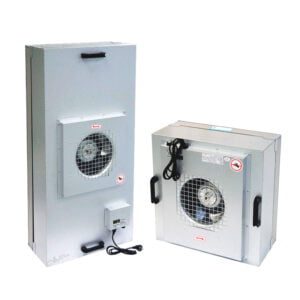
Unités de filtrage des ventilateurs apportent à la fois un flux d’air et de la chaleur. Chaque unité FFU consomme de l’énergie motrice qui se transforme directement en chaleur sensible au sein de l’espace contrôlé. Lorsque la densité des unités FFU est élevée — ce qui est courant dans les zones ISO 5 ou ISO 6 —, cette production interne de chaleur peut s’avérer importante par rapport à la capacité de refroidissement de la pièce, en particulier si le modèle thermique initial prévoyait une configuration à faible charge. L’ajout d’équipements spécifiques au processus après le dimensionnement du système CVC fait souvent pencher la balance sans pour autant déclencher une révision formelle de la conception.
Les charges liées à l'éclairage sont souvent sous-estimées dans les configurations de salles blanches modulaires, car on part du principe que les luminaires à LED ne dégagent que peu de chaleur. La puissance des luminaires, leur nombre et leur durée de fonctionnement en continu sont autant de facteurs qui entrent en ligne de compte dans le calcul de la charge sensible. Lorsque l'éclairage est installé par un corps de métier distinct ou ajouté tardivement au cours de l'aménagement, sa contribution thermique peut ne pas apparaître du tout dans le tableau des charges établi par l'ingénieur en génie mécanique.
En pratique, cela signifie que les projets de salles blanches modulaires doivent prendre en compte la charge thermique en fonctionnement — unités de traitement d’air (FFU) à leur vitesse de conception, équipements de process en régime permanent, éclairage à pleine intensité, personnel présent — comme base de conception du système CVC, et non la charge de pointe en salle vide ou dans le pire des cas. Il s’agit là de données de planification qui doivent être calculées en fonction de la configuration réelle des équipements spécifiée pour la salle. Toute modification apportée à cette liste d’équipements après le dimensionnement du système CVC doit entraîner un nouveau calcul de la charge avant que l’approvisionnement ne soit finalisé. Découvrir ce déficit lors de la cartographie thermique est un problème qui peut être résolu ; le découvrir après la remise des clés ne l’est pas.
Déplacements liés à l'ouverture des portes et aux transferts
Les écarts de courte durée dus à l'ouverture des portes et aux allées et venues sont systématiquement sous-estimés lors de la phase de conception, car les données de surveillance moyennes les masquent. Si un capteur de température ou d'humidité enregistre des mesures toutes les cinq ou dix minutes et que les écarts durent entre trente et quatre-vingt-dix secondes, l'enregistrement moyen peut indiquer une conformité totale alors que les conditions réelles d'exposition des produits ont dépassé les limites de tolérance à plusieurs reprises.
Les sas, les systèmes de portes à verrouillage séquentiel et l'étagement des différences de pression réduisent l'ampleur de chaque intrusion, mais ne la suppriment pas totalement. Dans le cadre de ISO 14644-4:2022, la conception des dispositifs d’entrée et de sortie des salles blanches — y compris les sas — est considérée comme un élément fonctionnel du système de contrôle environnemental, et non comme une simple commodité architecturale. La décision de savoir si un sas à porte unique est suffisant ou s’il faut recourir à un système à double porte interverrouillé dépend de l’ampleur et de la fréquence des perturbations environnementales générées par les cycles d’ouverture et de fermeture des portes, en fonction de la géométrie spécifique de la pièce et de la configuration du processus.
L’implication la plus importante en matière de planification réside dans la manière dont les critères d’acceptation traitent ces événements. Si le protocole de mise en service n’évalue que les conditions moyennes en régime permanent, une salle peut être déclarée conforme tout en restant incapable de respecter les tolérances pendant son fonctionnement normal. Les critères d’acceptation pour les processus de fabrication sensibles doivent explicitement prendre en compte le temps de rétablissement après un événement perturbateur — et pas seulement la bande de fonctionnement en régime permanent. Cela implique de définir ce qui constitue une amplitude de dépassement acceptable, la rapidité avec laquelle les conditions doivent revenir dans la plage de régime permanent, et si des dépassements consécutifs au sein d’une fenêtre définie constituent un écart nécessitant une action corrective. Ces définitions doivent faire l’objet d’un accord avant le début de la mise en service, et non après la rédaction du premier rapport d’écart.
Emplacements des capteurs pour les conditions de zone de travaux et de retour
L'emplacement des capteurs détermine les informations dont dispose le système de contrôle et ce que révèlent les rapports d'audit. Le fait de placer les capteurs uniquement au niveau du tableau de commande ou dans le plenum du plafond fournit des données qui, bien qu'elles reflètent fidèlement les conditions de l'air soufflé, peuvent donner une image faussée de l'environnement au point d'exposition du produit.
Le critère de conception qui s’applique ici est celui de la surveillance représentative : les capteurs doivent être placés dans la zone de travail proprement dite, là où se trouvent les produits, les matériaux ou les processus ouverts, ainsi qu’au niveau des conduits de retour d’air, où l’état du mélange d’air ambiant peut être évalué séparément de l’air soufflé. Cette approche à deux emplacements ne correspond pas à une disposition obligatoire des capteurs imposée par une norme prescriptive unique ; il s’agit d’un élément de conception qui dépend de la géométrie de la pièce, de la configuration des flux d’air et de l’importance critique de certaines zones spécifiques au sein de la pièce. Une pièce comportant une seule zone de travail dominante et un écoulement unidirectionnel simple, du plafond vers le sol, peut nécessiter moins d'emplacements de capteurs qu'une pièce comportant plusieurs zones de traitement à hauteur de paillasse et un flux d'air en recirculation.
La question de la validité de l’audit est distincte de celle des aspects opérationnels. Un réseau de capteurs qui répond aux exigences de rétroaction du système de contrôle peut néanmoins ne pas parvenir à démontrer que les conditions dans la zone de travail sont restées conformes aux spécifications tout au long d’un cycle de production. Lors d'un audit, la question n'est pas de savoir si le système de contrôle a maintenu sa consigne, mais si le produit a été fabriqué dans un environnement contrôlé à l'endroit même où la fabrication a eu lieu. Les capteurs qui ne couvrent pas la zone de travail ne peuvent pas répondre à cette question, quelles que soient les données de tendance affichées sur le panneau de contrôle. Les décisions relatives à l'emplacement des capteurs, prises dès le début de la phase de conception, sont difficiles à corriger sans procéder à des percements supplémentaires, à un nouveau câblage et à une revalidation une fois la salle construite.
Critères de retour à l'état stable et d'alarme
C'est la définition, avant le début de la mise en service, des limites en régime permanent, des critères de rétablissement après perturbation et des seuils d'alarme qui distingue une installation capable de démontrer son contrôle environnemental d'une autre qui ne peut que prouver que les équipements ont été installés et sont opérationnels. En l'absence de critères prédéfinis, il devient difficile d'évaluer les données de mise en service par rapport à une norme cohérente, et tout écart identifié lors de la qualification entre dans une zone grise où l'acceptabilité est négociée plutôt que mesurée.
Les limites en régime permanent doivent exprimer la plage de fonctionnement acceptable dans des conditions normales et stabilisées — et non la plage maximale que le système CVC est physiquement capable de maintenir. Les critères de rétablissement doivent définir le délai maximal autorisé pour que les conditions reviennent à la plage en régime permanent après une perturbation définie, telle que l’ouverture d’une porte ou un transitoire lié au démarrage d’un équipement. Ces valeurs ne sont pas identiques, et les confondre conduit à des protocoles d’acceptation qui autorisent un temps de rétablissement illimité tant que la valeur moyenne finit par se normaliser.
Les seuils de déclenchement des alarmes se situent au-dessus de la bande de fonctionnement et en dessous de la limite de tolérance du processus. Les définir trop près de la bande de fonctionnement génère des alarmes intempestives que les opérateurs apprennent à ignorer ; les définir trop près de la limite de tolérance du processus ne laisse pas suffisamment de temps pour prendre des mesures correctives avant qu’un lot ne soit menacé. Les architectures de contrôle basées sur des automates programmables (PLC), qui ajustent automatiquement les paramètres CVC à partir des données fournies par les capteurs et déclenchent des systèmes de secours en cas d’écart anormal, constituent une option de mise en œuvre permettant de maintenir les conditions sans recourir à une intervention manuelle — mais la logique et les seuils programmés dans ce système nécessitent toujours une définition et une validation humaines. L’efficacité d’une réponse automatisée dépend entièrement des critères qui lui ont été assignés.
L'enregistrement en continu, la notification des alarmes et la récupération des données historiques constituent des exigences de surveillance qui permettent à la fois un suivi en temps réel et la constitution d'une piste d'audit. La relation entre ISO 14644-2:2015 La définition des cadres de surveillance et des seuils d’alarme spécifiques adaptés à un processus donné n’est pas normative : la norme fournit un cadre pour les concepts de fréquence de surveillance et de réponse aux écarts, mais les seuils spécifiques au processus doivent être déterminés à partir des données de référence issues de la qualification de la salle et du processus concernés.
| Exigence | Mise en œuvre | Objectif |
|---|---|---|
| Récupération automatique du système CVC | Un système de commande intelligent basé sur un automate programmable (PLC) ajuste les paramètres en fonction des données fournies par les capteurs et déclenche les systèmes de secours en cas d'écart anormal. | Rétablit les conditions dans certaines limites sans intervention manuelle |
| Surveillance continue et piste d'audit | Surveillance en temps réel, commande à distance, enregistrement des données historiques et notifications d'alerte en cas d'écarts environnementaux | Permet d'alerter rapidement les opérateurs et fournit des documents attestant de la conformité en vue des audits |
Données de mise en service nécessaires à la fabrication de produits sensibles
La documentation relative à la mise en service des systèmes de contrôle de la température et de l'humidité n'est pas une simple formalité administrative. Elle constitue la base probatoire permettant de démontrer que la salle respecte les conditions requises par le processus — et, dans le domaine de la fabrication pharmaceutique, il s'agit du dossier qui doit résister à l'examen minutieux des autorités réglementaires lors de la révision d'un dossier de lot ou de l'ouverture d'une enquête.
Les cinq catégories d’enregistrements ci-dessous constituent la base documentaire qui garantit à la fois la conformité continue et la défense en cas d’audit. Chaque catégorie remplit une fonction distincte : les enregistrements continus de température et d’humidité prouvent que les conditions sont restées dans les tolérances spécifiées tout au long de l’historique de production de la salle ; les certificats d’étalonnage confirment que les capteurs produisant ces enregistrements mesuraient avec précision et traçabilité ; les registres de maintenance établissent que les systèmes générant ces conditions ont été maintenus en bon état de fonctionnement ; les registres des problèmes et des mesures correctives documentent la manière dont les écarts ont été identifiés, analysés et résolus ; et les rapports de validation démontrent que la salle a été officiellement testée par rapport aux critères définis d’état stable, de récupération et d’alarme avant le début de la production.
Pour les environnements de fabrication pharmaceutique non stériles, l’annexe 8 de l’OMS (TRS 1010) fournit des attentes de référence au niveau des procédés concernant la documentation et les pratiques de contrôle environnemental, qui sont conformes à cette norme de référence. L’exigence sous-jacente — à savoir pouvoir démontrer un contrôle rétrospectif, et non se contenter de décrire une intention prospective — s’applique à tous les types de fabrication sensibles, quel que soit le cadre réglementaire spécifique.
| Enregistrement / Journal | Contenu type | Mise en service et audit de valeur |
|---|---|---|
| Relevés de température et d'humidité | Mesures en continu des paramètres de l'environnement de production | Démontrer que les conditions sont restées dans les limites des tolérances spécifiées |
| Certificats d'étalonnage | Preuves de l'étalonnage des capteurs et des instruments | Vérifier la précision et la traçabilité des mesures |
| Registres d'entretien | Entretien, remplacement des filtres, disponibilité des équipements | Démontrer que les systèmes ont été maintenus en bon état de fonctionnement |
| Journaux des problèmes et des corrections | Écarts constatés et mesures correctives | Consigner les mesures prises suite aux incidents et la résolution de leurs causes profondes |
| Rapports de validation | Résultats des essais, données relatives au régime permanent, à la reprise et à la réponse aux alarmes | Démontrer la conformité aux exigences en matière de tolérances de processus et aux normes réglementaires |
Une lacune courante lors de la passation de pouvoir réside dans le fait que certains de ces documents existent bel et bien, mais sont détenus par différentes parties : le sous-traitant CVC détient les certificats d’étalonnage, l’intégrateur des systèmes de contrôle détient la configuration du journal des alarmes et l’équipe chargée des installations détient le rapport de validation, sans qu’il n’existe de dossier unifié pouvant être présenté comme un ensemble cohérent. Cette fragmentation devient problématique lorsqu’un auditeur demande l’historique complet du contrôle environnemental d’une pièce et que la réponse nécessite de rassembler des documents provenant de trois systèmes différents. Définir le dossier documentaire et la partie responsable de chaque catégorie avant le début de la mise en service est une étape de gestion de projet qui permet d’éviter ultérieurement tout problème de défendabilité en cas d’audit.
Pour garantir un contrôle adéquat de la température et de l'humidité dans une salle blanche modulaire, il est essentiel de prendre les bonnes décisions en matière de spécifications avant de déterminer la taille des équipements CVC, et non après. Les limites de tolérance qui déterminent le choix du groupe frigorifique, l'étagement de la déshumidification et l'emplacement des capteurs doivent toutes découler des exigences réelles du processus et des matériaux. De plus, toute modification de la configuration des équipements à l'intérieur de la salle après la définition de cette base de référence doit donner lieu à un nouveau calcul formel de la charge, et non à un simple ajustement sur site.
Avant de finaliser l'acquisition, vérifiez que la charge thermique d'exploitation tient compte des unités de traitement d'air (FFU) fonctionnant à la vitesse de conception, des équipements de production fonctionnant à pleine puissance et de l'éclairage fonctionnant pendant toutes les heures de service. Avant le début de la validation, assurez-vous que les critères d'acceptation prennent en compte le temps de rétablissement après des événements perturbateurs et que l'emplacement des capteurs permette d'obtenir des données fiables sur la zone de travail, et pas seulement des informations issues du système de régulation. Pour salles blanches modulaires à parois rigides et dans d’autres configurations fermées où l’accès pour les travaux de mise à niveau est limité, il est nettement plus facile de tenir compte de ces vérifications avant l’assemblage de la structure qu’après.
Questions fréquemment posées
Q : Que se passe-t-il si les données relatives aux tolérances de processus ne sont pas encore disponibles au moment de la définition du périmètre de la salle blanche modulaire ?
R : L’approvisionnement doit être reporté jusqu’à ce que les données relatives aux tolérances des procédés et des matériaux soient disponibles, même si cela retarde la phase de dimensionnement du système CVC. Définir des limites de température et d’humidité sans disposer de ces données oblige à choisir entre une surdimensionnement — ce qui gonfle les besoins en capacité des refroidisseurs et le coût d’investissement du système CVC — et un sous-dimensionnement, qui risque d’entraîner des pertes de lots une fois la production lancée. L'utilisation d'une fourchette indicative tirée des conventions du secteur ou d'une installation comparable ne constitue pas une solution provisoire sûre : cela conduit à un système dimensionné pour une charge inadaptée, et corriger cela après l'achat ou l'installation des équipements revient nettement plus cher que d'attendre de disposer des données correctes.
Q : Si la salle passe avec succès les tests de cartographie thermique en régime permanent lors de la mise en service, cela signifie-t-il qu'elle respectera les tolérances pendant l'activité de production normale ?
R : Pas nécessairement. Une cartographie en régime permanent, réalisée dans des conditions stabilisées et peu perturbées, ne permet pas de confirmer que la salle est capable de se rétablir correctement après des cycles d'ouverture/fermeture des portes, des mises en service d'équipements ou des entrées de personnel. Une salle peut être qualifiée tout en exposant le produit à des écarts courts et répétés que les données moyennes des capteurs ne permettent jamais de détecter. Les critères d’acceptation lors de la mise en service doivent définir explicitement l’amplitude maximale admissible des écarts et le temps de rétablissement requis après une perturbation définie avant la validation — et pas seulement la plage acceptable en régime permanent. Sans ces critères de rétablissement convenus à l’avance, une salle peut être officiellement qualifiée tout en étant, sur le plan opérationnel, inadaptée à une fabrication de produits sensibles.
Q : À partir de quel moment l'ajout d'équipements de production après le dimensionnement du système CVC nécessite-t-il réellement un nouveau calcul formel de la charge plutôt qu'un simple ajustement sur site ?
R : Tout ajout ou remplacement susceptible de modifier la charge thermique sensible à l’intérieur de la salle justifie un nouveau calcul avant que l’acquisition de cet équipement ne soit finalisée. Le seuil n’est pas une puissance en watts fixe : il s’agit de déterminer si la charge de fonctionnement cumulée des unités de traitement d’air (FFU) à la vitesse de conception, des équipements de process à pleine puissance et de l’éclairage à pleine durée de fonctionnement reste inférieure à la capacité pour laquelle le système CVC installé a été dimensionné. Les réglages sur site de la vitesse des ventilateurs ou des points de consigne peuvent masquer un déficit de capacité sans le résoudre ; ce déficit apparaît alors lors de la cartographie thermique ou des premiers cycles de production, moment où les possibilités de correction sont les plus limitées.
Q : Une salle blanche modulaire à parois rigides est-elle nettement plus performante qu'une configuration à parois souples pour respecter des tolérances d'humidité strictes, ou la différence est-elle principalement d'ordre structurel ?
R : Pour les tolérances d’humidité strictes, les configurations à parois rigides offrent un avantage pratique qui va au-delà de la structure : les joints de panneaux étanches, les assemblages de parois pleines et les points de flexion limités réduisent les infiltrations de vapeur incontrôlées et les fuites de pression que permettent les systèmes à rideaux à parois souples. Dans les applications où un écart d’humidité relative de 1% comporte un risque sérieux pour le lot, cette réduction de la charge d’infiltration est déterminante pour la précision du dimensionnement des systèmes CVC et la stabilité en régime permanent. Cependant, le choix entre les configurations doit toujours être guidé par les exigences réelles en matière de tolérance et la charge thermique de fonctionnement : une pièce à parois rigides équipée d’un système de déshumidification sous-dimensionné ne respectera pas les limites d’humidité strictes, quelle que soit la construction des panneaux.
Q : À qui revient-il de détenir le dossier de mise en service unifié lorsque la documentation est répartie entre le sous-traitant CVC, l'intégrateur de systèmes de contrôle et l'équipe chargée des installations ?
R : La responsabilité de la constitution et de la tenue à jour du dossier complet doit être confiée à un seul responsable — généralement le propriétaire de l’installation ou son représentant désigné en matière d’assurance qualité — avant le début de la mise en service, et non lors de la remise des clés. Les sous-traitants et les intégrateurs qui établissent les certificats d’étalonnage, les registres de configuration des alarmes et les registres de maintenance ne sont pas en mesure de maintenir un dossier cohérent et prêt pour un audit tout au long de la durée de vie de la salle. Définir quels documents doivent figurer dans ce dossier, qui détient les originaux et comment les récupérer sous forme d’ensemble unifié relève d’une décision de gouvernance du projet qui permet d’éviter qu’un dossier fragmenté ne devienne un risque en cas d’audit une fois la salle mise en service.