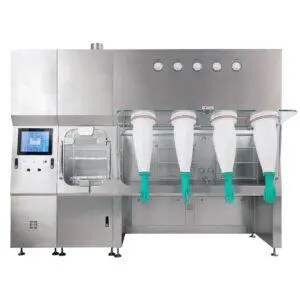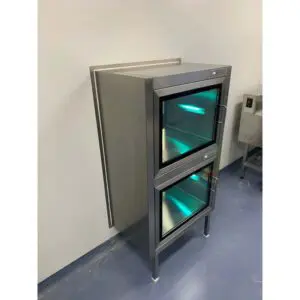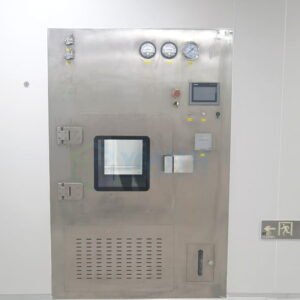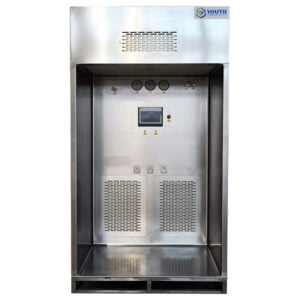
Le choix d’une chambre de transfert ou d’une chambre de décontamination VHP avant que le profil de chargement ne soit défini constitue l’une des sources les plus prévisibles de retard de mise en service dans les projets d’environnement contrôlé. La chambre est livrée, le processus de développement du cycle commence, puis la géométrie réelle du chargement (dimensions, matériaux, emballages emboîtés) s’avère incompatible avec les paramètres de cycle validés, ce qui entraîne des retouches non prévues dans le calendrier d’approvisionnement initial. Ce problème ne relève pas principalement de la qualité du fournisseur ; il s’agit d’un problème de spécifications qui survient lorsque les acheteurs évaluent les propositions d’équipements avant d’avoir répondu aux questions permettant de déterminer si la conception d’une chambre donnée est capable d’assurer une décontamination reproductible et documentable. Le choix d’un fournisseur d’équipements de décontamination pour une application de transfert de matériaux en salle blanche devrait commencer par les réponses à ces questions, et non par les devis des chambres.
Processus de décontamination préalable à la sélection d'un fournisseur de VHP
La première décision à prendre ne porte pas sur le choix du fournisseur de VHP à évaluer, mais sur la question de savoir si le VHP constitue la voie de transfert appropriée compte tenu du risque de contamination géré par le projet. Le transfert par VHP assure une décontamination active et constitue le choix approprié lorsque le contrôle de la charge microbienne est une exigence définie dans le processus de transfert. Les dispositifs de passage plus simples éliminent la nécessité de développer un cycle de stérilisation, réduisent la complexité opérationnelle et sont justifiables lorsque le risque de contamination croisée est réellement faible. Considérer le VHP comme la solution par défaut simplement parce qu’il semble plus performant entraîne une charge de travail liée au développement des cycles et des exigences de validation qui peuvent ne pas être proportionnées au risque à maîtriser.
Les conséquences concrètes d'un mauvais choix ne se font généralement pas sentir tout de suite. Une entreprise qui installe un Boîte de passage de la VHP Lorsqu’un système de passage simple aurait suffi, le problème est détecté lors de l’élaboration des procédures opérationnelles standard (SOP), lorsque les équipes chargées de la qualité ou de l’EHS demandent une justification du cycle et que la logique du processus ne tient pas la route. L’inverse — l’installation d’un simple système de passage alors qu’une décontamination active était en réalité nécessaire — a tendance à être mis en évidence plus tard, lors d’audits ou d’enquêtes sur des écarts, et est plus difficile à corriger car cela peut nécessiter le remplacement d’équipements et une refonte rétroactive du processus.
| Itinéraire de correspondance | Capacité de décontamination | Complexité cyclique | Convient lorsque |
|---|---|---|---|
| Transfert VHP | Assure une décontamination active | Plus élevé | Le contrôle de la charge microbienne est essentiel |
| Transfert simple | Aucune décontamination en cours | Plus bas | Le risque de contamination croisée est faible |
Le tableau ci-dessus présente cette comparaison sous l'angle d'un compromis de planification. Utilisez-le pour définir l'itinéraire avant d'entamer les discussions avec les fournisseurs, car c'est l'itinéraire qui détermine le matériel, la documentation et la charge de validation que le projet devra supporter.
Questions relatives à la taille de la chambre, au profil de charge, à l'étanchéité, à l'aération et aux résidus
La plupart des cas de sous-spécification dans Équipement VHP Les procédures d’achat suivent toutes le même schéma : les acheteurs indiquent la taille de chambre dont ils pensent avoir besoin, plutôt que de décrire la charge réelle qu’ils doivent décontaminer. Les dimensions internes de la chambre et l’enveloppe de charge utile ne sont pas la même chose. L'ouverture de la porte, la configuration des étagères et la géométrie du flux d'air pendant le cycle peuvent toutes réduire l'espace de travail effectif par rapport au volume nominal de la chambre. Définir les spécifications sur la base de dimensions approximatives de la charge — sans tenir compte du format d'emballage, de la masse de la charge, ni du fait que les charges arrivent emboîtées ou à plat — conduit à une situation où la chambre installée est techniquement conforme mais s'avère insuffisante dans la pratique pour les charges de production.
Même si les dimensions de la chambre ont été validées par rapport aux dimensions actuelles de la charge, elles peuvent s'avérer inadaptées en cas de modification du format d'emballage ou d'augmentation du volume de la charge.
Les cinq paramètres figurant dans le tableau ci-dessous correspondent aux critères qui déterminent le plus directement si une chambre VHP permet le développement d'un cycle et la validation d'une procédure opérationnelle standard (SOP) pour une application spécifique. Chacun d'entre eux présente un risque réel de défaillance s'il n'est pas défini lors de l'acquisition.
| Paramètres | Ce qu'il faut clarifier | Risque en cas d'incertitude |
|---|---|---|
| Dimensions de la chambre | Dimensions intérieures par rapport à l'enveloppe de charge maximale | Équipement trop petit pour les charges futures |
| Profil de charge | Éléments de charge, matériaux et masse types | Cycle non validé pour les articles réels |
| Sceau | Mécanisme d'étanchéité de la porte et intégrité | Une fuite compromettant la décontamination |
| Aération | Durée d'aération et critères de fin de traitement | Risques liés à l'opérateur ou retards dans le processus |
| Résidus | Teneurs en résidus prévues et critères d'acceptation | Contamination du produit ou rejet selon la procédure opérationnelle standard (SOP) |
Les critères de fin d'aération méritent une attention particulière. L'annexe 15 d'EudraLex mentionne en effet la nécessité de définir et de qualifier les critères de fin d'aération au cours de activités de qualification, cela signifie concrètement que la durée d'aération ne peut être estimée à l'avance sans connaître la masse de la charge, la porosité du matériau et la capacité d'évacuation de la chambre. Un fournisseur qui propose une durée d'aération sans avoir examiné le profil de la charge ne fait qu'avancer une approximation, et non une valeur finale validée. De même, les limites d'acceptation des résidus nécessitent l'avis du responsable du contact produit ou de la sécurité avant qu'un cycle puisse être validé pour utilisation.
Documents relatifs aux équipements VHP que les acheteurs devraient demander
Tous les documents qu’un acheteur rigoureux devrait demander à un fournisseur VHP ne relèvent pas nécessairement d’une obligation réglementaire formelle. Certains correspondent à des attentes standard, les cadres de qualification imposant la fourniture de ces documents comme condition préalable ; d’autres constituent des mesures d’atténuation des risques du côté des acheteurs, qu’un fournisseur ne proposera peut-être pas de son propre chef à moins qu’on ne le lui demande. Faire la distinction entre ces deux types de documents aide les équipes d’achat à comprendre quelles lacunes sont critiques pour la validation et lesquelles constituent des risques en matière de justifiabilité.
Au minimum, les acheteurs devraient demander des rapports de mise au point des cycles couvrant le type de charge visé, et non des données génériques de qualification de la chambre. Un rapport de mise au point des cycles basé sur une charge de substitution n'apporte qu'un soutien limité lorsque la géométrie réelle de la charge, la composition du matériau ou l'emballage diffèrent de manière significative de ceux de la charge de substitution. Lorsque ISO 22441 En tant que cadre d'essai pour les procédés de décontamination des gaz, la documentation relative au développement du cycle, liée à la configuration spécifique de la charge, constitue une condition préalable à une validation reproductible — et non un complément facultatif. Les données issues du développement du cycle obtenues avec une charge différente doivent être identifiées comme telles, et l'acheteur doit déterminer si une étude de transposition sera nécessaire.
Les acheteurs doivent également exiger des preuves de compatibilité des matériaux pour toutes les surfaces et tous les matériaux composant les articles à stériliser ou dans lesquels ils sont emballés. La compatibilité avec le VHP dépend du matériau ; si le fournisseur se contente d’affirmer qu’une chambre est adaptée aux “ charges pharmaceutiques standard ” sans fournir de données d’essais au niveau des matériaux, c’est l’acheteur qui assume le risque lié à la compatibilité. Outre les documents relatifs aux cycles et aux matériaux, demandez les données de validation de l'aération—notamment la méthode utilisée pour déterminer le point final de l'aération et l'emplacement du capteur qui permet de l'atteindre. La documentation relative à la maintenance, comprenant le calendrier d'entretien préventif, la liste des pièces d'usure et les intervalles d'entretien prévus pour le Système de production d'H₂O₂, devrait faire partie de l'offre avant la sélection du fournisseur, et non être demandée après l'installation.
Les données génériques de qualification de la chambre ne sauraient se substituer à la mise au point des cycles liée à la configuration réelle de la charge.
Lorsqu'un fournisseur n'est pas en mesure de fournir des rapports d'essais cycliques pour un type de charge comparable ou de communiquer des données de compatibilité des matériaux, cette lacune doit être considérée comme un risque lié à l'approvisionnement nécessitant une résolution explicite — soit par un engagement à fournir ces données avant la mise en service, soit par une réduction du niveau de confiance en matière de validation que l'acheteur est prêt à accepter.
Friction liée au développement cyclique due à des profils de charge indéfinis
Les schémas de chargement non définis constituent la principale cause des retards dans le développement des cycles pour les applications de transfert VHP — et non pas les défaillances des équipements, ni les lacunes dans la documentation des fournisseurs, ni les ambiguïtés réglementaires. Lorsque le développement d’un cycle débute sans définition précise du chargement, l’équipe se retrouve en réalité à développer un cycle pour une cible mouvante. Toute modification de la géométrie de la charge, du matériau d’emballage ou du nombre d’articles après le début du développement du cycle nécessite une nouvelle qualification d’une partie du travail déjà effectué. Ce qui ressemble à un problème de livraison ou de performance du fournisseur lors de la mise en service est généralement un problème de spécification qui trouve son origine plusieurs semaines auparavant, lors de la phase d’approvisionnement.
Les conséquences pratiques vont bien au-delà du calendrier. Lorsque des cadres de certification tels que Annexe 15 d'EudraLex Et bien que la norme ISO 22441 considère la définition de la charge comme une condition préalable à la validation d’un cycle reproductible, un cycle élaboré à partir d’une charge dont la caractérisation est incomplète est difficile à justifier dans un dossier réglementaire ou lors d’une inspection si une variation de la charge est identifiée par la suite. L’équipe de validation se retrouve alors confrontée à deux options : soit restreindre l’enveloppe de charge validée à ce qui a été effectivement testé — ce qui peut ne pas couvrir les besoins opérationnels —, soit réaliser des essais supplémentaires pour étendre la plage validée, ces deux options entraînant des coûts et des délais supplémentaires qui n’étaient pas prévus dans le plan de projet initial.
La solution est simple mais exige de la rigueur : définir précisément la charge — types d’articles, dimensions maximales, matériaux d’emballage et masse maximale — avant la rédaction du protocole de développement du cycle. Si la charge est susceptible de varier selon les familles de produits ou les formats d’emballage, cette variation doit être estimée et documentée avant la spécification de la chambre, et non découverte au cours des essais de cycle. Les fournisseurs qui proposent de commencer le développement du cycle avant que la définition de la charge ne soit finalisée font souvent un compromis commercial, et non une recommandation technique. Accepter cette concession fait peser le risque de retouches sur l’acheteur.
Décision relative au fournisseur une fois que les prévisions en matière de décontamination et le plan de maintenance ont été définis
Le choix du fournisseur doit être une confirmation, et non une découverte. Au moment où un acheteur en arrive à la sélection finale du fournisseur, la géométrie de la charge doit être fixée, le niveau de réduction de la charge microbienne requis doit être documenté, les attentes en matière de dossier de preuves doivent avoir été convenues, et le plan de maintenance doit être suffisamment bien compris pour évaluer l'accès au service et le risque de temps d'arrêt. Chacun de ces points d'alignement représente un risque d'approvisionnement s'il reste en suspens au moment de l'engagement.
| Zone d'alignement | Ce qu'il faut confirmer | Risque en cas de non-résolution |
|---|---|---|
| Géométrie de la charge | La chambre s'adapte à toutes les configurations de chargement | Révision du cycle de développement |
| Exigences en matière de décontamination | Niveau de réduction de la charge microbienne requis | Système sous-dimensionné ou surdimensionné |
| Dossier de preuves | Rapports sur le développement des cycles, analyses de résidus et assistance relative aux procédures opérationnelles standard (SOP) | Retards de validation |
| Parcours de maintenance | Accès au service après-vente, pièces de rechange et calendrier de maintenance préventive | Période d'indisponibilité prolongée |
| Critères de libération par l'opérateur | Critères d'aération et limites de rejet | Sécurité des opérateurs ou goulots d'étranglement dans le flux de travail |
Dans les évaluations des fournisseurs, l’aspect « maintenance » est souvent sous-estimé par rapport aux performances cycliques. Un système VHP qui fonctionne bien lors de la mise en service mais qui nécessite des consommables importés avec un délai de livraison de plusieurs semaines, ou dont les composants de production d’H₂O₂ ne peuvent pas être entretenus par un technicien local, engendre un risque opérationnel qui n’apparaît pas dans les spécifications de l’équipement. Avant de vous engager auprès d’un fournisseur, assurez-vous que le calendrier de maintenance préventive est réaliste pour l’équipe de maintenance du site, que les pièces de rechange sont disponibles dans des délais acceptables et que le modèle de service du fournisseur est compatible avec les horaires d’exploitation du site et sa tolérance aux temps d’arrêt.
Le choix d'un fournisseur avant que les exigences relatives au plan de maintenance et au dossier de justification n'aient été confirmées entraîne généralement des retouches lors de la validation ou des temps d'arrêt imprévus prolongés.
Les critères de libération par l'opérateur — les seuils d'aération et la méthode permettant de les confirmer avant l'ouverture de la porte de la chambre du côté propre — doivent également être définis avant l'engagement du fournisseur. Si la méthode de détermination des seuils d'aération nécessite des instruments ou un système de surveillance non inclus dans la configuration standard de la chambre, cela doit être précisé dans le cahier des charges et ne pas être laissé à la négociation lors de la phase de mise en service.
Avant de choisir définitivement un fournisseur de chambres VHP ou d’équipements de décontamination pour une application de transfert de matériaux en salle blanche, les vérifications préalables les plus importantes à effectuer sont la géométrie de la charge, les objectifs de réduction de la charge microbienne, l’étendue de la documentation relative aux cycles et la facilité d’entretien. Il ne s’agit pas là de préoccupations à prendre en compte après la sélection ; ce sont les critères qui déterminent si la chambre et le fournisseur sélectionnés sont en mesure de garantir le développement des cycles, la validation des procédures opérationnelles standard (SOP) et la fiabilité opérationnelle à long terme sans nécessiter de retouches.
Si l’un des cinq paramètres — taille de la chambre validée par rapport aux enveloppes de charge réelles, documentation des cycles liée aux matériaux de charge réels, méthode de détermination du point final d’aération définie et instrumentée, critères d’acceptation des résidus convenus avec la fonction qualité, et accès de maintenance confirmé pour le modèle de maintenance de l’installation — reste en suspens au moment de l’engagement du fournisseur, le risque de retouches ne disparaît pas. Il se déplace vers les phases de mise en service et de validation, où sa résolution est plus coûteuse et plus visible pour les parties prenantes du projet.
Questions fréquemment posées
Q : Notre établissement dispose déjà d'un système de désinfection par passage direct ne fonctionnant pas au VHP. Pouvons-nous le moderniser en y installant un générateur de VHP plutôt que d'acheter une nouvelle chambre de désinfection ?
R : L'adaptation d'un passe-objets standard pour le peroxyde d'hydrogène (VHP) n'est généralement pas une solution fiable. La géométrie de la chambre, l'étanchéité de la porte, la compatibilité des matériaux et les circuits d'écoulement d'air ne sont pas conçus pour contenir et répartir uniformément les vapeurs de peroxyde d'hydrogène tout en garantissant une aération sûre et l'élimination des résidus. Un passe-objets spécialement conçu pour le VHP constitue la solution la plus sûre lorsqu'une décontamination active est nécessaire.
Q : Une fois que nous avons sélectionné un fournisseur d'équipements VHP et passé commande, quelle doit être la première mesure prise par notre équipe de projet pour éviter tout retard dans la mise en service ?
R :tadsuiniumgg’teéllatledetV n p tsabt Ln litxerr lrecrelnoo dréédnpuliaeést fpei t znn cryutaseare é.id ded’i fdtane lde Cl iponusd otf arsoa auréeru etap nég rs eeu a ivàtl mer i seucdcrli ioreueeraea,l fiuréle ts,’i evmeoirse ieiemstdc ptmt mmoelcfero,ndrée aivamànehaes.èin’s,tennmllq oce’epévriemrc cicqoreerién a dàfiacebuaa’g n e lmiincdgfire eetlatr rérh uah os pdi rrr nitetataeesen vt e’ el ete menmscdeooio craae’rlorlzounaald uè nilinpa nrmiooaigdc anfeeollneénladldacl idert mel iiiltu rse q taodiceov nlb égidmceteéasioxa cooqaaes.
Q : Quelle est la solution de secours si le plus grand objet que nous devons décontaminer dépasse les dimensions intérieures de n'importe quelle boîte de transfert VHP standard ?
R : Les chambres VHP sur mesure constituent une solution technique viable, mais elles impliquent des délais d'ingénierie plus longs, un coût plus élevé et la charge de travail liée à un cycle de développement entièrement sur mesure. Avant de vous engager dans une fabrication sur mesure, évaluez s'il est possible de diviser, de reconditionner ou de reconfigurer la charge afin de l'adapter à une chambre standard, ce qui permet de conserver un processus de validation plus rapide et d'éviter le risque de dépendance vis-à-vis d'une seule charge.
Q : Dans quels cas un générateur VHP portable serait-il un meilleur choix qu'une enceinte de transfert VHP fixe pour le transfert de matériaux ?
R : Un générateur de VHP portable ne peut pas se substituer directement à une enceinte de transfert à VHP fixe dans le cadre d'un transfert de matériel de routine. Les appareils portables sont conçus pour la décontamination à l'échelle d'une pièce ou le traitement de surface des équipements, et non pour le transfert confiné et reproductible de charges à travers une barrière. Si votre processus nécessite que du matériel franchisse la limite d'une salle blanche avec une décontamination vérifiée, une enceinte de transfert à VHP fixe reste l'outil approprié.
Q : Pour un site où la fréquence des transferts de matériel est très faible, l'investissement dans un sas VHP reste-t-il justifié compte tenu de l'effort de validation que cela implique ?
R : Pas toujours. Si les transferts sont rares et que le risque lié à la charge microbienne est manifestement faible, les coûts liés au développement du cycle, aux procédures opérationnelles standard (SOP) et à la maintenance courante d’une chambre à vapeur de phénol (VHP) peuvent s’avérer disproportionnés. Dans de tels cas, une évaluation des risques documentée peut justifier le recours à un passage sans VHP, assorti d’une procédure de désinfection manuelle validée, afin de réserver la capacité VHP aux processus qui en ont réellement besoin.