Quando uma sala limpa sistema de partições Se o painel for encomendado na fase final do ciclo do projeto com base na espessura e na cor, os primeiros defeitos superficiais — bolhas, delaminação ou rachaduras no selante das juntas — costumam aparecer durante a validação da limpeza ou após apenas alguns ciclos de desinfecção. Essas falhas não são meramente estéticas; elas causam a liberação de partículas, comprometem a estanqueidade do invólucro e exigem retrabalho, o que atrasa a liberação da suíte. O custo real não é o painel em si, mas o tempo de inatividade, a incerteza quanto à estabilidade da cascata de pressão e a ausência de evidências defensáveis para apoiar uma decisão de liberação de acordo com as BPF. A decisão que evita esse resultado é tratar a aceitação da divisória como um exercício de verificação de materiais e interfaces, e não como uma aprovação visual.
Aceitação de divisórias de acordo com as BPF com base na compatibilidade com agentes de limpeza
A superfície que resiste a um teste de limpeza em fábrica, mas se degrada sob o regime real de desinfecção da instalação, torna-se uma fonte de contaminação difícil de sanar sem interromper as atividades da unidade. A aceitação das divisórias deve, portanto, basear-se na seguinte questão: o revestimento desse painel tolerará os agentes específicos de limpeza e desinfecção utilizados neste local, na frequência exigida pelo cronograma de higienização? Quando essa questão não é levantada durante a aquisição, a resposta se manifesta na forma de descoloração, microfissuras ou perda de aderência do revestimento do painel meses após a entrega.
Resistência química Os relatórios de testes relativos aos agentes utilizados no local — IPA, alvejante, peróxido de hidrogênio, ácido peracético ou formulações esporicidas exclusivas — permitem que a equipe do projeto compare os limites de degradação antes da instalação. Esses relatórios constituem uma etapa de verificação comercial, e não uma exigência regulatória; Anexo 1 das BPF da UE estabelece o princípio de que as superfícies devem ser compatíveis com agentes de limpeza, sem prescrever um método de teste. A consequência de se omitir essa verificação é que a superfície do painel se torna um gerador de partículas à medida que se degrada, liberando material no ambiente controlado e criando superfícies que não podem mais ser higienizadas de forma confiável.
A escolha entre aço pintado e aço inoxidável 304 material da pele é uma escolha que depende do local, e não uma especificação única que sirva para todos os casos. Aço inoxidável 304 oferece maior tolerância a agentes agressivos e é a recomendação do fabricante para instalações com elevada exposição a produtos químicos ou exigências específicas de higiene. O aço pintado pode ser aceitável em casos em que os procedimentos de limpeza sejam mais suaves e a diferença de custo seja significativa, mas a decisão deve ser documentada com dados de compatibilidade específicos para cada agente. Caso contrário, a instalação assume um risco operacional que só se torna visível quando os painéis começam a apresentar falhas.
| Fator de aceitação | O que confirmar | Evidências necessárias |
|---|---|---|
| Tolerância da superfície aos agentes de limpeza | A superfície da divisória resiste à exposição repetida a agentes específicos do local (IPA, alvejante, peróxido de hidrogênio, ácido peracético) sem desbotar, formar bolhas ou descascar | Relatórios de testes de resistência química dos fornecedores, abrangendo todos os agentes relevantes |
| Seleção do material da pele | A escolha do material (aço pintado x aço inoxidável 304) atende à exposição a substâncias químicas e aos requisitos de higiene | Especificações de materiais e dados de compatibilidade; recomenda-se o uso de aço inoxidável 304 para condições de alta exposição |
| Durabilidade a longo prazo | Sem degradação da superfície, rachaduras ou delaminação após vários ciclos de limpeza | Resultados de testes de envelhecimento acelerado ou referências de locais que comprovem um desempenho consistente |
A tabela resume os fatores de aceitação em pontos de confirmação que devem ser esclarecidos antes da realização de pedidos de painéis. A decisão fundamental não é se um painel “parece ser passível de limpeza”, mas se as evidências demonstram a tolerância da superfície à exposição repetida ao longo do ciclo de vida do ativo.
Resistência a danos e controle de bordas expostas
Uma amolgadela em um painel divisório não é apenas uma questão estética; ela cria um recanto onde os utensílios de limpeza não alcançam e o desinfetante fica acumulado, transformando um impacto menor em um problema persistente de higiene. O controle de danos é importante porque amolgadelas, delaminação, material do núcleo exposto e selante rachado tornam-se problemas de controle de contaminação difíceis de resolver sem reparos invasivos. As divisórias com maior probabilidade de evitar esse ciclo de degradação são aquelas que eliminam as condições que concentram danos mecânicos — bordas salientes, bordas cortadas no local e deixadas sem vedação, e geometrias de juntas que acumulam abrasão causada por utensílios de limpeza.
Os recortes usinados de fábrica para portas, janelas e passagens de instalações reduzem a quantidade de cortes no local da obra ao estritamente necessário para a instalação. Trata-se de uma abordagem de projeto específica do fabricante, e não de uma norma de construção obrigatória, mas atende diretamente à exigência do Anexo 1 das BPF da UE de que as superfícies estejam livres de fendas e saliências. Quando os painéis são cortados sob medida no local da obra, o núcleo exposto e a borda não vedada podem reter umidade e agentes de limpeza, provocando delaminação ou crescimento microbiano muito antes que isso se torne visível durante uma inspeção de rotina. Esse risco é difícil de ser mitigado posteriormente.
Bordas expostas e selante rachado não são defeitos de instalação que você conserta mais tarde — eles são os primeiros pontos de falha no controle de contaminação.
As superfícies planas dos painéis e as molduras de alumínio de precisão, que criam uma superfície contínua da parede composta sem saliências, permitem uma limpeza mais rápida e confiável e reduzem os pontos de acúmulo de poeira e resíduos. A escolha do design não é meramente estética; ela determina se o envelope da sala limpa pode ser limpo e desinfetado dentro do tempo de ciclo validado, ciclo após ciclo, sem que surjam zonas de difícil acesso que, eventualmente, comprometam os dados do monitoramento ambiental.
Papel das divisórias no fluxo de pessoal e no zoneamento de pressão
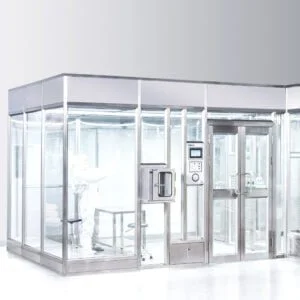
As decisões relativas ao layout das divisórias não são escolhas arquitetônicas independentes; suas posições devem ser determinadas com base no projeto do fluxo de ar da sala limpa e na cascata de pressão necessária para manter a contenção. Uma parede instalada sem levar em conta as posições das câmaras de equilíbrio, a localização das caixas de transferência e os protocolos de transferência de pessoal cria caminhos de vazamento que comprometem justamente os diferenciais de pressão que o sistema de climatização (HVAC) foi projetado para manter. O erro é frequentemente detectado durante os testes de integridade da sala, quando se constata que as portas se abrem contra o gradiente de pressão ou que as passagens de serviços públicos interrompem a cascata, forçando um reequilíbrio ou retrabalho físico.
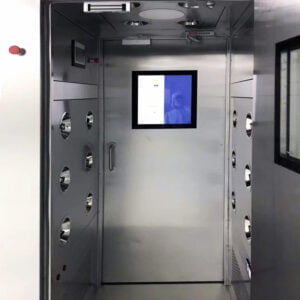
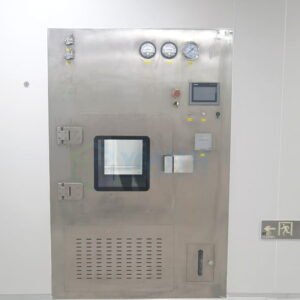
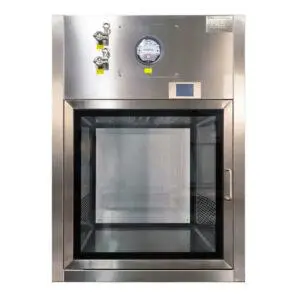
As divisórias devem ser analisadas em relação aos mapas de fluxo de pessoal e materiais com antecedência suficiente para influenciar a direção de abertura das portas, a integração das câmaras de transferência e os requisitos de visibilidade. A abertura escalonada das portas, garantida por câmaras de compensação interligadas, depende de uma configuração de paredes que separe fisicamente as zonas de pressão. Se uma câmara de transferência for encaixada em um canto onde a junção dos painéis não possa ser vedada adequadamente, o ponto de transferência se tornará um vazamento de pressão. A tabela abaixo identifica as características críticas das divisórias e o que deve ser verificado em relação aos desenhos da cascata de pressão.
| Recurso de partição | Impacto no fluxo/zoneamento | O que verificar |
|---|---|---|
| Coordenação do projeto com câmaras de equilíbrio e caixas de passagem | Permite a abertura gradual da porta e a transferência controlada de material, mantendo os diferenciais de pressão | Confirme se as posições das câmaras de equilíbrio, a localização das caixas de passagem e os sentidos de abertura das portas estão alinhados com o projeto da cascata de pressão |
| Sistema de junção de painéis | É necessário um invólucro hermético para compensar as diferenças de pressão; as juntas são o ponto mais vulnerável | Verifique o tipo de junta (lingueta e ranhura com juntas de vedação); para a norma ISO 5/6, verifique a fixação por travamento de came para garantir a máxima estanqueidade ao ar |
| Posicionamento de portas e aberturas | O posicionamento incorreto cria caminhos de vazamento que prejudicam a estabilidade da pressão | Verifique a localização correta das portas e das passagens de instalações, de acordo com os desenhos da cascata de pressão |
O sistema de junção de painéis é o ponto mais vulnerável no envelope hermético. As junções do tipo “lingueta e ranhura” com juntas de vedação podem manter os diferenciais de pressão em muitas áreas de apoio às BPF, mas para zonas ISO 5/6, onde a cascata de pressão é acentuada e a classificação de limpeza é inegociável, os sistemas de fixação do tipo “cam-lock”, que proporcionam uma fixação mecânica positiva, são a recomendação comercial preferida. Trata-se não de uma especificação regulatória, mas de uma avaliação sobre onde o risco de vazamento nas juntas é maior. Uma junta que se abre ligeiramente sob pressão negativa ou após ciclos repetidos de limpeza permite que o ar não filtrado contorne o caminho controlado do fluxo de ar, e essa perda costuma ser invisível aos monitores de pressão da sala até que acione um alarme.
O sistema de juntas, e não o revestimento do painel, é o verdadeiro fator determinante da estabilidade da cascata de pressão nas zonas ISO 5 e ISO 6.
Anexo 1 das BPF da UE e ISO 14644-4 estabelecem os requisitos de processo relativos a diferenças de pressão e contenção; não endossam nenhuma tecnologia específica de juntas. A tarefa de verificação da equipe do projeto consiste em adequar a estanqueidade do sistema de juntas à classificação da sala limpa e ao regime de pressão, e não simplesmente aceitar a proposta padrão.
Evidências materiais além da espessura e da cor
A aprovação de painéis divisórios com base em amostras de tecido e nos valores de espessura indicados na ficha técnica cria um ponto cego que só é preenchido durante a qualificação operacional. Dois painéis que compartilham a mesma espessura total podem apresentar desempenhos muito diferentes sob carga mecânica, tensão de limpeza e ciclos térmicos, dependendo da espessura do material de revestimento, do tipo e da densidade do núcleo e do projeto do perfil de alumínio. As evidências materiais que importam para uma instalação em conformidade com as BPF vão além da cor e da espessura, abrangendo a rugosidade da superfície, a geometria das juntas e as especificações de montagem que determinam a estabilidade dimensional a longo prazo.
As especificações de composição dos painéis — por exemplo, camadas externas de aço de 0,5 mm sobre um núcleo de PU de 40 kg/m³ ou um núcleo de EPS de 30 kg/m³ — são valores de projeto específicos do fabricante, e não normas universais. Elas se tornam critérios de aceitação quando a equipe do projeto as utiliza para confirmar que o produto entregue corresponde ao projeto de engenharia que foi avaliado quanto à resistência mecânica, isolamento e higiene. Sem verificar esses valores na inspeção de recebimento, a instalação assume um risco adicional que talvez só seja detectado quando a primeira auditoria questionar a base do desempenho das divisórias.
| Área de inspeção | O que isso revela | Prova de aceitação |
|---|---|---|
| Especificações de montagem do painel | Resistência mecânica, isolamento e higiene — não apenas a espessura total | Ficha técnica que indica a espessura da camada externa (por exemplo, 0,5 mm), o tipo e a densidade do núcleo (PU 40 kg/m³, EPS 30 kg/m³) e o projeto do perfil de alumínio |
| Rugosidade da superfície | Facilidade de limpeza e conformidade com a exigência de superfícies lisas do Anexo 1 das BPF da UE | Medição de Ra: ≤0,8 µm para as zonas ISO 5/6; ≤1,6 µm para as áreas de apoio ISO 7/8 |
| Geometria das junções e alinhamento | Eliminação de pontos de acúmulo de poeira e saliências; velocidade de limpeza | Verificação de perfis arredondados/cantos em arco, ausência de ângulos retos e alinhamento da superfície da parede nivelada |
Os limites de rugosidade superficial de ≤0,8 µm para zonas críticas ISO 5/6 e ≤1,6 µm para áreas de apoio ISO 7/8 constituem uma interpretação do setor quanto à exigência do Anexo 1 das BPF da UE relativa a superfícies lisas, e não limites regulatórios literais. Eles constituem evidência de aceitação comercial, e não normas legais, mas refletem uma realidade prática: superfícies mais rugosas do que esses valores são comprovadamente mais difíceis de limpar, tendem a reter carga biológica e retardam os ciclos de limpeza validados. A geometria das junções é importante pela mesma razão. Perfis arredondados e cantos em arco que eliminam ângulos retos reduzem o tempo de permanência dos agentes de limpeza e o esforço mecânico da limpeza, o que se traduz em resultados de limpeza mais reproduzíveis ao longo do tempo.
Uma placa que atenda à especificação de espessura, mas não seja aprovada na medição da rugosidade da superfície, não é considerada uma superfície GMP adequada para a finalidade pretendida.
As evidências de aceitação devem, portanto, incluir medições de rugosidade de amostras de lote ou certificados de fornecedores, juntamente com a confirmação de que os perfis das junções atendem aos requisitos de nivelamento e raio especificados nos desenhos de projeto. O custo de ignorar essas evidências é uma superfície que parece limpa, mas se comporta como uma superfície não limpa nos dados de monitoramento ambiental.
Registros de manutenção e entrega de sistemas de divisórias
Quando o sistema de divisórias é entregue com nada mais do que desenhos de obra concluída que mostram as posições das paredes, a equipe de manutenção perde a capacidade de rastrear o que foi instalado, onde foram feitos os recortes e quais produtos selantes foram utilizados. Essa lacuna de informação transforma um reparo de rotina em um risco de conformidade, pois qualquer alteração na divisória — reparo pontual, substituição de selante, substituição de painel — ocorre sem uma base de referência justificável. A decisão que vale a pena tomar na fase de entrega é insistir na documentação que apoie o futuro controle de mudanças nas Boas Práticas de Fabricação (GMP) e simplifique a revalidação.
O conjunto de documentação deve incluir a tabela de painéis, mapeando cada ID de painel para sua especificação, a localização e as dimensões de todos os recortes de fábrica e no local da obra, bem como os tipos de selante utilizados em cada interface. Esses registros não são requisitos explícitos do Anexo 1 das BPF da UE a serem verificados item por item, mas constituem os detalhes práticos do processo que tornam viáveis as expectativas do Anexo 1 quanto ao controle de contaminação e à manutenção ao longo da vida útil da instalação. Uma instalação que não consiga identificar a composição química do selante em uma determinada junta não pode avaliar se um novo agente de limpeza ou uma frequência diferente é compatível com essa junta; assim, ela é forçada a assumir o risco ou, por precaução, substituir o selante a um custo mais elevado.
A falta de registros de transferência também compromete a base para a requalificação periódica. Quando um auditor solicita evidências de que a integridade da divisória foi mantida desde a última requalificação, a ausência de históricos de reparos documentados e de rastreabilidade dos materiais deixa a instalação com uma lacuna de evidências que só pode ser preenchida por meio de inspeção invasiva ou novos testes onerosos. A equipe de projeto que garante esses registros durante o comissionamento não está apenas contribuindo para a decisão imediata de liberação; está também capacitando a equipe de manutenção para defender o status controlado da sala limpa anos mais tarde.
O sistema de divisórias é um dos poucos ativos de uma sala limpa que não pode ser facilmente substituído sem interromper as operações. O conjunto de registros de transferência é o seguro mais econômico contra a situação em que um dano menor se transforma em um grave problema de conformidade, pois ninguém consegue comprovar que o material de reparo é equivalente à instalação original. Especificar esses itens durante a aquisição custa pouco; reconstruí-los posteriormente costuma ser impossível.
Perguntas frequentes
P: E se o fornecedor não puder apresentar relatórios de testes de resistência química para todos os produtos de limpeza que utilizamos?
R: A alternativa é realizar testes internos com os agentes reais, respeitando sua frequência e tempo de contato. Se isso não for viável, solicite uma aceitação condicional com base nos agentes para os quais existem dados e negocie um período de teste com inspeções periódicas para verificar se há formação de bolhas ou delaminação. Ignorar completamente a verificação por falta do relatório completo é a única opção que transfere um risco não gerenciado para a unidade.
P: Depois de recebermos o pacote de documentação de transferência, qual é o primeiro passo a ser dado para que ele seja útil para a manutenção futura?
R: Registre o cronograma dos painéis, o mapa de recortes e o registro de selantes no sistema de controle de alterações ou de gestão de ativos da obra antes que a unidade seja liberada para operação. Isso permite que os registros sejam facilmente consultados quando um reparo ou uma mudança de produto de limpeza exigir uma verificação de compatibilidade, em vez de ficarem enterrados em uma pasta de comissionamento que ninguém consulta até o momento da auditoria.
P: Podemos aceitar uma rugosidade de superfície superior a 0,8 µm em uma zona ISO 5 se nossa validação de limpeza comprovar que ela é passível de limpeza?
R: Sim, tecnicamente, o valor de 0,8 µm é uma referência do setor, não um limite regulatório, e uma validação de limpeza bem-sucedida com dados de recuperação da superfície pode justificar uma rugosidade maior. No entanto, o ônus da prova recai sobre a unidade: é necessário demonstrar capacidade de limpeza equivalente na superfície mais rugosa ao longo de vários ciclos, e é de se esperar que os auditores examinem minuciosamente a justificativa. Na prática, muitas equipes consideram mais eficiente atender à meta de rugosidade do que elaborar uma argumentação de validação personalizada.
P: Se eu tiver que decidir onde investir esforços adicionais de verificação, devo me concentrar na rugosidade da superfície ou na estanqueidade das juntas?
R: Em uma área de BPF com requisitos de cascata de pressão, a estanqueidade das juntas merece atenção mais precoce e aprofundada, pois uma junta com defeito anula imediatamente o diferencial de pressão, o que pode resultar em contaminação transmitida pelo ar. A rugosidade da superfície é um fator de higiene cumulativo que se manifesta nas tendências do monitoramento ambiental, mas um caminho de vazamento é um modo de falha direto. Quando os recursos forem limitados, verifique primeiro a integridade das juntas e, em seguida, comprove o acabamento da superfície com certificados de lote.
P: É economicamente viável especificar aberturas usinadas na fábrica para uma pequena sala limpa em conformidade com as BPF, com apenas duas ou três penetrações?
R: Geralmente sim, se as penetrações estiverem em zonas críticas de pressão ou se a alternativa envolver corte e vedação no local, o que exigirá revalidação posteriormente. Para um número reduzido de aberturas, o custo adicional é pequeno em relação ao risco de uma borda não vedada que possa falhar durante os testes de integridade da sala. O ponto de equilíbrio não depende tanto do número de recortes, mas sim se algum deles atravessa uma barreira de pressão; nesse caso, os recortes usinados em fábrica são o investimento mais seguro, independentemente da quantidade.