Escolher o tipo errado de compartimento para sala limpa antes de confirmar a classificação ISO exigida é um dos erros de aquisição mais evitáveis em projetos de ambientes controlados — e um dos mais caros de se corrigir. Uma instalação que opta por um sistema de paredes flexíveis para reduzir os gastos iniciais, mas depois descobre que o processo exige a Classe ISO 5 ou mais rigorosa, não acaba tendo uma sala limpa mais barata: acaba com um compartimento não conforme que deve ser desativado e reconstruído, o que acarreta atrasos no cronograma e custos de requalificação além do investimento original. A decisão entre uma sala com painéis rígidos e um sistema baseado em cortinas não é, em primeiro lugar, uma questão de custo — é uma questão de quais limites físicos o processo realmente exige e se a estrutura da sala pode suportá-los diante do tráfego, da carga de limpeza e do tempo. Os critérios a seguir permitem que engenheiros, equipes de controle de qualidade e líderes de compras classifiquem esses requisitos antes que um tipo de parede seja definido.
Requisitos de classe ISO e pressão antes da comparação entre modelos de parede
O tipo de parede não é a primeira variável — a classificação ISO é que o é. A construção física do compartimento de uma sala limpa determina quais níveis de limpeza podem ser alcançados em condições normais de operação, e esse limite não é negociável apenas por meio de procedimentos ou melhorias na filtragem.
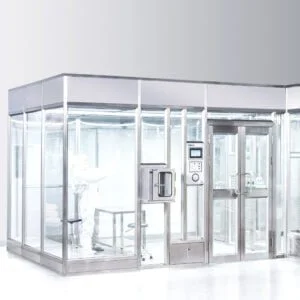
As salas limpas com painéis rígidos podem atender a ambientes que vão da Classe ISO 1 até a Classe ISO 4, nos quais são necessárias uniformidade do fluxo laminar, contagem de partículas extremamente baixa e controle preciso da pressão. Os sistemas de paredes flexíveis — construídos com cortinas de vinil flexíveis — estão funcionalmente limitados a ambientes das classes ISO 7 e ISO 8. Essa lacuna não é uma restrição insignificante: ela elimina as paredes flexíveis como opção para qualquer processo operando na classe ISO 5 ou mais rigorosa, independentemente do equipamento de filtragem instalado no interior. Os limites de classificação sob ISO 14644-1:2015 definir limites de concentração de partículas por classe, e a integridade das barreiras do recinto é um dos fatores que garantem a reprodutibilidade dessas concentrações.
A estabilidade da pressão agrava o problema. As salas limpas com paredes rígidas que utilizam sistemas de recirculação de ar podem manter diferenciais de pressão estática suficientes para impedir a intrusão de partículas em classificações mais exigentes. As salas com paredes flexíveis dependem de configurações de ar de passagem única e de divisórias com cortinas flexíveis que não garantem o mesmo controle de pressão. Isso não é uma deficiência de projeto nos sistemas de paredes flexíveis — reflete, na verdade, a finalidade para a qual foram construídos. O problema surge quando uma equipe de projeto trata a pressão como algo que os procedimentos operacionais podem compensar, em vez de algo que a estrutura da sala deve suportar desde o início.
| Recurso | Sala limpa com paredes rígidas | Sala Limpa Softwall |
|---|---|---|
| Faixa de classes ISO | Classe ISO 1–4 | Classe ISO 7–8 |
| Sistema de ar | Recirculação de ar (melhor controle de temperatura e umidade) | Sistema de ar de passagem única |
| Capacidade de pressão estática | Maior pressão estática, maior prevenção contra a intrusão de partículas | Pressão estática mais baixa, adequada para ambientes menos exigentes |
Confirmar a classe ISO e os requisitos de pressão antes de avaliar qualquer outro fator evita que se chegue a uma situação em que um tipo de parede seja selecionado, contratado e instalado antes que alguém tenha verificado se ele é fisicamente capaz de suportar a classificação exigida pelo processo.
Durabilidade das paredes rígidas versus flexibilidade das paredes flexíveis
Uma vez confirmada a classificação e com ambas as opções ainda viáveis, a comparação passa a se concentrar no que cada tipo de construção realmente oferece ao longo de sua vida útil — e em que aspectos cada um gera custos operacionais.
Compartimentos com painéis rígidos fabricados em aço inoxidável, acrílico ou HDPE oferecem superfícies que resistem ao desgaste mecânico, toleram limpezas químicas repetidas sem degradação e não acumulam partículas da mesma forma que os materiais porosos ou flexíveis. Essa característica de superfície não porosa é importante em ambientes de alto tráfego: a carga de validação da limpeza é menor, os ciclos de limpeza são mais previsíveis e a contribuição da sala para a geração de partículas permanece controlada. A estabilidade estrutural também suporta equipamentos de processo mais pesados e alto fluxo de pessoal sem introduzir variações físicas nos limites do gabinete.
Os sistemas de paredes flexíveis oferecem um conjunto diferente de recursos. As divisórias de cortina de vinil podem ser reconfiguradas rapidamente, as seções podem ser realocadas e, quando a sala é montada sobre uma estrutura com rodízios, todo o compartimento pode ser reposicionado sobre as máquinas ou em uma zona diferente da instalação sem a necessidade de desativação. A desvantagem é que as cortinas de vinil acumulam contaminação mais rapidamente do que os painéis sólidos, se degradam com o tempo devido ao uso de produtos químicos de limpeza agressivos e podem liberar gases orgânicos voláteis (VOCs), o que gera uma preocupação secundária com a compatibilidade de materiais, dependendo do processo. Esse último ponto costuma ser subestimado durante a elaboração das especificações: o ganho inicial de flexibilidade pode ser compensado por um ônus contínuo de limpeza e mitigação de materiais que não foi considerado na estimativa de custos operacionais.
| Aspecto | Sala limpa com paredes rígidas | Sala Limpa Softwall |
|---|---|---|
| Material do painel | Painéis pré-fabricados sólidos (aço inoxidável, acrílico, HDPE) | Cortinas de vinil flexíveis |
| Durabilidade e facilidade de limpeza | Altamente durável, não poroso, fácil de limpar | Menos durável, requer limpeza mais frequente |
| Reconfiguração e realocação | Baixa adaptabilidade, difícil de mudar ou expandir | Alta adaptabilidade, fácil de ser deslocado, ampliado e reconfigurado |
A escolha estrutural não é entre uma opção melhor e outra pior — é entre duas distribuições de risco diferentes. A parede rígida fixa a planta baixa em troca de durabilidade e menor carga de limpeza. A parede flexível aceita um desgaste mais rápido e um gerenciamento de limpeza mais rigoroso em troca da capacidade de reconfiguração. A distribuição mais adequada ao projeto depende do grau de estabilidade esperado para o layout do processo e do nível de rigor exigido pelo regime de limpeza.
Velocidade de instalação, custo ao longo do ciclo de vida e compromissos relacionados à expansão
Os prazos de instalação não são os mesmos que os prazos totais do projeto, mas afetam quando uma sala limpa pode ser qualificada, quando a produção pode começar e qual a margem de tempo disponível caso o projeto já esteja atrasado. Os sistemas de parede flexível (softwall) geralmente podem ser montados em questão de horas ou dias; já os sistemas de parede rígida (hardwall), com painéis rígidos, levam semanas para serem instalados, com tempo adicional necessário para vedação, comissionamento e verificações de pré-qualificação. Essa diferença é significativa para projetos com prazos rígidos de entrada em operação, mas não altera qual sistema é apropriado para a classificação — ela afeta apenas quando o sistema apropriado entra em operação.
A diferença no custo inicial é real, mas não leva em conta as divergências ao longo do ciclo de vida da instalação. Uma sala com paredes flexíveis que exija a substituição de cortinas de vinil, intervenções de limpeza mais frequentes ou reconfiguração após mudanças no layout acarreta custos que não constam no pedido de compra inicial. Uma sala com paredes rígidas, com maior investimento inicial, pode apresentar menor custo de mão de obra para limpeza, maior vida útil dos painéis e menos interrupções nas operações controladas ao longo de um período operacional de cinco a dez anos. Não há garantia de que uma das opções seja mais econômica ao longo do tempo — o cálculo do ciclo de vida depende da frequência de limpeza, da intensidade do tráfego e da estabilidade do layout do processo —, mas a escolha baseada apenas no preço de compra, sem levar em conta essas variáveis, é onde frequentemente ocorre a inversão.
O consumo de energia acrescenta outra dimensão que é fácil de omitir da comparação inicial. Salas com paredes flexíveis que utilizam sistemas de ventilação de passagem única tendem a apresentar menores requisitos de carga mecânica devido à sua estrutura leve, o que pode reduzir o custo de energia operacional. Essa vantagem de eficiência diminui se o sistema de passagem única exigir taxas de renovação de ar mais elevadas para manter um determinado nível de classificação, mas é um fator que vale a pena incluir em qualquer modelo de custo de ciclo de vida, em vez de tratar os sistemas como equivalentes em termos de despesas operacionais.
| Fator | Sala limpa com paredes rígidas | Sala Limpa Softwall |
|---|---|---|
| Tempo de instalação | Semanas | De horas a dias |
| Custo inicial | Custo inicial mais alto | Menor custo inicial |
| Vida útil/Durabilidade | Maior vida útil, maior durabilidade estrutural | Vida útil mais curta; pode se desgastar mais cedo |
| Eficiência energética | Menos eficiente em termos de energia | Maior eficiência energética (estrutura leve, circulação de ar em uma única passagem) |
| Mobilidade | Estrutura fixa, difícil de ser movida | Pode ser montado sobre rodízios e se deslocar sobre máquinas |
A mobilidade merece uma análise à parte, pois altera completamente a lógica de expansão. Um sistema de paredes flexíveis montado em uma estrutura com rodízios pode ser reposicionado à medida que a instalação evolui — acomodando novas áreas ocupadas por equipamentos, isolamento temporário de processos ou mudanças no layout sem a necessidade de obras. Uma sala com paredes rígidas não pode ser realocada sem o descomissionamento total. Para instalações nas quais se prevê que a área ocupada pelos processos mude dentro de dois a três anos, essa diferença estrutural em termos de adaptabilidade pode superar a vantagem de durabilidade dos painéis rígidos já na fase de planejamento.
Para se ter uma visão mais ampla de como as decisões relativas à construção modular interagem com os cronogramas de planejamento das instalações, o Guia Completo sobre Salas Limpas Modulares aborda considerações sobre projeto e implementação para ambos os tipos de gabinete.
Risco de retrabalho decorrente da escolha baseada exclusivamente no preço inicial
O padrão de falha mais comum na seleção de sistemas do tipo parede não é escolher o sistema errado — é tomar uma decisão antes que a avaliação de classificação esteja concluída. Quando uma equipe de compras solicita cotações antes de confirmar a classe ISO, os requisitos de pressão, o regime de limpeza, a carga de tráfego e a estabilidade esperada do layout, a comparação de preços ocorre com base em uma especificação incompleta. A cotação mais baixa ganha o contrato para um sistema que talvez não seja capaz de atender aos requisitos operacionais que o processo realmente exige.
A consequência da retrabalho é previsível assim que ocorre: uma sala com parede flexível, projetada com foco no custo, que não consegue atender à classificação exigida é sinalizada durante a qualificação; o compartimento precisa ser removido, e um sistema de parede rígida é adquirido e instalado sob pressão de tempo, com o cronograma original já esgotado. Essa sequência não apenas duplica os custos de capital — ela comprime o prazo de qualificação, pode forçar atrasos nos processos e, em ambientes regulamentados, pode exigir uma investigação documentada do desvio antes que o sistema de substituição possa ser aceito.
Uma classificação estruturada de riscos antes da aquisição — em consonância com o tipo de avaliação de riscos pré-decisória que ICH Q9(R1) — como parte do raciocínio geral de gestão de riscos — deve-se primeiro confirmar a classe ISO, depois os requisitos de pressão, em seguida a limpeza e a carga de tráfego, depois a probabilidade de modificação, antes que o custo seja introduzido como fator de seleção. Esse não é um processo que acrescente tempo significativo à aquisição: as informações geralmente já estão disponíveis na engenharia de processos antes da emissão de uma especificação. O atrito é organizacional — o custo é visível e imediato; o custo de retrabalho é contingente e diferido, o que torna fácil subestimá-lo até que ele se concretize.
A versão mais grave desse modo de falha envolve salas com paredes flexíveis que são aprovadas na qualificação inicial na Classe 7 ou 8 da ISO, mas que depois enfrentam uma atualização do processo que torna os requisitos de classificação mais rigorosos. Como a sala com paredes flexíveis não pode ser adaptada para atender a uma classe mais rigorosa — a restrição física é estrutural, não procedural —, a instalação precisa ser reconstruída, em vez de ser adaptada. Esse resultado não é uma falha de funcionamento; trata-se de uma premissa de projeto que não foi reavaliada quando os requisitos do processo mudaram. Documentar o limite máximo de classificação do tipo de parede selecionado como uma limitação de projeto durante a aquisição inicial cria um gatilho explícito para revisão caso os requisitos do processo evoluam, o que é uma medida simples que, como mostram a maioria dos casos de retrabalho, não foi adotada.
Ponto de decisão após a classificação das necessidades relacionadas ao tráfego, limpeza e modificações
Com a classificação confirmada e o custo do ciclo de vida estimada de forma aproximada, os critérios finais de seleção entram em ação: como a sala será limpa, quais cargas de equipamentos e pessoal ela suportará e qual é a probabilidade de alteração do layout. Essas não são questões abstratas de planejamento — elas determinam se o tipo de compartimento escolhido permanecerá controlável e estruturalmente sólido durante todo o período de operação previsto.
A facilidade de limpeza da superfície é o fator operacional mais direto que diferencia os dois tipos. As superfícies dos painéis de parede rígida — sólidas, não porosas e resistentes a produtos químicos — permitem que a validação da limpeza seja definida com alta confiança e mantida de forma consistente ao longo dos ciclos de limpeza. As cortinas de vinil de parede flexível acumulam partículas na textura da superfície, toleram uma gama mais restrita de agentes de limpeza sem acelerar a degradação do material e exigem intervenções mais frequentes para manter o mesmo padrão ambiental de referência. Esse aumento na frequência de limpeza não é apenas uma questão de custo de mão de obra: representa uma perturbação mais frequente do ambiente controlado, mais entradas e saídas de pessoal e mais oportunidades para eventos de contaminação relacionados à limpeza, caso o procedimento não seja seguido com precisão.
A liberação de COVs do material de cortina de vinil é um risco que deve ser verificado quanto à compatibilidade com o processo antes da especificação da parede flexível, especialmente em ambientes farmacêuticos ou de biotecnologia, onde traços de contaminação química podem afetar a qualidade do produto. Não se trata de um resultado certo de contaminação — é uma questão de compatibilidade de materiais que requer confirmação. Se o processo não puder tolerar COVs provenientes do vinil, a parede flexível é descartada, independentemente da classificação. Caso a compatibilidade possa ser confirmada, as medidas de mitigação devem ser documentadas como parte do procedimento operacional, não se devendo presumir que elas sejam desnecessárias.
A capacidade de carga e de tráfego definem o limite estrutural máximo da viabilidade das paredes flexíveis. Nos casos em que os equipamentos de processo são pesados, o fluxo de pessoal é elevado ou os ciclos de vestimenta e transferência de materiais são frequentes, as paredes flexíveis introduzem uma variabilidade física que afeta a consistência da pressão e o controle de partículas. As salas com paredes rígidas são construídas para absorver esse tráfego sem resposta estrutural; os sistemas de paredes flexíveis são adequados para equipamentos mais leves e acesso de menor frequência.
| Considerações | Sala limpa com paredes rígidas | Sala Limpa Softwall |
|---|---|---|
| Facilidade de limpeza da superfície | Não poroso, fácil de limpar, minimiza a geração de partículas | Mais propenso ao acúmulo de poeira, requer limpeza mais frequente |
| Liberação de COV | Risco mínimo | O vinil pode liberar COVs, o que exige medidas de mitigação |
| Carga de equipamentos e tráfego | Adequado para equipamentos pesados e tráfego intenso | Indicado para equipamentos mais leves e tráfego reduzido |
Quando esses fatores já foram classificados em relação aos requisitos reais do processo, a escolha do tipo de parede geralmente já está determinada, e não mais em aberto. A decisão não é entre duas opções comparáveis ponderadas pelo preço — é entre uma opção que se encaixa no perfil operacional e outra que não se encaixa. Quando ambas permanecem viáveis após a aplicação de todos os filtros, o custo e o prazo de instalação tornam-se os critérios legítimos para desempate. Essa é a ordem correta de análise, e invertê-la é o que gera retrabalho.
Especificações para salas limpas modulares com paredes rígidas e salas limpas com paredes macias Informações sobre materiais dos painéis de revestimento, compatibilidade com o sistema de ventilação e configurações dimensionais podem servir de base para a análise de engenharia, uma vez que os critérios de seleção tenham sido classificados.
Antes da emissão de qualquer especificação relativa ao tipo de parede, o registro de aquisição deve documentar claramente a classe ISO que a sala deve atingir, o diferencial de pressão exigido pelo processo, o regime de limpeza que a sala deve manter e se se espera que o layout permaneça estável ou sofra alterações durante o período de operação previsto. Esses quatro itens determinam quais tipos de parede são viáveis antes mesmo de o custo ser considerado na comparação.
Quando ambas as opções continuam tecnicamente viáveis após essa classificação, o modelo de custo do ciclo de vida — e não o preço de compra — é a base adequada para a decisão final. Uma sala com paredes flexíveis que acumule trabalho de limpeza, se desgaste mais rapidamente com o tráfego ou exija substituição antes que uma alternativa com paredes rígidas precisasse de sua primeira manutenção não proporciona a economia sugerida pelo seu preço de compra. Confirmar essas projeções operacionais com base em dados reais da instalação antes do fechamento da aquisição é a verificação final que evita que a inversão de custos venha à tona após a assinatura do contrato.
Perguntas frequentes
P: Uma sala limpa com paredes flexíveis pode ser adaptada para atender a uma classe ISO mais rigorosa caso os requisitos do processo mudem posteriormente?
R: Não — o limite máximo de classificação de um sistema de parede flexível é uma restrição estrutural, não procedural; portanto, não pode ser elevado pela adição de filtragem ou pelo endurecimento dos procedimentos operacionais. As divisórias de cortina de vinil flexível não são capazes de suportar os diferenciais de pressão ou a uniformidade do fluxo laminar exigidos para a Classe 5 da ISO ou níveis mais restritivos, o que significa que uma atualização do processo que ultrapasse esse limite exige o descomissionamento total e a substituição por um compartimento com painéis rígidos. A medida de segurança prática consiste em documentar o limite máximo de classificação como uma limitação explícita do projeto na fase de aquisição, criando um gatilho formal para reavaliação caso os requisitos do processo evoluam, em vez de se descobrir a restrição durante um evento de qualificação.
P: O que acontece com a comparação de custos ao longo do ciclo de vida se for previsto que o layout da instalação mude dentro de dois a três anos?
R: A instabilidade do layout inclina o cálculo para a opção de parede flexível, mas somente se a classificação permanecer na Classe ISO 7 ou 8. Um sistema de parede flexível montado em uma estrutura com rodízios pode ser reposicionado sem a necessidade de obra, o que evita o custo total de desativação exigido pela realocação de uma sala com parede rígida. No entanto, se a mudança no layout coincidir com uma atualização do processo que torne a classe ISO mais restritiva, a vantagem da flexibilidade desaparece completamente — a sala deverá ser substituída de qualquer maneira. Projetar conjuntamente a probabilidade de realocação e a probabilidade de mudança de classificação, em vez de tratá-las como variáveis independentes, fornece uma base mais precisa para o modelo de custo do ciclo de vida.
P: A liberação de gases do vinil das cortinas de parede flexível sempre impede o uso dessas cortinas em aplicações farmacêuticas ou biotecnológicas?
R: Não automaticamente, mas isso deve ser confirmado, em vez de simplesmente presumir que não haja. O material das cortinas de vinil pode liberar gases orgânicos voláteis (VOCs), o que cria um risco de contaminação química em traços, e a aceitabilidade desse risco depende do processo específico e da sensibilidade do produto envolvido. A etapa de qualificação consiste em verificar a compatibilidade do material entre as especificações da cortina e o ambiente do processo antes da contratação da cortina de vinil — e não após a instalação. Se a compatibilidade for confirmada, as medidas de mitigação devem ser incluídas no procedimento operacional como um controle documentado. Se não for possível confirmá-la, a cortina de vinil é desqualificada por motivos relacionados ao material, independentemente da classificação ISO.
P: Após a seleção e a contratação do tipo de parede, qual é a primeira etapa após a aquisição, antes do início da instalação?
R: O primeiro passo é confirmar que a documentação de projeto da sala — abrangendo materiais dos painéis, configuração do sistema de ventilação, metas de diferencial de pressão e layout dimensional — seja revisada em relação à especificação finalizada do processo antes do início de qualquer fabricação ou preparação do local. Alterações na área ocupada pelos equipamentos de processo, nas conexões de serviços públicos ou nos protocolos de vestimenta que surjam entre a adjudicação do contrato e a instalação são mais fáceis e baratas de resolver na fase de projeto do que após a fabricação dos painéis ou quando o local já estiver parcialmente preparado. Essa revisão também estabelece a documentação de referência necessária para as fases subsequentes de qualificação e validação, que a norma ISO 14644-4:2022 aborda como parte dos requisitos de projeto e início da construção.
P: Se tanto a parede rígida quanto a parede flexível forem tecnicamente viáveis após a aplicação de todos os filtros de classificação e operacionais, a velocidade de instalação é um critério legítimo para desempate ou ela traz riscos próprios?
R: A velocidade de instalação é um critério legítimo de desempate nesse cenário, mas deve ser ponderada em relação ao tempo de comissionamento e qualificação que se segue à instalação, e não tratada como equivalente ao tempo até o início das operações. Um sistema de parede flexível instalado em poucos dias ainda requer monitoramento ambiental, verificação de pressão e etapas de qualificação antes do início das operações controladas — e comprimir esse cronograma para cumprir uma data de entrada em operação introduz um risco de qualificação que pode causar um atraso maior do que o tempo economizado na instalação. Quando ambos os tipos de parede são genuinamente equivalentes em critérios operacionais, usar a velocidade de instalação como fator decisivo só é razoável se o cronograma de qualificação pós-instalação também for modelado de forma realista e não se presuma que ele se comprima proporcionalmente à fase de construção.