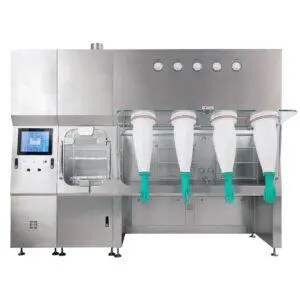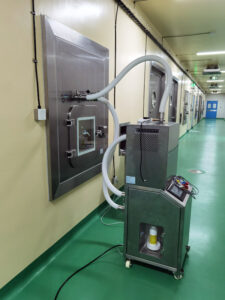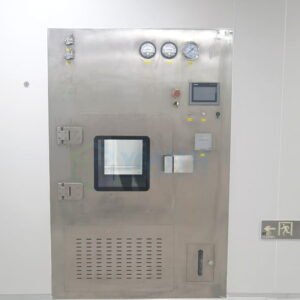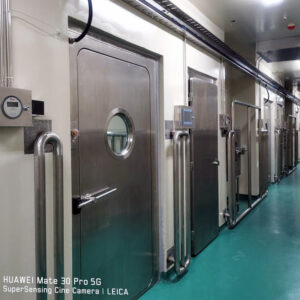
Listas de equipamentos elaboradas a partir de catálogos de produtos, em vez de uma lógica baseada nas especificações da sala, tendem a falhar justamente no momento em que mais importam: o comissionamento e a validação. Uma passagem sem intertravamento que permite perda por diferencial de pressão, ou um chuveiro de ar com uma superfície que não pode ser limpa com desinfetante estéril, não aparece como uma lacuna durante o planejamento — ela surge como uma via de contaminação documentada quando as equipes de qualificação começam os testes. Corrigir uma especificação de material ou de intertravamento nessa fase normalmente significa atraso na aquisição, possível refabricação e um reinício da qualificação para o limite afetado. As decisões que evitam isso são tomadas mais cedo, quando cada área de produção recebe uma classificação ISO, uma finalidade de controle de contaminação e uma família de produtos — antes que um único item chegue ao setor de compras. O que se segue oferece aos engenheiros e às equipes de controle de qualidade uma base estruturada para avaliar se sua lista foi elaborada com base nesses fundamentos ou apenas em torno deles.
Lista de equipamentos para salas limpas farmacêuticas, classificados por área
O nível de classificação influencia a escolha do equipamento mais do que a categoria de produção. Tanto uma área de dosagem sólida oral não estéril quanto uma unidade de envase asséptico existem na fabricação farmacêutica, mas a lógica de equipamento que as rege é tão diferente que uma lista comum gera incompatibilidades em ambas as direções — especificações excessivas na área de menor risco e especificações insuficientes na área crítica.
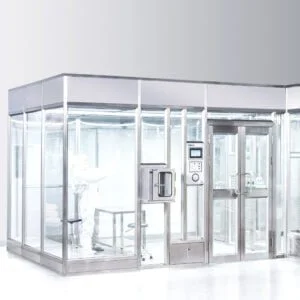
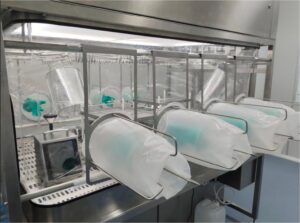
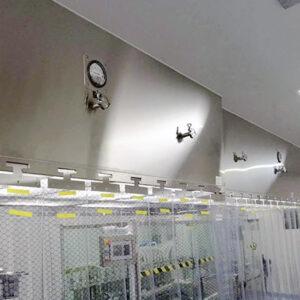
Para operações de dosagem oral de sólidos não estéreis e amostragem de materiais, condições da Classe 7 ou 8 da ISO são normalmente adequadas. Uma configuração de sala limpa com paredes flexíveis pode atender a essas condições com menor custo de construção e maior flexibilidade de layout do que um recinto com paredes rígidas. Aplicar uma especificação de paredes rígidas a essas zonas não é uma medida de segurança — é um padrão não questionado que aumenta os custos sem oferecer um controle de contaminação relevante para o risco do processo em questão.
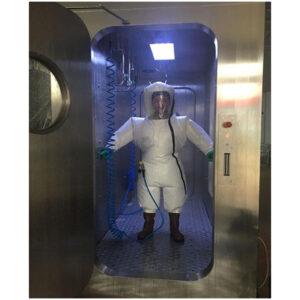
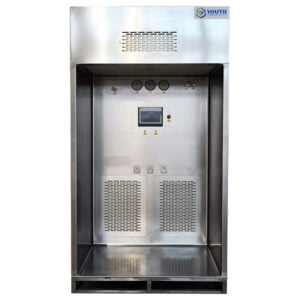
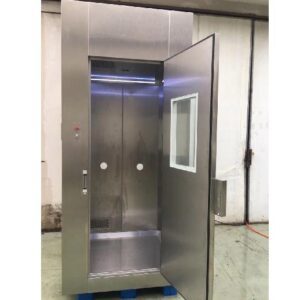
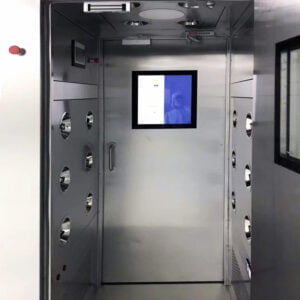
A entrada asséptica é um caso à parte. O chuveiro de ar nessa zona de transição precisa ser especificado em aço inoxidável, não porque o aço inoxidável seja uma opção estética preferida, mas porque é a única superfície que suporta de forma confiável a limpeza com desinfetante estéril. Um chuveiro de ar padrão com revestimento em pó ou pintado não pode ser higienizado efetivamente por esse método; resíduos se acumulam nas juntas e imperfeições da superfície de forma a criar um risco persistente de carga biológica no ponto de entrada na zona mais crítica da instalação.
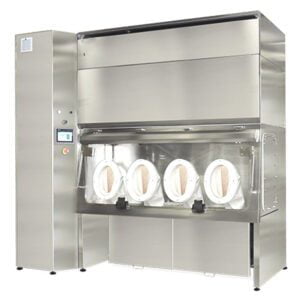
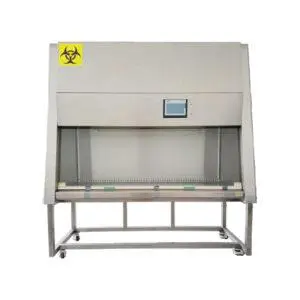
As salas tampão para operações de manipulação farmacêutica de acordo com a norma USP 797 apresentam uma terceira configuração: a própria sala deve atender às condições da Classe 7 da ISO, mas sua função específica é abrigar uma cabine de segurança biológica ou uma cabine de fluxo laminar na estação de trabalho crítica. A lista de equipamentos para essa área precisa refletir ambas as camadas — a classificação da sala e o dispositivo de proteção local —, pois nenhuma delas substitui a outra.
| Área / Aplicação | Tipo de equipamento | Principais especificações | Por que é importante |
|---|---|---|---|
| Amostragem de materiais e dosagens sólidas orais não estéreis | Sala limpa com paredes flexíveis | Classe ISO 7/8 | Evita a especificação excessiva de salas limpas com paredes rígidas para zonas de baixo risco, reduzindo custos e complexidade |
| Entrada asséptica | Chuveiro de ar em aço inoxidável | O aço inoxidável permite a limpeza com desinfetante estéril | Evita a contaminação causada por resíduos em superfícies que não sejam de aço inoxidável e contribui para os protocolos de higienização |
| Sala de preparação de tampões (USP 797) | Compartimento de classe 7 da ISO ao redor da cabine de segurança biológica ou da cabine de fluxo laminar | O compartimento proporciona um ambiente em conformidade com a norma ISO 7 ao redor da zona de trabalho crítica | Garante que a lista de equipamentos corresponda à função específica de controle de contaminação das salas tampão |
O padrão comum às três configurações é que o tipo de equipamento decorre da classificação e da finalidade de controle de contaminação, e não de uma lista geral do que as salas limpas contêm. Quando essa lógica é invertida, a lista tende a deixar de fora os itens mais importantes, ao mesmo tempo em que especifica em detalhes os menos importantes.
Necessidades relacionadas a ambientes assépticos, formas farmacêuticas sólidas orais, biotecnologia, transferência e salas de apoio
Cada área de produção tem uma obrigação específica de controle de contaminação, e os equipamentos que cumprem essa obrigação não são intercambiáveis entre as áreas, mesmo quando as categorias de produtos parecem semelhantes.
Para formas farmacêuticas sólidas orais, os parâmetros de projeto relevantes são a temperatura na faixa de 68°F a 72°F e a umidade relativa entre 30% e 50%. Esses são parâmetros de planejamento que refletem a sensibilidade do produto — estabilidade do comprimido e comportamento de dissolução —, e não limites regulatórios codificados por uma única norma vigente. Excedê-los não aciona automaticamente uma notificação de não conformidade, mas cria um risco à qualidade do produto que pode se acumular sem ser detectado até que os testes de estabilidade apresentem falha.
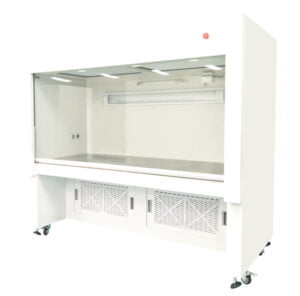
As estações de trabalho críticas assépticas exigem um fluxo de ar unidirecional de Classe 5 da ISO, o que, na prática, significa um fluxo horizontal ou vertical unidade de fluxo de ar laminar posicionados em cada ponto de exposição. A função não é a melhoria geral da qualidade do ar — trata-se da manutenção de uma cortina de fluxo de ar controlada e direcionada sobre a zona de exposição do produto, que impede a deposição de partículas vindas de cima ou a entrada lateral. Uma sala de Classe 7 da ISO sem fluxo unidirecional local na estação de trabalho crítica não atende ao objetivo de garantia de esterilidade dessa estação, independentemente da contagem de partículas no nível da sala.
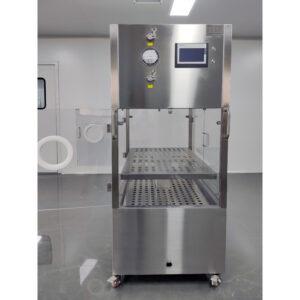
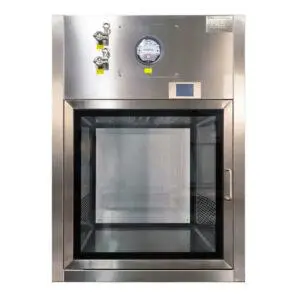
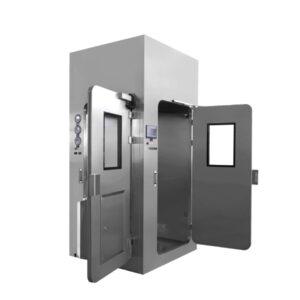
O projeto da área de transferência é onde as listas de equipamentos costumam apresentar falhas de precisão. O Anexo 1 das BPF da UE é explícito quanto à importância de manter diferenciais de pressão entre áreas adjacentes na fabricação asséptica, e uma passagem sem intertravamento mecânico representa uma falha estrutural nessa integridade: quando ambas as portas estão abertas simultaneamente — mesmo que por um breve momento —, o diferencial de pressão entre as duas áreas pode ser perdido, e o fluxo de ar pode se inverter. O intertravamento não é um recurso de conveniência; é o mecanismo que preserva a barreira.
| Área | Requisito crítico | Equipamentos / Solução de projeto | Risco em caso de não cumprimento |
|---|---|---|---|
| Forma farmacêutica oral sólida | Manter a temperatura entre 68°F e 72°F e a umidade relativa entre 30 e 50% | Equipamentos de controle de temperatura e umidade | Degradação do produto; estabilidade do comprimido e falha na dissolução |
| Estação de trabalho crítica asséptica | Fluxo de ar unidirecional da Classe 5 da ISO | Capa de fluxo laminar horizontal ou vertical | Garantia de esterilidade comprometida |
| Áreas de transferência | Evite a queda de pressão e a entrada de contaminantes | Passagens com intertravamento mecânico | A perda por diferença de pressão pode reverter o fluxo de ar, fazendo com que ar não classificado seja aspirado para dentro da sala limpa |
| Vestiários | Acomodar todo o pessoal sem que haja aglomeração | Sala com dimensões adequadas e fluxo eficiente de entrada e saída | A aglomeração aumenta o risco de contaminação cruzada durante a colocação e a retirada do equipamento de proteção individual |
| Manuseio de pós | Capturar pós em suspensão no ar e vapores orgânicos | Capô de contenção de pó com velocidade frontal ajustável | As coifas de velocidade fixa podem não conseguir capturar poeira em grandes quantidades ou compostos voláteis, o que pode levar à exposição do operador |
O dimensionamento do método de transferência com base nas dimensões dos itens é um critério de planejamento relacionado que tende a ser resolvido de maneira informal e tardiamente. Utilizar um corredor de passagem onde é necessária uma sala de transferência de materiais, ou uma sala de transferência de materiais onde é necessária uma porta enrolável motorizada, cria gargalos físicos durante as operações e pode forçar soluções alternativas que violam os limites da classificação das salas.
| Tamanho do item | Método de transferência | Risco de uso de método incorreto |
|---|---|---|
| Itens pequenos | Passagem com intertravamento mecânico | A utilização de um método de maior porte pode comprometer a classificação das salas ou criar gargalos físicos |
| Itens grandes | Sala de transferência de materiais | O dimensionamento inadequado compromete o controle da pressão e das partículas |
| Itens muito grandes | Porta enrolável motorizada | O uso de métodos com capacidade insuficiente gera gargalos físicos e aumenta o risco de contaminação |
Os vestiários e as áreas de manuseio de pó são funções de salas de apoio que, rotineiramente, são subdimensionadas em relação ao seu papel no controle de contaminação. Uma sala de vestimenta com dimensões insuficientes concentra o pessoal durante as trocas de turno, aumentando a geração de partículas e o risco de contaminação cruzada durante o processo de vestir e despir os trajes. Exaustores de contenção de pó com velocidade frontal fixa podem não conseguir capturar poeira em grande quantidade ou compostos voláteis durante a granulação ou moagem, expondo tanto os operadores quanto as áreas adjacentes à contaminação cruzada que um exaustor devidamente ajustável teria controlado.
Mapeamento da família de produtos para o risco de processo
Especificar uma família de produtos — filtragem HEPA, capelas de fluxo laminar, unidades de filtragem com ventilador, câmaras de passagem — sem vinculá-la à classificação ISO da área e ao ambiente químico resulta em uma lista que parece completa, mas apresenta lacunas ocultas.
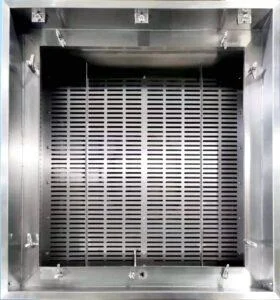
Os limites de eficiência dos filtros são o exemplo mais claro. Filtros HEPA com classificação de eficiência de 99,97% para partículas ≥0,3 µm são adequados para ambientes das classes ISO 5 a 7. Quando o risco do processo exige maior remoção de partículas — certas aplicações biotecnológicas, radiofarmácia ou trabalhos com semicondutores de altíssima sensibilidade —, a filtragem ULPA com classificação de eficiência de 99,999% para partículas ≥0,12 µm é a especificação relevante. A escolha de um filtro HEPA para uma área que exige desempenho ULPA não representa apenas uma pequena deficiência de eficiência; trata-se de uma especificação que não consegue atender aos limites de partículas para aquela classe ISO, o que se torna evidente durante os testes de qualificação, e não durante a aquisição.
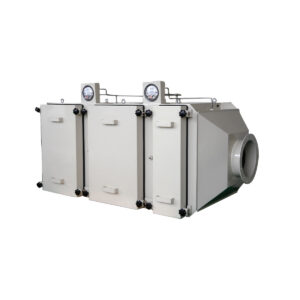
Uma especificação genérica de filtro exclusivamente HEPA também ignora completamente os riscos específicos de substâncias químicas. Áreas com exposição a solventes, geração de gases ácidos, formaldeído ou amônia exigem meios filtrantes específicos para essas substâncias — filtros de carvão ativado, de gases ácidos, de amônia ou de formaldeído — além da filtragem de partículas. Omitir essas famílias de filtros da lista porque a análise de risco do produto se concentrou em partículas, em vez de na contaminação química, é uma lacuna no planejamento que afeta tanto a qualidade do produto quanto a segurança do operador.
| Tipo de filtro | Eficiência / Função | Aplicação típica | Risco em caso de omissão |
|---|---|---|---|
| Pré-filtros | Prolonga a vida útil dos filtros primários de alta eficiência | Pré-filtragem em todas as áreas | Entupimento rápido dos filtros HEPA/ULPA |
| HEPA | 99.971 TP10T ≥ 0,3 µm | Áreas ISO 5–7 | Os limites de partículas para a classe ISO podem ser excedidos |
| ULPA | 99,999% ≥ 0,12 µm | Zonas de maior risco | Remoção insuficiente de partículas para aplicações críticas |
| Filtros específicos para substâncias químicas (gás ácido, carvão ativado, gás amônia, formaldeído, mercúrio, iodo radioativo) | Remover contaminantes químicos específicos | Áreas com riscos químicos identificados | A contaminação cruzada química afeta a qualidade do produto ou a segurança do operador |
A seleção de materiais para passagens e chuveiros de ar segue a mesma lógica. O aço inoxidável é o material adequado para qualquer equipamento de transferência ou entrada que seja limpo com desinfetante estéril em zonas assépticas. O polipropileno é adequado quando a resistência química a agentes de limpeza agressivos é a principal preocupação. A construção revestida com chumbo é necessária quando a proteção contra radiação faz parte da função de controle de contaminação. Nenhuma dessas opções é uma escolha padrão universal — cada uma é a especificação correta para um contexto de risco definido.
| Equipamentos | Contexto de risco | Material | Por que é importante |
|---|---|---|---|
| Superfície da parede | Risco de contaminação leve | Melamina/vinil | Materiais inadequados podem liberar partículas ou apresentar falhas químicas |
| Superfície da parede | Resistência química em produtos farmacêuticos | PRFV | Danos químicos ou liberação de partículas caso seja utilizada uma superfície inadequada |
| Superfície da parede | Processos sensíveis à eletricidade estática (eletrônica) | Alumínio pintado com propriedades dissipadoras de estática | A descarga estática compromete a integridade da sala limpa |
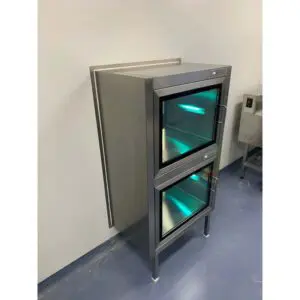
| Pass-thru | Áreas de limpeza com toalhetes esterilizados | Aço inoxidável | O material não inoxidável impede uma desinfecção eficaz |
| Pass-thru | É necessária resistência química | Polipropileno | A incompatibilidade de materiais impede o manuseio adequado de produtos químicos |
| Pass-thru | Proteção contra radiação | Revestido com chumbo | Via de vazamento de radiação, caso não haja blindagem |
| Ducha de ar | Áreas assépticas que exigem desinfetante estéril | Aço inoxidável | Os chuveiros de ar que não são de aço inoxidável não podem ser higienizados de forma eficaz |
| Ducha de ar | Entradas menos críticas | Padrão ou com parede flexível | A especificação excessiva de materiais aumenta o custo sem trazer benefícios em termos de risco |
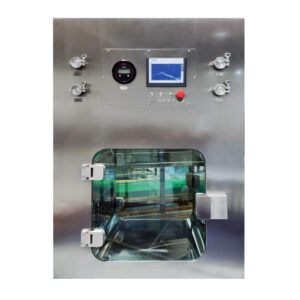
A caixa de passe dinâmica com filtragem HEPA e intertravamento mecânico representa uma escolha específica de família de produtos para percursos críticos de transferência. Substituir uma câmara de passagem estática padrão nessa aplicação não é uma alternativa equivalente em termos de custo — trata-se de um produto diferente, com capacidade diferente de controle de contaminação. O valor de mapear cada área para uma família de produtos antes da aquisição reside precisamente no fato de que isso torna essas distinções explícitas e evita substituições que parecem equivalentes em uma comparação de itens de linha, mas não são equivalentes em termos de controle de contaminação.
Erros na construção de listas que ignoram pontos de controle críticos
Os erros que mais frequentemente geram problemas em etapas posteriores compartilham uma estrutura comum: eles são imperceptíveis durante as etapas de aquisição e planejamento, e só se tornam visíveis no momento do comissionamento ou da validação — em uma fase em que a correção causa interrupções, em vez de ser uma tarefa rotineira.
O erro estruturalmente mais significativo é a omissão de um intertravamento mecânico nas passagens entre áreas com diferenças de pressão definidas. Uma passagem sem intertravamento não apresenta falha imediata ou evidente. Ela falha em condições normais de operação — uma porta aberta descuidadamente, a pressa na troca de turno — e o modo de falha é o colapso devido à diferença de pressão, seguido pela reversão do fluxo de ar. Essa reversão pode puxar ar não classificado para dentro da sala limpa sem acionar nenhum alarme e, sem um intertravamento mecânico, não há controle de engenharia que impeça que isso aconteça repetidamente. Quando isso é identificado durante a validação, a especificação da passagem precisa ser alterada, o que significa novos equipamentos, nova instalação e requalificação do limite.
A negligência em relação às superfícies de aço inoxidável em zonas assépticas apresenta um perfil semelhante. Superfícies que não são de aço inoxidável — aço pintado, alumínio com revestimento em pó, policarbonato padrão — absorvem desinfetantes, sofrem corrosão com o tempo ou desenvolvem irregularidades superficiais que abrigam carga biológica viável. A falha não é mecânica; é microbiológica e tende a se acumular, em vez de se manifestar como um evento isolado. Uma área asséptica em que a câmara de ar, a passagem ou a superfície do equipamento não possam ser higienizadas de forma eficaz com desinfetante estéril apresenta uma via de contaminação persistente que um protocolo de desinfecção não consegue eliminar, independentemente da frequência.
A filtragem HEPA em passagens de caminho crítico é frequentemente omitida das listas de equipamentos, pois a passagem é classificada como um componente de transferência, e não como um componente de filtragem. Quando a porta entre uma área menos limpa e uma área limpa é aberta, o ar do lado menos limpo entra na zona de transição. Sem uma cortina de ar filtrado, as partículas entram na zona limpa nesse momento. O formato da câmara de transferência dinâmica resolve esse problema ao manter um fluxo de ar filtrado por HEPA através da câmara de transferência, mas requer que seja especificado como a família de produtos para essa aplicação — não pode ser instalado posteriormente após a instalação de uma unidade estática padrão.
| Erro | Por que é importante | O que confirmar |
|---|---|---|
| Inspeção de superfícies de aço inoxidável em áreas assépticas | Superfícies que não sejam de aço inoxidável absorvem desinfetantes ou sofrem corrosão, deixando resíduos biológicos viáveis | Confirme se todos os equipamentos da zona asséptica são fabricados em aço inoxidável nos casos em que for necessária a desinfecção |
| Ausência de intertravamento mecânico nas passagens diretas | A perda por diferença de pressão pode reverter o fluxo de ar, fazendo com que ar não classificado seja aspirado para dentro da sala limpa | Verifique as especificações do intertravamento para todas as passagens entre áreas com diferenças de pressão |
| Omitir a filtragem HEPA em câmaras de transferência para transferências críticas | As partículas provenientes do lado menos limpo entram na zona limpa quando as portas são abertas | Confirmar a presença de câmaras de transferência com filtro HEPA para rotas de transferência críticas |
| Uso de macacões genéricos que não sejam livres de fiapos ou de luvas com talco em áreas assépticas | A liberação de partículas contamina produtos estéreis e pode causar falhas nos testes de esterilidade ou recalls | Confirme se as especificações do EPI exigem materiais que não soltem fiapos e luvas sem pó |
| Não levar em conta a carga térmica do processo, o calor gerado pelo pessoal e o calor proveniente da iluminação e da filtragem nas áreas de biotecnologia | A instabilidade térmica degrada produtos biológicos sensíveis ao calor e afeta a pressurização da sala limpa | Confirme se o dimensionamento do equipamento de controle de temperatura inclui todas as fontes internas de calor |
O erro de carga térmica em áreas de biotecnologia é menos intuitivo, mas igualmente significativo. Cálculos de controle de temperatura em salas limpas que levam em conta apenas a capacidade do sistema de climatização (HVAC) e a carga ambiente — omitindo o calor gerado pelos equipamentos de processo, pelo pessoal, pela iluminação e pelos motores dos filtros — podem resultar em um sistema que mantém a temperatura dentro das condições de projeto, mas apresenta desvios sob carga operacional. Para produtos biológicos sensíveis ao calor, esse desvio representa um risco à qualidade do produto. No que diz respeito à pressurização, a instabilidade térmica afeta o equilíbrio do fluxo de ar de maneiras que o monitoramento pode não detectar em tempo real se o posicionamento dos sensores e a frequência de amostragem tiverem sido dimensionados para a condição nominal, em vez da condição operacional.
Ponto de congelamento após cada área ter uma função de equipamento
Uma lista de equipamentos que esteja estruturalmente completa, mas que ainda não esteja fundamentada em decisões documentadas, não está pronta para ser finalizada. O risco não é que a lista contenha erros — é que ela não possa ser verificada, o que significa que o departamento de compras não pode avaliar alternativas de fornecedores, o controle de qualidade não pode confirmar se as escolhas de equipamentos atendem ao objetivo de controle de contaminação da área e as equipes de validação não têm uma justificativa rastreável para defender durante uma inspeção.
A sequência de congelamento consiste em uma série de confirmações, e não em uma única aprovação. A classificação ISO deve ser definida por área antes que a eficiência do filtro, os requisitos de pressurização e as especificações de monitoramento de partículas possam ser finalizados. Sem uma classe ISO definida, a escolha entre HEPA e ULPA, os valores-alvo de diferencial de pressão e a frequência de amostragem para monitoramento permanecem em aberto — e o departamento de compras preencherá essas lacunas com valores padrão que podem não corresponder ao perfil de risco real.
O objetivo do controle de contaminação precisa ser documentado no nível da área, e não presumido com base na categoria de produção. Uma sala de biotecnologia que lida com organismos vivos tem um objetivo de controle de contaminação diferente daquela que lida com produtos biológicos não viáveis, mesmo que ambas operem na Classe 7 da ISO. Os equipamentos utilizados para o controle de partículas viáveis — cabines de segurança biológica, exaustão com filtro HEPA, sistemas de transferência de contenção — não são os mesmos utilizados exclusivamente para o controle da contagem de partículas. Um objetivo não documentado torna essa distinção invisível até que os testes de qualificação a tornem concreta.
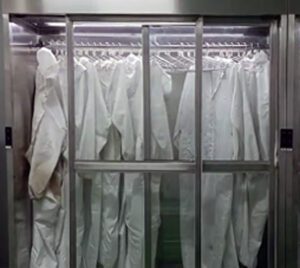
As práticas de pessoal e os procedimentos de vestimenta devem ser definidos antes que o equipamento da sala de vestimenta, os chuveiros de ar e o armazenamento de vestimentas sejam especificados. A sequência de vestimenta determina quais equipamentos são necessários e em que ordem — uma bancada de vestimenta para a aplicação sentada de protetores de botas, um espelho no ponto de verificação final, uma prateleira de armazenamento exclusiva para vestimentas estéreis — e o fluxo de pessoal determina quanto espaço linear e quantas passagens a sala precisa acomodar. Especificar esses itens antes que a sequência de vestimenta seja documentada resulta em equipamentos que podem não se adequar ao procedimento, e revisar o procedimento para se adequar ao equipamento é um problema de qualificação, não uma preferência de projeto.
| Ponto de controle | O que confirmar | Por que isso é essencial |
|---|---|---|
| Classificação ISO por área | Cada área possui uma classe ISO definida (por exemplo, ISO 5 para envase asséptico, ISO 7/8 para não estéril) | Os limites de partículas determinam a eficiência do filtro HEPA e os requisitos de pressão do ambiente; sem essa classificação, as especificações do filtro e da pressurização permanecem indefinidas |
| Finalidade de controle de contaminação | Documentar o objetivo de controle de contaminação de cada área (por exemplo, controle de partículas viáveis para a área de biotecnologia) | A ausência de um objetivo documentado torna impossível verificar se as escolhas de equipamentos correspondem ao risco real |
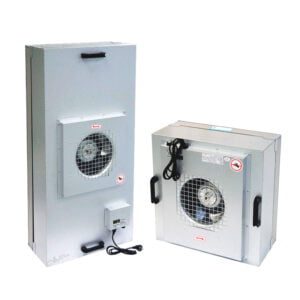
| Atribuição à família de produtos | Cada área possui uma família de produtos designada (FFU, capela de fluxo laminar, câmara de transferência, etc.) | Permite que a equipe de compras compare a cobertura dos fornecedores e identifique lacunas |
| Práticas de pessoal e procedimentos de vestimenta | Sequência de vestimenta e fluxo de pessoal definidos por nível de área | Equipamentos como bancadas de vestimenta, chuveiros de ar e armários para roupas dependem de uma sequência definida de vestimenta |
| Equipamentos de monitoramento ambiental | Contadores de partículas, medidores de pressão diferencial e sensores de temperatura/umidade selecionados com base na classificação da área e na frequência de monitoramento | Uma faixa de medição ou frequência de amostragem inadequada do sensor gera dados não confiáveis e não detecta desvios críticos do controle |
Os equipamentos de monitoramento ambiental são a categoria mais frequentemente subespecificada nessa sequência. Contadores de partículas, medidores de pressão diferencial e sensores de temperatura e umidade exigem, cada um, uma faixa de medição definida, um local de amostragem definido e uma frequência de monitoramento definida. Esses parâmetros não podem ser definidos adequadamente até que a classificação da área e o plano de monitoramento estejam documentados. Um sensor com faixa incorreta ou colocado em um local que não represente a zona crítica produz dados que parecem comprovar a conformidade, mas não detectam desvios de maneira confiável. Essa falta de confiabilidade tende a vir à tona durante uma inspeção ou durante uma investigação de desvio — momento em que a própria qualificação do monitoramento passa a fazer parte do registro do problema.
Para obter mais informações sobre como as categorias de equipamentos se relacionam com os requisitos de conformidade com as BPF, o Equipamento para salas limpas farmacêuticas | Guia de padrões GMP aborda o marco regulatório subjacente a várias das decisões sobre famílias de produtos discutidas aqui.
Uma empresa farmacêutica equipamentos para salas limpas A lista pronta para aquisição não é um catálogo de produtos classificado — trata-se de um registro documentado de decisões, no qual cada área possui uma classificação ISO confirmada, um objetivo declarado de controle de contaminação, uma família de produtos designada e um conjunto definido de requisitos documentais antes que qualquer item seja encaminhado para cotação. Os pontos de verificação na sequência de congelamento existem precisamente porque as lacunas que eles preenchem — áreas não classificadas, requisitos de intertravamento não especificados, sequências de vestimenta não documentadas — são as que geram atrasos no comissionamento e não conformidades na validação, em vez de correções pré-contratuais.
O próximo passo mais útil antes de finalizar a lista é analisar cada área de produção e confirmar se o equipamento designado a ela atende aos requisitos de controle de contaminação que essa área realmente exige, ou se foi transferido de um projeto anterior ou de uma lista de referência genérica sem essa confirmação. Os itens que passam nessa verificação têm uma justificativa rastreável. Os que não passam representam riscos relacionados às especificações, que são muito mais baratos de resolver na fase de elaboração da lista do que na fase de qualificação.
Perguntas frequentes
P: Essa abordagem baseada na área ainda se aplica caso a instalação esteja passando por uma reforma, em vez de ser construída do zero?
A: Yes, but the sequencing changes. In a retrofit, ISO classification and contamination-control purpose must be confirmed against the existing room envelope before any equipment is added or swapped — because the existing layout may constrain gowning flow, transfer path dimensions, or HVAC capacity in ways that affect which product families are physically viable. The freeze-point logic still applies; it just needs to run against what the space can actually support, not an idealized floor plan.
Q: At what project stage should environmental monitoring equipment be specified relative to the rest of the list?
A: It should be specified last within each area, after ISO classification, contamination-control purpose, and monitoring frequency are all documented. Particle counters, pressure gauges, and temperature and humidity sensors each require a defined sensor range and sampling location that cannot be correctly set before those upstream decisions are finalized. Specifying monitoring hardware earlier — to hit a procurement deadline, for example — frequently results in sensors with ranges or placements that do not reliably detect excursions in the actual operational condition.
Q: When is a softwall cleanroom no longer appropriate for an oral solid dosage area, even at ISO Class 7 or 8?
A: When the chemical environment, sanitization protocol, or mechanical load exceeds what softwall panel systems can structurally or chemically tolerate. Softwall configurations meet ISO 7/8 particle requirements under normal OSD conditions, but if the area uses aggressive cleaning agents, requires flush wall penetrations for process equipment, or must support continuous high-vibration machinery, the physical limitations of a softwall enclosure become a maintenance and integrity problem rather than a classification one. That threshold is defined by the process, not the ISO class.
Q: How should the equipment list handle areas that serve more than one contamination-control purpose — for example, a transfer zone that also functions as a personnel airlock?
A: Each purpose needs to be documented separately and then reconciled into a single equipment specification for that area. A combined material transfer and personnel airlock has simultaneous obligations — mechanical interlock on the material pass-through, air shower for personnel decontamination, and sufficient airlock volume to prevent pressure differential loss during either operation. Treating it as a single-function space and specifying only one of those obligations is one of the more common ways dual-purpose areas end up under-specified at qualification.
Q: Is there a point at which adding more filter families — acid gas, activated charcoal, ammonia, formaldehyde — reduces cleanroom performance rather than improving it?
A: Yes. Each additional filter stage adds resistance to the airflow path, which increases static pressure load on the fan and reduces effective airflow velocity if the fan capacity is not sized to compensate. Specifying chemical-specific filter families without a corresponding review of the fan filter unit or air handling unit capacity can degrade room pressurization and HEPA performance at the same time. The filter selection should be driven by a documented chemical hazard review, not by a precautionary approach of including every available media type.