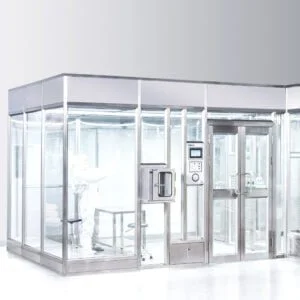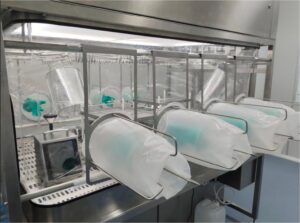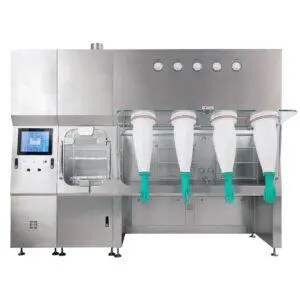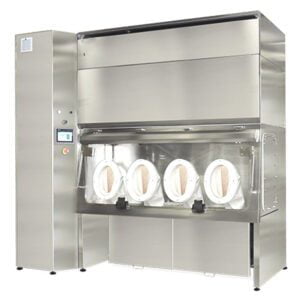
Muitos projetos de salas limpas modulares dimensionam a zona limpa local em torno da posição do produto indicada no layout e, em seguida, descobrem, durante os estudos de qualificação com fumaça, que as mãos dos operadores, os braços dos dispositivos de fixação e as bandejas temporárias de apoio se estendem para fora da área protegida pelo fluxo de ar. Nesse ponto, o espaço da sala já está comprometido, e reposicionar a unidade LAF ou ampliar a superfície de trabalho exige uma reformulação do layout, o que atrasa o comissionamento. Esses mesmos projetos costumam tratar a sala ISO 7 circundante como um problema resolvido assim que a unidade local é instalada, ignorando que a disciplina no uso de trajes, o tráfego de carrinhos e as atividades adjacentes alimentam continuamente partículas em direção ao limite da zona. O que importa antes que qualquer um desses problemas surja é uma definição clara do que a zona local deve proteger, sob quais condições de trabalho e se a sala adjacente e a disciplina dos operadores podem sustentar essa proteção de maneira confiável — ou se uma abordagem diferente é mais justificável desde o início.
Quando uma etapa crítica se enquadra na proteção local ISO 5
A proteção local ISO 5 se justifica quando a exposição crítica é pequena o suficiente para ser fisicamente isolada, repetível o suficiente para ser validada em relação a um padrão definido de fluxo de ar e contida dentro de uma estação de trabalho com fluxo de ar laminar, isolador ou RABS, sem interferência rotineira das atividades ao redor. Quando essas três condições se verificam simultaneamente, a proteção local oferece um ambiente validado que é mais fácil de qualificar, mais fácil de manter e impõe menor carga ao sistema de climatização do que a adaptação da sala ao redor. Quando elas não se verificam — quando a área de exposição é grande, a sequência do processo é variável ou os operadores precisam interromper repetidamente o plano de fluxo de ar —, a lógica da proteção local enfraquece e a posição de conformidade torna-se mais difícil de defender.
Os processos que se alinham bem a esse modelo são restritos e específicos: envase asséptico em uma única estação, operações de filtração estéril, manuseio de frascos abertos em uma estação de trabalho definida e intervenções críticas dentro de isoladores ou RABS. Essas operações compartilham uma característica comum — a exposição estéril é breve, fisicamente confinada e segue uma sequência repetível que pode ser mapeada para uma geometria fixa do fluxo de ar. É essa repetibilidade que torna a classificação justificável, pois tanto o protocolo de validação quanto o programa de monitoramento de rotina dependem de o processo se encaixar de forma confiável dentro do envelope protegido.
O erro prático de planejamento consiste em tratar isso como uma lista de verificação regulatória, em vez de uma verificação da lógica de projeto. Atender aos critérios nominais no papel não significa que a zona local terá o desempenho esperado em condições reais de operação. Uma cuba de retenção posicionada na borda da área ocupada pelo LAF, um braço de fixação que se estende para dentro da zona de transição ou uma bandeja de preparação colocada fora do plano do fluxo de ar devido à limitação de espaço na bancada — cada um desses elementos representa uma discrepância entre a configuração validada e a configuração real de trabalho, o que gerará eventos de partículas e complicará as respostas às auditorias.
| Critério | O que isso significa | Por que é importante |
|---|---|---|
| Tamanho da exposição | A operação crítica envolve uma área pequena e fisicamente confinada (por exemplo, um frasco aberto, uma agulha de enchimento, uma taça para rolhas) | Justifica a proteção local; um processo de grande porte em ambiente aberto exigiria o controle de toda a sala |
| Repetibilidade | O movimento crítico é altamente repetível e segue uma sequência definida e imutável | Padrões previsíveis de fluxo de ar podem ser validados e mantidos; a variação enfraquece a proteção |
| Viabilidade da contenção | A exposição pode ser contida dentro de uma estação de trabalho com fluxo de ar laminar, um isolador ou um RABS sem interferir no fluxo normal de trabalho | Garante que a área de trabalho permaneça sob um fluxo de ar unidirecional contínuo, livre de obstruções |
| Equipamentos típicos | Estações de trabalho com fluxo de ar laminar, unidades de fluxo vertical/horizontal, RABS e isoladores assépticos | Opções concretas que criam um envelope com classificação ISO 5 dentro de uma sala de classe inferior |
| Processos típicos | Enchimento asséptico, filtração estéril, manuseio de frascos abertos e intervenções críticas em isoladores/RABS | Operações nas quais etapas de exposição breves e contidas estão em conformidade com as medidas de proteção locais |
Cobertura do pacote de serviços para acessórios, peças e componentes
O padrão de falha mais comum no projeto local conforme a norma ISO 5 é dimensionar a unidade de fluxo de ar de acordo com a posição do produto e descobrir, durante a qualificação, que a área de trabalho real — incluindo dispositivos de fixação, as mãos do operador em seu alcance máximo e locais temporários de preparação — se estende além da área protegida. Estudos de fumaça realizados em uma estação de trabalho vazia não detectam isso. A falha se manifesta quando a unidade está operando em condições representativas, com um operador vestindo o traje de proteção realizando a sequência real do processo.
Para que a proteção local seja eficaz, é necessário que toda a área de trabalho esteja inserida em um fluxo de ar unidirecional contínuo, e não apenas o ponto nominal do produto. O suprimento de ar deve estar posicionado diretamente acima ou atrás de todos os pontos de exposição estéril ao longo da sequência do processo, incluindo posições intermediárias onde as peças são mantidas, depositadas ou transferidas. Se um braço de fixação ultrapassar os limites da área coberta pelo LAF em qualquer ponto da sequência, esse dispositivo não estará protegido, independentemente de onde o contador de partículas esteja posicionado durante o teste de qualificação.
A restrição à postura do operador decorre diretamente disso. Um operador inclinado no plano do fluxo de ar introduz uma massa corporal que libera partículas no limite da zona limpa e cria turbulência que pode transportar contaminação em direção ao produto exposto. Isso não é, principalmente, uma questão de conformidade com o uso de roupas de proteção — é uma questão de projeto do espaço de trabalho. Se a geometria da estação de trabalho exigir que o operador se incline para a frente para alcançar o produto, a área protegida precisa ser mais profunda ou a posição do produto precisa ser alterada. Descobrir isso durante a qualificação já é tarde; descobrir durante uma auditoria é ainda pior.
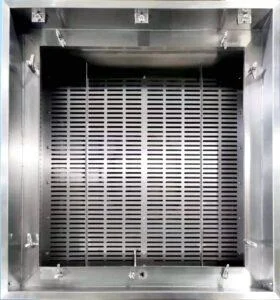
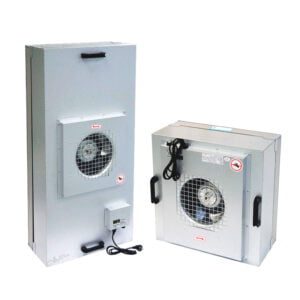
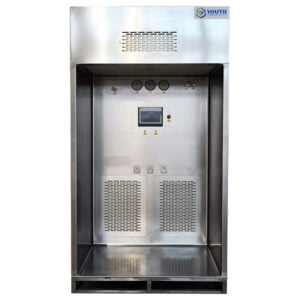
Para estações de trabalho nas quais essa questão de cobertura não é trivial, um Unidade de Fluxo de Ar Laminar – Unidade LAF com uma câmara de distribuição de ar suficientemente dimensionada — dimensionada com base no espaço de trabalho real, e não na área nominal ocupada pela bancada — reduz o risco de lacunas nas bordas que só se tornam visíveis em condições operacionais.
Condições do ambiente de fundo que ainda são importantes
A instalação de uma unidade local ISO 5 dentro de uma sala ISO 7 mal controlada não torna a zona local em conformidade por proximidade. A sala ao redor é uma fonte ativa de partículas: os operadores com aventais liberam partículas, os carrinhos transportam contaminação dos corredores e as atividades de processamento adjacentes geram perturbações que se propagam por toda a sala. Uma unidade LAF local mantém sua classificação ao remover continuamente essas partículas por meio de um fluxo de ar unidirecional e pressão positiva — mas esse mecanismo tem limites, e uma sala de fundo operando significativamente acima de sua classificação nominal reduz a margem disponível antes que a zona local seja comprometida.
A hierarquia padrão das salas GMP — zona crítica ISO 5 dentro do ambiente de fundo ISO 7, dentro da área de apoio ISO 8 — reflete uma estratégia deliberada de controle de partículas em camadas, e não uma preferência conservadora. Cada limite nessa cascata funciona como uma barreira contra partículas, e a zona ISO 5 depende de que a sala ISO 7 forneça um ambiente razoavelmente estável e com baixo teor de partículas no limite da zona. Se o ambiente de fundo ISO 7 se deteriorar devido à monitorização pouco frequente, à má manutenção dos diferenciais de pressão ou à falta de disciplina no uso de uniformes, a zona local estará enfrentando uma carga de partículas maior do que aquela para a qual foi projetada.
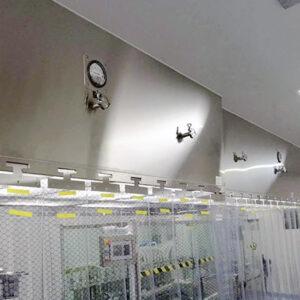
O diferencial de pressão entre a zona ISO 5 e o ambiente ISO 7 é a expressão mecânica dessa proteção. Um diferencial de ≥ 10–15 Pa — uma meta operacional amplamente citada nas diretrizes de boas práticas de fabricação (GMP) — tem como objetivo impedir o refluxo de ar contaminado em direção à zona crítica durante operações normais e perturbações de baixo nível. Esse valor é uma meta de projeto, não um mínimo regulatório universal, e sua adequação depende da geometria específica da sala e do projeto do fluxo de ar. O que importa na prática é que o monitoramento da pressão diferencial seja contínuo, que a direção da cascata seja confirmada em condições dinâmicas e que a qualificação de fundo da sala não seja tratada como um exercício pontual, desvinculado do desempenho da zona local.
Limites de movimentação e transferência do operador
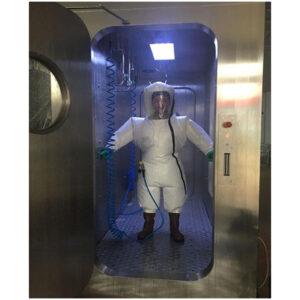
O comportamento do operador é a principal vulnerabilidade em qualquer estratégia local ISO 5. Uma unidade LAF bem especificada, com uma área de trabalho dimensionada corretamente e uma sala de fundo estável, ainda pode produzir eventos de partículas fora das especificações de forma consistente se o movimento do pessoal for indisciplinado ou se a transferência de materiais não seguir regras definidas. A zona local não possui mecanismo para compensar um operador que cruze repetidamente o plano do fluxo de ar, se mova rapidamente próximo à área crítica ou introduza materiais sem um protocolo de transferência definido.
A dinâmica subjacente é simples: os operadores em roupa de proteção são fontes geradoras de partículas, e o movimento amplifica significativamente essa geração. Mesmo pequenas perturbações — esticar o braço acima de um produto exposto, virar-se rapidamente, ajustar a posição sem parar — podem produzir picos de partículas que excedem o limite da norma ISO 5 no ponto crítico de exposição. O fluxo de ar local se recupera, mas a recuperação leva tempo e, se as perturbações forem frequentes, a zona pode nunca atingir um estado estável de limpeza entre os eventos. Esse é o mecanismo de contaminação que torna a disciplina do processo e o projeto físico inseparáveis: a geometria do fluxo de ar protege apenas o que o comportamento do operador permite que ela proteja.
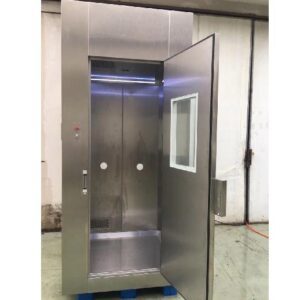
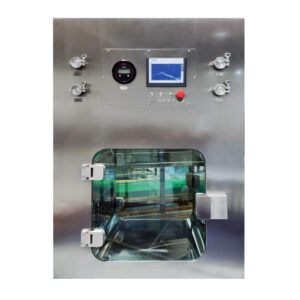
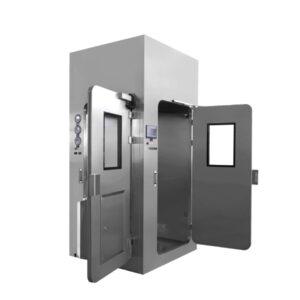
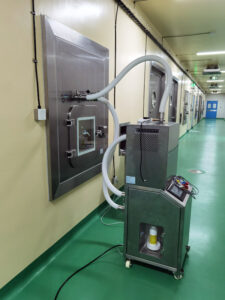
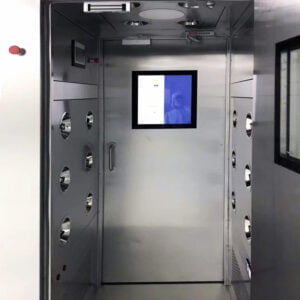
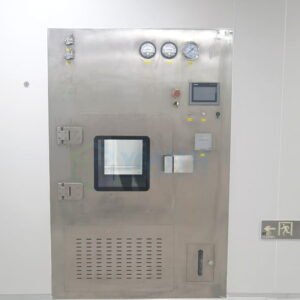
O problema da transferência é estruturalmente semelhante. Materiais que entram na zona local sem um caminho e um protocolo definidos introduzem eventos descontrolados de partículas no limite. As câmaras de transferência com travas nas portas e interiores lisos e laváveis resolvem isso ao controlar o tempo, a direção e a condição física dos itens que entram — reduzindo a frequência das passagens pela fronteira e limitando a introdução de partículas associada a cada transferência. O modo de falha não é uma câmara de transferência mal projetada; é a ausência de regras definidas sobre o que entra na zona, em que condição e por qual caminho, o que deixa a proteção local dependente do julgamento individual no momento da transferência.
| Área | Requisito | Por que é importante |
|---|---|---|
| Fluxo de pessoal | Siga a sequência controlada: ISO 8 → ISO 7 → ISO 5; minimize o alcance ou a passagem por cima do produto exposto; evite movimentos bruscos | Reduz a geração de partículas e a turbulência do ar próximo à zona crítica |
| Vestimenta do pessoal | É necessária uma disciplina rigorosa; mesmo pequenas perturbações podem provocar picos de partículas | Os movimentos do operador são uma das principais fontes de contaminação, capazes de sobrecarregar o fluxo de ar local |
| Entrada de materiais | Utilize caixas de passagem ou portas interligadas; apenas itens pré-esterilizados; superfícies internas lisas e fáceis de limpar | Reduz a frequência das intervenções e evita a entrada de partículas externas |
| Organização do material | Separação física clara entre os materiais que entram e os que saem; áreas de triagem definidas, afastadas da zona de exposição crítica | Evita a contaminação cruzada e impede que itens não esterilizados entrem no envelope ISO 5 |
Verificação da posição operacional para o fluxo de ar local
A qualificação realizada em uma face vazia do LAF — sem a presença de operador, sem acessórios instalados e sem movimento do processo — será rotineiramente aprovada, enquanto a unidade apresenta baixo desempenho em condições reais de trabalho. Esse é o modo de falha na verificação que, de forma mais confiável, produz um registro de qualificação impecável, seguido por resultados rotineiros de partículas fora das especificações. Essa discrepância existe porque a geometria do fluxo de ar, a uniformidade da velocidade e a cascata de pressão podem parecer aceitáveis na ausência das variáveis físicas e comportamentais que definem a operação real.
A verificação na posição operacional consiste em confirmar a velocidade do fluxo de ar, a uniformidade e o comportamento da fumaça com um operador vestindo o traje de proteção na estação de trabalho, com os equipamentos e ferramentas em suas posições de trabalho e com a sequência de movimentos do processo sendo executada. A meta de velocidade unidirecional comumente citada de 0,36–0,54 m/s na altura de trabalho e a faixa de 250–400 renovações de ar por hora associadas às zonas ISO 5 são valores de projeto e metas de verificação — não limites regulatórios universais — e devem ser confirmados nessas condições representativas, não inferidos a partir de medições nominais em repouso. A norma IEST-RP-CC002 fornece uma estrutura de testes útil para a qualificação de dispositivos de fluxo de ar e uma metodologia de estudo de fumaça que apoia essa abordagem.
A interdependência dos parâmetros é o que torna essa verificação não trivial. A velocidade, a taxa de renovação de ar, a integridade do filtro e o diferencial de pressão não são variáveis independentes: se a velocidade cair porque um filtro está parcialmente obstruído, a taxa efetiva de renovação de ar também diminui, o tempo de recuperação após perturbações aumenta e o diferencial de pressão pode se alterar. Um vazamento no filtro HEPA introduz ar contaminado diretamente na zona crítica, independentemente do que as leituras de velocidade e pressão indiquem. Verificar cada parâmetro isoladamente ignora a consequência que o desvio em um parâmetro tem sobre o desempenho dos demais. O teste de aerossol com PAO ou DOP na qualificação inicial e em intervalos programados — e após qualquer manutenção ou modificação do sistema — é o mecanismo para confirmar que a integridade do filtro não se degradou entre as revisões periódicas.
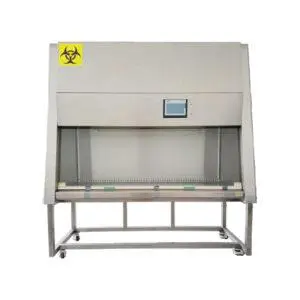
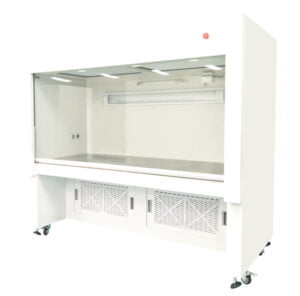
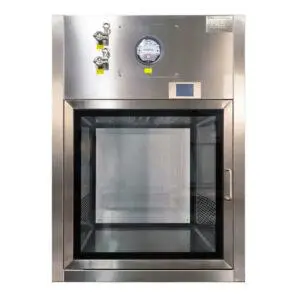
Para instalações em que o escopo da verificação inclui tanto a unidade LAF quanto os limites mais amplos da zona limpa, o Bancada operacional LAF para sala limpa vale a pena considerar essa opção integrada, na qual a geometria da superfície de trabalho e a geometria do fluxo de ar são projetadas em conjunto, reduzindo a diferença entre a cobertura nominal e a cobertura operacional.
| Parâmetro | Meta / Requisito | Como é feita a verificação | Consequência do desvio |
|---|---|---|---|
| Velocidade do fluxo de ar | 0,36–0,54 m/s unidirecional na altura de trabalho | Testes de velocidade e estudos de fumaça em condições de trabalho representativas | Baixa velocidade → perda do fluxo unidirecional e acúmulo de partículas |
| Taxa de troca de ar | 250–400 renovações de ar por hora | Calculado a partir do fluxo de ar de alimentação e do volume da zona limpa | Diluição insuficiente e recuperação lenta após perturbações |
| Integridade do filtro HEPA | Sem vazamentos; verificado na qualificação inicial, em intervalos programados e após a manutenção | Teste de exposição a aerossóis de PAO ou DOP (fotômetro ou contador de partículas) | Vazamentos introduzem ar contaminado diretamente na zona ISO 5 |
| Cascata de pressão | ISO 5 (Grau A) positivo em relação ao ISO 7 (Grau B), normalmente ≥ 10–15 Pa | Monitoramento da pressão diferencial entre os limites das zonas | Uma cascata incorreta leva o ar sujo do fundo para a zona crítica |
| Uniformidade do fluxo e obstrução | Fluxo de ar uniforme em todo o plano de trabalho, sem obstruções | Estudos de fumaça e mapeamento do fluxo de ar na posição de operação | Pontos mortos ou turbulência permitem o acúmulo de partículas no produto exposto |
Mais detalhes sobre os critérios específicos de desempenho da norma ISO 5 e os requisitos de qualificação dos filtros que servem de base a esses parâmetros de verificação são abordados em Padrões ISO Classe 5 para unidades de fluxo de ar laminar.
Casos em que o upgrade para um quarto de categoria superior é mais justificável
A decisão de utilizar uma zona local em vez de fazer a atualização completa da sala costuma ser tomada com base apenas no custo de capital, e essa abordagem não leva em conta o ônus da validação ao longo do ciclo de vida que envolve a manutenção de uma zona local em conformidade dentro de uma sala de fundo que é difícil de controlar. Para muitas operações assépticas farmacêuticas, uma zona local ISO 5 dentro de uma ISO 7 é a resposta certa — trata-se de uma prática estabelecida no setor, mais fácil de validar e proporcional ao risco de exposição. No entanto, as condições que levam à escolha justificável de uma modernização completa da sala são reais, e identificá-las antecipadamente é consideravelmente mais econômico do que rever a decisão após a construção da sala.
As condições que realmente favorecem a classificação ISO 5 em toda a sala não se resumem a uma questão de preferência — elas refletem geometrias de processo que as zonas locais não conseguem cobrir de maneira confiável. Quando a área crítica de exposição é grande e não pode ser fisicamente contida dentro de um envelope de fluxo de ar fixo, quando o processamento é distribuído por várias estações de trabalho com movimentação frequente de materiais entre elas, ou quando a frequência de transferência entre as estações é alta o suficiente para que o limite da zona local seja regularmente comprometido, a estratégia de proteção local torna-se difícil de justificar operacionalmente e em auditorias. A montagem de alta precisão em óptica e microeletrônica se enquadra nessa categoria não por causa de uma preferência regulatória, mas porque a área de superfície exposta e a variabilidade do processo tornam a geometria do fluxo de ar local impraticável.
O fator menos óbvio que leva a uma atualização completa da sala ocorre quando a sala de fundo ISO 7 apresenta dificuldades estruturais de controle — sistema de climatização mal configurado, alta ocupação, aberturas frequentes das portas ou atividades adjacentes que comprometem rotineiramente a classificação de fundo. Nesses casos, a zona local arca com uma carga desproporcional de controle de contaminação, e o custo ao longo do ciclo de vida do monitoramento contínuo, dos eventos frequentes de requalificação e dos relatórios de investigação pode, em última instância, exceder o que uma abordagem de sala inteira teria custado. Essa é a contrapartida que raramente é considerada na comparação inicial de custos.
| Fator | Zona ISO 5 local | Atualização para a norma ISO 5 em toda a sala |
|---|---|---|
| Quando for o caso | Exposições críticas que sejam de pequena magnitude, repetíveis e fisicamente contidas | Grandes áreas abertas de processamento que exigem controle uniforme de partículas; montagem de alta precisão (óptica, microeletrônica) |
| Principais vantagens | Menor carga no sistema de climatização, maior facilidade de validação, proteção direcionada exatamente onde é necessária, economia de custos | Limpeza uniforme em todo o ambiente; sem dependência da disciplina do operador dentro de um espaço reduzido |
| Principais desvantagens | A proteção se limita à área de trabalho definida; há risco de acidentes se os operadores descumprirem as normas de transferência | Alto custo de construção e operação; difícil de manter e validar continuamente |
| Setores típicos | Processamento asséptico farmacêutico, biotecnologia, embalagem de semicondutores | Óptica, microeletrônica e certos setores da indústria aeroespacial em que é necessária a Classe 5 em grandes áreas |
A questão prática a ser resolvida antes de especificar a proteção local ISO 5 não é se a unidade pode atingir essa classificação em repouso — a maioria das unidades LAF devidamente especificadas é capaz disso. A questão é se a área de trabalho, a disciplina do operador, o protocolo de transferência e as condições ambientais da sala, em conjunto, mantêm essa classificação em condições reais de trabalho, e se essa configuração é estável o suficiente para se manter defensável por meio de monitoramento de rotina e requalificação periódica. Se a resposta a qualquer uma dessas condições for incerta, a própria incerteza é um sinal de projeto que precisa ser resolvido antes da aquisição, e não durante a validação.
Ao definir o escopo de uma zona local, confirme as dimensões completas da área de trabalho sob movimentos representativos do processo antes de finalizar o dimensionamento da unidade; defina as regras de transferência e as posições de preparação como parte do projeto, em vez de como procedimentos operacionais padrão (SOPs) elaborados após a instalação; e garanta que a qualificação da sala de fundo seja tratada como uma dependência do desempenho da zona local, e não como um programa paralelo, porém separado. Essas são as decisões em que a conformidade é incorporada desde o início ou adaptada posteriormente — e adaptá-las após o comissionamento da sala é consistentemente mais caro do que resolvê-las no papel.
Perguntas frequentes
P: É possível justificar a existência de uma zona local com classificação ISO 5 dentro de uma sala de fundo que seja apenas ISO 8, ou o espaço ao redor precisa ser ISO 7?
R: A ISO 7 é a classe de fundo padrão para dar suporte a uma zona local ISO 5 nas práticas farmacêuticas de BPF, e reduzir para ISO 8 enfraquece a proteção. A unidade ISO 5 depende de que a sala ao redor forneça uma condição de contorno estável com baixo nível de partículas; um fundo ISO 8 apresenta uma carga de partículas significativamente maior, o que reduz a margem de manobra do fluxo de ar local antes que a zona crítica seja comprometida. Se a sua instalação só conseguir atingir o padrão ISO 8 no espaço circundante, a zona local precisará compensar uma carga de contaminação mais intensa; a recuperação após perturbações será mais lenta e a conformidade se tornará mais difícil de manter por meio do monitoramento de rotina — o que faz com que valha a pena reavaliar uma atualização de toda a sala ou uma estratégia baseada em isoladores antes de se comprometer com o layout.
P: Após a aprovação na qualificação, qual é a atividade contínua mais importante para manter a zona local defendível entre as requalificações periódicas?
R: O monitoramento contínuo da pressão diferencial, combinado com revisões sistemáticas da qualificação da sala de fundo, é a atividade contínua mais crítica. A qualificação confirma o desempenho do sistema em um determinado momento, mas os parâmetros que determinam o desempenho conforme a norma ISO 5 — velocidade, integridade do filtro e cascata de pressão — sofrem variações de forma independente e interagem entre si. Uma pressão diferencial que se reduziu discretamente, um filtro HEPA parcialmente obstruído que reduz a velocidade abaixo da meta de projeto ou uma sala de fundo que se degradou entre as revisões podem, cada um deles, comprometer o desempenho da zona local bem antes que a próxima requalificação programada detecte o problema. Tratar esses fatores como um programa de monitoramento interligado, em vez de itens de verificação periódicos separados, é o que mantém os dados rotineiros de partículas consistentes com o registro de qualificação.
P: A partir de que ponto o número de estações de trabalho ou de eventos de transferência torna uma estratégia de zona local impraticável em comparação com a norma ISO 5 para toda a sala?
R: Não há um número fixo de estações de trabalho, mas o limite prático é atingido quando as transferências de material entre as estações são frequentes o suficiente para que o limite da zona local seja ultrapassado regularmente antes que a recuperação seja concluída. Cada evento de transferência introduz um pico de partículas no limite e, se a próxima transferência ocorrer antes que o fluxo de ar tenha restabelecido a limpeza em estado estacionário, a zona estará operando em uma condição de perturbação persistente, em vez de se recuperar entre os eventos. Quando o mapeamento do processo mostra que a frequência de transferência é alta, que o armazenamento temporário entre estações exige que os itens saiam da área coberta pelo fluxo de ar ou que os operadores precisem cruzar o plano do fluxo de ar várias vezes por ciclo do processo, a zona local está arcando com uma carga de controle de contaminação para a qual não foi projetada — e a norma ISO 5 para toda a sala torna-se a especificação mais justificável.
P: Como a escolha entre uma unidade LAF de fluxo vertical e uma de fluxo horizontal afeta a cobertura da área de trabalho em relação às posições das mãos do operador?
R: As unidades de fluxo horizontal apresentam uma desvantagem significativa quanto à cobertura das mãos e dos braços que as unidades de fluxo vertical não apresentam. Em uma configuração horizontal, o fluxo de ar se desloca da parte traseira da estação de trabalho em direção ao operador, o que significa que as mãos que trabalham próximas à posição do produto ficam a jusante de qualquer contaminação que o operador introduza no plano de entrada — incluindo partículas desprendidas das luvas e das mangas. As unidades de fluxo vertical varrem para baixo por toda a superfície de trabalho; assim, as mãos do operador que trabalham acima do produto ficam no caminho do fluxo de ar, em vez de ficarem entre o filtro e o produto. Para processos em que as posições das mãos e dos acessórios são variáveis ou em que o operador precisa trabalhar em profundidade na bancada, o fluxo vertical oferece uma proteção geometricamente mais consistente em toda a área de cobertura.
P: Se a diferença no custo de investimento entre uma zona local e uma atualização completa da sala para o padrão ISO 5 for modesta, a zona local ISO 5 ainda seria a melhor opção para uma operação de envase asséptico de produtos farmacêuticos?
R: Não automaticamente — quando a diferença de capital é pequena, o ônus da validação do ciclo de vida da zona local passa a ser o fator decisivo. A ISO 5 local dentro de uma ISO 7 é uma prática estabelecida de BPF para envase asséptico, principalmente porque é mais fácil e mais barata de validar e manter do que uma sala inteira em ISO 5, e não porque a proteção seja inerentemente superior. Se os custos de capital forem comparáveis, a questão passa a ser qual abordagem gera um custo total menor ao longo das campanhas de qualificação, requalificação após alterações, relatórios de investigação de eventos de monitoramento fora das especificações e defesa em auditorias. Para uma operação simples de envase em estação única com uma sala de apoio estável, a ISO 5 local normalmente ainda se destaca em termos de custo do ciclo de vida. Para uma instalação com alta ocupação de operadores, mudanças frequentes no layout ou uma sala de apoio que seja estruturalmente difícil de controlar, a abordagem de sala inteira pode acarretar um custo total de conformidade menor, mesmo com um investimento de capital ligeiramente mais alto.