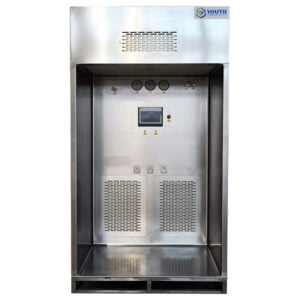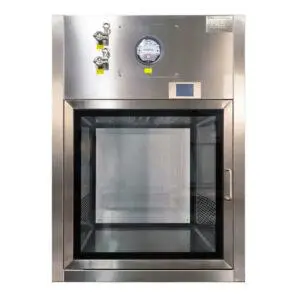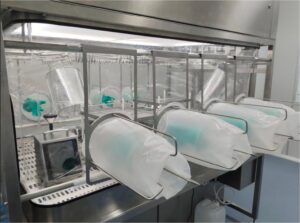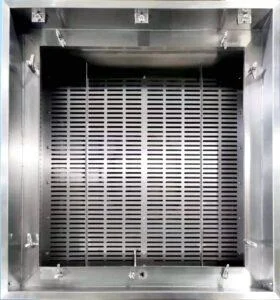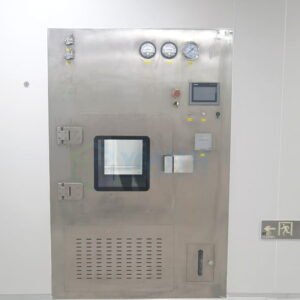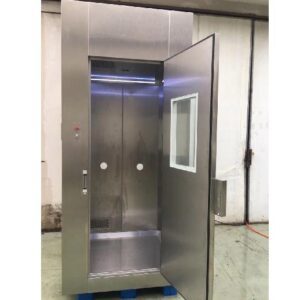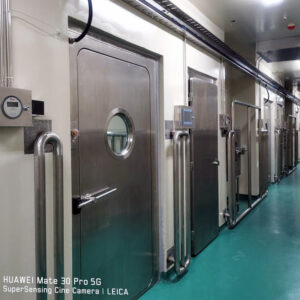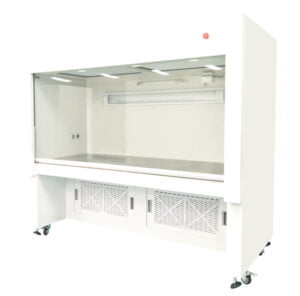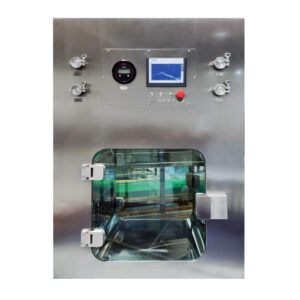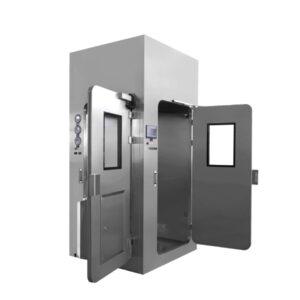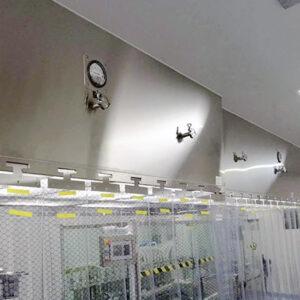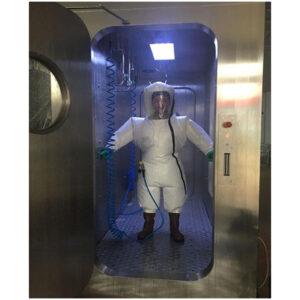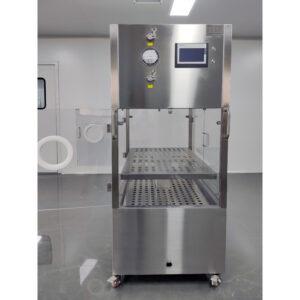
As análises do layout de salas limpas muitas vezes identificam esse problema tarde demais: a câmara de ar já está especificada, a área ocupada está definida e a área de vestimento foi reduzida a um corredor. A consequência não é apenas uma sequência de entrada apertada — é uma arquitetura de controle de contaminação em que a etapa a montante, mais fraca, limita tudo a jusante. Uma câmara de ar posicionada após um espaço de vestimento inadequado não consegue compensar o uso incorreto de roupas de proteção ou condições que introduzem partículas antes mesmo do ciclo de sopro começar. A decisão que importa não é simplesmente se deve-se incluir um chuveiro de ar, mas se toda a sequência de entrada — área de vestimenta, capacidade do chuveiro, lógica de intertravamento e disciplina procedural — pode ser justificada em relação ao tráfego real da instalação, ao risco de exposição do produto e aos requisitos de classificação.
Risco relacionado às partículas provenientes do pessoal associado ao uso do chuveiro de ar
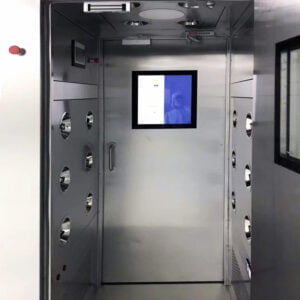
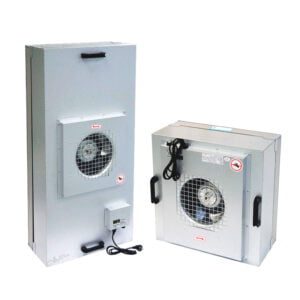
A justificativa para o uso de um chuveiro de ar baseia-se em um mecanismo específico: jatos de ar em alta velocidade removem as partículas soltas da superfície das roupas de sala limpa antes que o usuário entre no espaço controlado. Em condições operacionais de 25–30 m/s mantidas por 15–30 segundos, as orientações técnicas comerciais indicam uma redução de partículas superior a 95% para partículas ≥0,5 μm. Esse parâmetro de desempenho é válido para condições operacionais corretas — ele não se aplica automaticamente a todos os tipos de vestimentas, geometrias de câmara ou posturas do pessoal que comprometam a cobertura dos bicos.
Onde esse desempenho é mais relevante é nas entradas de salas limpas, onde a carga de partículas proveniente do pessoal constitui uma via significativa de contaminação. As cabines de ar são comumente consideradas uma medida de pré-tratamento indispensável nas entradas de ambientes das Classes 5 a 7 da ISO, com base na lógica de gerenciamento da carga de contaminação de que o pessoal está entre as maiores fontes geradoras de partículas em qualquer espaço controlado. Trata-se de uma recomendação dos profissionais da área, fundamentada na prática de projeto de entradas, e não de um requisito derivado diretamente de ISO 14644-4:2022, embora essa norma trate da sequência da câmara de pressão de entrada como uma referência de processo. A implicação prática é que, para instalações que operam nessas classificações e apresentam movimentação frequente de pessoal, a omissão de um chuveiro de ar é uma decisão que requer justificativa explícita — e não uma prática padrão que pressupõe baixo risco.
O valor de redução de partículas >95% reflete condições operacionais corretas; não se trata de um resultado garantido para todas as configurações de câmara ou tipos de vestuário.
O ponto fraco está em presumir que o dispositivo, por si só, controla o risco. Se as roupas de proteção não estiverem totalmente abotoadas, se o usuário não se virar durante o ciclo ou se a câmara for pequena demais e o pessoal passar por ela com pressa, o ciclo de purga removerá menos do que sua capacidade nominal sugere. A eficácia do chuveiro de ar depende da qualidade do processo de vestimento anterior e do comportamento correto do usuário — ambos os quais devem ser abordados separadamente.
Qualidade do vestuário versus benefício do chuveiro de ar
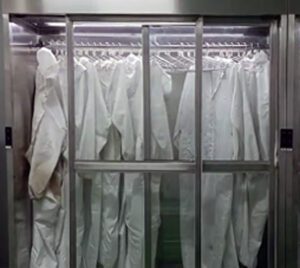
O equívoco mais comum em relação à função de uma ducha de ar é considerá-la um substituto para o vestimento adequado. Equipes que receberam observações de auditoria decorrentes de contagens de partículas próximas às zonas de entrada às vezes propõem a instalação de uma ducha de ar sem antes verificar se a própria área de troca de roupa é a fonte das partículas. Se o processo de vestimento for inconsistente — roupas parcialmente fechadas, luvas colocadas sem uma superfície limpa, capuzes não vedados —, a ducha de ar remove apenas as partículas soltas residuais na parte externa de roupas já comprometidas.
A relação entre o vestimento e o chuveiro de ar segue uma sequência rigorosa: as roupas devem ser vestidas corretamente e por completo em um vestiário separado primeiro. O chuveiro de ar, então, atua sobre a superfície das roupas de sala limpa vestidas corretamente, removendo partículas que se aderem frouxamente ao tecido. O dispositivo não remove partículas presas nas dobras das roupas, em pontos de contato não vedados nos punhos ou no pescoço, nem partículas já liberadas na sala durante o processo de vestir. Seu benefício é, portanto, maior quando a qualidade da roupa já é adequada e o risco de contaminação remanescente se resume a partículas aderidas à superfície decorrentes do transporte ou manuseio.
| Aspecto | Vestimentas | Ducha de ar |
|---|---|---|
| Barreira contra partículas primárias | As roupas para salas limpas constituem a barreira principal | Não substitui o processo de vestir o avental; remove partículas soltas que já estejam nas roupas |
| Remoção de partículas soltas | Limitada, depende da integridade da peça de roupa | Jatos de ar de alta velocidade reduzem as partículas ≥0,5 µm em >95% sob condições adequadas |
| Posição na sequência de entrada | A vestimenta é feita primeiro em um vestiário separado | Utilizado após a vestimenta para reduzir a contaminação residual da superfície |
| Ideal para uso quando | Todas as operações em salas limpas que exigem controle de contaminação | O risco é maior – tráfego frequente de pessoal, partículas soltas pelas roupas ou exposição do produto; considerado indispensável para áreas das classes ISO 5 a 7 |
O critério prático de decisão é se o investimento em um chuveiro de ar proporcionaria um retorno maior no controle de contaminação do que a melhoria da área de vestimenta. Investir em uma sala de vestimenta com sequência adequada e dimensões corretas — com uma bancada limpa, espelho, armazenamento adequado de roupas e controles de procedimentos — muitas vezes elimina mais contaminação por unidade de capital do que instalar um chuveiro a jusante de um espaço de troca inadequado. O chuveiro de ar agrega mais valor depois que o problema da vestimenta já tiver sido resolvido.
Frequência do tráfego e filas nas mudanças de turno
Uma câmara de ducha de ar com dimensões insuficientes não é um inconveniente menor — trata-se de um evento de contaminação secundária. Quando as trocas de turno levam o pessoal a fazer fila do lado de fora da câmara, os trabalhadores devidamente equipados ficam em um espaço não controlado e podem recontaminar uns aos outros por proximidade, contato físico ou pela circulação de ar causada pela abertura repetida das portas. A lógica de controle de contaminação de toda a sequência de entrada é comprometida no ponto de maior concentração de pessoal.
O limite utilizado nas diretrizes de planejamento comercial para câmaras individuais é de ≤20 passagens de pessoal por hora. Acima desse valor, deve-se avaliar a utilização de uma câmara dupla ou de um túnel de passagem. Essas opções reduzem as filas não apenas por uma questão de conveniência operacional, mas porque a formação de filas do lado de fora da entrada de uma sala limpa constitui uma falha no controle de contaminação, e não um problema de programação.
| Perfil do tráfego | Diretriz de rendimento | Câmara recomendada | Mitigação de riscos relacionados a filas |
|---|---|---|---|
| Baixa | ≤20 passes de acesso de funcionários por hora | Câmara individual | Capacidade suficiente; risco mínimo de filas em períodos de baixo volume |
| Alta | >20 passes de acesso por hora | Câmara para duas pessoas ou túnel de passagem | Evita o acúmulo de pessoas, o que pode causar contaminação secundária e atrasos |
As filas na troca de turno não são um problema de programação — trata-se de um evento de contaminação secundária que compromete toda a sequência de entrada.
Os planejadores de instalações costumam calcular a demanda máxima de entrada apenas com base no tráfego médio diário, em vez de considerar a carga concentrada na troca de turno. Uma instalação com 40 funcionários entrando em um intervalo de 10 minutos na troca de turno não se comporta como uma média de 5 passagens por hora ao longo de 24 horas. Dimensionem a câmara com base na demanda de pico e mapeiem essa demanda em relação aos padrões reais de sobreposição de turnos antes de definir as especificações. Quando estiverem avaliando configurações de túneis de passagem, considerem também a área de ocupação da entrada da sala limpa e a complexidade do intertravamento, uma vez que as configurações de túneis apresentam diferentes requisitos de área útil e sequenciamento de portas.
Requisitos relativos ao tempo de ciclo, ao bico e ao intertravamento
Disposição dos bicos É nesse ponto que as decisões relativas às especificações determinam se o desempenho nominal do chuveiro pode, de fato, ser alcançado para um determinado nível de sala limpa. A escolha entre conjuntos de bicos de um lado, de dois lados e de três lados reflete um equilíbrio entre a eficácia da limpeza e a complexidade mecânica. A diferença de eficiência — aproximadamente 30% maior para a configuração de dois lados em comparação com a de um lado, com base em orientações comerciais — reflete a área de cobertura, e não um multiplicador garantido de remoção de partículas que se aplique uniformemente a todos os tamanhos de câmara ou materiais de vestuário. A questão mais relevante para salas de classe ISO 5–6 é que tanto as configurações de um lado quanto as de dois lados deixam as zonas da cabeça e dos ombros com impacto direto reduzido; é por isso que os layouts de três lados são recomendados nessas classes. Especificar um layout de um lado nas classes ISO 5–6 e, em seguida, não detectar pontos cegos na região da cabeça e dos ombros até a validação é um risco de retrabalho que é totalmente evitável na fase de especificação.
O sistema de intertravamento é onde a integridade do procedimento é garantida mecanicamente. O ciclo padrão dura de 15 a 30 segundos, com um temporizador que impede que a porta de saída se abra antes da conclusão do processo. O intertravamento de portas duplas — com tempo de resposta ≤0,5 segundos, conforme especificações de sistemas de controle comerciais — garante que a sequência de entrada não possa ser contornada sob pressão de tempo ou por uso impaciente. Esse valor de tempo de resposta tem origem em diretrizes de controle comerciais, e não diretamente da norma ISO 14644-4:2022, embora a norma aborde o intertravamento de câmaras de compensação como um princípio de projeto.
| Área de especificação | Requisito | O que verificar |
|---|---|---|
| Disposição dos bicos | Nível de sala limpa: aceitável em um único lado para ISO 7–8; padrão em ambos os lados (≈30%, maior eficiência); em três lados para ISO 5–6, a fim de cobrir os pontos cegos da cabeça e dos ombros | A inspeção visual confirma que o traçado está de acordo com o nível; justificação documentada em caso de desvio |
| Tempo de ciclo | 15 a 30 segundos com bloqueio controlado por temporizador; a porta de saída não deve ser aberta antes da conclusão do ciclo | A configuração do temporizador está dentro do intervalo exigido; o bloqueio está funcionando |
| Velocidade de saída do bico | ≥20 m/s; se estiver abaixo do limite, verifique o ventilador ou o filtro | Medido com anemômetro; investigação é acionada se a velocidade cair |
| Sistema de intertravamento | Bloqueio de portas duplas, tempo de resposta ≤ 0,5 segundos, temporizador de bloqueio após o término do banho | O teste funcional confirma que a sequência de abertura das portas, o tempo de resposta e o comportamento de bloqueio estão de acordo com as especificações |
O limite de velocidade de saída do bocal de ≥20 m/s é, principalmente, um critério de verificação de manutenção: se a velocidade medida ficar abaixo desse nível durante as verificações periódicas, a investigação deve abordar o desempenho do ventilador ou a carga do filtro antes que a câmara seja colocada novamente em serviço. Não considere esse valor como uma meta de projeto que garanta a remoção de partículas em uma classe específica de sala limpa — trata-se de um limite operacional mínimo, e não de uma especificação de desempenho para classificação.
Procedimento de entrada e verificações de conformidade do usuário
O sistema de intertravamento de um chuveiro de ar controla o tempo, mas não controla o comportamento durante o ciclo. Os funcionários que permanecem parados, voltados para uma única direção ou mantêm os braços próximos ao corpo durante todo o processo de sopro reduzem a cobertura efetiva a uma fração do que o layout dos bicos pode oferecer. O sistema mecânico não consegue compensar o uso passivo.
O treinamento dos operadores para o uso do chuveiro de ar deve abordar o que o ciclo exige: rotação lenta ou movimentos circulares durante a purga, braços afastados do corpo para expor uma área maior da roupa e postura consistente para evitar que algumas zonas fiquem protegidas do jato do bocal. Esses são controles procedimentais, e não requisitos específicos do chuveiro de ar derivados de uma norma, mas baseiam-se na mesma lógica das orientações sobre o procedimento de vestimenta previstas em ISO 14644-5:2004, que considera o comportamento do pessoal parte integrante do controle de contaminação. O procedimento de entrada deve ser documentado, objeto de treinamento na qualificação inicial e observado periodicamente — não se deve presumir que ele permaneça consistente após a instrução inicial.
Um chuveiro de ar controla o tempo por meio de seu sistema de intertravamento; ele não pode controlar o comportamento que determina se o ciclo é eficaz.
As verificações de conformidade durante a operação de rotina geralmente incluem a observação do comportamento na entrada, a confirmação de que o pessoal conclui o ciclo completo, em vez de sair assim que a porta é destravada, e a verificação de que o processo de vestimenta esteja completo antes de entrar na câmara. Essas verificações fazem parte da disciplina de gestão da sala limpa e devem ser atribuídas a uma pessoa responsável — não devem ser consideradas um comportamento padrão implícito. Quando o monitoramento indicar incumprimentos repetidos, o reforço dos procedimentos é uma correção de menor custo do que a modificação do equipamento.
Casos em que um espaço melhor para vestir o avental é a prioridade máxima
A decisão de omitir ou adiar a instalação de um chuveiro de ar em uma sala limpa modular não representa automaticamente uma concessão no controle de contaminação — isso depende da finalidade do espaço alternativo e se o risco do processo da sala realmente exige essa etapa adicional de remoção de partículas. Para instalações com baixo tráfego ou salas onde o produto fica isolado durante o processamento e a exposição do pessoal a superfícies sensíveis é limitada, o benefício em termos de controle de contaminação proporcionado por uma área de vestimenta adequadamente projetada, com espaço, equipamentos e controles procedimentais adequados, muitas vezes supera o benefício de um chuveiro instalado em um espaço que reduz a área de troca de roupa.
O princípio subjacente é que a sala de vestimenta controla a maior variável na sequência de entrada: a qualidade da vestimenta. Um chuveiro de ar atua sobre as roupas já vestidas; ele não pode corrigir o que foi deixado de lado durante a vestimenta. Em instalações onde a entrada de pessoal é pouco frequente e o risco do processo é controlável por meio de equipamentos fechados, regras disciplinadas de vestimenta e entrada costumam proporcionar um controle de contaminação mais consistente por metro quadrado do que um chuveiro que aumenta a pressão sobre a área útil do layout.
| Cenário da instalação | Prioridade mais alta | Principais considerações |
|---|---|---|
| Alto fluxo de pessoas / produto sensível e exposto | Ducha de ar | A redução da carga de partículas provenientes das roupas é fundamental; o chuveiro de ar proporciona a remoção direta das partículas no ponto de entrada |
| Instalação com baixo tráfego ou processo fechado | Melhores condições para a troca de roupa e regras de acesso | O benefício do chuveiro de ar é limitado; a disciplina do pessoal e uma área de vestimenta adequada contribuem mais para o controle da contaminação |
| Espaço limitado no piso de uma sala limpa modular | Omitir inicialmente o chuveiro de ar para cargas; manter o chuveiro de ar para pessoal e a sala de vestimentas | As estruturas de parede removíveis permitem a instalação posterior de um chuveiro de ar para carga sem interromper a operação, ao mesmo tempo em que se mantém o controle essencial da contaminação do pessoal |
Em instalações modulares com espaço limitado, a área ocupada pela sala de vestimenta costuma ser o investimento mais justificável no controle de contaminação.
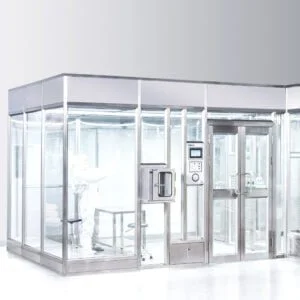
Uma abordagem prática em construções modulares com restrições — ilustrada pela estratégia de planejamento de espaço de pelo menos um fabricante — consiste em projetar estruturas de parede com seções removíveis no local onde um chuveiro de ar para cargas seria eventualmente instalado. Isso permite que a sala limpa opere com o chuveiro de ar para pessoal e a sala de vestimenta já instalados desde o comissionamento, adiando a instalação do chuveiro de ar para cargas até que o espaço ou o orçamento o permitam, sem a necessidade de modificações estruturais para adicioná-lo posteriormente. Essa é uma característica de projeto específica do fabricante, não uma abordagem padrão do setor, mas a lógica subjacente — de que a preparação para o futuro pode adiar despesas de capital sem comprometer permanentemente a sequência de entrada — aplica-se como princípio de planejamento quando restrições de espaço determinam as decisões de layout.
A avaliação das vantagens e desvantagens deve levar em conta a área ocupada pelo ambiente, o volume real de tráfego de pessoal, o risco de exposição do processo e se a classificação da instalação justifica a omissão durante uma auditoria ou revisão de validação. Omitir uma câmara de ar quando tanto a exposição do produto quanto o volume de tráfego justificam sua instalação é uma decisão diferente de omitir em uma configuração de baixo risco e baixo tráfego, e ambas as decisões devem ser documentadas com a justificativa que as sustenta.
Antes de finalizar o projeto da sequência de entrada para um sala limpa modular, comparar a demanda máxima real de tráfego com a capacidade da câmara, confirmar se o layout dos bicos está de acordo com o nível de limpeza pretendido para a sala limpa e verificar se a área de vestimenta a montante do chuveiro de ar possui dimensão e rigor procedural suficientes para conduzir o pessoal devidamente vestido até a entrada do chuveiro. Se as restrições de espaço estiverem forçando uma escolha entre a área de vestimenta e a área ocupada pelo chuveiro, esse é um ponto de decisão que deve ser avaliado explicitamente em relação ao risco do processo — e não resolvido optando-se automaticamente pela opção que o layout tornar mais fácil.
No momento da aceitação e do comissionamento, as verificações funcionais relevantes não se limitam apenas ao desempenho isolado do chuveiro de ar na redução de partículas. A sequência de intertravamento, a precisão do temporizador de ciclo, a velocidade dos bicos, o tempo de resposta da porta e a comprovada conformidade do usuário com o procedimento de entrada devem ser confirmados e documentados antes que a sequência de entrada seja considerada validada. Um chuveiro de ar que seja aprovado na verificação do equipamento, mas seja utilizado incorretamente na operação de rotina, oferece um controle de contaminação muito mais fraco do que o registro de comissionamento sugere.
Perguntas frequentes
P: Já operamos uma sala limpa modular sem chuveiro de ar. É viável instalar um posteriormente?
R: A adaptação posterior costuma ser viável, mas o ponto-chave é se o layout de entrada e o sistema de paredes existentes podem acomodar um chuveiro de ar sem comprometer as cascatas de pressão ou o espaço para vestimenta. Fornecedores de salas limpas modulares que oferecem seções de parede removíveis ou pontos de integração pré-projetados — como os projetos de salas limpas modulares da Youth — permitem que um chuveiro de ar seja adicionado posteriormente com o mínimo de interferência estrutural. Antes de prosseguir, verifique se o local planejado pode acomodar a profundidade da câmara, o movimento da porta com intertravamento e o trajeto do ar de retorno sem criar um gargalo na área de vestimentas.
P: Decidimos que é necessário instalar um chuveiro de ar em nossa nova sala limpa modular. Qual é o detalhe das especificações que costuma ser mais negligenciado durante o processo de aquisição?
R: O erro mais comum é dimensionar a câmara com base no tráfego médio diário, em vez de considerar a carga de pico concentrada durante as trocas de turno. Especificar o projeto com base em uma média de poucas passagens por hora, ignorando o intervalo de 15 minutos em que 30 operadores entram, leva a equipamentos subdimensionados, filas fora da sala limpa e contaminação secundária. Sempre mapeie a demanda máxima de entradas em um intervalo de 15 minutos e adapte-a à configuração para uma pessoa, duas pessoas ou túnel antes de finalizar o pedido.
P: Se nossa sala limpa modular for classificada como ISO 8, a recomendação de considerar o chuveiro de ar como indispensável ainda se aplica?
R: Não, a orientação “indispensável” se aplica especificamente a entradas das Classes 5 a 7 da ISO, nas quais as partículas provenientes do corpo humano representam um risco direto ao produto. Em um ambiente ISO 8, o benefício da redução de partículas proporcionado por um chuveiro de ar é menor e, muitas vezes, não melhora os resultados do processo o suficiente para justificar o espaço ocupado e o custo, a menos que a operação envolva um produto não coberto excepcionalmente sensível a partículas ou que a própria área de vestimenta seja uma fonte conhecida de contaminação. A decisão deve se basear em uma avaliação de risco da exposição do produto, e não apenas no limite de classificação.
P: Temos espaço físico limitado. Como devo comparar o nível de controle de contaminação de um vestiário maior com a instalação de um chuveiro de ar?
R: Comece identificando a fonte dominante de partículas em sua sequência de entrada atual. Se os operadores costumam vestir as roupas de proteção de maneira incorreta, usar cobertura incompleta ou deixar as luvas em contato com superfícies não limpas, então ampliar a sala de vestimenta com bancadas limpas, espelhos e espaço adequado para preparação quase sempre traz um retorno maior no controle de contaminação do que um chuveiro de ar. O chuveiro só consegue remover partículas soltas da superfície de roupas vestidas corretamente; ele não corrige erros na vestimenta. Reserve o espaço destinado ao chuveiro de ar para casos em que a disciplina no vestimento esteja comprovada e o risco remanescente seja a contaminação aderida à superfície proveniente do trajeto.
P: Para uma pequena sala limpa modular de P&D, na qual apenas dois operadores entram uma vez por dia, vale a pena investir em um chuveiro de ar?
R: Em um cenário com tráfego e frequência tão baixos, uma câmara de ar raramente oferece um valor em termos de controle de contaminação que justifique seu custo de investimento e de validação. A carga de partículas proveniente de dois operadores cuidadosos, que se vestem adequadamente, é mínima, e o risco é melhor gerenciado por meio de controles procedimentais, vestimentas descartáveis de alta qualidade e uma bancada de vestimenta bem projetada. Investir em uma área de vestimenta maior e em reciclagem periódica de treinamento normalmente proporcionará uma proteção mais consistente por dólar gasto.