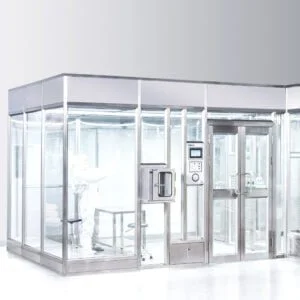
Salas modulares de sala limpa que são aprovadas na inspeção visual na entrega, mas depois são reprovadas nos testes de retenção de pressão ou contagem de partículas durante a IQ/OQ são um padrão comum e oneroso. O retrabalho que se segue — reabrir as interfaces da grade do teto, vedar novamente as molduras de penetração, reinspecionar as juntas das portas — ocorre exatamente no momento em que o cronograma do projeto é menos flexível. A causa principal é quase sempre a mesma: a aceitação foi realizada em componentes individuais, em vez de na estrutura montada da sala, de modo que lacunas nas juntas, caixilhos e aberturas do teto nunca tiveram um responsável designado nem um prazo para resolução. Entender como estruturar a aceitação da envolvente — quais evidências solicitar, quando os registros de fábrica se aplicam e quando é necessária a verificação no local, e como classificar o que permanece em aberto — é o que diferencia um dossiê de entrega que sustenta a qualificação de um que gera risco de auditoria.
Escopo de aceitação para sistemas modulares de revestimento de salas limpas
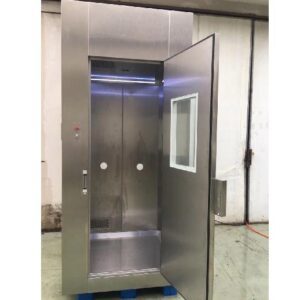
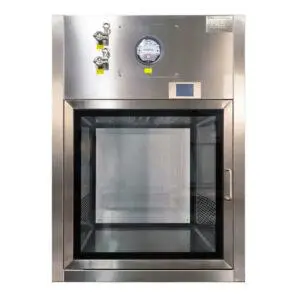
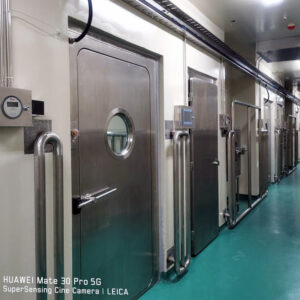
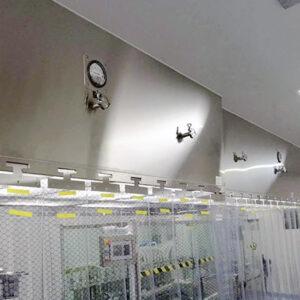
O invólucro de uma sala limpa modular — suas portas, janelas, painéis de parede e sistema de forro — funciona como uma única barreira capaz de manter a pressão e que pode ser limpa. Considerá-lo como quatro componentes separados para fins de análise é perder o foco. Uma vedação de porta que funcione corretamente isoladamente ainda pode apresentar vazamentos na interface entre a moldura e a parede. Uma placa de teto que seja aprovada na inspeção de acabamento na fábrica pode deixar uma abertura não vedada na junção entre a grade e a parede, uma vez instalada de acordo com as tolerâncias estruturais reais. O escopo da aceitação deve, portanto, incluir as interfaces montadas, e não apenas as peças individuais.
A verificação pré-embarque — frequentemente estruturada como um Teste de Aceitação em Fábrica (FAT) — tem uma finalidade útil e prática: confirmar que os painéis, portas, janelas e ferragens atendam à Especificação de Requisitos do Usuário (URS), aos desenhos de projeto e aos critérios de construção relevantes antes que os componentes saiam das instalações do fabricante. A norma ISO 14644-4:2022, que abrange o projeto, a construção e a entrada em operação de salas limpas, fornece uma base de intenção de projeto para esse tipo de revisão. A exigência formal do FAT em um determinado projeto depende do que estiver estabelecido nas especificações do projeto e nos documentos contratuais, e não de uma exigência regulatória universal. Seu valor é prático — detectar problemas de acabamento, substituições de materiais ou não conformidades dimensionais antes que cheguem ao local da obra, onde as correções são mais demoradas e causam mais transtornos.
O que a verificação pré-embarque não pode fazer é confirmar a integridade dos limites da sala. Essa confirmação só se torna possível após a instalação, quando os painéis são unidos, as molduras são fixadas, as penetrações são vedadas e a grade do teto é fechada. O escopo da aceitação no local deve incluir explicitamente essas interfaces. Se o plano de aceitação considerar a instalação concluída assim que os painéis estiverem no lugar e os componentes estiverem funcionais, ele rotineiramente deixará passar as lacunas que, posteriormente, impedirão a realização dos testes de partículas da norma ISO 14644.
As evidências relativas a portas, janelas, paredes e tetos que os compradores devem solicitar
As solicitações de comprovantes durante o recebimento dos envelopes se enquadram em três categorias práticas: documentação, inspeção física e conformidade do material. A falta de comprovantes em qualquer uma dessas categorias não representa apenas uma lacuna na documentação — ela impede a possibilidade de defender uma decisão posteriormente, seja durante uma auditoria regulatória, uma controvérsia sobre a qualidade da instalação ou uma investigação da causa raiz após um incidente de contaminação.
As lacunas na documentação são as mais comuns e as mais subestimadas. Desenhos de projeto, certificados de materiais, manuais de operação e diagramas elétricos para sistemas de intertravamento de portas não são meras formalidades administrativas; eles constituem a cadeia de evidências que conecta o que foi especificado ao que foi construído. Se esses documentos estiverem incompletos no Teste de Aceitação no Fábrica (FAT), raramente será mais fácil obtê-los após a instalação. Os compradores que aceitam garantias verbais de que os certificados serão fornecidos posteriormente muitas vezes descobrem que ainda estão tentando obtê-los no início do Teste de Instalação (IQ).
As evidências da inspeção física devem abranger as dimensões, o acabamento da superfície, o tipo de aço inoxidável e a rugosidade da superfície, a integridade das soldas nas juntas dos painéis e a limpeza das superfícies do invólucro antes do embarque. Essas características determinam diretamente se a sala instalada poderá ser limpa de acordo com o protocolo sem reter contaminantes nas juntas, sofrer corrosão causada por agentes de limpeza ou gerar partículas decorrentes da degradação da superfície. Inspecioná-las antes do embarque é estruturalmente mais fácil do que fazê-lo após a instalação, quando as superfícies podem estar parcialmente ocultas e as opções de correção são limitadas.
Os requisitos de conformidade dos materiais — resistência à corrosão, construção à prova de poeira e superfícies de fácil limpeza — devem ser rastreáveis até a URS e à intenção de projeto expressa na norma ISO 14644-4:2022. Confirmar se as paredes, tetos, pisos e conjuntos selados de portas e janelas atendem a esses requisitos é um critério de planejamento, e não um item de lista de verificação a ser marcado no final de uma visita à fábrica.
| Categoria de evidência | O que confirmar | Por que é importante |
|---|---|---|
| Revisão da documentação | Os desenhos de projeto, os diagramas elétricos, os manuais de operação e os certificados de materiais estão completos e estão em conformidade com os Requisitos de Especificação do Usuário (URS) | Cria uma trilha de evidências essenciais para fins de conformidade e manutenção futura |
| Inspeção de hardware | Dimensões, materiais, acabamento superficial, qualidade do aço inoxidável, rugosidade superficial, integridade da solda, limpeza | Verifica os atributos físicos que afetam a facilidade de limpeza, a resistência à corrosão e a durabilidade |
| Conformidade dos materiais | Paredes, tetos, pisos e portas/janelas vedadas atendem aos requisitos de resistência à corrosão, construção à prova de poeira e superfícies de fácil limpeza | A escolha do material determina diretamente a capacidade de manter a limpeza e de resistir aos protocolos de limpeza |
Uma implicação prática dessa estrutura de comprovação é que o comprador deve especificar, antes do FAT, quais documentos devem estar fisicamente presentes e serem analisados no próprio dia — e não serem apresentados posteriormente. As lacunas nos certificados detectadas no FAT geralmente podem ser resolvidas antes do embarque. As mesmas lacunas detectadas durante a aceitação no local, quando o cronograma de qualificação já está em andamento, são significativamente mais complicadas de resolver.
Inspeção na fábrica versus aceitação na sala de instalação
A inspeção na fábrica e a aceitação da sala instalada têm objetivos de verificação distintos, e confundir os dois é um dos erros de aceitação mais comuns em projetos de salas limpas modulares. Um registro válido do FAT (Teste de Aceitação na Fábrica) demonstra que os componentes foram corretamente fabricados e documentados antes de saírem da fábrica. Ele não demonstra, porém, que a sala instalada forme um limite aceitável — pois a instalação introduz variáveis que a inspeção de fábrica não pode prever: tolerâncias do substrato estrutural, decisões sobre o trajeto das penetrações tomadas no local, condições de interface na junção do invólucro da sala limpa com o edifício anfitrião e o efeito cumulativo das decisões de sequenciamento tomadas durante a montagem.
| Aspecto | Inspeção na fábrica (FAT) | Aceitação da instalação no local |
|---|---|---|
| Objetivo principal | Verifique se os componentes do invólucro estão em conformidade com os URS, os critérios de projeto e a norma ISO 14644 antes do envio | Verificar a estanqueidade das interfaces, a integridade dos limites da sala e a qualidade da instalação no local |
| Foco típico | Acabamento dos painéis, ajuste dos componentes, qualidade dos materiais, acabamento superficial, integridade da documentação | Direção da pressão, facilidade de limpeza, acesso para manutenção e compatibilidade com testes ISO futuros |
| Detecção de problemas | Identifica antecipadamente problemas de projeto, montagem ou funcionamento, reduzindo os custos de reparo e as interrupções operacionais | Identifica falhas específicas da instalação em penetrações, caixilhos, aberturas no teto e itens da lista de pendências |
| Função de documentação | Fornece evidências essenciais para auditorias regulatórias, preparação para auditorias e preparação para a transferência de responsabilidades | Completa o mapa de evidências com registros da condição de instalação e relatórios de aceitação final |
A implicação prática dessa distinção é que os registros do FAT devem ser tratados como o documento de base para a aceitação no local, e não como um substituto para ela. Um comprador que inicia a aceitação no local com registros completos do FAT está em uma posição vantajosa: os desvios encontrados no local podem ser comparados com a linha de base da fábrica, facilitando a determinação se um problema é uma falha de instalação, uma lacuna de projeto que estava presente, mas não foi detectada, ou uma modificação feita no campo. Um comprador que inicia a aceitação no local sem registros do FAT não tem uma linha de base, o que torna mais difícil avaliar a gravidade do que foi encontrado e atribuir a responsabilidade pela correção.
O padrão de falha a ser observado é um processo de aceitação da obra que se concentra na qualidade do acabamento visível — condição da superfície dos painéis, funcionamento das ferragens das portas, clareza dos vidros das janelas —, deixando sem solução as lacunas nas penetrações, nas juntas das molduras e nas interfaces da grade do teto, que são mais difíceis de ver e de fotografar. São essas lacunas que determinam se o ambiente mantém a direção da pressão e suporta os testes de partículas. Aprovar o acabamento visível e deixar os detalhes das penetrações como “pequenos itens da lista de pendências sem responsável designado” cria exatamente o tipo de desvio em aberto que se torna um risco de auditoria, em vez de um registro resolvido. Para projetos que visam sala limpa modular Nesse sentido, essa distinção entre aceitação de superfície e aceitação de limite é a origem da maior parte do retrabalho em etapas posteriores.
Como os testes ISO e a IQ/OQ dependem da preparação do envelope
A lógica de sequência entre a aceitação do envelope e a qualificação é direta: os testes de partículas segundo a norma ISO 14644, bem como as etapas de IQ/OQ que os precedem, exigem um perímetro estável e vedado da sala para produzir resultados comprováveis. Uma sala com brechas de penetração não sanadas ou interfaces não vedadas na grade do teto não manterá o diferencial de pressão necessário para confirmar a direção do fluxo de ar, e as contagens de partículas realizadas nessa sala não podem ser atribuídas ao desempenho da filtragem HEPA, mas sim a vazamentos nas delimitações. Os resultados dos testes não são apenas potencialmente fora de conformidade — eles são ininterpretáveis.
A norma ISO 14644-3:2019, que define métodos de ensaio para salas limpas, e o EudraLex, Volume 4, Anexo 15, que aborda a qualificação e a validação no contexto farmacêutico, refletem a lógica subjacente de que as atividades de qualificação dependem, como pré-requisito, de uma instalação corretamente montada e verificada. Na prática, isso significa que a fase de IQ — que confirma se a sala está instalada conforme projetada — não pode ser concluída até que a estrutura seja aceita em condições de instalação, e não apenas em condições de fábrica. A OQ, que demonstra que a sala opera conforme pretendido sob condições definidas, depende da conclusão da IQ.
A condição de bloqueio que os profissionais devem levar em conta é a seguinte: se desvios críticos do envelope permanecerem sem solução quando a sequência de qualificação estiver pronta para começar, o cronograma não apenas fica mais lento — ele é interrompido até que os desvios sejam corrigidos e reinspecionados. Se um desvio é “crítico” nesse sentido é determinado pelos próprios critérios de aceitação do projeto, e não por uma classificação ISO universal. Mas a definição prática é consistente: qualquer desvio que comprometa a integridade dos limites da sala, a manutenção da pressão ou a facilidade de limpeza é crítico, pois impede que os testes ISO produzam resultados válidos. Equipes que tratam lacunas não resolvidas no teto ou penetrações não vedadas como itens de baixa prioridade na lista de pendências frequentemente descobrem, quando os testes de partículas ISO falham, que a causa raiz estava documentada e visível no registro de aceitação do local — apenas não foi classificada nem resolvida.
A implicação anterior é que o plano de aceitação do envelope deve ser elaborado de forma a identificar explicitamente quais itens são pré-requisitos para o início do IQ, em vez de deixar essa determinação a cargo da equipe de qualificação após o fato. É também aqui que o processo de comissionamento de salas limpas e a aceitação do revestimento: as atividades de comissionamento que dependem de um limite vedado — testes de diferencial de pressão, visualização do fluxo de ar — devem ser realizadas após, e não simultaneamente à, vedação das penetrações e ao fechamento final da estrutura do teto.
Decisão sobre a entrega: aceita, condicional ou necessita de retrabalho
A decisão de entrega não é uma formalidade no final do processo de aceitação — é o mecanismo pelo qual o projeto atribui formalmente um status a cada item pendente e uma responsabilidade a cada desvio. Acertar nessa classificação determina se o arquivo de entrega será um registro de conformidade ou um risco em caso de auditoria.
A distinção fundamental é entre desvios que impedem que a sala funcione como uma sala limpa qualificada e aqueles que não o fazem. Uma fresta em uma penetração que permita a circulação descontrolada de ar não se enquadra na mesma categoria de problema que um pequeno arranhão superficial no painel de uma porta. Tratá-los de forma idêntica — seja forçando o retrabalho em ambos, seja adiando ambos como itens da lista de pendências — produz resultados errados em direções opostas. Classificar erroneamente um desvio crítico como não crítico atrasa a qualificação e pode exigir um retrabalho significativamente mais disruptivo após a ativação dos sistemas. Classificar erroneamente um desvio não crítico como crítico gera atrasos e custos desnecessários na entrega, sem melhorar a integridade da sala.
| Classificação de desvios | Avaliação de Impacto | Decisão sobre a transferência | Provas exigidas |
|---|---|---|---|
| Desvios críticos | Impede a realização de testes ISO, IQ/OQ ou compromete a limpeza/integridade | É necessário refazer o trabalho antes da aceitação | Registro de ação corretiva, relatório de reinspeção |
| Desvios não críticos | Não impede o funcionamento adequado nem a conformidade; risco controlável | É possível a aceitação condicional | Registro de desvios, avaliação de impacto, responsável designado e cronograma |
| Sem desvios | Todos os requisitos foram atendidos; aprovado no FAT | Aceitação total | Relatório de aceitação, manuais de operação e guias de manutenção que constituem o conjunto de documentos comprovativos da transferência |
A consequência da classificação incorreta que os profissionais costumam subestimar é o problema da “ausência de responsável designado”. Desvios que são identificados, mas não classificados explicitamente — deixados em uma lista geral de pendências sem avaliação de impacto, sem responsável e sem prazo para resolução — não se resolvem por si só. Eles reaparecem durante a Inspeção de Qualidade (IQ) como constatações não resolvidas, durante inspeções regulatórias como documentação incompleta e, durante problemas operacionais, como causas-raiz não identificadas. O arquivo de transferência deve encerrar cada item ou transferi-lo formalmente para a próxima etapa com uma classificação, um responsável e um cronograma acordados. Uma aceitação condicional com documentação completa dos desvios e responsáveis designados é um resultado defensável. Uma aceitação com uma lista de pendências geral e sem classificação não é.
O mapa de evidências que o arquivo de transferência deve conter é de natureza prática, e não teórica. Para cada item em aberto no momento da transferência: um registro de inspeção confirmando o que foi constatado, um registro de teste, quando aplicável, uma classificação do desvio com avaliação de impacto, um responsável identificado, um prazo para resolução e um registro de reinspeção final quando o item for encerrado. Para itens totalmente aceitos: o relatório de aceitação, os manuais de operação e os guias de manutenção que confirmam que o sistema está pronto para dar suporte à qualificação. O sistema de paredes e tetos e os componentes de portas e janelas devem constar neste arquivo, não como folhas de aprovação separadas, mas como partes de um único registro referente aos limites do ambiente — pois é essa a função que se espera que eles desempenhem durante a qualificação e a operação.
A posição mais defensável no início da Inspeção de Qualidade (IQ) é um registro completo de aceitação de lotes que distinga claramente o que foi totalmente aceito, o que foi aceito condicionalmente — com responsáveis e prazos documentados — e o que foi retrabalhado e reinspecionado antes da entrega. Esse registro é o que torna os resultados dos testes de partículas da ISO interpretáveis e o que protege o comprador caso a qualificação seja contestada.
Antes de aprovar a aceitação do envelope, confirme se as seguintes perguntas têm respostas explícitas no arquivo de transferência: Todas as penetrações estão vedadas e registradas? As interfaces entre a estrutura do teto e as paredes foram inspecionadas e documentadas? Todos os desvios têm uma classificação, um responsável e um prazo? Os pacotes de documentação do FAT estão completos e no local? Se alguma dessas perguntas estiver sem resposta, a aceitação não está completa — independentemente da aparência da qualidade do acabamento.
Perguntas frequentes
P: O que acontece se as especificações do projeto não incluírem um requisito formal de FAT — a aceitação no local ainda precisa verificar as mesmas evidências?
R: Sim, e, em alguns aspectos, a carga sobre a aceitação no local torna-se mais pesada. Os registros do FAT funcionam como uma linha de base que facilita a categorização e a atribuição de desvios no local. Sem eles, a aceitação no local deve verificar a integridade da documentação, a conformidade dos materiais e a qualidade da execução física — aspectos que, de outra forma, teriam sido confirmados antes do embarque — em um momento do cronograma em que as correções são mais demoradas e causam mais transtornos. Se não houver FAT, o plano de aceitação no local deve ampliar explicitamente seu escopo de evidências para abranger certificados de materiais, desenhos de projeto, integridade das soldas e conformidade das superfícies, em vez de presumir que esses itens tenham sido resolvidos em etapas anteriores.
P: Em que momento do cronograma do projeto o plano de aceitação do envelope deve ser elaborado — e quem deve ser o responsável por ele?
R: O plano de aceitação geral deve ser elaborado antes do agendamento do FAT, e não após o início da instalação. Uma vez que os componentes estejam no local, a oportunidade de definir quais documentos devem estar fisicamente presentes, quais interfaces exigem inspeção pós-instalação e quais desvios são pré-requisitos para o IQ já terá, na prática, passado. A responsabilidade normalmente recai sobre a parte responsável pela preparação para a qualificação — frequentemente o líder de projeto ou de validação do comprador —, pois o plano de aceitação determina diretamente se a documentação de entrega dará suporte à IQ ou exigirá investigação complementar antes que a qualificação possa prosseguir.
P: Um resultado de aceitação condicional é justificável durante uma auditoria regulatória, ou isso indica que a preparação para a qualificação ainda não está completa?
R: Uma aceitação condicional é justificável, desde que cada item em aberto possua uma classificação documentada, um responsável identificado e um prazo para resolução — e que os registros de reinspeção sejam anexados quando os itens forem encerrados. O que gera risco de auditoria não é o status condicional em si, mas uma lista de pendências geral e não classificada, sem responsáveis designados. O EudraLex, Volume 4, Anexo 15, exige que os desvios encontrados durante as atividades de qualificação sejam documentados e avaliados quanto ao seu impacto; uma aceitação condicional bem estruturada que atenda a essa norma representa uma posição mais sólida do que uma aprovação nominalmente impecável que deixa lacunas de penetração sem registro.
P: Qual é a diferença na aceitação do envelope em uma ampliação ou reforma de uma sala limpa em comparação com uma sala modular recém-construída?
R: Em uma reforma ou ampliação, a fase de aceitação da instalação no ambiente apresenta mais riscos do que em uma obra nova, pois o revestimento externo interage com uma estrutura existente cujas tolerâncias do substrato, histórico de penetrações e condição da superfície não foram controlados durante o projeto original. Os registros do FAT (Teste de Aceitação no Local) para novos painéis continuam sendo úteis como referência para os componentes, mas o escopo da aceitação no local deve dar proporcionalmente mais atenção às condições de interface — particularmente nas junções entre painéis novos e existentes, nas penetrações que atravessam o revestimento existente e nas conexões da grade do teto com a estrutura do edifício anfitrião. As categorias de evidência são as mesmas; a probabilidade de encontrar desvios de interface é maior, e a etapa de classificação torna-se, consequentemente, mais importante.
P: Se for realizado um teste de diferença de pressão durante o comissionamento para verificar a integridade das barreiras, isso substitui a necessidade de um registro documentado da inspeção das penetrações e da grade do teto?
R: Não — o teste de diferença de pressão e a inspeção física das interfaces têm finalidades de verificação diferentes e nenhum substitui o outro. Um teste de manutenção de pressão ou de diferença de pressão confirma que a interface montada atende a um padrão mensurável em um determinado momento; ele não identifica onde ocorre o vazamento nem documenta a condição de vedação de penetrações individuais e junções da grade do teto. Um registro de inspeção física cria a evidência rastreável de que interfaces específicas foram vedadas e aceitas, o que é exigido pela investigação da causa raiz e pela auditoria regulatória caso o desempenho se deteriore posteriormente. Ambos os registros devem constar no arquivo de transferência, e a ausência de qualquer um deles deixa uma lacuna que o outro não pode preencher.