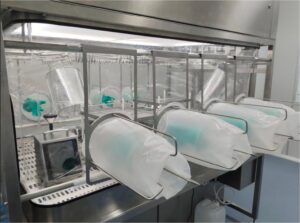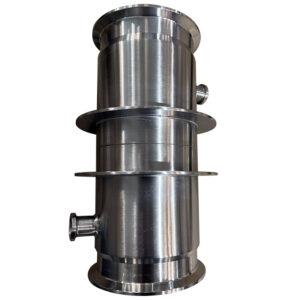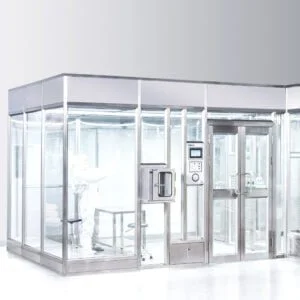
Especificar os equipamentos antes que a lógica do processo esteja definida é uma das formas mais comuns pelas quais os projetos de salas limpas farmacêuticas geram seus próprios problemas de qualificação. Uma FFU encomendada com base em uma suposição de grau, uma caixa de passagem especificada por categoria em vez de pelo risco de transferência, ou uma cabine de fluxo laminar selecionada por familiaridade em vez de pela direção do fluxo de ar — cada um desses itens pode chegar à instalação antes que alguém confirme se o equipamento realmente controla o risco para o qual foi destinado. Quando essa lacuna vem à tona durante a qualificação, a correção raramente é uma alteração na configuração; geralmente é um reprojeto, uma nova aquisição ou um desvio documentado que acompanha o registro do lote indefinidamente. A decisão que evita isso é o sequenciamento: a relação de grau, o estado de exposição do produto e a rota de transferência devem ser definidos antes que as categorias de equipamentos sejam atribuídas. Ao final deste artigo, engenheiros, equipes de controle de qualidade e líderes de compras estarão mais bem posicionados para avaliar se um determinado item de equipamento está resolvendo o problema certo no local certo.
Avaliar e analisar os riscos antes da seleção do equipamento
A classificação de grau define a meta de limpeza, mas, por si só, não indica quais equipamentos são necessários nem quais riscos esses equipamentos devem controlar. A Classe 5 da ISO é o limite mínimo para ambientes em que o produto estéril fica diretamente exposto ao ambiente — recipientes abertos, operações de envase, conexões assépticas. Essa classificação determina requisitos específicos de fluxo de ar e filtragem. O que ela não especifica é se o mecanismo de proteção deve ser uma unidade de fluxo unidirecional sobre uma linha de envase, um isolador de barreira ou uma configuração RABS. Essa escolha depende do tipo de exposição, e não apenas do grau.
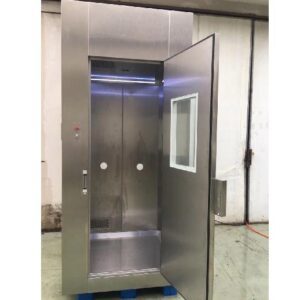
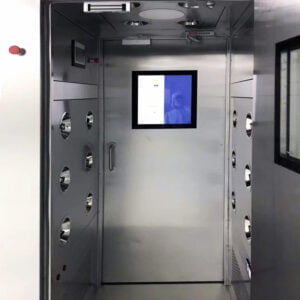
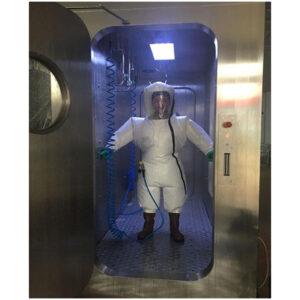
A camada de risco operacional preenche a lacuna deixada pela classificação numérica. Para qualquer espaço ou operação, as questões relevantes são: qual é o estado do produto no ponto de exposição, quais são as fontes de contaminação nas proximidades e o que o equipamento precisa interceptar. Em ambientes farmacêuticos, o pessoal é a principal fonte de contaminação microbiana — não o sistema de climatização, nem as superfícies, nem os materiais que entram de zonas adjacentes, na maioria dos casos. Essa realidade operacional é o que justifica o investimento em salas de vestimenta, chuveiros de ar e sistemas de barreira em operações de Grau B e Grau A, e é a lógica à qual essas decisões sobre equipamentos devem estar vinculadas. Se a justificativa em um URS (Especificação de Requisitos do Usuário) ou avaliação de risco indicar “necessário para o Grau B” sem estabelecer uma conexão com a via de contaminação pelo pessoal, a lógica de seleção estará incompleta e será difícil de defender caso seja questionada durante uma inspeção.
A seleção baseada no grau e a seleção baseada no risco do processo são complementares, não intercambiáveis. O grau indica a meta de limpeza; o risco do processo indica contra o que o equipamento deve proteger, quem ou o que ele deve conter e quais evidências serão necessárias para comprovar que está funcionando. Ambos devem ser definidos antes da atribuição das categorias de equipamentos.
Decisões sobre fluxo de ar, transferência, cabine e entrada por tipo de exposição
O não cumprimento da meta de diferencial de pressão não resulta em uma falha visível imediata. O que isso causa é uma via de entrada de contaminação que permanecerá invisível até que uma variação no monitoramento ambiental ou uma inspeção do anexo questione como a barreira foi mantida. A consequência de um diferencial inadequado em uma barreira entre áreas classificadas e não classificadas é a entrada de ar não filtrado na zona limpa sempre que uma porta se abre ou um pass-through é acionado. Entre duas zonas classificadas, uma deficiência na pressão diferencial colapsa o gradiente de limpeza do qual todo o layout depende.
| Transição de área | Diferencial de pressão necessário | Finalidade |
|---|---|---|
| Classificado → Não classificado | 15 Pa | Evite a entrada de ar não filtrado |
| Entre duas áreas confidenciais | 10 Pa | Manter o gradiente de limpeza entre as zonas |
| Dentro da mesma classificação | 5 Pa | Estabilizar a direção do fluxo de ar e evitar turbulências |
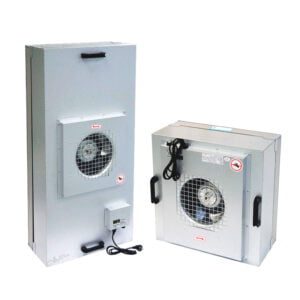
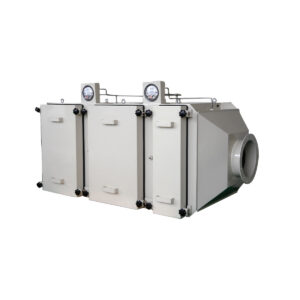
As taxas de renovação de ar têm um caráter diferente das diferenças de pressão. Os valores utilizados no projeto — 10 a 25 por hora para ambientes ISO 8, 40 a 60 para ISO 7 e fluxo unidirecional de 0,36 a 0,46 m/s para ISO 5 — são valores de projeto extraídos de diretrizes do setor, e não exigências regulatórias com aplicação universal. Eles determinam o dimensionamento das FFUs, Planejamento da capacidade do sistema de climatização, bem como o número e a localização das unidades de filtragem terminais. A consequência de subestimar as renovações de ar necessárias em um espaço de Grau C não é uma constatação imediata na auditoria; trata-se de uma contagem de partículas que não atende aos padrões, seja em repouso ou em operação, o que, por sua vez, exige um recálculo das renovações de ar, unidades de filtragem terminais (FFUs) adicionais e um novo teste de qualificação. Errar nas metas de renovação de ar na fase de projeto é algo que pode ser corrigido — mas não sem um custo elevado.
| Nível de sala limpa (Classe ISO) | Parâmetro de fluxo de ar | Valor-alvo |
|---|---|---|
| ISO 8 (Grau D) | Taxa de renovação de ar | 10–25 por hora |
| ISO 7 (Grau C) | Taxa de renovação de ar | 40–60 por hora |
| ISO 5 (Grau A) | Velocidade do fluxo unidirecional | 70–90 pés por minuto (0,36–0,46 m/s) |
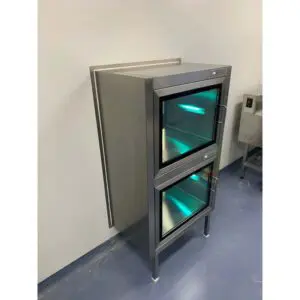
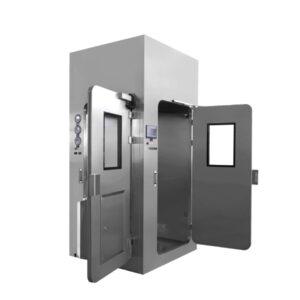
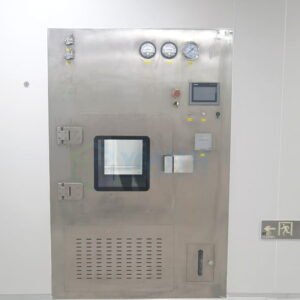
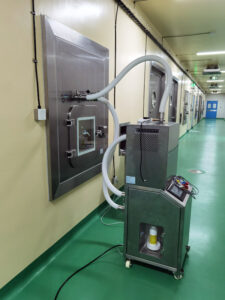
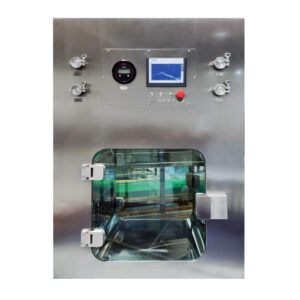
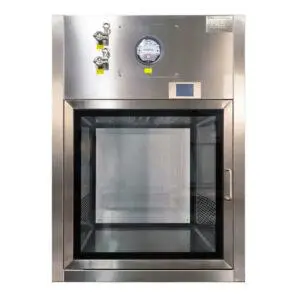
A configuração do pass-through é uma decisão de engenharia que deve estar explicitamente vinculada ao nível de risco da transferência. Um intertravamento mecânico básico — que impede que ambas as portas se abram simultaneamente — protege a integridade do diferencial de pressão durante a transferência de material. Um pass-through com filtro HEPA que purga a câmara quando a porta do lado da sala limpa é aberta adiciona uma camada de controle de partículas adequada para transferências de maior risco, particularmente quando superfícies de recipientes ou ferramentas expostas estão se deslocando entre classes. Nenhuma das configurações é universalmente exigida; a seleção depende do que está sendo transferido, entre quais classes e do que a avaliação de risco documenta como via de contaminação aceitável. Tratar todas as passagens como intercambiáveis por categoria leva à subdimensionação de um ponto de transferência crítico ou à especificação excessiva de um ponto de baixo risco — ambos criam problemas, o primeiro na qualificação e o segundo na análise de aquisição.
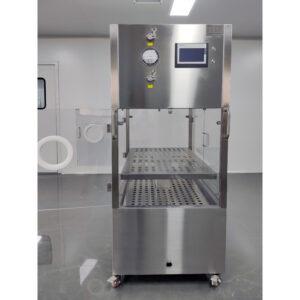
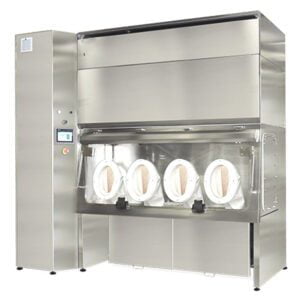
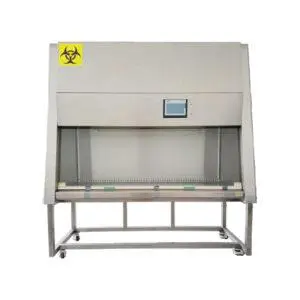
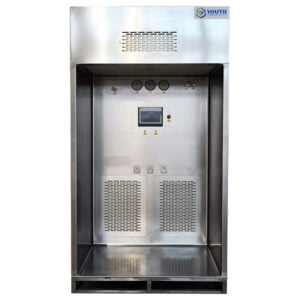
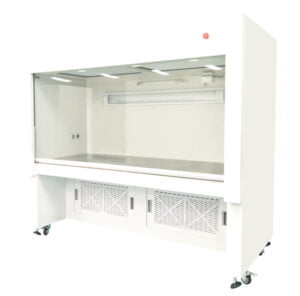
A escolha da cabine de fluxo laminar envolve uma restrição que costuma ser subestimada na fase de especificação. O fluxo de ar vertical direciona o ar filtrado para baixo, sobre a superfície de trabalho, protegendo o produto contra o depositamento de partículas. O fluxo de ar horizontal se move da parte traseira da unidade em direção ao operador, protegendo-o da exposição ao produto ou a agentes. As duas orientações não são intercambiáveis por meio de reposicionamento; a escolha da orientação errada para um cenário de risco combinado — em que tanto a integridade do produto quanto a proteção do operador são relevantes — não pode ser resolvida sem a troca da unidade. Essa decisão deve ser tomada na fase de caracterização do processo, e não na fase de aquisição.
Evidências necessárias para as equipes de controle de qualidade e de engenharia
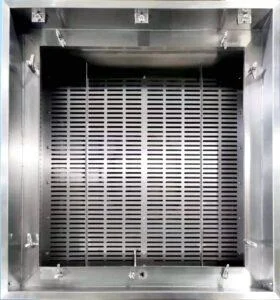
A validade do pacote de qualificação de qualquer ambiente classificado depende inteiramente dos testes realizados. Uma sala que seja aprovada na inspeção visual e atinja a taxa de renovação de ar adequada durante o comissionamento não é considerada uma sala qualificada — ela só se torna qualificada quando as contagens de partículas, os dados de pressurização e os resultados dos testes de vazamento dos filtros in situ forem documentados de acordo com critérios de aceitação definidos. Equipes de controle de qualidade que tratam a instalação de filtros como uma formalidade, em vez de um evento passível de teste, criam um risco de auditoria que vem à tona quando um inspetor solicita os registros dos testes de DOP e constata que não há nenhum ou que o conjunto está incompleto.
| Requisito de comprovação | Especificação principal / Limite | Objetivo da revisão de controle de qualidade |
|---|---|---|
| Eficiência do filtro HEPA | ≥ 99,971 TP10T a 0,3 µm (IEST-RP-CC-001) | Confirma o desempenho mínimo de remoção de partículas |
| Teste de vazamento de filtro HEPA no local | Concentração a jusante ≤ 0,011 TP10T do teste de carga a montante; meio filtrante, estrutura e junta do filtro de teste | Verifica a integridade da instalação e a ausência de vazamentos por derivação |
| Testes de qualificação de salas limpas | Contagem de partículas, pressurização da sala e vazamento do filtro, conforme a norma IEST-RP-CC-006 | Define o pacote de aceitação da sala para a liberação do controle de qualidade |
| Monitoramento de partículas em suspensão (ISO 14644-1) | Volume da amostra V = 20/C × 1000 por local | Garante dados estatisticamente válidos sobre partículas para análise de controle de qualidade |
| Programa de monitoramento ambiental | Monitoramento em tempo real de partículas e microrganismos (ar/superfícies/pessoal), registro contínuo de T/H/P | Fornece evidências contínuas de conformidade para o controle de qualidade |
| Observações de vazamentos em filtros no mundo real | Três dos 27 filtros HEPA apresentaram vazamentos no meio filtrante; os 24 restantes atingiram uma eficiência de 99,9971 TP10T | Justifica a realização de testes rigorosos de vazamento após a instalação, além da eficiência nominal |
A constatação de vazamentos em filtros, resultante de um estudo em sala limpa de Grau B — três filtros com vazamentos no meio filtrante entre os 27 instalados —, deve ser analisada dentro do seu contexto. Não se trata de uma taxa de falha representativa do setor e não deve ser generalizada além do que um único conjunto de dados permite. O que isso ilustra, porém, é um padrão que as equipes de controle de qualidade devem levar em conta: filtros classificados de acordo com as especificações ainda podem chegar ou ser instalados com caminhos de desvio através do meio filtrante, da estrutura ou da junta, que somente testes de DOP no local poderão revelar. Aceitar um filtro HEPA com base apenas na documentação de certificação, sem testes de vazamento pós-instalação, deixa uma via de contaminação sem ser detectada. O limite de concentração de 0,01% da corrente de ar a jusante para a corrente de ar a montante é a linha quantitativa que separa um teste aprovado de um reprovado, e se aplica ao sistema instalado, não apenas ao filtro isoladamente.
A fórmula de amostragem de partículas em suspensão da norma ISO 14644-1 — V = 20/C × 1000 — existe para garantir que os dados de monitoramento apresentados para análise do Controle de Qualidade (CQ) tenham validade estatística. A amostragem em menos locais ou com volumes menores do que os exigidos pela fórmula produz dados que não podem demonstrar, de forma confiável, a conformidade com o limite de classificação. Quando o controle de qualidade aceita um pacote de qualificação baseado em dados de partículas com amostragem insuficiente, o risco não é apenas receber uma observação de auditoria; é operar um espaço que pode não atender ao grau declarado e não ter evidências confiáveis para comprovar o contrário.
Risco de seleção quando os nomes dos equipamentos substituem a análise de risco
O padrão de falha no planejamento que, com maior segurança, gera problemas de qualificação é o seguinte: o departamento de compras recebe uma especificação que lista categorias de equipamentos — FFU, unidade LAF, caixa de passagem, chuveiro de ar — antes que a relação de classificação, a exposição do processo e os critérios de aceitação para cada item tenham sido formalmente definidos. Os nomes das categorias parecem resolver a questão da seleção. Mas não resolvem. Uma especificação de caixa de passagem sem uma rota de transferência definida e sem requisitos de intertravamento pode resultar em uma unidade que atenda às dimensões declaradas, mas que não consiga controlar a via de contaminação contra a qual foi projetada. Uma especificação de FFU sem meta confirmada de renovação de ar e sem faixa de velocidade frontal pode proporcionar área de filtragem correta, mas cobertura incorreta para o processo abaixo dela.
Isso não significa necessariamente uma falha garantida na conformidade em todos os projetos — algumas equipes identificam a lacuna durante a engenharia detalhada e corrigem o rumo antes da instalação. O risco é que a correção exija uma alteração no hardware, em vez de uma alteração na documentação: uma configuração diferente do intertravamento, uma direção diferente do fluxo de ar, uma unidade realocada. Cada uma dessas alterações após a instalação acarreta um esforço de requalificação que não foi previsto no cronograma do projeto.
A estrutura de gestão de riscos de qualidade da ICH Q9(R1) corrobora a lógica subjacente a isso: a identificação do risco precede a seleção das medidas de controle de risco. Um item de equipamento é uma medida de controle de risco. Especificar a medida de controle antes que o risco tenha sido caracterizado inverte a lógica e deixa a seleção sem uma base justificável. Quando um revisor de garantia da qualidade ou um auditor pergunta qual risco de contaminação um determinado equipamento foi selecionado para controlar, a resposta “é padrão para este grau” não é suficiente. A resposta deve remeter a uma via de exposição documentada, a uma análise de rota de transferência ou a uma avaliação de risco do operador.
Ponto de decisão após a definição da nota, do percurso e das evidências de aceitação
O layout da sala limpa e a seleção de equipamentos são resultados finais da definição do processo, e não elementos de entrada para ela. A sequência que evita retrabalho segue em uma única direção: definir o fluxo do processo, mapear as rotas de movimentação de materiais e pessoal, identificar pontos de exposição e limites entre classes, estabelecer requisitos de comprovação de aceitação para cada zona — e, então, atribuir equipamentos a cada função de controle identificada. Inverter qualquer parte dessa sequência, especialmente incluir equipamentos no layout antes que as rotas e os tipos de exposição estejam documentados, tende a resultar em uma instalação que, embora fisicamente completa, esteja logicamente desalinhada com seu próprio processo.
Trata-se de uma disciplina de projeto, não de um ponto de verificação regulatório com exigência de aprovação formal. Não existe nenhuma norma regulatória que especifique a ordem em que uma equipe de projeto deve tomar essas decisões. A consequência prática de errar a sequência é a necessidade de retrabalho na qualificação em etapas posteriores — descobrir durante a OQ ou a PQ que o diferencial de pressão em uma rota de transferência nunca foi formalmente analisado, que a direção do fluxo de ar em uma unidade de fluxo laminar foi presumida em vez de especificada, ou que o pacote de evidências não abrange um equipamento do qual o processo depende. Cada uma dessas lacunas exige um desvio documentado, troca de equipamento ou alteração do protocolo. Todas as três opções são mais caras do que uma sequência estruturada de decisões na fase inicial.
Os elementos que devem ser resolvidos antes que a seleção de equipamentos possa ser encerrada são: atribuição de classe, estado de exposição do produto no ponto de operação, rota de transferência de material e nível de risco de contaminação, objetivo de fluxo de ar para cada limite de zona e o pacote de evidências de aceitação de que o Controle de Qualidade precisará para a aprovação da qualificação. Se qualquer um desses itens permanecer em aberto no momento da aquisição, a seleção permanece em aberto na prática, independentemente do que estiver indicado no pedido de compra.
A seleção de equipamentos em salas limpas farmacêuticas é tanto um problema de documentação quanto de engenharia. O item físico que chega ao local pode estar tecnicamente correto em termos de categoria, mas se a seleção não tiver sido orientada por uma relação documentada entre grau de pureza e processo, um tipo de exposição definido e um conjunto de evidências planejado, a equipe de qualificação terá que reconstruir a justificativa a posteriori — e essa reconstrução, sob o escrutínio de uma auditoria, é mais difícil do que a documentação original elaborada nas condições do projeto. Antes de qualquer categoria de equipamento ser encaminhada para aquisição, confirme se a relação entre grau e exposição ao processo está documentada, se o nível de risco da rota de transferência foi avaliado, se a meta de fluxo de ar está definida em termos mensuráveis e se o escopo das evidências de aceitação do Controle de Qualidade (CQ) foi definido. Quando esses quatro elementos estão alinhados, a seleção de equipamentos torna-se rastreável. Quando qualquer um deles está ausente, a seleção é apenas um lugar-marcador, não uma decisão.
Para equipes que se encontram atualmente na fase de especificação, o próximo passo mais útil não é analisar as fichas técnicas dos equipamentos — mas sim revisar a avaliação de riscos do processo em relação à lista de equipamentos e confirmar se cada item possui uma função de controle documentada vinculada a uma via de exposição específica. Essa revisão identifica lacunas antes da aquisição, em vez de durante a qualificação. Consulte também o Guia de normas GMP para equipamentos de salas limpas farmacêuticas para obter mais informações sobre como os requisitos das BPF se relacionam com o escopo das especificações dos equipamentos.
Perguntas frequentes
P: Essa abordagem de seleção ainda se aplica se a instalação estiver passando por uma reforma, em vez de ser construída do zero?
R: Sim, mas a sequência se torna mais difícil de ser seguida de forma clara. Em uma adaptação, os limites de classe, as rotas de transferência e os objetivos de fluxo de ar costumam ser parcialmente determinados pela estrutura existente e pela infraestrutura de climatização, o que significa que algumas das decisões iniciais que o artigo trata como em aberto já estão condicionadas. O ajuste prático consiste em auditar o que já está definido — atribuições de classe existentes, diferenças de pressão documentadas, capacidade de filtragem instalada — e usar esses dados como parâmetros fixos, em vez de variáveis em aberto. O risco está em presumir que o equipamento existente já controla um risco de processo ao qual nunca foi formalmente designado. Cada equipamento herdado ainda precisa de uma função de controle documentada vinculada a uma via de exposição específica; o contexto da reforma não dispensa esse requisito de rastreabilidade.
P: Quando a relação de classificação e a divulgação do processo já estão definidas, qual é o primeiro documento que deve ser elaborado antes do início do processo de aquisição?
R: Uma lista de funções do equipamento com avaliação de risco, e não uma especificação de aquisição. O primeiro documento a ser elaborado após a definição do grau e da exposição deve mapear cada via de contaminação identificada para o item de equipamento designado para controlá-la, indicar o fluxo de ar mensurável ou o objetivo de contenção para esse item e identificar as evidências de aceitação que o controle de qualidade exigirá na qualificação. Somente quando esse mapeamento existir é que uma especificação de aquisição terá uma base defensável. Iniciar o processo de aquisição com base em uma lista de categorias antes que esse documento exista é o padrão que o artigo identifica como a principal fonte de retrabalho na qualificação posterior.
P: Em que momento a especificação excessiva de uma rota de transferência de baixo risco — por exemplo, a escolha de uma câmara de passagem VHP para o transporte de um material não crítico — passa a ser um problema?
R: A especificação excessiva se torna um problema na análise de aquisição e durante as operações em andamento, não na qualificação. Uma unidade compatível com VHP instalada em um ponto de transferência de baixo risco será aprovada na qualificação, mas introduz obrigações de validação — desenvolvimento de ciclo, testes de eficácia esporicida, monitoramento de resíduos — que são desproporcionais ao risco que ela controla. A análise de aquisição questionará a diferença de custo em relação a um sistema de passagem intertravado padrão e, se a avaliação de risco não documentar uma justificativa de contaminação para a atualização, a escolha será difícil de defender. O risco mais duradouro é operacional: uma equipe que precisa executar e documentar um ciclo de VHP para cada transferência de material de baixa criticidade criou uma sobrecarga processual sem a correspondente redução de risco, e essa sobrecarga tende a gerar soluções alternativas que introduzem o risco de contaminação que o equipamento supostamente controlava.
P: Como esse quadro se aplica quando um único equipamento está localizado na fronteira entre dois níveis de risco diferentes — por exemplo, uma unidade LAF que atende tanto a uma etapa de produto exposta quanto a uma tarefa adjacente realizada na proximidade do operador?
R: Trata-se de uma condição de limite que o artigo destaca, mas não resolve: quando tanto a proteção do produto quanto a proteção do operador são simultaneamente relevantes na mesma estação de trabalho, as orientações vertical e horizontal do fluxo de ar não são intercambiáveis, e nenhuma delas, por si só, resolve totalmente o cenário de risco combinado. A abordagem correta é tratar isso como um ponto de decisão relativo a um RABS ou isolador, em vez de uma seleção de capela de fluxo laminar. Se um isolador de barreira não for viável, a avaliação de risco deve documentar explicitamente qual risco tem prioridade, justificar a direção do fluxo de ar escolhida em relação a essa prioridade e identificar qual controle compensatório aborda o risco residual para a parte desprotegida. Deixar essa escolha sem documentação e optar por qualquer unidade de fluxo laminar (LAF) disponível é o modo de falha a ser evitado — isso resulta em uma seleção que não pode ser defendida caso o risco não controlado se manifeste como um incidente.
P: A fórmula de amostragem de partículas da norma ISO 14644-1 é um requisito regulatório rígido, ou o departamento de controle de qualidade pode aceitar um pacote de qualificação baseado em um plano de amostragem específico para a instalação?
R: A fórmula define o volume mínimo de amostragem estatisticamente válido por local; não se trata de uma exigência regulatória no sentido de que uma única autoridade possa considerá-la uma violação, mas ficar abaixo desse valor compromete a validade estatística dos dados nos quais o pacote se baseia. Um plano de amostragem específico para cada instalação, que preveja volumes maiores ou mais locais do que o exigido pela fórmula, é justificável e, muitas vezes, apropriado para classificações de maior risco. Um plano que realize amostragens menores — seja utilizando menos locais, volumes menores ou durações de amostragem mais curtas — produz dados que não podem demonstrar de forma confiável a conformidade com o limite de classificação, o que significa que o controle de qualidade está aceitando um pacote que pode não representar o desempenho real da sala. Se um inspetor ou auditor perguntar como os volumes de amostragem foram determinados, um plano específico para a instalação precisa de uma justificativa estatística documentada; citar a fórmula da ISO é a base mínima que essa justificativa precisa atender ou superar.