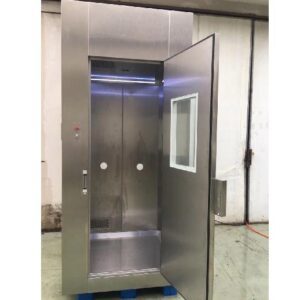
Before a pharmaceutical powder handling project reaches equipment selection, someone has to decide what the room or booth is actually protecting: the product, the operator, or the next batch that must not see a trace of this one. That decision is not generic. It depends on the powder itself and on where, in the sequence of receipt, sampling, weighing, dispensing, charging, cleaning, and waste, the exposure actually occurs.
Powder Properties and Handling Steps That Set the Design Problem
| Input to characterize | Question to resolve | Decizia de proiectare pe care o stă la baza |
|---|---|---|
| Powder potency | What material- and process-specific containment basis applies? | The project-specific containment requirements used to assess a room or booth concept |
| Dustiness | At which handling steps can dust be released? | Where airflow, filtration, or transfer boundaries require attention |
| Batch scale | What operating scale must the concept address? | Whether the proposed room or booth concept fits the intended use |
| Manipulare deschisă | Which operating steps handle powder openly? | Where the containment boundary must be evaluated |
| Operator proximity | At which steps are operators close to powder handling? | Where operator containment may compete with product-protection priorities |
| Cleaning difficulty | How difficult is cleaning for the material and process? | The cleaning interface and cross-contamination risk controls that require project evidence |
A cleanroom or booth concept cannot be chosen before the powder and the process around it are characterized. Potency sets the containment basis the rest of the design must satisfy; a material handled at a given potency changes what “acceptable” looks like for airflow, access, and cleaning in ways that a generic cleanliness classification does not capture. Dustiness is a separate variable from potency. A highly potent powder that is also cohesive and non-friable behaves differently in an open transfer than a lower-potency powder that aerosolizes readily, so the two materials can demand different airflow and enclosure responses even if other project parameters look similar.
Batch scale changes the physical footprint and duration of exposure. A process that moves small quantities briefly through an open step presents a different containment problem than one that holds a larger quantity in an open configuration for an extended operation, because duration and quantity both affect how much dust can become airborne before the boundary is closed again. Where a process requires open handling, as opposed to a closed or contained transfer, the equipment choice has to account for an exposure window that a closed system would not create in the same way.
Operator proximity determines whether the primary concern is keeping dust off the operator, keeping contamination out of the product, or both at once. A step performed with the operator standing immediately at an open powder bed presents a different design problem than one where the operator interacts through a closed interface. Cleaning difficulty is the final input, and it is often where the design intent is tested: a material that cakes, that adheres to surfaces, or that is difficult to fully recover from an enclosure changes the cleaning interface the equipment must support, and it changes how confidently the next product run can be started without residual cross-contamination risk. Each of these properties should be documented before a room-level or booth-level concept is proposed, because the same nominal process can require different equipment depending on how these inputs combine.
Balancing Product Protection with Operator and Cross-Contamination Control
| Obiectivul de protecție | Question for each operating step | Limita de decizie |
|---|---|---|
| Protecția produselor | Does this step require product protection to take priority? | Airflow and pressure decisions must reflect the stated priority |
| Operator containment | How close is the operator to powder handling or dust release? | The room or booth concept must be assessed against the project-specific containment requirement |
| Cross-contamination control | Where could released powder reach another product? | Handling and cleaning controls must address the identified path |
| Competing objectives | Do product protection and operator containment pull airflow or pressure in different directions? | The risk owner must state which boundary takes priority for that step |
Once the powder and process are characterized, the harder judgment begins: product protection and operator containment do not always pull the design in the same direction. Protecting the product from the room typically favors positive pressure at the work zone relative to the surrounding space, so that ambient contamination cannot migrate into an open product stream. Protecting the operator from the powder typically favors negative pressure or inward airflow at the same work zone, so that dust generated at the source is drawn away from the breathing zone rather than pushed outward. A single booth or room cannot default to both pressure regimes at once for the same operating step, which is why the risk owner- not the equipment itself- has to decide which objective takes priority when the two compete.
This is not a fixed answer across a project. The same facility may run one product where operator exposure is the dominant concern and another where product sterility or purity is dominant, and the airflow configuration that serves one may undermine the other if applied without adjustment. Where the same enclosure is expected to serve multiple products or process steps, the design conversation has to identify which priority governs each step rather than assuming one pressure relationship is “the containment setting” for the room.
Cross-contamination control adds a third consideration that is distinct from either product protection or operator protection: it concerns where a released particle could travel to reach a different product, not just whether it leaves the immediate work zone. A step that is adequately contained for operator safety may still permit enough residual migration to create a cross-contamination risk for a subsequent batch or an adjacent process, particularly if cleaning or transfer boundaries are not aligned with where the dust actually settles. Framing these three objectives separately, rather than treating “containment” as one undifferentiated requirement, is what allows the risk owner to state a clear priority for each operating step instead of leaving the airflow and pressure decisions implicit in the equipment choice.
Mapping Receipt, Sampling, Weighing, Dispensing, Charging, Cleaning, and Waste
The same escape-and-cross-contamination logic applies at every step in the sequence, but the point at which it applies changes with what the operator is physically doing. Receipt is the point where a container first enters the controlled environment, and the relevant question is whether the container’s exterior or its opening can introduce contamination before any processing begins. Sampling and weighing both involve opening a container and briefly exposing the powder to the surrounding environment, which means the same dustiness and open-handling considerations raised earlier apply directly here: a material that generates airborne particles readily creates a different exposure window at these steps than one that does not.
Dispensing and charging extend the open-handling concern across a longer or more active transfer, where the powder moves from one container or vessel to another rather than sitting briefly exposed. This is often where batch scale interacts most directly with containment, because a longer or larger transfer increases the period during which the containment boundary must perform without interruption. Cleaning is a distinct step with its own risk profile: it is where residual powder from the prior operation must be removed before the equipment or room can be considered ready for a different product, and the cleaning difficulty characterized earlier determines how confidently that readiness can be established. Waste removal closes the sequence and raises the same escape question as receipt did at the start- whether material leaving the controlled space can carry contamination with it.
Mapping these steps in sequence, rather than treating “powder handling” as a single undifferentiated activity, is what lets a project team identify exactly where a boundary is needed and what kind of boundary each step requires. A step-by-step map also clarifies where a single piece of equipment can serve multiple steps and where separate equipment or a separate room zone is needed because the containment or pressure requirement changes between one step and the next.
Choosing Room, Booth, Filtration, and Transfer Boundaries by Intended Use
| Boundary choice | Intended-use question | Inputs that govern the choice |
|---|---|---|
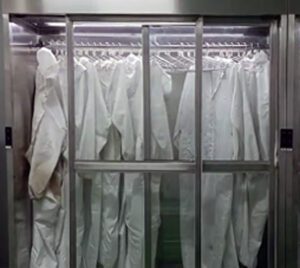
| Room or modular cleanroom boundary | Should the activity be controlled at room level? | Powder potency, dustiness, batch scale, open handling, operator proximity, and cleaning difficulty |
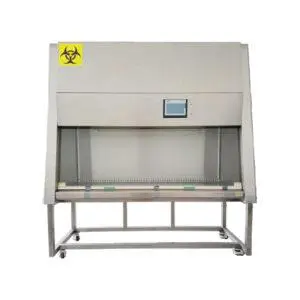
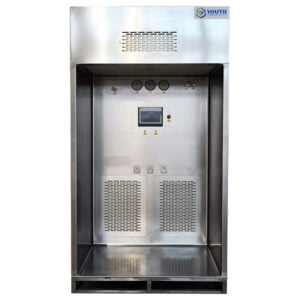
| Dispensing, sampling, or weighing booth boundary | Should the activity be controlled within a booth concept? | The same powder and process characterization, assessed for the specific operating step |
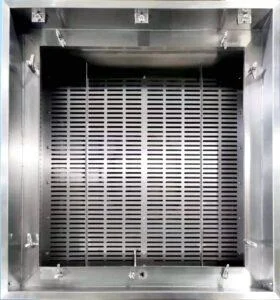
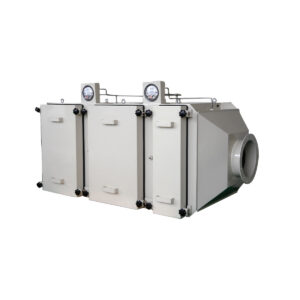
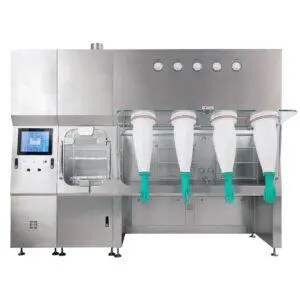
| Filtration or BIBO boundary | Where does the project require a filtration boundary or BIBO configuration? | The handling map, intended use, and project-specific containment requirement |
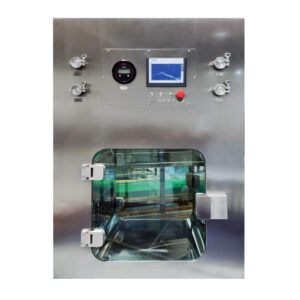
| Transfer boundary | At which transitions can dust escape or reach another product? | The mapped receipt, sampling, weighing, dispensing, charging, cleaning, and waste-removal steps |
With the handling map and the protection priorities established, the project can address which boundary belongs at which point. A room-level or modular cleanroom boundary is the appropriate scope where the control objective applies broadly across an activity or space rather than at a single operation- for example, where general room cleanliness supports multiple steps that do not each need independent containment. A booth-level boundary, by contrast, is suited to a specific operating step where containment or product protection needs to be enforced locally, without requiring the entire surrounding room to meet the same condition.
A dispensing, sampling, or weighing booth concept is evaluated against the same powder and process characterization developed earlier, applied to that specific step rather than to the process as a whole. The same powder might justify a booth boundary at the weighing step while the surrounding room operates under a broader, less stringent cleanliness control, provided the handling map confirms that other steps in the sequence do not require the same local containment.
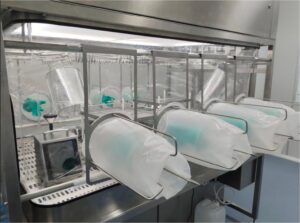
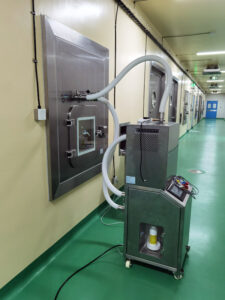
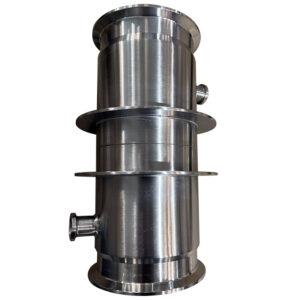
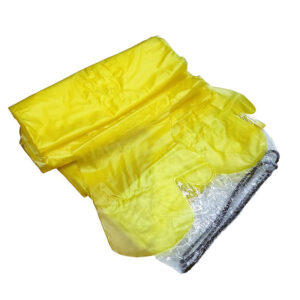
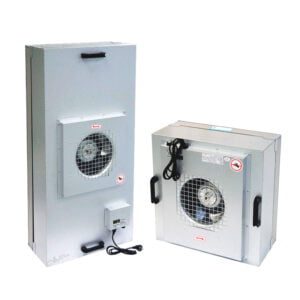
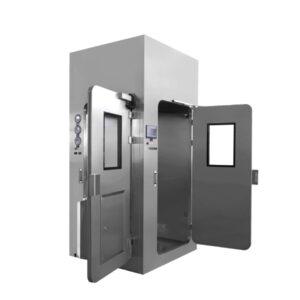
Filtration and BIBO boundaries address a different question: where does air leaving a controlled zone need to pass through a filtration stage before release or before recirculation, and where does the project require a bag-in-bag-out configuration to permit filter change without exposing personnel to accumulated contamination. This boundary is governed less by the single operating step and more by the overall handling map and the project’s containment requirement, since it concerns the fate of air and filtered material after it leaves the immediate work zone rather than the work zone itself.
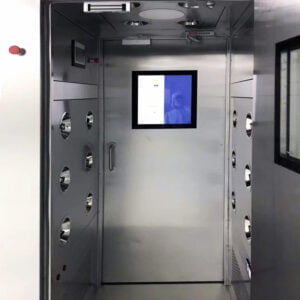
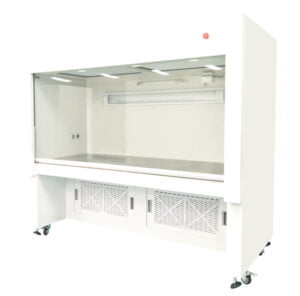
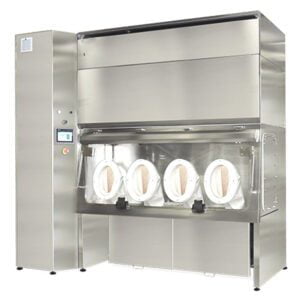
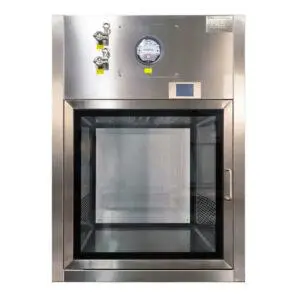
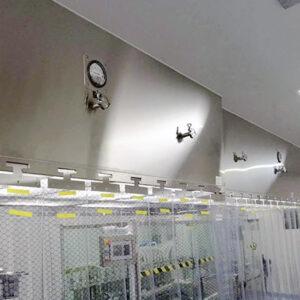
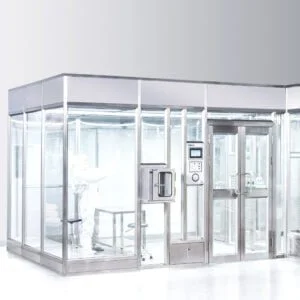
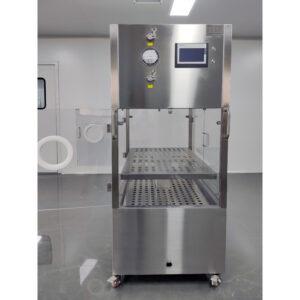
Transfer boundaries are where the mapped steps meet physically- the points at which material, equipment, or waste crosses from one controlled zone to another. These transitions are where the receipt, sampling, weighing, dispensing, charging, cleaning, and waste-removal sequence either holds together as a coherent containment strategy or breaks down, because a transfer that is not matched to the boundary on either side of it can reintroduce the exposure the room and booth selections were meant to prevent. Readers evaluating a Cameră curată modulară farmaceutică concept against a Cabina de distribuire, cabina de eșantionare, cabina de cântărire concept are, in effect, deciding where the room-level boundary ends and the booth-level boundary begins for each step in the map.
Defining Pressure, Exhaust, Access, and Cleaning Interfaces for Suppliers
Once the boundaries are chosen, the project still needs to specify how each boundary interfaces with the facility and with the supplier’s equipment. Pressure interface is the first and most consequential, because it is where the product-protection-versus-operator-containment conflict identified earlier becomes a concrete facility requirement: the supplier needs to know not just “containment” as a goal but which pressure relationship- positive to the surroundings or negative- applies at each specified step, and whether that relationship needs to change between process steps served by the same equipment.
Exhaust interface follows directly from the pressure decision: where negative pressure or inward airflow is required at a work zone, the air drawn in has to go somewhere, and the project needs to define whether that exhaust is filtered before release, recirculated, or ducted to an existing facility system. This is also where a BIBO configuration becomes relevant if the project has established that filter change at that point in the system needs to occur without exposing personnel to what the filter has captured.
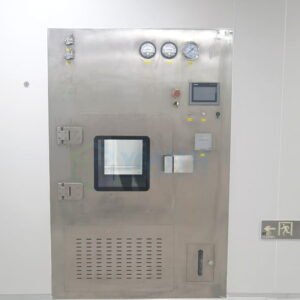
Access interface concerns how operators, materials, and equipment move across the boundary without compromising it- for instance, how a container enters a booth or room without the opening or closing of an access point undermining the pressure relationship just established. Cleaning interface is the last and in some respects the most demanding to specify, because it has to reconcile the cleaning difficulty of the specific powder with the physical design of the boundary: a surface or geometry that is straightforward to clean for one material may trap residue from another, and the supplier needs the same powder and process characterization developed earlier in order to propose a configuration that can actually be cleaned to the standard the project requires between products. Specifying these four interfaces clearly, rather than describing a general containment requirement, is what allows a supplier to translate the project’s risk priorities into an actual equipment configuration during quotation review.
Project Evidence Needed Before Containment or Explosion-Protection Claims
| Claim or decision area | Evidence basis needed | Boundary on the conclusion |
|---|---|---|
| Performanța de izolare | Material, product, toxicology, process, cleaning, and applicable regulator evidence | Treat performance as project-specific; do not assume a standard booth provides a fixed result |
| Exposure limits | Product-specific toxicology and applicable regulator evidence | ICH Q9(R1) supports risk management but does not set exposure or containment values |
| Explosion protection | Material and process evidence tied to the intended use | Treat explosion protection as a project-specific requirement, not a default claim for a standard booth |
| Cross-contamination controls | Product, toxicology, process, cleaning, and applicable regulator evidence | A structured risk approach supports the assessment method but does not establish a project outcome |
None of the reasoning above licenses a claim that a standard booth or room configuration delivers a specific containment performance, exposure limit, or explosion-protection outcome. Containment performance is project-specific: it depends on the material’s properties, the product’s characteristics, toxicological data, the process as actually run, and the cleaning regime applied between operations, together with whatever regulator-specific evidence applies to the project’s jurisdiction and product. A structured risk approach, such as the one described in ISPE’s Baseline Guide Volume 7 on risk-based manufacture, supports a method for assessing cross-contamination risk using health-based limits, but the published summary of that guide does not itself supply the product-specific data a given project needs; that data has to come from the project’s own material, process, and regulatory evidence.
Exposure limits follow the same logic. ICH Q9(R1) establishes a risk-based approach to quality risk management- assessment, control, communication, and review conducted with formality proportionate to the risk- but it does not set containment, cleanroom, exposure, or equipment performance values. Those values, where they apply, come from product-specific toxicology and the regulator requirements that govern the project, not from the risk-management framework itself.
Explosion protection sits in the same category: it is a requirement tied to the specific material and process in use, not a default feature of a standard booth or room design. Where a powder’s properties raise an explosion-protection question, that determination depends on material and process evidence specific to the project, and it should be confirmed before any equipment is assumed to provide that protection. The ISPE Good Practice Guide on containment for potent compounds is relevant by subject matter to potent-compound and booth containment questions, but its specific requirements, test methods, and limits are not established here; a project relying on that guide needs to read it directly rather than infer its content from the subject match alone. Across all three claim areas, the pattern is the same: the risk-assessment frameworks referenced here describe how to structure the evaluation, not what the resulting containment, exposure, or explosion-protection figure will be for this powder, this process, and this equipment configuration.
Întrebări frecvente
Q: Can one cleanroom or booth concept be applied to every powder-handling step?
A: Do not assume that one concept fits the full process. Assess receipt, sampling, weighing, dispensing, charging, cleaning, and waste removal separately, then identify where open handling, operator proximity, dust release, or transfer points change the required boundary.
Q: What information should be prepared before comparing a room with a dispensing, sampling, or weighing booth?
A: Prepare the powder potency, dustiness, batch scale, open-handling steps, operator proximity, and cleaning difficulty for the intended operation. Use the same operating scenario for each proposal so the comparison addresses the actual containment, product-protection, and cleaning questions rather than equipment labels alone.
Q: Who should decide when product protection and operator containment point toward different airflow or pressure choices?
A: The project risk owner should state which protection boundary takes priority at each operating step. Record that priority alongside the identified dust-release and cross-contamination paths so pressure and airflow proposals can be assessed against an explicit project decision.
Q: What should a buyer give suppliers so room, booth, filtration, and transfer proposals can be compared consistently?
A: Provide the intended use and handling-step map, the required boundary at each step, and the project decisions for pressure, exhaust, access, and cleaning interfaces. Also identify where a filtration or BIBO boundary is being considered and which project-specific containment requirement the proposal must address.
Q: Can containment performance, exposure limits, or explosion protection be accepted as standard features of a booth?
A: No fixed result should be assumed from a standard booth description. Define the claim using the relevant material, product, toxicology, process, cleaning, regulatory, and intended-use evidence, then evaluate the proposed configuration against that project-specific basis.