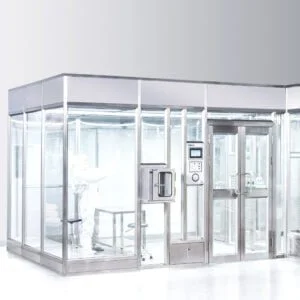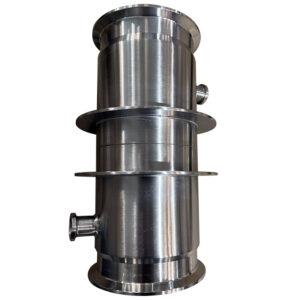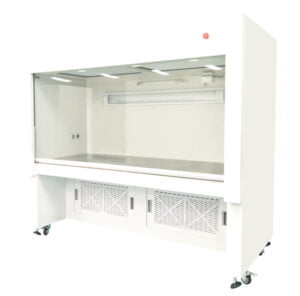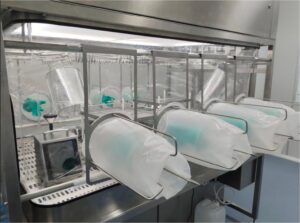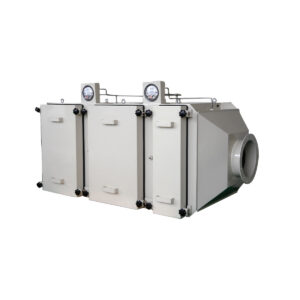
Specifying the wrong personnel decontamination system early in facility design is one of the few mistakes that becomes structurally expensive to correct later. An air shower installed at a BSL-2 entry corridor cannot be upgraded to a mist or chemical shower without replanning chemical supply lines, drain treatment infrastructure, and drying stages that were never roughed into the original build — by the time a biosafety audit or validation review identifies the gap, the entry corridor geometry and interlock architecture are often already fixed. The cost gap between system types ($8,000–$25,000 for a pharmaceutical-grade air shower versus $30,000–$80,000 for a mist shower system versus $80,000–$200,000 for a full chemical shower room) makes early downselection feel financially defensible, but the downstream retrofit cost frequently exceeds the original delta. Understanding what each system actually does to a contaminant — and where its mechanism stops — is the judgment that prevents that mistake.
Decontamination Mechanism Comparison: VHP Chemistry vs. Particle Removal vs. UV Photolysis
The three principal personnel decontamination mechanisms operate on fundamentally different physical and chemical principles, and those differences determine which contaminant types each system can and cannot address.
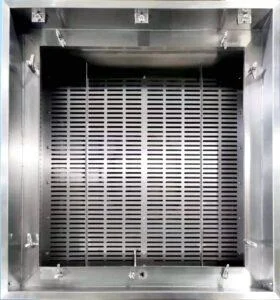
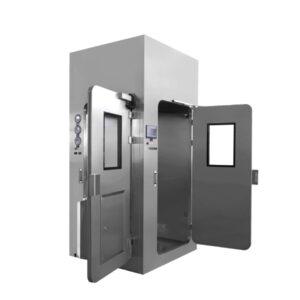
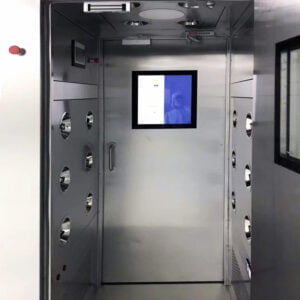
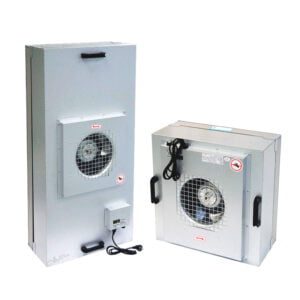
Air showers work through kinetic particle dislodgement. High-velocity HEPA-filtered air jets — typically operating at 20–25 m/s — create turbulent boundary-layer disruption across garment surfaces, mechanically detaching loosely adhered particles and exhausting them back through the HEPA return system. The mechanism is purely physical. It has no chemistry, no residual kill effect, and no inactivation efficacy against viable biological organisms. A well-specified air shower removes particles effectively from outer garment surfaces but leaves the microbial population on those surfaces entirely intact. This is not a design flaw in air showers — it is a mechanism boundary that gets misread as a containment capability.
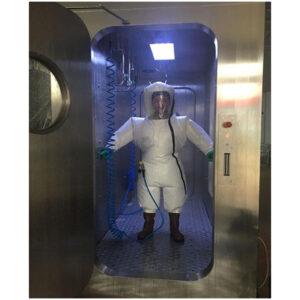
Mist shower systems introduce a fundamentally different mode. A fine aqueous or IPA mist creates surface adhesion, capturing particles that might otherwise re-entrain in turbulent airflow and carrying them to the drain. When 70% IPA is used as the mist agent, the system adds a chemical decontamination layer: contact with alcohol-based mist achieves >99.9% surface bioburden reduction on personnel and materials within a 3–5 minute cycle. This hybrid mechanism — simultaneous particulate capture and chemical inactivation — makes mist showers effective against the contaminant categories where dry air is insufficient: sticky powders, active pharmaceutical ingredients with electrostatic adhesion, and surface-viable microbial contamination. The trade-off is cycle time, chemical supply complexity, and a drain waste stream that requires chemical disposal management.
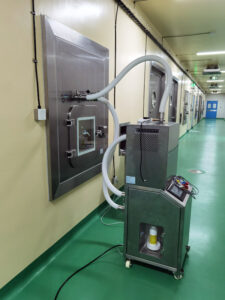
Vaporized hydrogen peroxide (VHP) operates as a gaseous sporicidal agent rather than a personnel shower mechanism. At concentrations used in chamber applications (typically 140–1,400 ppm), VHP achieves broad-spectrum inactivation including bacterial spores, fungi, and non-enveloped viruses — contaminant categories that neither air nor IPA mist reliably addresses. The limitation is that VHP is applied in enclosed chambers to materials and equipment, not to personnel in transit. Its regulatory acceptance profile and log-reduction claims are relevant to pass-box and room decontamination decisions, not to personnel entry decontamination design. Understanding this scope boundary prevents planners from treating VHP chamber performance data as transferable to personnel shower selection.
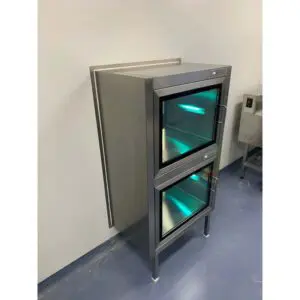
UV photolysis applies germicidal energy — most effective at 254 nm for DNA damage — to exposed surfaces within direct line of sight of the lamp. Efficacy is a function of irradiance, contact time, and surface geometry. Shadow zones, reflective surfaces, and clothing folds all create areas of incomplete exposure, which is why UV-based systems are generally characterized as a supplementary decontamination layer rather than a primary personnel decontamination control. Where UV is used in pass-through configurations for material surfaces with controlled geometry, it provides a documentable decontamination step. Where it is treated as a personnel decontamination equivalent to liquid chemical contact, the coverage assumptions are difficult to validate and harder to defend in a biosafety audit.
VHP Chambers: Cycle Parameters, Log Reduction Claims, and Regulatory Acceptance
VHP decontamination performance is often discussed in terms of log reduction — the measured decrease in viable microbial population after a defined exposure cycle. In chamber applications, VHP systems are designed to achieve ≥6-log reduction against Geobacillus stearothermophilus biological indicators, the standard spore-former used for sporicidal validation. This performance threshold is not arbitrary: it reflects the regulatory expectation for terminal decontamination of materials entering aseptic or high-containment environments, and it is used in pharmaceutical manufacturing qualification under FDA process validation frameworks.
Cycle parameters that drive log reduction performance include VHP concentration (typically expressed as hydrogen peroxide vapor concentration in ppm), contact time, temperature, and relative humidity. Humidity management is operationally critical — if relative humidity is too high before the conditioning phase, condensation can form on surfaces and dilute the VHP concentration locally; if humidity is too low, the biocidal efficacy drops. In practice, a complete VHP cycle (conditioning, decontamination, aeration) typically runs 45–120 minutes depending on chamber volume, load geometry, and the required residual VHP level at cycle end. This cycle length is a planning constraint for material throughput: a VHP pass-through chamber serving a high-traffic aseptic filling line creates a scheduling bottleneck if cycle frequency is not matched to production demand.
Regulatory acceptance of VHP as a surface and space decontamination method is well-established in pharmaceutical and biotech manufacturing, where it appears in guidance documents supporting aseptic processing qualification. Where VHP is used at facility entry or exit as a material decontamination control, the validation expectation is that the chamber achieves consistent distribution of VHP throughout the loaded volume and that biological indicator placement covers worst-case locations within the load. The design figures used in VHP system specifications — including log-reduction claims from equipment manufacturers — should be treated as performance benchmarks during system selection and then independently validated with site-specific biological indicator studies before the method is accepted for regulatory submission. A manufacturer’s stated 6-log claim does not substitute for a qualification study conducted under actual use conditions.
For personnel decontamination decision-making, VHP chambers are not a competing alternative to air or mist showers. They are a materials-handling decontamination control. Planners who are evaluating personnel entry systems should treat VHP pass-through performance data as contextually irrelevant to that decision, and instead use it to inform the parallel question of how materials and equipment are decontaminated before entering the controlled zone.
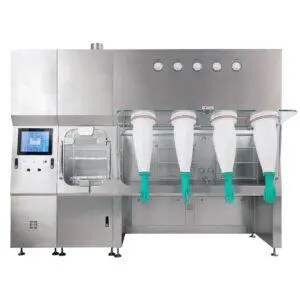
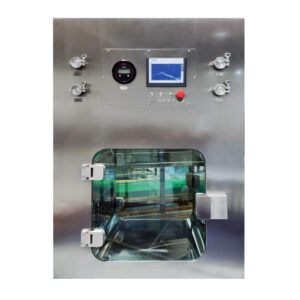
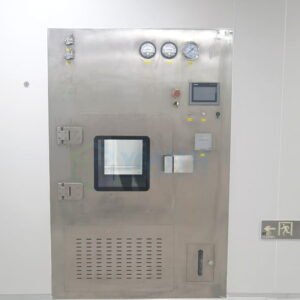
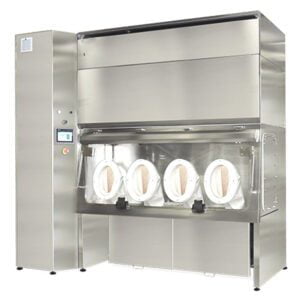
For facilities evaluating VHP-based pass-through options for materials, Youth Filter’s VHP pass box provides a starting reference point for chamber configurations used in pharmaceutical and biotech applications.
Air Showers: Particle Removal Efficiency and Performance Limitations for Personnel Decontamination
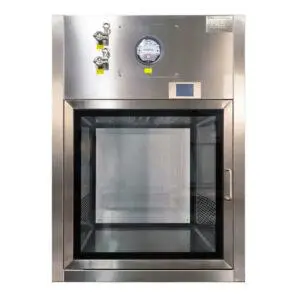
Air showers perform their designed function well within a defined scope: they remove loosely adhered surface particles from cleanroom garments within a 20–30 second cycle, achieving 80–95% particle removal efficacy for particles ≥5 µm. Within ISO 7 and ISO 8 pharmaceutical cleanrooms where the contamination risk is particulate — shed skin cells, clothing fibers, environmental dust — this removal rate supports garment discipline and reduces particle ingress into the controlled zone. For semiconductor manufacturing and electronics cleanrooms where biological risk is absent, air showers represent an appropriate and cost-effective entry control.
The performance limitation that creates real project risk is not the air shower’s particle removal rate — it is the assumption that particle removal is equivalent to biological decontamination. Surface particles and surface-viable microbial contamination are not the same contaminant population. An air shower that removes 90% of garment-surface particles leaves the microbial population on the remaining garment surface fully intact and potentially viable. WHO Laboratory Biosafety Manual guidance and CDC BMBL both require liquid decontamination protocols to address viable biological contamination at BSL-2 and above — a requirement that air showers cannot satisfy by mechanism, regardless of their particle removal efficiency. The failure pattern documented in BSL-2 facility designs is specifying air showers at entry on the assumption that gowning and garment discipline manage biocontamination risk, a logic chain that survives informal review but collapses under biosafety audit scrutiny because it conflates two distinct control objectives.
A second performance boundary affects air shower efficacy even within its intended particulate-removal scope. High-velocity air jets — the mechanism that makes air showers effective — can create user discomfort that degrades protocol compliance. Personnel who find the jet velocity uncomfortable may limit dwell time or position themselves to minimize exposure, reducing actual particle removal below the system’s design performance. This is a human-factors risk, not a systemic air shower deficiency, and it is addressable through training and system configuration (some units allow velocity adjustment within performance bounds). The operational implication is that air shower performance in the field depends on consistent protocol adherence, and protocol adherence should be verified as part of ongoing operational review rather than assumed from initial commissioning data.
Capital cost for pharmaceutical-grade stainless steel air showers typically falls in the $8,000–$25,000 range for the unit itself, with annual maintenance costs of approximately $1,000–$3,000 covering HEPA filter replacement, seal inspection, and interlock calibration. Energy Star-rated models may reduce operational energy costs by up to 30% over standard units — a conditional benefit that depends on duty cycle and local energy costs, not a guaranteed savings figure. Total cost of ownership should also account for installation, which includes electrical supply and interlock integration with adjacent airlocks or change rooms.
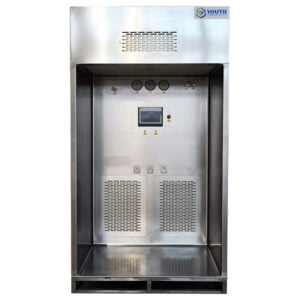
For facilities evaluating air shower configurations for pharmaceutical or electronics cleanroom entry, Youth Filter’s cleanroom air shower range covers stainless steel options across standard and custom footprint configurations.
UV Pass Boxes: Wavelength Requirements, Contact Time, and Efficacy Limitations
UV pass-through boxes are installed at cleanroom boundaries to apply germicidal irradiation to material surfaces before transfer into the controlled zone. The germicidal mechanism depends on UV-C wavelength output, with 254 nm representing the peak absorption wavelength for DNA disruption in most vegetative bacteria and certain viruses. At this wavelength, UV energy causes thymine dimer formation that inhibits cellular replication — the mechanism is well-characterized for surface decontamination under controlled laboratory conditions.
The gap between controlled-condition performance and field efficacy is where UV pass boxes create procurement and validation risk. Effective UV decontamination requires direct, unobstructed line-of-sight contact between the lamp and the target surface for a sufficient dose — typically expressed as µW·s/cm² (microwatt-seconds per square centimeter, or J/m²). Materials transferred through a pass box have irregular geometries, shadow zones, and surfaces that face away from the lamp array. A carton, wrapped package, or instrument with concave surfaces will have regions of essentially zero UV exposure regardless of lamp intensity or contact time. This is not a calibration problem; it is a geometric constraint inherent to the mechanism.
The practical consequence for facility design is that UV pass boxes should be characterized accurately in the contamination control strategy: they provide a supplementary UV surface treatment for exposed, accessible material surfaces, not a validated terminal decontamination step equivalent to VHP or liquid chemical contact. Where regulatory or biosafety authority requires documented decontamination of incoming materials at a defined log-reduction level, UV pass boxes alone are generally difficult to validate to that standard because the dose uniformity across complex load geometries cannot be reliably guaranteed. For applications where the contamination risk is limited to exposed flat surfaces with predictable geometry, UV pass boxes offer a fast, low-maintenance, chemical-free option. For applications requiring sporicidal or broad-spectrum decontamination of materials with complex geometry, VHP or liquid chemical methods provide more defensible performance documentation.
Contact time requirements vary by target organism and lamp intensity, and manufacturers’ stated cycle times should be evaluated against the actual UV dose delivered to the worst-case surface location in the load, not to the lamp-proximal surface. Facilities specifying UV pass boxes for regulated applications should confirm that the qualification approach accounts for load geometry variability and that the cycle time validation is conducted with representative worst-case load configurations.
Selection Framework: Contamination Risk Level, Throughput, and Integration with Cleanroom Zoning
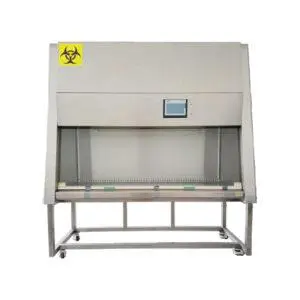
Containment level is the primary decision criterion, and it eliminates options before throughput or cost enters the analysis. Biosafety officers applying WHO and CDC BMBL frameworks consistently use this sequence: identify the biological risk classification of the work, determine the containment requirements that govern personnel decontamination at entry and exit, and then evaluate system options within that constraint. Air showers are appropriate for ISO 7/ISO 8 pharmaceutical cleanrooms with no biological risk. Mist showers are specified at BSL-1/BSL-2 entry when surface decontamination is part of the containment strategy. Chemical showers are required at BSL-3 exit where personnel decontamination before leaving the controlled zone is a regulatory requirement, not a design preference.
| Decision Factor | Mist Shower | Air Shower |
|---|---|---|
| Contamination Risk Level | High-risk environments (e.g., BSL-3/4) for biological containment | Low-risk environments (e.g., ISO 7/8) for particulate control only |
| Primary Industry Applications | Pharmaceutical sterile/aseptic processing, biotechnology labs | Electronics manufacturing, general cleanrooms with no biological hazard |
After containment level sets the technology boundary, throughput and zoning integration become the operational design parameters. A mist shower serving a BSL-2 laboratory with a 3–5 minute cycle time creates a personnel flow constraint that must be designed into the entry corridor layout — if staff entry and exit peak at shift changes, a single mist shower unit may become a bottleneck that pressures personnel to abbreviate cycle time. This is not a hypothetical compliance risk; it is an observed behavioral response to throughput constraints that undermines the decontamination protocol without triggering any system-level alarm. Facility planning should model personnel flow against cycle time before finalizing the number of shower units and the interlock sequencing logic.
The silent failure mode that is consistently underestimated in mist shower installations is nozzle blockage. IPA residue and mineral deposits from mist carrier water accumulate at nozzle orifices over time. Partial blockage reduces spray coverage without triggering a flow alarm or pressure fault, meaning the system continues to cycle, the interlock continues to function, and the entry protocol appears operationally normal — while personnel are moving through a zone of uneven or absent mist coverage. The protocol is invalidated without any visible indicator of failure. The only reliable intercept for this failure mode is a documented quarterly physical nozzle inspection, a pump seal replacement schedule (typically every three months for high-cycle installations), and an annual pressure vessel inspection for IPA delivery systems. Facilities that treat mist shower maintenance as routine HVAC servicing rather than as a protocol-sustaining activity experience this failure mode at a rate that is difficult to detect until a biosafety incident or external audit creates the review pressure to find it.
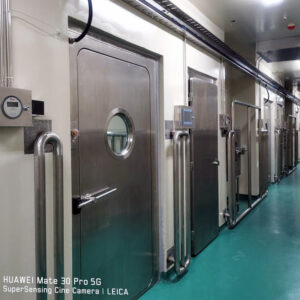
Cleanroom zoning integration adds a third layer of constraint that affects both layout and regulatory defensibility. Personnel decontamination systems must fit within the zoning logic of the facility — the differential pressure cascade, the interlock architecture between adjacent zones, and the documentation trail that demonstrates consistent use. An air shower at an ISO 8/ISO 7 boundary contributes to particulate ingress control as part of the pressure differential and garment discipline strategy. A mist shower at a BSL-2 boundary must be integrated with the drain treatment system, the IPA supply containment, and the personal protective equipment transition sequence in a way that supports a documented decontamination SOP. A chemical shower at a BSL-3 exit requires drain neutralization capacity, automated cycle verification, and often a redundant interlock to ensure personnel cannot exit the controlled zone without completing a full decontamination cycle. Each step up in system complexity requires corresponding infrastructure that must be planned at the architectural stage — it cannot be added after the fact without significant construction intervention.
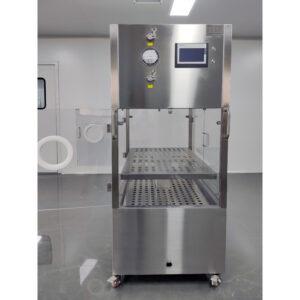
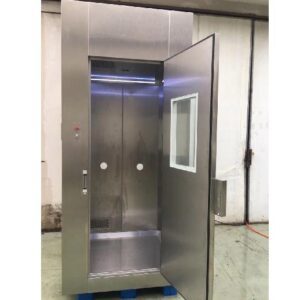
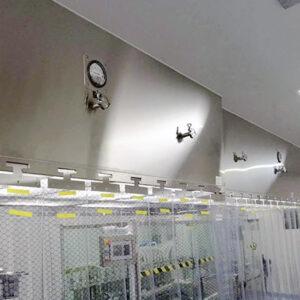
For facilities specifying mist shower systems for pharmaceutical or biosafety applications, Youth Filter’s cleanroom mist shower covers IPA-based and aqueous mist configurations with integrated drying stages for pharmaceutical and biotech entry applications.
The clearest pre-procurement checkpoint for this decision is a written contamination control strategy that identifies contaminant type, biological risk classification, and the specific decontamination objective at each facility boundary — not a budget-led shortlist of equipment options. If the contamination control strategy cannot confirm that no biological risk is present at the entry point, an air shower should not be the default selection regardless of its lower capital cost. The cost of specifying upward after construction is rarely less than the cost of specifying correctly at the design stage.
Before finalizing system selection, the practical questions worth confirming are: what is the biological risk classification of the work conducted in the controlled zone; what does the contamination control strategy require at personnel entry and exit specifically; and what drain, chemical supply, and drying infrastructure is either already in place or can be roughed in during initial construction? Those three answers will close the selection decision faster — and with more regulatory defensibility — than any side-by-side cost comparison of equipment unit prices alone.
Frequently Asked Questions
Q: Our facility handles BSL-2 biological work but our current build already has an air shower installed at the entry corridor — is a full replacement the only remediation path?
A: Not necessarily, but the options are constrained by the original infrastructure roughed into the build. If the entry corridor lacks IPA supply lines, drain connections with chemical waste capacity, and space for a drying stage, a like-for-like swap to a mist shower requires those elements to be added — which is the expensive part, not the shower unit itself. In some cases, a supplementary liquid decontamination step (a documented spray-down and dwell protocol with appropriate PPE) can be implemented as an interim procedural control while infrastructure upgrades are planned, but this approach must be formally reviewed by your biosafety officer against WHO and BMBL requirements before it can be used to support a compliant decontamination SOP.
Q: After the right shower system is installed and commissioned, what is the first operational step that facilities typically overlook?
A: Establishing a documented maintenance schedule before the first operational cycle, not after the first service interval. The most consequential post-installation gap is the absence of a formal nozzle inspection and pump seal replacement schedule for mist shower systems. Because nozzle blockage degrades decontamination coverage without triggering any system alarm, a facility that treats the mist shower like standard HVAC equipment — serviced reactively — will not detect protocol invalidation until an audit or incident forces a review. The schedule should be written into the SOP at commissioning, with responsibility assigned and records retained alongside cycle logs.
Q: At what point does a mist shower stop being sufficient and a full chemical shower become the regulatory requirement?
A: The threshold is BSL-3 exit. WHO and CDC BMBL frameworks require personnel to complete a full-body chemical decontamination before leaving a BSL-3 controlled zone — this is a regulatory requirement, not a design option. Mist shower systems using 70% IPA are appropriate for BSL-1 and BSL-2 entry where surface decontamination is part of the containment strategy, but their cycle parameters, chemical concentrations, and drain treatment infrastructure are not designed or validated for BSL-3 exit requirements. If there is any uncertainty about the BSL classification of the work, that determination — made by the institutional biosafety committee against WHO and BMBL criteria — must precede system selection, because it controls which technology is permissible.
Q: How does a mist shower compare to a chemical shower on total operational cost, not just capital cost?
A: Mist showers are substantially less expensive to operate but carry higher maintenance complexity than their capital cost suggests. A mist shower system falls in the $30,000–$80,000 capital range, with recurring costs from IPA supply, quarterly pump seal replacement, and annual pressure vessel inspection. A chemical shower room at BSL-3 ranges from $80,000–$200,000 and adds drain neutralization, automated cycle verification, and redundant interlock maintenance to the operational burden. The more meaningful cost comparison is not unit price versus unit price — it is whether the lower-cost system is compliant for your containment level, because a mist shower installed where a chemical shower is required creates a regulatory liability that no operational cost saving offsets.
Q: For a pharmaceutical cleanroom with no biological risk and high staff throughput, is the particle removal efficiency of an air shower actually sufficient to justify the trade-off against a mist shower?
A: Yes, for a cleanroom with confirmed absence of biological risk and an ISO 7 or ISO 8 classification, an air shower’s 80–95% particle removal efficacy for particles ≥5 µm is appropriate and the mist shower’s additional capability is unnecessary for the application. The relevant trade-off is not efficacy — it is cost, cycle time, and operational complexity. A mist shower’s 3–5 minute cycle versus an air shower’s 20–30 seconds creates a personnel throughput constraint that becomes a compliance risk at high-traffic entries: if staff abbreviate cycle time under bottleneck pressure, the mist shower’s decontamination performance degrades in practice. Where biological risk is absent and the contamination control strategy confirms that particulate ingress is the sole concern, the air shower is the operationally correct specification.
Related Contents:
- Emergency Chemical Shower Rooms: Quick Response Guide
- Decontamination Shower Types | Air vs Water vs Chemical Systems
- Water Quality in Chemical Showers: Management Tips
- Why Mist Showers Prevent Secondary Contamination Better Than Traditional Wet Shower Systems
- VHP Pass Box Market Forecast: 2025-2030 Growth Analysis
- VHP vs Traditional Pass Boxes: Key Differences Compared
- VHP Pass Box 6-Log Reduction: Validation Methods & Data
- Enclosed Chemical Shower Rooms: Privacy and Safety
- VHP-Compatible Materials: Comprehensive 2025 List