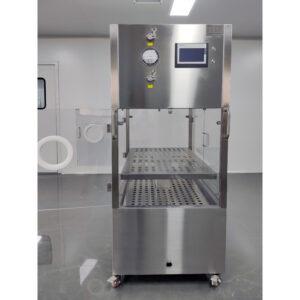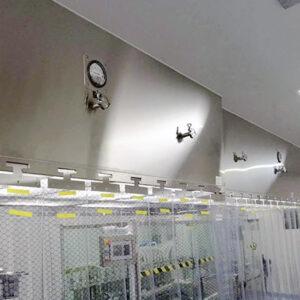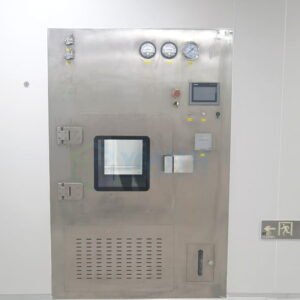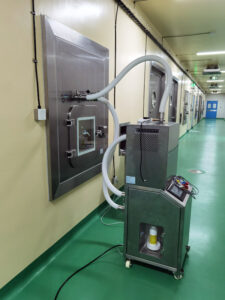
Selecting a Bag In Bag Out (BIBO) filter housing is a critical containment engineering decision, not a standard procurement task. The specifications you choose directly determine the safety, compliance, and long-term operational cost of handling toxic, radioactive, or biological waste streams. A mismatch between housing capabilities and application hazards can lead to catastrophic containment failure, regulatory non-compliance, and severe financial liability.
The complexity of modern hazardous material processing demands a specification-first approach. With evolving regulatory standards and the increasing cost of certified hazardous waste disposal, the initial capital investment is just one component of a multi-decade operational commitment. This guide deconstructs the key technical specifications—from material science to validation protocols—to provide a decision framework for engineers and facility managers.
Key Design Differences: BIBO vs. Standard Filter Housings
The Core Philosophy: Containment Over Convenience
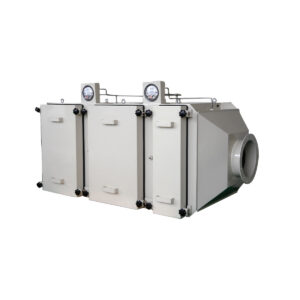
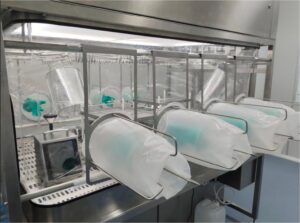
Standard filter housings prioritize accessibility for routine maintenance in clean or general environments. Their design facilitates quick filter changes with minimal downtime. In contrast, a BIBO housing is a fully welded, leak-tight containment vessel. Its entire purpose is to isolate a hazardous agent during every phase of the filter lifecycle, including removal. This fundamental shift transforms a maintenance procedure into a validated safety-critical operation, governed by standards like ASME N509.
Integrated Safety Components as Standard
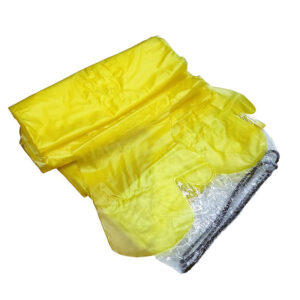
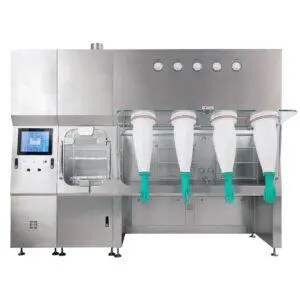
This containment mandate is evidenced by non-negotiable integrated features. Bubble-tight isolation dampers seal the housing from the ductwork before any procedure begins. Heavy-duty PVC bag attachment rings and integral glove ports allow personnel to safely detach, bag, and seal the contaminated filter within a primary containment barrier. We often see the oversight where these features are treated as optional add-ons rather than the system’s defining architecture.
Procurement Implications
This design philosophy redefines the procurement process. It moves the conversation from generic HVAC specifications to hazard-specific engineering reviews. Insight 1 clarifies that successful implementation requires collaboration between risk assessment, facility engineering, and operations teams from the project’s conceptual stage to ensure the housing design aligns with the facility’s safety case and standard operating procedures.
Material Selection: 304 vs. 316 Stainless Steel Compared
The Alloy Decision: Corrosion Resistance in Context
Material selection is the primary determinant of long-term housing integrity, especially when facing aggressive decontamination cycles. Grade 304 stainless steel offers excellent general corrosion resistance and is the standard for many applications. However, Grade 316 stainless steel, with its added molybdenum content, provides superior resistance to chlorides, acids, and chemical sterilants like vaporized hydrogen peroxide (VHP).
Evaluating the Full Material Spectrum
The choice extends beyond stainless steel. Epoxy-coated carbon steel presents a cost-effective alternative but carries significant lifecycle risk. Insight 2 highlights the critical trade-off: while 316 stainless represents a higher capital expenditure, it is often mandated for aggressive environments to prevent pitting, crevice corrosion, and potential containment failure. An inferior material may degrade under repeated decontamination, leading to unplanned downtime and costly full housing replacement.
A Guide to Material Application
The following table compares the primary material options for BIBO housings, outlining their key characteristics and ideal use cases.
| Material | Key Alloy Addition | Primary Application |
|---|---|---|
| 304 Stainless Steel | Standard corrosion resistance | General applications |
| 316 Stainless Steel | Added molybdenum | Aggressive chemical environments |
| Epoxy-Coated Carbon Steel | Cost-effective alternative | Limited decontamination cycles |
Source: Technical documentation and industry specifications.
Flow Rate Sizing: Matching Capacity to Your Application
Calculating Volumetric Demand
Correct sizing begins with an accurate calculation of the system’s required volumetric airflow, expressed in CMH or CFM. This is dictated by the process exhaust volume, required face velocity across the filter, and any system static pressure considerations. Undersizing creates a bottleneck and risks overloading filters; oversizing increases capital cost and may compromise containment velocity profiles.
The Modular Design Advantage
Standard single BIBO modules are typically rated for capacities up to 4,000 CMH. For higher flow requirements, systems achieve necessary throughput via parallel or series configurations of these standardized units. Insight 5 reveals that this modular philosophy directly solves the conflict between standardized containment technology and unique, space-constrained facility layouts. It provides flexibility without resorting to prohibitively expensive custom fabrication.
Configuration for Space and Performance
Understanding standard configurations allows for efficient facility planning. The table below outlines the typical capacities and design rationales for different BIBO system layouts.
| Configuration | Typical Max Capacity | Design Philosophy |
|---|---|---|
| Single Module | Up to 4,000 CMH | Standardized containment unit |
| Parallel/Series Systems | Higher total flows | Modular, flexible layout |
| Custom Solutions | Application-specific | Costly, space-constrained layouts |
Source: Technical documentation and industry specifications.
Containment Ratings: Understanding HEPA vs. ULPA Standards
Defining Filter Efficiency Benchmarks
The final filter stage defines the system’s particulate removal efficiency. HEPA filters are classified by their retention of 0.3-micron particles, with H13 (99.97%) and H14 (99.995%) being common in hazardous applications. ULPA filters, classified under standards like EN 1822-1:2019, are tested at the Most Penetrating Particle Size (MPPS), often below 0.2 microns, with efficiencies of 99.9995% (U15) or higher.
Selection Based on Hazard Profile
The choice between HEPA and ULPA is not arbitrary. It depends on the size of the target contaminant and the required cleanliness classification of the exhaust air or protected environment. A potent biohazard like viral vectors may necessitate ULPA filtration, while many pharmaceutical powders are effectively controlled with H14 HEPA. Insight 7 infers a regulatory trend toward holistic system validation, making the selection of correctly rated, independently certified filters paramount.
A Comparison of Filter Classes
The following table clarifies the key performance differences between common HEPA and ULPA filter classifications.
| Filter Type | Minimum Efficiency | Particle Size Tested |
|---|---|---|
| HEPA (H13) | 99.97% | 0.3 microns |
| HEPA (H14) | 99.995% | 0.3 microns |
| ULPA (U15+) | 99.9995% | MPPS (<0.2 microns) |
Source: EN 1822-1:2019 – High efficiency air filters. This standard defines the classification, performance testing, and marking for HEPA and ULPA filters, establishing the efficiency benchmarks referenced in this table.
Cost Analysis: Capital Investment vs. Total Cost of Ownership
Moving Beyond Purchase Price
A comprehensive financial assessment must scrutinize Total Cost of Ownership (TCO). The capital expenditure for the housing itself varies significantly with material grade and safety features. However, Insight 10 stresses that TCO now must fully account for the recurring logistics and expense of hazardous waste disposal. Each filter change generates contaminated PVC bags and filters that require certified handling, transport, and incineration.
Quantifying Lifecycle Risks
Operational costs are predictable; containment failure costs are not. Selecting inferior materials to reduce upfront cost, as noted in Insight 2, can lead to premature housing degradation. The consequence is not just a replacement unit, but a potential breach requiring full facility decontamination, regulatory reporting, and halted production. This risk makes a lifecycle cost analysis essential for justifying premium specifications.
Breaking Down the Cost Factors
A clear view of cost drivers aids in budget planning and justification. The table below categorizes the primary financial considerations for a BIBO system.
| Cost Factor | Description | Financial Impact |
|---|---|---|
| Capital Expenditure | Initial housing material grade | High for 316 stainless |
| Operational Cost | Hazardous waste disposal | Recurrent, certified handling |
| Lifecycle Risk | Inferior material failure | High replacement & containment cost |
Source: Technical documentation and industry specifications.
Which BIBO System Is Best for Your Hazardous Waste Stream?
Aligning Specifications with Hazard
The optimal system is defined by a precise alignment with the waste stream’s physical, chemical, and biological properties. A stream containing volatile organic compounds demands material compatibility studies. Radioactive or Category A biohazards necessitate the highest integrity welds, seals, and typically H14 or ULPA filtration. The specification process must start with a thorough hazard identification and risk assessment.
Navigating Supplier Specialization
Insight 8 predicts continued market stratification. Suppliers often develop core competencies—some excel in cost-effective containment for industrial toxics, while others specialize in ultra-high-integrity systems for pharmaceutical or biodefense with full validation support. Matching your risk profile to a supplier’s proven expertise prevents both dangerous under-engineering and unnecessarily expensive over-engineering for your specific hazardous air filtration applications.
Installation & Validation: Ensuring Compliance and Performance
Design Features that Enable Testing
Proper validation is impossible without integrated design features. Insight 3 identifies pressure decay test ports, ports for DOP/PAO aerosol scan testing, and sterilant injection ports as non-negotiable. These features are not for the manufacturer’s quality control alone; they are essential for in-situ performance verification per standards like ASME N510-2007 throughout the system’s operational life.
Commissioning the Safety Backstop
Installation is not complete until the system’s operational negative pressure regime is verified and documented. Insight 6 establishes this as a critical passive safety backstop, ensuring any microscopic leak draws air into the containment vessel, not out of it. This setpoint becomes a key performance indicator for continuous safety monitoring, not just filtration efficiency.
Key Validation Protocols
The following table outlines the essential tests required to commission and validate a BIBO housing system.
| Validation Feature | Purpose | Compliance Standard |
|---|---|---|
| Pressure Decay Test | Leak-tightness verification | ASME N510 |
| DOP/PAO Aerosol Scan | Filter integrity testing | IEST-RP-CC001.7 |
| Operational Negative Pressure | Passive safety backstop | System commissioning |
Source: ASME N510-2007 – Testing of Nuclear Air Treatment Systems. This standard establishes in-service testing requirements, including pressure decay and aerosol testing, to verify the performance and integrity of nuclear air treatment systems, which directly applies to BIBO housing validation.
Making the Final Decision: A BIBO Housing Selection Checklist
A Consolidated Specification Framework
Use this checklist to methodically evaluate options and ensure no critical parameter is overlooked. It synthesizes the technical insights from each preceding section into an actionable decision tool.
- Hazard & Standards: Define contaminant type (bio, radio, chemical) and all governing standards (ASME N509, ISO 14644, WHO guidelines).
- Material & Compatibility: Specify 304/316 stainless or coated carbon steel based on chemical exposure and decontamination sterilant protocols.
- Flow & Configuration: Calculate required CMH/CFM; plan modular parallel/series layout for spatial constraints.
- Filtration Rating: Select HEPA (H13/H14) or ULPA grade based on required containment efficiency and outlet air classification.
- Safety Features: Mandate bubble-tight isolation dampers, welded bag rings, glove ports, and integrated testing ports.
- Validation & Training: Plan and budget for in-situ pressure decay and aerosol scan testing. Include recurrent personnel training on the safe-change procedure, a complexity highlighted by Insight 4.
- Future-Proofing: Consider Insight 9 by selecting systems with provisions for digital pressure and differential pressure sensor integration for predictive maintenance and audit trails.
- TCO & Waste: Factor in lifecycle material durability and obtain quotes for the certified handling and disposal of your specific hazardous waste stream.
Prioritize specifications that mitigate the highest risks identified in your hazard assessment. The material grade, containment rating, and validation protocol are typically non-negotiable for safety and compliance. Flow configuration and digital features offer flexibility for optimization. This disciplined approach ensures the selected BIBO housing is a validated engineering control, not just another piece of equipment.
Need professional guidance to specify a containment system that aligns with your risk profile and operational budget? The engineers at YOUTH specialize in translating complex hazardous process requirements into reliable, compliant BIBO solutions. We can help you navigate the specification checklist to arrive at a optimized, validated system. Contact Us to discuss your application’s specific challenges.
Frequently Asked Questions
Q: How do you validate a BIBO housing meets its containment rating after installation?
A: Validation requires in-situ testing using integrated design features. You must perform pressure decay tests and aerosol challenge scans, such as DOP/PAO testing, through dedicated ports built into the housing. This process is mandated by standards like ASME N510 for nuclear systems. For projects where safety is critical, plan to verify the operational negative pressure setpoint during commissioning, as this is a key continuous performance indicator for leak integrity.
Q: What is the practical difference between 304 and 316 stainless steel for a BIBO housing?
A: The choice hinges on corrosion resistance to chemicals and sterilants. Grade 316 stainless steel contains molybdenum, providing superior protection against chlorides and aggressive agents like vaporized hydrogen peroxide. Grade 304 is a standard, cost-effective option for less harsh environments. If your operation requires repeated, rigorous decontamination cycles, you should specify 316 stainless to prevent housing degradation and potential containment failure over the system’s lifespan.
Q: When should you specify a ULPA filter over a standard HEPA filter in a BIBO system?
A: Specify ULPA filters when your hazard profile demands capture efficiency exceeding 99.9995% of particles at the Most Penetrating Particle Size (MPPS), typically below 0.2 microns. Standard HEPA filters (e.g., H13, H14) are rated for 99.97% to 99.995% efficiency on 0.3-micron particles. This decision is guided by standards like EN 1822 and your required outlet air classification. For applications involving ultra-fine hazardous particulates, plan for the higher performance and associated validation of a ULPA-rated system.
Q: How does modular design affect BIBO housing sizing for high-flow applications?
A: Modular design solves high-flow requirements without custom engineering. Single housings typically handle up to 4,000 CMH, but systems achieve greater capacity through parallel or series configurations of standard modules. This means facilities with space constraints or unique layouts can work with suppliers to create vertical or horizontal assemblies. For your project, engage vendors early to leverage this flexibility, ensuring your system meets both volumetric demand and spatial limitations efficiently.
Q: What are the key safety features to mandate in a BIBO housing specification?
A: Essential safety features include fully welded, leak-tight construction, bubble-tight isolation dampers, heavy-duty bag rings, glove ports, and integrated testing ports. These components transform filter replacement into a contained procedure, isolating toxic agents. This design philosophy is central to standards like ASME N509. If your facility handles radioactive or biological hazards, you must prioritize these features to ensure validated safety during maintenance operations.
Q: How should total cost of ownership analysis influence BIBO housing material selection?
A: TCO analysis justifies higher initial capital costs for durable materials. While epoxy-coated carbon steel is cheaper upfront, 316 stainless steel often delivers lower lifecycle costs by withstanding repeated decontamination without degradation. You must also factor in the recurring logistics and expense of disposing of contaminated filters and PVC bags. For operations with aggressive chemical environments, expect the TCO of premium materials to be lower than the cost and risk of premature housing failure.
Q: How do you match a BIBO system to a specific hazardous waste stream?
A: Align the system’s specifications with the waste stream’s physical, chemical, and biological properties. Volatile organics demand material compatibility, while potent biohazards require the highest integrity seals and H14/ULPA filtration. This means you must conduct a thorough risk assessment first. To avoid dangerous under-engineering or costly over-engineering, select a supplier whose core competency matches your specific risk profile, whether industrial containment or ultra-high-integrity biological systems.
Related Contents:
- HEPA Housing Boxes in Pharmaceutical Manufacturing: Uses
- Understanding BIBO | Hazardous Material Containment
- BIBO vs. Traditional Containment: Which is Better?
- Emerging Trends in HEPA Housing Box Technology for 2025
- Aerospace HEPA Housing Box Requirements & NASA Standards
- HEPA vs ULPA Housing Boxes: Choosing the Right Filtration
- Aluminum vs Stainless Steel HEPA Housing Boxes 2025
- What is the Efficiency Rating of HEPA Housing Boxes?
- Safe Chemical Handling with BIBO Systems