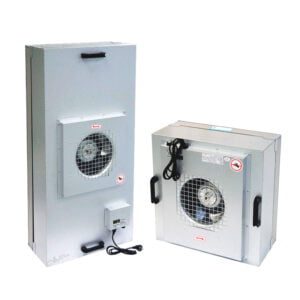
Designing a cleanroom to meet a specific ISO classification requires precise engineering, yet a fundamental calculation often trips up even experienced professionals. The air change rate (ACH) is not a fixed number from a table but a flexible design parameter with significant cost implications. Selecting and calculating the required number of Fan Filter Units (FFUs) is the critical step that translates a cleanliness target into a functional, efficient, and compliant system.
This process demands more than plugging numbers into a formula. It requires understanding the interplay between airflow, contamination control, and total system design. A miscalculation here can lead to non-compliance, wasted energy, or unnecessary capital expenditure. This guide provides the authoritative, step-by-step framework for accurate FFU air change rate calculation, moving from basic math to advanced implementation strategies.
Understanding Air Change Rate (ACH) for Cleanrooms
Defining the Core Metric
The Air Change Rate (ACH) quantifies how many times the total air volume within a cleanroom is replaced each hour. It is the primary design driver for non-unidirectional (mixed/turbulent) airflow cleanrooms, such as ISO 7 and ISO 8 classifications. The ACH directly determines the dilution and removal rate of airborne particulates, forming the basis for achieving and maintaining the required cleanliness level. Industry standards, however, provide wide ranges for each class, not single prescriptive values.
The Design Flexibility-Cost Trade-off
This range creates a pivotal engineering decision. For an ISO 7 cleanroom, the ACH can vary from 60 to 480. Selecting a value at the lower end minimizes upfront capital costs and long-term energy consumption but leaves minimal operational buffer. Choosing a higher ACH increases the safety margin and contamination removal efficiency at a significant lifetime cost. According to research from contamination control authorities, the chosen ACH must be explicitly justified by a formal risk assessment of internal processes, occupancy, and contamination risk. This single parameter sets the scale for the entire HVAC and filtration system.
Navigating Standards and Ranges
The wide ACH ranges defined in standards like ISO 14644-4 are intentional, allowing for application-specific design. A packaging cleanroom with minimal personnel may function at the low end of an ISO 8 range, while a pharmaceutical compounding suite with higher activity requires a value toward the higher end. This underscores that cleanroom design is not a copy-paste exercise but a performance-based engineering challenge where the ACH is a key variable to be optimized.
| ISO Class | Typical ACH Range | Design Flexibility |
|---|---|---|
| ISO 7 | 60 – 480 ACH | Wide range |
| ISO 8 | 5 – 60 ACH | Significant flexibility |
| Lower ACH Selection | Minimizes capital cost | Reduced operational buffer |
| Higher ACH Selection | Increases safety margin | Higher lifetime cost |
Source: ISO 14644-4: Cleanrooms and associated controlled environments — Part 4: Design, construction and start-up. This standard establishes the framework for cleanroom design, where ACH is a key parameter determined to meet specific ISO classes. It provides the basis for the wide ranges and the need for risk-based justification.
The Core FFU Calculation Formula Explained
The Essential Equation
The fundamental formula for sizing an FFU system is straightforward: Number of FFUs = (ACH × Cleanroom Volume) / FFU Flow Rate. This calculation determines the quantity of units needed to deliver the total hourly airflow required to achieve the target ACH. Every variable in this equation must be accurately defined; an error in any one leads to an under or oversized system.
Volume-Based vs. Area-Based Thinking
A common and costly mistake is using floor area instead of volume. The formula is inherently three-dimensional. Ceiling height acts as a direct multiplier on the required airflow. A decision to increase room height for utility space, for instance, has a linear impact on the number of FFUs and project cost. This highlights the need for early coordination between architectural and MEP teams, as room dimensions are locked in during schematic design.
Application by Cleanroom Type
It is critical to note this formula applies specifically to non-unidirectional airflow rooms (ISO 6-9). For unidirectional (laminar) flow cleanrooms (ISO 1-5), the core design metric shifts from ACH to maintaining a specific average air velocity, such as 0.45 m/s (90 fpm), as outlined in guidance like IEST-RP-CC012.3. Applying an ACH-based calculation to a laminar flow cleanroom will result in a fundamentally incorrect design.
| Design Parameter | Core Metric | Key Insight |
|---|---|---|
| Non-Unidirectional Flow (ISO 6-9) | Air Change Rate (ACH) | Volume-based calculation |
| Unidirectional Flow (ISO 1-5) | Average Air Velocity | e.g., 0.45 m/s (90 fpm) |
| Formula Basis | Room Volume (m³) | Not floor area |
| Common Design Error | Using floor area only | Ignores ceiling height multiplier |
Source: IEST-RP-CC012.3: Considerations in Cleanroom Design. This recommended practice provides guidance on airflow patterns and ventilation, distinguishing between the design principles for mixed/turbulent (ACH-based) and laminar (velocity-based) cleanrooms.
Step-by-Step FFU Calculation with Example
Gathering Input Parameters
The calculation requires three definitive inputs: room volume (Length x Width x Height in meters), the target ACH (selected from the justified range), and the certified flow rate (Q_FFU in m³/h) of the specific FFU model under standard operating conditions. Do not use theoretical or maximum values; use the tested, sustainable flow rate.
Performing the Calculation
For an ISO 7 cleanroom measuring 10m (L) x 6m (W) x 2.8m (H) with a target ACH of 70, the volume is 168 m³. The total required airflow is 11,760 m³/h (70 ACH x 168 m³). If the selected FFU model has a rated flow of 1,000 m³/h, the baseline unit count is 11.76. This must always be rounded up to the nearest whole unit, resulting in a requirement for 12 FFUs to meet the minimum target.
Moving Beyond Simplistic Rules
This calculated number is a performance-based result. Outdated concepts like “FFU ceiling coverage percentage” (e.g., 25%, 50%) are simplified tools for preliminary cost estimation. They are not referenced performance parameters in current ISO standards. The final design must be validated against the calculated performance metrics of ACH or velocity, not coverage rules of thumb.
| Calculation Step | Example Value | Unit |
|---|---|---|
| Room Dimensions | 10m x 6m x 2.8m | Meters |
| Room Volume | 168 | m³ |
| Target ACH (ISO 7) | 70 | ACH |
| Required Total Airflow | 11,760 | m³/h |
| FFU Rated Flow (Q_FFU) | 1,000 | m³/h |
| Calculated FFU Count | 12 | Units |
Note: FFU count must always be rounded up to the nearest whole unit.
Source: Technical documentation and industry specifications.
Key Design Considerations Beyond Basic Math
Strategic Placement for Uniformity
The calculated FFU quantity is a starting point for layout. Effective contamination control requires strategic placement to ensure uniform air distribution and prevent stagnant zones. While a uniform grid on a T-bar ceiling is standard, optimal protection involves mapping anticipated contamination sources and personnel workflows. Research in healthcare isolation rooms proves that exhaust grille placement relative to the source drastically affects pollutant removal efficiency, making layout as critical as the ACH value itself.
Incorporating a Design Margin
A calculated number should never be the final installed number. A design margin of 10-20% is essential. This buffer accounts for filter loading over time, which increases pressure drop and can reduce individual FFU flow if not properly compensated. It also provides flexibility for future process changes and accommodates room leakage. In my experience, omitting this margin is the most common reason a new cleanroom fails its initial performance qualification after a few months of filter use.
Integrating with Ceiling Grid and Services
The physical layout must coordinate with the ceiling grid, lighting, sprinklers, and other services. FFUs have specific footprint dimensions, and their placement must align with the structural T-bar grid. This coordination ensures a clean aesthetic, maintains ceiling integrity, and allows for proper sealing—a non-negotiable requirement for maintaining pressurization. Failure to coordinate leads to costly field modifications and potential compliance gaps.
FFU Selection: Performance Factors and Specifications
Evaluating Motor Technology
The assumed Q_FFU must be a reliable value, but the technology delivering that flow is paramount. Motor technology is the primary differentiator: Electronically Commutated (EC) motors offer superior energy efficiency, stable airflow control via built-in variable speed drives, and longer operational life compared to traditional AC motors. For systems operating 24/7, the focus is squarely on total cost of ownership, making advanced motor technology a critical selection factor.
Understanding Total Cost of Ownership (TCO)
Procurement decisions should favor FFUs with advanced motor and control technology. While the initial price premium for EC-motor FFUs can be 15-30% higher, the long-term energy savings often result in a payback period of less than two years. Over a 10-year lifespan, the energy cost savings can significantly outweigh the initial capital difference. This shifts the evaluation from a simple equipment cost to a lifecycle financial analysis.
Specifications for Reliability
Beyond flow rate, key specifications include filter efficiency (typically HEPA or ULPA), sound pressure level (dBA), and control system compatibility. The unit should maintain its rated flow against a defined range of external static pressure to ensure performance as filters load. Units should be selected with integrated controls or compatibility with building management systems for monitoring and adjustment.
| Selection Factor | Key Consideration | Impact on TCO |
|---|---|---|
| Motor Technology | EC vs. AC motors | Primary differentiator |
| EC Motor Benefit | Superior energy efficiency | Lower lifetime cost |
| Airflow Control | Stable performance | Essential for 24/7 operation |
| Filter Loading | Pressure drop increase | Requires design margin |
| Procurement Focus | Advanced motor technology | Outweighs initial premium |
Source: Technical documentation and industry specifications.
Integrating FFUs with HVAC for Pressure Control
The Critical Role of Make-up Air
A fundamental and often misunderstood principle is that FFUs alone do not control room pressurization. FFUs are recirculation devices, moving and filtering air within the room. Maintaining the differential pressure cascade essential for contamination containment (e.g., clean corridor > processing room > airlock) is the function of a separate, actively balanced central HVAC system. This system provides conditioned make-up air.
Balancing Airflow for Pressurization
The HVAC system must precisely balance the volume of supplied make-up air against all exhaust flows—general room exhaust, process exhaust from equipment, and leakage. A positive pressure is created by supplying slightly more air than is exhausted. Neglecting this integration guarantees failure. The FFU system and the central air handling system must be designed, sized, and controlled as a single, cohesive package to establish and maintain these critical pressure differentials.
Control System Coordination
Modern designs integrate FFU speed control with pressure sensors and the building management system (BMS). If a door opens, causing a pressure drop, the system can adjust make-up air dampers or, in some configurations, temporarily modulate FFU speeds to assist in re-establishing the pressure cascade. This level of integration requires careful planning from the control narrative stage to ensure all components communicate effectively.
Advanced Configurations for Enhanced Contamination Control
Localized Unidirectional Flow Applications
For applications requiring extreme local cleanliness or specific pathogen control, FFUs can be deployed in targeted, advanced configurations. One evidence-based strategy involves ceiling-mounted FFUs to create a localized unidirectional flow zone over a critical workbench or process, coupled with low-wall exhaust grilles placed near the contamination source. This design dramatically improves pollutant removal efficiency by creating a clean air curtain and immediately capturing contaminants before dispersion.
The Shift to Performance-Based Modeling
This approach represents a shift from prescriptive, table-based design to performance-based, facility-specific engineering. Leading operators increasingly demand computational fluid dynamics (CFD) simulations to visualize and optimize airflow patterns and contaminant removal for complex layouts or critical zones. CFD moves the design process beyond one-size-fits-all benchmarks, allowing engineers to test and validate configurations before installation, de-risking the project.
Modular and Adaptive Design
The inherent modularity of FFU systems enables phased investment and adaptive cleanroom design. A pilot facility or R&D lab can start with a lower ACH configuration for ISO 8. As processes mature and cleanliness requirements increase, additional FFUs can be added to the existing grid to achieve ISO 7 performance. This scalability lowers initial capital outlay and allows control to scale precisely with process needs and risk assessment.
Implementing Your Calculation: A Practical Framework
From Calculation to Qualified System
View the FFU calculation as the first step in a dynamic qualification process. The calculated and installed system must be validated through initial particle count tests and airflow velocity measurements to prove it meets the target ISO class and ACH. This performance data becomes the baseline for ongoing operational qualification.
Embracing Continuous Monitoring
The industry is transitioning from periodic manual sampling to continuous, data-driven monitoring. Integrating IoT-enabled particle counters, pressure sensors, and FFU performance monitors creates an “Intelligent Clean Room.” This facilitates real-time performance analytics, trend analysis, and predictive maintenance for filters and motors, shifting management from a reactive compliance activity to a proactive operational intelligence function.
Establishing a Maintenance and Response Protocol
The final step is establishing clear protocols. This includes scheduled filter integrity testing (DOP/PAO testing), periodic airflow verification, and defined response actions for when monitoring data indicates a drift from baseline conditions. A well-designed FFU system with a robust data backbone is only as good as the operational discipline that supports it.
The core decision points are selecting a justified ACH, performing an accurate volume-based calculation, and selecting FFUs based on total cost of ownership, not just upfront price. Implementation requires integrating FFU layout with HVAC pressure control and validating performance through testing. This framework turns a simple formula into a reliable contamination control strategy.
Need professional guidance to specify and implement a high-performance Fan Filter Unit (FFU) system for your facility? The engineers at YOUTH can assist with calculations, product selection, and system design to ensure your cleanroom meets its classification targets efficiently and reliably.
Frequently Asked Questions
Q: How do you determine the correct air change rate for an ISO 7 cleanroom when the standard gives such a wide range?
A: You must select a specific ACH value within the broad ISO range through a formal risk assessment, as this single parameter sets your entire system’s scale. The ISO 14644-4 framework requires this justification based on internal process risk, occupancy, and contamination potential. This means facilities with highly variable processes should target the higher end of the range for a safety margin, while stable, low-occupancy operations can opt for a lower ACH to minimize capital and lifetime energy costs.
Q: Why is room volume, not just floor area, critical for calculating the number of FFUs needed?
A: The core formula for FFU quantity is inherently three-dimensional: (ACH × Room Volume) / FFU Flow Rate. Using floor area alone ignores ceiling height, which acts as a direct multiplier on the total air volume you must process. This principle is central to cleanroom design guidance like IEST-RP-CC012.3. For projects where architectural plans are not yet fixed, expect that even a modest increase in ceiling height will have a linear, significant impact on your required FFU count and HVAC capital expenditure.
Q: Can FFUs alone control cleanroom pressurization for contamination containment?
A: No, FFUs primarily handle internal air recirculation and filtration; they do not manage the differential pressure cascade. Maintaining critical pressure gradients depends on a separate, actively balanced HVAC system that provides conditioned make-up air, precisely offsetting exhaust flows. This integration is a foundational design requirement. If your operation requires a stable pressure cascade (e.g., clean corridor > processing room), plan for the FFU system and central air handler to be designed and controlled as a single, cohesive package from the outset.
Q: What are the key factors to evaluate when selecting a specific Fan Filter Unit model?
A: Look beyond the rated flow rate (Q_FFU) to motor technology and total cost of ownership. Electronically Commutated (EC) motors provide superior energy efficiency, stable airflow control, and longer service life compared to traditional AC motors. Since these systems run continuously, the long-term energy savings from advanced motors can significantly outweigh initial price premiums. For projects where operational expenditure is a major concern, you should prioritize FFU specifications that include EC motor technology and proven, reliable performance data.
Q: How should the basic calculated number of FFUs be adjusted for a robust, long-term design?
A: The formula provides a theoretical minimum, which you must then increase by a 10-20% design margin. This buffer accounts for filter loading over time, future process changes, and inevitable room leakage. Furthermore, strategic placement on a uniform grid is required to ensure uniform air distribution and prevent stagnant zones, a principle supported by IEST-RP-CC012.3. This means facilities planning for process flexibility or located in high-particle environments should incorporate this margin during initial procurement to ensure long-term classification compliance.
Q: When should you consider advanced FFU configurations like localized unidirectional flow?
A: Implement targeted configurations, such as a ceiling FFU paired with low-wall exhausts, for applications requiring extreme cleanliness or specific pathogen control over a critical zone. This design creates a clean air curtain that immediately captures contaminants at the source, dramatically improving removal efficiency. If your operation involves high-risk processes in defined areas, you should plan for performance-based design, potentially using Computational Fluid Dynamics (CFD) simulation, rather than relying solely on prescriptive, room-wide benchmarks.
Q: Is the concept of “FFU ceiling coverage percentage” a valid parameter for final system design?
A: No, percentages like 25% or 50% coverage are simplified tools for preliminary cost estimation and are not referenced performance parameters in current ISO 14644-4 standards. Final design must be based on the calculated performance metrics of ACH for mixed-flow rooms or specific air velocity for laminar flow rooms. This means your procurement and validation documents should specify the required ACH or velocity, not a ceiling coverage target, to ensure the installed system meets the intended ISO classification.
Related Contents:
- Fan Filter Units or Laminar Flow Hoods: Which to Choose?
- Top 3 Fan Filter Unit Applications in Pharmaceutical Manufacturing
- Optimizing Airflow Patterns in Fan Filter Unit Systems
- The Complete Fan Filter Unit Guide for Cleanroom Managers: Technical Selection, Installation, and Performance Optimization 2025 Edition
- What Are the FFU Requirements for Different Cleanroom Classes?
- FFU vs Laminar Air Flow Unit Comparison
- How Fan Filter Units Create Laminar Airflow in ISO Class 5 Cleanrooms
- Fan Filter Unit Airflow Principles and Laminar Flow Performance: Complete Guide to Positive Pressure Cleanroom Environments
- How to Calculate CFM Requirements for Modular Cleanroom HVAC Systems