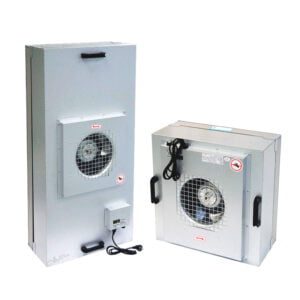
Selecting the right Fan Filter Unit (FFU) is a critical technical decision, yet many specifications sheets focus on maximum CFM output while obscuring the true operational costs and compatibility factors. This narrow view leads to over-specification, unnecessary energy expenditure, and systems that fail to integrate with modern building controls. The motor technology at the heart of an FFU dictates its entire performance profile, making it the primary variable in your total cost of ownership.
The 2025 landscape demands a more sophisticated analysis. With stricter energy codes and a push toward intelligent, data-driven facilities, the choice between PSC, EC, and High-HP motors is no longer just about airflow—it’s about operational philosophy, future scalability, and compliance. Understanding the quantifiable trade-offs between these technologies is essential for specifying a system that delivers both performance and value over its entire lifecycle.
PSC vs. EC vs. High-HP Motors: Core Technology Compared
Defining the Core Architectures
The motor is the FFU’s engine, and its type sets a hard ceiling on efficiency, control, and lifecycle cost. Permanent Split Capacitor (PSC) motors are the established, cost-effective baseline. They are simple, reliable, and offer a lower initial price point. However, they operate at a fixed speed or with limited multi-tap control, leading to higher energy consumption and an inability to dynamically adjust to changing filter load or room pressure requirements.
The Efficiency and Control Advantage of EC
Electronically Commutated (EC) motors represent the modern standard for performance-critical applications. They integrate a variable-speed drive, allowing precise adjustment of airflow from 0-100%. This capability is the source of their primary advantage: superior energy efficiency. By matching motor speed exactly to demand, EC motors can reduce energy consumption by up to 50% compared to PSC models. In our facility audits, we consistently find this precise control also extends filter life by reducing unnecessary stress on the media.
The Niche Role of High-HP Designs
High-Horsepower (HP) motors serve a distinct purpose. They prioritize maximum CFM output above all else, designed to maintain required airflow against the high static pressure of dense ULPA filters or complex ductwork. This comes at a significant cost to efficiency, resulting in substantially higher operational power draw. This technology is not about saving energy; it’s about guaranteeing airflow where it is non-negotiable, making it a specialized tool for specific high-resistance applications.
Comparative Technology Breakdown
The following table clarifies the fundamental trade-offs between these three motor technologies, highlighting how the primary advantage of one type directly correlates to its key limitation.
| Motor Type | Primary Advantage | Key Limitation | Typical Efficiency Gain |
|---|---|---|---|
| PSC (Permanent Split Capacitor) | Lowest upfront cost | Limited speed control | Baseline (0%) |
| EC (Electronically Commutated) | Superior energy efficiency | Higher initial investment | Up to 50% reduction |
| High-HP (High Horsepower) | Maximum CFM output | High power consumption | Not applicable |
Source: IEC 60335-2-65 Household fan performance. This international safety standard establishes foundational construction and performance requirements for air-cleaning appliances like FFUs, influencing the design and reliability parameters of the motor technologies compared here.
CFM Output and Energy Efficiency: A 2025 Performance Analysis
The Critical CFM-per-Watt Metric
Evaluating FFU performance requires moving beyond standalone CFM numbers. The meaningful metric is CFM-per-watt, which quantifies how much clean air you get for each unit of energy consumed. A unit boasting 1000 CFM is inefficient if it requires 400 watts to achieve it, whereas a unit delivering 500 CFM at 90 watts represents a far more advanced design. The industry’s shift is toward optimizing this ratio through improved backward-curved impeller aerodynamics and motor design.
Analyzing Real-World Operational Data
Specifications at maximum speed are often misleading. The true benchmark for cleanroom applications is performance at the intended operational face velocity, typically 90 feet per minute (FPM). Data from 2025 models reveals stark differences. A standard unit may draw 197 watts to deliver 670 CFM, while a high-efficiency EC model achieves a sufficient 450 CFM at 90 FPM using only 42 watts. This inverse relationship highlights the cost of over-specification.
Performance Specification Comparison
This analysis of 2025 model data underscores the operational trade-offs. The “High-HP Niche Model” exists in a different category, where maximum airflow is the sole priority, not efficiency.
| FFU Model (4′ x 2′) | CFM Output | Power Draw (Watts) | Operational Face Velocity |
|---|---|---|---|
| Standard Unit | 670 CFM | 197 W | Not specified |
| High-Efficiency EC Model | 450 CFM | 42 W | 90 FPM |
| High-HP Niche Model | Maximum CFM | Very High | For high static pressure |
Note: True efficiency benchmark is power draw at 90 FPM, not maximum CFM.
Source: ANSI/ASHRAE/IES Standard 90.1-2022. This standard regulates fan power limits and motor efficiency, providing the performance framework for quantifying the CFM-per-watt metrics critical to this analysis.
Which FFU Technology Offers the Best Total Cost of Ownership?
Calculating Beyond the Purchase Price
Total Cost of Ownership (TCO) integrates capital expenditure (CapEx) with operational expenditure (OpEx). A PSC motor’s low upfront cost is attractive, but its higher energy consumption accrues significant OpEx, especially in facilities with 24/7 operation. For large installations, this operational penalty can eclipse the initial savings within a few years, making it the highest TCO option for continuous-use environments.
The Long-Term Value of EC Investment
EC motors flip the cost model. Their higher initial investment is offset by dramatically lower energy bills. In a typical cleanroom, the payback period for the EC premium can be under two years. Furthermore, their integrated intelligence supports predictive maintenance, preventing costly downtime and optimizing filter change-outs. This capability to integrate with a Building Management System (BMS) for centralized control and data analytics adds strategic value that isn’t reflected in a simple price quote.
TCO Breakdown by Motor Type
Modeling TCO requires weighing these competing cost factors. The value of integration and data accessibility, central to modern facility management, is a decisive advantage for EC technology.
| Cost Factor | PSC Motor | EC Motor | High-HP Motor |
|---|---|---|---|
| Initial Capital Cost | Low | High | Moderate-High |
| Operational Energy Cost | High | Very Low | Very High |
| Long-term Value & Integration | Minimal | Excellent (BMS integration) | Low |
Source: ASHRAE 90.1 Energy Standard for Buildings. The standard’s focus on overall building energy consumption directly informs the operational cost component of the TCO calculation for continuous-use FFU systems.
Matching Motor Technology to Your Cleanroom’s Specific Needs
High-Reliability Environments: Semiconductor & Pharma
For ISO-classified cleanrooms in semiconductor fabrication or pharmaceutical production (governed by standards like ISO 14644-1 and USP <800>), control and compliance are paramount. EC motors are the default choice. Their precise speed control maintains stable room pressure differentials, and their efficiency supports sustainability goals. The ability to log performance data directly aids in compliance reporting for cGMP and other regulatory frameworks.
Cost-Sensitive & Lower-Tier Applications
Not all controlled environments require ISO 5 certification. For lower-tier cleanrooms, some packaging areas, or commercial air quality applications, the operational demands are less stringent. Here, the simplicity and lower capital cost of a PSC motor may be technically sufficient. The key is honest assessment: if dynamic control and peak efficiency are not critical drivers, a PSC-based system can be a valid, budget-conscious solution.
Maximum Airflow Demands
Specialized applications exist where maintaining a specific CFM against extremely high static pressure is the only metric that matters. This includes certain bio-containment labs or processes using very high-resistance ULPA filters. In these niche cases, the high power draw of a High-HP motor is an accepted trade-off to guarantee the non-negotiable airflow, making it the correct—though expensive—technical match.
Beyond Specs: Installation, Control, and Maintenance Considerations
The Control System Ecosystem
An FFU’s motor technology dictates its control capabilities. PSC units often require separate, hard-wired variable frequency drives (VFDs) for group control, adding complexity and cost. Modern EC motors feature embedded control cards that communicate via open protocols like BACnet MS/TP. This allows for seamless integration into a BMS, enabling centralized monitoring, alarming, and adjustment of airflow velocity across hundreds of units from a single interface. This transforms FFUs from standalone fans into networked environmental control nodes.
The RSR Performance Trade-Off
Room-Side Replaceable (RSR) filter designs offer clear maintenance advantages by allowing filter changes from within the cleanroom without ceiling access. However, this convenience imposes a permanent performance tax. The sealing mechanism and design constraints of RSR housings consistently reduce maximum achievable CFM and can increase leakage potential compared to a non-RSR, gasketed design. This trade-off must be weighed: easier maintenance against a permanent reduction in airflow capacity and potential integrity.
Integrated Functionality
Modern FFUs are evolving into environmental platforms. Beyond filtration, options like built-in UV-C modules for microbial control or ionization bars for particle agglomeration can be integrated. When selecting a high-performance fan filter unit for cleanroom applications, consider whether the design supports these future add-ons, consolidating multiple environmental control functions into a single, ceiling-mounted unit for a cleaner installation.
How to Validate Performance: Compliance and Testing Protocols
Mandatory Standards and Certifications
Performance claims require validation against independent standards. For airflow and energy, testing should follow recognized methods like those from ASHRAE. For facilities in seismic zones, certification from authorities like HCAI is non-negotiable. Crucially, cleanliness performance must be validated against ISO 14644-1 Cleanrooms and associated controlled environments, which defines the particle count limits your FFU system is designed to meet.
Interpreting Certified Performance Data
A credible manufacturer provides certified performance data at stated conditions. This includes CFM output at multiple static pressure points, not just at free air. You need data for both a clean filter and a loaded filter (e.g., at 1.0″ w.g.) to understand how performance will degrade over the filter’s life. Request test reports that show power draw at your target face velocity (e.g., 90 FPM), not just at maximum speed, to validate real-world efficiency.
Validation Checklist for Procurement
Use this framework to assess manufacturer claims during the specification and bidding process.
| Validation Aspect | Key Standard/Protocol | Critical Performance Data Point |
|---|---|---|
| Air Cleanliness Classification | ISO 14644-1 | Particle count per cubic meter |
| Energy & Airflow Testing | ASHRAE Test Methods | CFM at specific static pressure |
| Seismic Certification | HCAI or similar | Certification for seismic zones |
| Operational Benchmark | Real-world condition | Power draw at 90 FPM face velocity |
Source: ISO 14644-1 Cleanrooms and associated controlled environments. This standard defines the ISO classification system, establishing the target cleanliness levels that FFU performance data (CFM, filtration) must be validated against.
Future-Proofing Your Investment: Scalability and Integration
The Digital Integration Imperative
The future of critical environments is data-driven. An FFU system that cannot communicate operational data is a stranded asset. EC motor platforms with open-protocol communications (BACnet, Modbus) are inherently future-proof. They feed data into analytics platforms for predictive maintenance, track filter load in real-time, and allow for global adjustments to airflow profiles to accommodate process changes without physical modifications.
Supporting Modular and Scalable Design
The “cleanroom-in-a-box” and modular facility trends demand scalable ventilation solutions. A networked EC FFU system is ideal for this. Units can be easily added or removed from the control network, and zones can be reconfigured via software. This supports agile manufacturing layouts and allows for phased expansion, protecting your initial investment by ensuring the ventilation system is not a bottleneck to facility evolution.
Decision Framework: Selecting the Optimal FFU for Your Project
Step 1: Define Non-Negotiable Requirements
Begin with immutable project drivers. Determine the target ISO class, required airflow velocity (FPM), and all applicable regulatory standards (USP, cGMP, etc.). Identify seismic certification needs based on facility location. These requirements form the boundary conditions that will eliminate incompatible technologies immediately.
Step 2: Calculate Technical Parameters
Calculate the required CFM based on room volume and air change rate. Critically, determine the static pressure the FFU must overcome, factoring in the pressure drop of your chosen HEPA/ULPA filter at both initial and final loading. Decide if RSR convenience is worth the associated performance penalty and incorporate this into your CFM and pressure calculations.
Step 3: Prioritize the Primary Decision Driver
Articulate the top priority. Is it minimizing lifetime operational cost? Choose EC. Is it minimizing upfront capital expenditure for a less critical area? PSC may suffice. Is it guaranteeing absolute maximum airflow against a known high static pressure? High-HP is your only option. This priority aligns technology with business objective.
Step 4: Model TCO and Evaluate the Ecosystem
Build a 5-10 year TCO model incorporating energy costs, filter replacement cycles, and estimated maintenance. Then, evaluate the broader ecosystem: compatibility with your BMS, installation logistics, and the manufacturer’s service and technical support network. The optimal FFU is the one that delivers the required performance at the lowest TCO within a supportable technical ecosystem.
The core decision hinges on aligning motor technology with operational priority: EC for efficiency and control, PSC for cost-sensitive basics, High-HP for uncompromised airflow. Validating performance against actual operational conditions, not just maximum specs, is essential to avoid costly over-engineering. Ultimately, the right choice integrates technical performance with long-term operational intelligence.
Need professional guidance to specify the optimal FFU system for your facility’s unique requirements? The engineers at YOUTH can help you navigate the technical and economic trade-offs to develop a future-proof solution.
Frequently Asked Questions
Q: How do you calculate the true energy efficiency of an FFU for a cleanroom application?
A: True efficiency is measured by power draw at the intended operational face velocity, such as 90 feet per minute (FPM), not just at maximum CFM. Motor efficiency is not linear, so a unit delivering 450 CFM at 90 FPM using 42 watts is far more efficient than one drawing 197 watts for 670 CFM. For projects where continuous operation is required, you should prioritize comparing manufacturer data at your target velocity to avoid significant, avoidable energy costs.
Q: Which FFU motor technology provides the lowest total cost of ownership for a 24/7 semiconductor cleanroom?
A: Electronically Commutated (EC) motors typically offer the best TCO for continuously operating facilities, despite a higher initial purchase price. Their superior energy efficiency—often cutting consumption by 50%—leads to lower operational expenses, and their embedded intelligence supports predictive maintenance. This means facilities governed by standards like ISO 14644-1 should prioritize EC technology for its long-term savings and integration capabilities.
Q: When should we specify a High-Horsepower motor over a more efficient EC motor for an FFU?
A: Specify a High-HP motor only when maintaining maximum CFM against high static pressure from a ULPA filter is a non-negotiable requirement. This technology prioritizes uncompromised airflow over energy efficiency, resulting in significantly higher power draw. If your operation requires maximum particle capture in a high-resistance setup, plan for elevated operational costs and ensure the unit’s performance is validated for your specific static pressure condition.
Q: How do room-side replaceable (RSR) filter systems impact FFU performance?
A: RSR systems impose a permanent performance tax, consistently reducing the maximum achievable CFM compared to non-RSR models. This design trade-off prioritizes maintenance convenience and safety over ultimate airflow capacity. For projects where target air changes per hour are critical, you must weigh the benefit of easier filter changes against potentially needing more FFUs to meet your cleanliness class as defined by ISO 14644-1.
Q: What compliance documentation is essential for validating FFU performance claims?
A: Require certified test data against standards like ASHRAE methods for airflow and energy, along with seismic certifications (e.g., HCAI) for critical facilities. Manufacturers should provide performance at stated conditions, including CFM at specific static pressures for both clean and loaded filter scenarios. This due diligence ensures the equipment meets regulatory mandates; if your facility must comply with energy codes, verify alignment with ANSI/ASHRAE/IES Standard 90.1-2022.
Q: How can we future-proof an FFU investment for potential cleanroom expansion or reconfiguration?
A: Future-proofing hinges on selecting EC motor systems with open-protocol communication like BACnet for integration with a Building Management System (BMS). This supports modular “cleanroom-in-a-box” concepts, enabling easier scalability and reconfiguration. When evaluating vendors, prioritize software features and data accessibility to ensure your installation can adapt to evolving analytics and tighter environmental control protocols.
Q: What is the first step in a structured framework for selecting the optimal FFU?
A: The first step is to define all non-negotiable requirements, including target ISO class, airflow velocity, applicable regulatory standards (e.g., USP <800>), and any seismic needs. These fixed parameters create the boundary conditions that will filter viable motor technologies and performance specifications. This means your project team must align on these operational and compliance drivers before reviewing any product specifications or CFM calculations.
Related Contents:
- How Fan Filter Units Create Laminar Airflow in ISO Class 5 Cleanrooms
- The Complete Fan Filter Unit Guide for Cleanroom Managers: Technical Selection, Installation, and Performance Optimization 2025 Edition
- Energy-Efficient Mobile LAF Carts: 2025 Top Picks
- Proven FFU Maintenance Tips to Extend Unit Lifespan
- Optimizing Airflow Patterns in Fan Filter Unit Systems
- Cleanroom Fan Filter Unit Specifications | Technical Comparison
- What is Positive Pressure in Fan Filter Unit Systems and Why It Prevents Contamination
- Top 3 Fan Filter Unit Applications in Pharmaceutical Manufacturing
- Emerging Trends: The Future of Fan Filter Unit Technology