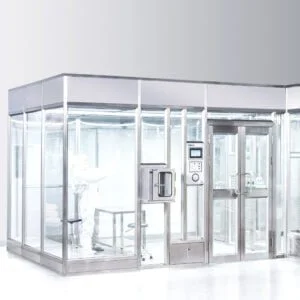
Selecting the right air handling system for a cleanroom is a foundational technical and financial decision. The choice between a modular Fan Filter Unit (FFU) grid and a conventional centralized HVAC system dictates not just initial performance but long-term operational flexibility and cost. Many professionals default to familiar HVAC designs, potentially overlooking how modern modular architectures can address specific cleanroom challenges more effectively.
This comparison is critical now as industries from pharmaceuticals to advanced electronics face increasing pressure for agility, energy efficiency, and precision. Understanding the eight key performance differences between these systems is essential for specifying a solution that aligns with both current ISO classification requirements and future operational needs.
FFU vs Conventional HVAC: Core System Definitions Compared
Understanding the Modular FFU Architecture
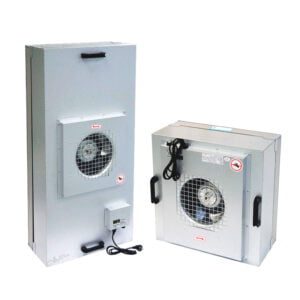
A Fan Filter Unit (FFU) is a self-contained, modular air purification device. Each unit integrates a high-efficiency fan, pre-filter, and final HEPA or ULPA filter within a single housing. Installed in a grid across the cleanroom ceiling, each FFU acts as an independent, powered supply for laminar airflow. This decentralized design represents a fundamental shift from centralized paradigms. The widespread adoption of Electronically Commutated (EC) motors is a key enabler, providing the variable speed control, efficiency, and compact form required for viable modular units.
The Centralized HVAC Paradigm
In contrast, a conventional cleanroom HVAC system relies on a remote Air Handling Unit (AHU). This single unit conditions and filters air for the entire space before distributing it through extensive ductwork to terminal HEPA filters in the ceiling. This creates a system with centralized intelligence, where one unit manages the environment for a large area. The ductwork itself introduces design constraints and energy losses not present in a modular system.
Defining the Appropriate Application Scope
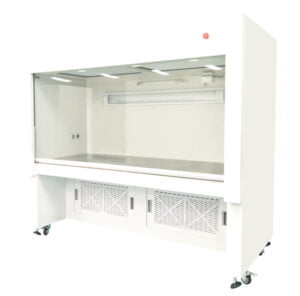
The choice between systems forces a clear scope decision. FFUs are engineered for room or zone-scale particulate control, creating a uniform laminar flow field. Equipment like Laminar Air Flow workstations address localized, point-of-process protection. Conventional HVAC is often tasked with conditioning the entire facility envelope, including the cleanroom and adjacent support spaces. This fundamental difference in design intent directly influences all subsequent performance comparisons.
Capital & Operational Cost Comparison: FFU vs HVAC
Analyzing Initial Capital Expenditure
The financial analysis must look beyond simple equipment lists. FFU systems often have a higher initial capital cost due to the expense of multiple integrated fan-motor-filter units. However, their installation is typically simpler and faster, involving grid mounting and power/control wiring with minimal complex ductwork, which can reduce labor costs. Conversely, a conventional system may have a lower central AHU cost, but this is frequently offset by the extensive, costly installation of sheet metal ductwork, insulation, and meticulous system balancing.
Calculating Operational and Lifetime Costs
Operationally, FFUs offer significant advantages that can offset the upfront investment. Their decentralized design means they only move and filter air locally within the clean zone, avoiding the substantial energy losses from pushing air through long duct runs. This targeted operation reduces both fan and cooling loads. In my experience evaluating total cost of ownership for clients, the years of energy savings from an FFU system often make it the more economical choice over a 5-10 year horizon, despite a higher initial price tag.
Strategic Financial Implications
The strategic implication is that total cost of ownership (TCO) is a more critical metric than purchase price. FFUs enable capital to be allocated precisely to contamination-critical zones rather than conditioning an entire facility, improving ROI. This zone-precise investment supports a phased cleanroom strategy, aligning capital expenditure directly with process rollout.
| Cost Component | FFU System | Conventional HVAC System |
|---|---|---|
| Initial Capital Cost | Higher unit cost | Lower central AHU cost |
| Installation Labor | Simpler, faster mounting | Complex ductwork installation |
| Operational Energy | Lower fan & cooling loads | Higher ductwork resistance losses |
| Total Cost of Ownership | Lower long-term TCO | Higher operational energy spend |
| Investment Flexibility | Zone-precise capital allocation | Bulk facility conditioning |
Source: Technical documentation and industry specifications.
Which System Offers Better Energy Efficiency & Control?
Mechanisms of FFU Efficiency
FFU systems achieve superior efficiency through multiple, interconnected mechanisms. Each unit typically uses a high-efficiency EC motor, and the short, direct air path from the ceiling plenum to the room minimizes static pressure loss. Critically, FFUs facilitate dynamic zoning; units in non-critical or unoccupied areas can reduce speed or shut down, while others maintain full flow. This granular control is enabled by the distributed intelligence of networked FFU controllers, allowing real-time response to process needs.
The Efficiency Challenge of Centralized Systems
Conventional HVAC efficiency is heavily design-dependent. While large central fans can be efficient at their design point, they often operate at fixed speeds and waste significant energy overcoming ductwork resistance. Implementing Variable Air Volume (VAV) strategies for pressure control is possible but adds complexity and cost. The system must overcome the combined pressure drop of all ductwork, dampers, and filters, a load that increases as filters load with particulate.
Contrasting Control Paradigms
The control paradigm differs fundamentally. Conventional systems rely on centralized Building Automation Systems (BAS) with limited sensor points. FFUs feature a distributed control architecture. This allows airflow, pressure, and energy use to be monitored and adjusted at the individual unit level, enabling precise optimization and facilitating predictive maintenance based on actual performance data.
| Efficiency Parameter | FFU System | Conventional HVAC System |
|---|---|---|
| Motor Type | High-efficiency EC motor | Variable (often less efficient) |
| Air Path Static Pressure | Minimal loss (short path) | Significant ductwork resistance |
| Operational Control | Granular, per-unit speed control | Centralized BAS control |
| Zoning Capability | Dynamic, real-time optimization | Possible with complex VAV |
| Energy Use Monitoring | Distributed, unit-level data | Centralized system monitoring |
Source: ASHRAE 52.2. This standard provides the test method for rating filter efficiency, a key factor in the energy consumption of both systems, as filter pressure drop directly impacts fan power requirements.
Flexibility & Scalability: FFU vs Conventional System Design
The Modular Advantage for Facility Agility
Flexibility is a primary FFU value driver. The modular grid layout permits relatively easy reconfiguration of equipment layouts beneath the ceiling. Cleanroom capacity or cleanliness class can be scaled by adding, removing, or changing the speed of units. This system excels in retrofit scenarios due to the absence of extensive rigid ductwork. We’ve seen this modularity successfully support a pod-based cleanroom strategy, where investment aligns directly with phased process needs.
The Rigidity of Fixed Infrastructure
Conventional HVAC systems are largely inflexible once installed. Ductwork and central AHU capacity are fixed. Significant cleanroom layout changes often require costly duct modifications, system rebalancing, or even central plant upsizing, leading to operational downtime and major disruption. This inherent rigidity makes conventional systems less suitable for dynamic production environments, such as in R&D or contract manufacturing, where process lines frequently change.
Strategic Implications for Future-Proofing
The strategic advantage of FFUs lies in future-proofing facilities. They enable rapid reconfiguration with minimal structural impact, protecting the long-term value of the cleanroom asset. This adaptability is becoming a competitive necessity in fast-moving industries.
| Design Attribute | FFU System | Conventional HVAC System |
|---|---|---|
| System Architecture | Modular grid layout | Centralized, fixed ductwork |
| Reconfiguration Ease | Relatively easy layout changes | Costly duct modifications required |
| Scalability Method | Add/remove ceiling units | Requires system rebalancing/upsizing |
| Retrofit Suitability | Excellent (minimal ductwork) | Poor (highly invasive) |
| Future-Proofing | Supports phased expansion | Rigid, capacity-limited design |
Source: IEST-RP-CC012.3. This recommended practice outlines cleanroom design considerations, including airflow and layout, which directly inform the flexibility and scalability trade-offs between modular and centralized systems.
Redundancy, Reliability, and Maintenance Requirements
Graceful Degradation vs. Single Point of Failure
The reliability profiles differ sharply. FFU systems offer inherent, graceful redundancy. The failure of a single unit affects only a small section of the cleanroom, allowing operations to continue while a replacement is installed. This distributed fault tolerance enhances overall system uptime. In contrast, conventional HVAC presents a single point of failure at the central AHU. A failure of the main fan, coil, or control system can compromise the entire cleanroom environment, often necessitating a complete shutdown. This risk typically mandates installing a backup AHU or implementing extraordinarily robust maintenance protocols.
Maintenance Actions and System Balancing
Maintenance also differs in scope and impact. FFU maintenance involves monitoring individual filter pressure drops and swapping out units as needed, a task facilitated by their modular, plug-and-play design. System balancing is simple, as each unit operates independently. For conventional systems, maintenance requires servicing central filters and components, and system balancing is complex and interconnected. Filter loading at one terminal can affect airflow distribution across the entire network, requiring periodic rebalancing.
Evaluating the Risk Profile
The choice is between managing many small, non-critical failures (FFU) or mitigating the risk of one catastrophic failure (HVAC). For mission-critical processes where downtime is prohibitively expensive, the distributed risk model of an FFU grid often provides greater operational assurance.
| Reliability Factor | FFU System | Conventional HVAC System |
|---|---|---|
| Failure Mode | Graceful, single-unit failure | Single point of failure (AHU) |
| System Uptime Impact | Localized section affected | Potential full cleanroom shutdown |
| Maintenance Action | Individual unit filter replacement | Central system filter servicing |
| System Balancing | Simple, independent units | Complex, interconnected duct balancing |
| Risk Profile | Many small, non-critical failures | One catastrophic failure risk |
Source: Technical documentation and industry specifications.
Space Utilization & Installation Complexity Compared
Streamlined FFU Installation
Installation complexity directly impacts project timelines and cleanroom design. FFU installation is primarily overhead work: mounting a grid of units into a ceiling structure (often a T-bar grid) and connecting power and control wiring. This simpler process reduces construction time and avoids the spatial conflicts of routing large ducts. It is particularly advantageous in high-bay cleanrooms, like those in semiconductor fabs, where extensive ductwork is structurally and spatially impractical.
The Invasive Nature of Ductwork
Conventional HVAC installation is more complex and invasive. It requires designing, fabricating, and installing an extensive network of sheet metal ducts, along with insulation, dampers, and sound attenuators. This ductwork consumes significant ceiling plenum space, can conflict with other services (sprinklers, electrical, process piping), and requires careful balancing to ensure even airflow distribution. While it centralizes mechanical equipment, the distribution system itself is space-intensive and rigid.
Influence on Overall Building Design
The choice influences overall building design. FFU systems allow for greater design freedom and can reduce overall building height requirements by minimizing plenum space needs. The ease of installing a high-performance modular cleanroom filtration system makes advanced environmental control accessible in spaces where traditional HVAC retrofits would be cost-prohibitive or impossible.
Selecting the Right System: A Decision Framework for Cleanrooms
Matching System to Cleanroom Class and Process
The optimal choice is contextual, not binary. A decision framework must weigh technical and strategic factors. FFU systems are strongly favored for high-class cleanrooms (ISO 5/Class 100 or cleaner) requiring strict unidirectional flow, high-bay spaces, and facilities anticipating frequent process changes. Their modularity, superior recovery performance, and zoning capability are key assets. For larger, lower-class cleanrooms (ISO 7/8 or below) where precise laminarity is less critical, a conventional system can be a cost-effective solution, especially when conditioning both the cleanroom and adjacent support spaces.
Considering Hybrid and Future Trends
The future points toward optimized hybrid systems. Here, a conventional HVAC system handles bulk thermal conditioning, humidity control, and fresh air makeup, while an FFU array manages precise particulate filtration and laminar flow within the clean zone. This approach leverages the strengths of both architectures. Strategically, as FFU technology matures, it lowers the barrier to entry for high-precision manufacturing, intensifying competition. Advantage will increasingly shift to operational excellence within the controlled environment.
Final Specification Considerations
Specifiers must also consider supply chain and interoperability. Best-in-class solutions may integrate specialized components from multiple vendors—filters certified to standards like ISO 14644-1 for classification, motors from one supplier, and controls from another. Planning for this interoperability is essential for system performance and maintainability.
| Decision Criteria | Favors FFU System | Favors Conventional HVAC |
|---|---|---|
| Cleanroom Class | ISO 5/Class 100+ | ISO 7/8 or lower class |
| Airflow Requirement | Strict unidirectional flow | Less critical laminarity |
| Ceiling Height | High-bay spaces (e.g., fabs) | Standard ceiling height |
| Process Change Frequency | Anticipated frequent changes | Static, fixed layout |
| System Scope | Room/zone-scale particulate control | Whole facility conditioning |
Source: ISO 14644-1. This standard defines cleanroom classification by particle concentration, providing the critical performance benchmark that guides the selection of an appropriate air handling system (FFU or HVAC) for a target ISO Class.
The decision between FFU and conventional HVAC hinges on three priorities: the required level of environmental control and laminarity, the anticipated need for facility reconfiguration, and the true total cost of ownership over the system’s lifespan. A modular FFU grid provides superior precision, flexibility, and long-term energy efficiency for high-class or dynamic environments. A conventional system may suffice for larger, more static spaces with lower classification targets.
Need professional guidance to specify the right air handling solution for your cleanroom application? The experts at YOUTH can help you navigate these technical and financial trade-offs to design an optimal system. For a direct consultation on your project requirements, you can also Contact Us.
Frequently Asked Questions
Q: How do you calculate the true total cost of ownership when comparing FFUs to a traditional cleanroom HVAC system?
A: You must analyze both capital and operational expenses beyond initial equipment prices. FFU systems often have higher unit costs but lower installation labor due to minimal ductwork, while conventional HVAC has lower central unit costs offset by expensive, extensive duct installation. The operational advantage comes from FFUs’ decentralized design, which reduces energy losses from long duct runs and lowers fan and cooling loads over time. For projects where energy efficiency is a priority, expect the long-term savings of an FFU system to potentially justify its higher upfront investment.
Q: What cleanroom classification levels typically favor an FFU system over a conventional HVAC design?
A: Fan Filter Unit systems are strongly preferred for high-classification environments requiring strict unidirectional laminar flow, such as ISO 5 (Class 100) or cleaner. Their modular grid provides precise, localized particulate control critical for these standards. For larger, lower-class spaces like ISO 7 or 8 where laminarity is less critical, a conventional system can be more cost-effective. This means facilities planning for advanced semiconductor or pharmaceutical manufacturing should prioritize FFU architectures to meet stringent ISO 14644-1 particle count benchmarks.
Q: How does system redundancy differ between a modular FFU grid and a centralized AHU?
A: Redundancy models are fundamentally different. An FFU grid offers graceful, distributed redundancy where a single unit failure only affects a small ceiling area, allowing continuous operation during swap-out. A conventional system presents a single point of failure at the central Air Handling Unit; its failure can compromise the entire cleanroom. This means facilities where uptime is critical must either accept managing many small, non-critical failures with FFUs or invest in a backup AHU and robust protocols to mitigate the risk of one catastrophic HVAC failure.
Q: Which system provides better control for dynamic zoning and energy management in a cleanroom?
A: FFU systems with networked controllers enable superior, granular control for dynamic zoning. Each unit’s EC motor can adjust speed independently, allowing reduced airflow in non-critical or unoccupied zones while maintaining full flow elsewhere. Conventional HVAC relies on a centralized Building Automation System and struggles with this granularity without adding complex Variable Air Volume hardware. If your operation requires adapting to shifting process layouts or optimizing real-time energy use, plan for the distributed intelligence of an FFU system.
Q: What are the key installation and space trade-offs between these two systems?
A: Installation complexity diverges significantly. FFU setup involves overhead grid mounting and electrical connections, simplifying construction and avoiding spatial conflicts from large ducts—ideal for high-bay spaces. Conventional HVAC requires designing and installing an extensive network of sheet metal ductwork, which consumes plenum space, complicates balancing, and is rigid post-installation. For retrofit projects or facilities anticipating future layout changes, expect the simpler, less invasive FFU installation to reduce downtime and modification costs.
Q: How do maintenance protocols compare for FFUs versus a centralized filtration system?
A: Maintenance approaches reflect the system architecture. FFU upkeep involves monitoring individual filter pressure drops and replacing self-contained units as needed, facilitated by their modular design. A conventional system requires maintaining a central AHU and its complex duct network, with filter loading potentially affecting overall balance and performance. This means teams managing a centralized system must implement more comprehensive monitoring and balancing protocols, while FFU maintenance is decentralized and localized to specific ceiling modules.
Q: When should a hybrid cleanroom system combining FFUs and conventional HVAC be considered?
A: A hybrid approach is optimal when decoupling thermal conditioning from particulate control. Use conventional HVAC to handle bulk temperature, humidity, and fresh air makeup for the entire facility or zone. Then, deploy an FFU array exclusively within the clean zone to manage precise laminar flow and high-efficiency filtration. This strategy is advantageous for high-class cleanrooms where the central system handles the latent load, allowing the FFUs to focus on achieving the required EN 1822-1 HEPA/ULPA performance efficiently.
Related Contents:
- Fan Filter Units or Laminar Flow Hoods: Which to Choose?
- Top 3 Fan Filter Unit Applications in Pharmaceutical Manufacturing
- Fan Filter Unit Downward Airflow vs Traditional HVAC: Which Maintains Better Particle Control
- 5 Essential Steps for Proper FFU Installation
- Modular Laminar Air Flow Units for Cleanrooms
- Modular BIBO Designs: Flexibility for Your Facility
- Optimizing Airflow Patterns in Fan Filter Unit Systems
- Cleanroom Fan Filter Unit Specifications | Technical Comparison
- Proven FFU Maintenance Tips to Extend Unit Lifespan