For medical device manufacturers, navigating cleanroom equipment requirements across regulatory frameworks presents a persistent operational challenge. The choice between FDA 21 CFR Part 820 and ISO 13485 compliance is not merely academic; it dictates facility design, validation protocols, and ultimately, market access. Misconceptions that one standard is universally “stricter” or that a single cleanroom design satisfies both can lead to costly redesigns and regulatory delays.
Understanding the nuanced differences is critical for strategic planning. As global markets expand and regulatory scrutiny intensifies, the technical and financial implications of your compliance roadmap directly impact speed-to-market and operational viability. A misaligned strategy risks enforcement actions, failed audits, and significant capital waste.
FDA vs ISO 13485: Foundational Philosophy Compared
The Legal Nature of Compliance
FDA 21 CFR Part 820, the Quality System Regulation (QSR), is a prescriptive U.S. law. Non-compliance carries direct legal consequences, including warning letters, injunctions, and product seizure. Its mandate is outcome-focused: equipment must be suitable for its intended use and facilitate cleaning. In contrast, ISO 13485 is a voluntary international standard outlining requirements for a comprehensive Quality Management System (QMS). Compliance is demonstrated through third-party audits and is often a prerequisite for market access in regions like the European Union, Canada, and others.
Process vs. Prescription
This philosophical divergence dictates strategy. Part 820 sets a mandatory floor of specific controls enforced by FDA inspectors. ISO 13485 provides a risk-based, process-oriented framework where the organization defines and controls its environment to prevent contamination. A “one-size-fits-all” cleanroom is impossible; the intended market and its governing regulations must be the primary driver of the initial compliance strategy and facility design.
Strategic Implication for Equipment
The foundational difference means your equipment validation and documentation strategy must be adaptable. For a U.S.-only device, your process can be built around FDA expectations. For global ambitions, building your QMS to the ISO 13485 framework, incorporating the technical rigor of standards like ISO 14644, will inherently address core FDA requirements while opening international doors.
Key Differences in Cleanroom Equipment Requirements
Mandate and Scope
FDA Part 820.70(c) provides a broad mandate for equipment design, construction, and maintenance to ensure suitability. It references meeting “specified requirements” but does not cite specific technical standards. ISO 13485 Clause 6.4 is more explicit, requiring the organization to define, manage, and control the work environment to prevent contamination. This directly links cleanroom performance to documented parameters, such as an ISO 14644 classification.
Material and Design Strategy
While the FDA expects equipment to be cleanable, ISO 13485’s risk-based approach, often interpreted through ISO 14644-4, makes material selection a foundational compliance issue. Industry experts recommend prioritizing non-shedding, smooth, and cleanable materials like electropolished stainless steel. This isn’t just about cleaning ease; it’s a core risk-mitigation strategy to control contamination at the source. We compared material specifications across audit findings and found that failures often trace back to porous or difficult-to-clean surfaces in high-risk zones.
A Unified Technical Foundation
Despite different mandates, both frameworks commonly rely on the ISO 14644 series for technical execution. Adhering to these standards becomes a cost-effective unifying strategy. Cleanroom design is a multi-layered contamination control strategy where equipment selection forms the critical first layer. Easily overlooked details include the cleanability of equipment feet, cable management systems, and service penetrations, which can undermine an otherwise compliant design.
Validation & Qualification: FDA 21 CFR Part 820 vs ISO 13485
The Validation Requirement
Both frameworks mandate validation for processes where results cannot be fully verified by subsequent inspection. FDA Part 820.75 requires process validation for such operations, treating cleanroom environmental control as a critical supporting process. ISO 13485 Clause 7.5.6 has a parallel requirement but is explicitly supported by a global methodology.
The Qualification Roadmap
The key procedural difference lies in the formal qualification sequence. ISO 13485 is supported by ISO 14644-3:2019, which provides the definitive global methodology for cleanroom and equipment qualification: Installation (IQ), Operational (OQ), and Performance Qualification (PQ). This structured sequence provides documented proof that equipment and the environment consistently meet the required classification. The FDA does not specify this sequence but expects equivalent rigor; thus, the IQ/OQ/PQ framework has become the industry benchmark for satisfying both.
The Lifecycle Perspective
A critical insight is that certification is a continuous lifecycle, not a one-time event. The ongoing monitoring and periodic re-qualification required by standards like ISO 14644-2 mean validation is a perpetual operational activity. In my experience, companies that budget only for initial qualification often face compliance gaps during routine audits when they cannot produce evidence of sustained performance.
Validation & Qualification: FDA 21 CFR Part 820 vs ISO 13485
| Qualification Stage | FDA 21 CFR Part 820 | ISO 13485 / ISO 14644-3 |
|---|---|---|
| Core Requirement | Process validation (820.75) | Process validation (Clause 7.5.6) |
| Formal Sequence | Not specified | IQ, OQ, PQ |
| Supporting Standard | Implied | ISO 14644-3 test methods |
| Nature of Activity | Supporting process validation | Definitive global methodology |
| Lifecycle View | Implied | Continuous, not one-time event |
Source: ISO 14644-3:2019 Cleanrooms — Part 3: Test methods. This standard provides the essential technical test methods for cleanroom qualification, forming the basis for the formal Installation (IQ), Operational (OQ), and Performance (PQ) Qualification sequence referenced in compliance with ISO 13485.
Documentation & Recordkeeping: A Side-by-Side Comparison
Anchoring Documentation
The documentation structures reflect each framework’s philosophy. FDA Part 820 anchors evidence in the Device Master Record (DMR) and Device History Record (DHR); cleanroom equipment logs and environmental records serve as supporting evidence. ISO 13485 requires comprehensive QMS documentation, which explicitly includes environmental control procedures, qualification reports (IQ/OQ/PQ), and continuous monitoring records.
Integration with Technical Standards
ISO 13485’s documentation is more explicitly integrated with the technical outputs of the ISO 14644 series. Your cleanroom qualification report, following ISO 14644-3, becomes a direct input to your QMS. This integration creates a clear audit trail from your environmental classification target (ISO 14644-1:2015) to your monitoring plan (ISO 14644-2:2015) and final performance evidence.
The Resource Challenge
This documentation burden highlights why cleanroom expertise is a scarce, strategic resource. Maintaining in-house fluency across evolving FDA expectations and ISO standard updates is challenging. Many organizations find that partnering with specialized firms to manage qualification and documentation provides more consistent audit readiness than attempting to build and retain this niche capability internally.
Which Standard Has Stricter Cleanroom Monitoring Rules?
Basis for Monitoring Requirements
Neither standard is universally “stricter”; they emphasize different control aspects. The FDA expects monitoring suitable for the product’s risk, often referencing ISO 14644 standards in practice during inspections. ISO 13485, through its alignment with ISO 14644-2, provides explicit, standardized protocols for parameters like airborne particle counts, pressure differentials, temperature, and humidity.
The Precision of Protocol
ISO 14644-2 specifies monitoring plans, including sample locations, instrument calibration, and test frequencies. This explicit technical guidance creates a measurable, repeatable standard for compliance. The FDA’s risk-based approach can be equally stringent but may allow for more variability in methodology, provided it is justified and effective.
The Future Cost of Compliance
The strategic implication is that evolving ISO standards will drive increased testing precision and associated costs. Forthcoming updates emphasizing monitoring of smaller particle thresholds (≥0.1µm) may render existing particle counters obsolete. Proactive audits of monitoring equipment and budgeting for future upgrades are essential to avoid non-conformance.
Which Standard Has Stricter Cleanroom Monitoring Rules?
| Monitoring Aspect | FDA 21 CFR Part 820 | ISO 13485 / ISO 14644-2 |
|---|---|---|
| Basis for Rules | Product risk assessment | Explicit standardized protocols |
| Key Reference | Often cites ISO 14644 | ISO 14644-2 |
| Parameter Examples | Particle counts, pressure differentials | Particle counts, pressure differentials |
| Future Trend Impact | Evolving ISO standards increase cost | Evolving ISO standards increase cost |
| Key Future Change | Smaller particle thresholds (≥0.1µm) | Smaller particle thresholds (≥0.1µm) |
| Risk | Existing equipment obsolescence | Existing equipment obsolescence |
Source: ISO 14644-2:2015 Cleanrooms — Part 2: Monitoring. This standard specifies the monitoring requirements to provide evidence of ongoing cleanroom performance compliance, forming the basis for the explicit protocols referenced by ISO 13485 and increasingly expected by the FDA.
Cost & Compliance Burden: A Practical Comparison
Nature of the Burden
The compliance burden is contextual. FDA compliance carries the direct legal and financial risk of enforcement actions. ISO 13485 certification requires significant upfront investment in developing and implementing a full QMS, plus ongoing third-party audit costs. However, the technical execution for both commonly relies on the ISO 14644 series, making adherence to these technical standards a cost-effective unifying strategy.
Major Cost Drivers
A primary cost driver is the required classification level. The need for higher classification and stringent microbial control for aseptic processing versus standard “clean” rooms creates an order-of-magnitude difference in capital and operational expense. Upgrading an existing facility for aseptic work often necessitates costly re-validation for microbial control, sometimes making new, purpose-built construction more economically feasible than retrofit.
Mitigating Cost and Time
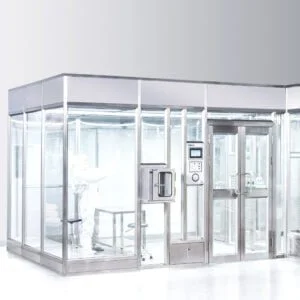
Prefabricated modular cleanrooms can offer a strategic speed-to-market advantage here, reducing installation timelines by 40-60% and accelerating regulatory submissions. This approach can be particularly effective for startups or when adding new production lines, as it provides a controlled, validated environment that integrates cleanroom equipment and monitoring systems from the outset.
Cost & Compliance Burden: A Practical Comparison
| Cost Factor | FDA 21 CFR Part 820 | ISO 13485 |
|---|---|---|
| Primary Burden | Legal & enforcement risk | Upfront QMS investment |
| Unifying Strategy | ISO 14644 series adherence | ISO 14644 series adherence |
| Major Cost Driver | Aseptic vs. standard cleanroom | Aseptic vs. standard cleanroom |
| Facility Upgrade | Costly re-validation for microbial control | Costly re-validation for microbial control |
| Speed-to-Market Solution | Prefabricated modular cleanrooms | Prefabricated modular cleanrooms |
| Timeline Reduction | 40-60% faster installation | 40-60% faster installation |
Source: Technical documentation and industry specifications.
Building a Unified Strategy for Global Market Access
Design to the Highest Common Denominator
The most robust strategy is to design and qualify your cleanroom and its equipment according to the detailed protocols of the ISO 14644 series. This satisfies the core requirements of both FDA Part 820, by proving equipment meets “specified requirements,” and ISO 13485, by integrating qualification into the QMS. This approach future-proofs your facility for multiple regulatory pathways.
Navigating Regulatory Fragmentation
A unified approach is critical because true regulatory harmonization remains elusive. The persistent differences between FDA, EU MDR, and other regional standards create a complex landscape that advantages specialized providers. A holistic, systems-based design philosophy is mandatory, integrating architectural, equipment, and operational layers to achieve a sustainable controlled environment.
The Role of Specialized Partnership
Given this complexity, few manufacturers maintain deep expertise in all applicable standards internally. Partnering with firms that specialize in validated cleanroom design and build can de-risk the compliance process. These partners bring current knowledge of evolving standards and can implement a design that is audit-ready for both FDA and ISO 13485 frameworks from day one.
Decision Framework: Choosing Your Compliance Roadmap
Market-Driven Decision Tree
Your primary decision driver is target markets. For U.S.-only devices, Part 820 compliance is non-negotiable. For global market access, pursuing ISO 13485 certification is typically the prerequisite. Implementing its risk-based framework with ISO 14644 technical standards will inherently address FDA expectations, creating a compliant foundation for a future U.S. submission.
Integrating Advanced Controls
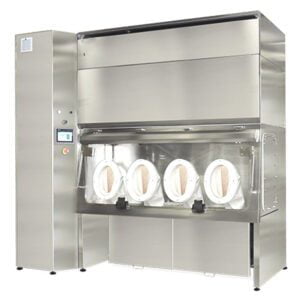
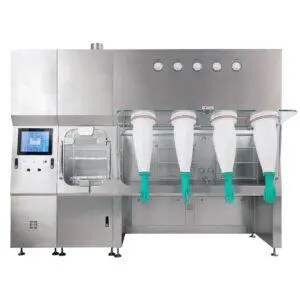
Long-term planning must design in flexibility for automation and robotics. This technology is transitioning from a luxury to a strategic necessity for contamination control. As personnel are the primary contamination risk, integrating isolators or robotics for critical aseptic processes is a core risk-mitigation strategy, especially for advanced therapies like cell and gene products.
Future-Proofing Your Investment
Your compliance roadmap must account for tightening regulatory expectations. Designing with higher-grade materials, incorporating advanced monitoring capabilities for smaller particles, and planning for isolator technology positions your operation for long-term viability. The initial capital outlay for a more robust, flexible system often yields lower lifetime cost by avoiding costly retrofits and requalification projects.
Key Differences in Cleanroom Equipment Requirements
| Requirement Focus | FDA 21 CFR Part 820 | ISO 13485 |
|---|---|---|
| Primary Mandate | General suitability & cleaning | Explicit risk-based control |
| Key Clause | 820.70(c) | Clause 6.4 |
| Technical Reference | “Specified requirements” | ISO 14644 classification |
| Material Strategy | Not explicitly defined | Cleanable materials (e.g., stainless steel) |
| Design Philosophy | Outcome-focused | Process & risk-integrated |
Source: ISO 13485:2016 Medical devices — Quality management systems. This standard’s Clause 6.4 explicitly requires the definition and control of the work environment to prevent contamination, directly linking cleanroom equipment performance to documented parameters and risk management.
The decision between FDA and ISO 13485 compliance is not binary but hierarchical. For global aspirations, build your Quality Management System upon ISO 13485 and integrate the technical rigor of the ISO 14644 series. This foundation inherently satisfies the core intent of FDA Part 820 while unlocking international markets. Prioritize equipment and facility designs that control contamination at the source through material selection and advanced automation.
Need professional guidance to navigate these complex requirements and implement a unified cleanroom strategy? The experts at YOUTH specialize in designing and building validated environments that meet both FDA and ISO standards, ensuring your path to market is efficient and compliant. For a detailed consultation on your specific project requirements, you can also Contact Us.
Frequently Asked Questions
Q: How does the fundamental approach to cleanroom compliance differ between FDA 21 CFR Part 820 and ISO 13485?
A: The FDA’s Quality System Regulation is a legally binding, prescriptive rule that mandates specific equipment controls. ISO 13485 is a voluntary, process-oriented standard that establishes a risk-based Quality Management System framework. This means your initial compliance strategy and facility design must be driven by your target market’s governing regulations, as a universal cleanroom solution is not feasible.
Q: What is the definitive technical methodology for qualifying a cleanroom to meet regulatory requirements?
A: The global benchmark is the three-stage qualification sequence defined in ISO 14644-3:2019: Installation (IQ), Operational (OQ), and Performance Qualification (PQ). This formal process provides the evidence that your cleanroom equipment and environment consistently meet the required ISO classification. You must budget for this as a continuous lifecycle of monitoring and re-qualification, not a one-time project cost.
Q: Which standard has stricter rules for ongoing cleanroom environmental monitoring?
A: Neither is universally stricter; they emphasize different control aspects. FDA expects risk-appropriate monitoring, while ISO 13485 aligns with the explicit, standardized protocols in ISO 14644-2:2015 for parameters like particle counts. This means you must proactively audit your monitoring equipment against evolving ISO standards, as future updates to smaller particle thresholds may require costly upgrades to avoid non-conformance.
Q: How should we design our documentation strategy to satisfy both FDA and ISO requirements for cleanroom equipment?
A: Build your documentation around the detailed qualification reports (IQ/OQ/PQ) and monitoring records aligned with the ISO 14644 series. This satisfies ISO 13485’s integrated QMS requirements and provides the rigorous proof of control the FDA expects for equipment meeting “specified requirements.” For operations targeting global markets, maintaining in-house expertise across both frameworks is challenging and often favors specialized partnerships.
Q: What is the most cost-effective compliance strategy for cleanroom equipment targeting both U.S. and international markets?
A: Design and qualify your cleanroom using the technical protocols from the ISO 14644 series. This unified approach inherently addresses the core requirements of both ISO 13485 and FDA Part 820. Given the persistent lack of full regulatory harmonization, this strategy is critical. It also enables a holistic, systems-based design philosophy that integrates architectural, equipment, and operational layers for a sustainable controlled environment.
Q: When planning a new cleanroom, what factors most significantly drive compliance cost and complexity?
A: The required air cleanliness classification is a primary cost driver, with aseptic processing demanding far higher control than standard clean rooms. Upgrading an existing facility for aseptic work often necessitates expensive re-validation for microbial control, sometimes making new, purpose-built construction more feasible. For projects with tight timelines, prefabricated modular cleanrooms can reduce installation time by 40-60%, accelerating regulatory submissions.
Q: How does cleanroom equipment selection serve as a foundational contamination control strategy?
A: Equipment selection is the first layer of defense in a multi-layered contamination control strategy. You must prioritize equipment with smooth, cleanable materials like stainless steel that can meet the performance criteria outlined in standards like ISO 14644-4. This controls contamination risk at the source. For manufacturers of advanced therapies, integrating isolators or robotics is becoming a strategic necessity to mitigate the primary contamination risk: personnel.
Related Contents:
- FDA/ISO Compliance for Laminar Air Flow Units
- ISO 14644 Cleanroom Equipment Standards | Compliance Guide
- ISO 14644 and GMP Compliance Standards for Cleanroom Equipment: Complete Certification Requirements and Testing Protocols
- FDA Approved Cleanroom Equipment | Regulatory Documentation
- GMP Compliant Air Filters | FDA Requirements Cleanroom Validation
- ISO 14644-1 Laminar Air Flow Compliance
- GMP Compliant Biosafety Purification Equipment | FDA Requirements | Validation
- Understanding Cleanroom Equipment Standards and Requirements
- GMP Compliant Cleanroom Equipment | FDA Requirements Guide