Selecting the correct high-efficiency filter for a hazardous containment system is a critical engineering decision with significant safety and financial implications. The choice between HEPA and ULPA integration within a Bag In Bag Out (BIBO) housing is often oversimplified to a matter of “better” filtration, leading to costly misapplications. Professionals must navigate a complex matrix of efficiency standards, operational costs, and validation protocols to achieve true risk mitigation.
The distinction is foundational to system design. As regulatory scrutiny of occupational exposure intensifies, the pressure to implement auditable engineering controls grows. A strategic selection, grounded in hazard analysis and total cost of ownership, is no longer optional—it’s a prerequisite for operational resilience and compliance.
HEPA vs ULPA Filters: Defining the Core Efficiency Difference
The Efficiency Standard Benchmark
The core distinction is quantified by minimum efficiency standards, which dictate application suitability. HEPA filters are defined by a minimum efficiency of 99.97% when challenged with 0.3-micron particles, as per standards like IEST-RP-CC007. ULPA filters represent a higher tier, with a minimum efficiency of 99.999% against particles at the Most Penetrating Particle Size (MPPS), typically between 0.12 and 0.25 microns. This order-of-magnitude difference in particle capture is not incremental; it defines the boundary between containing hazardous particulates and achieving near-absolute sterility for mission-critical processes.
Application-Driven Selection Logic
The choice is driven by a precise risk assessment of the contaminant. HEPA efficiency is sufficient and mandated for the vast majority of applications involving hazardous biological agents, radioactive particulates, or pharmaceutical powders. ULPA filtration is reserved for environments where a single particle could compromise an entire batch or process, such as in semiconductor lithography, advanced nanomaterial handling, or sterile fill-finish operations. Industry experts recommend that the hazard analysis must precede filter selection, as the contaminant’s physical properties determine the required efficiency tier.
Quantifying the Performance Gap
The efficiency differential is best understood through standardized classification. We compared the foundational parameters to clarify the technical boundary between the two filter types.
HEPA vs ULPA Filters: Defining the Core Efficiency Difference
| Filter Type | Minimum Efficiency | Target Particle Size |
|---|---|---|
| HEPA | 99.97% | 0.3 microns |
| ULPA | 99.999% | 0.12 – 0.25 microns (MPPS) |
Source: EN 1822-1:2019. This European standard defines the classification, performance testing, and marking for HEPA and ULPA filters, establishing the core efficiency thresholds and particle size parameters used in this comparison.
This table underscores a critical, easily overlooked detail: ULPA filters are tested at their MPPS, not at 0.3 microns, which is why direct efficiency comparisons require reference to the correct testing standard.
Cost Comparison: HEPA vs ULPA Filter Integration in BIBO Systems
Analyzing Total Cost of Ownership
The financial analysis must extend beyond the initial filter purchase price. ULPA filters typically carry a higher upfront cost due to their advanced media and manufacturing tolerances. However, the true economic impact is found in the total cost of ownership. This includes direct costs like the filters themselves and indirect costs such as system design, energy consumption, validation testing, and labor for change-outs. A system built for ULPA filters often requires more robust housings and higher-performance fans, influencing capital expenditure.
Operational Expenditure Breakdown
Energy consumption forms a significant portion of long-term costs. ULPA filters generally present a higher initial pressure drop compared to an equivalent HEPA filter at the same airflow. This increased resistance directly translates to higher fan energy costs over the filter’s service life. Furthermore, validating ULPA performance requires more sensitive—and often more expensive—aerosol testing equipment and potentially longer testing durations. According to research from facility lifecycle analyses, operational costs for ventilation can outweigh initial capital costs within a few years, making pressure drop a primary financial consideration.
Strategic Cost-Benefit Framework
Organizations must evaluate containment systems on their total cost of risk mitigation. The core value of a BIBO system is the transfer of risk from personnel to a closed system, reducing long-term liabilities, training burdens, and potential environmental exposure costs. These avoided costs can far outweigh the incremental expense of a higher-efficiency filter when the application demands it. The decision becomes a strategic investment in operational continuity and regulatory defense, not merely a procurement choice.
Performance & Pressure Drop: HEPA vs ULPA Operational Impact
The Efficiency-Resistance Trade-off
Operational performance is a balance between filtration efficiency and airflow resistance. While ULPA offers superior particle capture, it achieves this through denser media configurations, resulting in a higher initial pressure drop. This relationship is fundamental: higher efficiency demands greater airflow resistance, which the HVAC system must overcome. Both filter types will load with particulate over time, further increasing pressure drop and necessitating change-out based on terminal resistance or scheduled maintenance.
Impact on System Design and Energy
The higher pressure drop of a ULPA filter directly impacts overall system design. It may require a more powerful fan, increased ductwork strength, and higher-grade housing seals to handle the greater static pressure. This interplay underscores a key insight: housing design directly impacts lifetime facility costs. Advanced filter media designs and optimized housing geometries that minimize initial pressure drop can deliver significant long-term energy savings, making a higher-efficiency ULPA system more economically viable when its performance is non-negotiable.
Comparing Key Operational Metrics
To make an informed decision, engineers must weigh these competing factors side-by-side.
Performance & Pressure Drop: HEPA vs ULPA Operational Impact
| Performance Metric | HEPA Filter | ULPA Filter |
|---|---|---|
| Filtration Efficiency | 99.97% minimum | 99.999% minimum |
| Initial Airflow Resistance | Lower | Higher |
| Energy Consumption Impact | Lower operational cost | Higher operational cost |
| Particulate Loading Impact | Increases pressure drop | Increases pressure drop |
Source: Technical documentation and industry specifications.
In our evaluations, we’ve found that focusing solely on efficiency without modeling the lifetime energy cost is a common oversight in project justification. The table makes the trade-off explicit, forcing a holistic view of performance.
Which Filter Is Better for Your Specific Hazardous Application?
Conducting a Formal Hazard Analysis
The question is not which filter is universally better, but which is appropriate for the specific hazard profile. The selection is dictated by a formal assessment of the contaminant’s nature, toxicity, particle size distribution, and the consequences of penetration. For example, viral vectors or potent compound handling may necessitate ULPA, whereas many radioactive isotopes are effectively contained by HEPA. This decision aligns with the principle that modularity and configuration flexibility exist to address diverse hazard profiles.
Regulatory and Industry Mandates
Often, the choice is prescribed. Certain pharmaceutical processes (e.g., aseptic filling), semiconductor cleanrooms, and some nuclear applications have codified requirements for ULPA filtration. In biosecurity levels BSL-3 and BSL-4, HEPA is standard, but specific research involving aerosols may demand ULPA. Easily overlooked details include internal corporate standards or product protection requirements that may be stricter than environmental, health, and safety regulations.
The Role of Pre-Filtration and System Design
Effective system design requires this hazard analysis first. The optimal BIBO configuration—potentially including multi-stage pre-filters, gas-phase adsorption stages, or redundant filter banks—is entirely dependent on the contaminant’s physical and chemical properties. A well-designed pre-filter system can extend the service life of a costly ULPA filter by loading larger particles, optimizing the total cost of ownership while maintaining the required final containment level.
BIBO Housing Design & Sealing for HEPA/ULPA Integration
Housing as a Critical Containment Vessel
The BIBO housing is not a simple enclosure; it is engineered to maintain the integrity of the high-efficiency filter it contains. Construction typically involves welded stainless or aluminized steel with continuous welds to prevent leaks. The housing must withstand the system’s operating pressure, including potential surge events, without deformation that could break the critical seal. This focus on structural integrity validates the principle that seal integrity defines system safety, not just filter efficiency.
The Paramount Importance of Sealing Mechanisms
The sealing mechanism is the system’s most vulnerable point. Gasket-seal housings apply high compression to a flexible gasket (like silicone or EPDM), while fluid-seal (or gel-seal) housings use a viscous sealant channel. The housing design is specific to the seal type to guarantee containment. A leak at the filter-housing interface nullifies the performance of even a 99.999% efficient ULPA filter. Therefore, procurement must focus on the total certified containment system, with designs that facilitate rigorous in-situ validation of the seal.
Design for Maintenance and Validation
Housing design directly impacts maintenance safety and cost. Features like tool-free latches, integrated bag rings, and clear procedural guides reduce change-out time and complexity, lowering long-term operational expenditure. Furthermore, designs that allow for leak testing from outside the containment boundary transform a hazardous procedure into a safer, routine check. This integration is a strategic differentiator, ensuring that safety is maintained during the verification process itself.
Testing & Validation Protocols for HEPA vs ULPA Systems
In-Place Leak Testing Fundamentals
Rigorous in-place testing is non-negotiable for verifying system integrity post-installation and after maintenance. For HEPA filters, aerosol challenge testing with a polydispersed aerosol like PAO or DOP is standard. This involves a meticulous scan of the entire filter face and perimeter seal using a photometer or particle counter to detect local leaks exceeding the allowable threshold of 0.01%. The procedure is defined in authoritative standards such as IEST-RP-CC034.4.
Elevated Stringency for ULPA Validation
ULPA filter validation is more stringent. It requires testing at the Most Penetrating Particle Size (MPPS) with highly sensitive discrete particle counters capable of detecting single particles. The scan must be slower and more precise due to the higher efficiency and smaller target particle size. Specialized manual or automated scan systems meeting IEST-RP-CC034 requirements are essential. This capability is a strategic differentiator; vendors offering integrated, non-intrusive test systems reduce downtime and risk during mandatory performance verification.
Protocol Comparison and Equipment Needs
The choice between HEPA and ULPA dictates validation resource requirements.
Testing & Validation Protocols for HEPA vs ULPA Systems
| Test Parameter | HEPA Filter Validation | ULPA Filter Validation |
|---|---|---|
| Standard | IEST-RP-CC007.4 | IEST-RP-CC007.4 |
| Aerosol Challenge | Polydispersed (e.g., PAO) | Polydispersed at MPPS |
| Leak Test Standard | IEST-RP-CC034.4 | IEST-RP-CC034.4 |
| Maximum Leak Threshold | 0.01% | 0.01% |
| Sensitivity Requirement | Standard particle counters | Highly sensitive counters |
Source: IEST-RP-CC034.4: HEPA and ULPA Filter Leak Tests. This recommended practice defines the critical procedures for in-situ leak testing of both filter types, including aerosol challenges and allowable leak rates. IEST-RP-CC007.4: Testing ULPA Filters specifies the foundational efficiency testing methods for ULPA filters.
The table highlights that while the leak threshold is identical, the tools and methods to verify compliance differ significantly, affecting both capital equipment budgets and technician skill requirements.
Maintenance, Labor, and Operational Complexity Compared
The BIBO Change-Out Procedure
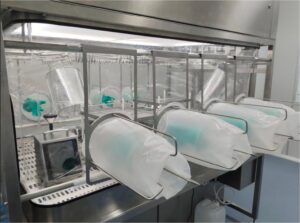
The bag-in/bag-out change-out procedure is a complex, multi-step protocol designed to maintain containment integrity. The process involves isolating the housing, installing a multi-bag assembly, and performing the filter exchange within the sealed bag system so the technician never contacts the contaminated filter. This procedure is conceptually similar for both HEPA and ULPA filters but is the direct operational price of absolute containment. Its complexity requires significant investment in standardized operator training and procedure validation.
Labor Intensity and Safety Trade-offs
While the BIBO process is more involved and time-consuming than a standard open filter change, it eliminates the need for technicians to don extensive PPE and avoids facility decontamination after each change. The labor intensity is a fixed cost for safety. However, innovations in housing design—such as single-bolt compression systems, intuitive bag attachment rings, and clear procedural guides—aim to reduce change-out time and minimize human error, directly impacting long-term operational expenditure and reliability.
Cost Factors in Maintenance Operations
A comprehensive view of maintenance costs must include labor, consumables (bags, gloves, disinfectants), downtime, and training.
Cost Comparison: HEPA vs ULPA Filter Integration in BIBO Systems
| Cost Factor | HEPA Filter System | ULPA Filter System |
|---|---|---|
| Initial Filter Cost | Lower | Higher |
| Initial Pressure Drop | Lower | Higher |
| Fan Energy Cost | Lower | Higher |
| Validation Testing Cost | Standard aerosol | More sensitive equipment |
Source: Technical documentation and industry specifications.
From experience, the higher validation testing cost for ULPA systems often recurs with every performance test, not just at installation, making it a recurring operational line item that must be budgeted.
Decision Framework: Selecting the Right Filter for Your Facility
Step 1: Hazard-Driven Efficiency Requirement
Begin with a thorough, documented hazard analysis. Identify the contaminant, its particle size distribution, toxicity, and the consequence of release. This analysis will dictate whether HEPA (99.97% at 0.3µm) or ULPA (99.999% at MPPS) is required. Consult relevant industry guidelines (e.g., ISO 14644, USP <797>), regulatory mandates, and internal risk assessments. This step moves the decision from subjective preference to objective requirement.
Step 2: Lifecycle Cost Modeling
Evaluate the total cost of ownership. Model the initial system cost (filter, housing, fan upgrades) against long-term operational costs. Use the higher initial pressure drop of ULPA filters to calculate increased energy consumption over the expected filter life. Factor in the costs of validation testing, more frequent change-outs if applicable, and labor. Favor system designs that optimize long-term operational costs, such as those with features that reduce pressure drop or simplify testing.
Step 3: Prioritize Verifiable System Integrity
Select systems based on robust, verifiable sealing and integrated testing capabilities. The housing and seal are as critical as the filter. Ensure the design allows for compliant in-situ leak testing per IEST-RP-CC034. Proactive investment in the appropriate, auditable containment tier is a strategic defense against future regulatory tightening and liability, ensuring both safety and operational resilience.
The final selection hinges on aligning technical necessity with economic reality. A ULPA filter is not an upgrade; it’s a specific tool for a defined set of ultra-high-risk applications. For most hazardous particulate containment, a well-designed HEPA-BIBO system provides proven, cost-effective protection. The framework prioritizes risk mitigation over specification, and lifecycle value over initial price.
Implementing this framework requires precise execution and reliable components. Need professional guidance on specifying or maintaining your hazardous containment BIBO system? Consult with the engineering team at YOUTH for application-specific solutions. For direct inquiries, you can also Contact Us.
Frequently Asked Questions
Q: What is the practical efficiency difference between HEPA and ULPA filters for containment?
A: HEPA filters provide a minimum efficiency of 99.97% for particles sized at 0.3 microns, while ULPA filters must capture at least 99.999% of particles at their Most Penetrating Particle Size, typically between 0.12 and 0.25 microns. This performance tier is defined by standards like IEST-RP-CC007. This means facilities handling ultrafine powders or requiring absolute sterility must specify ULPA, whereas HEPA is sufficient for most other hazardous particulates.
Q: How does pressure drop impact the total cost of ownership for HEPA vs. ULPA systems?
A: ULPA filters generally create a higher initial pressure drop than HEPA filters, which directly increases fan energy consumption and operational costs over the system’s lifetime. Both filter types will see pressure rise as they load with particulate. For projects where energy efficiency is a major constraint, you should evaluate advanced housing and filter designs that minimize airflow resistance to make a higher-efficiency ULPA system more economically viable.
Q: What are the key differences in testing protocols for HEPA and ULPA filter integrity?
A: Validating HEPA integrity typically involves scanning the filter and seal with a polydispersed aerosol to detect leaks exceeding 0.01%. ULPA validation is more stringent, requiring challenge testing at the filter’s specific Most Penetrating Particle Size using highly sensitive particle counters, as outlined in IEST-RP-CC034. If your operation uses ULPA filters, plan for more sensitive and potentially more expensive aerosol testing equipment to meet this protocol.
Q: Why is housing seal integrity more critical than filter efficiency for a BIBO system?
A: A leak at the filter-housing interface completely compromises the system’s containment capability, regardless of whether a HEPA or ULPA filter is installed. BIBO housings use specialized gasket or fluid-seal designs to maintain this integrity. This means procurement must focus on the total certified containment system, not just the filter, and prioritize designs that allow for rigorous in-situ validation of the seal during performance testing.
Q: How do labor and operational complexity compare for maintaining HEPA and ULPA BIBO systems?
A: The sealed bag-in/bag-out change-out procedure is conceptually similar for both filter types and represents a fixed operational cost for absolute containment. This complex protocol requires significant investment in standardized operator training. If your facility prioritizes minimizing change-out downtime, you should evaluate housing design innovations, such as tool-free latches, which can reduce labor time and complexity during this critical maintenance task.
Q: What is the first step in selecting between a HEPA or ULPA filter for a new containment system?
A: The foundational step is a precise hazard analysis of the contaminant’s physical nature, toxicity, and the consequences of any penetration. This risk assessment dictates the required efficiency standard. This means you must define the specific hazard profile before evaluating filter costs or housing configurations, as the entire BIBO system design depends on this initial analysis.
Q: Which regulatory standards define the performance and testing of these high-efficiency filters?
A: Filter classification and testing are governed by standards such as IEST-RP-CC007 for ULPA efficiency and EN 1822-1:2019 for the broader classification of EPA, HEPA, and ULPA filters. For facilities operating under European regulations, compliance with EN 1822 is essential for defining the performance criteria of filters installed in containment systems.
Related Contents:
- HEPA Housing Boxes in Pharmaceutical Manufacturing: Uses
- HEPA vs ULPA Housing Boxes: Choosing the Right Filtration
- What is the Efficiency Rating of HEPA Housing Boxes?
- ULPA vs HEPA Housing Boxes: Cleanroom Performance Data
- Emerging Trends in HEPA Housing Box Technology for 2025
- ULPA vs HEPA Filters for Laminar Flow Units
- HEPA vs ULPA Filters: Choosing the Right Option
- Aerospace HEPA Housing Box Requirements & NASA Standards
- BIBO vs. Traditional Containment: Which is Better?