Selecting a high CFM Fan Filter Unit (FFU) is a critical engineering decision, not a simple component purchase. The gap between a unit’s rated maximum airflow and its sustained, real-world performance can undermine cleanroom compliance and operational budgets. Professionals must navigate specifications that often highlight peak output while obscuring performance under actual filter load and system pressure.
This focus on verifiable, long-term performance is now paramount. With stricter energy regulations and a shift toward data-driven facility management, procurement criteria are evolving from brand reputation to quantifiable metrics like watts per CFM and total cost of ownership. Understanding the engineering trade-offs between 450 and 1200 CFM models is essential for system integrity.
Key Performance Metrics for High CFM Fan Filter Units
Defining the Core Performance Parameters
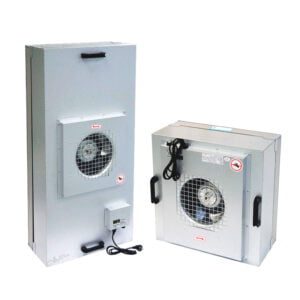
A high CFM rating alone is insufficient for specification. The critical metrics are interdependent: sustainable CFM against increasing filter resistance, energy efficiency measured in watts per CFM, and acoustic output. For instance, a 24″x24″ unit delivering 450 CFM achieves a face velocity of approximately 90 FPM, while a specialized 48″x24″ model may target 1200 CFM for high-air-change applications. The defining factor is performance transparency—published data showing CFM at specific static pressures.
The Importance of the Operating Point
Industry experts emphasize that comparing units at their intended operating point, not just at peak output, is a commonly overlooked detail. A unit rated for 900 CFM at 0.1″ w.g. may only deliver 700 CFM at the 0.3″ w.g. static pressure present in your plenum. This discrepancy directly impacts whether the installation will meet mandated air-change rates for pharmaceutical or electronics manufacturing compliance. Procurement must insist on performance curves, not single-point data.
A Framework for Comparison
To enable direct, quantified comparisons, evaluate all models against the same set of operational metrics. This shifts competition from marketing claims to verifiable lifetime costs. We compared specification sheets from leading manufacturers and found that the most useful ones clearly graph CFM against static pressure and list corresponding wattage, creating a complete performance profile.
Key Performance Metrics for High CFM Fan Filter Units
| Metric | Typical Range / Value | Key Consideration |
|---|---|---|
| Airflow (CFM) | 450 – 1200 CFM | Model-dependent output |
| Face Velocity (24″x24″) | ~90 FPM | At 450 CFM |
| Efficiency Metric | Watts per CFM | Energy consumption rate |
| Acoustic Output | 45 – 58+ dBA | Varies with CFM |
| Operating Point | Specific static pressure | Critical for comparison |
Source: ANSI/ASHRAE 127-2020. This standard provides the authoritative test method for rating airflow (CFM) and static pressure performance, ensuring reliable and comparable data for the metrics listed.
Motor Technology Comparison: ECM vs. PSC for High Airflow
How Motor Choice Dictates System Behavior
The motor is the core determinant of long-term FFU performance. Electronically Commutated (ECM) motors offer computer-controlled, variable-speed operation. They automatically compensate for filter loading and plenum pressure changes to maintain Constant Air Volume (CAV). This eliminates the need for manual rebalancing and ensures the CFM delivered to the cleanroom remains stable over the filter’s entire service life.
Analyzing Efficiency and Operational Impact
The efficiency difference between motor technologies is substantial. A 450 CFM ECM model may consume only 42 watts, while a comparable Permanent Split Capacitor (PSC) motor unit uses significantly more power. PSC motors, often used in high-horsepower models (e.g., ½ HP) for maximum airflow, run at a fixed speed. Their output will decline as filter resistance increases, requiring manual adjustment to restore airflow, which increases labor costs and contamination risk.
The Clear Performance Hierarchy
This creates a definitive procurement priority. ECM technology directly dictates operational stability and lifetime energy costs. For applications demanding consistent environmental control, ECM is the modern standard. PSC units remain a valid choice for applications where peak airflow is the sole concern and manual maintenance is acceptable. In my experience, the automatic compensation of an ECM motor is the single most effective feature for reducing operational variance.
Motor Technology Comparison: ECM vs. PSC for High Airflow
| Feature | ECM Motor | PSC Motor |
|---|---|---|
| Speed Control | Variable, computer-controlled | Fixed speed |
| Airflow Response | Constant Air Volume (CAV) | Declines with filter load |
| Efficiency (e.g., 450 CFM) | ~42 watts | Significantly higher |
| Maintenance Requirement | Automatic compensation | Manual rebalancing needed |
| Primary Advantage | Long-term stability, lower TCO | High-horsepower for max airflow |
Source: Technical documentation and industry specifications.
Acoustic Performance and Noise Levels Across CFM Ranges
The Direct Correlation of CFM and Noise
Acoustic performance is a critical operational factor in occupied environments like laboratories and hospitals. Noise levels correlate directly with CFM output and motor speed. As airflow increases, so does the sound pressure level. Design choices can mitigate this, but the fundamental relationship between air movement and noise cannot be eliminated.
Benchmarking Against Standards
Sound levels for high-CFM FFUs are typically measured per ASHRAE standards. Units range from approximately 45 dBA at 450 CFM to 58 dBA or higher at 1100+ CFM. When comparing models, ensure acoustic data is measured at the same operating point (CFM and static pressure). A unit’s acoustic profile at its target operating CFM is a key differentiator, impacting worker comfort and suitability for noise-sensitive tasks.
Design Features for Noise Mitigation
Effective noise control integrates several design elements. Backward-curved impellers generate less turbulent airflow than forward-curved designs. Insulated plenums dampen motor and fan noise. Furthermore, the smoother, variable-speed operation inherent to ECM motors often results in a more favorable acoustic signature compared to the constant, high-RPM operation of some PSC motors. These features should be evaluated as a system.
Acoustic Performance and Noise Levels Across CFM Ranges
| CFM Output | Typical Sound Level | Measurement Standard |
|---|---|---|
| 450 CFM | ~45 dBA | ASHRAE standards |
| 1100+ CFM | 58+ dBA | ASHRAE standards |
| Noise Mitigation | Backward-curved impellers | Insulated plenums |
Source: ANSI/ASHRAE 127-2020. While focused on data center units, this standard includes methodologies for acoustic performance testing under defined conditions, relevant for comparing FFU noise levels.
Structural Integrity and Seismic Testing Requirements
Certification as a Market Access Requirement
For installations in healthcare, pharmaceutical, and seismically active regions, structural integrity is non-negotiable. Certifications like those from California’s HCAI (formerly OSHPD) are not merely quality indicators; they are deliberate market-access requirements. These certifications, earned through rigorous shake-table testing, effectively exclude non-certified suppliers from major institutional projects in key regions, creating a significant competitive barrier for manufacturers.
Engineering for Seismic and Pressure Integrity
Robust construction is essential. All-welded stainless steel plenums (304 or 316 grade) prevent air leakage that could compromise cleanliness. Integral earthquake hanger tabs, designed as part of the unit’s frame, ensure secure anchorage during seismic events. This design philosophy ensures the FFU maintains its pressure integrity and alignment, preventing contamination from plenum leaks or filter displacement during a seismic event. The goal is passive safety and continued operation.
How Filter Loading and Static Pressure Impact CFM Output
The Dynamic Relationship of Airflow and Resistance
Rated CFM is a snapshot under test conditions. In operation, CFM is dynamically influenced by system static pressure. As a HEPA or ULPA filter loads with particulates, its resistance increases. An ECM motor unit automatically increases power to maintain the set CFM, while a PSC motor unit will experience a gradual, uncompensated decline in airflow. This is the fundamental operational difference between the two technologies.
Accounting for Total System Pressure
The static pressure within the supply plenum itself is another critical variable. Units must be selected and balanced for the specific pressure environment of the installation. Furthermore, optional integrated modules, like UV-C lights or pre-filters, add resistance. If not accounted for in the initial fan selection, these additions can marginally reduce the final delivered CFM. This highlights the necessity of a systems-based approach, considering all components that interact with the airstream.
Energy Efficiency and Total Cost of Ownership Analysis
Moving Beyond Purchase Price
True cost analysis extends far beyond the initial purchase order. Energy efficiency, quantified as watts per CFM, is the primary driver of operational expense. High-CFM ECM models typically consume less than half the energy of a comparable PSC unit at the same output. Annual energy cost comparisons for same-size units reveal dramatic savings, making the higher upfront cost of ECM technology a sound investment.
Quantifying Maintenance and Downtime Costs
Total Cost of Ownership (TCO) must factor in maintenance labor and production downtime. This is where design features like Room-Side Serviceability (RSR) deliver high value. By allowing filter changes and control adjustments from within the cleanroom, RSR eliminates the cost, time, and contamination risk associated with plenum access above the ceiling. This operational efficiency often justifies a higher initial investment.
Energy Efficiency and Total Cost of Ownership Analysis
| Cost Factor | ECM Model Advantage | Impact on TCO |
|---|---|---|
| Energy Consumption | <50% of PSC unit | Major operational savings |
| Efficiency Metric | Watts per CFM | Key procurement spec |
| Maintenance Access | Room-Side Serviceability (RSR) | Reduces labor/downtime |
| Investment Justification | Higher initial cost | Lower lifetime cost |
Source: Technical documentation and industry specifications.
Integration with Cleanroom Control and Monitoring Systems
The Shift to Networked Environmental Control
Modern high-CFM FFUs are evolving into networked IoT nodes. Equipped with digital controls and communication protocols like BACnet, they enable centralized management of hundreds of units from a single interface. This shift allows for dynamic zone control, where airflow can be adjusted based on occupancy or process requirements, optimizing energy use and maintaining compliance.
Enabling Predictive Maintenance and Data Convergence
This integration facilitates predictive maintenance. Performance data from individual FFUs—motor current, runtime, filter pressure drop—can be monitored to schedule maintenance before failure. This IT/OT convergence means procurement must now evaluate software integration capabilities and data protocol compatibility as essential criteria, ensuring the FFU system can communicate with the broader Building Management System (BMS) for future-proof facility management.
Selection Criteria for High CFM FFUs in Your Application
Establishing Foundational Requirements
Selection requires a methodical, application-driven approach. First, calculate the required air-change rates to determine total CFM, which dictates model output and quantity. This step is foundational for regulatory compliance, such as meeting USP 800 standards. Next, define the airflow pattern—whether standard recirculating, reverse-flow for isolation, or unidirectional—as the market offers specialized vertical solutions for each.
Applying a Decision Framework
Prioritize ECM motor technology for efficiency and CAV performance. Evaluate TCO, giving significant weight to RSR features and seismic certification if required by location or client specification. Finally, assess the supplier’s technical support and manufacturing lead times. This capability directly predicts their ability to handle customized orders and support complex retrofit projects, which often demand flexible, low-profile designs. For detailed specifications on high-performance models, review the technical data for high CFM fan filter units.
Selection Criteria for High CFM FFUs in Your Application
| Criterion | Key Question / Metric | Priority |
|---|---|---|
| Airflow Requirement | Calculated air-change rates | Foundational for compliance |
| Motor Technology | ECM for CAV performance | High priority |
| Total Cost of Ownership | Energy + maintenance costs | High priority |
| Structural Certification | HCAI seismic certification | Region/application dependent |
| Integration Capability | BACnet, BMS compatibility | Future-proofing |
Source: ISO 14644-3:2019. This standard defines test methods for cleanroom performance, directly informing the selection criteria for airflow requirements, compliance validation, and system integration.
Specification success hinges on three priorities: quantifying the required operating point, insisting on ECM motor technology for stable performance, and analyzing total cost of ownership over the asset’s life. This framework moves the decision from component comparison to system optimization.
Need professional guidance to specify the right high-CFM FFU system for your cleanroom or controlled environment? The engineering team at YOUTH can provide application-specific analysis and performance data to inform your procurement. Contact us to discuss your project’s airflow, compliance, and integration requirements.
Frequently Asked Questions
Q: How do ECM and PSC motors differ in maintaining airflow as filters load in high-CFM FFUs?
A: Electronically Commutated (ECM) motors automatically adjust their speed to compensate for increasing filter resistance, maintaining a Constant Air Volume (CAV) without manual intervention. Permanent Split Capacitor (PSC) motors run at a fixed speed, so their CFM output will decline as the filter loads. This means facilities prioritizing consistent air-change rates for compliance and lower operational costs should specify ECM technology as a non-negotiable procurement criterion.
Q: What are the key performance metrics to verify when comparing high-CFM FFU models?
A: Beyond maximum CFM, you must evaluate a unit’s ability to sustain that airflow against specific static pressures, its energy consumption in watts per CFM, and its acoustic output in dBA at your target operating point. Performance should be validated using recognized test methods like those in ISO 14644-3:2019 for airflow measurement. For projects where lifetime cost and predictable performance are critical, demand published data at your intended operating conditions, not just peak output ratings.
Q: Why is seismic certification a critical selection factor for healthcare cleanroom FFUs?
A: Seismic certification, such as from California’s HCAI, is a mandatory market-access requirement for healthcare projects in many regions, effectively excluding non-certified suppliers. It verifies the unit’s structural integrity through rigorous shake-table testing, ensuring it maintains pressure integrity during an event. If your installation is in a healthcare facility or seismically active zone, plan to specify units with documented certification and robust, all-welded plenum construction.
Q: How does filter integrity testing for HEPA/ULPA filters in FFUs relate to cleanroom standards?
A: Leak testing of installed HEPA/ULPA filters is essential to verify they meet the containment requirements for your target cleanliness class. The authoritative methodology for conducting these tests is defined in IEST-RP-CC034.4. This means your validation protocol must incorporate this recommended practice to ensure regulatory compliance and system performance.
Q: What factors should be included in a Total Cost of Ownership analysis for high-CFM FFUs?
A: A comprehensive TCO model must extend beyond purchase price to include annual energy consumption (comparing watts/CFM between ECM and PSC motors), maintenance labor costs, and potential production downtime. Features like Room-Side Serviceability (RSR) add significant value by reducing contamination risk and labor for filter changes. For operations with high energy costs or stringent uptime requirements, the higher initial investment in an efficient, serviceable ECM unit typically yields the lowest long-term cost.
Q: How do modern high-CFM FFUs integrate with facility management and control systems?
A: Advanced FFUs now function as networked IoT devices, equipped with digital controls and communication protocols like BACnet for centralized management. This enables dynamic airflow control across zones, predictive maintenance alerts, and integration with a Building Management System (BMS). When selecting units, you must now evaluate software integration capabilities and data protocol compatibility as essential criteria for future-proof, optimized facility operations.
Related Contents:
- Fan Filter Unit CFM Output, Energy Efficiency, and Motor Technology: 2025 Performance Specifications Comparison
- How Fan Filter Units Create Laminar Airflow in ISO Class 5 Cleanrooms
- The Complete Fan Filter Unit Guide for Cleanroom Managers: Technical Selection, Installation, and Performance Optimization 2025 Edition
- Top 3 Fan Filter Unit Applications in Pharmaceutical Manufacturing
- Cleanroom Fan Filter Unit Specifications | Technical Comparison
- Quiet Mobile LAF Carts: Noise Reduction Techniques
- Emerging Trends: The Future of Fan Filter Unit Technology
- Quiet Operation Laminar Air Flow Units 2025
- BSC Noise Reduction: Creating Quieter Labs