Selecting an air filter based on a single efficiency rating is a common procurement mistake. The 99.97% at 0.3 microns benchmark for HEPA filters is often misunderstood as a maximum capability or a static performance guarantee. This misconception can lead to under-specification for critical environments, where the nuanced physics of particle capture dictate real-world efficacy. Professionals must move beyond the marketing spec sheet to understand the dynamic mechanisms at play.
The demand for verifiable clean air has never been higher, driven by health-conscious building standards and stringent manufacturing protocols. HEPA filtration remains the gold standard, but its application requires a technical understanding of its worst-case performance, operational variables, and how it fundamentally differs from lower-grade filtration. This knowledge is essential for making defensible, risk-based decisions in healthcare, labs, cleanrooms, and high-occupancy buildings.
The Four Physical Mechanisms of HEPA Filtration
Defining the Capture Regimes
HEPA filtration is not a simple sieve. Its exceptional performance stems from the complex interplay of four distinct physical capture mechanisms within a dense, non-woven mat of randomly arranged fibers. The first mechanism, impaction, captures larger, heavier particles. Their inertia prevents them from following the airstream around a fiber, causing direct collision. Interception captures medium-sized particles that follow the airflow but, due to their size, come close enough to a fiber to be snagged.
Applying the Mechanisms in Concert
For ultrafine particles below 0.1 microns, diffusion dominates. Brownian motion causes these particles to zigzag erratically, vastly increasing their chance of drifting into a fiber. The least common mechanism is sieving, where a particle is physically too large to pass through a gap. This multi-mechanism design provides resilient performance against diverse particulate mixes, making HEPA a versatile, single-technology solution for complex air quality challenges. In our system design reviews, we consistently see that filters relying on a single capture principle fail under variable particle loads, whereas HEPA’s multi-mechanism approach provides stability.
Validating the Multi-Mechanism Model
The combined action of these mechanisms is formally detailed in industry standards. The table below summarizes the dominant capture regimes, which are the foundation of all HEPA performance testing.
The Physics of Particle Capture
| Mechanism | Dominant Particle Size | Primary Capture Principle |
|---|---|---|
| Impaction | > ~0.5 microns | Inertia; direct collision |
| Interception | Medium-sized | Snagging; close approach |
| Diffusion | < 0.1 microns | Brownian motion; erratic drift |
| Sieving | Largest particles | Physical size exclusion |
Source: IEST-RP-CC001.6 HEPA and ULPA Filters. This recommended practice details the construction and testing of HEPA filters, which rely on these four physical mechanisms working in concert within a fibrous mat to achieve high-efficiency particle capture.
Why 0.3 Microns Is the Most Penetrating Particle Size (MPPS)
The Problem of Minimum Efficiency
The 0.3-micron benchmark is a critical minimum, not a limit. It represents the Most Penetrating Particle Size (MPPS), where filter efficiency is at its lowest. This occurs because it is the point where the effectiveness of interception and impaction for larger particles is waning, while the effectiveness of diffusion for smaller particles has not yet peaked. Testing at this point ensures a worst-case performance rating.
The Solution: MPPS-Aware Testing
Crucially, the MPPS is not fixed; it shifts based on airflow rate, filter loading, and pressure differential. This means a filter’s real-world minimum efficiency point can change during operation, affecting its performance against specific particle sizes dynamically. System design and maintenance schedules must therefore account for variable conditions to ensure consistent protection, rather than assuming static performance from a lab test rating. Standards like EN 1822-1:2019 High efficiency air filters are built around this variable MPPS concept.
The Decision Framework for Dynamic Performance
Understanding the factors that influence the MPPS is key to predicting filter behavior. The following data outlines how operational variables affect this critical point.
Factors Influencing Filter Performance
| Factor | Effect on MPPS | Impact on Efficiency |
|---|---|---|
| Airflow Rate Increase | Can shift MPPS | Reduces efficiency at new MPPS |
| Filter Loading (Dirt) | Can shift MPPS | Alters performance dynamically |
| Pressure Differential | Can shift MPPS | Affects specific particle capture |
| Interception & Impaction | Waning effectiveness at ~0.3µm | Creates efficiency dip |
| Diffusion | Not yet peaked at ~0.3µm | Creates efficiency dip |
Source: EN 1822-1:2019 High efficiency air filters. This standard’s central testing methodology is based on the MPPS, recognizing it as a variable point where filter efficiency is lowest, influenced by operational conditions like airflow and loading.
How HEPA Filters Capture Particles Larger and Smaller Than 0.3
Defining the Efficiency Curve
Due to the efficiency curve created by the four capture mechanisms, HEPA filters are actually more effective for particles both larger and smaller than the 0.3-micron MPPS. For particles significantly larger, such as pollen or mold spores (>1 micron), impaction and interception become highly effective. For particles significantly smaller, such as many viruses (~0.1 microns), diffusion becomes extremely effective.
Applying the Curve to Real-World Threats
A filter certified at 99.97% efficiency at 0.3 microns will capture a higher percentage of particles in these other size ranges. This evidence-based insight allows organizations to confidently deploy HEPA filtration against sub-micron biological threats, countering the common misconception that undermines adoption. The 0.3-micron rating is a guaranteed minimum, not a ceiling.
Validating Performance Across the Spectrum
The combined effect of the capture mechanisms creates a characteristic “U-shaped” efficiency curve. Efficiency dips to a minimum at the MPPS (~0.3 microns) and rises on either side. Therefore, the 99.97% rating represents a filter’s worst-case performance under test conditions. This standardized benchmark ensures that a certified HEPA filter is rigorously tested at its most challenging point, guaranteeing high efficiency across the entire particle spectrum.
The Efficiency Curve: Understanding HEPA’s Worst-Case Performance
The Problem of Single-Point Selection
Understanding the efficiency curve is fundamental, as it reveals that filter selection based on a single particle size is misleading. The performance is robust across sizes, providing a resilient defense against the diverse mix of particles found in real-world environments. Relying on a MERV rating, which reports a range, does not provide this worst-case guarantee.
The Solution: Worst-Case Benchmarking
The HEPA standard’s focus on the MPPS provides a conservative and reliable benchmark. It answers the critical question: “What is the lowest efficiency I can expect from this filter under test conditions?” This allows for risk assessment and system design with a clear safety margin, unlike filters rated only for their best performance.
Impact on System Resilience
This curve-based performance means HEPA filters maintain protection even as the particle size distribution in an environment changes. Whether facing a surge in fine dust or aerosolized pathogens, the filter’s multi-mechanism capture provides consistent, high-level removal. This resilience is why HEPA is non-negotiable in settings where air quality failure is not an option.
HEPA vs. MERV: A Critical Performance Comparison for Clean Air
Defining the Performance Gap
Comparing HEPA to filters rated on the MERV (Minimum Efficiency Reporting Value) scale reveals a dramatic performance gap. A high-efficiency one-micron filter, like a MERV 16, captures approximately 95% of particles in the 0.3 to 1.0 micron range. A true HEPA filter (MERV 17+) captures 99.97% at 0.3 microns.
Applying the Data to Procurement
Data shows this allows a MERV 16 filter to pass 167 times more 0.3-micron particles than a HEPA filter. This creates a direct trade-off between upfront cost and the level of protection. Procurement decisions must quantitatively weigh the risk and liability of lower air quality against filter cost, as the performance difference is non-linear and significant for health-critical applications. The test methodology behind this, defined in standards like ANSI/ASHRAE 52.2-2017, highlights the granularity of particle-size efficiency reporting.
The Decision Framework for Filter Selection
The quantitative comparison makes the specification choice clear for critical environments. The following table illustrates the stark difference in particle passage rates.
Quantitative Comparison of Filter Classes
| Filter Type | Efficiency at 0.3µm | Relative Particle Passage |
|---|---|---|
| True HEPA (MERV 17+) | 99.97% minimum | Baseline (1x) |
| MERV 16 | ~95% (0.3-1.0µm range) | 167 times more particles |
| MERV 13 | 89-90% (1-3µm range) | Significantly higher passage |
| MERV 11 | 65-80% (3-10µm range) | Very high particle passage |
Note: Performance gap is non-linear; MERV 16 passes 167x more 0.3µm particles than HEPA.
Source: Technical documentation and industry specifications.
Validating HEPA Performance: Standards, Testing, and Certification
The Requirements: Enforceable Standards
The term “HEPA” is governed by strict, enforceable standards. In the U.S., the DOE standard requires a minimum efficiency of 99.97% at 0.3 microns MPPS. Higher classes and the more stringent ULPA (99.999% at 0.12 microns) also exist. This mature ecosystem of standards, testing protocols, and regulatory acceptance creates a self-reinforcing cycle of preference.
The Methods: Global Classification
Globally, standards like ISO 29463-1:2017 High-efficiency filters provide a unified classification system. These standards mandate testing at the MPPS, ensuring performance validation at the filter’s weakest point. This global framework is critical for specifying filters in international projects and supply chains.
The Validation Framework for Procurement
HEPA’s dominance in critical industries is reinforced by this proven infrastructure, which lowers adoption barriers and validates performance. Competing technologies must overcome not just performance claims but also this entrenched standardization and industry familiarity. The table below outlines key global classifications.
International HEPA/ULPA Classifications
| Standard/Class | Minimum Efficiency | Test Particle Size (MPPS) |
|---|---|---|
| U.S. DOE HEPA | 99.97% | 0.3 microns |
| ISO 35H (HEPA H13) | 99.95% | Most Penetrating Particle Size |
| ISO 45H (ULPA) | 99.995% | Most Penetrating Particle Size |
| EN 1822 ULPA | 99.999% | 0.12 microns |
Source: ISO 29463-1:2017 High-efficiency filters. This international standard establishes the classification system for HEPA/ULPA filters based on filtration efficiency at the MPPS, providing the global framework for performance testing and marking.
Beyond Viruses: HEPA Effectiveness on Sub-Micron Contaminants
The Prevalence Problem
A persistent strategic communication challenge is the misconception that HEPA cannot capture sub-0.3 micron particles like individual viruses. This is incorrect due to the diffusion mechanism. Efficiency for a 0.1-micron virus particle is typically greater than 99.97%. Furthermore, viruses are usually carried in larger respiratory droplets or nuclei.
The Solution: Count vs. Mass Analysis
The more relevant insight involves particle prevalence: over 98.5% of airborne particles by count are below 1 micron, yet 97% of the mass is above 1 micron. This divergence means selecting a filter based on mass capture (e.g., for dust control) prioritizes different ratings than selection based on particle count (e.g., for pathogen control). A clear health-protection objective mandates HEPA’s high count-based efficiency.
Validating Performance Against Ultrafines
The data confirms that HEPA efficiency increases for particles both larger and smaller than the MPPS. This makes it exceptionally effective against the ultrafine particles that dominate airborne count.
HEPA Performance Across Particle Sizes
| Particle Size Range | Capture Efficiency | Relevance by Count vs. Mass |
|---|---|---|
| ~0.1 micron (virus) | > 99.97% | High count prevalence |
| 0.3 micron (MPPS) | 99.97% (minimum) | Standard test benchmark |
| > 1 micron (pollen) | > 99.97% | High mass percentage |
| Sub-0.3 micron | Efficiency increases | Dominated by diffusion |
Note: Over 98.5% of airborne particles by count are below 1 micron.
Source: Technical documentation and industry specifications.
Selecting and Maintaining a HEPA Filter for Optimal Performance
Requirements for System Integration
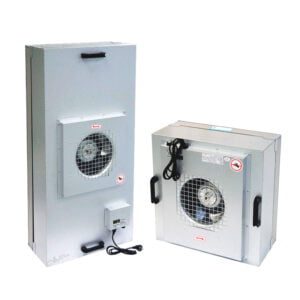
Selecting a HEPA filter requires looking beyond the efficiency rating. With core efficiency plateauing at high levels, the next competitive frontier is system integration. Prioritize total cost of ownership, energy consumption, smart monitoring, and ease of maintenance. The filter is a component within a smarter air quality management ecosystem. For applications requiring guaranteed performance, evaluating a certified high efficiency air filter designed for your specific airflow and housing is the first technical step.
Methods for Sustained Performance
Proper maintenance is non-negotiable; a loaded filter increases pressure drop and can shift the MPPS, affecting performance. Implementing a pressure-drop monitoring regimen with clear change-out thresholds is more effective than a fixed time schedule. This data-driven approach prevents both premature replacement and the performance degradation of an overloaded filter.
The Decision Framework for Investment
As clean air guidelines become a baseline expectation for occupant safety—similar to seatbelts or sanitation—organizations should view advanced HEPA systems not as a discretionary upgrade but as a future-proofing investment in operational resilience and risk mitigation. The decision pivots from pure cost to value, weighing the liability of poor indoor air quality against the assurance of a standardized, high-performance system.
Specification decisions must start with the MPPS efficiency curve, not a single-point rating. Validate compliance against enforceable standards like ISO 29463 or EN 1822, and design maintenance protocols around pressure drop, not just time. This ensures the filter operates within its certified performance envelope for its entire service life.
Need professional-grade HEPA solutions backed by technical validation and system-level support? The engineers at YOUTH specialize in translating these complex performance parameters into reliable, efficient filtration systems for critical environments. Contact our team to review your application requirements and pressure drop constraints.
Frequently Asked Questions
Q: Why is 0.3 microns the benchmark for HEPA filter efficiency?
A: The 0.3-micron rating represents the Most Penetrating Particle Size (MPPS), where filter efficiency is at its lowest point. This occurs because the capture mechanisms for larger and smaller particles are less effective at this specific size under test conditions. The EN 1822-1:2019 standard uses MPPS testing to establish this worst-case performance benchmark. This means you should select filters based on this minimum efficiency rating, as it guarantees higher performance for particles both larger and smaller than 0.3 microns in real-world use.
Q: How can a HEPA filter capture viruses smaller than 0.3 microns?
A: HEPA filters capture ultrafine particles like individual viruses primarily through diffusion, where Brownian motion causes erratic movement, increasing collision with fibers. Efficiency for a 0.1-micron particle typically exceeds the 99.97% rating for 0.3 microns. Since over 98.5% of airborne particles by count are below 1 micron, this high count-based efficiency is critical for pathogen control. If your health-protection objective targets sub-micron biological aerosols, HEPA filtration provides a validated, standards-based solution.
Q: What is the practical performance difference between a MERV 16 filter and a HEPA filter?
A: The performance gap is significant and non-linear. A MERV 16 filter captures about 95% of particles in the 0.3-1.0 micron range, while a true HEPA filter captures 99.97% at the more challenging 0.3-micron MPPS. This results in a MERV 16 filter passing over 150 times more 0.3-micron particles. The ANSI/ASHRAE 52.2-2017 method defines MERV ratings. This creates a direct trade-off, meaning facilities managing infection control or liability risks should quantitatively weigh this performance difference against initial filter cost.
Q: How do the four capture mechanisms in a HEPA filter work together?
A: Four distinct physical mechanisms operate within the fiber mat: impaction for large particles, interception for medium-sized ones, diffusion for ultrafine particles via Brownian motion, and sieving for the largest particles. Their combined effect creates a resilient, multi-mechanism defense against diverse particulate mixes. This integrated design, detailed in standards like ISO 29463-1:2017, makes HEPA a versatile single-technology solution. For operations with complex air quality challenges, this ensures robust performance across a wide particle size spectrum.
Q: What should we prioritize when selecting a HEPA filter beyond the efficiency rating?
A: With core efficiency standardized at high levels, selection should focus on total cost of ownership, including energy consumption from pressure drop, smart monitoring capabilities, and ease of maintenance. The filter is a component within a broader air management ecosystem. Proper maintenance is critical, as a loaded filter increases pressure drop and can shift the MPPS. This means for optimal long-term performance and operational resilience, you should evaluate the filter’s integration into the entire HVAC system, not just its initial certification.
Q: How is HEPA filter performance validated and certified?
A: Performance is validated against strict, enforceable standards that define testing at the Most Penetrating Particle Size. In the U.S., the DOE standard mandates a minimum of 99.97% efficiency at 0.3 microns MPPS. Guidance on testing and classification is provided in documents like IEST-RP-CC001.6. This mature standardization infrastructure lowers adoption barriers. When procuring filters, you must verify certification against these recognized standards to ensure the claimed efficiency is proven and not merely a marketing term.
Related Contents:
- HEPA Filter Technical Principles and Filtration Mechanisms: Understanding MPPS Testing, Efficiency Ratings, and Particle Capture Science for Industrial Applications
- HEPA Filter Efficiency: Maximizing Air Purification
- MERV 16 Pre-Filters in HEPA Housing Box Systems
- What is MPPS (Most Penetrating Particle Size) in HEPA Filter Testing and Why Does It Matter?
- HEPA vs ULPA Filters: Choosing the Right Option
- HEPA Filter Testing: Ensuring Optimal Performance
- HEPA Filters in Biosafety Cabinets: A Deep Dive
- ULPA vs HEPA Filters for Laminar Flow Units
- High-Efficiency Air Filter Fundamentals | Cleanroom Filtration Basics