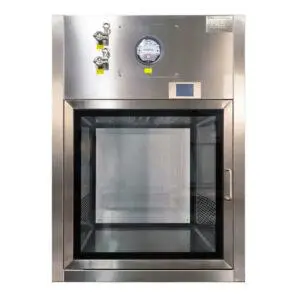
Specifying a laminar flow hood for tissue culture without first mapping your actual workflow is one of the more reliable ways to arrive at commissioning with the wrong piece of equipment installed. The most common version of that error is selecting a laminar hood for work that involves mammalian cells or potentially infectious source material — a choice that protects the culture but leaves the operator and the environment completely unguarded, with no retrofit path that avoids replacing the unit. Even when the hood category is correctly chosen, layout decisions made after procurement — which bottles go where, how tall the vessels are, where the waste container lands — routinely turn a technically adequate specification into a contamination-prone workstation. The checks that follow are organized around the decisions where misalignment between workflow reality and specified equipment creates the most expensive downstream consequences.
Tissue-culture setup checks that matter before specification
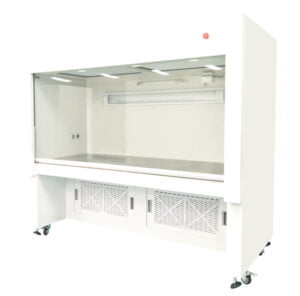
The specification process for a laminar flow hood should begin with a clear picture of what the workstation will look like before the first sample is opened — not after. Two pre-run requirements set the baseline: the blower and lights should run for 15–30 minutes before work begins to establish stable laminar airflow and clear residual particles, and a UV cycle of 15–20 minutes can be used beforehand to disinfect internal surfaces, provided the lamp is off and personnel are protected before anyone approaches the hood. These are not regulatory mandates; they are established operational figures that reflect how long it realistically takes to stabilize the airflow and decontaminate surfaces. A hood that is not warmed up adequately may show acceptable velocity readings at the face while still delivering inconsistent air distribution at the work plane.
The HEPA filter performance target most commonly referenced for tissue-culture applications is 99.97% efficiency at 0.3 µm — the particle size most difficult to capture and the standard benchmark for laminar flow hood filtration. Alongside that, target airflow velocity at the work plane is typically cited at approximately 0.5 m/s. Below that threshold, particle removal efficiency drops; above it, airflow can begin to displace lightweight materials and create secondary turbulence around vessels. Neither figure is a universally codified legal threshold, but both are widely recognized design parameters that should appear in the hood specification and be confirmed during acceptance testing.
Surface preparation follows a consistent logic: wipe the work surface with 70% isopropyl alcohol before introducing any materials, and clean between different tissue culture applications during the session. The cleaning sequence — top to bottom, cleanest to dirtiest, using sterile water, cleaning agent, disinfectant, and sporicidal agent in that order — reflects the contamination gradient inside the hood and prevents reintroducing particles to already-cleaned areas. Establishing this as a start-of-day and end-of-day routine is the minimum cadence for maintaining aseptic conditions across work sessions. These are operational implementation details, not formal compliance obligations, but skipping them creates contamination risk that no amount of HEPA performance compensates for.
Vessel height and media staging inside the aseptic work zone
Laminar airflow inside a hood is a managed resource, not a static field — the moment a tall bottle, a pipette stand, or a stacked tray interrupts the flow path, it creates a shadow zone where particles can accumulate and settle onto open vessels or media surfaces. This is the practical reason why work zone layout deserves as much attention as airflow velocity during specification: a correctly designed hood running at the right face velocity will still produce contamination if the arrangement of materials creates dead spots in the air column.
The guiding principle is to keep all materials within 3–6 inches of the hood’s interior so they remain inside the laminar flow envelope. Items positioned too close to the front opening are in the most turbulent zone; items pushed too far back may block the rear grille. The vertical dimension matters as well — vessels or containers taller than the effective laminar column will deflect airflow over their tops rather than past them, reducing protection over any open surface nearby. For right-handed workflows, a functional zone layout positions the primary workspace at the center, keeps the pipettor at front right for quick dominant-hand access, and pushes reagent bottles, tube racks, and waste containers toward the rear where they are stable but less likely to intercept the airflow path over the primary work area.
| Work Zone Area | Item(s) | Rationale |
|---|---|---|
| Center (wide workspace) | Vessels (flasks, plates) | Keeps manipulation area open and undisturbed |
| Front right | Pipettor | Quick dominant-hand access without crossing the air barrier |
| Rear right | Reagent bottles | Stable storage away from primary work path |
| Rear center | Tube rack | Reachable without blocking airflow; central sample management |
| Rear left | Liquid waste container | Isolates waste from clean materials; consistent flow separation |
| All materials | All items | Keep within 3–6 inches from hood interior to stay in laminar flow envelope |
The layout logic in that arrangement is not arbitrary ergonomics — it is an airflow management decision. Waste at the rear left keeps contaminated materials separated from the clean path of reagents moving from rear right to center, and placing the pipettor at the front right minimizes the crossing movements that draw the operator’s arm across the critical open-vessel zone. Getting this arrangement wrong at the procurement stage is less costly than getting it wrong after installation, because the wrong stand height or an absent gas tap cannot be corrected without rework — but the wrong bottle arrangement on the first day of use can quietly undermine sterility for months before anyone identifies the pattern.
Crowded accessory layouts that push work into turbulence
Even a well-specified laminar flow hood becomes unreliable when the work zone is treated as general storage. The mechanism is straightforward: every additional object in the hood creates a wake zone — an area of disturbed airflow on its downstream side — and when those wakes overlap, the cumulative effect is a work zone that is partially turbulent across most of its usable surface. The more items present, the more likely that hands, pipette tips, and open vessels will spend time inside those disturbed zones rather than in clean, unidirectional airflow.
The rear filter grille is the most commonly blocked structure. Tall waste containers or reagent bottles placed against the back wall restrict the airflow inlet, reduce velocity at the filter face, and generate vortices that pull room air — and its particle load — back into the clean zone. The front of the hood presents the opposite failure mode: items placed too close to the sash opening are already at the margin of the laminar envelope, and any arm movement in that area introduces a velocity disruption that can push particles inward toward open vessels.
| Risk Factor | Consequence | Prevention |
|---|---|---|
| Overcrowding with non‑essential items (e.g., incubator trays, excess bottles, waste) | Pushes hands and open vessels into turbulent airflow outside laminar zone | Keep only essential items in hood; remove clutter |
| Placing tall objects near rear filter grille or blocking air vents | Creates eddies that pull contaminants into work area | Keep vent area clear; avoid tall items near rear |
| Fast or sudden arm movements across the work zone | Induces turbulence that can carry particles into open vessels | Use slow, intentional movements; avoid abrupt gestures |
The practical corrective is to define the maximum permitted item list for a given protocol before the hood is in regular use, rather than allowing the work zone to accumulate items session by session. Slow, deliberate arm movements are less a matter of style and more a contamination control measure — fast movements across the work zone generate turbulence that can persist for several seconds after the movement ends. If a protocol genuinely requires the volume of materials that fills the hood to capacity, that is a signal that a larger work surface is part of the specification, not an argument for tolerating a crowded layout on a smaller unit. For a broader view of how workflow type shapes laminar hood selection, Laminar Flow Hood Applications in Research covers a range of application contexts and the specification logic behind them.
Laminar preparation benefits versus biosafety containment needs
The most consequential specification error in tissue-culture hood selection is treating a laminar flow hood and a biosafety cabinet as equivalent platforms that differ mainly in cost or footprint. They are not equivalent. A laminar flow hood provides product protection — HEPA-filtered unidirectional airflow that prevents environmental particles from reaching the culture — but it offers nothing in return: unfiltered exhaust moves toward the operator, and there is no inward air curtain at the sash. If the material being handled poses any risk to the person working with it, a laminar hood does not mitigate that risk at all. Choosing one for a protocol where a biosafety cabinet is appropriate does not create a performance gap that can be closed with technique; it creates an unmitigated personnel exposure risk that no procedural control inside the hood addresses.
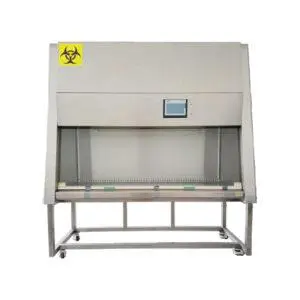
A Class II biosafety cabinet combines HEPA-filtered downward supply air with an inward air curtain at the sash and filtered exhaust — protecting the culture, the operator, and the surrounding environment simultaneously. That architecture is what makes it the appropriate enclosure for mammalian cell culture, even when the cells are presumed non-infectious, because the relevant question is not whether the material is known to be hazardous but whether the operator can be certain it is not. For most mammalian cell culture work, that certainty is not available at the start of a session.
| Feature | Laminar Flow Hood | Class II Biosafety Cabinet |
|---|---|---|
| Product protection | Yes (HEPA-filtered unidirectional airflow) | Yes (HEPA-filtered supply + inward airflow) |
| Personnel protection | No (exhaust directs unfiltered air toward operator) | Yes (inward airflow and HEPA-filtered exhaust) |
| Environmental protection | No | Yes (filtered exhaust) |
| Airflow pattern | Unidirectional laminar flow, typically horizontal toward user | Downward HEPA-filtered flow with inward air curtain at sash |
| Typical use | Non-hazardous sterile preparations (e.g., plant tissue culture, media prep) | Mammalian cell culture, potentially infectious samples, BSL-2/BSL-3 work |
| Regulatory role | Not suitable for biohazardous work | Primary engineering control per CDC/NIH BMBL for biohazardous agents |
The appropriate use case for a laminar flow hood in tissue culture is non-hazardous sterile manipulation — plant tissue culture, media preparation, non-infectious reagent handling — where product protection is the only engineering objective. As soon as the protocol introduces primary human or animal cells, patient-derived material, or any agent with an uncertain infectious status, the decision criterion shifts, and the laminar hood is no longer the right platform regardless of its HEPA performance or airflow velocity. For a more detailed treatment of where the two enclosure types diverge, LAF vs Biosafety Cabinet | When to Use Each Type works through the decision criteria in a comparative format.
Utility and stand details that buyers miss in tissue-culture setups
Procurement conversations for laminar flow hoods tend to focus on HEPA filter efficiency, work surface dimensions, and airflow velocity — all of which matter — while accessory and utility details are treated as secondary. In practice, those secondary items are where the most common post-installation delays originate, because they are difficult to add after the unit is positioned and connected.
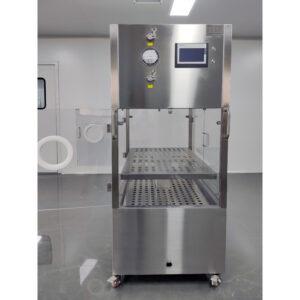
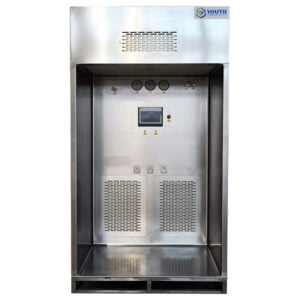
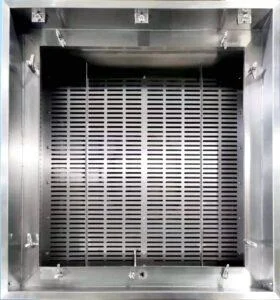
The component checklist that deserves explicit verification before purchase includes: pre-filter, blower, HEPA filter, diffuser screen, UV lamp, fluorescent light, front sash, and stainless steel work surface. These are not optional additions on a well-specified unit; their presence or absence should be confirmed in writing during the quotation stage, not assumed based on the product category. UV lamp inclusion, in particular, is inconsistently specified across manufacturers, and a hood that arrives without one cannot be trivially retrofitted after installation without disrupting the validated airflow geometry.
Stand height and electrical service are the two utility details most often discovered too late. Stand height determines ergonomic posture for the operator and, critically, whether the work surface falls at the right elevation for the typical vessel sizes and pipette lengths used in the protocol. An incorrect stand height is a procurement defect, not a use error, and correcting it after delivery typically means sourcing a custom stand or adapting the flooring situation. Electrical service — the number of outlets, their position relative to the work zone, and whether gas taps are included — should be mapped against the actual accessory load of the protocol before the purchase order is placed. A protocol that requires a vortex mixer, a heated block, and a vacuum pump inside or adjacent to the hood needs those outlet positions confirmed as part of the specification, not requested as a field modification after the unit is installed.
Biohazardous protocols that require a biosafety cabinet
Using a laminar flow hood for mammalian cell culture is not a conservative choice that can be upgraded later with better technique — it is a failure to provide the personnel protection that the work requires. The mechanism of that failure is direct: a laminar flow hood exhausts air toward the operator. Any aerosol generated during pipetting, centrifugation, or vessel manipulation moves in the direction of the person performing the work. There is no engineering control in a laminar hood that intercepts that pathway.
Class II biosafety cabinets are required for BSL-2 and BSL-3 work involving moderate- to high-risk agents that may cause disease or produce aerosols. This is not a manufacturer recommendation; it is the position of CDC/NIH Biosafety in Microbiological and Biomedical Laboratories (BMBL), which identifies the Class II BSC as the primary engineering control in a biosafety program for work at those levels. The specific BSC type — IIA2, IIB2, or other variants — is determined by a formal risk assessment and must reflect institutional biosafety guidelines, not simply the available budget or the lab’s existing equipment configuration.
| Protocol Scenario | Required Equipment | Reason |
|---|---|---|
| Non-hazardous sterile manipulation (e.g., plant tissue, media preparation) | Laminar flow hood may be appropriate | Product protection sufficient; no personnel or environmental risk |
| Mammalian cell culture (even if presumed non‑infectious) | Class II biosafety cabinet (BSC) | Laminar flow hood lacks personnel protection; BSC required to protect user and environment |
| BSL-2 or BSL-3 work with moderate- to high‑risk agents | Class II BSC (type determined by risk assessment) | Required by biosafety guidelines (CDC/NIH BMBL) for personnel and environmental safety |
| Aerosol-generating procedures with risky source material | Class II BSC | Contains aerosols and limits lab exposure |
The audit consequence of getting this wrong is not a warning or a documentation finding — it is a required equipment replacement and a protocol hold until the appropriate engineering control is in place. That outcome is almost entirely avoidable if the risk assessment that should precede protocol design actually precedes it, rather than being conducted after procurement is complete. For workflows that fall into the mammalian cell culture or aerosol-generating category, the Biological Safety Cabinet is the correct starting point for specification, and the laminar hood comparison is not a relevant trade-off to be weighing at that stage.
The specification decision that matters most happens before any product is selected: a clear protocol characterization that identifies the source material, the operator exposure pathway, and the biosafety level of the work. That characterization determines whether the work belongs in a laminar flow hood at all or requires a biosafety cabinet from the start. Getting that answer right eliminates the most expensive downstream consequence — a commissioned unit that must be replaced rather than reconfigured.
For work that correctly falls within the laminar hood category, the remaining risks are layout-driven and procurement-driven. Confirm the component list, map the utility requirements against the actual protocol load, define the work zone arrangement before the unit is installed, and set a cleaning cadence that treats the hood as an active contamination control rather than a passive enclosure. Those steps will not rescue the wrong equipment choice, but they will ensure a correctly specified hood performs at the level the specification promises.
Frequently Asked Questions
Q: Can a laminar flow hood be used for plant tissue culture and media preparation if no human or animal cells are involved?
A: Yes — plant tissue culture and non-infectious media preparation are appropriate use cases for a laminar flow hood, provided the source material carries no infectious risk and personnel protection is not an engineering requirement. The hood’s HEPA-filtered unidirectional airflow is sufficient when product protection is the sole objective. Once the protocol introduces primary animal cells, patient-derived material, or any agent with uncertain infectious status, the laminar hood is no longer the correct platform regardless of how non-hazardous the material appears at the start of a session.
Q: After the hood is installed and the cleaning routine is running, what is the next verification step that’s easy to skip?
A: Acceptance testing of airflow velocity at the work plane should be the immediate next step, and it is frequently deferred or assumed complete based on the manufacturer’s factory data. A hood that reads correct velocity at the face during installation may still deliver inconsistent distribution at the work plane once accessories are placed and the unit is in a real lab environment. Confirming approximately 0.5 m/s at the actual working positions — not just at an unobstructed center point — establishes a real baseline and catches any installation or accessory-placement problems before they affect culture outcomes.
Q: At what point does a protocol’s arm movement pattern alone justify switching to a biosafety cabinet, even if the material is non-hazardous?
A: Heavy or frequent arm movement near the front sash opening is itself a risk threshold, independent of material hazard classification. Fast or repetitive movements in that zone generate turbulence that can persist for several seconds and pull room air inward across open vessels. If a protocol requires the operator’s arms to cross the sash plane frequently — for example, repeatedly repositioning large flasks or operating equipment at the front edge — the geometry of the work is creating contamination exposure that a laminar hood cannot compensate for, and a biosafety cabinet’s inward air curtain provides a more appropriate engineering boundary for that movement pattern.
Q: How does the cost of a laminar flow hood compare to a biosafety cabinet, and when is the price difference actually irrelevant to the decision?
A: Laminar flow hoods are generally less expensive to purchase and operate than Class II biosafety cabinets, but that cost difference becomes irrelevant the moment the protocol involves mammalian cells, BSL-2 agents, or aerosol-generating steps. At that point the choice is not a trade-off between two valid platforms at different price points — it is the difference between compliant and non-compliant engineering controls. An audit that identifies a laminar hood where a BSC is required results in a protocol hold and mandatory equipment replacement, which costs substantially more than the price gap between the two units at procurement. The budget comparison only applies within the subset of workflows where a laminar hood is genuinely appropriate.
Q: What happens if the UV lamp was omitted from the specification and the hood is already installed?
A: Surface decontamination before each session must then rely entirely on chemical methods — 70% isopropyl alcohol wipe-down and the structured cleaning sequence from sterile water through sporicidal agent — without the UV pre-treatment cycle. That is workable for ongoing sessions but means the lab is operating without one layer of the standard surface disinfection protocol. Retrofitting a UV lamp after installation is problematic because adding it without retesting airflow geometry risks altering the validated air distribution inside the enclosure. The practical consequence is that the omission should trigger a formal assessment of whether the chemical-only cleaning cadence is sufficient for the specific protocols in use, rather than assuming the gap is trivially covered by more frequent wiping.