For professionals in pharmaceuticals, biotechnology, and electronics, specifying a cleanroom is a high-stakes capital decision. The choice between modular and traditional construction directly impacts project timelines, operational agility, and long-term financial health. Misconceptions persist that modular solutions are less capable or only suitable for temporary needs, overlooking their engineered performance and strategic advantages.
Attention to modular specifications is critical now. Supply chain volatility demands predictable project timelines. Evolving regulatory landscapes, like updated USP chapters, require facilities that can adapt. The shift toward flexible manufacturing and the need to preserve capital make the reconfigurable, depreciable asset model of modular cleanrooms a compelling strategic priority.
Modular vs. Stick-Built Cleanrooms: Core Differences
Defining the Construction Paradigm
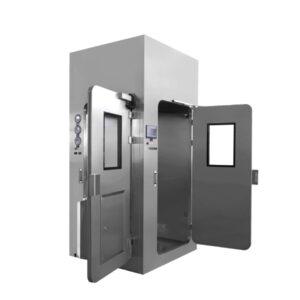
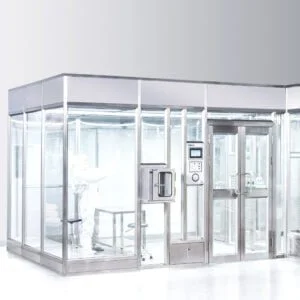
The fundamental divergence lies in methodology. Modular cleanrooms are engineered systems built from prefabricated, standardized components—walls, ceilings, integrated utilities—assembled on-site. Stick-built construction employs traditional methods, building walls and installing systems piecemeal within an existing shell. This core difference dictates everything from schedule predictability to financial accounting.
Impact on Timeline and Capital
The modular approach offers a compressed, predictable installation timeline. Factory fabrication occurs in parallel with site preparation, minimizing facility downtime and operational disruption. Evidence suggests this method can reduce capital costs by up to 25% compared to traditional builds. More strategically, it repositions the cleanroom from a fixed, sunk cost into a depreciable, reconfigurable asset. This preserves capital and offers financial flexibility in uncertain markets.
Strategic Application and Trade-offs
Modular solutions excel in applications requiring standard to moderately complex classifications (ISO 5-8) and rectilinear footprints. Their efficiency is less suited for highly unique, non-rectilinear spaces where bespoke stick-built construction may be necessary. The strategic trade-off is between ultimate customization and speed, predictability, and financial agility. For most applications, the modular model delivers a superior return on investment and future-proofing.
The following table clarifies the operational and financial distinctions between these two approaches.
| Feature | Modular Cleanroom | Stick-Built Cleanroom |
|---|---|---|
| Construction Method | Prefabricated, standardized components | Conventional on-site construction |
| Installation Timeline | Significantly reduced | Longer, unpredictable schedules |
| Capital Cost Reduction | Up to 25% lower | Higher initial investment |
| Financial Model | Depreciable, reconfigurable asset | Fixed sunk cost |
| Customization Level | Standard to moderate complexity | High for unique spaces |
Source: Technical documentation and industry specifications.
Cost Analysis: Modular Cleanroom Capital and Operational Expenses
Understanding Total Cost of Ownership
A rigorous analysis must separate capital expenditure (CAPEX) from operational expenditure (OPEX). Modular CAPEX is typically more predictable, covering prefabricated panels, integrated systems, and controlled installation. However, the true financial picture emerges from lifecycle costs. Initial investment in superior materials directly reduces long-term OPEX, a point often underestimated in procurement decisions.
Drivers of Operational Expenditure
OPEX is dominated by HVAC energy consumption, periodic HEPA/ULPA filter replacements, recertification, and maintenance labor. Design decisions made during specification have a direct, calculable impact on these recurring costs. For instance, a walkable ceiling design drastically reduces the labor cost and contamination risk associated with filter changes and utility servicing, lowering ongoing OPEX. In our comparisons, features designed for maintainability consistently show a 20-30% reduction in annual service costs.
Evolving Financial Models
The market is shifting toward flexible financial engagements. Beyond outright purchase, leasing and full-service support packages are becoming common. This trend points to a “Cleanroom-as-a-Service” relationship model, lowering upfront barriers and allowing firms to treat cleanroom capacity as a variable expense. This demands updated procurement frameworks that evaluate vendors on total lifecycle cost and service capability, not just initial price.
A breakdown of cost categories highlights the strategic considerations for both immediate and long-term budgeting.
| Cost Category | Key Drivers | Strategic Consideration |
|---|---|---|
| Capital Expenditure (CAPEX) | Prefabricated panels, integrated systems | More predictable initial investment |
| Operational Expenditure (OPEX) | HVAC energy, filter replacement, labor | Dominated by long-term energy use |
| Long-term OPEX Reduction | Superior nonporous materials, welded seams | Minimizes cleaning time, chemical resistance |
| Maintenance Cost Reduction | Walkable ceiling design | Lowers filter servicing cost/risk |
| Financial Model Trend | Leasing, support packages | Shift toward “Cleanroom-as-a-Service” |
Source: Technical documentation and industry specifications.
Key Performance Specifications: ISO Class, Airflow, and Control
The Foundation: ISO Classification
Performance is quantifiably defined by ISO 14644-1, which classifies air cleanliness from ISO 1 (most clean) to ISO 9. Modular cleanrooms commonly serve ISO 5 (Class 100) to ISO 8 (Class 100,000) applications. The class specifies the maximum allowable concentration of airborne particles (0.5 µm and 5.0 µm). Achieving it requires precise engineering of air change rates and filtration.
Achieving Control: Airflow and Pressurization
The ISO class is maintained through controlled airflow patterns—laminar for unidirectional particle sweep or turbulent for dilution—and room pressurization. Positive pressure prevents ingress from less clean areas; negative pressure contains hazards. These parameters are not standalone; they must be balanced to eliminate dead zones while meeting energy efficiency goals. Industry experts recommend computational fluid dynamics (CFD) modeling during design to visualize and optimize airflow before installation.
The Compliance Ecosystem
Beyond ISO, industry-specific standards impose additional layers. For pharmaceutical compounding, compliance with USP General Chapter <797> Pharmaceutical Compounding – Sterile Preparations is legally enforceable. It mandates specific environmental controls, gowning, and procedures. This regulatory complexity drives demand for turnkey vendors who can navigate the entire compliance pathway from design to validation.
This table outlines the key parameters that define and maintain cleanroom performance.
| Parameter | Typical Range/Type | Critical Function |
|---|---|---|
| ISO Classification (ISO 14644-1) | ISO 5 to ISO 8 common | Defines maximum particle concentration |
| Airflow Pattern | Laminar (unidirectional) or turbulent | Sweeps particles from critical zones |
| Room Pressurization | Positive or negative | Controls contamination migration |
| Regulatory Standards | USP <795>, <797>, <800> | Industry-specific environmental requirements |
| Continuous Monitoring | Particles, pressure, temperature, humidity | Real-time compliance, automated reporting |
Source: ISO 14644-1: Cleanrooms and associated controlled environments — Part 1: Classification of air cleanliness by particle concentration. This is the foundational international standard defining the nine ISO cleanliness classes and testing methodology, providing the core performance criteria for modular cleanroom air cleanliness.
Essential Structural Components and Envelope Integrity
The Primary Barrier: Wall and Panel Systems
The envelope is the first line of defense. Wall panels must feature non-shedding cores (e.g., aluminum honeycomb) clad in nonporous, cleanable surfaces like powder-coated steel or rigid uPVC. Seams are critical failure points; chemical welding creates a monolithic, non-particle-trapping seal. Floors are typically heat-welded vinyl or poured epoxy with integral coved bases to eliminate corners. These specifications are engineered to reduce cleaning labor and withstand aggressive disinfectants.
Doors, Windows, and Transitions
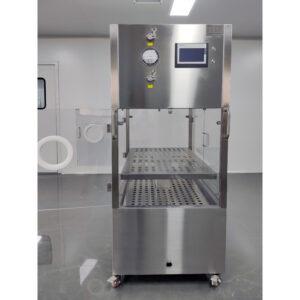
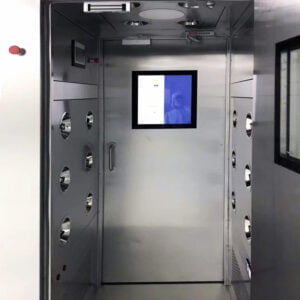
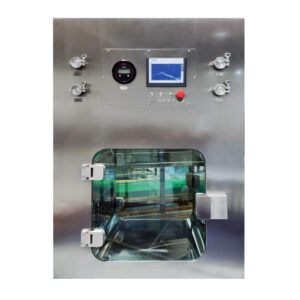
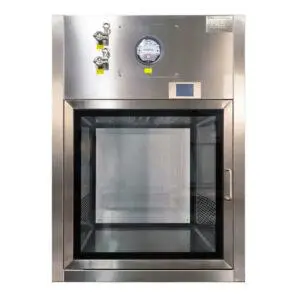
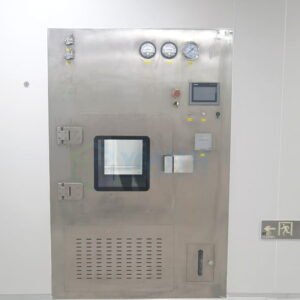
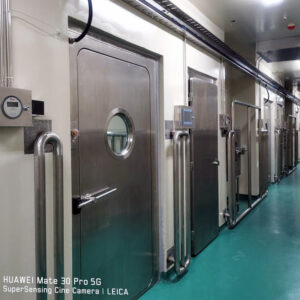
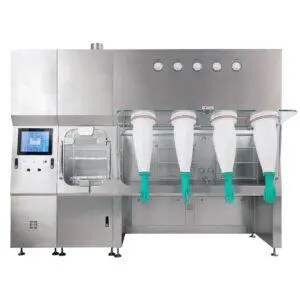
All penetrations must maintain envelope integrity. Doors and windows require flush frames with perimeter gaskets to sustain pressure differentials. Pass-through chambers and transfer hatches are essential ancillary components for material transfer without breaching the clean environment. The ease of integrating these components is a key advantage of modular design, as they are part of the standardized component library.
Strategic Material Selection
Choosing materials is a long-term operational decision. Antimicrobial surfaces and chemically resistant finishes directly lower lifetime cleaning and maintenance costs. The standardization of high-performance components across industries creates a shared innovation pool. Advancements in semiconductor cleanroom materials, for example, rapidly raise the performance baseline available for pharmaceutical applications.
Critical Integrated Systems: HVAC, Filtration, and Monitoring
The Engine: HVAC and Filtration
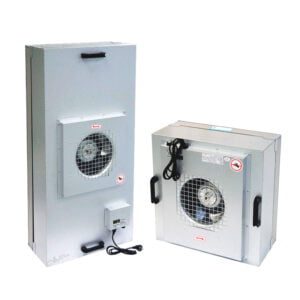
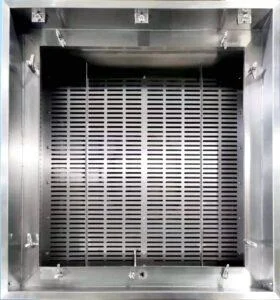
The structural envelope is passive; integrated mechanical systems actively control the environment. The heart is the HVAC system, employing HEPA or ULPA filters in Fan Filter Units (FFUs) or a central Air Handling Unit (AHU). This system must deliver the required air changes per hour while maintaining precise temperature (±1°C) and humidity (±5% RH) tolerances. Design guidance from sources like IEST-RP-CC012.3: Considerations in Cleanroom Design emphasizes balanced airflow to achieve specification without dead zones or excessive energy use.
Designing for Lifecycle Serviceability
System design must account for its entire lifecycle. A walkable ceiling is not a luxury; it is a critical feature for safe, direct access to filters, lights, and utilities. This design drastically reduces the cost and contamination risk of routine maintenance and future upgrades. It is a direct investment in lowering OPEX and enabling future reconfiguration.
The Digital Nerve Center: Monitoring
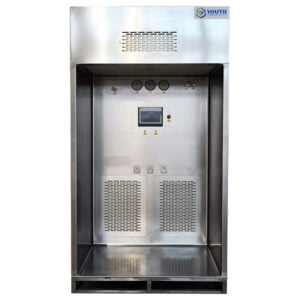
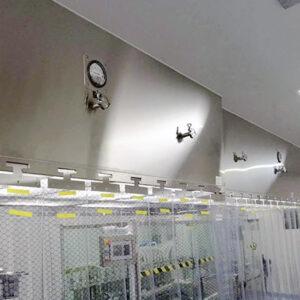
Continuous monitoring of particles, differential pressure, temperature, and humidity is now a compliance necessity. Integrated systems with real-time alerts and automated data logging transform compliance from a periodic audit event into a managed process. This provides an immutable audit trail, reduces administrative overhead, and enables proactive response to excursions before product or processes are impacted.
Integrated systems work in concert to achieve and maintain the controlled environment. Their design directly impacts long-term operational efficiency.
| System Component | Core Function | Design for Lifecycle |
|---|---|---|
| HEPA/ULPA Filtration | Particle removal for ISO class | Housed in Fan Filter Units (FFUs) |
| HVAC/AHU | Manages air changes, temperature, humidity | Ensures balanced airflow, no dead zones |
| Walkable Ceilings | Safe access to utilities/filters | Drastically reduces maintenance cost/risk |
| Integrated Monitoring | Real-time environmental data | Enables proactive compliance management |
| Data Reporting | Automated audit trails | Reduces administrative overhead, excursion risk |
Source: IEST-RP-CC012.3: Considerations in Cleanroom Design. This recommended practice provides comprehensive guidance on cleanroom design, covering critical integration factors like airflow, construction materials, and services integration which are central to specifying modular cleanroom systems.
Compliance, Validation, and Ongoing Certification
The Gateway: Initial Validation
Installation completion is not operational readiness. A formal validation process, typically conducted by a third-party CETA-accredited professional, is mandatory. This tests and documents that all performance specifications—ISO class, airflow velocity, recovery, pressure differentials, and environmental controls—are met. For regulated applications, this includes validation against specific chapters like USP <797>.
The Cycle of Recertification
Compliance is not a one-time event. Ongoing recertification, required every 6 to 12 months, verifies the cleanroom continues to perform within specification. This cycle includes filter integrity testing (DOP/PAO), particle count verification, and pressure profile checks. The efficiency of this process is heavily influenced by the cleanroom’s design and monitoring infrastructure.
Mitigating Project Risk
This phase carries significant project risk. A key vendor differentiator is the offering of performance-guaranteed contracts. Leading providers may hold the final project invoice until successful third-party certification is achieved. This shifts financial risk from the buyer and guarantees regulatory compliance from operational day one, underscoring a turnkey, accountable partnership model.
The validation and certification process is a structured, recurring requirement for operational integrity.
| Phase | Key Activity | Frequency / Trigger |
|---|---|---|
| Initial Validation | Third-party performance verification | Post-installation, before operation |
| Certification Body | CETA-accredited professional | Mandatory for operational readiness |
| Ongoing Recertification | Verifies continued compliance | Every 6 to 12 months |
| Performance Guarantee | Vendor holds final invoice | Until successful certification |
| Regulatory Validation | Against standards like USP chapters | Required for regulated industries |
Source: Technical documentation and industry specifications.
Scalability, Reconfiguration, and Future-Proofing
Inherent Flexibility as an Asset
The core strategic advantage of modular construction is its inherent flexibility. Wall panels, ceiling grids, and even modular HVAC skids can be disassembled, relocated, or expanded with minimal disruption compared to demolishing and rebuilding a stick-built room. This allows a facility to adapt to a new product line, scale production, or meet updated regulatory demands without a total capital write-down.
Designing for Change
True future-proofing is designed in from the start. Features like walkable ceilings, accessible utility raceways, and standardized panel sizes are explicit investments in lowering the future cost of change. When specifying a system, the long-term cost and disruption of reconfiguration must be factored into the total cost of ownership analysis. A slightly higher initial CAPEX for a more adaptable system often yields a significantly lower lifetime cost.
The Capital Preservation Strategy
This transforms the cleanroom from a fixed, illiquid asset into a flexible, redeployable one. It directly serves as a capital preservation strategy, allowing companies to reallocate resources quickly in response to market or R&D shifts. The ability to repurpose a high-value controlled environment asset protects the initial investment and extends its useful life.
Selecting the Right Modular Cleanroom for Your Application
Defining Non-Negotiable Requirements
Selection begins with unambiguous application requirements. Define the target ISO class, specific regulatory standards (USP, FDA cGMP, Annex 1), and precise environmental tolerances. Map process workflows to identify needed ancillary components: gowning rooms, airlocks, pass-through chambers, and dedicated utility drops. This functional specification forms the non-negotiable foundation for vendor discussions.
Evaluating the Vendor Ecosystem
The technical checklist must cover envelope materials, HVAC capacity, monitoring systems, and validation support. Strategically, you must also evaluate the vendor relationship model. The market shows consolidation toward vertically integrated vendors offering ecosystems of software, automation, and consumables—a single-source solution that offers convenience but requires scrutiny regarding vendor lock-in. A multi-vendor “best-of-breed” approach offers flexibility but places integration burden on your team.
The Decision Framework
Final selection criteria must balance technical compliance, lifecycle costs (guided by material and maintenance design), financial models (CAPEX vs. OPEX vs. leasing), and risk mitigation. The value of performance guarantees that ensure certification cannot be overstated. The goal is to select a modular cleanroom system and a partner that delivers not just a controlled environment, but a strategic asset aligned with both operational and business agility.
The decision to implement a modular cleanroom hinges on three priorities: aligning the ISO class and regulatory validation plan with your exact process risks, calculating total cost of ownership with a 10-year horizon for energy and reconfiguration, and selecting a partner whose performance guarantees and service model mitigate your project risk. This framework moves the conversation from technical specifications to strategic investment.
Need professional guidance to specify a cleanroom that balances performance, compliance, and financial agility? The engineers at YOUTH specialize in turn-key modular solutions backed by certification guarantees. Contact us to discuss your application requirements and lifecycle goals.
Frequently Asked Questions
Q: How do modular cleanroom costs compare to traditional construction over the full lifecycle?
A: Modular cleanrooms often have a more predictable capital expenditure (CAPEX) but their true advantage is in reducing long-term operational expenses (OPEX). Investments in superior materials like nonporous surfaces and welded seams lower cleaning costs and chemical damage, while features like walkable ceilings reduce maintenance labor and contamination risk. This means your total cost of ownership analysis should weigh higher-quality initial components against their proven OPEX savings over years of operation.
Q: What are the critical performance specifications for validating a modular cleanroom?
A: Validation hinges on meeting the air cleanliness class defined by ISO 14644-1, which sets particle count limits for classes from ISO 1 to 9. You must also verify controlled airflow patterns, stable temperature and humidity, and correct pressurization differentials. For pharmaceutical applications, compliance with standards like USP General Chapter <797> adds mandatory environmental and procedural controls. This means your project plan must allocate time and budget for third-party testing against all applicable standards before operational release.
Q: How can modular design reduce the cost and risk of future cleanroom changes?
A: Modular construction inherently supports reconfiguration, as prefabricated panels and integrated systems can be disassembled and relocated with minimal operational disruption. Strategic design investments, such as walkable ceilings and accessible utility raceways, allow for maintenance and upgrades without breaching the clean envelope. If your facility anticipates process changes, scaling production, or new regulatory demands, you should prioritize these future-proofing features to avoid costly, invasive retrofits later.
Q: What should we look for in a vendor to manage cleanroom compliance risk?
A: Seek vendors who offer performance-guaranteed contracts and can manage the entire compliance burden as a turnkey solution. A key differentiator is a vendor that withholds final payment until successful third-party certification is achieved, financially guaranteeing that the room meets all specifications like ISO class and USP <797> requirements. This means for regulated industries, selecting a partner with deep validation expertise is a critical risk-mitigation strategy over choosing based on price alone.
Q: Why is integrated environmental monitoring a necessity, not an optional upgrade?
A: Continuous, real-time monitoring of particles, pressure, temperature, and humidity is now a fundamental compliance requirement for maintaining validated states. These integrated systems provide automated data logging and alerting, enabling proactive management and supplying the auditable data lineage regulators demand. If your operation must adhere to GMP or ISO standards, you must budget for and specify a monitoring system that transforms compliance from a periodic audit into a managed, daily process.
Q: How does material selection for the cleanroom envelope impact long-term operational costs?
A: Specifying components with coved corners, chemically welded seams, and non-shedding, antimicrobial surfaces directly reduces long-term operational expenses. These design choices minimize particle traps, withstand aggressive cleaning agents, and significantly cut the labor time required for sanitation. For projects with high throughput or strict sterility protocols, you should prioritize these material specifications to achieve lower total lifecycle costs, even if the initial panel cost is higher.
Q: What financial models are emerging for procuring modular cleanroom capacity?
A: The market is shifting from outright CAPEX purchases toward flexible models like leasing and full-service support packages, resembling a “Cleanroom-as-a-Service” relationship. These models lower capital barriers and allow companies to treat cleanroom capacity as a variable operating expense. If your organization faces budget constraints or needs to preserve capital, you should evaluate these new procurement frameworks against traditional ownership during the vendor selection process.
Related Contents:
- GMP Compliant Air Filters | FDA Requirements Cleanroom Validation
- Modular BIBO Designs: Flexibility for Your Facility
- Modular Laminar Air Flow Units for Cleanrooms
- The Complete Modular Cleanroom Guide for Facility Managers and Operations Directors: Standards, Design, and Implementation Best Practices 2025
- Modular Cleanroom Airflow Design and HVAC System Requirements: Complete Engineering Guide for ISO Classification Compliance
- ISO 14644 Cleanroom Equipment Standards | Compliance Guide
- Medical Device Cleanroom Equipment | ISO Class Requirements
- Laboratory Purification Equipment | Validation Protocols | Audit Preparation
- FDA 21 CFR Part 820 vs ISO 13485 Cleanroom Equipment Requirements: Key Regulatory Differences