Selecting cleanroom furniture materials is a critical contamination control decision. The choice between non-shedding and nonporous properties is often misunderstood, leading to costly specification errors and compliance risks. Professionals must navigate technical requirements, performance validation, and total cost implications to protect product integrity and operational uptime.
The distinction is more than semantic; it defines a material’s fundamental interaction with the cleanroom environment. A material that excels in only one property creates a vulnerability. As cleanroom standards tighten and regulatory scrutiny increases, a methodical, evidence-based approach to material selection becomes a strategic operational necessity.
Non-Shedding vs. Nonporous: Defining the Core Difference
The Fundamental Distinction
Non-shedding and nonporous are distinct but complementary material properties. A non-shedding material does not release particles—fibers, flakes, or dust—into the environment through abrasion, impact, or routine use. It actively prevents the generation of airborne contaminants. A nonporous material features a seamless, impermeable surface without pores, cracks, or crevices. This characteristic prevents the entrapment and accumulation of particles, microbes, and chemical residues, enabling complete decontamination.
Why Both Properties Are Non-Negotiable
The ideal cleanroom furniture material must excel in both properties. A non-shedding surface that is porous will still harbor contaminants within its microstructure, acting as a reservoir for bioburden. Conversely, a nonporous surface that sheds will actively pollute the environment it is meant to protect. The core objective is to specify materials that neither contribute to nor retain contamination. In our evaluations, we consistently find that the most frequent specification error is prioritizing one property while inadequately verifying the other.
The Hierarchy of Contamination Control
This dual requirement forms the base of a contamination control hierarchy. The material itself must be inert. Next, the fabrication must preserve these properties at every joint and edge. Finally, the design must eliminate particle traps. A failure at any level compromises the entire system. This foundational understanding directly informs the subsequent technical requirements and testing protocols.
Key Technical Requirements Compared: A Detailed Breakdown
Chemical and Disinfectant Resistance
Surfaces must withstand aggressive, frequent cleaning cycles without degrading. Chemical resistance is not optional; it is a determinant of material lifespan and cleanability. A material that clouds, cracks, or delaminates when exposed to sporicides like hydrogen peroxide or quaternary ammonium compounds becomes a contamination source itself. This requirement is stratified by application; a material suitable for an ISO 8 gowning room may be wholly inadequate for the harsh chemical environment of a GMP ISO 5 filling suite.
Mechanical Durability and Classification Suitability
Abrasion resistance ensures the material maintains its surface integrity under daily use. Scratches and wear points become particle generation sites and compromise cleanability. Furthermore, material suitability is intrinsically linked to cleanroom classification as defined in standards like ISO 14644-1: Classification of air cleanliness by particle concentration. The required performance threshold for particle shedding and cleanability escalates dramatically from an ISO 7 to an ISO 5 environment. Specifying a material without confirming its validated performance for your specific class is a high-risk oversight.
The Critical Role of ESD Control
Electrostatic Dissipative (ESD) functionality is a non-negotiable property in many cleanrooms, especially in electronics and pharmaceutical powder handling. Uncontrolled static charge attracts airborne particles to surfaces, defeating the purpose of non-shedding materials, and can damage sensitive microelectronics. ESD performance must be built into the material or coating and must remain effective after repeated cleaning and abrasion. Industry experts recommend verifying ESD performance data as part of the material validation package.
Material Showdown: Stainless Steel vs. HPL vs. Solid Resins
The Benchmark: Austenitic Stainless Steel
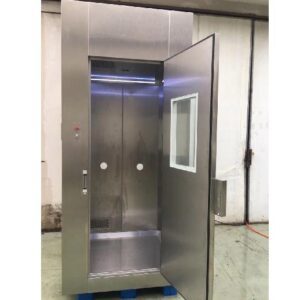
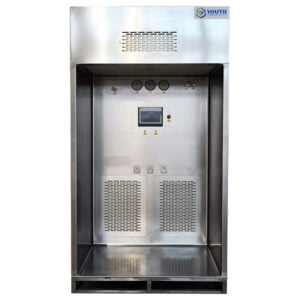
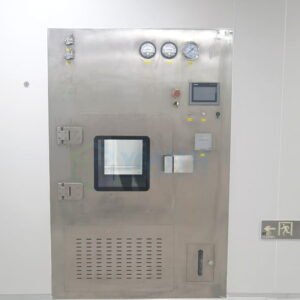
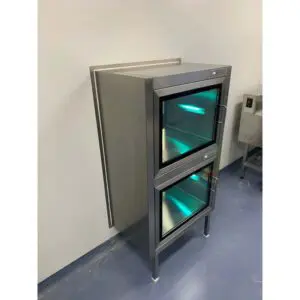
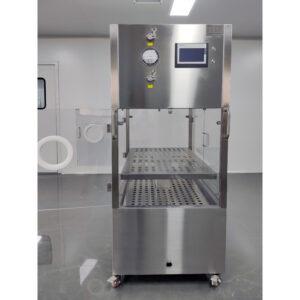
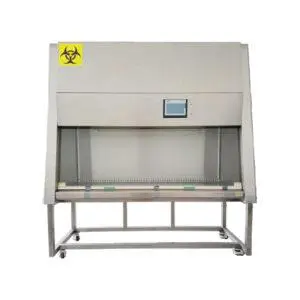
Grades 304 and 316 stainless steel are the benchmark for ISO 5-7 and GMP environments. The material is inherently monolithic and nonporous when properly welded and electropolished. It offers exceptional chemical and corrosion resistance, making it suitable for the most rigorous cleaning regimens. Its primary limitation is higher initial cost, but this is often justified by its durability and lifecycle performance.
The Cost-Effective Contender: High-Pressure Laminate
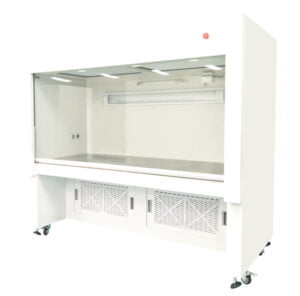
High-Pressure Laminate (HPL) provides a hard, smooth, and highly chemical-resistant surface at a lower cost for large casework and shelving. Its performance is excellent on the sealed surface. However, its critical limitation is at the edges and joints. If the substrate is exposed or edge sealing fails, the material becomes a porous particle trap. Meticulous fabrication and sealing are paramount.
The Homogeneous Option: Solid Phenolic/Epoxy Resins
Solid resins are homogeneous, core-through materials. They remain nonporous even at cut edges, offering excellent chemical resistance and consistency. A common trade-off can be lower impact strength compared to steel. The market is seeing increased specialization, with suppliers offering advanced, validated resin formulations tailored to specific industry niches like semiconductor wet benches or pharmaceutical biosafety cabinets.
| Material | Key Property | Primary Limitation |
|---|---|---|
| Stainless Steel (304/316) | Inherently monolithic & nonporous | Higher initial cost |
| High-Pressure Laminate (HPL) | Excellent chemical resistance | Edge & joint sealing critical |
| Solid Phenolic/Epoxy Resins | Homogeneous, core-through material | Lower impact strength |
Source: IEST-RP-CC012.3: Considerations in Cleanroom Design. This standard provides guidelines for selecting cleanroom materials based on cleanability, non-shedding properties, and surface finishes, directly informing the technical profiles of these common furniture materials.
Performance Compared: Shedding, Cleanability, and Durability
Head-to-Head Performance Metrics
When comparing core performance metrics, each material class has a distinct profile. Electropolished stainless steel offers the lowest potential for particle shedding and the highest cleanability due to its seamless nature. HPL performs similarly on its sealed surface but is entirely dependent on edge-sealing quality. Solid resins provide consistent, predictable performance across the entire material body, as there is no core or edge to fail.
The Dominant Risk: Design Flaws
The greatest contamination risk often stems not from the base material but from design and fabrication flaws. Welds, handles, seams, fastener holes, and panel gaps create micro-environments where particles and microbes accumulate, shielded from cleaning agents. Therefore, performance validation must assess the complete fabricated unit, not just sample swatches. Seamless, radiused, or press-fit designs are explicitly advocated to eliminate these inherent particle traps.
| Performance Metric | Stainless Steel (Electropolished) | HPL (Sealed Surface) | Solid Resins |
|---|---|---|---|
| Particle Shedding | Lowest potential | Low (surface dependent) | Consistent performance |
| Cleanability | Highest (seamless) | High (surface dependent) | Excellent across material |
| Durability Risk | Design flaws (welds, gaps) | Edge-seal failure | Impact damage |
Source: Technical documentation and industry specifications.
Validating Performance: Essential Testing Methods Explained
Moving Beyond Supplier Claims
Procurement must be driven by verifiable evidence, not marketing claims. A qualified supplier will provide documented test results from recognized methods. Particle shedding tests, for instance, subject samples to controlled abrasion or vibration while counting released airborne particles to ensure compliance with cleanroom class thresholds. This objective data replaces subjective assurances.
Key Tests for Material Qualification
Cleanability and recovery tests challenge surfaces with a known load of particles or microbial spores, apply a standardized cleaning protocol, and measure residual contamination. This directly validates the “nonporous” claim. Chemical resistance tests grade materials against a panel of cleanroom disinfectants, noting any visual or functional degradation. Abrasion resistance tests, like the Taber Abraser, simulate years of wear to predict long-term shedding potential. Surface roughness measurement (Ra value) quantifies microscopic smoothness, a key indicator of cleanability.
| Test Method | Measures | Key Output |
|---|---|---|
| Particle Shedding Test | Airborne particle release | Compliance with class thresholds |
| Cleanability/Recovery Test | Residual contamination post-cleaning | Microbial/particle count reduction |
| Chemical Resistance Test | Degradation from disinfectants | Material grading against agents |
| Abrasion Resistance (Taber) | Simulated long-term wear | Weight loss / surface change |
| Surface Roughness (Ra) | Microscopic smoothness | Quantitative Ra value |
Source: ASTM E3108: Standard Test Method for Preparation of Surfaces and Evaluation of the Effectiveness of Cleaning Processes. This standard provides a method for preparing surfaces and quantitatively evaluating cleaning effectiveness, which is the foundation for cleanability and recovery testing of materials.
Cost Analysis: Initial Investment vs. Total Cost of Ownership
The True Cost of Ownership
Financial justification must extend beyond the purchase order. A Total Cost of Ownership (TCO) model reveals the actual economic impact. While stainless steel and high-quality, well-sealed HPL command higher upfront costs, their superior durability and chemical resistance lead to a lower TCO over a 5-10 year horizon. Inferior materials degrade faster under rigorous cleaning, losing their surface integrity and becoming particle generators.
Quantifying the Risk Cost
The TCO analysis must include risk cost. Premature replacement of failed casework is a direct expense. More significantly, a material failure that leads to a contamination event can result in costly batch losses, regulatory non-compliance, and production downtime. Investing in validated, high-performance materials is a risk mitigation strategy. The multi-year TCO model often justifies the initial investment by quantifying the avoidance of these potential failures.
| Cost Factor | High-Quality Material (e.g., SS) | Inferior Material |
|---|---|---|
| Initial Investment | Higher upfront cost | Lower purchase price |
| Durability & Degradation | Superior chemical resistance | Faster degradation |
| Replacement Cycle | Longer lifespan | Premature replacement likely |
| Risk Cost | Lower contamination event risk | Higher compliance downtime risk |
| Total Cost of Ownership (TCO) | Lower over 5-10 years | Higher long-term cost |
Source: Technical documentation and industry specifications.
Design and Implementation: Critical Considerations for Success
Integrating Material with Contamination-Control Design
Material selection is futile if compromised by poor design. The goal is seamless construction. Welded joints must be continuously welded and polished to a smooth finish equal to the parent material. Mechanical fasteners should be avoided or designed to be flush and sealed. This is where modular cleanroom furniture systems prove to be a strategic operational asset. Their precision press-fit systems inherently prevent particle traps, while easy disassembly facilitates thorough cleaning and rapid reconfiguration for batch changes, directly reducing bioburden risk.
The Ergonomic Trade-Off
Ergonomics cannot be ignored, but features must be compatible with cleanroom protocols. Height adjustability in chairs and workstations is necessary for operator comfort and productivity. However, features like fabric backrests or porous foam are prohibited. Seating must use sealed hydraulic or mechanical mechanisms and nonporous vinyl or polymer upholstery. For ultra-sensitive zones, backless stools are often specified to eliminate a major surface area and potential contamination niche.
The Criticality of Seamless Integration
The final implementation step is ensuring the furniture integrates seamlessly with the room’s finishes, airflow, and cleaning protocols. Furniture should not create airflow shadows or eddies. It must be positioned to allow complete access for cleaning. The selection of integrated solutions, such as those for modular cleanroom workbenches and casework, can streamline this integration by ensuring design principles are baked into the system from the start.
Selecting the Right Material: A Decision Framework
A Structured Five-Step Process
A disciplined framework aligns technical needs with strategic outcomes. First, explicitly define the cleanroom classification and primary chemical exposure profile. This filters out materially unsuitable options. Second, prioritize designs that eliminate surface imperfections. Invest in fabrication quality—such as polished welds or certified edge-sealing—over material cost savings alone.
Supplier Evaluation and Financial Justification
Third, evaluate suppliers based on specialized expertise for your industry and their provision of validated test data. Request certification sheets for shedding, cleanability, and chemical resistance relevant to your ISO class. Fourth, conduct a formal TCO analysis over a 5-10 year horizon, incorporating replacement cycles and quantified risk mitigation. This provides the financial rationale for the specification.
The Human Factor
Finally, recognize that the best furniture cannot compensate for poor protocols. The investment in superior design and materials must be matched by rigorous and ongoing personnel training. The human factor remains the highest variable risk in any cleanroom. The furniture system should support and enforce good practice, not work against it.
| Decision Step | Key Action | Filtering Criteria |
|---|---|---|
| 1. Define Environment | Classify cleanroom & chemical exposure | ISO/GMP class; disinfectant profile |
| 2. Prioritize Design | Eliminate surface imperfections | Seamless, press-fit fabrication |
| 3. Evaluate Suppliers | Request validated test data | Specialized industry expertise |
| 4. Financial Analysis | Conduct 5-10 year TCO model | Include replacement & risk costs |
| 5. Integrate Protocols | Match investment with training | Address human factor risk |
Source: ISO 14644-1: Classification of air cleanliness by particle concentration. This standard defines the ISO classification system, which is the primary criterion in the first step of the framework for filtering material suitability based on the required cleanliness level.
The decision pivots on validating both non-shedding and nonporous performance through standardized testing, not supplier assurances. Prioritize seamless design and fabrication quality to avoid creating contamination niches that undermine material properties. Finally, justify the specification through a total cost of ownership lens that accounts for durability and contamination risk.
Need professional guidance to specify and validate the right cleanroom furniture system for your critical environment? The contamination control engineers at YOUTH provide evidence-based material selection and design support to meet stringent ISO and GMP standards. Contact our technical team to discuss your project requirements and request validation data for our solutions.
Frequently Asked Questions
Q: What is the practical difference between non-shedding and nonporous properties for cleanroom furniture?
A: Non-shedding materials prevent particle generation from abrasion, while nonporous materials have seamless surfaces that block contaminant entrapment. Both properties are essential, as a porous surface will harbor microbes even if it doesn’t shed, and a shedding surface will pollute the air even if it’s smooth. This means you must validate both characteristics; a material excelling in only one fails to provide complete contamination control for ISO 5-7 or GMP environments.
Q: How do you validate a supplier’s claims about cleanroom furniture performance?
A: Replace claims with documented evidence from standardized tests. Essential methods include particle shedding tests under abrasion, cleanability assessments using microbial spores, chemical resistance panels against common disinfectants, and abrasion resistance measurements like the Taber Abraser. You should mandate this traceable validation data during procurement, as it is a key criterion for supplier selection outlined in guidelines like IEST-RP-CC012.3.
Q: Why is stainless steel often the benchmark for high-grade cleanrooms, and what are its alternatives?
A: Austenitic grades like 304/316 stainless steel are monolithic, offer exceptional chemical resistance, and can be electropolished to a seamless, nonporous finish. Primary alternatives are High-Pressure Laminate (HPL) for cost-effective casework and solid phenolic resins for consistent edge performance. This means your choice depends on the cleanroom classification; for ISO 5-7 suites with aggressive disinfectants, stainless steel’s durability typically justifies its higher initial investment.
Q: What are the biggest contamination risks in cleanroom furniture design?
A: The greatest risks originate from design flaws, not the base material. Welds, seams, handles, and gaps create micro-environments where particles and microbes accumulate, undermining an otherwise suitable material. Therefore, performance validation must assess the complete fabricated unit. For projects where contamination control is critical, you should prioritize seamless, press-fit, or handle-less designs that eliminate these particle traps entirely.
Q: How should we analyze the cost of cleanroom furniture beyond the purchase price?
A: Conduct a Total Cost of Ownership (TCO) analysis over a 5-10 year horizon. While advanced materials like stainless steel have higher upfront costs, their superior durability and chemical resistance reduce replacement frequency and mitigate expensive contamination downtime. This means facilities with rigorous cleaning protocols should use a TCO model to justify the initial investment, as cheaper materials often degrade faster and carry higher long-term risk.
Q: What role do industry standards play in selecting furniture for a specific cleanroom class?
A: Standards like ISO 14644-1 define the airborne particle concentration limits for each cleanliness class, directly dictating the required performance of all materials within the room. Your furniture must not contribute particles beyond these thresholds. This means you must first define your cleanroom’s ISO classification and chemical exposure profile to filter acceptable material classes before comparing supplier options.
Q: How does modular furniture support contamination control in dynamic cleanroom environments?
A: Modular systems with press-fit connections prevent particle-trapping gaps and allow for easy disassembly. This facilitates thorough cleaning and enables rapid reconfiguration for batch or process changes, which directly reduces bioburden risk. If your operation requires frequent layout adjustments, you should plan for modular designs to maintain integrity while supporting operational flexibility without compromising cleanability.
Related Contents:
- The Complete Cleanroom Furniture Selection and Specification Guide for Contamination-Controlled Environments: 2025 Edition
- Cleanroom Furniture Material Selection Guide: Stainless Steel vs. Plastic vs. Melamine Performance Comparison for ISO-Classified Environments
- Cleanroom Furniture Chemical Compatibility: Which Materials Resist Common Disinfectants and Solvents?
- Material Selection for Sterility Test Isolators
- What Are the Key Regulations for Cleanroom Sinks?
- 9 Critical Safety Features of Modern Cleanroom Sinks
- LAF Garment Cabinets: Material Compatibility Guide
- How Often Should You Clean a Stainless Gloves Dispenser?
- Are HPL Cabinets Compliant with Cleanroom Standards?