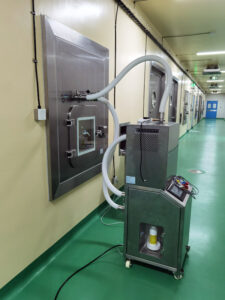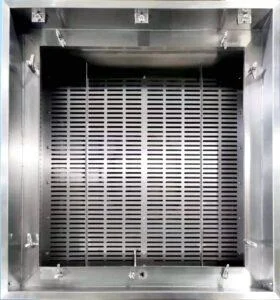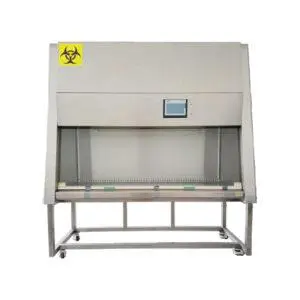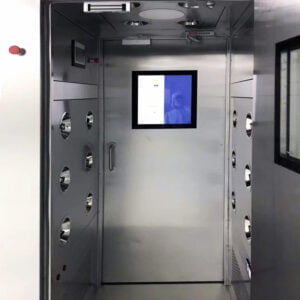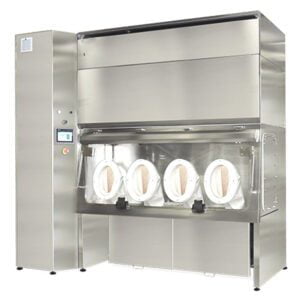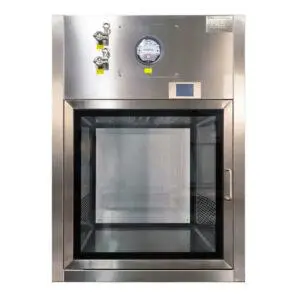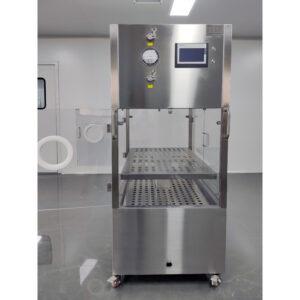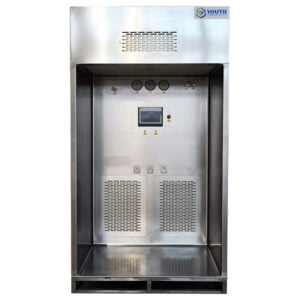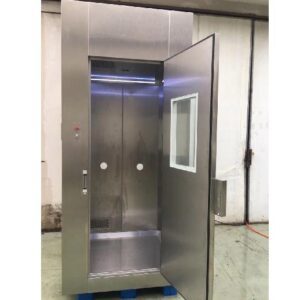
Material transfer in cleanrooms presents a persistent contamination control challenge. The pass box, a seemingly simple interlock chamber, is a critical barrier whose improper specification can introduce significant operational risk and compliance exposure. Professionals must navigate a complex landscape of technical specifications, material choices, and evolving regulatory expectations to select a system that ensures integrity without incurring unnecessary cost. Misconceptions about static versus dynamic performance or underestimating total lifecycle costs are common pitfalls that compromise facility control strategies.
The 2025 landscape demands a more sophisticated approach. Revised guidelines like EU GMP Annex 1 emphasize a holistic, risk-based contamination control strategy, shifting focus from periodic validation to continuous, data-driven assurance. This evolution makes understanding the full spectrum of pass box features—from core filtration performance to smart connectivity—essential for future-proofing cleanroom operations and safeguarding product quality.
Static vs. Dynamic Pass Boxes: Core Differences Explained
Defining the Operational Principle
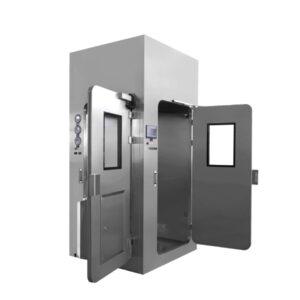
The fundamental distinction lies in the method of contamination control. A static pass box is a sealed chamber with no internal airflow system. It relies entirely on the pressure differentials and cleanliness of the adjoining rooms to prevent cross-contamination. Its design is passive, making it suitable only for transfers between areas of equal classification, such as ISO Class 8 to ISO Class 8. Industry experts recommend its use exclusively in lower-risk workflows where the primary need is physical segregation, not active air cleaning.
Application and Risk Assessment
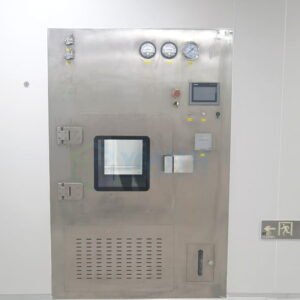
Selecting the wrong type is a critical error. A dynamic pass box incorporates an integral fan and HEPA filtration system to actively create and maintain a controlled, clean environment—often ISO Class 5—within the chamber itself. This active control is mandatory for transfers across different cleanliness zones or when higher assurance is required for sensitive materials. According to research from regulatory guidelines, the choice must be dictated by a thorough contamination risk assessment of the transfer workflow. Over-specifying with a dynamic unit adds unnecessary cost, while under-specifying with a static unit introduces unacceptable risk.
Comparative Decision Framework
The following table clarifies the core differentiators to inform a risk-based selection:
| Feature | Static Pass Box | Dynamic Pass Box |
|---|---|---|
| Airflow Principle | Sealed, no internal system | Integral fan & HEPA |
| Internal Cleanliness | Relies on room differentials | Actively maintains ISO Class 5 |
| Typical Application | Equal classification transfers | Different classification transfers |
| Decontamination Method | UV-C surface treatment | HEPA air filtration |
| Risk Tier | Lower risk workflows | Higher risk assurance |
Source: EU GMP Annex 1. This guideline mandates appropriate design and qualification of material transfer devices based on contamination risk, directly informing the selection criteria between static and dynamic types.
Key Performance Specs: Airflow, Recovery, and Particle Counts
The Interdependent Performance Ecosystem
For dynamic units, performance is quantified by a linked system of parameters. The average face velocity of HEPA-filtered air is typically maintained between 0.36 m/s and 0.54 m/s (70 fpm ±20%). This velocity ensures effective laminar flow and particle sweeping. However, this metric alone is insufficient. It directly governs the recovery time—the period required for the interior particle count to return to its specified limit after a door opening event. A drop in velocity cascades into longer recovery times.
Validating to the Ultimate Benchmark
The definitive performance benchmark is the non-viable particle count, which must conform to ISO 14644-1 limits. For an ISO Class 5 environment, this means ≤ 3,520 particles/m³ for particles ≥0.5µm. Recovery time testing validates that the unit can re-establish this condition within 2 to 5 minutes post-disturbance. In our validation protocols, we consistently find that monitoring these parameters in concert is crucial; an individual metric within tolerance does not guarantee overall system integrity.
Specification Ranges and Limits
The target performance envelope for a dynamic pass box is defined by the following key parameters:
| Parameter | Specification Range | Target / Limit |
|---|---|---|
| Face Velocity | 0.36 – 0.54 m/s (70 fpm ±20%) | ISO Class 5 maintenance |
| Recovery Time | 2 – 5 minutes | Post-door opening |
| Particle Count (≥0.5µm) | ≤ 3,520 particles/m³ | ISO Class 5 limit |
Source: ISO 14644-1. This standard defines the particle concentration limits for ISO Class 5 cleanrooms, which is the benchmark for dynamic pass box performance and recovery time validation.
Material Construction: Comparing 304 vs. 316L Stainless Steel
The Foundation of Cleanability and Durability
Austenitic stainless steel is the standard for internal chambers due to its durability and cleanability. The critical decision lies in the grade selection. Grade AISI 304 stainless steel offers excellent general corrosion resistance and is suitable for most controlled environments using standard cleaning agents. Its performance is proven and cost-effective for many applications.
When Enhanced Resistance is Required
Grade 316L stainless steel, with its added molybdenum content, provides superior resistance. It is essential for environments exposed to aggressive cleaning agents, acids, chlorides, or in stringent pharmaceutical and biotech applications. The marginally higher upfront investment mitigates risk of pitting corrosion and extends the unit’s operational lifespan in corrosive conditions. Supplier fabrication quality is paramount; all interior seams must be welded and polished to a smooth, crevice-free finish, typically 220-240 grit, to prevent particulate traps.
Material Selection Guide
The choice between grades hinges on the operational environment and cleaning regimen:
| Property | AISI 304 Stainless Steel | AISI 316L Stainless Steel |
|---|---|---|
| Corrosion Resistance | Excellent, general purpose | Enhanced, with molybdenum |
| Chemical Resistance | Good for standard cleaners | Superior for acids/chlorides |
| Typical Application | Most controlled environments | Pharmaceutical, biotech, corrosive |
| Surface Finish | 220-240 grit, polished welds | 220-240 grit, polished welds |
| Cost Implication | Lower upfront cost | Higher upfront investment |
Source: Technical documentation and industry specifications.
HEPA Filtration Systems: Specifications and Filter Integrity
Two-Stage Filtration Architecture
The filtration system is the core of a dynamic pass box’s contamination control. It employs a staged approach: a coarse pre-filter (G4 grade) captures larger particulates, protecting the main HEPA filter from premature loading. The main HEPA filter is typically rated H13 (99.95% efficient on 0.3 µm particles) or H14 (99.995% efficient). Filter integrity is non-negotiable and is assured via in-situ testing using a dedicated port for an upstream aerosol challenge, such as DOP/PAO testing.
Monitoring and Lifecycle Management
Performance is continuously monitored via a differential pressure gauge across the HEPA filter. A rising pressure indicates filter loading and signals the need for replacement. Filter management is a primary driver of operational cost. Pre-filters require replacement every 3-6 months, while HEPA filters typically last 1-3 years depending on the environment. Easily overlooked details include the accessibility of the filter housing; a design that simplifies service reduces downtime and labor costs.
Filtration System Components
A clear understanding of the filtration subsystem is key for maintenance planning:
| Component | Specification / Rating | Replacement Frequency |
|---|---|---|
| Pre-filter | G4 grade (coarse) | 3 – 6 months |
| Main HEPA Filter | H13 (99.95% @ 0.3µm) or H14 (99.995%) | 1 – 3 years |
| Integrity Test | In-situ DOP/PAO challenge | Periodic, per validation |
| Performance Monitor | Differential pressure gauge | Continuous monitoring |
Source: Technical documentation and industry specifications.
Operational Costs and Total Cost of Ownership (TCO)
Moving Beyond Purchase Price
The initial capital expenditure is a minor component of TCO. Recurring filter replacement constitutes a significant, predictable ongoing expense. Energy consumption from the integral fan motor adds continuously to operational costs, a factor increasingly addressed by high-efficiency, variable-speed EC motor designs. These hidden costs accumulate over the equipment’s lifespan, often surpassing the initial investment.
The High Cost of Failure
Unscheduled downtime carries substantial hidden costs. Interlock failures, performance degradation, or filter blinding disrupt workflows and pose compliance risks. Investing in a robust preventative maintenance program—including regular seal inspections, performance verification, and interlock checks—is essential to avoid these failures. Furthermore, comprehensive operator training on SOPs protects the capital investment by preventing misuse, such as premature door openings that stress the system.
Comprehensive TCO Analysis
A strategic procurement decision requires evaluating all cost factors:
| Cost Category | Typical Components | Impact on TCO |
|---|---|---|
| Recurring (Filters) | Pre-filters & HEPA replacements | Significant ongoing expense |
| Energy Consumption | Integral fan motor operation | Additive operational cost |
| Preventative Maintenance | Seal inspections, performance checks | Avoids costly downtime |
| Training & Compliance | Operator SOP adherence programs | Protects capital investment |
| Unscheduled Downtime | Interlock failures, performance drops | Hidden workflow disruption cost |
Source: Technical documentation and industry specifications.
Critical Design Parameters for 2025: Data and Connectivity
The Shift to Continuous Assurance
The regulatory trajectory, emphasized in the revised EU GMP Annex 1, demands a move from periodic validation to continuous, data-driven monitoring. This makes integrated sensors for real-time measurement of airflow, differential pressure, and particle counts a baseline expectation. The data from these sensors must be actionable.
Ensuring Data Integrity and Integration
Connectivity via standard protocols like Modbus or Ethernet to facility Building Management Systems (BMS) is now essential. Data logging must comply with ALCOA+ principles and electronic records standards (21 CFR Part 11/EU Annex 11), providing secure, traceable audit trails. This enables real-time performance alerts, trend analysis, and predictive maintenance, transforming the pass box from a passive barrier into an intelligent node in the contamination control strategy. Documentation integrity is now as critical as physical performance.
2025 Design Requirements
The following parameters define the next generation of pass box design:
| Parameter | 2025 Requirement | Purpose / Standard |
|---|---|---|
| Integrated Sensors | Airflow, pressure, particle counts | Continuous monitoring |
| Connectivity Protocol | Modbus, Ethernet to BMS | Real-time data integration |
| Data Logging | ALCOA+ principles, audit trail | 21 CFR Part 11 / EU Annex 11 compliance |
| Validation Evidence | Electronic IQ/OQ/PQ records | Data-driven performance assurance |
Source: EU GMP Annex 1. The revised guideline emphasizes a holistic, data-driven contamination control strategy, mandating continuous monitoring and data integrity for equipment like pass boxes.
Selecting the Right Pass Box for Your Cleanroom Application
Initiating with a Risk Assessment
Selection is a strategic exercise that begins with a detailed risk assessment of the transfer process. Key questions define the path: Are the adjoining areas of equal or different classifications? What are the physical dimensions, weight, and decontamination needs of the materials? The answers dictate the fundamental choice between static and dynamic types, chamber size, and interior configuration.
Evaluating Advanced Feature Integration
For higher-risk applications, advanced decontamination features become critical. UV-C cycles provide surface decontamination, while integrated Vaporized Hydrogen Peroxide (VHP) cycles transform a pass box into an active bio-decontamination station—a key consideration for sterile processing or potent compound handling. Furthermore, technological convergence is creating hybrid “smart chambers” that offer isolator-level containment for advanced therapies, blurring the traditional lines between equipment categories.
Partnering with the Right Supplier
Technical specifications are only part of the equation. Supplier evaluation must prioritize regulatory support and validation documentation capability. A supplier must provide comprehensive Installation, Operational, and Performance Qualification (IQ/OQ/PQ) protocols and support their execution. They should also offer expert guidance on integrating their modular cleanroom transfer devices into your specific workflow, ensuring the selected unit functions as a validated component of your overall control strategy.
Validation and Maintenance: Ensuring Long-Term Performance
The Validation Lifecycle Mandate
Adherence to a formal validation lifecycle—Installation (IQ), Operational (OQ), and Performance (PQ) Qualification—is mandatory under GMP. IQ verifies correct installation per design specs. OQ confirms operational functions within defined ranges. PQ provides the critical evidence that the unit consistently performs its intended function in the actual operating environment. This lifecycle creates the documented evidence base for regulatory compliance.
Addressing the Human Factor
Validation data often reveals the greatest risk point: personnel behavior, not hardware failure. Procedural deviations, like bypassing interlocks or premature door opening, can instantly nullify system performance. Therefore, validation must extend beyond technical checks to include verification of SOP adherence and the effectiveness of operator training programs. The door interlock system itself is a single point of failure; its regular functional testing is paramount.
Sustaining Performance Through Maintenance
Long-term reliability depends on a sustained maintenance program informed by continuous monitoring data. This program should schedule filter changes based on differential pressure trends, periodic seal inspections, and routine interlock verification. This integrated approach of rigorous initial validation followed by proactive, data-informed maintenance ensures the pass box delivers reliable, long-term performance as a trusted component of the facility’s contamination control strategy.
Specifying a pass box requires balancing technical performance, material suitability, lifecycle cost, and future-ready data capabilities. Prioritize a risk-based selection between static and dynamic principles, invest in material construction that matches your cleaning chemistry, and mandate connectivity for continuous assurance. The validation dossier is your evidence of control, but sustained performance hinges on disciplined maintenance and operator compliance.
Need professional guidance on integrating a validated material transfer solution into your cleanroom strategy? The engineers at YOUTH specialize in translating these technical parameters into reliable, compliant cleanroom equipment. Contact us to discuss your specific application requirements and validation support needs. You can also reach our technical team directly at mailto:[email protected] for preliminary specifications.
Frequently Asked Questions
Q: How do you decide between a static and dynamic pass box for material transfer?
A: Choose a static pass box only for transfers between rooms of identical cleanliness classification, as it lacks internal air control. A dynamic pass box, with its integrated fan and HEPA filter, actively creates an ISO Class 5 environment and is mandatory for transfers between zones of different cleanliness or when higher contamination assurance is needed. This means facilities handling sterile or potent compounds must select dynamic technology to mitigate cross-contamination risk.
Q: What are the critical performance specifications for a dynamic pass box?
A: Performance hinges on three linked parameters: HEPA-filtered airflow velocity (0.36-0.54 m/s), recovery time to ISO Class 5 limits after door opening (2-5 minutes), and final particle counts meeting ISO 14644-1 standards. A drop in airflow directly degrades recovery and increases particles. For projects where material transfer frequency is high, you must validate that the unit consistently meets all three specifications under simulated operational loads.
Q: When is 316L stainless steel necessary instead of standard 304 for the chamber?
A: Upgrade to 316L stainless steel when the environment involves aggressive cleaning agents, acidic solutions, or chlorides, as its molybdenum content provides superior corrosion resistance. Standard 304 grade is suitable for most general controlled environments. This means pharmaceutical or biotech facilities using sporicidal cleaners should prioritize 316L construction to ensure long-term chamber integrity and avoid surface degradation that could harbor contaminants.
Q: How does HEPA filter management impact total cost of ownership?
A: Total cost is dominated by recurring filter changes, not the initial purchase. Pre-filters typically require replacement every 3-6 months, while the main HEPA filter (H13/H14 rated) needs changing every 1-3 years, with costs amplified by service accessibility. If your operation runs continuously, plan for these predictable expenses and factor in energy consumption from the fan motor to build an accurate long-term operational budget.
Q: What validation approach is required to ensure long-term pass box performance?
A: You must execute a full IQ/OQ/PQ protocol under GMP, but performance qualification often reveals the greatest risk is operator error, not equipment failure. Validation must therefore include verifying SOP adherence and interlock system reliability, as procedural deviations can instantly compromise contamination control. This means your validation plan should integrate personnel training effectiveness checks alongside the technical tests mandated by EU GMP Annex 1.
Q: Why are data connectivity features becoming critical for pass box design?
A: Regulatory expectations are shifting toward continuous, data-driven monitoring, making integrated sensors for airflow, pressure, and particles essential. Connectivity via Modbus or Ethernet to a BMS enables real-time alerts, predictive maintenance, and audit trails compliant with ALCOA+ and electronic records standards like 21 CFR Part 11. For facilities building a holistic contamination control strategy for 2025, you should prioritize suppliers offering this connectivity to support proactive quality management.
Q: How do you assess the need for advanced decontamination features like UV-C or VHP cycles?
A: Integrate UV-C or Vaporized Hydrogen Peroxide cycles when transferring materials into higher-classification zones or handling sterile components, as these features transform a pass box into an active decontamination station. This assessment is part of a broader transfer workflow risk analysis. If your application involves advanced therapies or potent compounds, expect to evaluate hybrid “smart chamber” designs that offer isolator-level containment assurance.
Related Contents:
- VHP Pass Box Market Forecast: 2025-2030 Growth Analysis
- VHP Pass Box Validation: IQ/OQ/PQ Compliance Checklist
- VHP vs Traditional Pass Boxes: Key Differences Compared
- The Complete Pass Box Selection and Implementation Guide for Cleanroom Contamination Control: 2025 Edition with GMP and ISO 14644 Compliance Framework
- GMP Compliant Air Filters | FDA Requirements Cleanroom Validation
- VHP Pass Box Pressure Control: ISO 14644 Compliance
- Pass Box Pressure Differential Requirements: How to Maintain Optimal Airflow Between Cleanroom Zones
- HEPA Housing Box Static Pressure Ratings & Airflow Design
- Custom-Sized HEPA Housing Box Manufacturing Guidelines