Maintaining proper pressure differentials between cleanroom zones is a non-negotiable requirement for contamination control. The pass box, a seemingly simple transfer chamber, is a critical control point where this pressure integrity is most vulnerable. A failure here—whether from incorrect selection, poor maintenance, or flawed operation—can instantly compromise product quality and facility classification. This article addresses the precise technical and procedural controls needed to ensure pass boxes support, rather than disrupt, your cleanroom’s pressure cascade.
The stakes are particularly high in regulated environments like pharmaceuticals and biotechnology, where pressure differentials are a primary engineering control for particulate and cross-contamination. With increasing material transfer frequencies, especially in advanced therapies, the pass box’s role has evolved from a passive barrier to an active, validated component of the contamination control strategy. Understanding its integration into the broader HVAC and operational workflow is essential for sustainable compliance.
Understanding Pass Box Types: Static vs. Dynamic
Defining the Core Operational Philosophies
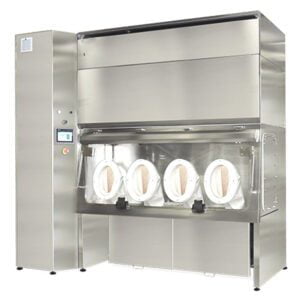
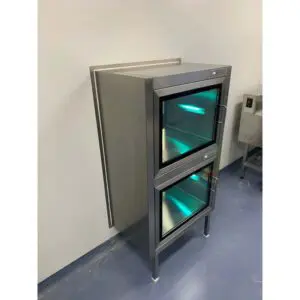
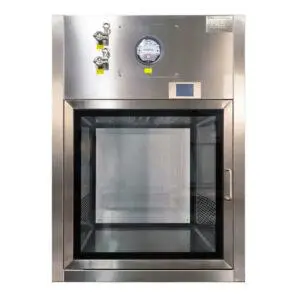
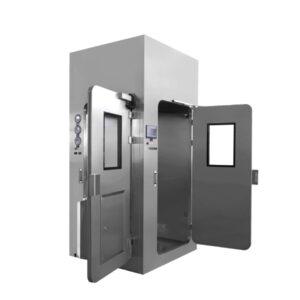
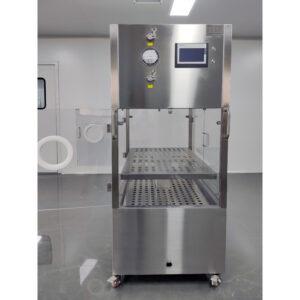
The choice between static and dynamic pass boxes is a direct reflection of your contamination control risk assessment and pressure cascade design. This decision dictates the fundamental capability of the transfer system. A static pass box is a sealed, passive chamber with no internal airflow generation. It relies entirely on the existing room pressure differential and a mechanical interlock to maintain isolation, making it suitable only for transfers between zones of equal or similar classification.
The Active Protection of Dynamic Systems
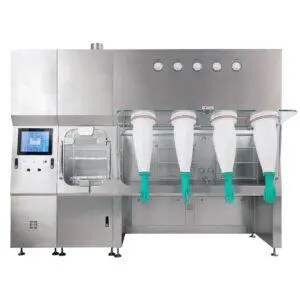
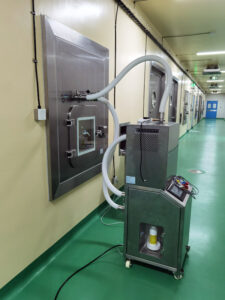
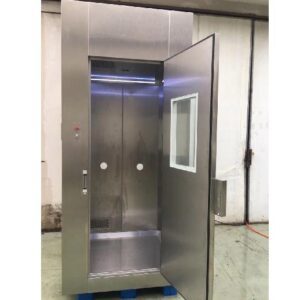
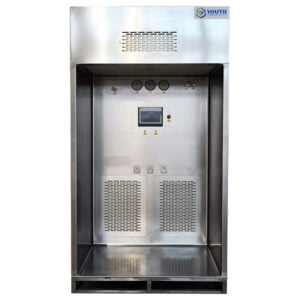
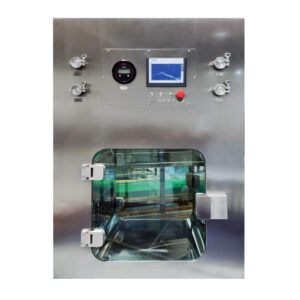
In contrast, a dynamic pass box incorporates an integrated fan and HEPA filtration system to create and maintain an ISO Class 5 environment internally. This active decontamination is mandatory for transferring materials into a higher-classification, higher-pressure cleanroom. The unit protects the cleaner zone by ensuring any particulate introduced during loading is captured and purged before the inner door can be opened. Industry experts recommend dynamic systems for any transfer crossing a pressure boundary where the receiving environment is cleaner.
Evaluating the Continuous-Flow Alternative
A proven third design, the continuous-flow pass box, challenges the traditional binary choice. It uses precisely calculated overflow openings to leverage the room’s own HVAC-driven pressure cascade, creating a constant, unidirectional airflow from the high-pressure zone to the low-pressure zone without internal fans. This design achieves rapid particle recovery for specific applications while offering lower maintenance and operational costs. We compared static, dynamic, and continuous-flow models and found the optimal choice is never generic; it is a direct function of the specific pressure differential and transfer risk profile.
| Type | Primary Function | Key Operational Feature |
|---|---|---|
| Static | Equal-pressure zone transfers | Passive, sealed chamber |
| Dynamic | Entry to higher-pressure zones | Integrated HEPA/fan system |
| Continuous-Flow | Rapid particle recovery | Overflow openings, no fans |
Source: Technical documentation and industry specifications.
How Pass Boxes Maintain Cleanroom Pressure Cascades
Integration into the HVAC Pressure Map
A pass box must function as a supporting node within the cleanroom’s unidirectional pressure cascade, which flows from the cleanest, highest-pressure area to the less-clean, lower-pressure areas. Its design and operation cannot create a short-circuit. Static units act as simple airlock barriers, preserving isolation so long as their door seals are intact and interlocks functional. Their effectiveness is wholly dependent on the designed differential between the two connected rooms.
Active Management of Airflow Relationships
Dynamic and continuous-flow models are engineered to actively manage this pressure relationship. For instance, a dynamic pass box transferring items from a corridor into a core cleanroom must be designed so its internal fan pressure and airflow pattern do not compromise the positive pressure of the cleaner zone. The continuous-flow design explicitly operationalizes the cascade principle, where calculated airflow from the high-pressure room enters the pass box and exhausts to the lower-pressure area, maintaining the differential constantly. A common mistake is specifying a pass box in isolation without coordinating its airflow requirements with the facility’s HVAC balancing from the project outset.
The Critical Role of Interlocks and Pressure Gauges
Interlocks as the Enforcement Mechanism
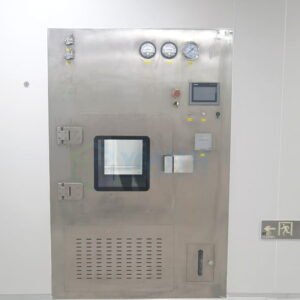
The interlock system is the critical bottleneck preventing catastrophic pressure equalization. Its mechanical or electronic function ensures both doors cannot be open simultaneously. In dynamic models, this interlock typically integrates with the fan control to enforce a complete purge cycle before allowing access to the clean side. This single point of failure requires regular validation; a malfunctioning interlock renders the pass box useless for its core containment purpose.
Pressure Gauges for Predictive Maintenance
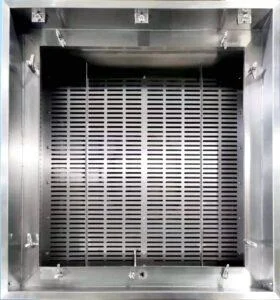
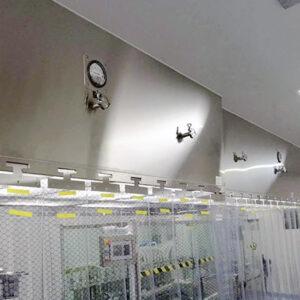
The differential pressure gauge serves a dual, vital function. Primarily, it monitors the pressure drop across the HEPA filter in a dynamic unit. As the filter loads with particulates, resistance increases. Manufacturers specify a final pressure drop (typically 250-450 Pa) to trigger replacement, enabling a strategic shift from calendar-based to condition-based maintenance. This proactive approach prevents the reduced airflow that occurs with a clogged filter, which can weaken support for the room pressure cascade.
Gauges as System Performance Indicators
Secondarily, the pressure gauge verifies the unit is generating the correct airflow to maintain its designed pressure relationship with the connected rooms. It provides a real-time, at-a-glance confirmation of system health. From my experience in facility audits, an uncalibrated or ignored pressure gauge is a leading indicator of broader procedural gaps in contamination control.
| Component | Primary Function | Key Metric/Threshold |
|---|---|---|
| Interlock System | Prevent simultaneous door opening | Mechanical/electronic enforcement |
| Pressure Gauge | Monitor HEPA filter load | 250-450 Pa final drop |
| Pressure Gauge | Verify airflow relationship | Real-time differential monitoring |
Source: Technical documentation and industry specifications.
Operational Protocols to Prevent Pressure Equalization
The Non-Negotiable Transfer Cycle
Strict, documented operational protocols are the human-factor safeguard that complements engineered controls. The interlock-enforced transfer cycle is paramount. For dynamic boxes, personnel must understand that the fan must complete its full purge sequence—indicated by a visual or audible signal—before the opposite door unlocks. Attempting to bypass this cycle, even momentarily, disrupts the controlled airflow and risks contaminant ingress.
Measuring Recovery for Assurance
A key performance metric validating these protocols is recovery time—the period required for the internal particle count to reduce by a factor of 100 after door closure. Effective dynamic pass boxes achieve this in under 3 minutes, rapidly re-establishing a stable, protective environment. This metric should be tested during qualification and monitored periodically.
Standardization for Complex Workflows
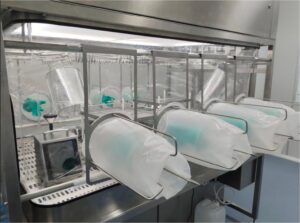
These procedures must be standardized, especially with the rise of Advanced Therapy Medicinal Products (ATMPs). High-frequency transfers of patient-specific materials demand flawless, repeatable processes to prevent cross-contamination. This operational reality points to the need for pass boxes designed for modular containerization and integrated basket-based logistics to streamline these critical, high-risk transfers.
| Protocol Element | Key Requirement | Performance Metric |
|---|---|---|
| Interlock Cycle | Enforce complete purge | Mandatory before door unlock |
| Particle Recovery | Re-establish stable environment | Under 3 minutes |
| Standardization | Ensure repeatable processes | Critical for ATMP transfers |
Source: Technical documentation and industry specifications.
Maintenance Impact on Airflow and Filter Performance
Filter Replacement as a Critical Procedure
Scheduled maintenance is non-negotiable for sustaining designed airflow and pressure differentials. Filter replacement in a dynamic pass box represents a high-risk procedural window. A clogged HEPA filter increases system resistance, directly reducing airflow volume. This diminished airflow can fail to support the designed pressure cascade, potentially allowing contamination to backflow into cleaner zones. Replacement at the specified pressure drop is essential but requires a controlled shutdown and meticulous handling to avoid damaging the filter media or installing it against the marked airflow direction—an easily overlooked detail with severe consequences.
The Insidious Risk of Seal Degradation
Similarly, worn or damaged door seals on any pass box type allow uncontrolled air leakage, silently compromising isolation integrity. Regular inspection and replacement of gaskets are fundamental, low-cost, high-impact maintenance activities. The calibration of differential pressure gauges is another routine but critical task; an inaccurate gauge provides false assurance.
Evaluating Total Cost of Ownership
This ongoing maintenance burden underscores the strategic value of selecting the appropriate pass box type. For applicable scenarios, continuous-flow designs offer a compelling advantage due to their lack of internal fans and filters, significantly reducing long-term operational expenses and validation complexity. The decision matrix always balances upfront capital cost against lifecycle operational risk and cost.
Selecting the Right Pass Box for Your Pressure Differential
Application Boundaries Dictate Choice
Selecting the correct pass box is a direct, rule-based function of your pressure differential strategy. The application boundary is strict: static boxes are confined to equal-pressure zones, while dynamic boxes are required for transfers into higher-pressure, cleaner zones. This choice reflects a calculated trade-off between upfront cost and operational contamination insurance. Attempting to use a static box where a dynamic unit is needed creates an unacceptable and often undetected contamination risk.
Materials as Compliance Enablers
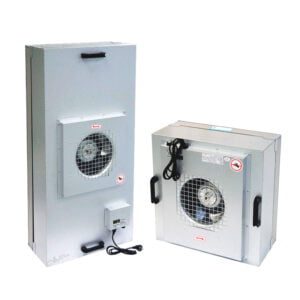
Beyond type, material and finish specifications are explicit compliance enablers, not preferences. Construction in 304 or 316L stainless steel with smooth, radiused internal finishes (surface roughness Ra ≤ 0.5µm) is foundational for GMP-compliant cleaning and preventing particle shedding. Selecting inferior materials or poor welds creates a permanent compliance obstacle, increasing long-term validation costs and contamination risk. The initial procurement decision is therefore critical for lifecycle value and facility integrity. For facilities requiring dynamic protection, evaluating the specific performance characteristics of a high-performance fan filter unit at the core of the pass box design is a essential technical step.
Validating and Calibrating Pass Box Performance
Testing Against International Standards
Validation is the process that ensures the pass box performs to its design specifications within the cleanroom ecosystem. This involves a series of objective tests against recognized standards like ISO 14644-3. Critical tests include measuring airflow rates to ensure correct volume, verifying leak tightness of the chamber and filters, timing particle recovery rates, and rigorously testing interlock functionality. This suite of tests confirms the unit operates as an integrated part of the pressure cascade.
The Strategic Shift in Supplier Value
Calibration of differential pressure gauges is a periodic requirement within this validation framework. The strategic implication is that supplier value is rapidly shifting from providing hardware alone to offering comprehensive validation and ecosystem support. Competitive advantage now lies in providing detailed documentation packages (DQ/IQ/OQ protocols) and factory acceptance testing, which significantly reduces the facility’s own qualification burden. This trend is preparing the ground for next-generation smart pass boxes that will function as networked contamination control nodes.
| Validation Test | Parameter Measured | Governing Standard |
|---|---|---|
| Airflow Rates | System performance | ISO 14644-3 |
| Recovery Time | Particle reduction speed | ISO 14644-3 |
| Leak Tightness | Pressure integrity | ISO 14644-3 |
| Interlock Function | Safety and control | ISO 14644-3 |
Source: ISO 14644-3: Cleanrooms and associated controlled environments — Part 3: Test methods. This standard provides the normative test methods, including containment leak testing (Annex B.13), which is essential for verifying the pressure differential integrity and leakage of pass boxes.
Key Design Considerations for Optimal Airflow Control
Holistic Integration with Workflow and Layout
Optimal airflow control requires design integration that looks beyond the pass box itself. Placement within the physical pressure cascade is crucial, but so is compatibility with material handling workflows. Designers must consider the unit’s interface with trolley systems, cleanroom basket dimensions, and the ergonomics of the transfer process. A poorly placed pass box can become a bottleneck or encourage procedural shortcuts that compromise pressure integrity.
Future-Proofing with Smart Systems
The trajectory is clearly toward smart, integrated systems. Future pass boxes will likely incorporate advanced decontamination cycles (e.g., UV-C or Vaporized Hydrogen Peroxide) and sophisticated data logging that feeds real-time performance analytics into facility management systems. Investing in modular or upgradeable systems today can future-proof operations against evolving regulatory and operational demands.
Decision-Driven by Formal Risk Assessment
Ultimately, every design decision—from selecting static versus dynamic type to specifying material finish and data connectivity—must be driven by a formal risk assessment of the materials and processes involved. The pass box is not just a piece of equipment; it is a physical manifestation of the facility’s quality culture and its commitment to maintaining unwavering pressure differentials.
Effective pass box management hinges on three decision points: aligning the equipment type (static/dynamic/continuous-flow) with your specific pressure differential map, enforcing strict procedural and maintenance disciplines to preserve engineered controls, and selecting units based on total lifecycle value including validation support. Neglecting any of these areas introduces a measurable contamination risk.
Need professional guidance to specify and validate pass boxes for your cleanroom pressure cascade? The engineers at YOUTH combine technical expertise with practical validation experience to help you implement reliable, compliant transfer solutions. For a direct consultation on your specific application, you can also Contact Us.
Frequently Asked Questions
Q: When should we choose a dynamic pass box over a static model for our cleanroom transfers?
A: Select a dynamic pass box when moving materials into a higher-classification, higher-pressure cleanroom, as its integrated HEPA filters and fans actively create an ISO Class 5 environment to protect the cleaner zone. Static models are only suitable for transfers between zones of equal or similar classification where active decontamination isn’t required. This means facilities with a strict pressure cascade must invest in dynamic units for critical ingress points to maintain contamination control.
Q: How do differential pressure gauges on pass boxes support predictive maintenance?
A: These gauges primarily monitor the pressure drop across the internal HEPA filter, which increases as the filter loads with particles. Manufacturers specify a final pressure drop, typically between 250 and 450 Pa, to signal the need for replacement. This enables a shift from calendar-based to condition-based maintenance. For projects where minimizing operational downtime is critical, plan for regular gauge calibration and use this data to schedule filter changes proactively, avoiding unexpected airflow loss.
Q: What are the key validation tests for a new pass box installation?
A: Validation must confirm the unit performs to its design specifications within your cleanroom’s pressure cascade. Core tests include verifying airflow rates, measuring particle recovery time, confirming leak tightness of the chamber and seals, and ensuring interlock functionality prevents simultaneous door opening. These tests align with methods specified in standards like ISO 14644-3. If your operation requires GMP compliance, expect to require comprehensive documentation (DQ/IQ/OQ) from your supplier to reduce your internal qualification burden.
Q: Why are material finishes a critical compliance factor in pass box selection?
A: Construction in 304 or 316L stainless steel with smooth, radiused finishes (surface roughness Ra ≤ 0.5µm) is foundational for GMP-compliant cleaning and preventing particle shedding. Inferior materials create permanent cleaning challenges and increase long-term contamination risk. This means the initial procurement decision is critical for lifecycle value; selecting compliant materials avoids future validation obstacles and operational compromises, aligning the equipment with a true quality culture from the start.
Q: How does a continuous-flow pass box design maintain pressure differentials without internal fans?
A: This design uses precisely calculated overflow openings to leverage the room’s own HVAC-driven pressure cascade. Airflow from the connected high-pressure room enters the pass box and exhausts to the lower-pressure area, maintaining a constant differential and enabling rapid particle recovery. This systems-level integration requires upfront coordination with HVAC design during facility planning. For applications where reducing long-term maintenance is a priority, this lower-complexity solution can offer significant operational expense savings over dynamic models.
Q: What operational protocol is most critical for preventing pressure equalization during transfers?
A: The strict enforcement of the interlock-controlled transfer cycle is paramount. For dynamic boxes, the internal fan must complete its full purge cycle before the system unlocks the opposite door, preventing a disruptive breach of controlled airflow. A key performance metric validating this is recovery time, with effective units re-establishing a stable environment (100:1 particle reduction) in under 3 minutes after door closure. This means facilities handling high-frequency transfers, such as in ATMP production, must standardize and rigorously train staff on this procedure.
Related Contents:
- VHP vs Traditional Pass Boxes: Key Differences Compared
- VHP Pass Box Pressure Control: ISO 14644 Compliance
- VHP Pass Box Market Forecast: 2025-2030 Growth Analysis
- VHP Pass Box Validation: IQ/OQ/PQ Compliance Checklist
- Pass Box Working Principles Explained: Interlock Mechanisms, Airflow Dynamics, and UV Sterilization Cycle Design for Cleanroom Applications
- The Complete Pass Box Selection and Implementation Guide for Cleanroom Contamination Control: 2025 Edition with GMP and ISO 14644 Compliance Framework
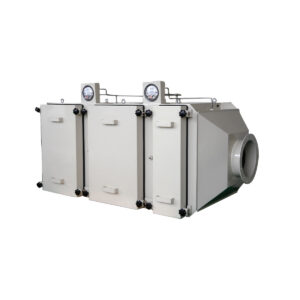
- HEPA Housing Box Static Pressure Ratings & Airflow Design
- Laboratory VHP Pass Box Applications: Research Best Practices
- Aerospace HEPA Housing Box Requirements & NASA Standards