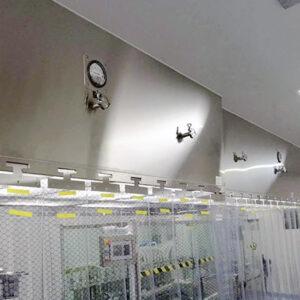
Choosing cleanroom equipment isn’t a catalog exercise. Your ISO classification drives everything—air change rates, filter coverage, HVAC complexity, and ultimately your capital expenditure and operational costs. Yet many project teams approach equipment selection backward, specifying components before defining their true contamination control requirements. This creates validation failures, budget overruns, and facilities that can’t maintain certification during routine operations.
The stakes are higher in 2025. Regulatory scrutiny has intensified across pharmaceutical, semiconductor, and medical device manufacturing. Your cleanroom must deliver consistent environmental performance while integrating real-time monitoring, maintaining data integrity under 21 CFR Part 11, and supporting your quality management system. This guide provides the technical framework for selecting, integrating, and validating cleanroom equipment that meets both your process requirements and your long-term operational objectives.
Understanding Cleanroom Classifications and Matching Equipment to Your ISO Class
ISO Classification Fundamentals and Cost Drivers
Your ISO class determines your equipment budget. ISO 14644-1 defines cleanroom classification by permissible particle counts per cubic meter. An ISO 5 environment allows 3,520 particles at 0.3 microns. ISO 8 permits 3,520,000 particles at the same size. This difference translates directly into air change rates, filter coverage, and system complexity. Lower ISO classes demand ULPA filtration at 99.999% efficiency on 0.12-micron particles. Higher classes function with HEPA filters at 99.97% efficiency on 0.3-micron particles. The equipment cost differential can reach 300-400%.
Process requirements drive your ISO class selection. Semiconductor wafer fabrication requires ISO 5 with strict ESD controls. Pharmaceutical packaging operates in ISO 7 with emphasis on surface cleanability and chemical resistance. I’ve seen facilities over-specify their ISO class, then struggle with excessive operational costs for air changes they don’t need. Match your classification to your actual contamination risks, not industry assumptions.
Air Change Rates and Filter Coverage Requirements
ISO 5 cleanrooms require 300-480 air changes per hour. ISO 8 cleanrooms need only 20. The difference fundamentally alters your HVAC design, energy consumption, and maintenance intervals. Filter coverage follows the same progression. ISO 5 demands 60-70% ceiling coverage with HEPA or ULPA fan filter units. ISO 8 requires just 4-5% coverage. Your CFM per square foot drops from 36-65 in ISO 5 to 4-8 in ISO 8. These parameters determine your air handler capacity, ductwork sizing, and makeup air requirements.
Temperature and humidity control tighten with stricter ISO classes. Some processes require ±1°C temperature stability and ±10% humidity control. This necessitates custom air handlers with oscillating valves and dedicated dehumidification systems. Standard HVAC equipment can’t deliver this precision. Your equipment selection must account for both particle control and environmental parameter stability.
ISO Class Environmental Control Requirements Comparison
| ISO Class | Air Changes Per Hour (ACH) | Filter Coverage | CFM Per Square Foot |
|---|---|---|---|
| ISO 5 (Class 100) | 300-480 | 60-70% | 36-65 |
| ISO 6 (Class 1,000) | 150-240 | 25-40% | 20-35 |
| ISO 7 (Class 10,000) | 60-90 | 15-20% | 10-15 |
| ISO 8 (Class 100,000) | 20 | 4-5% | 4-8 |
Note: HEPA filters (99.97% at 0.3μm) required for ISO 6-8; ULPA filters (99.999% at 0.12μm) required for ISO 5.
Source: ISO 14644-1:2015
Matching Equipment to Process-Specific Requirements
Your process defines equipment features beyond basic air cleanliness. Aseptic pharmaceutical processes require biological control with validated disinfection protocols. Hazardous material handling demands negative pressure rooms with dedicated exhaust and scrubbing systems. Semiconductor manufacturing needs precise humidity control to prevent static discharge. Each application adds specific equipment requirements that affect your capital and operational budgets.
Material compatibility matters for long-term performance. Chemical exposure requires 316L stainless steel construction and chemically resistant gaskets. Biological processes benefit from antimicrobial polypropylene surfaces in gowning areas. Generic equipment specifications fail when your cleaning agents degrade standard materials. Define your sanitization chemistry before finalizing equipment materials.
Selecting Core Equipment: From Laminar Flow Systems and HVAC to Pass-Throughs and Furniture
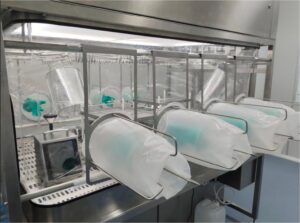
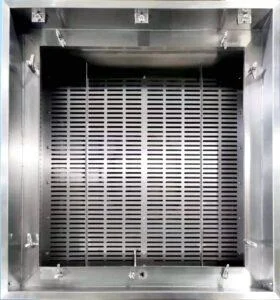
Laminar Flow Systems and HEPA/ULPA Fan Filter Units
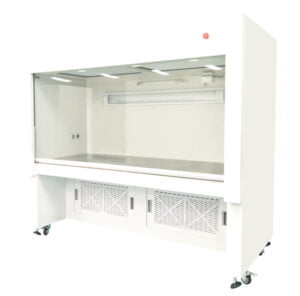
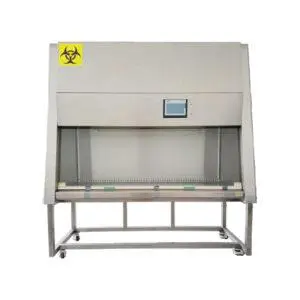
Laminar flow systems deliver unidirectional, particle-free air to your critical work zones. Your filter coverage percentage determines how many fan filter units you need. ISO 5 cleanrooms require 60-70% ceiling coverage, creating uniform downward airflow across the entire space. ISO 7 installations use localized laminar flow workstations to protect specific processes while maintaining lower air change rates in the surrounding room. This hybrid approach reduces capital costs by 40-50% compared to full ceiling coverage.
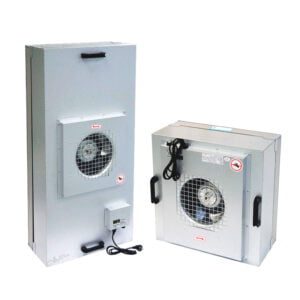
Fan filter unit selection depends on your ceiling grid and structural loading capacity. Standard units mount in T-bar ceiling systems with minimal structural support. High-velocity units reduce the number of filters needed but increase noise levels and require stronger mounting. I’ve specified low-profile units for retrofit projects where ceiling height constraints prevented standard installations. Verify your building’s load capacity before committing to equipment quantities.
ULPA filters cost 2-3 times more than HEPA filters and require more frequent replacement. Their 99.999% efficiency becomes necessary only for ISO 5 applications where submicron contamination affects yields. Pharmaceutical cleanrooms rarely need ULPA filtration unless handling potent compounds with nanogram exposure limits. Don’t over-specify filter efficiency—it drives replacement costs for your facility’s entire operational life.
HVAC System Design and Environmental Control
Your HVAC system is your largest capital expense and operational cost driver. It must regulate temperature, humidity, pressurization, and air change rates simultaneously. Cleanroom system design requires dedicated makeup air units to maintain positive pressure cascades between cleanroom zones. Recirculation air handlers process 85-90% of the airflow, reducing energy costs while maintaining particle control.
Custom air handlers become necessary when process requirements exceed ±2°C temperature or ±15% humidity tolerances. Oscillating control valves provide precise modulation of heating and cooling coils. Desiccant dehumidifiers maintain humidity below 30% RH for moisture-sensitive processes. These systems add $150-$250 per CFM to your HVAC budget compared to standard commercial equipment. Calculate your true environmental tolerances before specifying precision control systems.
Pressurization control prevents contamination migration between zones. Your cleanroom should maintain 0.02-0.03 inches water column positive pressure relative to adjacent spaces. This requires constant airflow monitoring and automatic damper adjustments as doors open or production equipment operates. Pressure differential monitors with alarming capabilities alert operators to system failures before contamination occurs.
Core Cleanroom Equipment Material Specifications
| Equipment Category | Approved Materials | Critical Specifications |
|---|---|---|
| Laminar Flow Systems | Stainless steel housing, HEPA/ULPA filters | Filter coverage per ISO class, unidirectional airflow |
| HVAC Systems | Corrosion-resistant metals, sealed ductwork | Temperature ±1°C, Humidity ±10%, positive pressurization |
| Furniture & Work Surfaces | Stainless steel, solid laminate, polypropylene | Non-shedding, radiused edges, sealed joints with mastic |
| Pass-Through Chambers | 316L stainless steel, chemical-resistant gaskets | Interlocked doors, HEPA filtration, pressure differential monitoring |
Source: ISO 14644-4:2022, ISPE GMP Guidelines
Cleanroom Furniture and Material Transfer Equipment
Furniture and work surfaces must be non-particulate shedding and fully cleanable. Stainless steel provides maximum durability and chemical resistance for ISO 5-6 applications. Solid laminate panels offer lower cost for ISO 7-8 cleanrooms while maintaining cleanability. All surfaces require radiused edges and sealed joints with mastic to prevent particle accumulation. Avoid laminate veneer over particleboard—it delaminates under repeated sanitization and sheds particles.
Polypropylene auxiliary furniture works well in gowning areas. The material resists sanitization chemicals and inhibits microbial growth. Mobile carts and shelving require caster wheels with non-marking, low-particulation materials. Storage cabinets need flush-mounted handles and continuous hinges to eliminate crevices where contamination accumulates.
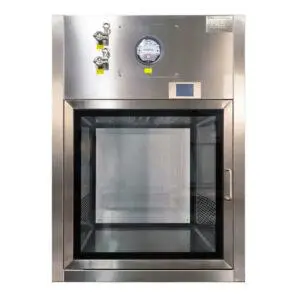
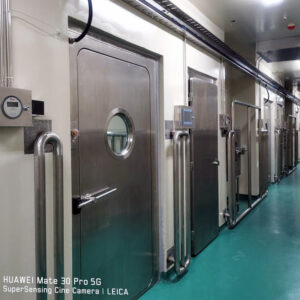
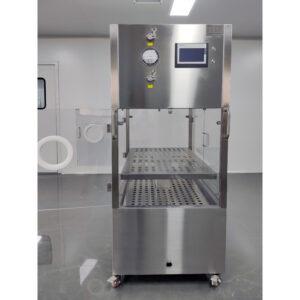
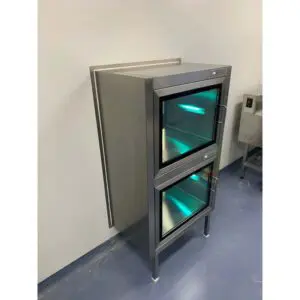
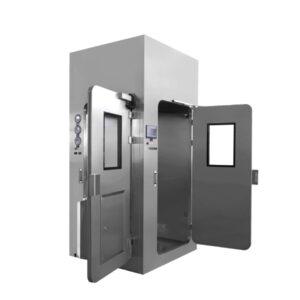
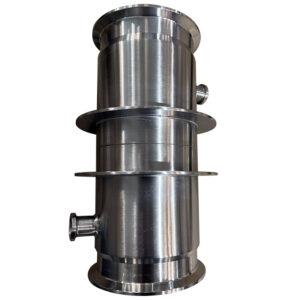
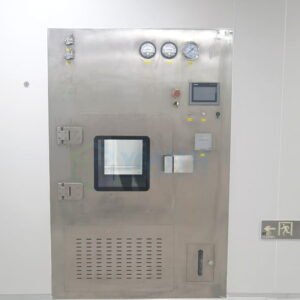
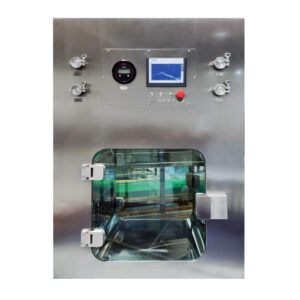
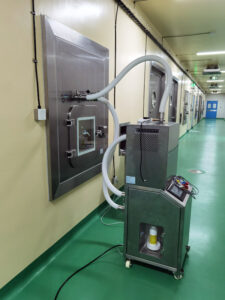
Pass-through chambers maintain cleanroom integrity during material transfer. Interlocked doors prevent simultaneous opening that would compromise pressure differentials. HEPA-filtered pass-throughs provide active air cleaning for critical transfers. Size your pass-through chambers to accommodate your largest containers plus 12-18 inches clearance for personnel access. Undersized pass-throughs force operators to compromise transfer procedures.
Integrating Advanced Monitoring and Control Systems for Data Integrity
Real-Time Environmental Monitoring Architecture
Real-time monitoring systems track particulate levels, temperature, humidity, and pressure differentials continuously. Particle counters sample air at predetermined intervals—typically every 60 seconds in critical zones. The system generates immediate alerts when parameters exceed action levels, enabling corrective action before batch rejection occurs. Modern systems provide 0.3, 0.5, 1.0, and 5.0 micron particle size discrimination, identifying contamination sources by characteristic particle distributions.
Sensor placement determines monitoring effectiveness. Position particle counters downstream of critical work zones to capture contamination generated by processes and personnel. Temperature and humidity sensors should avoid direct airflow from supply diffusers and heat-generating equipment. Pressure differential monitors require installation across doorways and between segregated zones. I’ve audited systems with poorly placed sensors that reported compliance while actual work zones exceeded limits.
Alert configuration requires thoughtful action and alert level establishment. Action levels trigger investigation but allow continued operation. Alert levels demand immediate process stoppage and remediation. Setting levels too close to specification limits generates false alarms and operator fatigue. Position alert levels at 75-80% of specification limits to provide intervention time before non-compliance.
Data Logging and Regulatory Compliance Integration
Data logging systems create tamper-proof records of environmental conditions for regulatory audits. Systems must comply with 21 CFR Part 11 requirements for electronic records—including audit trails, electronic signatures, and data encryption. Historical data enables trend analysis identifying gradual system degradation before failures occur. Your validation documentation must demonstrate data integrity throughout the acquisition, processing, storage, and retrieval chain.
Data retention policies should align with your product batch record retention requirements. Pharmaceutical manufacturers typically maintain 25-year data archives. Semiconductor facilities may need only 3-5 years. Cloud-based storage provides cost-effective long-term archiving with off-site redundancy. Ensure your data system supports export to common formats for cross-platform analysis.
Environmental Monitoring System Integration Components
| System Type | Monitoring Parameters | Data Integrity Features |
|---|---|---|
| Real-Time Particulate Counters | 0.3-5.0μm particle counts, concentration trends | Immediate alerts, automated reporting, calibration tracking |
| Environmental Monitoring System (EMS) | Temperature, humidity, differential pressure | Continuous logging, 21 CFR Part 11 compliance, audit trails |
| Building Management System (BMS) | HVAC performance, airflow, filter status | Automated control adjustments, predictive maintenance alerts |
| Integrated BMS-EMS Platform | All environmental parameters, equipment status | Unified dashboard, historical trend analysis, regulatory reporting |
Source: FDA 21 CFR Part 11, ISPE GMP Guidelines
Building Management System and Environmental Monitoring System Integration
Integrated BMS-EMS platforms automate cleanroom environmental control. The BMS monitors HVAC equipment status and adjusts operating parameters to maintain specifications. The EMS validates that adjustments achieve desired environmental conditions. Integration eliminates manual intervention and reduces response time to excursions from hours to minutes. Your system should support automatic escalation—alerting technicians, supervisors, and quality managers based on excursion severity and duration.
Predictive maintenance capabilities leverage monitoring data to schedule service before failures occur. Filter loading indicators track pressure drop across HEPA filters, triggering replacement when differential exceeds specifications. Compressor runtime hours predict refrigeration system service needs. These capabilities reduce unplanned downtime by 30-40% compared to reactive maintenance approaches. Calculate your true cost of cleanroom downtime before dismissing advanced monitoring as unnecessary.
Developing a Strategic Implementation Plan: Budgeting, Phasing, and Validation
Phased Implementation and Pilot Project Strategy
Phased implementation minimizes operational disruption and financial risk. Start with a pilot project covering one production line or process area. This identifies installation challenges, validates equipment performance, and refines procedures before full-scale rollout. Your pilot should represent your most demanding application—if it succeeds there, less critical areas will proceed smoothly. Budget 15-20% more time and resources for the pilot than subsequent phases to accommodate the learning curve.
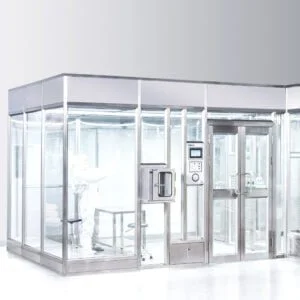
Modular cleanroom construction supports phased implementation better than conventional stick-built approaches. Prefabricated wall panels, ceiling systems, and integrated mechanical systems arrive pre-tested and ready for rapid installation. Your facility remains operational in adjacent areas during construction. I’ve managed modular installations completed in 6-8 weeks versus 16-20 weeks for stick-built equivalents. The speed premium costs 10-15% more but delivers faster return on investment.
Define clear success criteria before starting your pilot. Metrics should include particle count compliance, environmental stability, production throughput, and operator acceptance. Document issues systematically and implement corrective actions before proceeding to subsequent phases. Treating the pilot as a validation exercise rather than a learning opportunity guarantees repeated mistakes across your entire facility.
Factory Acceptance Testing and Site Validation Protocols
Factory Acceptance Testing (FAT) verifies modular cleanroom components before shipment. Manufacturers assemble wall panels, demonstrate HEPA filter integrity, and validate control system programming in their facility. You should witness FAT to verify compliance with specifications and identify issues while correction costs remain minimal. FAT documentation becomes part of your installation qualification package, streamlining site validation.
Site Acceptance Testing (SAT) confirms proper installation and startup performance. Test pressure differentials, air change rates, and filter integrity after installation. Verify control system functionality and alarm response. SAT demonstrates that installation didn’t damage components during shipping and assembly. Schedule SAT before beginning operational and performance qualification to avoid validating improperly installed equipment.
Cleanroom Validation Process Phases
| Qualification Phase | Testing Requirements | Documentation Deliverables |
|---|---|---|
| Factory Acceptance Testing (FAT) | Component verification, modular system integrity | Test protocols, vendor certificates, performance data |
| Installation Qualification (IQ) | Equipment installation verification, utility connections | As-built drawings, calibration records, material certifications |
| Operational Qualification (OQ) | System performance at operational parameters, alarm testing | Operating range verification, SOP validation, deviation reports |
| Performance Qualification (PQ) | Process simulation, worst-case scenarios, continuous monitoring | Statistical analysis, compliance certification, final validation report |
Source: ISO 14644 Series, ISPE GMP Guidelines
Long-Term Cost Planning and Hidden Expense Management
Budget for total cost of ownership, not just capital expenditure. Annual maintenance costs typically run 8-12% of initial equipment investment. Energy costs for HVAC operation often exceed $15-$25 per square foot annually in ISO 5-6 cleanrooms. Filter replacement happens every 2-4 years at $800-$1,500 per unit. A 2,000 square foot ISO 5 cleanroom with 65% filter coverage needs 80-100 filters per change cycle—that’s $80,000-$150,000 every 2-4 years.
Hidden costs emerge during operations. Unscheduled downtime for equipment failures costs $5,000-$25,000 per hour in lost production. Revalidation after modifications consumes significant resources. Training new operators requires 40-80 hours per person. These costs compound over your facility’s 15-25 year operational life. Front-loading capital investment in reliable equipment and comprehensive monitoring reduces long-term operational expenses by 20-30%.
Establishing Rigorous Contamination Control Protocols and Staff Training
Personnel Gowning Procedures and Sequence Control
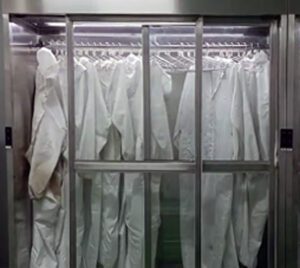
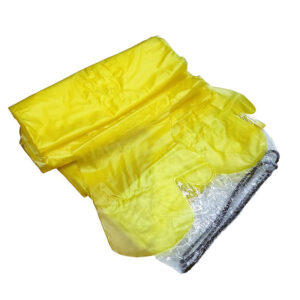
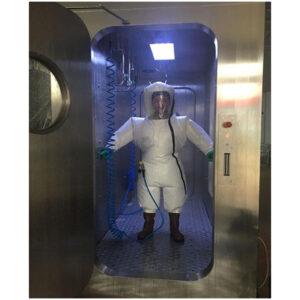
Gowning procedures are your primary contamination control mechanism. Personnel generate 100,000-1,000,000 particles per minute through skin shedding, clothing fibers, and movement. Proper gowning reduces this to 5,000-10,000 particles per minute in ISO 5-6 environments. The gowning sequence matters—donning gloves before the coverall contaminates the garment’s exterior. Taping gloves to coverall cuffs creates a sealed system preventing skin exposure.
ISO 5-6 cleanrooms require full bunny suits with integrated hoods, face masks, sterile gloves taped to cuffs, and boot covers. ISO 7-8 environments function with lab coats or coveralls, hair covers, gloves, and dedicated footwear. Your gowning area should provide sufficient space for personnel to dress without contacting walls or equipment—minimum 3 feet clearance on all sides. Three-stage gowning rooms with progressive garment donning reduce contamination transfer.
Gowning compliance failures cause most cleanroom contamination events. Operators rushing skip steps or don garments in incorrect sequence. I’ve implemented photo-illustrated gowning instructions posted at each stage, reducing errors by 60-70%. Video monitoring of gowning areas enables quality review of procedures and retraining identification. Make compliance easy—poorly designed gowning rooms guarantee protocol violations.
Material Transfer Protocols and Airlock Management
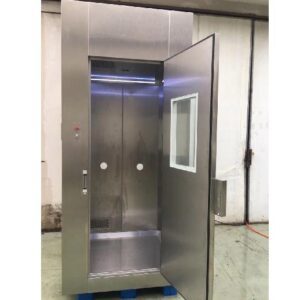
Material transfer breaks cleanroom integrity if not properly controlled. Exterior packaging accumulates particulation and microbial contamination during storage and transit. Strip outer packaging in receiving areas, transfer materials to cleaned containers, and introduce through pass-throughs with interlocked doors. HEPA-filtered pass-throughs actively clean items during transfer for critical applications.
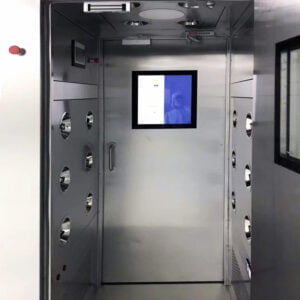
Airlocks maintain pressure cascades during personnel and material movement. A three-stage airlock with pressure progression (outside < airlock 1 < airlock 2 < cleanroom) prevents contamination backflow. Interlocked doors prevent simultaneous opening that would eliminate pressure differential. Visual indicators showing current pressure status help operators understand system function. Time delays between door closures allow pressure re-establishment—typically 10-15 seconds.
Contamination Control Protocol Requirements by ISO Class
| Control Protocol | ISO 5-6 Requirements | ISO 7-8 Requirements |
|---|---|---|
| Personnel Gowning | Full bunny suit, hood, face mask, sterile gloves taped to cuffs, boot covers | Lab coat or coverall, hair cover, gloves, dedicated footwear |
| Material Transfer | Sterilized pass-through with HEPA filtration, double-door interlock | Pass-through chamber with cleaning protocol, unidirectional flow |
| Cleaning Frequency | Surfaces cleaned every shift, validated weekly with microbial testing | Daily surface cleaning, monthly validation with particle counting |
| Entry/Exit Protocol | Three-stage gowning room, airlocks with pressure cascades | Two-stage gowning, controlled entry points with positive pressure |
Source: ISO 14644-5, NASA-HDBK-6022
Cleaning Validation and Microbiological Testing Programs
Cleaning protocols must specify frequency, agents, methods, and validation procedures. High-traffic areas require cleaning every shift. Work surfaces need sanitization before and after each production run. Your cleaning agents should provide broad-spectrum antimicrobial activity while remaining compatible with cleanroom materials. Rotating disinfectants prevents resistant organism development—use quaternary ammonium compounds one week, alcohol-based agents the next.
Validation confirms cleaning effectiveness. Surface sampling with swabs and contact plates quantifies microbial contamination and particle residue. Sample immediately before and after cleaning to demonstrate reduction. Trending data over months identifies problematic areas requiring enhanced procedures. I’ve found corners, undersides of work surfaces, and door handles consistently show elevated contamination—these become focus areas for procedure refinement.
Microbiological identification characterizes contamination sources. Skin flora indicates personnel shedding. Environmental organisms suggest HVAC or water system contamination. Gram-negative organisms point to cleaning solution contamination or inadequate surface drying. Understanding contamination sources enables targeted corrective actions rather than generic intensified cleaning.
Planning for Long-Term Equipment Maintenance, Calibration, and Operational Efficiency
HEPA/ULPA Filter Maintenance and Integrity Testing
Filter integrity testing verifies 99.97% (HEPA) or 99.999% (ULPA) efficiency across the entire filter face. DOP or PAO challenge testing introduces aerosol upstream and scans the filter downstream with a photometer. Leaks appear as localized elevated readings indicating seal failures or media damage. Test filters after installation, annually during operation, and after any event potentially causing damage. Filter integrity failures cause immediate cleanroom classification non-compliance.
Pressure differential across filters indicates loading and required replacement. New HEPA filters show 0.5-1.0 inches water column pressure drop. Replace filters when pressure differential exceeds 2.0 inches—higher resistance reduces airflow and increases energy consumption. I’ve seen facilities run filters to 3.0-4.0 inches differential, then discover their cleanroom no longer achieves specified air change rates. Monitor pressure continuously rather than relying on annual checks.
Filter replacement timing balances multiple factors. Pressure differential indicates mechanical loading. Integrity test failures require immediate replacement regardless of pressure drop. Catastrophic events like sprinkler discharge or construction dust infiltration mandate replacement even if testing passes—embedded contamination releases gradually over months. Budget for 25-35% of filters requiring replacement in any three-year period for realistic cost planning.
HVAC System Calibration and Performance Verification
HVAC calibration maintains environmental control accuracy. Temperature and humidity sensors drift 0.1-0.3°C and 2-5% RH annually. Pressure differential monitors require quarterly calibration to NIST-traceable standards. Airflow velocity measurements verify fan performance and duct integrity. Schedule calibration during production downtime to minimize disruption—annual shutdown periods provide ideal calibration windows.
Airflow visualization tests validate air pattern integrity. Smoke testing reveals turbulent zones where contamination accumulates rather than being swept away. Video recording smoke tests documents problem areas for corrective action. Test during equipment operation and different door positions to simulate actual conditions. Your cleanroom may pass particle count testing yet harbor stagnant zones where smoke accumulation reveals poor airflow design.
Equipment Maintenance Schedule and Calibration Requirements
| Equipment Type | Maintenance Interval | Calibration/Testing Protocol |
|---|---|---|
| HEPA/ULPA Filters | Integrity testing quarterly, replacement based on pressure differential | DOP/PAO leak testing, photometric scanning per ISO 14644-3 |
| HVAC Air Handlers | Monthly inspection, annual overhaul | Airflow velocity verification, temperature/humidity sensor calibration |
| Particle Counters | Weekly zero count verification, annual service | ISO 21501-4 calibration with traceable standards, flow rate verification |
| Pressure Differential Monitors | Daily verification, quarterly calibration | NIST-traceable calibration, alarm function testing |
Note: Predictive maintenance strategies using real-time monitoring data can reduce unplanned downtime by 30-40%.
Source: ISO 9001 Quality Management, ISPE GMP Guidelines
Continuous Improvement Programs and SOP Refinement
Continuous improvement transforms operational data into procedural enhancements. Monthly reviews of environmental monitoring trends identify gradual degradation requiring preventive action. Contamination investigations reveal procedural gaps and training deficiencies. Equipment maintenance logs show reliability patterns guiding replacement decisions. This systematic analysis drives 5-10% annual efficiency improvements across well-managed facilities.
Standard Operating Procedure (SOP) refinement responds to operational experience and regulatory changes. Annual SOP reviews incorporate lessons learned from deviations, near-misses, and employee suggestions. I’ve facilitated SOP revision sessions where operators provided insights management never considered—they work in the cleanroom daily and understand practical implementation challenges. Their input improves compliance by making procedures realistic and achievable.
Benchmarking against industry standards quantifies your performance. Compare your particle count trends, environmental excursions, and maintenance costs against similar facilities. Significant deviations indicate opportunities for improvement or validation that your enhanced procedures deliver superior results. Industry conferences and professional organizations provide benchmarking data and best practice sharing opportunities.
Successful cleanroom equipment selection and implementation requires matching technical specifications to your true contamination control needs, not industry conventions or vendor recommendations. Your ISO classification drives core equipment requirements, but process-specific demands for environmental control, material compatibility, and monitoring capabilities determine final specifications. Phased implementation with rigorous validation proves system performance before full production loading.
Need professional cleanroom equipment solutions tailored to your specific ISO classification and process requirements? YOUTH provides engineered filtration systems, environmental monitoring integration, and validation support for pharmaceutical, semiconductor, and medical device manufacturing facilities. Our technical team helps you navigate equipment selection complexity and develop implementation strategies that balance performance requirements with operational efficiency.
Start your cleanroom equipment evaluation by defining your true contamination control requirements and validation criteria. This foundation enables confident equipment decisions that deliver compliant, efficient operations for decades.
Frequently Asked Questions
Q: How do we determine the correct air change rate (ACH) and filter coverage for a target ISO class?
A: The required air change rate and filter coverage are directly determined by your target ISO classification as defined in ISO 14644-1. For example, an ISO 5 environment typically requires 300-480 air changes per hour (ACH) and 60-70% HEPA filter coverage, while an ISO 8 cleanroom may only need 20 ACH and 4-5% coverage. These parameters are non-negotiable for achieving and maintaining the specified particle count for your critical process.
Q: What are the key material selection criteria for cleanroom furniture and surfaces to ensure compliance with cGMP?
A: Furniture and work surfaces must be constructed from non-particulate shedding, cleanable, and durable materials like 316 stainless steel, solid laminate, or polypropylene. Per cGMP guidelines, designs must feature smooth, radiused edges, minimal joints, and be sealed to the structure with mastic to prevent contamination harborage and facilitate effective sanitization.
Q: How can we integrate environmental monitoring systems to meet FDA data integrity requirements?
A: Implement a system that provides real-time tracking of particulate levels, temperature, and humidity, with all data automatically logged into a secure, unalterable database. This creates a verifiable audit trail for trend analysis and provides the documented evidence of environmental control mandated by FDA regulations, which is critical for regulatory audits.
Q: What is the strategic advantage of a phased implementation plan with Factory Acceptance Testing (FAT)?
A: A phased approach, beginning with a pilot project, allows you to validate system performance and refine processes before full-scale deployment, minimizing operational disruption. Conducting Factory Acceptance Testing on modular components off-site verifies compliance with all technical specifications, de-risking the project by identifying issues before costly on-site assembly begins.
Q: What specific elements should a gowning procedure for an ISO 7 cleanroom include?
A: For an ISO 7 environment, gowning procedures must require a full “bunny suit” with gloves that are taped to the cuffs to prevent skin exposure. This rigorous protocol, guided by ISO 14644-5 on cleanroom operations, serves as the primary defense against personnel-borne contamination and must be reinforced through consistent training and adherence monitoring.
Q: How should long-term maintenance of HEPA/ULPA filtration systems be managed to ensure continuous compliance?
A: A strict, scheduled maintenance regimen is essential, including regular integrity testing (e.g., dioctyl phthalate testing) and replacement based on pressure drop readings or elapsed time. This proactive approach is a core requirement of GMP and is critical for sustaining filter efficiency, cleanroom classification, and overall operational efficiency over the system’s lifecycle.
Related Contents:
- GMP Compliant Air Filters | FDA Requirements Cleanroom Validation
- HEPA Filter Testing: Ensuring Optimal Performance
- HEPA Filter Systems | Air Handling Equipment Specifications
- Understanding Cleanroom Air Quality Standards | Filter Requirements
- Biotechnology Cleanroom Equipment | Sterile Processing
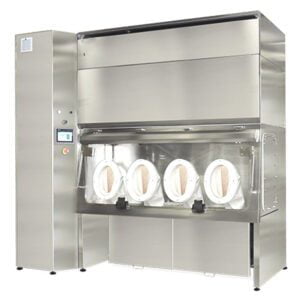
- Environmental Monitoring in Sterility Test Isolators
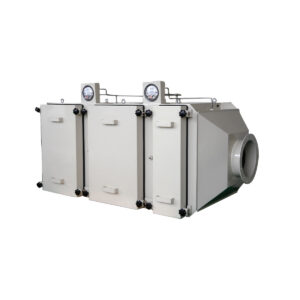
- HEPA Housing Boxes in Pharmaceutical Manufacturing: Uses
- ISO 14644 Cleanroom Equipment Standards | Compliance Guide
- Medical Device Cleanroom Equipment | ISO Class Requirements