Facility managers face a recurring dilemma: production demands increase, contamination control requirements tighten, and regulatory audits intensify—yet capital budgets remain constrained and construction timelines are unforgiving. Traditional cleanroom construction can consume 24-36 months and millions in capital expenditure, all while operational manufacturing sits idle or constrained. Modular cleanroom systems have emerged as a strategic alternative, but the decision to deploy them requires understanding classification requirements, design tradeoffs, procurement nuances, and lifecycle management protocols that differ fundamentally from stick-built approaches.
The stakes have escalated in 2025. Updated EU GMP Annex 1 requirements demand validated contamination control strategies and risk-based monitoring protocols. FDA enforcement actions increasingly target environmental control failures. Meanwhile, pharmaceutical and biotech companies race to commercialize complex biologics and cell therapies that require flexible, GMP-compliant manufacturing infrastructure deployed in compressed timeframes. For operations directors evaluating modular systems, the technical decisions made during procurement and implementation directly determine regulatory compliance, operational flexibility, and total cost of ownership over a 15-20 year facility lifecycle.
Understanding Cleanroom Classifications (ISO 14644-1) and Industry-Specific Standards
Particle Concentration Limits Define Operational Requirements
ISO 14644-1 establishes cleanroom classification based on airborne particle concentration per cubic meter. The classification directly determines capital and operating costs through air change rate requirements, HEPA filtration specifications, and pressure differential mandates. ISO 5 environments demand 240-300 air changes per hour with unidirectional laminar flow—a specification that drives substantial HVAC capacity and energy consumption. ISO 7 spaces require minimum 30 ACH, while ISO 8 allows variable rates based on process risk assessment.
Temperature regulation intersects with classification maintenance in ways many specifications overlook. Thermal fluctuations generate convective currents that disrupt laminar flow patterns and increase particle dispersion. I’ve observed facilities where poorly controlled temperature swings of 3-4°C caused intermittent classification failures during particle count testing, requiring costly remediation and revalidation.
Beyond particle counts, industry-specific standards layer additional requirements. USP <797> mandates specific anteroom configurations and personnel flow patterns for pharmaceutical compounding. EU GMP Annex 1 requires demonstrated contamination control strategies with validated cleaning and disinfection protocols.
ISO Cleanroom Classifications and Technical Requirements
| ISO Class | Particle Count Limit (≥0.5 µm/m³) | Minimum ACH | Primary Applications |
|---|---|---|---|
| ISO 5 | 3,520 | 240-300 (unidirectional) | Aseptic filling, open sterile operations via laminar flow hoods |
| ISO 7 | 352,000 | ≥30 | Background for ISO 5 operations, downstream processing |
| ISO 8 | 3,520,000 | Variable | Upstream processing, buffer prep, staging areas |
| Controlled Non-Classified | No specification | As needed | Storage, equipment prep with limited critical exposure |
Source: ISO 14644-1:2015
Regulatory Frameworks Vary by Region and Product Type
FDA 21 CFR Part 210/211 establishes cGMP baseline requirements for pharmaceutical manufacturing in the U.S., while EU GMP Annex 1 provides comparable European standards with notable differences in Grade A/B classification definitions versus ISO nomenclature. ICH Q7 guidance applies specifically to active pharmaceutical ingredient manufacturing, with distinct requirements for primary manufacturing facilities.
A pharmaceutical company designing for USP <797> compliance must incorporate classified anteroom spaces with appropriate pressure cascades and personnel gowning protocols. Biotechnology facilities producing cell therapies face layered requirements: GMP compliance for the manufacturing process, ISO classification for the cleanroom environment, and product-specific regulatory guidance from FDA’s CBER division.
Regulatory Standards by Industry and Region
| Standard/Regulation | Region/Authority | Primary Scope | Key Requirements |
|---|---|---|---|
| ISO 14644-1 | International | Cleanroom classification and environmental parameters | Particle concentration limits, monitoring protocols |
| USP <797> / USP <800> | United States | Pharmaceutical compounding cleanrooms | Sterile compounding procedures, hazardous drug handling |
| FDA 21 CFR Part 210/211 | United States | Pharmaceutical manufacturing environments | cGMP compliance, environmental controls, validation |
| EU GMP Annex 1 | European Union | Sterile medicinal products | Risk-based contamination control, disinfection validation |
| ICH Q7 | International | Active pharmaceutical ingredients | GMP guidance for API manufacturing |
Source: USP General Chapter 797, EU GMP Annex 1
Application-Specific Classification Strategies
Aseptic filling operations require ISO 5 conditions at the fill point, typically achieved through laminar airflow hoods or isolator technology positioned within an ISO 7 background environment. Downstream processing areas supporting filtration and formulation can operate at ISO 7 or 8 depending on product exposure risk. Upstream bioreactor operations generally function in ISO 8 or controlled non-classified spaces where closed systems minimize contamination risk.
Biotechnology facilities increasingly adopt zone-based designs: separate operational areas for upstream processing, downstream purification, and fill-finish operations, each with appropriate ISO classifications and distinct HVAC systems to prevent cross-contamination between manufacturing stages.
Key Design Considerations: From Modular Components to HVAC and Contamination Control
Pre-Fabricated Component Systems Enable Flexible Configuration
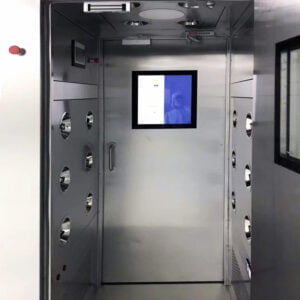
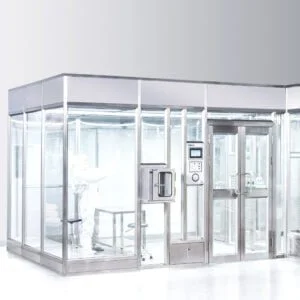
Modular cleanrooms utilize pre-engineered components: wall panels, ceiling grid systems, pass-through chambers, and personnel airlocks assembled on-site from factory-fabricated elements. This approach differs from panellized construction where components are cut and fitted during installation. Two primary wall system types dominate the market: hard wall systems using rigid acrylic or aluminum-framed panels that resemble traditional construction, and soft wall systems employing vinyl curtains that offer easier transport and reconfiguration.
Design flexibility extends to facility integration strategies. Free-standing structures create complete enclosures independent of existing building elements—ideal for temporary installations or facilities requiring future relocation. Alternatively, designs can incorporate existing walls and tie into facility HVAC systems, reducing capital cost but sacrificing portability.
The wall system selection impacts operational factors beyond initial cost. Hard wall systems provide superior sound attenuation and perceived permanence valued in regulated manufacturing environments. Soft wall systems excel in research settings requiring frequent reconfiguration or temporary campaign manufacturing.
Modular Cleanroom Wall Types and Airflow Configurations
| Design Element | Hard Wall System | Soft Wall System | Recirculating Airflow System |
|---|---|---|---|
| Construction | Solid acrylic panels, rigid structure | Flexible vinyl curtains | Air-chase walls with ceiling plenum |
| Transportability | Lower; requires careful handling | Higher; compact, easier transport | Moderate; integrated ductwork |
| Flexibility | Permanent/semi-permanent installation | Easy reconfiguration and relocation | Fixed once installed |
| Typical ISO Range | ISO 5-8 | ISO 7-8 | ISO 5-7 |
Note: Single-pass systems provide maximum contamination control but higher operating costs.
Source: ISO 14644-1:2015
Airflow Architecture Drives Performance and Operating Cost
Three primary airflow configurations serve distinct operational requirements. Single-pass systems draw 100% outside air through HEPA filtration and exhaust it after one pass through the cleanroom—providing maximum contamination control at the highest energy cost. Recirculating systems capture return air through chase walls and ceiling plenums, filter it, and reintroduce it to the space, dramatically reducing HVAC capacity and energy consumption. Hybrid approaches use recirculation for general air cleanliness with supplemental single-pass air for critical zones.
Pressurization strategy requires careful planning. Positive pressure relative to adjacent spaces prevents infiltration of unfiltered air. The typical specification calls for 10-15 Pascal pressure differential between classification zones. Monitoring systems must provide continuous pressure measurement with alarming for out-of-specification conditions.
I’ve found that energy modeling during design often underestimates the operational cost delta between single-pass and recirculating systems—the difference can exceed $50,000 annually for a modest 2,000 square foot ISO 7 cleanroom operating 24/7.
Contamination Control Integration Beyond Airflow
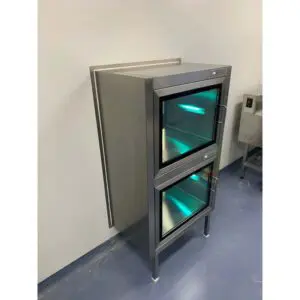
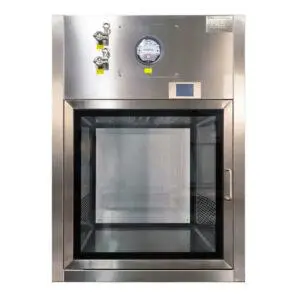
Effective contamination control requires integrated protocols beyond HVAC performance. Surface material selection influences cleaning efficacy: smooth, non-porous finishes on walls, floors, and ceilings prevent microbial harborage. Pass-through chambers with interlocked doors prevent simultaneous opening that would compromise pressure differentials.
The updated EU GMP Annex 1 emphasizes validated cleaning and disinfection as distinct process steps. Residue removal using appropriate cleaning agents must precede disinfectant application—many contamination control failures stem from applying disinfectants to soiled surfaces where organic residue blocks microbial contact. Disinfectant rotation protocols incorporating sporicidal agents prevent resistance development.
The Procurement and Vendor Selection Process for Modular Cleanrooms
Delivery Approach Selection Establishes Project Framework
The choice between modular, panellised, or hybrid delivery approaches represents the most consequential early procurement decision. Modular systems ship as complete room units fabricated and tested offsite—enabling parallel construction while site preparation proceeds but requiring large access routes and precision in utility connection planning. Panellised approaches deliver components for onsite assembly, offering design flexibility and easier site access at the cost of longer installation timelines. Hybrid models combine modular elements for standardized spaces with panellised construction for custom areas.
Timeline pressure often drives modular selection. A biotech company facing regulatory milestone deadlines can compress overall project duration by 6-12 months through offsite fabrication that proceeds simultaneously with site foundation work and utility installation. However, this advantage disappears if site access constraints prevent delivery of large modular units.
Cleanroom Delivery Approach Comparison
| Delivery Approach | Typical Timeline | Best Use Case | Key Advantages | Considerations |
|---|---|---|---|---|
| Modular | 12-18 months | Speed-to-market priority, offsite FAT capability | Parallel construction, plug-and-play, relocatable | Requires large access routes, higher upfront engineering |
| Panellised | 18-24 months | Custom layouts, existing building integration | Design flexibility, easier site access | Longer onsite assembly, sequential workflow |
| Hybrid | 14-20 months | Mixed standardization needs, complex facilities | Optimizes cost and speed, tailored solutions | Requires careful interface planning |
| Traditional Construction | 24-36 months | Permanent, highly customized facilities | Maximum design freedom | Longest disruption, highest labor costs |
Source: ISO 14644-1:2015
Factory Acceptance Testing Reduces Commissioning Risk
Factory Acceptance Testing (FAT) distinguishes modular procurement from traditional construction approaches. The vendor constructs the complete cleanroom at their facility, installs HVAC and monitoring systems, achieves target classification, and demonstrates performance before shipment. This front-loaded validation identifies design deficiencies and equipment issues in a controlled environment rather than discovering them during onsite commissioning when schedule pressure intensifies.
FAT protocols should specify acceptance criteria: particle count testing demonstrating classification achievement, pressure differential verification, temperature and humidity control performance, and monitoring system functionality. Documentation from FAT becomes the foundation for Installation Qualification (IQ) protocols executed after site installation.
A pharmaceutical manufacturer evaluating vendors should require complete qualification documentation packages: design qualification records, FAT protocols and results, component certificates of conformity, and material certifications demonstrating compliance with regulatory requirements for surfaces and finishes.
Site Logistics Assessment Prevents Delivery Failures
Modular unit dimensions often exceed standard door and corridor clearances. Site assessment must verify delivery routes from property access roads through building openings to the installation location. A complete modular cleanroom system may arrive as multiple units requiring crane placement or removal of building sections for access.
Utility coordination demands attention during procurement. Vendors must provide precise specifications for electrical service, compressed air, process gases, water supply, and drain connections. Dimensional tolerances for utility stub-ups typically run ±25mm—seemingly generous until installation day when misalignment delays startup by weeks.
Step-by-Step Guide to Phased Implementation and Minimizing Operational Disruption
Parallel Work Streams Compress Overall Timeline
Phased implementation leverages the core advantage of modular systems: offsite fabrication proceeding simultaneously with site preparation. Week 1-8 focuses on requirements definition, space planning, and utility mapping while the vendor initiates engineering design. Weeks 8-24 see parallel tracks—module fabrication and FAT offsite while foundations, utility rough-in, and building modifications progress onsite.
This parallel approach compresses total duration but demands rigorous interface management. The site team must complete foundation work and utility stub-ups to specifications matching the module design. Any dimensional deviation or utility misalignment discovered during installation week creates costly delays and potential rework.
I’ve learned that dedicating a single point of contact for site/vendor coordination prevents the majority of interface issues—split responsibility between facilities and project management teams consistently produces communication gaps that surface during installation.
Phased Implementation Process for Modular Cleanrooms
| Phase | Key Activities | Timeline Position | Deliverables |
|---|---|---|---|
| Site Assessment & Design | Requirements gathering, space analysis, utility mapping | Weeks 1-8 | Functional design specification, site logistics plan |
| Offsite Fabrication | Module construction, FAT, system integration | Weeks 8-24 (parallel) | Tested and certified modules, qualification documentation |
| Site Preparation | Foundation work, utility rough-in, access preparation | Weeks 8-20 (parallel) | Ready infrastructure, connection points |
| Delivery & Installation | Transport, assembly, utility connection | Weeks 24-28 | Installed cleanroom structure |
| Qualification | IQ, OQ, PQ testing, certification | Weeks 28-32 | Validated system, regulatory compliance documentation |
Note: Offsite and onsite work streams run in parallel to compress total project duration.
Source: ISO 14644-1:2015
Hybrid Strategies Minimize Disruption in Operational Facilities
Facilities maintaining production during cleanroom installation require strategies beyond standard implementation approaches. Hybrid delivery models deploy modular units for personnel airlocks and gowning rooms—spaces with standardized requirements—while using panellised construction for process areas requiring custom equipment integration. This approach minimizes onsite assembly time in production-adjacent areas.
Temporary containment barriers with HEPA filtration maintain classification in existing cleanrooms during adjacent construction. Scheduling installation activities during planned maintenance shutdowns eliminates production impact for critical work phases like utility tie-ins that require temporary service interruptions.
A contract manufacturing organization expanded capacity by installing a modular ISO 7 suite during their annual two-week maintenance shutdown. Advance site preparation completed during production operations; the modular units arrived day one of shutdown and achieved operational status before production resumption.
Qualification Follows Structured IQ/OQ/PQ Protocol
Installation Qualification verifies that installed equipment matches design specifications and approved drawings. Documentation requirements include dimensional verification, material certifications, utility connections confirmation, and calibration certificates for monitoring instruments. Operational Qualification demonstrates the system performs across its operating range: HVAC achieves specified air change rates, pressure differentials maintain under door-open conditions, temperature and humidity controls respond to setpoint changes.
Performance Qualification proves the cleanroom maintains classification during simulated or actual production operations. Particle count testing under dynamic conditions with personnel present and equipment operating provides the regulatory basis for production authorization.
Integrating Automation and Monitoring Systems for Smart Cleanroom Operations
Environmental Monitoring Systems Enable Real-Time Compliance
Modern cleanroom operations demand continuous monitoring rather than periodic manual sampling. Environmental Monitoring Systems (EMS) integrate particle counters, temperature and humidity sensors, pressure transducers, and microbial samplers into unified platforms providing real-time data visualization and automated alerting. Integration with Building Management Systems (BMS) creates closed-loop control where monitoring data triggers HVAC adjustments to maintain specifications.
Regulatory frameworks increasingly expect continuous monitoring with documented alert and action limits. An alert condition triggers investigation while production continues; an action limit requires production hold until remediation and documented return to control. The monitoring system must generate audit trails documenting all excursions and response actions.
IoT-enabled sensors reduce installation complexity and cost compared to traditional hard-wired systems. Wireless particle counters and environmental sensors communicate via mesh networks, eliminating conduit runs and enabling flexible placement as process layouts evolve.
Environmental Monitoring System Parameters and Standards
| Monitored Parameter | Measurement Frequency | Typical Alert Thresholds | Regulatory Basis |
|---|---|---|---|
| Nonviable Particles (≥0.5 µm) | Continuous or per batch | Per ISO class limits | ISO 14644-1, EU GMP Annex 1 |
| Microbial Counts (CFU) | Scheduled per risk assessment | Grade A: <1 CFU, Grade B: 10 CFU | EU GMP Annex 1, cGMP |
| Temperature | Continuous | ±2°C from setpoint | USP <797>, facility specifications |
| Relative Humidity | Continuous | 30-60% (typical) | Process-specific requirements |
| Pressure Differentials | Continuous | ≥10-15 Pa between zones | ISO 14644-1, cGMP frameworks |
Source: ISO 14644-1:2015, EU GMP Annex 1
Data Integrity Requirements Shape System Architecture
FDA 21 CFR Part 11 requirements apply when monitoring systems generate electronic records used in regulatory submissions or batch release decisions. System architecture must prevent unauthorized data modification, maintain complete audit trails, and enforce electronic signature requirements for critical actions. Cloud-based monitoring platforms simplify compliance through built-in access controls and automated backup, but require validation of the vendor’s IT infrastructure and data security protocols.
Data integrity principles (ALCOA+) demand monitoring systems create records that are Attributable, Legible, Contemporaneous, Original, Accurate, complete, consistent, enduring, and available. Particle count data must timestamp at the moment of measurement, not when manually transcribed into batch records hours later.
Automation Integration Supports Operational Efficiency
Single-use technology and automated processing equipment increasingly populate cleanroom environments. Monitoring system integration with process control systems enables correlation between environmental conditions and process parameters. When particle counts spike during a specific process step, integrated data reveals whether the excursion results from the operation itself or HVAC system performance degradation.
Predictive maintenance algorithms analyze monitoring trends to forecast HVAC filter loading and schedule replacement before performance degrades. I’ve observed facilities reduce unplanned downtime by 40% through predictive approaches versus reactive maintenance after classification failures occur.
Maintaining Compliance and Optimizing Performance: Lifecycle Management Best Practices
Validated Protocols Sustain Regulatory Compliance
Lifecycle management begins with comprehensive validation establishing the control strategy: Installation, Operational, and Performance Qualification protocols that become the baseline for ongoing verification. Periodic requalification requirements vary by regulatory framework—annual recertification prevails in many pharmaceutical facilities, while risk-based approaches permit extended intervals for stable, well-controlled systems.
Change control procedures govern modifications to validated systems. HVAC filter changes, monitoring system upgrades, or revised cleaning protocols require impact assessment and revalidation to extent appropriate for the change scope. Documentation of the change control process provides regulatory inspectors evidence of maintained validated state.
Staff training represents a critical but often underemphasized compliance element. Personnel must demonstrate competency in gowning procedures, aseptic technique, cleaning protocols, and response to environmental excursions. Training frequency should align with error rate trends—increased gowning violations or cleaning deficiencies signal the need for refresher training cycles.
Three-Step Contamination Control Protocol
Effective surface disinfection requires separate, sequential steps that many facilities incorrectly compress into single operations. Step one: residue removal using detergent or cleaning agent appropriate for the soil type removes organic and inorganic contamination. Step two: surface disinfection using an agent selected for target organism spectrum. Step three: rotation among disinfectants with different mechanisms of action, including periodic use of sporicidal agents.
The EU GMP Annex 1 revision emphasizes validation of cleaning and disinfection efficacy. Facilities must demonstrate through microbial recovery studies that their protocol achieves target log reduction for relevant organisms on actual cleanroom surfaces. Generic vendor data supporting disinfectant efficacy does not satisfy this requirement—validation must occur in the specific cleanroom using site procedures.
Lifecycle Management Protocol and Compliance Requirements
| Activity Category | Protocol Requirements | Frequency | Compliance Standards |
|---|---|---|---|
| Validation (IQ/OQ/PQ) | Documented testing of installation, operation, performance | Initial + after major changes | cGMP, EU GMP Annex 1 |
| Environmental Monitoring | Continuous data capture with alert/action limits | Real-time to weekly | ISO 14644-2, FDA 21 CFR Part 11 |
| Cleaning & Disinfection | Residue removal, separate disinfection step, agent rotation | Daily to weekly | EU GMP Annex 1, Annex 1 updates |
| Staff Training | Updated SOPs, regulatory changes, contamination control | Quarterly + as needed | cGMP frameworks |
| Audit & Documentation | Complete records, data integrity, deviation management | Ongoing + periodic review | EU GMP Annex 1, FDA 21 CFR Part 210/211 |
Note: Disinfectant rotation must include sporicidal agents per risk assessment.
Source: EU GMP Annex 1, FDA 21 CFR Part 210/211
Continuous Improvement Through Performance Trending
Environmental monitoring data accumulated over months and years reveals performance trends invisible in daily operations. Seasonal variations in facility humidity affect cleanroom RH control. Particle count patterns correlate with specific manufacturing campaigns. Pressure differential decay rates indicate filter loading progression.
Quarterly performance reviews analyzing monitoring trends, deviation frequency, and maintenance requirements inform optimization opportunities. A facility experiencing recurring temperature excursions during summer months might justify HVAC capacity upgrades or enhanced insulation. Particle count elevations consistently following filter changes suggest technique issues in maintenance procedures.
Documentation Architecture Supports Regulatory Readiness
Comprehensive documentation systems organize validation records, monitoring data, maintenance logs, training records, and deviation reports into structures supporting rapid retrieval during regulatory inspections. Electronic document management systems with version control and audit trails satisfy data integrity requirements while improving accessibility compared to paper-based archives.
Mock audit exercises prepare teams for regulatory inspections by testing documentation completeness and staff ability to explain control strategies. These exercises consistently reveal gaps in documentation that seem obvious in retrospect but escape notice during routine operations.
The decision to implement modular cleanroom infrastructure hinges on three core factors: timeline requirements driving speed-to-market urgency, operational flexibility needs anticipating future manufacturing changes, and total cost of ownership spanning 15-20 year facility lifecycles. Successful implementations balance these factors through rigorous vendor selection, phased deployment strategies minimizing operational disruption, and lifecycle management protocols sustaining regulatory compliance while optimizing performance.
For facility managers and operations directors navigating pharmaceutical, biotech, or medical device manufacturing expansion decisions, modular cleanroom systems offer strategic advantages beyond conventional construction—but only when procurement and implementation follow structured approaches matching the technical complexity and regulatory scrutiny these environments demand. Need a partner with proven expertise in GMP-compliant modular cleanroom solutions engineered for pharmaceutical and biotech applications? YOUTH delivers turnkey systems from initial design through validated startup, with ongoing support ensuring sustained performance and regulatory compliance. Our team brings decades of experience helping facility managers implement cleanroom infrastructure that meets today’s requirements while accommodating tomorrow’s manufacturing evolution. Contact us to discuss your specific application requirements and timeline constraints.
Frequently Asked Questions
Q: How do I determine the appropriate ISO classification and air change rate for my specific pharmaceutical process?
A: Match your critical process steps to the required particle limits. For open sterile operations like aseptic filling, an ISO 5 environment with 240–300 ACH is mandated, often within a laminar flow hood. Background areas for these operations or downstream processing typically require ISO 7 with at least 30 ACH. You must also cross-reference specific regulations like USP <797> for compounding or EU GMP Annex 1 for sterile products, which may impose stricter requirements.
Q: What are the key differences between soft-wall and hard-wall modular cleanrooms, and how do I choose?
A: Hard-wall structures use solid panels like acrylic for a permanent, traditional-build feel and are ideal for complex utility integrations. Soft-wall systems offer superior flexibility and transportability, making them suitable for temporary needs or facilities expecting future reconfiguration. Your choice hinges on the need for permanence versus adaptability, site logistics, and the complexity of your HVAC and contamination control strategy.
Q: What critical factors should we evaluate when selecting a modular cleanroom vendor?
A: Prioritize vendors with proven expertise in your industry’s regulatory framework, such as FDA 21 CFR Part 210/211. Assess their project approach—fully modular, panellised, or hybrid—against your timeline and disruption tolerance. Confirm they conduct comprehensive Factory Acceptance Testing (FAT) and provide full qualification documentation (IQ/OQ/PQ protocols) to streamline your onsite commissioning and validation.
Q: How can a phased implementation strategy minimize operational disruption during a cleanroom installation or renovation?
A: Phased implementation uses offsite fabrication to construct the modular cleanroom while site preparation occurs concurrently. This parallel workflow can reduce time-to-validation by months. For operational sites, a modular “plug-and-play” system can act as a bridging solution, allowing production to continue in the old area while the new cleanroom is installed and qualified, thereby avoiding a complete shutdown.
Q: Beyond particle counts, what parameters must a smart Environmental Monitoring System (EMS) track for compliance?
A: A compliant EMS must continuously monitor all critical conditions that impact product quality and classification. This includes viable and nonviable particle counts, temperature, relative humidity, and pressure differentials between zones. Systems integrated with a Building Management System (BMS) provide real-time alerts for out-of-spec conditions, which is essential for cGMP compliance and data integrity under regulations like FDA 21 CFR Part 11.
Q: What are the essential steps in a compliant cleanroom cleaning and disinfection protocol?
A: A compliant protocol involves three distinct steps: residue removal with a detergent, a thorough cleaning step, and a final disinfection. You must validate the efficacy of your disinfectants and implement a rotation schedule that includes a sporicidal agent to prevent microbial resistance. This risk-based approach, emphasizing separate steps and rotation, is central to updated EU GMP Annex 1 requirements.
Q: How does the ISO 14644-1 standard specifically impact the design of a cleanroom’s HVAC system?
A: ISO 14644-1 directly dictates key HVAC specifications by defining the required air cleanliness class. The classification sets the minimum air change rates (e.g., ≥30 ACH for ISO 7), dictates the level of HEPA filtration needed, and informs the necessary pressure differentials between zones to control airflow direction. Your HVAC design must be validated to consistently meet these parameters to maintain certification.
Related Contents:
- EU GMP Annex 1 Laminar Unit Guidelines
- GMP Compliant Air Filters | FDA Requirements Cleanroom Validation
- EU GMP Annex 1: Mobile LAF Cart Compliance Guide
- Modular Laminar Air Flow Units for Cleanrooms
- Modular BIBO Designs: Flexibility for Your Facility
- ISO 14644 Cleanroom Equipment Standards | Compliance Guide
- The Complete Pass Box Selection and Implementation Guide for Cleanroom Contamination Control: 2025 Edition with GMP and ISO 14644 Compliance Framework
- The Complete Cleanroom Equipment Selection and Implementation Guide for Manufacturing and Life Sciences: 2025 Edition
- ISO 5 Laminar Flow | Cleanroom Classification Standards