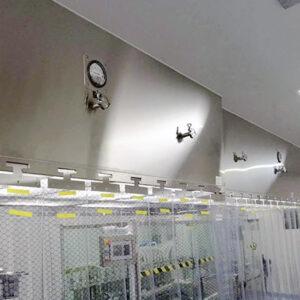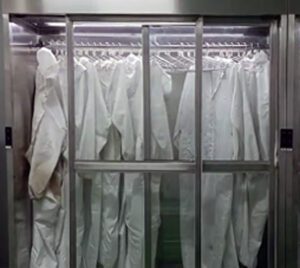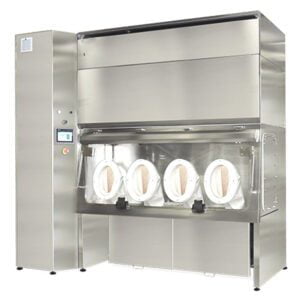
Maintaining proper pressure differentials is a non-negotiable requirement for ISO 7 and ISO 8 cleanrooms, yet the specific implementation is often misunderstood. Many professionals assume a single, rigid pressure value is mandated, leading to designs that are either insufficiently protective or operationally inefficient. The reality is more strategic: pressure control is a dynamic system balancing contamination risk, energy consumption, and operational workflow. A misconfigured cascade can silently compromise product integrity or fail to contain hazardous materials.
This topic demands attention because the regulatory landscape is shifting from prescriptive rules to performance-based standards. The pressure differential itself is an informative guideline, not an absolute command. This shift places the burden of proof on facility operators to demonstrate control through rigorous validation and monitoring. Selecting the right setpoints and supporting systems is now a critical engineering decision with direct implications for compliance, operational cost, and long-term facility flexibility.
Core Pressure Differential Requirements for ISO 7 vs. ISO 8
Defining the Standard Range
The foundational guidance from ISO 14644-4 establishes a pressure differential range of 5 to 20 Pascals between adjacent cleanrooms. This range is engineered to provide a sufficient directional air barrier to prevent cross-contamination during brief door openings, without generating disruptive turbulence. A common implementation sees an ISO 7 buffer room maintained at a higher positive pressure than an adjoining ISO 8 anteroom. For instance, an ISO 7 room might be set at +15 Pa relative to the ISO 8 space.
The Strategic Gray Area
Critically, this 5-20 Pa guidance is informative, not a strict mandate. This creates a significant strategic decision point. Facilities can implement differentials at the lower end of this range, but they must then invest in enhanced, continuous monitoring and more frequent validation to prove control stability. It’s a trade-off: potential capital savings from a less aggressive HVAC system are exchanged for increased operational rigor and documentation. The setpoint is not the goal; proven, stable control is.
Application and Design Implication
The selection within this range dictates the entire pressure cascade design. The ISO 8 room itself must be positive relative to any connecting unclassified corridor or space. This graded cascade ensures air consistently flows from the cleanest area (ISO 7) to the less clean (ISO 8), and finally to the unclassified environment. The following table clarifies the core requirements for each classification.
ISO 7 and ISO 8 Pressure Parameters
This comparison outlines the typical pressure relationships and regulatory context for standard ISO 7 and ISO 8 cleanrooms.
| Parameter | ISO 7 Cleanroom | ISO 8 Cleanroom |
|---|---|---|
| Typical Pressure Setpoint | +15 Pa (relative to ISO 8) | Positive relative to corridor |
| Standard Differential Range | 5 to 20 Pa (adjacent rooms) | 5 to 20 Pa (adjacent rooms) |
| Regulatory Status | Informative guidance | Informative guidance |
| Design Implication | Higher pressure than ISO 8 | Lower pressure than ISO 7 |
How Pressure Cascades Protect Cleanroom Contamination Control
The Principle of Directional Flow
A properly designed pressure cascade acts as an invisible, continuous barrier. Air consistently flows from areas of higher cleanliness (higher pressure) to areas of lower cleanliness (lower pressure). If a door between an ISO 7 and ISO 8 room opens, the leak is from the critical ISO 7 space outward, protecting the core process from particulate ingress. This directional flow is the first line of defense against cross-contamination.
The Turbulence Ceiling
However, this principle has a critical ceiling. Excessive pressure differentials above the recommended range can be counterproductive. Pressures exceeding 20-25 Pa can induce high-velocity air jets at door cracks and openings, creating turbulent eddies that resuspend settled particles. This turbulence defeats the primary goal of contamination control. The design objective is stable, laminar flow—not simply maximizing pressure.
Optimizing for Stability
Achieving this requires careful HVAC balancing. The system must maintain a sufficient differential—typically between 10-15 Pa for a robust yet safe buffer—while ensuring supply and exhaust volumes are precisely matched to room volume. In my experience, the most common instability stems from improperly sized exhaust or return ducts, not from the supply fans. The system must recover quickly from disturbances without overshooting, which demands integrated control logic, not just a static setpoint.
Key Differences for Hazardous Drug (HD) Compounding Rooms
The Containment Imperative
Hazardous drug handling requires a fundamental inversion of the standard pressure paradigm. Per USP <800>, an ISO 7 buffer room for HD compounding must be at a negative pressure of -0.01″ to -0.03″ water column (-2.5 to -7.5 Pa) relative to all adjacent spaces. The primary function shifts from product protection to personnel and environmental containment, preventing hazardous particulates from escaping.
The Zoning Challenge and Solution
This negative-pressure exception creates a significant design challenge. A negative-pressure ISO 7 room adjacent to a standard anteroom risks drawing potentially contaminated air inward from that anteroom. The strategic solution is intelligent zoning. One compliant approach forces the anteroom to also be ISO 7. A more efficient and common design inserts a small, positive-pressure ISO 7 gowning room as a buffer between the negative-pressure buffer room and the main anteroom. This allows the main anteroom to revert to the more lenient and cost-effective ISO 8 classification.
Comparing Standard vs. HD Room Design
The design requirements for hazardous drug compounding rooms represent a complete departure from standard cleanroom pressure logic, as shown in the table below.
| Design Aspect | Standard ISO 7 Room | HD Compounding ISO 7 Room |
|---|---|---|
| Pressure Relationship | Positive pressure | Negative pressure |
| Pressure Range | +5 to +20 Pa | -2.5 to -7.5 Pa |
| Primary Function | Product protection | Personnel/environment containment |
| Key Standard | ISO 14644 series | USP <800> |
| Common Buffer Strategy | ISO 8 anteroom | Positive-pressure ISO 7 gowning room |
Source: USP <800> Hazardous Drugs—Handling in Healthcare Settings.
Integrating Air Changes per Hour (ACH) with Pressure Control
Interdependent Performance Parameters
Pressure differential and ACH are not independent targets; they are interdependent control parameters that the HVAC system must deliver simultaneously. ISO 14644-1 defines the particle concentration limits for each class, which directly informs the ACH requirement. An ISO 8 room requires a minimum of 20 ACH for particle dilution, while an ISO 7 room requires 30 ACH. This 50% increase in air turnover is a substantial HVAC performance gap.
Sizing for Combined Demand
The system must be precisely sized to deliver sufficient volumetric airflow (CFM) to achieve both the particle dilution (ACH) and the designed pressure relationship against adjacent spaces. Undersizing will cause a failure in one or both parameters. Furthermore, the particle size focus, while the same (≥0.5µm), has a 100x stricter limit for ISO 7. This indicates that upgrading classification requires not just more air changes, but a fundamentally more sensitive and responsive monitoring and control strategy.
HVAC and Monitoring Requirements
The table below highlights the integrated requirements for airflow and particle control that directly influence pressure system design.
| Parameter | ISO 7 Requirement | ISO 8 Requirement |
|---|---|---|
| Minimum Air Changes (ACH) | 30 ACH | 20 ACH |
| Particle Size Monitored | ≥0.5µm | ≥0.5µm |
| Particle Count Limit | 352,000 per m³ | 3,520,000 per m³ |
| HVAC Demand | Higher CFM for ACH+Pressure | Lower CFM for ACH+Pressure |
| Monitoring Sensitivity | 100x stricter than ISO 8 | Baseline sensitivity |
Source: ISO 14644-1: Classification of air cleanliness by particle concentration.
The Role of Modular Construction in Maintaining Pressure
Envelope Integrity as Foundation
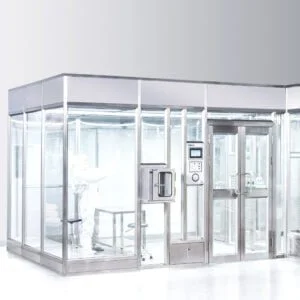
Stable pressure control is impossible without an airtight cleanroom envelope. Uncontrolled leakage through walls, ceilings, or door seals acts as an unmanaged exhaust port, destabilizing differentials. Modular construction, with its prefabricated, tightly sealed wall panels, gasketed doors, and integrated ceiling systems, provides a superior and verifiable barrier. This inherent integrity is the physical foundation upon which a reliable pressure cascade is built.
Enabling a Zonal Strategy
This airtight integrity supports a strategic shift from monolithic facility design to a product-focused zonal approach. Modular units allow you to define and isolate a Critical Processing Zone—such as an ISO 5 biosafety cabinet within an ISO 7 room—with precision. Supporting areas can then be built to less stringent, more cost-effective standards. This approach, central to modern modular cleanroom design, enables scalable, adaptable cleanroom strategies where pressure regimes are optimized for specific processes rather than entire buildings.
Facilitating Upgrades and Changes
When process needs change, modifying pressure cascades in a traditional build is costly and disruptive. The panel-based nature of modular construction allows for the reconfiguration of rooms, doors, and pass-throughs with minimal impact on the overall envelope integrity. This flexibility ensures that pressure relationships can be re-optimized for new workflows without compromising the fundamental containment boundary.
Validating and Monitoring Your Cleanroom Pressure System
Proving Performance in C&Q
Commissioning and qualification (C&Q) must prove that pressure differentials perform as designed under both “at-rest” and dynamic “in-operation” conditions. This includes testing recovery times after door openings and simulating worst-case material transfer scenarios. This validation burden is particularly critical if you deviate from standard pressure setpoints, as you must provide equivalent proof of control.
The Limits of Mechanical Validation
Continuous monitoring with real-time alarms is essential for operational control. However, the most frequent point of failure is often “in-use,” tied to personnel practices and material flow, not the HVAC system itself. A door propped open, an overloaded pass-through, or improper gowning can instantly collapse a pressure cascade. Therefore, validation should extend beyond mechanical performance to include procedural controls and personnel training.
Investing in Human Factors
Investments in comprehensive gowning protocols, airlock procedure training, and material decontamination practices offer a high return on investment for sustaining classification compliance. The monitoring system should not only alarm for pressure loss but also help identify procedural weaknesses—for example, correlating alarm events with specific shift changes or material delivery schedules.
Common Design Challenges and How to Overcome Them
Managing Door Opening Recovery
A primary operational challenge is pressure recovery after door openings. An ISO 8 room opening directly to an uncontrolled corridor can take 30-45 minutes to recover its classification, creating significant downtime between batches. The solution is incorporating airlocks. An ISO 7 or ISO 8 gowning airlock reduces this recovery time to under 5 minutes by providing a filtered, intermediate pressure zone that buffers the classified space from major disturbances.
Upgrading Existing Spaces
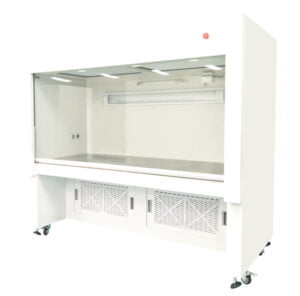
Another common challenge is upgrading an existing ISO 8 space to ISO 7. This often appears to require a full HVAC overhaul to meet the higher ACH and pressure stability demands. A lower-risk, capital-efficient pathway is to install a dedicated modular cleanroom pod or enhanced vertical flow hoods within the existing space. This achieves the higher classification for the specific process footprint without a full facility overhaul.
Strategic Solutions for Operational Stability
The table below summarizes common pressure control challenges and the strategic solutions to address them.
| Challenge | Consequence | Strategic Solution |
|---|---|---|
| Door Opening Recovery | 30-45 min classification recovery | Install gowning airlock |
| Airlock Benefit | Reduces recovery to <5 minutes | Provides filtered intermediate zone |
| ISO 8 to ISO 7 Upgrade | Often requires full HVAC overhaul | Use modular cleanroom or flow hoods |
| Solution Impact | Lower-risk capital expenditure | Targeted, product-focused control |
Source: ANSI/ASHRAE Standard 170: Ventilation of Health Care Facilities.
Selecting the Right Pressure Setpoints for Your Application
Application-Specific Analysis
Selecting specific setpoints within the 5-20 Pa range requires analysis of your specific application. For a standard ISO 7/8 cascade, 10-15 Pa is common, balancing stability with door-opening effort and energy cost. For HD compounding, the negative pressure range is mandated by USP <800>. The choice involves weighing operational stability against the lifetime energy cost of maintaining a higher differential.
Avoiding the Turbulence Threshold
The priority must always be stable, controlled airflow. Designers should avoid pushing differentials toward the upper limit of 20 Pa unless absolutely necessary for a specific containment risk, as this increases the risk of creating counterproductive turbulence. The goal is the minimum differential that reliably maintains directional flow under all operational conditions.
The Holistic Partner Imperative
Given the complexity of integrating standards, airtight construction, precise HVAC, and continuous monitoring, supplier selection is critical. End-users should seek partners offering holistic design-build-maintain expertise. This ensures the pressure regime is not an isolated specification but part of a fully integrated, compliant, and operational system designed for long-term performance.
Pressure Setpoint Selection Guide
The final table provides a concise guide for selecting pressure setpoints based on the primary application.
| Application Type | Typical Pressure Setpoint | Key Consideration |
|---|---|---|
| Standard ISO 7/8 Cascade | 10-15 Pa differential | Balance stability and energy cost |
| Hazardous Drug Compounding | -2.5 to -7.5 Pa (negative) | Mandated containment range |
| General Guidance Range | 5 to 20 Pa | Informative, not mandatory |
| Design Priority | Stable, controlled airflow | Avoids counterproductive turbulence |
Source: Technical documentation and industry specifications.
The decision framework for ISO 7 and ISO 8 pressure differentials hinges on three priorities: defining the primary function (protection vs. containment), validating control stability over simply meeting a number, and designing for operational reality, not just theoretical conditions. Your setpoint is a means to an end—proven, stable contamination control.
Need professional guidance to design and validate a pressure cascade that meets both standard and operational demands? The engineers at YOUTH specialize in integrating modular construction, precision HVAC, and monitoring systems into a compliant, turnkey cleanroom solution. We can help you navigate the informative guidelines to build a system with demonstrable control.
For a detailed consultation on your specific application requirements, you can also Contact Us.
Frequently Asked Questions
Q: Are the 5-20 Pascal pressure differentials between ISO 7 and ISO 8 cleanrooms a mandatory requirement?
A: No, the 5-20 Pa range specified in ISO 14644-4 is an informative guideline, not a strict mandate. Facilities can implement lower differentials, but this requires enhanced monitoring and validation to prove control stability. This means facilities seeking capital savings on HVAC must invest more in operational rigor and documentation to demonstrate equivalent contamination control.
Q: How do pressure requirements differ for hazardous drug compounding rooms compared to standard ISO 7 cleanrooms?
A: For hazardous drug containment per USP <800>, the ISO 7 buffer room must be under negative pressure (-2.5 to -7.5 Pa) relative to adjacent spaces. This inversion from standard positive pressure creates a design challenge. If your application involves hazardous materials, plan for a zoned design with buffer rooms to safely manage this pressure relationship without over-classifying all adjacent spaces.
Q: What is the key challenge when integrating Air Changes per Hour (ACH) with pressure differentials for ISO 7 and ISO 8 rooms?
A: The HVAC system must be precisely sized to deliver both the volumetric airflow for particle dilution (30 ACH for ISO 7 vs. 20 ACH for ISO 8) and the designed pressure cascade. This substantial performance gap means achieving both parameters requires careful system balancing. For projects upgrading from ISO 8 to ISO 7, expect to evaluate and likely upgrade your HVAC capacity, not just adjust setpoints.
Q: Why is pressure recovery time a critical design consideration, and how is it managed?
A: An ISO 8 room opening directly to an uncontrolled corridor can take 30-45 minutes to recover its classification, crippling operational efficiency. The solution is incorporating an airlock, such as an ISO 7 or ISO 8 gowning room, which can reduce recovery to under five minutes. This means facilities with frequent material or personnel transfers should prioritize airlock design to maintain batch process integrity and throughput.
Q: How does modular construction support better pressure control in cleanroom design?
A: Modular panels and sealed ceilings create an inherently airtight envelope, minimizing unintended air leakage that destabilizes pressure differentials. This integrity enables a strategic zonal approach, allowing a high-classification Critical Processing Zone within a larger, more cost-effective supporting shell. For scalable or product-focused strategies, modular units offer a pathway to targeted ISO 7 control without requiring a full facility built to that standard.
Q: What should cleanroom pressure validation cover beyond basic HVAC performance?
A: Validation must prove pressure stability under both “at-rest” and “in-operation” conditions, with continuous monitoring. Crucially, failures often stem from personnel practices and material flow, not the mechanical system. This means your commissioning plan should integrate procedural controls and gowning protocol validation. Investing in operator training provides a high return on investment for sustaining long-term compliance with ISO 14644-1 classification limits.
Q: What factors determine the specific pressure setpoint chosen within the 5-20 Pa guideline?
A: Setpoint selection balances operational stability, energy cost, and door-opening effort. A common cascade uses 10-15 Pa between ISO 7 and ISO 8 rooms. Given the interdependencies between standards, construction, and monitoring, selecting a partner with holistic design-build-maintain expertise is critical. This ensures your pressure regime is an integrated part of a compliant operational system, not just an isolated specification.
Related Contents:
- Fan Filter Unit Air Change Rate Calculation: Step-by-Step Formula for Cleanroom Classification
- How to Calculate CFM Requirements for Modular Cleanroom HVAC Systems
- What is Positive Pressure in Fan Filter Unit Systems and Why It Prevents Contamination
- The Complete Fan Filter Unit Guide for Cleanroom Managers: Technical Selection, Installation, and Performance Optimization 2025 Edition
- Modular Cleanroom Airflow Design and HVAC System Requirements: Complete Engineering Guide for ISO Classification Compliance
- The Complete Cleanroom Equipment Selection and Implementation Guide for Manufacturing and Life Sciences: 2025 Edition
- ISO 14644-1 Laminar Air Flow Compliance
- Air Pressure in Biosafety Pass Box for Cleanroom
- VHP Pass Box Pressure Control: ISO 14644 Compliance