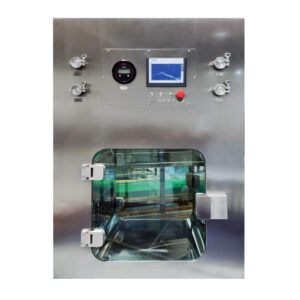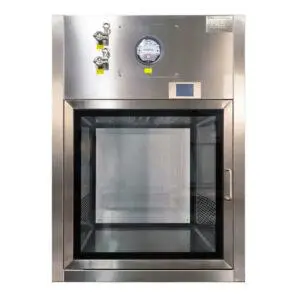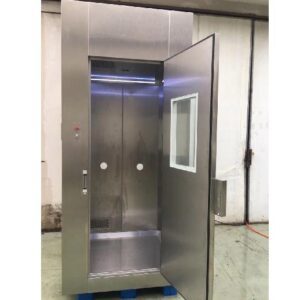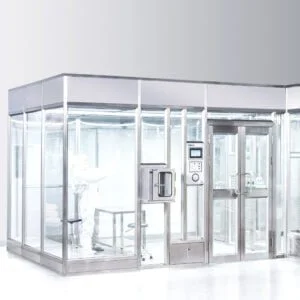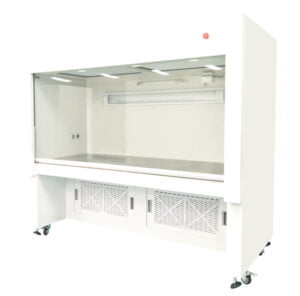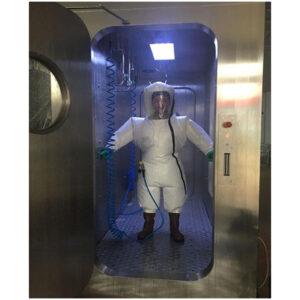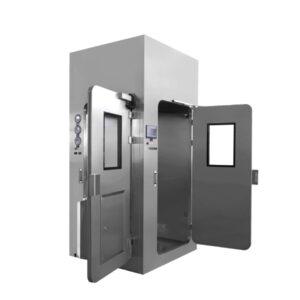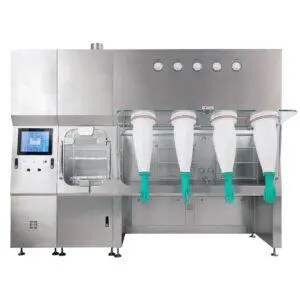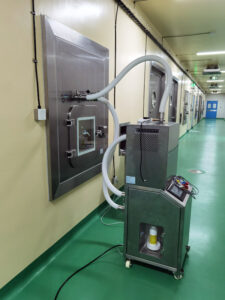
In pharmaceutical manufacturing, cleanroom furniture is not merely functional equipment but a critical component of contamination control. The material choice directly impacts product sterility, regulatory compliance, and operational longevity. A common misconception is that initial cost savings from alternative materials like plastics or coated steel justify their use, but this overlooks the systemic risk to aseptic processing.
The shift toward advanced therapies and stricter regulatory scrutiny makes material specification more urgent. Furniture must withstand aggressive sterilization, resist chemical degradation, and support validation protocols without compromise. This decision influences total cost of ownership, facility flexibility, and long-term product integrity.
Why Stainless Steel vs. Other Materials for Cleanrooms?
The Monolithic Advantage
Stainless steel’s dominance stems from its inherent stability. As a monolithic, non-porous material, it does not degrade, shed particles, or off-gas volatile organic compounds. This inertness is non-negotiable for maintaining ISO-classified environments. Plastics can outgas and degrade under UV light or chemical exposure, while coated metals risk chipping and creating particulate contamination. Industry experts recommend viewing furniture as an active part of the contamination control strategy, integrated with HVAC design from the outset.
Strategic Implications of Material Choice
Selecting alternative materials for lower upfront cost introduces unacceptable long-term risks. Easily overlooked details include the interaction between furniture surfaces and cleaning agents, which can degrade lesser materials over time. According to research from cleanroom validation studies, material incompatibility is a root cause of failed environmental monitoring. We compared integrated material strategies and found that stainless steel’s performance supports consistent compliance, whereas substitutes often lead to increased sanitation costs and audit observations.
Key Properties: Corrosion Resistance and Cleanability
Alloy Composition Dictates Performance
The operational advantages of stainless steel are not universal; they are dictated by alloy grade. Grade 316 contains 2% molybdenum, providing superior chloride resistance compared to grade 304. This is critical in areas using saline solutions or harsh sporicides. Grade 430, while lower cost, lacks the necessary corrosion resistance for pharmaceutical cleaning and poses a direct risk to product integrity. The choice is a fundamental technical decision with direct operational consequences.
Surface Finish as a Contamination Control Feature
The surface finish plays an equally critical role. A standard #4 brushed finish has microscopic grooves that can harbor microbes. Electropolishing creates a smoother, microbe-resistant surface. This process, often at a ~6% price premium, represents a direct investment in reducing bioburden and cleaning labor. In our validation work, we’ve measured significantly lower particle recovery from electropolished surfaces post-decontamination. The trade-off between initial cost and ongoing contamination risk must be evaluated against the facility’s specific product sensitivity and cleaning protocols.
Comparing Long-Term Cost of Ownership (TCO)
Beyond Initial Capital Expenditure
While stainless steel commands higher initial CAPEX, its true value is realized through superior Total Cost of Ownership. Its decades-long lifespan resists the dents, scratches, and corrosion that compromise lesser materials. This durability directly addresses emerging sustainability and ESG pressures, positioning fully recyclable stainless steel as the responsible choice for lifecycle management. The market’s tiered value proposition allows alignment of upfront costs with performance needs.
Evaluating the Total Cost Framework
A comprehensive TCO analysis must include replacement cycles, sanitation labor, and risk of contamination events. The table below illustrates the long-term economic drivers of different material choices.
| Material/Series | Key Cost Driver | Longevity & Impact |
|---|---|---|
| Stainless Steel (General) | Higher initial CAPEX | Decades-long lifespan |
| Budget Series | Lower upfront cost | Aligns with basic needs |
| Deluxe Series | Mid-range investment | Balanced performance |
| Spec-Master® Series | Premium specification | Meets critical requirements |
| Plastics/Coated Steel | Lower initial cost | Risk of degradation/replacement |
Source: Technical documentation and industry specifications.
Performance in Sterilization and Chemical Exposure
Engineered for Aggressive Processes
Pharmaceutical workflows demand rigorous sterilization, including autoclaving and exposure to vaporous hydrogen peroxide. Stainless steel, particularly grade 316, is engineered to withstand these processes without degrading. Suppliers now offer components like casters rated for autoclaving, enabling full sterilization of mobile units. This capability transforms cleanroom layouts from static to dynamic assets.
Future-Proofing Against Evolving Sterilants
As the industry advances toward biologics and cell/gene therapies, the use of harsher sterilants will increase. This evolution systematically shifts demand toward chloride-resistant 316 stainless steel as the new baseline. The following table outlines the material requirements for common processes.
| Process/Condition | Recommended Grade | Critical Feature |
|---|---|---|
| Autoclaving | Grade 316 | Withstands high heat/moisture |
| Hydrogen Peroxide Vapor | Grade 316 | Resists oxidative sporicides |
| High Chloride Exposure | Grade 316 | 2% Molybdenum content |
| General Chemical Exposure | Grade 304 | Suitable for less aggressive agents |
| Mobile Unit Sterilization | Grade 316 with casters | Full unit autoclave capability |
Source: Technical documentation and industry specifications.
Regulatory Compliance and Validation Advantages
Documentation and Material Traceability
In a cGMP environment, every material must be documented and qualified. Stainless steel supports compliance through full traceability; suppliers provide chemical composition and ISO grade references (e.g., A4 for 316). This documentation is as critical as the physical product for regulatory audits. The prominent “Made in the USA” claim is a strategic differentiator that speaks to supply chain transparency and adherence to recognized manufacturing standards like those outlined in ISO 14644-1:2015.
Furniture as a Validated System
Material specification is a compliance decision, not a cost-saving lever. The furniture itself becomes part of the validated cleanroom system. Its design must not interfere with the room’s ability to meet its classified ISO air cleanliness level consistently, as required by ongoing performance monitoring standards such as ISO 14644-2:2015. Failure to specify compliant materials can result in lengthy validation delays and costly remediation.
Design and Ergonomics for Pharmaceutical Workflows
Integrating with Contamination Control Principles
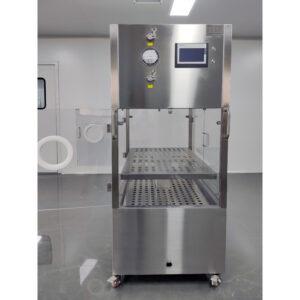
Effective cleanroom furniture integrates seamlessly into dynamic operations. Designs featuring perforated tops with ~40% air permeability are engineered to maintain unobstructed laminar airflow, a foundational principle of contamination control. Monolithic, seamless construction prevents microbial harborage at joints or seams. These features ensure the furniture supports, rather than hinders, the cleanroom’s performance.
Enabling Operational Flexibility
Mobility is a key design feature for modern, multi-product facilities. Tables on autoclave-resistant casters enable rapid reconfiguration for different batches or processes. This improves facility utilization and operational agility without compromising sterile integrity. The table below summarizes key design specifications and their benefits.
| Design Feature | Technical Specification | Operational Benefit |
|---|---|---|
| Perforated Table Top | ~40% air permeability | Maintains laminar airflow |
| Autoclave-Resistant Casters | Rated for sterilization | Enables workspace reconfiguration |
| Monolithic Construction | Non-porous, seamless | Prevents microbial harborage |
| Ergonomic Height Adjustment | Meets user workflow needs | Supports operator efficiency |
Source: ISO 14644-2:2015 Cleanrooms and associated controlled environments — Part 2: Monitoring to provide evidence of cleanroom performance related to air cleanliness by particle concentration. Furniture design must allow for effective cleanroom performance monitoring. Features like perforated tops must not disrupt air particle sampling or compromise the room’s ability to consistently meet its ISO classification during dynamic operations.
Selecting the Right Stainless Steel Grade and Finish
A Decision Framework for Specification
Selecting the appropriate grade requires alignment with the facility’s specific cleaning protocols, sterilants, and product sensitivity. Grade 304 is suitable for general use in less aggressive environments. Grade 316 is essential for areas with high chloride exposure. The finish must also be specified: electropolishing for critical zones, #4 brushed for standard applications. This decision framework prevents both under-specification, which risks contamination, and over-specification, which wastes capital.
Technical Comparison for Informed Selection
The following table provides a clear comparison to guide the specification process. Adherence to relevant standards like the GB 50591-2010 Code for construction and acceptance of cleanroom in applicable regions further ensures material compatibility within the built environment.
| Grade | Primary Use Case | Corrosion Resistance |
|---|---|---|
| 316 (A4) | Harsh chemicals/chlorides | Excellent (with Molybdenum) |
| 304 (A2) | General cleanroom use | Good |
| 430 | Cost-sensitive, non-critical | Low (Risks product integrity) |
| Finish | Surface Characteristic | Cleanability |
| Electropolished | Smooth, microbe-resistant | Highest (~6% price premium) |
| #4 Brushed | Common, microscopic grooves | Standard (can harbor microbes) |
Source: ISO 14644-1:2015 Cleanrooms and associated controlled environments — Part 1: Classification of air cleanliness by particle concentration. This standard defines the required cleanliness class for cleanrooms. The selected steel grade and finish must not contribute to particle generation or interfere with maintaining the specified ISO class, making material specification a direct compliance factor.
Implementing a Future-Proof Cleanroom Strategy
Proactive Specification for Advanced Therapies
A strategic approach looks beyond immediate needs. Specifying grade 316 steel accommodates future advanced therapies that require harsher sterilants. Choosing designs that enable flexibility, like mobile workstations, supports the trend toward multi-product facilities. This proactive investment builds operational resilience and avoids costly retrofits.
Partnering for Systemic Integration
Procurement should evaluate vendors as integrated contamination control partners. The shift toward vendors offering comprehensive portfolios—from modular cleanroom furniture and garments to full builds—signals the advantage of single-source partners who understand systemic interactions. This holistic approach reduces integration risk and ensures the furniture investment supports long-term compliance and adaptability.
The core decision points are material grade, surface finish, and design integration. Prioritize grade 316 stainless steel for its chemical resistance and future-proofing value. Specify electropolished finishes in critical zones to minimize bioburden. Select designs that maintain laminar airflow and enable operational flexibility. These choices form a defensible specification that supports product integrity and regulatory standing.
Need professional cleanroom furnishing solutions that align with this strategic framework? Explore the engineered solutions and material specifications available at YOUTH. For direct consultation on your specific application requirements, you can also Contact Us.
Frequently Asked Questions
Q: How does stainless steel grade selection impact long-term cleanroom performance and cost?
A: The choice between grades like 304 and 316 directly dictates corrosion resistance and lifespan. Grade 316, with its molybdenum content, is essential for areas using chloride-based chemicals or saline, while 304 may suffice for less aggressive general use. Opting for a lower-cost grade like 430 introduces significant contamination risk. This means facilities planning for biologics or harsh sterilants should specify grade 316 from the outset to avoid premature furniture failure and protect product integrity.
Q: What are the key factors in selecting a stainless steel surface finish for contamination control?
A: The surface finish critically influences cleanability and microbial harborage. A standard #4 brushed finish has microscopic grooves that can trap contaminants, whereas an electropolished finish provides a smoother, more resistant surface. This electropolishing typically adds a cost premium but reduces bioburden and cleaning labor. For critical zones or processes with stringent purity requirements, you should budget for an electropolished finish as a direct investment in your contamination control strategy.
Q: How does cleanroom furniture design affect compliance with air cleanliness standards?
A: Furniture must not disrupt the unidirectional laminar airflow required to maintain particle count limits. Designs like perforated tops with approximately 40% air permeability are engineered to prevent airflow obstruction. This integration is vital for meeting the ongoing performance monitoring requirements of standards like ISO 14644-2:2015. If your cleanroom operates to a strict ISO class, you must validate that furniture specifications support the room’s ability to pass continuous air cleanliness tests.
Q: Why is material traceability for stainless steel furniture a compliance requirement in pharmaceutical manufacturing?
A: In a cGMP environment, every material must be fully documented and qualified. Reputable suppliers provide certificates with the alloy’s chemical composition and corresponding ISO grade references (e.g., A4 for 316), ensuring full traceability. This documentation is as critical as the physical product for regulatory audits. This means your procurement process must treat material certification as a non-negotiable deliverable, not an optional accessory, to streamline audit readiness and facility validation.
Q: How can mobile stainless steel furniture improve operational flexibility in a cleanroom?
A: Tables equipped with autoclave-resistant casters enable rapid reconfiguration of workspaces for different batches or processes. This mobility transforms a cleanroom from a static layout into an adaptable asset, improving facility utilization and supporting multi-product manufacturing. For projects where operational agility or future process changes are anticipated, you should plan for mobile units to enhance workflow efficiency without compromising the sterile environment defined in your cleanroom classification per ISO 14644-1:2015.
Q: What should we consider when evaluating the total cost of ownership for cleanroom furniture?
A: Look beyond the initial capital expenditure to factors like decades-long durability, reduced replacement cycles, and lower sanitation labor due to superior cleanability. Stainless steel’s fully recyclable nature also addresses lifecycle management and ESG pressures. This means for a true TCO analysis, you must quantify the long-term risks and costs associated with the potential degradation, particle shedding, or frequent replacement of alternative materials.
Q: How do regional construction standards, like those in China, influence stainless steel furniture installation?
A: National codes, such as GB 50591-2010, set technical requirements for cleanroom construction and acceptance, including material compatibility and installation practices. Furniture must be non-shedding, cleanable, and installed in a way that does not compromise the validated built environment. For facilities being built or certified under such regional standards, you must ensure your furniture vendor understands and can demonstrate compliance with these specific integration and acceptance protocols.
Related Contents:
- The Complete Cleanroom Furniture Selection and Specification Guide for Contamination-Controlled Environments: 2025 Edition
- Aluminum vs Stainless Steel HEPA Housing Boxes 2025
- HPL Cabinets vs Stainless Steel: Which is Best for You?
- Cleanroom Furniture Material Selection Guide: Stainless Steel vs. Plastic vs. Melamine Performance Comparison for ISO-Classified Environments
- What Are the Key Regulations for Cleanroom Sinks?
- LAF Garment Cabinets: Stainless Steel Advantages
- Material Comparison for Laminar Air Flow Units
- Cleanroom Sinks: Stainless Steel vs. Epoxy Resin Comparison
- GMP Compliant Air Filters | FDA Requirements Cleanroom Validation