In contamination control, the exit strategy is as critical as the entry protocol. The transition from a contaminated zone to a clean area presents a persistent risk: secondary contamination. This occurs when decontamination processes inadvertently spread pollutants via air, water, or surface transfer, undermining safety and compromising controlled environments. The choice of decontamination system directly dictates the magnitude of this risk.
Traditional wet showers have been the default for decades, but their operational model is fundamentally at odds with modern containment principles. As regulatory scrutiny on cross-contamination vectors intensifies and total cost of ownership becomes a decisive factor, understanding the technological divergence between wet and mist systems is no longer optional. It’s a core component of operational risk management and facility design.
Mist Showers vs. Wet Showers: Defining the Core Difference
The Fundamental Operational Model
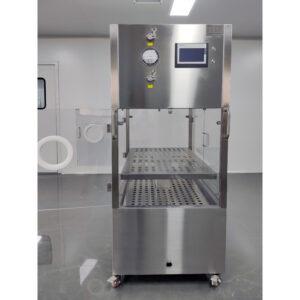
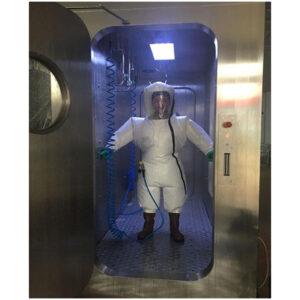
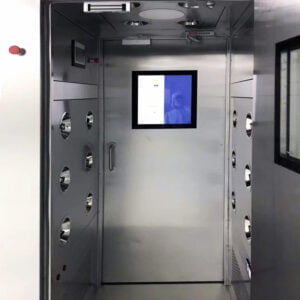
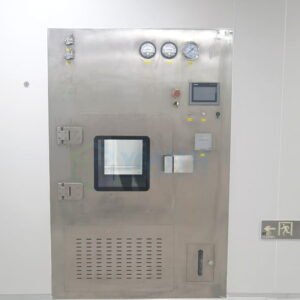
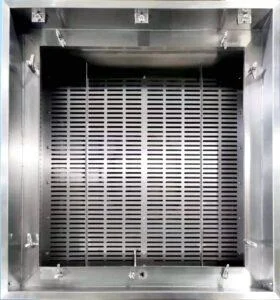
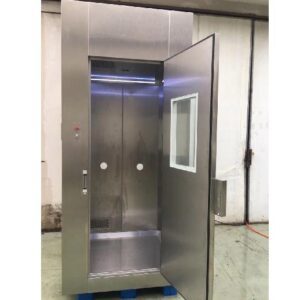
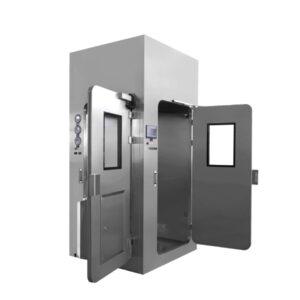
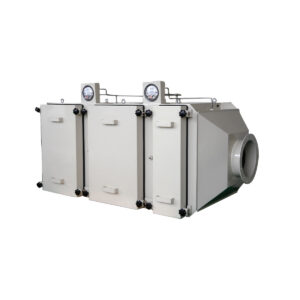
The divergence begins with first principles. Wet shower systems operate on a dilution and removal model, using a continuous stream of water to rinse contaminants from a person or object. The waste stream—a mixture of water and pollutants—flows into a drain, becoming a separate management challenge. In contrast, a mist or air shower functions on a closed-loop, dry-containment principle. It employs high-velocity, filtered air to dislodge particulates, which are immediately captured through a grated floor and processed by an integrated, multi-stage filtration system.
From Reactive to Proactive Containment
This core difference represents a paradigm shift from reactive washing to active capture. The wet method addresses the immediate surface but creates secondary vectors in water runoff and potential aerosolization. Industry experts recommend viewing decontamination as a system-wide challenge, not a point solution. The mist shower’s design embodies this by engineering controls for each contamination vector—air, surface, and waste—at the source. We compared system architectures and found the containment model inherently reduces pathways for pollutant migration.
The Strategic Implication for Risk
The shift to a capture-and-remove model directly addresses findings from cross-industry risk assessments that highlight multi-vector threats. A wet process can never fully eliminate the risk of spreading contaminants to drainage systems or adjacent areas. The dry-containment approach of a mist shower, however, is architected from the ground up to isolate and remove hazards, making it a strategically superior choice for environments where tracking contamination into a clean zone carries unacceptable consequences.
Operational Comparison: Containment vs. Runoff
Engineered Control of the Environment
Mist showers excel by creating a physically controlled environment. The enclosed chamber and recirculating air stream establish laminar or targeted airflow patterns, ensuring dislodged particles have a single, predetermined destination: the filtration system intakes. Parameters like high air changes per cycle are designed to scrub the chamber thoroughly. This level of engineered control is a direct application of principles found in standards for separative devices, which mandate performance criteria for containment.
Uncontrolled Vectors in Wet Systems
Conversely, wet shower operation introduces multiple uncontrolled variables. The hydraulic force of water can aerosolize liquid and particulate contaminants. Splash and runoff create a clear pathway for spreading pollutants to the surrounding floor area and into the drainage infrastructure. Easily overlooked details include the difficulty in containing and treating this contaminated water stream on-site. According to research on contamination control, secondary contamination is a systemic risk requiring controls for each vector; the wet shower’s design struggles with air, water, and surface vectors simultaneously.
A First-Hand Operational Perspective
In practice, the difference is stark. Managing the aftermath of a wet decontamination often involves secondary cleaning of the shower area itself, adding steps and risk. The dry, contained process of a mist system turns decontamination into a closed-loop event, with waste securely captured in filters for safe disposal. This operational efficiency is a critical advantage in high-throughput or high-risk settings.
Filtration Efficiency: Which System Captures More Contaminants?
The Integrated Filtration Hierarchy
Mist showers are defined by their progressive, in-process filtration, which is the engineering backbone of their efficacy. This staged approach is designed for maximum capture and system longevity. A typical sequence uses a high-capacity primary filter to capture the bulk of particulates, followed by a final polishing filter of exceptional efficiency. This design protects the more sensitive final filter and ensures the recirculated air is cleansed before re-entering the chamber.
The Absence of In-Process Capture
Wet showers have no equivalent mechanical capture stage within the decontamination event itself. Contaminants are simply diluted and transported by the water flow. Any subsequent capture relies entirely on the efficacy of downstream wastewater treatment facilities, which are separate, non-integrated systems often not designed for specific industrial toxins or particulates. This lack of immediate control is a significant liability.
The following table quantifies the filtration capability gap between the two systems:
Filtration Stage Performance
| Filtration Stage | Efficiency / Rating | System Application |
|---|---|---|
| Primary Filter | MERV 16 (>99% @ 0.08µm) | Mist Shower |
| Final Filter | HEPA (99.97% @ 0.3µm) | Mist Shower |
| In-Process Capture | None / Dilution Only | Wet Shower |
Source: ANSI/ASHRAE Standard 52.2. This standard defines the MERV rating system used to quantify the particle-size-dependent efficiency of air-cleaning devices, directly relevant to the primary filter performance in a mist shower system.
For particulate capture, the mist shower’s integrated, high-efficiency filtration is unequivocally superior. The use of a HEPA filter, tested to standards like ISO 29463, ensures virtually no liberated particulates are reintroduced into the chamber or escape into the environment.
Cost Analysis: Capital, Operating, and Total Cost of Ownership
Understanding the Full Financial Picture
Initial capital expenditure often favors traditional wet showers, which have lower upfront costs for hardware and enclosure construction. Mist showers, with their integrated blowers, filtration assemblies, and control systems, command a higher initial investment. However, procurement decisions based solely on CAPEX are short-sighted and can lead to higher long-term expenses and hidden liabilities.
The Operational Cost Divergence
Operating costs reveal the true financial divergence. Mist showers have predictable, scheduled costs centered on periodic filter changes and the energy required to run fans. Wet systems incur continuous, variable costs for significant volumes of water and sewer charges, plus potential energy for water heating. A critical and often underestimated cost driver for wet systems is the mandatory implementation of a Water Management Program (WMP) to control Legionella and other waterborne pathogens—a non-negotiable requirement for liability reduction.
A Total Cost of Ownership analysis clarifies the long-term financial impact:
Total Cost of Ownership Comparison
| Cost Category | Mist Shower | Traditional Wet Shower |
|---|---|---|
| Capital Expenditure (CAPEX) | Higher | Lower |
| Operating Costs | Filter changes, energy | Water, sewer, heating |
| Key Risk Cost Driver | Minimal contamination risk | Legionella WMP, remediation |
| Total Cost of Ownership (TCO) | Predictable, lower risk | Higher operational & risk costs |
Source: Technical documentation and industry specifications.
Factoring in Risk Costs
The TCO calculation must include the risk cost of a secondary contamination event. Remediation, operational downtime, regulatory fines, and health impacts can be catastrophic. The contained nature of a mist shower inherently mitigates this risk profile, providing a more predictable and ultimately lower TCO by design.
Secondary Contamination Risks: A Direct Side-by-Side Comparison
Mapping the Pathways of Failure
A direct, vector-based comparison crystallizes the risk profile of each system. Wet showers present four primary pathways for secondary contamination, each representing a failure point in the decontamination process. Mist showers are specifically engineered to negate these same vectors through their dry, closed-loop architecture.
The side-by-side analysis below details these critical differences:
Contamination Vector Analysis
| Contamination Vector | Mist Shower Risk | Wet Shower Risk |
|---|---|---|
| Aerosolization | Prevented by containment | High risk from water force |
| Splash & Runoff | None (dry process) | Primary pathway |
| Microbial Growth (Legionella) | Eliminated | High risk in stagnant water |
| Surface Transfer | Minimal | High from wet areas |
Source: Technical documentation and industry specifications.
The Microbial Amplification Factor
The wet shower’s requirement for extended “wet time” for certain disinfectants can exacerbate risk. If drying is not rapid and complete, residual moisture creates an ideal environment for microbial regrowth on surfaces. This turns the decontamination area into a potential contamination source. The mist shower’s dry process eliminates the waterborne amplification risk entirely, akin to how modern water systems eliminate stagnant reservoirs to prevent biofilm formation.
Systemic Risk Mitigation
Ultimately, the mist shower attacks contamination at the system architecture level. By removing water from the decontamination equation, it eliminates the most common and difficult-to-control vectors for secondary spread. This systemic approach is the most reliable method for protecting sensitive environments downstream.
Key Decision Criteria: How to Choose the Right System
Aligning Technology with Contaminant Profile
Selection is not about one technology being universally “better,” but about matching the system to the specific hazard and operational context. The physical and chemical nature of the contaminant is the foremost decision factor. Efficacy is highly context-dependent; a system perfect for one hazard may be inadequate or even dangerous for another.
Evaluating the Consequence of Failure
The potential impact of a failure—allowing contamination to breach a boundary—must be quantified. In environments like pharmaceutical cleanrooms or post-abatement exits, the consequence is high, warranting the superior containment of a mist shower. In emergency response scenarios where gross chemical or biological material is on skin, immediate dilution with copious water is the critical need, making a traditional drench shower the necessary choice.
The following framework helps guide the selection process:
Decision Framework for Decontamination Systems
| Decision Factor | Choose Mist Shower For… | Choose Wet Shower For… |
|---|---|---|
| Contaminant Type | Dry particulates, toxic dusts | Gross chemical/biological on skin |
| Consequence of Failure | Unacceptable clean zone tracking | Emergency response, dilution |
| Operational Context | Contamination-sensitive egress | Laboratories, industrial plants |
Source: Technical documentation and industry specifications.
The Imperative of Site-Specific Validation
The strategic implication is clear: product selection must be validated against a site-specific risk assessment, not generic marketing claims. This involves mapping personnel flows, identifying contaminant properties, and understanding the clean area’s sensitivity. For specialized dry particulate hazards, exploring engineered solutions like a dedicated cleanroom mist shower system is a logical step in this validation process.
Implementation & Maintenance: Space, Staffing, and Servicing
Infrastructure and Spatial Demands
Implementation requirements differ significantly. A mist shower requires dedicated space for the chamber and, crucially, planned access for maintenance—often rear or under-floor—to service filters, blowers, and controls. Its operation is independent of complex plumbing. A wet shower needs extensive infrastructure: potable water supply, drainage with appropriate waste handling, and potentially water treatment or tempering systems, dictating its location and increasing installation complexity.
Diverging Maintenance Regimens
The core maintenance tasks define the long-term staffing and expertise needs. Mist shower maintenance is technically focused on scheduled filter replacements and periodic verification of airflow parameters to ensure containment performance. Wet shower maintenance is dominated by water quality management—regular flushing, temperature monitoring, and biocide treatment—to mitigate the ever-present risk of Legionella, requiring diligent record-keeping.
The table below contrasts these operational requirements:
Implementation and Maintenance Requirements
| Requirement | Mist Shower | Traditional Wet Shower |
|---|---|---|
| Infrastructure | Chamber, mechanical access | Plumbing, drainage, water treatment |
| Core Maintenance Task | Scheduled filter replacement | Water quality management |
| Staff Expertise | Technical filter handling | Microbiology, Legionella control |
| Compliance Focus | Airflow verification | Flushing, biocide treatment logs |
Source: ISO 14644-7. This standard specifies requirements for separative devices like isolators, which share design principles with mist shower containment chambers, particularly regarding controlled environments and maintenance access.
The Rise of a New Specialization
This divergence signals the need for distinct competencies. Maintaining a mist shower blends mechanical engineering with contamination control logic. Managing a wet shower requires knowledge of microbiology and plumbing codes. This underscores the emergence of cross-contamination systems management as a specialized professional domain, combining technical skill with regulatory awareness.
Real-World Applications: Best Use Cases for Each Technology
Optimal Deployment of Mist Shower Technology
Mist showers are best deployed in contamination-sensitive egress scenarios where protecting the “clean side” of a boundary is paramount. Prime applications include exit portals from hazardous material handling (e.g., potent compound processing in pharmaceuticals, toxic dusts in battery manufacturing), egress from asbestos or mold abatement containment zones, and entry vestibules for high-grade electronics or aerospace cleanrooms. Their strength is ensuring personnel or tools do not become vectors for transferring dry particulates into controlled environments.
The Enduring Role of Traditional Wet Showers
Traditional wet showers remain essential, non-negotiable safety equipment in specific contexts. They are critical for emergency eyewash and body drench stations in laboratories, industrial chemical plants, and first-responder facilities. In these scenarios, the immediate need is copious dilution and removal of hazardous substances from the body, where speed and water volume are the primary performance metrics.
The Future: Convergence and Intelligence
The future of decontamination lies in the intelligent integration of both principles within holistic facility designs. This could involve sequential use or systems with hybrid capabilities. Furthermore, “smart” monitoring—logging airflow performance in mist showers and water quality parameters in wet systems—will provide auditable compliance data trails. This data-driven approach anticipates stricter future regulations focused on demonstrable risk control and will be key for facilities managing complex contamination portfolios.
The decision between mist and wet decontamination systems hinges on a clear-eyed assessment of the contaminant, the consequence of its spread, and the operational reality of your facility. For dry particulates where secondary tracking is a critical failure, the closed-loop containment of a mist shower offers superior risk mitigation and a predictable operational cost profile. For emergency chemical or biological exposure, the immediate dilution of a wet shower is irreplaceable. The priority is to move beyond a one-size-fits-all approach and implement a strategy where technology choice is dictated by a validated site-specific risk assessment.
Need professional guidance to specify the right containment solution for your critical environment? The engineers at YOUTH specialize in translating contamination control challenges into engineered decontamination systems, from risk assessment to final validation.
Frequently Asked Questions
Q: How does the filtration performance of a mist shower system compare to a wet shower’s wastewater handling?
A: Mist showers deliver superior particulate capture through integrated, multi-stage filtration, typically using a primary filter rated at MERV 16 or higher followed by a final HEPA stage. Wet showers lack in-process filtration, relying on dilution and external wastewater treatment. This means facilities managing fine, hazardous particulates like toxic dusts or mold spores should prioritize a mist system’s contained filtration to prevent environmental release and protect clean zones.
Q: What are the key operational risks of secondary contamination from traditional emergency showers?
A: Wet showers present four primary risk pathways: aerosolization of contaminants, splash and runoff spreading material, microbial growth like Legionella in stagnant water, and surface transfer from wet areas. The system’s design inherently struggles to control these vectors. For operations where tracking contaminants into adjacent clean areas carries high consequence, you must implement engineered controls that address air, water, and surface vectors, which a wet shower alone cannot provide.
Q: When should we choose a mist shower over a traditional wet shower for decontamination?
A: Select a mist shower for dry particulate hazards and environments where preventing cross-contamination into clean zones is critical, such as exits from hazardous material handling or abatement containment. A wet shower remains necessary for emergency response to gross chemical or biological contamination on skin. This means your product selection must be validated against site-specific contaminant types and the operational consequence of secondary spread, not generic claims.
Q: How do maintenance requirements differ between mist and wet decontamination systems?
A: Mist shower maintenance focuses on scheduled filter replacements and airflow verification, requiring technical staff trained in safe filter handling. Wet shower upkeep is dominated by water quality management—flushing, temperature control, and biocide treatment to mitigate Legionella risk—demanding different expertise. For projects where reducing long-term water treatment complexity and associated liability is a goal, plan for the technically focused, dry maintenance regimen of a mist system.
Q: What standards govern the high-efficiency filtration used in containment systems like mist showers?
A: The performance of final HEPA filters in such systems is classified and tested according to ISO 29463, which specifies methods for high-efficiency particulate air filters. For evaluating the particle-size efficiency of general ventilation air-cleaning devices, the ANSI/ASHRAE Standard 52.2 MERV rating system is foundational. This means specifying filters for a new containment system requires referencing these standards to ensure documented capture efficiency for your target particle sizes.
Q: How does the total cost of ownership (TCO) compare between these two decontamination technologies?
A: While mist showers have a higher initial capital cost, their TCO often proves favorable due to predictable operating expenses for filter changes and minimal water or sewer charges. Wet systems incur continuous utility costs and mandatory, rigorous water management programs to control microbial risk. If your financial analysis includes the potential cost of contamination incidents and remediation, the contained mist system’s lower inherent risk profile positively impacts long-term TCO.
Q: What are the critical space and installation considerations for a mist shower?
A: Installing a mist shower requires dedicated space for the chamber and mechanical access, typically at the rear or under-floor, for the blower and filtration modules. This contrasts with wet showers, which need significant plumbing, drainage, and water treatment tie-ins. For facility layouts where adding new water lines or managing extensive drainage is prohibitive, the mist shower’s mechanical footprint and dry installation may offer a more feasible implementation path.
Related Contents:
- Water Quality in Chemical Showers: Management Tips
- Decontamination Shower Types | Air vs Water vs Chemical Systems
- Chemical Shower Activation Sensors: Latest Innovations
- Water Supply for Chemical Showers: System Design Guide
- Emergency Chemical Shower Rooms: Quick Response Guide
- Enclosed Chemical Shower Rooms: Privacy and Safety
- Chemical Shower Troubleshooting: 10 Common Issues
- Pharmaceutical Decontamination Showers | Industry Best Practices
- Stainless Steel Chemical Shower Rooms: Durability Guide