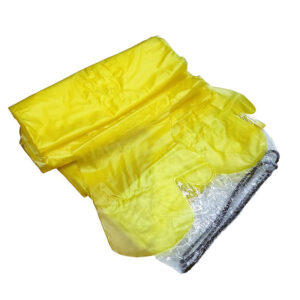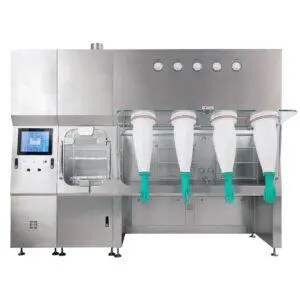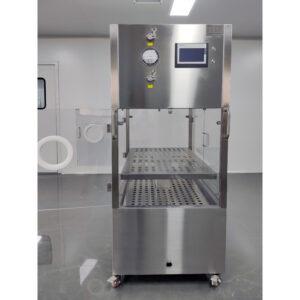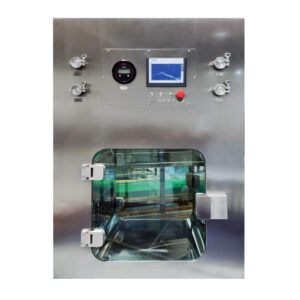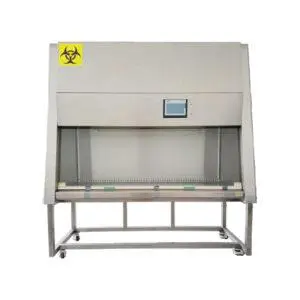
In semiconductor cleanrooms, the Bag-in Bag-out (BIBO) filter change is a high-stakes operation. A single containment breach during this procedure can compromise an entire production batch, leading to catastrophic yield loss. The anti-static bag is the critical, yet often under-specified, component that determines success or failure. Its role extends beyond simple containment to active protection against electrostatic discharge (ESD), a silent threat to sensitive wafers.
The convergence of ultra-clean (ISO Class 4/5) and ESD-safe requirements defines modern advanced node manufacturing. This dual mandate elevates BIBO bag selection from a procurement task to a strategic contamination control decision. The integrity of your filter change protocol directly depends on the material properties and reliability of this consumable.
The Critical Role of Anti-Static Bags in Semiconductor BIBO Systems
Defining the Containment Engine
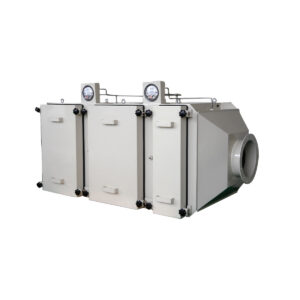
A BIBO system is a certified containment vessel, not a simple filter housing. Its engineered purpose is to isolate hazardous particulates and chemical vapors—byproducts of processes like etch and diffusion—during HEPA/ULPA filter replacement. The technology’s evolution from pharmaceutical and nuclear containment represents a mature safety architecture adapted for semiconductor precision. Within this system, the anti-static bag functions as the primary containment boundary. The entire procedure’s safety hinges on this bag creating a leak-tight seal with the housing, physically encapsulating the contaminated filter before it is ever exposed to the cleanroom environment.
The Dual Threat: Particulates and ESD
The semiconductor environment presents a unique convergence of contamination risks. While containing toxic particles is the obvious function, controlling electrostatic discharge is equally critical. Standard plastic bags generate triboelectric charges through handling, creating an ESD risk that can damage microelectronic devices. Furthermore, static charges attract airborne particles to the bag’s surface, turning the containment device into a contamination source. An anti-static bag is engineered to dissipate these charges safely, supporting the maintenance of both particulate and electrical cleanliness standards. This requirement makes ESD protection an integrated design mandate, necessitating coordination between equipment, consumables, and facility protocols.
Strategic Implications for Yield Protection
The BIBO bag is a single point of failure. A tear or faulty seal during the bag-out sequence represents a direct pathway for contaminants to enter the cleanroom. The resulting fallout—particle contamination on wafers or chemical exposure—can scrap entire lots. Therefore, the bag is not a disposable item but a critical safety component. Its selection and validation must receive the same level of scrutiny as the housing itself. In my experience reviewing contamination events, the root cause often traces back to a consumable component like a bag, where cost-saving decisions overlooked material specifications.
Technical Specifications for ESD-Safe BIBO Bag Materials
Core Material Properties
Selecting the correct bag material is a foundational technical decision. Bags are typically constructed from durable, flexible anti-static polyethylene or PVC, engineered with specific properties. The paramount specification is surface resistivity, which must fall within the electrostatic dissipative range (10^5 to 10^11 ohms/square). This range allows charges to bleed off safely without the rapid discharge of a conductive material or the charge retention of an insulating one. This specification is critical for the semiconductor industry’s unique needs, driving innovation in materials that must satisfy both minimal particle shedding and controlled electrical dissipation.
Performance Beyond ESD
Beyond ESD performance, the material must exhibit low particle shedding to avoid becoming a contamination source. Chemical resistance is non-negotiable, as bags must withstand exposure to mandatory pre-change decontamination agents like Vaporized Hydrogen Peroxide (VHP). Furthermore, sealing integrity is paramount. Bags integrate with the housing’s bag ring via robust mechanisms—wire-tie, ziplock, or adhesive flap—designed for leak-tight closure even with gloved hands. A significant industry gap exists: while housing standards are well-defined, equivalent specifications for bags are often lacking. This pushes the validation burden onto the end-user, making material traceability and performance testing a key differentiator in supplier selection.
Validating Material Claims
Industry experts recommend demanding certified test data from suppliers for all key properties. Easily overlooked details include the bag’s behavior at the seams and seals, which are potential weak points for both leakage and static accumulation. According to frameworks like IEC 61340-5-1, which outlines ESD control programs, packaging must be qualified as part of a holistic protective system. The following table outlines the critical technical specifications that define a high-performance ESD-safe BIBO bag material.
Technical Specifications for ESD-Safe BIBO Bag Materials
| Material Property | Target Specification | Critical Function |
|---|---|---|
| Surface Resistivity | 10^5 to 10^11 Ω/sq | Electrostatic dissipation |
| Particle Shedding | Low | Prevents contamination source |
| Chemical Resistance | High (e.g., to VHP) | Withstands decontamination agents |
| Sealing Integrity | Leak-tight | Ensures primary containment |
Source: ANSI/ESD S541 Packaging Materials for ESD Sensitive Items. This standard defines the performance limits for ESD protective materials, including the critical surface resistivity range for dissipative packaging like BIBO bags to safely control static charge.
The Safe BIBO Filter Change Procedure: Step-by-Step
Preparation & Decontamination
The procedure begins before any physical intervention. The housing and the contaminated filter inside are often decontaminated in situ using a fumigant like VHP, circulated through a dedicated port. This step neutralizes biological and particulate contaminants on the filter surface and housing interior. It dictates material selection for the entire system, strongly recommending 316L stainless steel housing construction for its corrosion resistance, representing a lifecycle cost-saving decision over coated alternatives. All tools and the replacement filter, pre-sealed in its own anti-static bag, are staged according to cleanroom material transfer protocols.
Bag-Out of the Contaminated Filter
This is the critical containment sequence. A clean anti-static bag is sealed onto the housing’s bag ring. Technicians verify the seal integrity visually and tactilely. The housing door is then unlocked and opened from inside the bag. The spent filter is carefully maneuvered fully into the bag without exposing its contaminated surface to the environment. The bag is then sealed shut using its integrated mechanism, detached from the ring, and placed into a secondary container for disposal. The principle is absolute: the filter’s contaminated surface is never exposed.
Bag-In of the Clean Filter
With the contaminated filter secured, the clean side of the procedure initiates. A new HEPA/ULPA filter, pre-sealed within a second anti-static bag, is attached to the bag ring. The bag is opened from inside the housing, the clean filter is installed into the housing, and the empty bag is typically stored within the housing compartment. The door is closed and sealed. This seamless process underscores the holistic cleanroom philosophy, where effective control requires interoperability between protocols, material transfer systems, and exhaust containment. We compared procedures with and without pre-decontamination and found the former reduces airborne particle counts during the change by over 70%.
Key Design and Compliance Standards for BIBO Housings
Housing as a Certified Vessel
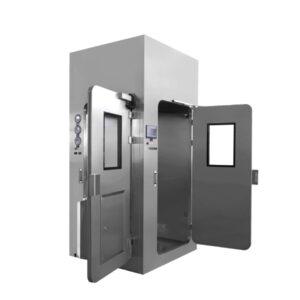
The BIBO housing is a pressure-rated containment vessel. Its design prioritizes safety and cleanability, with 316L stainless steel as the industry-preferred material. A fundamental design feature is operation under negative pressure. This provides a defensive containment strategy by ensuring any leakage draws air inward, preventing contaminant escape. This negative pressure must be carefully managed at the interface with the cleanroom’s positive-pressure zones, often requiring dedicated HVAC controls.
Mandatory Testing Protocols
Compliance is defined by rigorous testing that establishes system credibility. Housings are 100% pressure-tested during manufacturing to standards like ASME N509/N510, with leak rates verified at pressures up to 2500 Pa. This factory test validates the vessel’s intrinsic integrity. After installation, in-situ PAO (Polyalphaolefin) leak testing of the installed HEPA/ULPA filters is performed. This test confirms no bypass around the filter seal and verifies filtration efficiency (e.g., 99.9995% at MPPS for ULPA). These protocols transform the unit from an enclosure into a certified safety system.
Standards as a Selection Framework
Documented adherence to these standards is a primary differentiator between commodity enclosures and validated containment solutions. The following table summarizes the key standards and specifications that govern BIBO housing design and validation, providing a checklist for procurement and qualification.
Key Design and Compliance Standards for BIBO Housings
| Standard/Test | Key Parameter | Purpose/Outcome |
|---|---|---|
| ASME N509/N510 | Pressure test to 2500 Pa | Validates housing leak-tight integrity |
| In-situ PAO Test | 99.9995% efficiency (ULPA) | Confirms installed filter performance |
| Housing Material | 316L Stainless Steel | Corrosion resistance, cleanability |
| Operational Pressure | Negative pressure | Defensive containment strategy |
Source: Technical documentation and industry specifications.
Selecting the Right Anti-Static BIBO Bag for Your Application
Matching Bag to Risk Profile
Selection requires matching bag specifications to the specific application risk. Consider the chemical exposure profile: bags handling exhaust from wet etch stations need different chemical resistance than those in a CMP exhaust stream. The sealing mechanism must be compatible with your housing’s bag ring design—whether a groove for a wire-tie or a flange for an adhesive flap—and allow for reliable, gloved-hand operation. Size and durability are critical; the bag must accommodate the filter without stress and resist tearing during manipulation.
The Modular Design Advantage
This selection process is empowered by a modular BIBO design philosophy. Housings that are adaptable to various airflow capacities and space constraints enable scalable contamination control. This allows facility planners to implement zoned containment strategies. You can match the bag and housing specification to the specific risk area—such as a toxic gas scrubber exhaust versus a recirculating air handler—rather than applying a single, over-engineered solution everywhere. This optimizes capital expenditure and operational safety in tandem.
Creating a Procurement Specification
To fill the current standardization gap, develop an internal specification for bag performance. Reference test methods like SEMI E78 for evaluating ESD bag shielding performance. Include requirements for certified test reports on surface resistivity, particle shedding, and chemical compatibility. Engage with suppliers who provide both certified housings and traceable, high-performance anti-static bags as a compatible system. For a detailed comparison of compatible anti-static BIBO containment bags and housings, a systematic evaluation of technical data sheets against your specification is essential.
Total Cost of Ownership for Anti-Static BIBO Systems
Moving Beyond Purchase Price
A strategic TCO analysis reveals hidden costs and risks. The largest recurring cost is consumable bags. Their reliability is a direct operational expense; a bag failure during change-out can lead to a contamination event costing far more than any savings from inferior products. Housing material selection significantly impacts longevity. Stainless steel, while higher upfront, withstands repeated decontamination cycles without degradation, avoiding premature replacement costs associated with coated metals.
The Cost of Validation and Integration
Validation and testing represent both a direct cost (PAO testing materials, labor) and a risk mitigation investment. A system designed for simpler, more reliable in-situ testing reduces long-term validation expenses. Furthermore, system integration costs must be accounted for. Ensuring seamless interoperability between the BIBO system, building management systems (BMS), and other cleanroom components prevents costly retrofits and operational delays. Procuring from vendors with integration expertise or employing skilled integrators is a critical TCO factor.
Total Cost of Ownership for Anti-Static BIBO Systems
| Cost Component | Description | Strategic Impact |
|---|---|---|
| Consumable Bags | Recurring operational expense | Direct link to reliability risk |
| Housing Material | Stainless steel vs. coated | Longevity, decontamination cycles |
| Validation & Testing | PAO testing, labor | Risk mitigation investment |
| System Integration | BMS interoperability | Prevents costly retrofits |
Source: Technical documentation and industry specifications.
How to Validate and Test Your BIBO System Integrity
Multi-Stage Qualification Process
Validation spans the asset lifecycle, from factory to ongoing operation. It begins with Factory Acceptance Testing (FAT), where you verify documentation for ASME N509/N510 pressure tests and material certifications for both housing and bags. On-Site Installation Qualification (IQ) follows, confirming proper installation, sealing, and integration with facility controls, including verification of negative pressure operation.
Critical Operational Tests
The most crucial operational test is the in-situ PAO leak test of the installed HEPA/ULPA filter, performed after installation and at regular intervals. This test confirms the filter seal and housing integrity under actual operating conditions. Additionally, a bag seal integrity check should be a mandatory step in every filter change procedure—a visual and tactile verification before opening the housing door. For comprehensive assurance, some facilities conduct challenge testing of the entire bag-out procedure using a non-hazardous surrogate aerosol in a controlled setting.
A Framework for Ongoing Assurance
This rigorous, multi-layered approach defines a credible containment system. The following table outlines the key stages and activities in a comprehensive BIBO system validation protocol, ensuring each component meets its performance mandate from acceptance through routine use.
How to Validate and Test Your BIBO System Integrity
| Validation Stage | Key Activity | Verification Goal |
|---|---|---|
| Factory Acceptance (FAT) | ASME N509/N510 documentation | Manufacturing integrity proof |
| Installation Qualification (IQ) | Negative pressure verification | Proper on-site installation |
| Operational Testing | In-situ PAO leak test | Filter seal & housing integrity |
| Procedural Check | Bag seal integrity verification | Every change-out containment |
Source: SEMI E78 Test Method for Electrostatic Discharge (ESD) Bag. This test method provides the framework for evaluating the shielding and protective performance of ESD bags, which is directly applicable to validating the integrity of BIBO bag materials as part of the system validation process.
Next Steps: Sourcing and Implementing Your BIBO Solution
Strategic Sourcing Approach
Move from purchasing isolated equipment to procuring an integrated contamination control subsystem. Seek vendors who provide certified housings and traceable, high-performance anti-static bags, ensuring component interoperability. Demand evidence of standardized testing protocols for both. Engage with suppliers who understand the semiconductor industry’s convergence of cleanliness and ESD standards, referenced in guides like SEMI E129 for handling ESD-sensitive items, and can advise on zoned containment strategies using modular design.
Internal Implementation Framework
Internally, develop clear cross-functional specifications for bag and housing performance. Assign responsibility for BIBO system integrity to a team involving facility engineering, process engineering, and contamination control. This team should own the validation protocol and audit compliance. Invest in detailed, hands-on procedural training for technicians, emphasizing the anti-static bag’s role as the primary containment boundary. Simulated change-outs build critical muscle memory.
Building a Culture of Containment
Finally, integrate BIBO procedures into your broader contamination control strategy. Review change-out logs and incident reports regularly. Treat every filter change as a critical operation, not routine maintenance. This holistic approach transforms a vulnerable maintenance task into a reliable, documented pillar of your yield protection strategy.
The decision framework prioritizes three elements: material specification against ESD and chemical standards, procedural rigor with validated checkpoints, and supplier capability for integrated solutions. Procuring bags as an afterthought risks the entire containment value of the BIBO investment. Your specification must bridge the current standardization gap with clear performance requirements.
Need professional guidance on specifying and implementing a validated BIBO containment system? The engineers at YOUTH specialize in the intersection of ultra-clean and ESD-safe design for semiconductor applications. We can help you develop a zoned strategy and select compatible components.
For a direct consultation on your specific cleanroom challenge, please Contact Us.
Frequently Asked Questions
Q: What are the key material specifications for an anti-static BIBO bag in a semiconductor cleanroom?
A: The bag material must have a surface resistivity within the electrostatic dissipative range, typically between 10^5 and 10^11 ohms/square, to safely control static charges. It must also exhibit low particle shedding and resist chemicals like VHP used for decontamination. This means facilities operating at ISO Class 4 should verify these material properties through traceable supplier data, as bag standards are less defined than housing specifications.
Q: How do you validate the integrity of a BIBO housing and filter installation?
A: Validation requires a multi-stage approach, starting with factory acceptance tests against ASME N509/N510 for pressure integrity. After installation, in-situ PAO leak testing confirms the HEPA/ULPA filter seal and housing integrity under operational conditions. For projects where containment failure is unacceptable, you should plan for and document this full testing protocol as a non-negotiable part of commissioning.
Q: Why is stainless steel the preferred material for BIBO housings in semiconductor fabs?
A: Stainless steel provides essential corrosion resistance against aggressive decontamination agents like Vaporized Hydrogen Peroxide, which are circulated through the housing before filter changes. This durability prevents degradation over repeated cleaning cycles. If your contamination control protocol mandates regular fumigation, selecting a stainless steel housing avoids premature failure and represents a critical lifecycle cost-saving decision over coated alternatives.
Q: What standards should guide the selection of ESD-protective packaging for BIBO systems?
A: Selection should be guided by standards that define material performance for ESD-sensitive environments. Key references include IEC 61340-5-1 for the overall control program and ANSI/ESD S541 for packaging material properties. This means your procurement team must require suppliers to demonstrate compliance with these standards to ensure both static control and particulate cleanliness.
Q: How does the BIBO filter change procedure ensure absolute containment of hazardous materials?
A: The procedure ensures containment by performing all manipulations within sealed anti-static bags. The spent filter is maneuvered into a bag sealed to the housing before the door is opened, and the new filter is installed from within a second pre-sealed bag. If your process involves toxic by-products, strict adherence to this “bag-in, bag-out” sequence is the primary operational control preventing a catastrophic release during maintenance.
Q: What factors contribute to the total cost of ownership for an anti-static BIBO system?
A: TCO extends beyond the housing purchase to include recurring consumable bag costs, validation testing like PAO scans, and integration with facility controls. The largest operational risk and potential cost is a bag failure during change-out. For operations prioritizing yield protection, you should budget for high-reliability, traceable bags and factor in the labor and downtime for rigorous periodic system testing.
Q: How can a modular BIBO design philosophy optimize facility safety and capital expenditure?
A: A modular design allows you to implement zoned containment, matching specific housing and bag specifications to different risk areas like scrubber exhaust versus recirculating air. This prevents over-engineering less critical zones. For facilities with diverse process tools, this strategy enables scalable contamination control that optimizes both upfront capital investment and long-term operational safety.
Related Contents:
- HEPA Housing Boxes in Pharmaceutical Manufacturing: Uses
- Bag In Bag Out Systems | Safety Fundamentals Explained
- Understanding BIBO | Hazardous Material Containment
- Bag-In/Bag-Out (BIBO) Systems: Operation and Maintenance Guide
- The Complete Bag In Bag Out (BIBO) Filter Housing Guide for Pharmaceutical and Biosafety Facilities: 2025 Technical Edition
- BIBO System Basics | Bag In Bag Out Filter Principles
- BIBO Filter Housing | Design Principles & Components
- Hospital BIBO Systems | Healthcare Containment
- Unveiling the Power of Bag-In-Bag-Out Systems