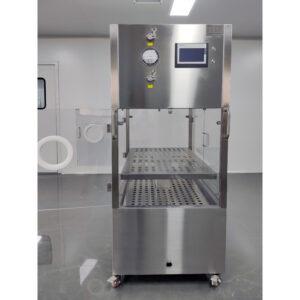
GMP pharmaceutical projects that look well-funded at capex approval frequently arrive at commissioning underfunded — not because the equipment was mispriced, but because qualification services, customs duties, and filter replacement schedules were never modeled as first-order budget inputs. A facility team that purchases HEPA filtration units at an attractive OEM price, skips factory acceptance testing to protect that saving, and then discovers dimensional mismatches on arrival can easily spend more resolving the qualification delay than the original price difference. The decisions that determine whether a cleanroom project finishes on budget are mostly made in the first eight weeks of planning, before a single purchase order is issued. What follows gives procurement managers and facility engineers the cost structure, trade-offs, and failure patterns they need to build a defensible budget from the first estimate.
Capital Equipment Cost Ranges: ISO Class Benchmarks for Key Equipment Categories
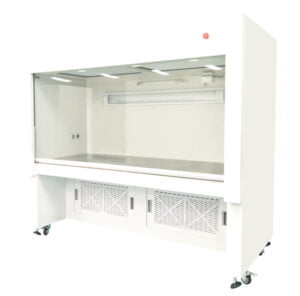
The most common early-stage mistake is building a budget around structural cost alone and treating equipment as a downstream line item. In practice, the HVAC and air filtration package is not a separate procurement — it is the dominant cost driver of the cleanroom itself, and its specification directly determines the ongoing operating cost for the life of the facility.
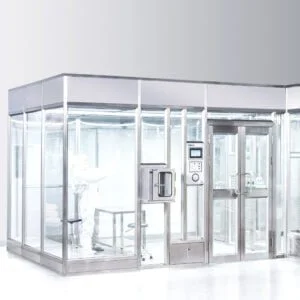
For a 100 m² ISO 7 pharmaceutical cleanroom, modular build costs run roughly $120–$250 per square foot for the core structure and envelope. That range is wide by design: it reflects the difference between a lean, standardized layout with off-the-shelf panel systems and a fully customized facility with elevated ceiling heights, complex segregation requirements, or specialized surface finishes. Geography and local contractor rates shift those figures further. The HVAC system typically represents 25–40% of total modular cleanroom cost, which means that on a 100 m² build at the midpoint of the range, HVAC alone can account for $200,000–$400,000 before any filtration hardware or controls are counted. Teams that budget HVAC as a residual — what is left after structure and finishes — routinely reach equipment procurement with an underfunded mechanical scope.
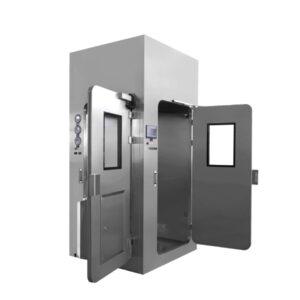
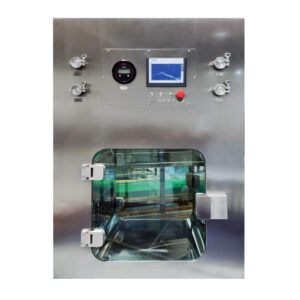
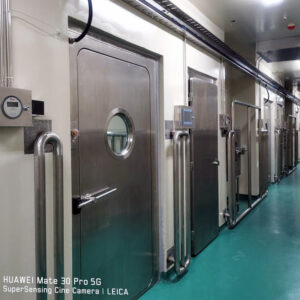
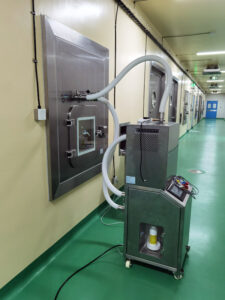
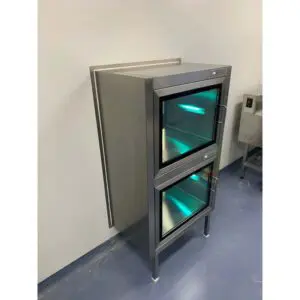
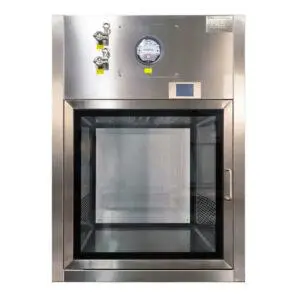
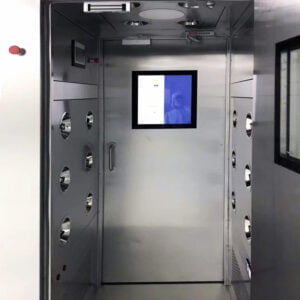
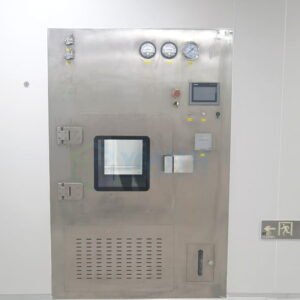
The airlock and pass-through category is where incremental costs accumulate in ways that early estimates miss. A standard airlock adds $15,000–$30,000 to project cost per unit; a VHP-rated pass-through box with interlocked doors and sterilization validation support sits at the higher end of that band or above it, depending on chamber size and documentation requirements. Facilities with multiple grade transitions — an ISO 5 filling zone inside an ISO 7 background, for example — can require three or four such transitions, which means $60,000–$120,000 in pass-through infrastructure before any process equipment is considered. More detail on VHP pass-through cost structures is available in a dedicated guide on VHP passbox pricing.
The 2–3× spread between OEM Chinese manufacturer pricing and European or US branded equipment with full documentation packages is real and well-documented. It does not represent a quality gap by default, but it does represent a documentation and support gap that has direct consequences at qualification. Equipment supplied without adequate Factory Acceptance Test protocols, calibration certificates, or CE documentation does not fail in operation — it fails in the IQ/OQ documentation review, which is where GMP auditors look first. Choosing the lower-cost supply path is a legitimate strategy, but only when the qualification documentation requirements are specified in the purchase contract and verified before shipment.
| Component / Scope | Cost Metric | Typical Range |
|---|---|---|
| Modular Cleanroom (ISO 7) | Cost per square foot | $120 – $250 / sq.ft. |
| HVAC System | Percentage of total modular cleanroom cost | 25 – 40% |
| Standard Airlock | Additional project cost | $15,000 – $30,000 |
ISO 14644-1:2015 defines the particle concentration limits that determine ISO class, and those limits directly govern the air change rates, filtration efficiency, and ceiling coverage that set the hardware specification. The cost tiers in the table above are not regulatory minimums — they are industry design benchmarks. What the standard does anchor is the performance envelope that the equipment must deliver; the cost of achieving that performance varies significantly with supplier, geography, and design philosophy.
HVAC and Air Filtration: First-Cost vs. Energy Cost Over a 10-Year Horizon
HVAC procurement decisions made to minimize capex approval numbers frequently produce the worst total cost of ownership outcomes in the cleanroom category. This is not a general principle about energy efficiency — it is a specific structural feature of pharmaceutical HVAC, where air change rates are high, systems run continuously, and even modest efficiency differences compound materially over a ten-year horizon.
Energy-efficient HVAC systems typically carry a 15–30% higher first cost compared to standard-specification alternatives. Over the same asset life, they tend to deliver 20–40% reductions in annual operational energy cost. Whether that trade-off is favorable in a given project depends on system sizing, operating hours, local utility rates, and how aggressively the facility pursues setpoint relaxation during non-production periods — so these ranges should be treated as planning-horizon illustration rather than guaranteed savings. That said, even at the conservative end of both ranges, the payback calculation tends to turn within two to four operating years for a full-time pharmaceutical facility, after which the efficiency premium is fully recovered and the ongoing cost advantage persists for the remaining asset life. Presenting only the first-cost comparison at capex approval, without a ten-year operating cost model, skews the decision toward the option that looks cheaper on paper but costs more in use.
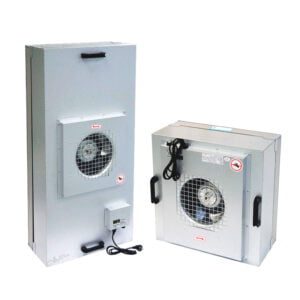
The fan filter unit selection is where this trade-off is most actionable. FFU units with EC (electronically commutated) motors consume significantly less power than AC motor equivalents at the same airflow, and the cost difference between motor types is modest relative to a decade of energy spend. The critical variable is ceiling coverage ratio: a higher HEPA ceiling coverage percentage reduces the air velocity required per unit, which reduces motor load nonlinearly — meaning the energy efficiency benefit of EC motors compounds with good layout design rather than substituting for it.
A less discussed first-cost input is the ductwork and air handling unit sizing that supports the HEPA terminal filter layer. Undersizing the AHU to reduce capital cost forces higher static pressure across the filter media, which increases both energy consumption and filter loading rate, shortening replacement intervals. A system that appears cheaper at procurement can therefore create higher annual filter replacement costs and higher energy costs simultaneously — a double-efficiency penalty that does not show up in the initial equipment quote.
Qualification and Validation Costs: IQ/OQ/PQ Budget Allocation by Project Scale
Qualification cost is the line item most frequently absent from early-stage capex estimates, and its absence is the single most reliable predictor of a facility project finishing over budget. Teams that treat IQ/OQ/PQ as a downstream procurement decision — something to price after the equipment is selected — routinely discover that qualification and commissioning support adds 25–40% on top of the hardware purchase price. For a $300,000 equipment package, that is $75,000–$120,000 in qualification services that was never in the budget.
The structure of that cost matters for planning. Installation Qualification (IQ) covers physical verification: equipment is installed as specified, utilities are correctly connected, and documentation matches the as-built configuration. Operational Qualification (OQ) verifies that the equipment performs within its specified operating range under controlled test conditions. Performance Qualification (PQ) demonstrates consistent performance under actual production conditions over a defined period. Each stage requires protocol preparation, execution documentation, and often third-party witnessing or review — and each stage can generate deviations that require investigation, corrective action, and re-testing before the next stage can proceed. The protocol preparation alone for a multi-room GMP facility can represent a substantial fraction of total qualification cost before a single test is run.
ISO 14644-2:2015 sets out the monitoring requirements that provide ongoing evidence of cleanroom performance after initial classification — meaning the qualification investment does not end at commissioning. It establishes the framework within which periodic reverification is conducted, and the instrumentation, calibration records, and monitoring data generated during IQ/OQ/PQ become the baseline against which ongoing compliance is assessed. ISPE Baseline Guide Vol. 3 provides the design-level framework for what sterile manufacturing facilities need to demonstrate at qualification, which informs the depth of protocol required.
The project scale dependency is significant. A single-room ISO 7 facility with a defined equipment list and a straightforward HVAC system can be qualified with a relatively compact protocol set. A multi-room facility with ISO 5 aseptic zones, personnel and material airlocks, VHP sterilization systems, and integrated environmental monitoring represents a qualification scope that can run to hundreds of protocol pages and require months of execution time. Buyers who benchmark qualification cost against a simpler project often underestimate by a factor of two or more. The practical check is to price qualification services explicitly, at the same time as equipment, before the capex estimate is submitted for approval — not after.
Maintenance and Filter Replacement: Annual Operating Cost Modeling for Common Configurations
Annual operating cost for a GMP cleanroom is often modeled as a single HVAC energy line, with filter replacement treated as a minor consumable. In practice, filter replacement typically accounts for 10–20% of total annual operating cost — a share that is material enough to affect total cost of ownership comparisons between equipment configurations, particularly when filter grade and air change rate interact.
That 10–20% figure is a planning criterion, not a fixed industry standard. It varies with filter grade (H13 versus H14 HEPA versus ULPA), with the number of terminal filter positions in the ceiling grid, with the upstream pre-filtration strategy, and with the particulate loading from the process being run. A filling line generating minimal airborne contamination in an ISO 7 background room will load filters at a very different rate than a granulation or powder-handling area at the same ISO class. Using a flat percentage without adjusting for process type will either under-provision the maintenance budget or over-provision it by a wide margin.
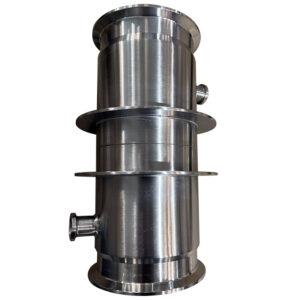
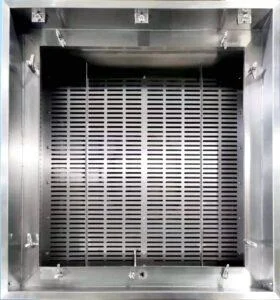
The upstream filtration strategy is the most controllable lever for reducing filter replacement frequency and cost. Mini-pleat HEPA and ULPA filters sized correctly relative to face velocity will consistently outperform standard pleat configurations in both loading capacity and replacement interval. Bag filters or high-efficiency panel filters at the AHU inlet remove the coarse particulate load that would otherwise reach the terminal HEPA layer, extending its service life. The capital cost of a robust pre-filtration stage is modest relative to the terminal filter hardware it protects; its lifecycle benefit materializes in reduced replacement frequency and lower qualification disruption, since terminal filter changeouts in a GMP facility require re-certification of the affected zones before production can resume.
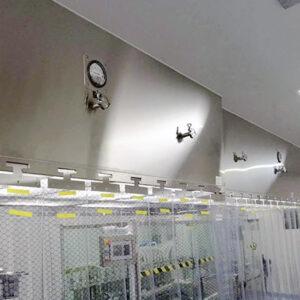
A realistic annual operating cost model for a 100 m² ISO 7 facility should include: terminal filter replacement (frequency driven by differential pressure monitoring), pre-filter replacement at the AHU (typically quarterly to semi-annual), calibration of monitoring instrumentation, periodic particle count surveys under ISO 14644-2:2015 monitoring schedules, and any gasket or seal inspection associated with the filter housing and wall/ceiling panel system. The last item is frequently omitted: panel joint integrity and filter housing seal integrity are critical to maintaining ISO class, and deterioration is gradual enough that it is missed without a scheduled inspection protocol.
Cost Reduction Levers: Modular Construction, Standardized Equipment, and Phased Build Strategies
Cost reduction in cleanroom procurement is most effective when it operates at the design decision level rather than the negotiation level. Negotiating 3% off a quoted equipment price after scope is fixed has far less impact than making the right specification choices at concept stage.
Modular construction versus traditional stick-built is the most consequential of those choices for most projects. Modular systems deliver a 15–30% lower initial investment compared to conventional construction, with the additional advantage of shorter installation timelines and higher predictability on scope. The trade-off is in flexibility: a modular system built to a standard panel grid is more constrained in room geometry than a poured-concrete build, and facilities with unusual equipment footprints or complex segregation requirements may find that the customization required to accommodate them erodes much of the modular cost advantage. The lever is most effective when room geometry is resolved at concept stage and the layout is designed to fit the modular grid rather than adapted to it after the fact. For a deeper look at the operational and flexibility case for modular systems, the modular cleanroom benefits overview addresses the design constraints and conditions where this approach delivers the most value.
Standardization of equipment components — using catalogue-standard FFU sizes, pre-validated filter housing configurations, and uniform panel dimensions — typically delivers 10–20% cost reduction versus fully custom solutions. The downstream benefit extends beyond unit price: standardized components reduce qualification documentation burden because the equipment family already has a validation history, and they reduce spare parts inventory requirements. Custom equipment, even when it appears justified at the design stage, often creates a long-tail maintenance cost that is not apparent at procurement.
Classification optimization is a lever that requires clinical judgment rather than blanket application. Downgrading a non-critical area from ISO 5 to ISO 6 can reduce cost for that zone by approximately 18% — primarily through reduced HEPA ceiling coverage, lower air change rates, and simpler monitoring requirements. The risk is classification creep in the opposite direction: facilities that under-specify a zone to reduce capital cost and later introduce a process step that requires the higher classification must retrofit the HVAC, re-qualify, and often reconfigure the ceiling grid. The saving reverses into a cost premium. Classification decisions should be made against the intended process envelope, including a realistic forward view of product pipeline, not solely against the first product to be manufactured.
| Cost Reduction Lever | Description | Typical Cost Impact |
|---|---|---|
| Standardized Components | Using standardized components over fully custom solutions | 10 – 20% reduction |
| Classification Optimization | Optimizing a non-critical area from ISO 5 to ISO 6 | ~18% reduction (for that area) |
| Modular Construction | Modular cleanroom vs. traditional stick-built construction | 15 – 30% lower initial investment |
A phased build strategy — qualifying and operating a smaller initial footprint with designed-in expansion capability — is a risk management tool as much as a cost reduction lever. It defers capital spend on capacity that may not be needed at launch, but it requires that the expansion interface points are engineered into the first phase rather than retrofitted. Expansion joints, HVAC header sizing, and electrical infrastructure capacity need to be specified at initial design for a phased strategy to work without a costly re-commissioning cycle when the second phase is built out.
The 15–20% contingency reserve that experienced procurement managers apply above quoted equipment price reflects the documented frequency of specification changes, currency movements on international equipment packages, and qualification rework. It is not pessimism — it is a calibrated response to a category where the gap between the early estimate and the final landed, validated cost is structurally larger than in most capital equipment procurement. Teams that submit capex estimates without this reserve frequently find themselves seeking supplemental approval mid-project, which creates schedule pressure that in turn drives the kind of shortcut decisions — skipping FAT, accepting incomplete documentation, deferring pre-filter infrastructure — that generate the highest remediation costs.
The most reliable cost control decision in a GMP cleanroom project is resolving the full cost structure — equipment, qualification services, customs classification, and annual operating model — before the capex estimate is submitted, not after. The hardware price is the most visible input and often the least volatile one. What drives final project cost is the interaction between specification quality, supplier documentation readiness, and qualification scope — none of which are negotiable at the procurement stage without consequences elsewhere.
Before approving a cleanroom equipment budget, confirm that IQ/OQ/PQ costs are itemized explicitly, that filter classification and HS code have been reviewed with a customs broker, that the AHU sizing reflects the ten-year energy model rather than just the first-cost target, and that the contingency reserve accounts for the documentation and rework risks specific to your supply chain path. Those checks cost nothing to perform and protect against the most common reasons pharmaceutical facility projects arrive at qualification underfunded.
Frequently Asked Questions
Q: What happens to our qualification timeline if we source equipment from an OEM Chinese manufacturer and something fails the IQ/OQ documentation review after delivery?
A: Expect significant schedule disruption — often longer and more costly than the price difference that motivated the sourcing decision. Equipment that passes functional inspection on arrival can still fail Installation Qualification if calibration certificates are missing, CE documentation is incomplete, or as-built dimensions deviate from specification. At that point, the corrective path requires either supplier-provided remediation documentation (which can take weeks to obtain internationally) or re-testing with third-party support, both of which delay OQ and PQ execution. The risk is not hypothetical: it is the documented failure mode for OEM procurement where factory acceptance testing was skipped or qualification documentation requirements were not written into the purchase contract before shipment.
Q: Should the customs HS code classification for our HEPA filter package be confirmed before or after the purchase order is issued?
A: Before — ideally during the budgeting phase, not at the point of import. HEPA filters correctly classified under HS 8421.39 attract 0–5% duty in most markets, but misclassification as general industrial filtration equipment can trigger 15–25% duty rates. On a large filtration package, that difference can materially exceed the savings from negotiating unit price. Confirming classification with a customs broker at the budgeting stage protects the landed cost estimate and avoids a duty reclassification dispute that creates both cost and schedule exposure at the point of clearance.
Q: If we design the facility for the first product in our pipeline and later introduce a process that requires a higher ISO class in a zone we downgraded to save cost, what does remediation realistically involve?
A: Retrofitting a zone to a higher ISO class is substantially more disruptive and expensive than specifying it correctly at the outset. The scope typically includes increasing HEPA ceiling coverage density, raising air change rates (which may require AHU resizing or additional fan filter units), reconfiguring the monitoring system, and re-qualifying the affected zone from IQ through PQ before it can be used for the new process. In an operating facility, this work must be conducted without contaminating adjacent classified areas, which adds containment and scheduling complexity. The 18% capital saving from downgrading a non-critical zone reverses into a cost premium once retrofit, requalification, and production downtime are included — which is why classification decisions should be made against the full intended process pipeline, not just the first product.
Q: We have a fixed capex envelope. Is it better to invest in a higher-specification HVAC system upfront or allocate that budget toward a more comprehensive qualification package?
A: These are not directly substitutable — both are required, and underfunding either creates a different category of risk. That said, if the choice is between a higher-efficiency HVAC system and a compressed qualification scope, the qualification package should not be the variable that is cut. An underfunded IQ/OQ/PQ program creates regulatory exposure and can prevent the facility from operating at all until deficiencies are resolved. A standard-efficiency HVAC system, by contrast, creates a higher ongoing energy cost and potentially shorter filter replacement intervals — real costs, but ones that materialize over time and do not block initial operation. The more productive approach is to apply the 15–20% contingency reserve as a budget protection mechanism from the start, rather than treating qualification and HVAC efficiency as competing line items within a fixed number that was set before the full cost structure was modeled.
Q: Once the cleanroom is commissioned and qualified, what is the first scheduled maintenance action that most teams overlook in their annual operating model?
A: Panel joint and filter housing seal integrity inspection is the most consistently omitted item. Terminal filter replacement, pre-filter changeouts, and particle count surveys under ISO 14644-2:2015 monitoring schedules are typically included in annual operating models, but gasket and seal condition in the wall, ceiling, and filter housing assemblies is rarely given a scheduled inspection protocol. Deterioration is gradual enough that it is not detected by routine particle counting until the ISO class boundary is actually breached — at which point an unplanned re-qualification event is triggered. Including a defined seal inspection interval in the annual maintenance schedule costs very little and prevents the most common source of unexpected re-certification scope in an otherwise well-maintained GMP cleanroom.
Related Contents:
- Cleanroom Filter Replacement Cost | Budget Planning Guide
- Cleanroom Equipment Cost Analysis | ROI Calculator 2025
- Biosafety Purification Equipment Cost | ROI Analysis | Budget Planning
- Generic Cleanroom Equipment vs Brand Name Comparison
- Cleanroom Equipment: How to Select and Specify the Right Systems for Your ISO Class and Application
- BIBO Price Comparison | Budget Guide & Cost Factors
- Modular BIBO Designs: Flexibility for Your Facility
- Cleanroom Equipment Pricing | Budget Planning | Cost Comparison
- Decontamination Shower Cost | ROI Analysis for Cleanroom Facilities