Replacing a filter in a hazardous containment system is a high-stakes procedure where a single breach can compromise personnel safety, environmental controls, and regulatory compliance. The core challenge isn’t just swapping a component; it’s executing a controlled containment transfer. Professionals must navigate a complex protocol that balances operational downtime against the absolute necessity of zero leakage. Misconceptions that BIBO is merely a specialized filter housing can lead to inadequate training and procedural shortcuts.
Attention to meticulous BIBO protocols is critical now as occupational exposure banding tightens and biopharmaceutical production scales. The financial and legal repercussions of a containment failure during maintenance have never been higher. A systematic, safety-first approach is the only viable path for handling toxic powders, potent compounds, or pathogenic agents.
Core Components of a BIBO Filter System
More Than a Housing: An Engineered Control
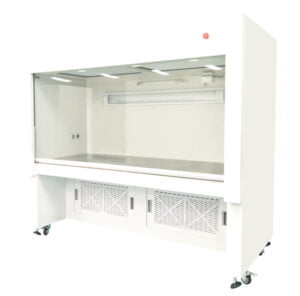
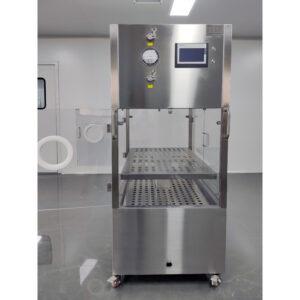
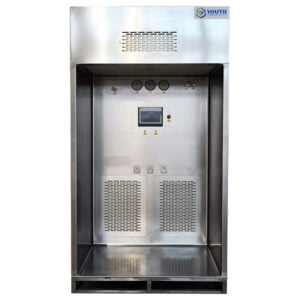
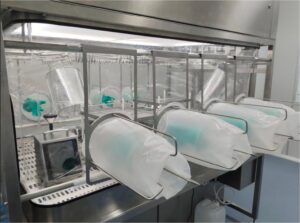
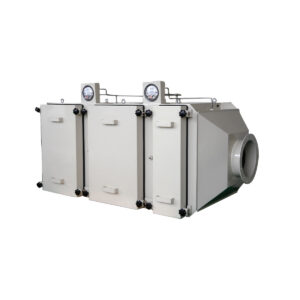
A Bag-In/Bag-Out system is fundamentally a risk containment system for maintenance operations. Its value is realized during the filter change-out, not just during normal operation. The housing is a sealed unit, typically constructed from coated carbon steel or stainless steel, designed with side-mounted access doors to facilitate the bagging procedure. This architecture is the physical foundation for the closed-system transfer that defines BIBO safety.
Customizable Filtration and Critical Features
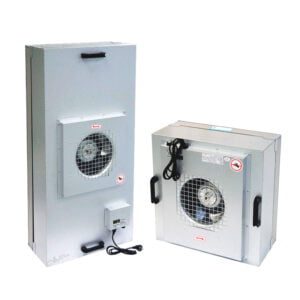
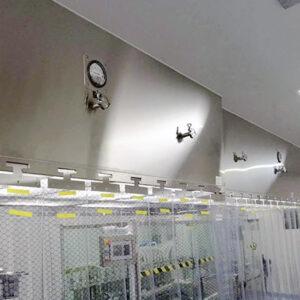
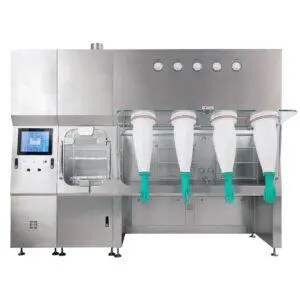
Internally, the system is highly configurable based on the specific hazard profile. A single HEPA filter may suffice for certain applications, while others require a multi-stage arrangement like a pre-filter followed by a primary HEPA, or even a dual-HEPA setup for the highest containment levels like OEB5. Key functional components are integrated for safety and verification: a bag collar for attaching containment bags, integrated gloves for internal manipulation, and pressure ports for in-situ integrity testing. A differential pressure gauge is essential for monitoring filter loading to schedule changes proactively.
The Procurement Imperative: Risk Assessment First
Industry experts consistently emphasize that BIBO procurement cannot be generic. The selection of filter stages, bag material compatibility (e.g., anti-static, chemical-resistant), and features like decontamination ports must be meticulously derived from a thorough process hazard analysis. We compared standard and custom housings and found that overlooking this customization phase is a common source of later procedural inadequacy.
Understanding the System Architecture
The table below outlines the key physical components that enable the BIBO containment function.
| Component | Key Feature | Typical Material/Type |
|---|---|---|
| Housing | Sealed unit construction | Coated carbon steel |
| Filter Stages | Multi-stage arrangement | Pre-filter + HEPA |
| Key Ports | In-situ leak testing | Pressure ports |
| Differential Gauge | Monitors filter loading | Pressure gauge |
| Bag Collar | Attaches containment bags | Integrated fitting |
Source: Technical documentation and industry specifications.
The 8-Step Safety Procedure for BIBO Change-Out
A Protocol of Contained Transfers
The BIBO change-out is a defined containment protocol where procedural complexity is the direct trade-off for achieving the highest level of protection. It transforms a high-exposure task into a series of closed, controlled steps. The fundamental paradigm is performing maintenance within a sealed, disposable barrier, a concept with potential for re-engineering other risky procedures.
The Sequential Safety Framework
The eight critical steps provide a fail-safe framework. They begin with system shutdown and isolation using physical valves or blanks—a step often rushed but vital for eliminating energy or flow that could disrupt containment. This is followed by meticulous worksite and PPE staging. The core physical sequence involves deploying the primary bag, removing the contaminated filter into it, and executing a twist-seal-cut maneuver to create two sealed halves. Installation then uses a bag-within-a-bag technique for the new filter before final reassembly and mandatory integrity testing.
Evaluating the Operational Trade-Off
This multi-bag process is inherently more complex and time-consuming than a standard filter change, requiring specialized training and causing operational downtime. Facilities must weigh this against the significant reduction in exposure risk and potential regulatory liability. The business case should be framed in risk finance terms: the procedural cost is often dwarfed by the latent financial risk of a single contamination event.
The Definitive Change-Out Sequence
The following table details the critical path for a safe BIBO filter replacement.
| Step | Key Action | Primary Objective |
|---|---|---|
| 1 | System shutdown & isolation | Isolate energy/hazard source |
| 2 | Pre-installation preparation | Stage PPE and materials |
| 3 | Access door removal | Deploy primary containment bag |
| 4 | Contaminated filter removal | Transfer hazard to primary bag |
| 5 | Primary bag sealing/severing | Create two sealed halves |
| 6 | New filter installation | Use bag-within-a-bag technique |
| 7 | Final closure & reassembly | Re-establish housing integrity |
| 8 | Integrity testing | Validate zero-leakage performance |
Source: Technical documentation and industry specifications.
Critical PPE and Worksite Preparation for Safety
PPE: A Risk-Based Decision
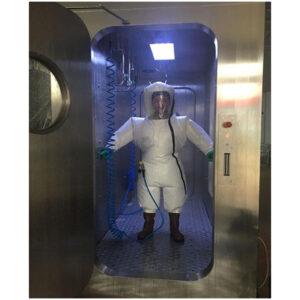
Before breaching the housing, personnel must don appropriate Personal Protective Equipment based on a site-specific hazard risk assessment. This is not a one-size-fits-all requirement. For potent compounds, a full air-fed suit may be necessary; for certain biological agents, a powered air-purifying respirator (PAPR) with appropriate filtration may suffice. The selection must consider the potential for exposure during a hypothetical worst-case procedural failure.
Staging the Worksite for Success
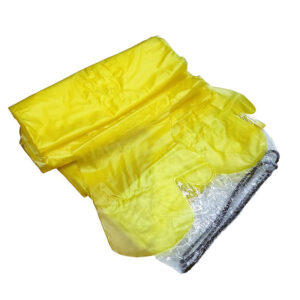
Concurrent with PPE donning, the worksite must be meticulously staged. All tools, the pre-bagged replacement filter, secondary containment bags, sealing clamps, and waste receptacles must be within reach but outside the potential contamination zone. A critical, often overlooked, prerequisite is verifying that a clean, heavy-duty PVC containment bag is correctly pre-installed on the housing’s internal bag collar and neatly folded within the still-sealed housing. This preparation underscores that BIBO is a holistic safety protocol, not just a hardware solution.
The Bag as a Critical Component
The bag material itself is a key safety component. It must possess the tensile strength to handle the filter weight, be anti-static to prevent ignition risks with combustible powders, and be chemically compatible with the contaminants. Using a generic plastic bag invalidates the containment promise. From experience, improper bag selection or faulty pre-installation is a frequent root cause of procedural compromise during the change-out.
How to Safely Remove and Bag a Contaminated Filter
Operating Within the Sealed Environment
After the access door is removed and the pre-installed empty bag is deployed, the operator uses the housing’s integrated gloves to manipulate components inside this sealed environment. The contaminated filter is carefully disconnected and pulled from its housing slot directly into the primary containment bag. This step requires controlled movement to avoid tearing the bag or generating aerosolized particles from the loaded filter media.
The Twist, Seal, and Sever Maneuver
Once the filter is fully inside the bag, the core containment action occurs. The bag neck is twisted tightly between the filter and the housing collar to create a temporary sealed isolation of the hazard. A permanent clamp is then applied upstream of the twist. The bag is severed below this seal, typically using a dedicated tool accessed via a glove port. This action creates two sealed halves: one containing the hazardous waste, and the other remaining on the collar to maintain the housing’s environmental seal.
Embodiment of the Closed-System Principle
This meticulous process embodies the core BIBO principle of maintaining a closed system at every step. The hazardous filter is never exposed to the ambient environment or the technician. The sealed waste bag can then be safely transferred to a secondary overpack container for disposal. The integrity of the worksite remains intact, which is the ultimate goal of the procedure.
Installing the New Filter with Secondary Containment
The Bag-Within-a-Bag Technique
Installation uses a layered containment method to preserve the cleanliness of the housing interior and the new filter. A new, empty secondary bag is installed over the half-bag remaining on the collar. The new filter—which should itself be supplied in a protective bag—is then introduced into this secondary bag. The operator manipulates the filter within this secondary containment.
Completing the Transfer and Securing the Filter
The critical move is to then pull the old half-bag from the collar up into the secondary bag, past the new filter. This action ensures any residual debris on the old bag collar is captured within the secondary containment and does not fall into the clean housing. Once the old bag is clear, the new filter is positioned and secured into its housing slot. For multi-stage housings, this entire process is repeated sequentially for each filter stage.
The Operational and Design Advantage
This layered strategy is the operational manifestation of BIBO’s risk-containment promise. It enables the safe indoor placement of hazardous collection systems. Full containment allows dust collectors or exhaust systems handling toxic materials to be installed indoors, eliminating the cost and efficiency loss associated with long exterior duct runs required for non-contained units that must vent directly outside for safe maintenance. For facilities integrating such systems, selecting the correct BIBO containment bag and housing system is a foundational decision.
Post-Replacement Integrity Testing and Recommissioning
Non-Optional Validation
Following reassembly, system validation is essential. Before reopening isolation valves or restarting airflow, an integrity leak test must be performed. This test is the final proof that the “zero-leakage” promise of the BIBO procedure functions as designed. Skipping this step assumes perfect execution—an unacceptable risk in high-containment applications.
Executing the In-Situ Leak Test
The test involves introducing a polydispersed aerosol (like PAO or DOP) upstream of the filter bank. A calibrated photometer probe is then used to meticulously scan the perimeter of each filter seal, the housing gasket seams, and the bag collar area. Any leak is detected as a spike in particle concentration downstream. The test must be conducted per relevant standards to ensure accuracy and repeatability.
The Shift to Digital Monitoring
The total cost of ownership for a BIBO system must include ongoing certification and validation services. The next evolution is integrated digital monitoring, where IoT sensors provide real-time differential pressure data, potential bag-seal integrity alerts, and digital audit trails for safety reporting. This data feeds directly into facility-wide Environmental, Health, and Safety (EHS) platforms.
Standards-Based Leak Testing Protocol
The definitive method for post-replacement validation is outlined in the following standard.
| Test Component | Method | Standard/Instrument |
|---|---|---|
| Aerosol Introduction | Upstream polydispersed aerosol | PAO, DOP, or similar |
| Leak Scan | Photometer scanning | Per IEST/ISO standards |
| Test Areas | Filter seals & gaskets | Full perimeter scan |
| System Restart | Post-leak test confirmation | Valve reactivation |
Source: IEST-RP-CC034.3. This recommended practice provides the definitive procedure for conducting in-situ leak tests on HEPA filter installations, which is the critical final validation step for a BIBO change-out.
When Is In-Situ Decontamination Required?
A Decision Driven by Hazard Level
For extremely high-hazard biological agents (e.g., Risk Group 4 pathogens, select toxins), physical removal is insufficient. In-situ decontamination is required to inactivate pathogens on the filter surface before any handling occurs. This step is dictated solely by the biological risk assessment, not by convenience. It occurs after system isolation but before the bag deployment step of the change-out procedure.
Process and Housing Requirements
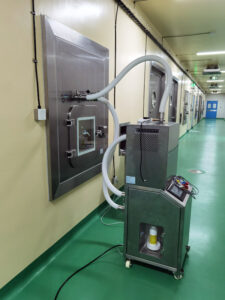
BIBO housings designed for this purpose include sealed ports for introducing gaseous decontaminants like vaporized hydrogen peroxide (VHP) or formaldehyde. The entire filter and housing interior undergo a gassing cycle. The need for this feature reinforces that BIBO systems are highly customized solutions. The efficacy of any decontamination cycle must be rigorously validated using biological indicators placed at challenging locations within the housing.
A Specialized Market Segment
This requirement further segments the market, pushing facilities handling high-consequence biologics toward vendors with specialized expertise in bio-containment and cleanroom protocols. The validation data from decontamination cycles becomes a critical part of the facility’s safety and regulatory documentation.
Criteria for Decontamination
The decision matrix for implementing in-situ decontamination involves several key factors.
| Criteria | Requirement | Typical Agent |
|---|---|---|
| Hazard Level | Extremely high-hazard biological agents | Pathogens, select toxins |
| Process Timing | Before bag deployment | Post-isolation, pre-removal |
| Housing Feature | Integrated gas ports | VHP or formaldehyde |
| Validation | Rigorous cycle efficacy testing | Biological indicators |
Source: Technical documentation and industry specifications.
Developing Your Site-Specific BIBO Safety Protocol
Beyond the Generic Manual
A generic equipment manual procedure is inadequate for a live hazardous environment. A site-specific safety protocol must integrate three core elements: the exact equipment specifications, the validated hazard profiles of the materials handled, and the applicable regulatory frameworks (OSHA, EU directives, etc.). This protocol becomes the governing document for all change-out activities.
Protocol Content and Competency
The protocol should detail PPE requirements based on job hazard analysis, step-by-step work instructions, waste disposal methods, emergency response actions, and required training competencies. Training must move beyond theory to include hands-on practical drills. Given the trajectory where industry best practice often becomes codified, proactive development of robust protocols positions organizations ahead of regulatory curves.
Framing the Long-Term Business Case
As occupational exposure limits tighten, demonstrable engineering controls like BIBO will shift from recommendation to compliance for an expanding range of materials. The financial argument is clear. While BIBO systems incur higher upfront and procedural costs, they drastically reduce the latent, catastrophic financial risks of contamination events, production shutdowns, and regulatory fines. For high-hazard materials, the cost of a single incident can eclipse years of BIBO operating expenses.
Implementing a BIBO system requires prioritizing procedural integrity over speed and validation over assumption. The decision hinges on a facility’s risk tolerance and the concrete outcomes of its hazard assessments. For operations handling potent compounds or biological agents, the protocol is not just a maintenance task—it is a critical control point for facility safety.
Need professional guidance to develop a compliant containment strategy for your specific hazard profile? The engineers at YOUTH specialize in translating risk assessments into engineered safety solutions, from component selection to protocol development.
Frequently Asked Questions
Q: How do you validate a BIBO filter installation after replacement to ensure zero leakage?
A: You must perform an in-situ integrity leak test before system restart. This involves introducing a polydispersed aerosol upstream and scanning all seals and gaskets with a photometer to detect any breach. The definitive procedure for this critical validation is detailed in IEST-RP-CC034. This means facilities handling high-potency compounds should budget for and schedule this mandatory test as part of every change-out cycle, not as an optional check.
Q: What determines the need for in-situ decontamination before a BIBO filter change-out?
A: The requirement is dictated solely by your site-specific hazard risk assessment for the material on the filter. For high-risk biological agents requiring inactivation, a vaporized hydrogen peroxide or formaldehyde cycle is performed through dedicated housing ports before the bag-out procedure begins. If your operation involves live pathogens or toxins, you must specify this feature during BIBO system procurement and plan for rigorous validation of the decontamination cycle’s efficacy.
Q: Why is a generic BIBO procedure inadequate, and what must a site-specific protocol include?
A: A one-size-fits-all approach fails because it doesn’t account for your unique hazard profile, equipment specifications, and regulatory obligations. Your protocol must detail PPE selection based on risk assessment, approved waste disposal methods, emergency response actions, and required staff competencies. This means organizations must invest in developing these customized documents internally or with expert partners to ensure both safety and compliance, positioning themselves ahead of evolving regulatory mandates.
Q: How does the “bag-within-a-bag” installation method preserve system integrity?
A: This layered containment technique ensures no contaminated surfaces contact the clean housing interior. A secondary bag is installed over the sealed stub from the old filter removal. The new filter, often pre-bagged, is introduced into this secondary environment, and the old bag stub is pulled past it before final placement. For projects where maintaining a pristine airstream is critical, such as in pharmaceutical production, this method is non-negotiable and requires practiced operator skill.
Q: What are the key functional components of a BIBO housing beyond the filter itself?
A: Essential engineered features include a sealed bag collar for containment attachment, integrated gloves for internal manipulation, pressure ports for leak testing and decontamination, and a differential pressure gauge for monitoring filter load. This modular architecture is highly customizable. If your hazard profile demands OEB5 containment, you should plan for a dual-HEPA setup and ensure all components are specified during the initial risk assessment, not added later.
Q: How should replacement filter elements be qualified for use in a critical BIBO system?
A: Filters must be tested and certified to meet the required efficiency and performance criteria before installation. The standardized test methods for high-efficiency particulate air filters are defined in ISO 29463-5:2022. This means procurement should require and verify this certification from suppliers to ensure the filter element will perform as an integral part of your containment safety system.
Q: What is the core financial trade-off when implementing a BIBO safety protocol?
A: You accept higher procedural costs from specialized training, longer downtime, and consumable bags in exchange for drastically reducing latent financial risk. The cost of a single contamination event, including fines, cleanup, and operational disruption, can far exceed years of BIBO operating expenses. For facilities handling high-hazard materials, the business case should be framed in risk finance terms, prioritizing predictable containment costs over unpredictable incident liabilities.
Related Contents:
- Bag-In/Bag-Out (BIBO) Systems: Operation and Maintenance Guide
- Bag In Bag Out Systems | Safety Fundamentals Explained
- BIBO System Basics | Bag In Bag Out Filter Principles
- How BIBO Works | Containment Filter Technology Guide
- Understanding BIBO | Hazardous Material Containment
- The Complete Bag In Bag Out (BIBO) Filter Housing Guide for Pharmaceutical and Biosafety Facilities: 2025 Technical Edition
- Anti-Static Bags for Bag in Bag Out Filter Housing in Semiconductor Cleanroom Applications
- Unveiling the Power of Bag-In-Bag-Out Systems
- BIBO HEPA Housing Box Installation for Hazardous Environments