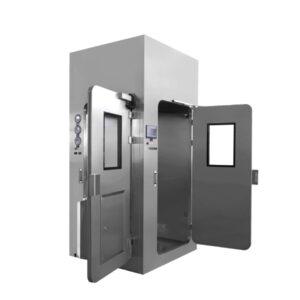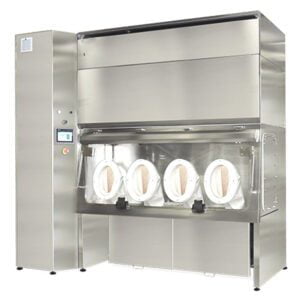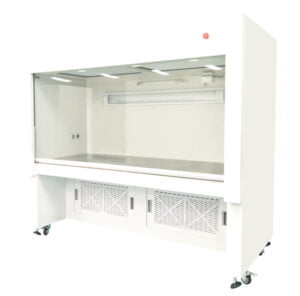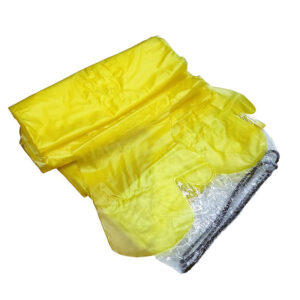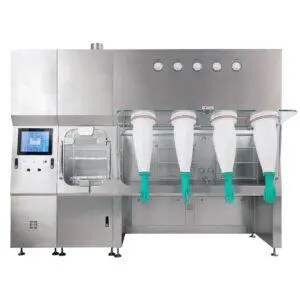
Filter change-outs in hazardous environments present a critical challenge: how do you replace contaminated filters without exposing personnel or the surrounding environment to toxic particles, pathogens, or radioactive materials? Many facilities implement bag-in bag-out (BIBO) systems, yet improper bag selection, flawed installation procedures, or non-compliant configurations create vulnerability points that compromise containment. The wrong bagging material tears during change-out. Inadequate sealing protocols allow particulate escape. Mismatched components create bypass gaps that render expensive filtration systems ineffective.
Regulations tighten each year. ASME nuclear standards evolve. ISO cleanroom requirements expand. EH&S enforcement intensifies. Facilities operating BIBO systems in 2025 must navigate overlapping compliance frameworks while maintaining operational efficiency. Beyond regulatory pressure, the financial stakes are substantial—premature filter failure, contamination incidents, and regulatory citations carry costs that dwarf the investment in proper system specification. This guide provides the technical framework for selecting materials, executing safe installations, meeting 2025 compliance standards, and optimizing system performance across the operational lifecycle.
Material Selection for BIBO Bags: Balancing Chemical Resistance, Strength, and Temperature Tolerance
Matching Material Properties to Contaminant Profiles
Material compatibility determines containment integrity. The substances your BIBO system handles—whether pharmaceutical APIs, nuclear particulates, or industrial chemicals—dictate material requirements. Chemical resistance prevents bag degradation during filter saturation periods. Temperature tolerance matters when filters operate in heated exhaust streams or cold storage environments. Biological resistance becomes critical in pharmaceutical applications where microbial growth could compromise bag integrity between change-outs.
I’ve seen facilities select bagging materials based solely on cost, only to experience catastrophic failure during change-out when chemical exposure weakened the material structure. Match your material specification to your worst-case contaminant scenario, not average conditions.
BIBO Bag Material Performance Characteristics
| Material | Chemical Resistance | Temperature Tolerance | Biological Resistance |
|---|---|---|---|
| Stainless Steel | Excellent | High | Good |
| PTFE | Excellent | High | Excellent |
| Polypropylene | Good | Moderate | Excellent |
| Nylon | Very High | High | Good |
| PVC | Moderate | Low | Good |
| Polyester | Good | Moderate | Good |
Note: Material selection can increase filtration system lifetime by up to 30%.
Source: Industry comparative analysis based on standardized testing protocols.
Strength and Impermeability Requirements
Bagging material must withstand mechanical stress during the change-out procedure. Twisting, sealing, and cutting operations place tension on the material. Saturated HEPA filters weigh substantially more than new filters—your bag must support this weight without tearing. Impermeability prevents particulate migration through the material itself. Even microscopic pores compromise containment when dealing with submicron particles.
Polyester offers cost-effectiveness for general filtration applications with moderate hazard levels. Nylon provides superior strength for extreme conditions where filter weight or sharp housing edges create tear risk. PTFE delivers optimal performance across all three parameters—chemical resistance, temperature tolerance, and biological resistance—making it the preferred choice for pharmaceutical and nuclear applications despite higher material costs. Research indicates that employing the correct filter material increases the lifetime of your filtration system by as much as 30%, offsetting initial material investment through extended service intervals.
Step-by-Step Guide to Safe BIBO Bag Installation and Change-Out Procedures
Pre-Change-Out Preparation and Verification
Safe filter change-out begins before you open the access door. Verify the system maintains negative pressure to prevent outward leakage during the procedure. Confirm the disposal bag matches the required impermeability and strength specifications for your application. Gather crimping tools and sealing equipment. Special training on appropriate handling methods is required for hazardous applications—certification in bag-in bag-out filter handling forms part of the Certified Technician Level II program offered by national air filtration associations.
Inspect the side-mounted access door seals before opening. Compromised door gaskets allow contamination escape even during closed-system procedures.
Safe BIBO Filter Change-Out Procedure
| Step | Action | Safety Requirement |
|---|---|---|
| 1 | Open side-mounted access door | Maintain negative pressure |
| 2 | Secure disposal bag to filter housing | Verify bag impermeability and strength |
| 3 | Remove contaminated filter into bag | Use certified handling techniques |
| 4 | Twist, seal, and cut bag in half | Apply crimping tool to ensure seal |
| 5 | Install new filter using reverse technique | Maintain closed system integrity |
| 6 | Verify seal and close access door | Conduct leak test per protocol |
Note: Level II Certification required for hazardous applications.
Source: National air filtration association Certified Technician program standards.
Executing the Closed-System Change-Out
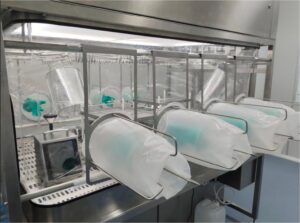
BIBO systems feature side-mounted access doors allowing removal of contaminated filters directly into heavy-duty disposal bags. The procedure uses multiple bags to maintain a closed system throughout filter replacement. Once you secure the disposal bag to the housing, remove the contaminated filter into the bag while maintaining negative pressure within the housing. Twist the bag above the filter to isolate the contaminant, then apply a crimping tool to create a secure seal. Cut the bag in half between the crimp and the housing connection.
The process of installing new filters reverses the same technique. The contaminated filter remains sealed in the lower bag section for disposal according to your facility’s hazardous waste protocols. A facility using a non-sterile hybrid isolator with a bag-in bag-out annex successfully limited employee exposure to APIs during powder handling operations, demonstrating the effectiveness of proper procedure execution. I conducted a custom sealed filter change-out where improper crimping tool application allowed particulate escape during the cutting step—investing in quality tools and thorough training prevents such failures.
Understanding Compliance: ASME, ISO, and EH&S Standards for 2025
Nuclear and High-Hazard Application Requirements
Compliance demonstrates your system meets recognized safety and performance criteria while protecting your facility from regulatory citations and liability. Nuclear applications operate under the strictest protocols. ASME N509/N510 governs nuclear facility HVAC systems, specifying leak testing requirements and filter efficiency verification procedures. DIN 25496 defines the tightness class required by nuclear power stations, establishing containment thresholds that BIBO systems must achieve during filter change-out operations.
Isolation valves in nuclear applications require certification to ISO 5208 Category 3 or ANSI B 16-104 Class V standards. Containment isolators must meet ISO 10648-2 Class 3 leak-tight containment specifications. These standards aren’t suggestions—they’re legal requirements for facility operation in nuclear environments.
2025 BIBO Compliance Standards Matrix
| Standard | Application Area | Key Requirements |
|---|---|---|
| ASME N509/N510 | Nuclear facilities | Leak testing, filter efficiency verification |
| EN 1822 | HEPA filter classification | Performance testing, particle capture rates |
| ISO 14644 | Cleanrooms | Airborne particulate cleanliness levels |
| ISO 10648-2 | Containment isolators | Class 3 leak-tight containment |
| DIN 25496 | Nuclear power stations | Tightness classification |
| OSHA | Workplace safety | Contamination control protocols |
Note: Compliant facilities report 25% fewer regulatory citations.
Source: ISO 14644-1:2015, EN 1822-1:2019.
Cleanroom, Pharmaceutical, and Industrial Standards
ISO 14644 establishes airborne particulate cleanliness classifications for cleanrooms and controlled environments. Pharmaceutical manufacturing facilities must maintain specified cleanliness levels during filter change-out operations—BIBO systems provide the containment mechanism that allows filter replacement without compromising room classification. EN 1822 defines HEPA filter classification and performance testing methodologies, ensuring filters meet stated efficiency claims.
OSHA regulations govern workplace safety requirements, mandating contamination control protocols that protect personnel during maintenance operations. Facilities using bag-in bag-out systems that comply with industry standards report 25% fewer regulatory citations and improved audit outcomes. I’ve worked with pharmaceutical clients who neglected ISO 14644 compliance during BIBO installations, only to face costly retrofits when auditors identified classification violations during filter change-out procedures. Build compliance into your initial specification rather than retrofitting later.
Critical Performance Metrics: Evaluating Filtration Efficiency and Dust-Holding Capacity
Filter Efficiency Standards and Testing Protocols
Filtration system effectiveness focuses on the ability to remove contaminants from the air stream efficiently. HEPA filters remove up to 99.97% of particles as small as 0.3 microns in diameter—this efficiency level protects personnel and environments in pharmaceutical, laboratory, and many industrial applications. ULPA filters achieve 99.9995% efficiency for particles ≥0.1 microns, meeting nuclear facility and semiconductor manufacturing requirements where even single particle escape creates unacceptable risk.
ANSI/ASHRAE Standard 52.2 provides the testing methodology for determining MERV ratings. IEST-RP-CC001.3 establishes ULPA filter testing protocols. EN 1822 governs HEPA filter classification across European markets. These standards ensure consistent performance claims across manufacturers—specify testing compliance in your procurement requirements.
Filtration Performance and Airflow Parameters by Application
| Application | Filter Efficiency | Airflow Rate (CFM) | Pressure Differential (inches w.g.) |
|---|---|---|---|
| Laboratory | HEPA: 99.97% @ 0.3μm | 500 – 2,000 | 1.0 – 2.0 |
| Pharmaceutical | HEPA: 99.97% @ 0.3μm | 1,000 – 5,000 | 1.5 – 3.0 |
| Nuclear | ULPA: 99.9995% @ 0.1μm | 2,000 – 10,000 | 2.0 – 4.0 |
| Industrial | HEPA: 99.97% @ 0.3μm | 5,000 – 50,000 | 2.5 – 5.0 |
Note: Optimal pressure control extends filter life by up to 30%.
Source: ANSI/ASHRAE Standard 52.2, IEST-RP-CC001.3.
Containment Efficiency and Pressure Control
Containment efficiency measures how effectively your system prevents hazardous particle escape during the bag-out process. High-efficiency BIBO systems achieve containment levels up to 99.99%, critical for API handling and nuclear applications. This metric differs from filter efficiency—containment efficiency evaluates the entire system’s ability to isolate contaminants during change-out operations, not just the filter’s capture rate during normal operation.
Proper airflow and pressure control maintain containment system integrity while ensuring efficient filtration. Laboratory applications typically operate at 500-2,000 CFM with 1.0-2.0 inches water gauge pressure differential. Nuclear facilities require 2,000-10,000 CFM with 2.0-4.0 inches water gauge to handle higher air volumes and maintain containment under stricter safety requirements. Industrial applications span the widest range—5,000-50,000 CFM with 2.5-5.0 inches water gauge—depending on process scale and hazard level.
Research indicates that optimal airflow and pressure control can extend filter life by up to 30% while maintaining high filtration efficiency. Install filter pressure measuring devices across each filter bed with efficiency of 75% (MERV 12) or more. High-efficiency filters need replacement when pressure drop doubles the initial value—this indicator prevents premature change-out while avoiding excessive pressure that damages filter media or housing seals.
BIBO System Integration: Ensuring Compatibility with Your Existing Housings and Ductwork
Frame and Seal Requirements for Airtight Integration
Filter holding frames must provide durable, properly sized airtight fit within enclosing ductwork. Small gaps between filters or between filters and surrounding ductwork create serious efficiency loss. A university study found that just a 10mm gap between filters could reduce filter efficiency from MERV 15 to MERV 8—this dramatic performance degradation occurs even when the filter itself operates perfectly, because particulate-laden air bypasses the filter media entirely through the gap.
All joints between filter frame banks and enclosing ductwork should be caulked or gasketed to provide positive seals against air leakage. Gasket material uses neoprene or other compressible rubber-like material that maintains sealing force despite thermal cycling and vibration. I specified a BIBO containment system with integrated sealing gaskets for a pharmaceutical client, and leak testing confirmed zero bypass compared to their previous system where improper sealing caused repeated audit failures.
BIBO System Integration Seal Requirements
| Component | Material Specification | Performance Impact | Tolerance |
|---|---|---|---|
| Filter frame gaskets | Neoprene or compressible rubber | Airtight seal integrity | ≤1mm gap |
| Ductwork joints | Caulked or gasketed seals | Prevents air leakage | Zero bypass |
| Clamping systems | Stainless steel or reinforced polymer | Filter retention under pressure | ≤0.5mm deflection |
| Filter bank seals | Multi-layer compressible material | Maintains negative pressure | ≤2mm compression |
Note: A 10mm gap reduces efficiency from MERV 15 to MERV 8.
Source: University filtration efficiency gap study, industry sealing standards.
Maintaining Negative Pressure During Integration
The system must maintain negative pressure environment during filter changes to prevent outward leakage. This requirement drives integration specifications—your ductwork connections, access door seals, and clamping mechanisms must function as an integrated containment envelope, not just mechanical connections. Sealing mechanisms such as gaskets and clamping systems must be robust and reliable under operational pressures and during change-out procedures when mechanical disturbance tests seal integrity.
Specify stainless steel or reinforced polymer clamping systems with deflection ≤0.5mm under rated pressure. Multi-layer compressible material for filter bank seals allows ≤2mm compression while maintaining seal force across the filter perimeter. Zero bypass at ductwork joints requires caulking or gasketing that accommodates thermal expansion without creating gaps. These specifications seem excessive until you conduct leak testing on a system with standard commercial seals—the difference between compliant containment and regulatory citation often comes down to these integration details.
Operational Best Practices for Minimizing Exposure and Maximizing Bag Lifespan
Ergonomic Design and Safety-Centered Operation
BIBO system design should prioritize user safety and ergonomics to minimize injury risk and ensure ease of operation during filter changes. Ergonomically designed systems reduce the risk of musculoskeletal injuries by up to 40% among maintenance personnel. Position access doors at heights that don’t require awkward reaching or lifting. Provide adequate working space around the housing for bag manipulation and crimping tool operation. Install handles or lifting assists for heavy filter removal.
A recent industry survey found that 87% of facilities using bag-in bag-out systems reported improved safety outcomes and reduced contamination incidents when proper selection criteria were applied. Safety outcomes improve when systems accommodate human factors—technicians execute procedures correctly when the system design supports proper technique rather than forcing workarounds.
Pressure Monitoring and Filter Replacement Indicators
Install filter pressure measuring devices across each filter bed having efficiency of 75% (MERV 12) or more. This monitoring provides objective data for filter replacement decisions. High-efficiency filters need changing when pressure drop doubles the initial value. Replacing filters prematurely wastes money. Waiting too long risks media failure or housing seal compromise from excessive pressure.
Using pre-filters extends high-efficiency filter life and preserves their integrity for capturing smaller particles. Changing pleated pre-filters quarterly is more economical than replacing expensive HEPA filters prematurely. I implemented a two-stage filtration approach at an industrial facility, and the client extended HEPA filter life from 18 months to over three years while maintaining identical particle capture performance—the pre-filter investment paid for itself in six months.
BIBO Component Operational Lifespan and Maintenance
| Component | Expected Lifespan | Maintenance Interval | Replacement Indicator |
|---|---|---|---|
| Housing | 20+ years | Annual inspection | Structural compromise |
| Seals and gaskets | 5-7 years | Quarterly check | Loss of compression |
| Bagging material | 2-3 years | Per change-out | Visible degradation |
| Clamping mechanism | 10+ years | Semi-annual inspection | Reduced tension |
| High-efficiency filters | Varies | Monitor pressure drop | 2x initial pressure drop |
| Pre-filters | 3-6 months | Quarterly replacement | Visible loading |
Note: Ergonomic design reduces musculoskeletal injuries by 40%.
Source: Industry survey data (87% of facilities), manufacturer maintenance guidelines.
Maximizing Component Lifespan Through Preventive Maintenance
High-quality bag-in bag-out systems can have operational lifespans of 15-20 years when properly maintained. Housing structures last 20+ years with annual inspection for structural compromise. Seals and gaskets require quarterly checks and replacement every 5-7 years when they lose compression. Bagging material degrades over 2-3 years even without use—UV exposure, temperature cycling, and material aging reduce strength and impermeability.
Clamping mechanisms last 10+ years with semi-annual inspection for reduced tension. Pre-filters need quarterly replacement based on visible loading, while high-efficiency filters vary based on application. Track pressure drop data to establish baseline replacement intervals for your specific environment. Document all maintenance activities to identify degradation patterns and optimize replacement schedules. This data proves invaluable during regulatory audits and helps justify maintenance budget allocations to facility management.
Selecting the right materials, following verified installation procedures, and maintaining compliance with evolving 2025 standards protects your personnel, your facility, and your regulatory standing. The technical specifications outlined here—from material compatibility matrices to integration seal tolerances—provide the decision framework for evaluating your current systems and specifying new installations. Proper BIBO system implementation reduces regulatory citations by 25%, extends filter life by 30%, and cuts injury risk by 40% compared to poorly specified systems.
Need professional guidance on BIBO system specification for your specific application? YOUTH engineers provide technical consultation on material selection, compliance verification, and system integration for pharmaceutical, nuclear, and industrial facilities. Our team brings decades of containment system experience to help you navigate the complex intersection of performance requirements, regulatory standards, and operational constraints.
Questions about compatibility with your existing housings or compliance requirements for your jurisdiction? Contact us for application-specific technical support.
Frequently Asked Questions
Q: What material selection criteria are most critical for BIBO bags in pharmaceutical applications handling potent compounds?
A: Polypropylene offers the optimal balance for pharmaceutical applications with excellent biological resistance and good chemical compatibility. For higher temperature processes or more aggressive chemicals, PTFE provides excellent resistance across all categories. Material choice directly impacts system longevity, with proper selection increasing filtration system lifespan by up to 30%. Ensure compatibility with your specific active pharmaceutical ingredients (APIs) before finalizing material specifications.
Q: Which compliance standards are mandatory for BIBO systems in nuclear facilities by 2025?
A: Nuclear applications require strict adherence to ASME N509/N510 standards for leak testing and filter efficiency, along with DIN 25496 for tightness class requirements. These standards ensure containment integrity in critical environments where particle escape could have severe consequences. Facilities implementing compliant systems report 25% fewer regulatory citations and demonstrate recognized safety performance during audits.
Q: How significant is the efficiency loss from installation gaps in BIBO filter housings?
A: Even minor gaps create substantial efficiency losses—a 10 millimeter gap between filters can reduce performance from MERV 15 to MERV 8. All joints between filter frame banks and ductwork must be caulked or gasketed with compressible materials like neoprene to maintain an airtight seal. ISO 14644-1:2015 specifies airborne particulate cleanliness classifications that depend on maintaining these seals to prevent serious efficiency degradation.
Q: What pressure differential monitoring is required for maintaining HEPA filter performance?
A: Install pressure measuring devices across each filter bed with MERV 12 or higher efficiency and replace high-efficiency filters when pressure drop doubles the initial reading. Typical differentials range from 1.0-2.0 inches w.g. for laboratories to 2.0-4.0 inches w.g. for nuclear applications. ANSI/ASHRAE Standard 52.2 establishes the testing methodology for determining MERV ratings that inform these maintenance thresholds.
Q: What certification should technicians have for hazardous filter change-outs?
A: Technicians handling hazardous materials require Certified Technician – Level II program certification in Bag In/Bag Out filter handling from a national air filtration association. This specialized training covers closed-system replacement techniques using multiple bags, including twisting, sealing, and cutting procedures that maintain containment. Proper certification reduces exposure risks during change-outs of contaminated filters in hazardous applications.
Q: How do HEPA and ULPA filter efficiencies compare for containment applications?
A: HEPA filters capture 99.97% of particles ≥0.3 microns, while ULPA filters achieve 99.9995% efficiency for particles ≥0.1 microns. EN 1822 establishes the classification system for both filter types, with high-efficiency BIBO systems achieving containment levels up to 99.99% during bag-out processes. Select ULPA for submicron particulate hazards and HEPA for broader applications where 0.3 micron capture suffices.
Q: What maintenance schedule optimizes BIBO system component lifespan?
A: Implement quarterly pre-filter changes to protect high-efficiency filters, while expecting 5-7 years for seals and gaskets, 2-3 years for bagging material, and 10+ years for clamping mechanisms. Housing typically lasts 20+ years with proper maintenance. This staged replacement approach is more economical than premature high-efficiency filter replacement and reduces maintenance frequency by 40% through ergonomic design improvements.
Related Contents:
- Nuclear BIBO Units | Radiation Containment Systems
- Bag-In/Bag-Out (BIBO) Systems: Operation and Maintenance Guide
- Bag In Bag Out Systems | Safety Fundamentals Explained
- Understanding BIBO | Hazardous Material Containment
- Nuclear Safety Revolution: BIBO Systems Enhance Protection
- Top 5 BIBO Containment Solutions for 2025
- Nuclear Facility HEPA Housing Box Safety Protocols 2025
- BIBO System Basics | Bag In Bag Out Filter Principles
- Safe Chemical Handling with BIBO Systems