For professionals in pharmaceuticals, microelectronics, and hazardous material abatement, verifying HEPA filter integrity is non-negotiable. The choice between DOP and PAO testing, however, is often clouded by outdated terminology and misconceptions about accuracy. Many assume these are fundamentally different methods, leading to confusion in procurement, compliance, and safety protocols. This misunderstanding can delay projects and introduce unnecessary chemical risks.
The distinction matters now because regulatory scrutiny and occupational health standards have evolved. While the core test method remains valid, the chemical agent used has significant implications for workplace safety and long-term liability. Selecting the appropriate verification protocol is a critical operational decision that impacts compliance documentation, technician safety, and the reliability of your critical containment systems.
DOP vs PAO Testing: Defining the Core Difference
The Evolution from a Chemical to a Method
The term “DOP testing” persists as a generic label for HEPA filter leak testing, but its original meaning—Dioctyl Phthalate—is largely historical. The industry’s shift to Poly Alpha Olefin (PAO) was driven by health concerns regarding phthalates. This transition reflects a strategic upgrade in safety without altering the fundamental verification physics. The core process of generating an upstream aerosol and scanning for downstream leaks with a photometer is identical. Understanding this is crucial: when a specification calls for “DOP testing,” it is typically mandating the method, not the obsolete chemical.
Why Terminology Creates Operational Risk
Using “DOP” interchangeably with all aerosol photometry tests creates a liability gap. Procurement teams may source services based on legacy terminology without verifying the actual agent used. This can lead to a compliance conflict if local regulations restrict hazardous substances like phthalates. The strategic imperative is to decouple the method name from the material. Specify “PAO aerosol leak testing” in your RFPs and SOPs to ensure you receive the modern, safe agent while still satisfying all historical “DOP” test protocol requirements from standards like IEST-RP-CC002.3.
A Standardized Process with a Modern Agent
From firsthand experience in cleanroom validation, I’ve observed that the most critical factor isn’t the agent name on the service report, but the technician’s certification and the calibration traceability of the photometer. The process of challenging the filter at its Most Penetrating Particle Size (MPPS) and detecting leaks exceeding 0.01% of upstream concentration is standardized. The shift to PAO future-proofs your operations against evolving safety regulations while maintaining technical rigor.
Comparing DOP and PAO Test Agent Chemistry and Safety
Material Safety Profiles Diverge
The primary distinction is toxicological, not functional. DOP is a phthalate ester with associated carcinogenic concerns and hazardous material handling requirements. PAO is a synthetic hydrocarbon classified as non-toxic and non-hazardous. Both generate the required sub-micron aerosol cloud, but their material safety data sheets (MSDS) dictate vastly different safety protocols for storage, handling, personal protective equipment (PPE), and waste disposal.
Operational Impact on Safety and Training
Choosing PAO directly reduces operational complexity and cost. It eliminates the need for specialized hazardous material training, reduces PPE burdens for technicians, and simplifies spill response procedures. For facilities with stringent indoor air quality or environmental health and safety (EHS) policies, using a non-hazardous agent aligns with broader risk reduction goals. This is not a minor detail; it transforms the test from a potential chemical hygiene event into a routine maintenance procedure.
Performance Equivalence in Aerosol Generation
The following table clarifies that while safety profiles differ, the functional performance of the agents in generating a test aerosol is equivalent.
Chemical and Safety Comparison
| Parameter | DOP (Dioctyl Phthalate) | PAO (Poly Alpha Olefin) |
|---|---|---|
| Chemical Type | Phthalate ester | Synthetic hydrocarbon |
| Health Classification | Hazardous; carcinogenic concerns | Non-toxic; non-hazardous |
| Aerosol Particle Size | Sub-micron range | Sub-micron range |
| Primary Driver for Use | Historical standard | Modern safety priority |
Source: Technical documentation and industry specifications.
This equivalence means the choice should default to the safer agent. Service providers competing on the chemical itself are focusing on an obsolete differentiator. The real competition is in service quality, documentation, and technical expertise.
Methodology Accuracy: DOP vs PAO for Leak Detection
Identical Leak Detection Sensitivity
There is no measurable difference in leak detection sensitivity between properly conducted tests using DOP or PAO. Both methods are capable of detecting downstream particle penetration as low as 0.01% of the upstream challenge concentration. This threshold is not agent-dependent; it is a function of the photometer’s calibration and the test procedure’s rigor. This sensitivity directly verifies the installed filter system’s ability to maintain 99.97% efficiency at the MPPS.
The Critical Role of Equipment Calibration
Accuracy hinges on the calibrated state of the aerosol generator and photometer, not the liquid in the bottle. A poorly calibrated system will yield inaccurate results regardless of using DOP or PAO. The strategic takeaway is to audit your service provider’s calibration certificates, which should be traceable to national standards. The “HEPA” label on a filter or unit is a claim, not proof; the integrity test certificate is the forensic evidence of performance.
Accuracy and Sensitivity Factors
| Accuracy Factor | DOP Testing | PAO Testing |
|---|---|---|
| Leak Detection Sensitivity | ≤ 0.01% upstream challenge | ≤ 0.01% upstream challenge |
| Verifies Filter Efficiency | 99.97% (HEPA standard) | 99.97% (HEPA standard) |
| Core Test Methodology | Identical aerosol photometry | Identical aerosol photometry |
| Critical Success Factor | Equipment calibration & procedure | Equipment calibration & procedure |
Source: IEST-RP-CC002.3: HEPA and ULPA Filter Leak Tests. This recommended practice provides the definitive methodology for leak tests using aerosol challenges, specifying the sensitivity (e.g., 0.01%) and procedures that are identical for both DOP and PAO agents.
The data confirms the methodological parity. Procuring testing services based on perceived accuracy differences between agents is a mistake. Focus procurement criteria on calibration protocols and technician certification instead.
Which Test Is Better for Regulatory Compliance?
Standards Are Largely Agent-Agnostic
Key regulatory and guidance documents, such as ISO 14644-3:2019 and BS EN 1822-1:2019, specify the test method and acceptance criteria—not the chemical agent. They require a suitable aerosol challenge capable of generating particles in the MPPS range. This flexibility allows for PAO, DOP, or other approved oils. The compliance burden is on the facility to demonstrate periodic verification of the engineering control’s integrity, not to justify the specific chemical used.
Aligning with Broader Health and Safety Mandates
While filter integrity standards may not mandate an agent, workplace safety regulations often implicitly favor the least hazardous option. Using PAO eliminates a secondary compliance risk related to chemical handling under regulations like OSHA’s Hazard Communication Standard or similar frameworks globally. Therefore, PAO testing is typically the better choice for holistic compliance. It meets all technical requirements of the filter test while proactively aligning with modern occupational health expectations.
The Legal Imperative for Verification
In many jurisdictions, the requirement for testing is not just guidance—it’s law. For example, the UK’s Control of Substances Hazardous to Health (COSHH) Regulations legally mandate regular examination and testing of local exhaust ventilation (LEV), which includes HEPA-filtered systems. In such a context, the choice of agent should support, not complicate, your legal duty of care. PAO simplifies meeting this duty by removing a layer of chemical hazard from a mandatory safety procedure.
Cost and Operational Considerations: DOP vs PAO
Direct Costs Are Comparable, Indirect Costs Differ
The per-liter cost of DOP and PAO agents is similar. The significant cost divergence is in indirect operational expenses. PAO’s non-hazardous status translates to lower costs for hazardous material shipping, storage (no special cabinets required), waste disposal, and technician training. These soft costs, often overlooked in procurement, can materially impact the total cost of ownership for a recurring testing program.
The High Cost of Infrequent Testing
A more substantial cost factor than the agent is testing frequency. A rigid, calendar-based schedule (e.g., annual only) is a false economy. If a leak develops months after a test, the cost of a containment breach—in lost product, remediation, or regulatory fines—dwarfs the cost of additional testing. Implementing an event-driven protocol is critical for true risk mitigation. Testing after any filter change, housing disturbance, or facility maintenance incident is a cost-effective strategy to prevent catastrophic failures.
Logistics for Portable Equipment
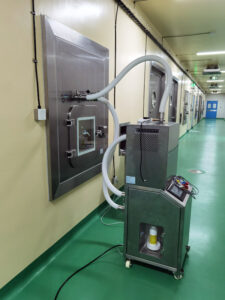
For portable negative air scrubbers and vacuum systems, the logistical cost is paramount. These units must be tested on-site after transport and setup, as movement can compromise gaskets and seals. This requirement adds labor time and planning complexity to projects. Factoring this into project timelines and budgets is essential; a test certificate from a warehouse is invalid for a unit that has since been transported to a job site.
Key Standards and Acceptance Criteria for Integrity Tests
The ISO 14644-3 Framework
ISO 14644-3:2019 provides the overarching test method framework for cleanrooms, including the aerosol challenge leak test. Its central acceptance criterion—that a leak is indicated by downstream penetration exceeding 0.01% of the upstream challenge—is the universal benchmark. This verifies the installed system integrity, encompassing the filter, its frame, and the sealing to the housing.
Complementary Classification and Procedure Standards
BS EN 1822-1:2019 focuses on classifying the filter media based on its MPPS efficiency, defining the performance baseline that leak testing verifies. IEST-RP-CC002.3 details the step-by-step recommended practice for performing the leak test itself. Together, these documents form a complete specification: what performance is required (EN 1822), how to test for it in situ (ISO 14644-3), and the detailed procedure to follow (IEST-RP-CC002).
Summary of Key Standards
| Standard / Guideline | Primary Scope | Key Acceptance Criterion |
|---|---|---|
| ISO 14644-3:2019 | Cleanroom test methods | Leak >0.01% upstream concentration |
| BS EN 1822-1:2019 | Filter classification & testing | Defines MPPS efficiency basis |
| IEST-RP-CC002.3 | HEPA/ULPA leak test procedure | Defines scan method & criteria |
| GB/T 6165-2021 | HEPA filter performance (China) | Specifies efficiency test methods |
Source: ISO 14644-3:2019. This standard specifies the test methods for cleanrooms, including the aerosol challenge leak test and the fundamental acceptance criterion of 0.01% for verifying installed filter system integrity.
This standardization creates a consistent language of verification across industries. Whether in a pharmaceutical fill line or an asbestos abatement enclosure, the 0.01% leak threshold defines failure. This convergence allows for the transfer of best practices between sectors.
Practical Application: Testing Frequency and Equipment
Establishing a Risk-Based Frequency Schedule
Testing frequency should blend regulatory baselines with dynamic risk assessment. Fixed installations in stable environments may follow a 6-to-12-month schedule. Portable units used continuously in hazardous environments, like asbestos abatement, may require testing every 30 days or per shift, as per local regulations. The baseline is just the starting point.
Mandating Event-Driven Triggers
Beyond periodic schedules, event-driven testing is non-negotiable. Integrity must be verified after any event that could compromise the system: filter replacement, physical movement of the unit, maintenance on the housing or ductwork, or any suspected impact. This protocol catches failures introduced between periodic tests, closing a critical risk gap. In practice, this means no portable unit should be put into service at a new site without a current on-site test.
Scope of Application Across Equipment Types
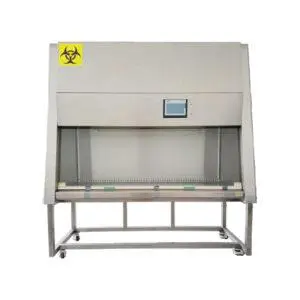
The test applies to any system claiming HEPA filtration as a primary engineering control. This includes laminar flow workbenches, biological safety cabinets, compounding isolators, negative air machines, and HEPA vacuums. The principle is universal: if it filters to 99.97% at 0.3 microns, its integrity must be verifiable.
Testing Frequency Guidelines
| System Type | Baseline Frequency | Key Event-Driven Triggers |
|---|---|---|
| Fixed Installations | 6 to 12 months | Post-maintenance, suspected damage |
| Portable Hazardous Use | Every 30 days | After transport & setup |
| All HEPA Systems | After installation/replacement | Filter movement, seal disturbance |
| Application Examples | Laminar flow, safety cabinets | Negative air machines, vacuums |
Source: Technical documentation and industry specifications.
Implementing this matrix requires integrating testing logistics into standard operating procedures and project plans, treating verification as a core component of operational readiness.
Choosing the Right Test for Your HEPA Filter Verification
Specify PAO and Audit the Service Quality
The right test uses PAO as the standard agent. The subsequent decision is selecting a service provider based on demonstrable quality indicators: technician certification (e.g., through NEBB or equivalent), traceable calibration of equipment, and thorough documentation practices. The test report should include upstream concentration, photometer calibration data, scan patterns, and clear pass/fail statements for each filter.
Decouple Procurement from Operational Approval
A critical strategic move is to separate the purchase of HEPA-filtered equipment from its approval for use. Operational release should be contingent on passing a current integrity test performed under your site’s specific conditions. This policy prevents the assumption that a factory test or a certificate of conformity equates to a validated installed system.
Integrate Data into Asset Lifecycle Management
Transform test certificates from filed paperwork into active data. Integrate results into a computerized maintenance management system (CMMS) or asset register. This creates a performance history for each filter and housing. Trend analysis of pressure drop alongside integrity pass/fail data can inform predictive filter change-outs, optimize costs, and provide a compelling audit trail that demonstrates rigorous due diligence.
The decision between DOP and PAO testing is resolved by prioritizing modern safety without sacrificing technical accuracy. PAO is the clear choice for the agent, fulfilling all methodological requirements while mitigating chemical risk. The larger operational priority is implementing a dynamic verification protocol that combines scheduled frequency with mandatory event-driven triggers. This approach validates the entire installed system’s integrity, not just the filter media.
Need professional HEPA integrity verification and high-efficiency air filter solutions? Partner with a provider who understands that compliance is demonstrated through calibrated equipment, certified technicians, and unambiguous documentation. YOUTH integrates these principles into its service and product support framework. For specific project consultations, you can also Contact Us.
Frequently Asked Questions
Q: Is there a real difference in leak detection accuracy between DOP and PAO testing methods?
A: No, the accuracy for identifying leaks is equivalent when tests are performed correctly. Both methods rely on generating an upstream aerosol and scanning downstream with a calibrated photometer to detect penetrations as low as 0.01% of the upstream challenge. The critical factor is the quality and calibration of the test equipment itself. This means your primary focus should be on verifying the photometer’s certified calibration traceability, not the specific agent used in the test.
Q: How do I ensure my HEPA filter integrity testing meets global regulatory compliance?
A: Compliance hinges on following the standardized test method and acceptance criteria, not the specific chemical agent. Key standards like ISO 14644-3 define the aerosol challenge procedure, while IEST-RP-CC002.3 provides detailed leak test practices. Using PAO satisfies all technical requirements while aligning with modern occupational health expectations. For projects where safety audits are stringent, choosing PAO testing mitigates secondary regulatory risks associated with hazardous material handling.
Q: What is the most critical acceptance criterion for a passing HEPA leak test?
A: A passing test confirms the entire installed filter system maintains 99.97% efficiency. A leak is typically indicated if the downstream photometer reading exceeds 0.01% of the upstream aerosol challenge concentration. This stringent threshold is specified in standards such as ISO 14644-3. This means your test report must explicitly document that measured penetrations remained below this limit to provide valid proof of integrity for audit purposes.
Q: How should we determine the frequency for integrity testing on our HEPA systems?
A: Base frequency on a dynamic risk assessment that combines regulatory baselines with event-driven triggers. While fixed installations often follow a 6-12 month schedule, portable units in continuous hazardous operations may need testing every 30 days. Crucially, test after any filter change, maintenance activity, equipment movement, or suspected damage. If your operation uses portable negative air machines, you must build on-site testing after each setup into project plans, as transit can compromise seals.
Q: What are the main operational cost factors to consider for DOP vs PAO testing?
A: The chemical agent cost is comparable; significant costs arise from testing logistics and safety management. PAO offers lower long-term handling costs due to reduced hazardous material training and simpler waste disposal. The larger expense stems from unplanned, event-driven tests needed after incidents to prevent costly containment failures. For facilities with frequent filter changes or mobile equipment, you should budget for a higher frequency of on-site verification to manage true operational risk.
Q: When procuring a HEPA-filtered device, what step is critical before putting it into operational service?
A: You must decouple the equipment purchase from its operational approval. Before use, the entire installed system—including filter, housing, and seals—requires a current, passing integrity test performed on-site in its operational configuration. This applies even to brand-new or recently certified units. This means your procurement policy should mandate that a valid test certificate is a condition for operational release, not just a line item on a purchase order.
Q: Which technical standard is most directly relevant for performing the leak test procedure itself?
A: The most directly applicable document for the test methodology is IEST-RP-CC002.3, which details procedures for aerosol leak testing on installed HEPA/ULPA filters. For cleanroom applications, ISO 14644-3 provides the overarching framework. If your validation strategy requires a single, procedure-focused reference, IEST-RP-CC002.3 should be your primary guide for technician training and protocol development.
Related Contents:
- HEPA Filter Testing: Ensuring Optimal Performance
- Air Filter Leak Testing Procedures | Quality Control Methods
- Leak Testing Procedures for Sterility Test Isolators
- HEPA Filter Testing Protocols | Quality Control Procedures
- Biosafety Equipment Calibration | Quality Control | Performance Testing
- HEPA Filter Efficiency Testing | Performance Metrics Guide
- Laminar Air Flow Unit Calibration Guide 2025
- VHP Sensor Calibration: GMP Compliance Procedures
- HEPA Filter Systems | Air Handling Equipment Specifications