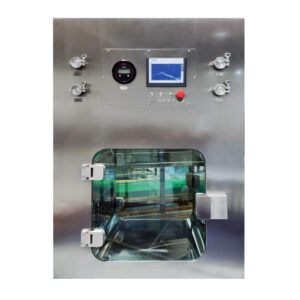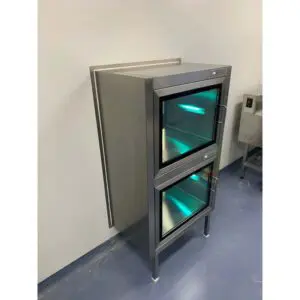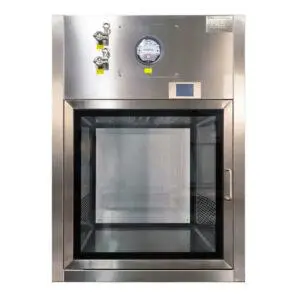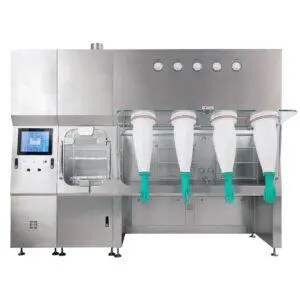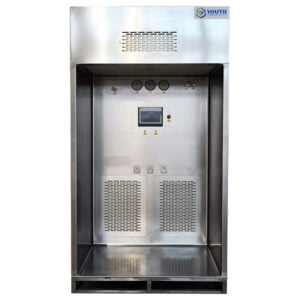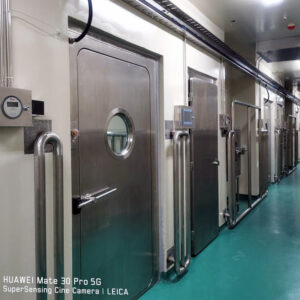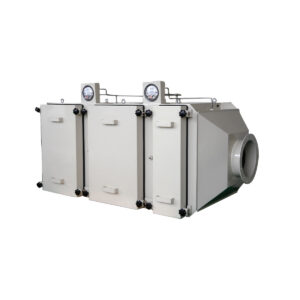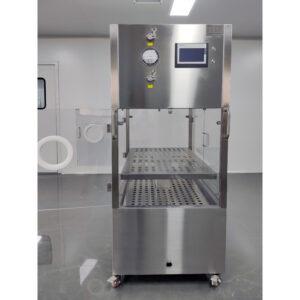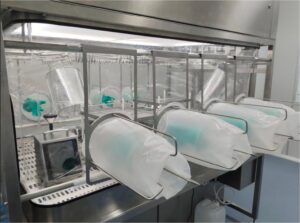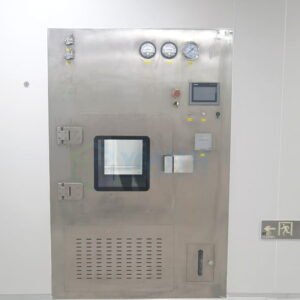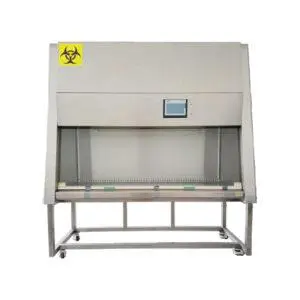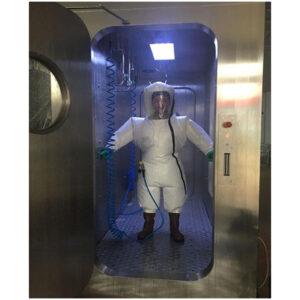
In pharmaceutical manufacturing, the selection of a vaporized hydrogen peroxide (VHP) generator is a critical capital decision with far-reaching implications for sterility assurance and facility throughput. The common misconception is that a higher-capacity unit inherently delivers faster, more effective decontamination. In reality, performance hinges on a complex interplay of engineering specifications, integration design, and validation rigor that extends far beyond the generator’s nameplate rating.
Attention to these technical details is paramount now, as regulatory scrutiny intensifies and production schedules demand faster turnaround. A misaligned VHP system can become a bottleneck, compromising both compliance and operational efficiency. This analysis moves beyond basic specifications to the core engineering and strategic factors that dictate real-world success.
Capacity vs. Cycle Time: The Core VHP Trade-Off
Defining the Operational Variables
Capacity and cycle time are interdependent but not linearly related. A generator’s capacity, defined by its hydrogen peroxide injection rate (g/min) and carrier air flow (m³/h), must be sized to achieve the target vapor concentration within the largest intended volume. However, total cycle time is a composite of dehumidification, conditioning, biological exposure, and aeration phases. A unit with excess capacity may shorten the conditioning phase but cannot compensate for poor room sealing or an inefficient distribution system that prolongs dehumidification or aeration.
The Strategic Throughput Analysis
Cycle time is a primary competitive battleground, directly impacting manufacturing throughput. Procurement requires a throughput analysis where reduced cycle time is balanced against the complexity of validating uniform distribution. Factors like room geometry, leakage rate, and load characteristics critically influence duration. For instance, a high-capacity generator in a leaky room may achieve concentration quickly but fail to maintain it, invalidating the exposure phase and requiring a restart. The strategic implication is clear: system sizing must be based on a worst-case scenario model of the actual environment, not just cubic volume.
Quantifying the Cycle Components
Understanding the breakdown of a typical cycle is essential for setting realistic expectations and comparing vendor claims. The following table outlines the key phases and their drivers.
| Phase | Typical Duration | Key Influencing Factor |
|---|---|---|
| Dehumidification | Variable | Room baseline humidity |
| Conditioning | Variable | Target vapor concentration |
| Biological Exposure | 30+ minutes | 6-log reduction validation |
| Aeration | Variable | HVAC integration efficiency |
| Total Cycle | 30 min – several hours | Room volume & leakage |
Source: Technical documentation and industry specifications.
In my experience, the most frequently overlooked detail is the aeration time, which can double the total cycle if the HVAC system isn’t properly integrated for rapid vapor breakdown and removal.
VHP Generator Cost: Capital, Operational & TCO Analysis
Moving Beyond Capital Expense
Evaluating VHP system cost requires a total cost of ownership (TCO) model. The upfront capital expense covers the generator, distribution piping (uPVC or stainless steel), and control systems with Siemens PLCs for 21 CFR Part 11 compliance. However, focusing solely on CapEx is a critical error. Extensive service layers—installation, commissioning, and validation—constitute a significant, often underestimated portion of the lifecycle cost. Industry experts recommend budgeting for these services from the outset to avoid project delays and cost overruns.
The Hidden Recurring Costs
Operational costs form the sustained financial commitment. These include VHP solution consumables, HEPA filter changes, and utilities for dehumidification and operation. Furthermore, annual maintenance contracts are not optional; they are essential for ensuring long-term reliability, calibration accuracy, and regulatory compliance. A vendor offering a comprehensive service package with clear cost structures provides more predictable budgeting than one with a low initial price but expensive, unbundled support.
Building a Comprehensive TCO Model
A strategic TCO analysis prevents under-budgeting and aligns capital investment with sustainable performance. The model must account for all cost categories over the system’s expected lifespan.
| Cost Category | Components | Strategic Consideration |
|---|---|---|
| Capital Expense (CapEx) | Generator, piping, PLC controls | Upfront investment |
| Service Layers | IQ/OQ/PQ validation, installation | Significant lifecycle portion |
| Operational (OpEx) | VHP solution, filter changes | Recurring consumables |
| Maintenance | Annual service contracts | Ensures long-term reliability |
| Total Cost of Ownership | CapEx + OpEx + Services | Prevents under-budgeting |
Source: Technical documentation and industry specifications.
Which VHP Distribution System Design Is Right for You?
The Critical Hidden Variable
The distribution system is the decisive factor in achieving uniform vapor concentration for a validated 6-log reduction. Its design encompasses leak-tight VHP-compatible piping, strategically placed adjustable nozzles, and integrated mixing fans. For isolators or chambers, internal tacho-monitored fans are non-negotiable for creating the necessary turbulence. For room decontamination, the system must integrate with the facility HVAC for pressure control and final aeration. Under-investing in this engineering poses the single greatest validation risk.
Dedicated vs. Shared System Architectures
The choice hinges on facility layout and risk assessment. A dedicated distribution system for a single room or isolator offers simplicity and eliminates cross-contamination risk. A shared system, where a single generator serves multiple spaces via controlled ductwork and dampers, maximizes capital utilization and supports modular facility design. However, shared systems increase engineering complexity, require rigorous damper sealing validation, and need careful planning to prevent vapor migration. The trend toward configurable, modular platforms supports both approaches with standardized components for faster deployment.
Ensuring Engineering Precision
We compared projects with custom-engineered distribution versus off-the-shelf layouts and found a direct correlation between upfront engineering investment and first-pass validation success. Nozzle placement must be modeled for the specific space to avoid dead zones, and all piping joints must be welded or use VHP-rated seals. The integration of the distribution system with room pressure control is easily overlooked but essential for both containment during conditioning and efficiency during aeration.
Validating Performance: From IQ/OQ to 6-Log Reduction
The Qualification Framework
Validation transforms the VHP system from a utility into a compliant, data-generating asset. The process begins with Installation Qualification (IQ), verifying all components are installed per design specifications. Operational Qualification (OQ) follows, testing the system operates within specified tolerances for critical parameters like injection rate and dehumidification. According to the framework established in ISO 14937:2009, which outlines requirements for characterizing a sterilizing agent, this phase confirms the system’s capability to deliver a repeatable process.
Demonstrating Microbial Efficacy
Performance Qualification (PQ) demonstrates the ultimate benchmark: a consistent 6-log reduction of Geobacillus stearothermophilus biological indicators. This phase proves the integrated system—generator, distribution, and environment—can achieve sterility assurance. PQ protocols must account for worst-case locations, including areas farthest from injection points and within equipment shrouds. Data integrity is non-negotiable; modern PLCs must continuously monitor and record all cycle parameters (concentration, temperature, humidity) for regulatory audit, aligning with 21 CFR Part 11 requirements.
Setting and Verifying Tolerances
Each qualification phase has defined acceptance criteria that must be rigorously documented. The tolerances for key operational parameters are critical for ensuring process consistency.
| Qualification Phase | Key Parameter | Acceptable Tolerance |
|---|---|---|
| Installation (IQ) | Correct installation | Per design specifications |
| Operational (OQ) | Injection rate | ±10-20% |
| Operational (OQ) | Dehumidification | ±5% RH |
| Performance (PQ) | Biological indicator | Geobacillus stearothermophilus |
| Performance (PQ) | Reduction Benchmark | 6-log reduction |
Source: ISO 11138-1:2017 Sterilization of health care products — Biological indicators — Part 1: General requirements. This standard specifies requirements for biological indicators, which are critical for validating the 6-log reduction efficacy of VHP cycles, ensuring the biological challenge is reliable and standardized.
Integrating VHP with Facility HVAC and Control Systems
Coordination for Containment and Efficiency
Seamless integration with facility HVAC and Building Management Systems (BMS) is non-negotiable for efficient, contained operation. The VHP cycle must coordinate with the room’s HVAC to manage pressure differentials. During conditioning, the room is typically sealed under negative pressure to contain vapor. For aeration, the HVAC is often used in a purge mode to accelerate vapor breakdown and removal. This integration reduces total cycle time but requires careful upfront planning in facility design, including the specification of VHP-compatible dampers and sensors.
Control System Interfacing
Control integration enables automated sequencing, safety interlocks, and centralized monitoring. The VHP system’s PLC should interface with the BMS to provide status alerts, fault notifications, and cycle reports. Safety interlocks must prevent room access during active cycles and abort the process if pressure containment is lost. This level of integration supports modular system architecture, allowing a single generator to serve multiple spaces via controlled ductwork, thereby enhancing operational flexibility and asset utilization.
Avoiding Common Pitfalls
The most frequent integration failure we observe is inadequate HVAC capacity for aeration, leading to prolonged cycle times. Another is the use of standard BMS sensors that are degraded by peroxide vapor. Specify HVAC components and sensors rated for VHP exposure. Furthermore, the control philosophy must be defined early: will the VHP PLC be the master, or will it slave to the BMS? This decision impacts software design, validation scope, and long-term maintenance responsibilities.
Material Compatibility and Load Considerations
Defining Compatible Materials
Not all materials tolerate repeated VHP exposure. Compatible materials include pharmaceutical-grade stainless steel (304/316L), anodized aluminum, certain grades of silicone, and polycarbonate. Incompatible materials like copper, brass, and some elastomers may catalyze decomposition or degrade. Furthermore, porous materials like untreated paper, wood, or some fabrics can absorb peroxide, creating residual hotspots and extending the required exposure phase. A pre-deployment material audit of all items entering the decontaminated space is essential.
Assessing the Impact of Load
The “load”—the quantity and nature of items in the space—significantly impacts cycle efficacy. Densely packed carts, complex equipment with shrouds, and absorbent packaging create shadowing and adsorption challenges. These factors must be characterized during cycle development, often requiring extended exposure times or strategic placement of auxiliary mixing fans. This is a prerequisite for implementing automated, low-intervention workflows, as all transfer containers, trolleys, and packaging within the loop must be VHP-compatible.
Strategic Workflow Design
The insight that VHP enables closed material transfer networks dictates a systems approach. When designing a new filling line or isolator suite, material compatibility must be a selection criterion for ancillary equipment. For example, choosing a portable decontamination unit with validated material lists can streamline this process. This proactive design prevents future bottlenecks where a single incompatible tool or container forces a revalidation or a shift to a less efficient manual transfer method.
Mobile vs. Fixed VHP Generators: A Use Case Comparison
Flexibility Versus Dedicated Throughput
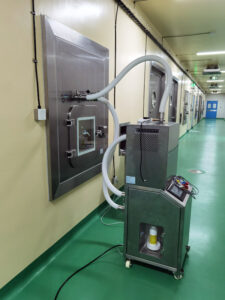
The choice between mobile and fixed systems hinges on facility strategy. Mobile, modular units offer operational flexibility to decontaminate multiple rooms, suites, or equipment (like isolators and RABS) sequentially. This maximizes capital utilization and is ideal for multi-purpose facilities, clinical manufacturing, or retrofit applications where installing fixed piping is prohibitive. Their key advantage is adaptability to changing facility layouts and campaign-based production.
The Case for Permanent Installation
Fixed, skid-mounted systems provide a tidy, permanent solution for high-throughput, dedicated applications. They are typically integrated into the facility infrastructure with dedicated distribution lines. This is the preferred approach for a constant stream of transfer isolators in a fill-finish area or for the regular decontamination of a core production suite. Fixed systems often allow for a higher degree of automation and tighter integration with adjacent processes and building controls.
Aligning Choice with Operational Model
The strategic shift is toward configurable platforms. Both mobile and fixed systems now often use standard generator and control modules, offering faster deployment and lower cost than fully bespoke designs. The decision matrix should be based on a clear analysis of use cases.
| System Type | Primary Use Case | Key Advantage |
|---|---|---|
| Mobile Modular Unit | Multi-purpose facilities | Sequential room decontamination |
| Mobile Modular Unit | Retrofit applications | Capital utilization maximization |
| Fixed Skid-Mounted | Dedicated production suites | High-throughput, permanent solution |
| Fixed Skid-Mounted | Transfer isolator streams | Tidy, integrated installation |
| Both Types | Modern platforms | Configurable, faster deployment |
Source: Technical documentation and industry specifications.
Selecting a VHP System: A Final Decision Checklist
Technical and Compliance Verification
Begin by verifying the technical fundamentals. Does the generator’s capacity match your largest volume, including plenums? Has the distribution design been engineered to ensure vapor uniformity, with computational fluid dynamics (CFD) modeling if the space is complex? On the compliance side, does the control system deliver robust data integrity with 21 CFR Part 11-compliant audit trails? Confirm the vendor’s validation support package includes cycle development and PQ protocol execution.
Strategic and Financial Alignment
Assess the strategic impact. How will the system alleviate existing bottlenecks, such as autoclave queues or lengthy manual sanitization? Apply a total cost of ownership lens, ensuring the vendor provides a comprehensive TCO model that includes all service layers and projected consumable costs. Prefer vendors who offer specialized ecosystem solutions, as this indicates deeper expertise in solving discrete workflow challenges beyond simply selling equipment.
Final Evaluation Framework
Use a structured checklist to ensure no critical factor is omitted during the final vendor assessment. This framework consolidates technical, strategic, and compliance requirements into actionable questions.
| Evaluation Factor | Key Question | Data Source / Action |
|---|---|---|
| Technical Capacity | Matches largest volume? | Throughput analysis |
| Distribution Design | Ensures vapor uniformity? | Engineering review |
| Strategic Impact | Alleviates process bottlenecks? | Workflow assessment |
| Compliance | Robust data integrity? | 21 CFR Part 11 controls |
| Total Cost | Comprehensive TCO model? | Vendor financial support |
| Ecosystem Fit | Solves discrete workflow challenges? | Vendor specialized solutions |
Source: Technical documentation and industry specifications.
The selection of a VHP decontamination system is a multi-disciplinary decision that balances engineering specifications with strategic facility goals. Prioritize systems where the distribution design is engineered for your specific space, not an afterthought. Ensure the validation strategy is comprehensive and the TCO model accounts for the full lifecycle, not just the purchase price. Finally, the system’s control architecture must provide unassailable data integrity for regulatory confidence.
Need a VHP solution engineered for pharmaceutical-grade performance and seamless integration? The team at YOUTH specializes in decontamination systems designed to meet stringent capacity, cycle time, and validation requirements. Contact us to discuss your specific application and request a detailed throughput analysis.
Frequently Asked Questions
Q: How do you calculate the total cycle time for a VHP decontamination process?
A: Total cycle time is not just a function of generator capacity. It is the sum of four distinct phases: dehumidification, conditioning, biological exposure, and aeration. The duration, which can range from 30 minutes to several hours, is critically influenced by room geometry, air leakage rates, and the absorption characteristics of the load inside the space. This means facilities with complex room layouts or high-density material loads should prioritize distribution system design and cycle development over simply selecting the largest generator.
Q: What are the key cost drivers in a VHP system’s total cost of ownership?
A: The capital expense for the generator and distribution piping is just the starting point. A comprehensive TCO model must include extensive service layers like installation, commissioning, and full validation (IQ/OQ/PQ), along with ongoing costs for consumables, filter replacements, and annual maintenance contracts. For projects where long-term operational reliability is critical, plan for these lifecycle service costs to constitute a significant portion of your budget, ensuring they are factored into vendor selection from the outset.
Q: What is the critical factor in ensuring a validated 6-log reduction in a room decontamination cycle?
A: Achieving a uniform, lethal vapor concentration throughout the entire space is the decisive factor, and this depends entirely on the engineered distribution system. This system requires leak-tight, compatible piping, strategically placed and adjustable nozzles, and often integrated mixing fans to prevent dead zones. If your operation requires decontaminating large or irregularly shaped rooms, under-investing in this distribution design poses the highest risk to successful performance qualification and sterility assurance.
Q: How do modern VHP control systems support compliance with data integrity regulations like 21 CFR Part 11?
A: Modern systems use programmable logic controllers (PLCs) to continuously monitor and record all critical cycle parameters—such as injection rate, humidity, and concentration—creating an immutable electronic record. This automated data logging provides the documented evidence required for regulatory audits and is foundational to the validation framework. This means when selecting a system, you must verify the control platform’s capability for robust, audit-ready data generation as a core compliance feature.
Q: When should a pharmaceutical facility choose a mobile VHP generator over a fixed system?
A: Choose a mobile, modular unit when you need the flexibility to decontaminate multiple rooms or suites sequentially, maximizing capital utilization in multi-purpose or retrofit facilities. Opt for a fixed, skid-mounted system for dedicated, high-throughput applications like a constant stream of transfer isolators. A strategic takeaway is that many modern platforms use configurable standard modules, so you can often achieve faster deployment and lower cost than with a fully bespoke design, regardless of the mobility choice.
Q: Which materials are typically compatible with repeated VHP exposure in a production environment?
A: Compatible materials include pharmaceutical-grade stainless steel (304/316L), silicone, and polycarbonate. It is crucial to verify the compatibility of all items within the decontamination zone, as some materials may degrade or absorb peroxide, impacting cycle efficacy. For facilities implementing automated material transfer networks, ensuring all containers, trolleys, and packaging in the loop are VHP-compatible is a strategic prerequisite to enable closed, low-intervention workflows without validation issues.
Q: What is the foundational standard for characterizing a sterilizing agent like VHP and validating its process?
A: The general principles for characterizing a sterilizing agent and developing, validating, and controlling its sterilization process are established in ISO 14937:2009. This standard provides the essential framework applicable to chemical methods like VHP. For your validation protocol, this means your approach to defining agent efficacy and process parameters should be aligned with the requirements outlined in this foundational document.
Related Contents:
- Optimizing Cycles: Portable VHP Generator Efficiency
- Installing Your Portable VHP Generator: Step-by-Step
- Vaporized Hydrogen Peroxide Generator Sizing for Cleanroom Classifications
- Validating Portable VHP Generator Performance
- Monitoring Portable VHP Generators: Best Practices
- VHP Generator Energy Consumption Analysis: Flash vs Catalytic Systems Real-World Power Usage Data
- VHP Generator Integration: Enhancing Cleanroom Efficiency
- Optimal VHP Concentrations: Sterilization Efficiency Guide
- VHP Passbox Validation: Ensuring Sterilization Efficacy