
In pharmaceutical manufacturing, the weighing booth is not just another piece of equipment. It is a critical control point where potent active pharmaceutical ingredients (APIs) are exposed, creating a nexus of product protection and operator safety risks. A common misconception is that any laminar airflow unit can be adapted for this high-stakes role. This error leads to compliance gaps, failed validation, and significant operational risk. The reality is that GMP compliance is engineered into the booth’s specifications from the outset.
Attention to these specifications is non-negotiable now. Regulatory scrutiny, especially around data integrity and containment for potent compounds, has intensified. The 2022 revision of EU GMP Annex 1 further emphasizes the qualification and monitoring of these controlled environments. Selecting or qualifying a booth based on superficial features, rather than its validated performance against definitive parameters, is a direct threat to product quality and regulatory standing.
What Are the 8 Critical GMP Weighing Booth Parameters?
Defining the Non-Negotiable Foundation
GMP compliance for weighing operations is not a single feature but a system of interdependent technical parameters. These eight specifications form the minimum baseline for any booth handling pharmaceutical materials. They ensure the dual mandate of protecting the product from contamination and the operator from exposure is met through engineered, measurable controls.
The Interdependent System in Practice
These parameters cannot be viewed in isolation. For instance, achieving the target Occupational Exposure Limit (OEL) is a function of laminar airflow velocity, HEPA filtration integrity, and maintained pressure differential working in concert. A failure in any one compromises the entire system. Industry experts recommend mapping these interdependencies during the User Requirements Specification (URS) phase to avoid specification silos that lead to performance shortfalls.
Validating the Outcome
The ultimate proof is in validation. Each parameter must have a clear, standardized test method and acceptance criterion. Easily overlooked details include the “at rest” condition for ISO classification and the specific scanning protocol for HEPA leak testing. According to research from leading consultancies, a common mistake is validating these parameters only at installation without establishing ongoing monitoring and alert limits to ensure continuous control.
Containment Performance vs. Airflow: Which Is More Critical?
The Outcome Versus the Mechanism
Containment performance, measured by achieving a specific OEL (e.g., 1 µg/m³ or lower), is the non-negotiable outcome. It is the definitive metric of safety. Airflow—its velocity, pattern, and direction—is the primary engineering mechanism to achieve that outcome. Framing them as competing priorities is a fundamental error; one is the goal, the other is the most critical tool to reach it.
Strategic Design Choices
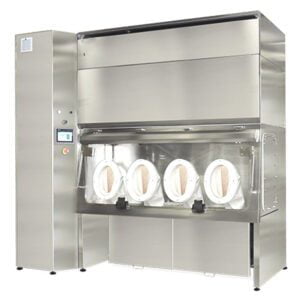
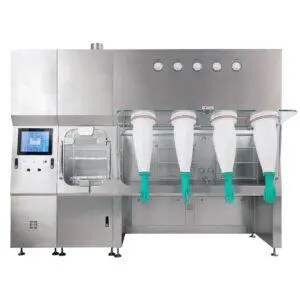
The critical choice is between an open-front downflow booth and a closed gloveport isolator. This decision, dictated by the potency band (OEB 3/4/5) of the materials, fundamentally shapes the airflow strategy. An open design uses a laminar curtain to contain materials of lower potency, prioritizing ergonomics. A closed isolator uses physical barriers for ultra-potent compounds, guaranteeing higher containment. Selecting the wrong paradigm for your API potency is a costly strategic failure.
Engineering the Balance
Within the chosen design, airflow must be precisely engineered. A laminar downflow of 0.45 m/s ±20% is typical, but this must be uniform and stable across the entire work surface to prevent turbulence that compromises containment. We compared several booth designs and found that units without flow visualization and velocity mapping during qualification often have dead zones or eddies that become containment failure points during actual use.
How to Validate Filtration Integrity and Cleanliness Class
The Two Pillars of Protection
Validation proves the system protects both the product (cleanliness) and the operator (filtration). These are distinct but linked testing protocols. Cleanliness classification, per ISO 14644-1:2015, demonstrates the internal environment is suitable for the product. HEPA filter integrity testing, per standards like EN 1822-1:2019, proves no unfiltered air bypasses the containment barrier.
Proactive vs. Reactive Validation
Relying solely on post-installation performance qualification (PQ) is reactive. Leading practice involves proactive design validation. Computational Fluid Dynamics (CFD) analysis and physical mock-ups can predict airflow patterns and containment efficacy before fabrication. This approach identifies and mitigates design flaws early, reducing costly modifications and validation failures during site qualification.
Executing the Critical Tests
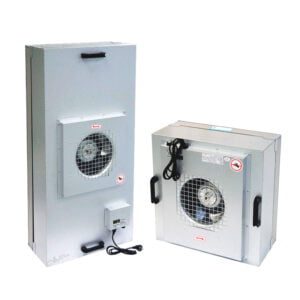
The execution of these tests is where compliance is won or lost. HEPA integrity requires an in-situ scan of all filter seams and gaskets with a thermal or photometric aerosol generator, with acceptance at ≤0.01% leakage. Cleanliness classification requires airborne particle counting at specified locations within the work zone to prove ISO Class 5 at rest.
Validation Specifications at a Glance
The following table outlines the key validation aspects, methods, and acceptance criteria critical for GMP compliance.
| Validation Aspect | Test Method / Standard | Acceptance Criteria |
|---|---|---|
| HEPA Filter Integrity | In-situ scan per ISO 14644-3 | ≤ 0.01% leakage |
| Cleanliness Classification | Airborne particle counting | ISO Class 5 at rest |
| Airflow Pattern & Containment | CFD analysis, physical mock-up | Predictive design validation |
| Supplier Qualification | Build/test to ISO, ISPE protocols | Reduced buyer validation risk |
Source: ISO 14644-1:2015 Cleanrooms and associated controlled environments — Part 1: Classification of air cleanliness by particle concentration and EN 1822-1:2019 High efficiency air filters (EPA, HEPA and ULPA) — Part 1: Classification, performance testing, marking.
Pressure Control & Environmental Stability: Key Specs Compared
The Dynamic Containment Force
Pressure control is an active, dynamic system. It typically uses sensors and variable-frequency drives (VFDs) on exhaust fans to maintain a stable negative pressure differential relative to the surrounding room. This is often achieved through a controlled exhaust bleed (5-15% of supply airflow), ensuring continuous inward airflow at the booth access. Any fluctuation or loss of differential is an immediate containment risk, requiring real-time monitoring and alarm.
The Foundation for Operator Reliability
Environmental stability parameters—temperature, illumination, and noise—are often mischaracterized as comfort features. Under GMP, they are engineered requirements for procedural consistency. Temperature swings can affect material properties and operator comfort, leading to errors. Inadequate lighting (<500 lux) increases weighing mistakes. excessive noise (>75 dB(A)) causes fatigue and impedes communication. These are specifications, not suggestions.
Integrated System Performance
The control system must seamlessly manage both. It monitors real-time pressure for instant alarm on containment loss while logging environmental data to demonstrate ongoing operational suitability. The specifications for these subsystems are distinct in function but equal in importance for sustained GMP operation.
Comparing Critical Subsystems
Understanding the distinct roles of pressure control and environmental stability is key to specifying a compliant booth.
| System | Primary Function | Key Performance Specifications |
|---|---|---|
| Pressure Control | Active containment force | Stable negative differential |
| Exhaust bleed (5-15% of supply) | ||
| Environmental Stability | Operator comfort & reliability | Temperature regulation |
| Illumination ≥500 lux | ||
| Noise ≤70-75 dB(A) |
Source: EU GMP Annex 1:2022 Manufacture of Sterile Medicinal Products.
Weighing Booth Materials: Stainless Steel vs. Coated Surfaces
The GMP Standard for Critical Surfaces
For all interior surfaces and any area with direct product contact, austenitic stainless steel (grade 304 or preferably 316L for enhanced corrosion resistance) is the unambiguous GMP standard. The required finish is a smooth, electropolished surface with a low roughness average (Ra ≤ 0.5 – 0.8 µm). This provides inherent durability, superior chemical resistance to cleaning and sanitizing agents, and facilitates flawless decontamination.
The Role of Coatings and Composites
Powder-coated mild steel or composite panels may be suitable for external cladding or structural elements in lower-classification areas. Some coatings offer antimicrobial properties. However, the strategic implication from cGMP is clear: the interior material choice is driven solely by cleanability and product compatibility. Any compromise for cost on critical surfaces introduces a permanent risk of particle harborage, corrosion, or cleaning agent incompatibility.
Design for Cleanability
The material choice is wasted without proper design. All corners must be coved, joints minimized and fully sealed, and ledges eliminated. The design must enable complete drainage and prevent any area from becoming inaccessible for cleaning. In my experience, a booth with a superior material specification but poor detailing is often harder to validate and maintain than a well-designed booth with a marginally less resistant material.
Control System Capabilities: Data Integrity and Alarm Features
Beyond Basic Operation
A modern control system is the central nervous system of GMP compliance. Moving beyond simple switches, a Programmable Logic Controller (PLC) with a Human-Machine Interface (HMI) is now standard. It manages core functions—fan control, pressure balance, lighting—but its true value is in data integrity and oversight.
Ensuring Audit Trail and Compliance
The system must provide continuous monitoring and data logging of all critical parameters: airflow velocity, differential pressures, filter differential pressure (load), temperature, and more. This data log creates an immutable audit trail, essential for batch documentation and regulatory review. Alarms for any deviation must be unambiguous, with both visual and audible indicators, and the alarm event itself must be logged.
The Trajectory Towards Integration
The industry trajectory points toward deeper integration. Future GMP expectations will likely demand that data from the booth’s monitoring systems feed directly into site-wide Manufacturing Execution Systems (MES) or Quality Management Systems (QMS). Therefore, selecting a booth with a control system capable of data export via standard protocols (e.g., OPC, Ethernet/IP) is a forward-looking investment in digital compliance.
Total Cost of Ownership: Capital, Validation, and Maintenance
Looking Beyond the Purchase Price
The true cost of a weighing booth is a lifecycle calculation. Capital expenditure (CapEx) covers the booth and any bespoke engineering for integration with drum tippers or other material handling equipment. Validation costs include installation, operational, and performance qualification (IQ/OQ/PQ), plus potentially extensive and costly OEL testing for containment claims.
The Recurring Cost Drivers
Recurring operational costs define long-term value. These include periodic HEPA filter replacement (where tool-less safe-change designs drastically reduce downtime and risk), annual re-qualification, sensor calibration, utilities, and preventive maintenance. The balance subsystem, often integrated into the booth, adds its own TCO for calibration and performance verification per USP <41>.
Strategies for Cost Containment
Modularity and configurability are key cost-reduction strategies. A booth that can be reconfigured for a new process or potency band protects against obsolescence. Partnering with a supplier who offers standardized, pre-validated testing protocols and modules can significantly transfer validation risk and reduce ongoing qualification expenses.
Analyzing the Full Lifecycle Cost
A comprehensive TCO analysis is essential for informed procurement and budgeting.
| Cost Category | Key Components | Cost Reduction Strategy |
|---|---|---|
| Capital Expenditure (CapEx) | Booth, bespoke engineering | Modular, configurable design |
| Validation Costs | IQ/OQ/PQ, OEL testing | Pre-validated modules, standardized tests |
| Recurring Operational Costs | Filter replacement, re-qualification | Tool-less safe-change filter design |
| Utilities, calibration, maintenance | Supplier with integrated service |
Source: Technical documentation and industry specifications.
Selecting the Right Booth: A Decision Framework for Your Facility
Define the Product and Process Risk
Initiate selection with a clear definition of product potency (OEL/OEB band). This dictates the fundamental containment strategy—open vs. closed design. Next, detail process requirements: materials, batch sizes, frequency, and necessary integrations. A complex process requiring integration with external equipment may necessitate a bespoke solution and a vendor acting as a true integration partner, not just an equipment supplier.
Assess Facility and Compliance Constraints
Evaluate the installation environment. What is the classification of the surrounding room? What are the spatial constraints? What are the site-specific data integrity and alarm notification requirements? These facility factors can eliminate certain booth designs or necessitate specific form factors, such as a modular dispensing and weighing booth that fits existing layouts.
Evaluate Vendor Capability and Total Cost
Vendor evaluation must focus on technical partnership capability. Do they offer standardized testing per ISO and ISPE guidelines? Can they provide design validation support? Finally, apply the Total Cost of Ownership lens. The optimal choice balances upfront CapEx with low long-term validation and maintenance costs, ensuring the booth remains a compliant and financially sustainable asset for its entire lifecycle.
The decision hinges on a systematic, risk-based approach. Prioritize the containment level dictated by your API potency, as this is the hardest parameter to upgrade later. Then, ensure the design and vendor can meet your specific process and facility integration needs without creating operational bottlenecks. Finally, validate that the total cost of ownership aligns with the asset’s expected lifecycle and value.
Need professional guidance to specify and validate the right weighing booth for your GMP facility? The experts at YOUTH combine engineering precision with regulatory insight to deliver compliant, high-performance solutions. Contact us to discuss your project requirements and review validated design options. You can also reach our technical team directly at mailto:[email protected] for a confidential consultation.
Frequently Asked Questions
Q: How do you validate a GMP weighing booth’s filtration integrity and cleanliness class?
A: You confirm HEPA filter integrity via in-situ leak testing per ISO 14644-3, scanning for leaks exceeding 0.01%. Cleanliness classification to ISO Class 5 at rest is proven through airborne particle counting inside the work zone. For projects where regulatory risk is high, plan for proactive design validation using CFD modeling before fabrication to avoid costly post-installation corrections.
Q: What is the relationship between airflow velocity and containment performance in a weighing booth?
A: Airflow is the engineered mechanism that achieves the required containment outcome. A validated laminar downflow pattern at 0.45 m/s ±20% creates the physical barrier, directing particles toward the exhaust HEPA filters to meet the target Occupational Exposure Limit (OEL). This means your initial choice between an open-front booth and a closed isolator, driven by the OEL, fundamentally dictates the required airflow strategy.
Q: Why is stainless steel the preferred material for weighing booth interiors, and what finish is required?
A: Austenitic stainless steel (304 or 316L) offers superior chemical resistance and durability for repeated cleaning with aggressive agents. The interior surface must have a smooth, electropolished finish with a surface roughness (Ra) of ≤ 0.8 µm to prevent particle adhesion and enable flawless decontamination. Facilities handling potent compounds should prioritize this specification over cost savings from coated alternatives for critical surfaces.
Q: What control system features are essential for GMP data integrity in a weighing booth?
A: A PLC/HMI system must continuously monitor and log all operational parameters—airflow, pressure, filter status, and environmental conditions—to create an immutable audit trail. It must also trigger immediate alarms for any deviation, such as a loss of containment pressure. If your operation requires batch traceability, invest in systems with data export capabilities to prepare for integration with higher-level MES or quality systems.
Q: How should we evaluate the total cost of ownership for a pharmaceutical weighing booth?
A: Look beyond capital cost to include validation (IQ/OQ/PQ, OEL testing), recurring filter replacement, re-qualification, and utilities. Modular booth designs reduce long-term costs by allowing future reconfiguration without full replacement. This means when selecting a vendor, prioritize those offering standardized, pre-validated modules to control your ongoing validation burden and operational expenses.
Q: What is the decision framework for selecting the right weighing booth design for our facility?
A: Start by defining your product’s potency (OEL/OEB band), which dictates the need for an open-front booth or a closed isolator. Next, detail process requirements like material handling and equipment integration, then assess facility spatial and classification needs. Finally, evaluate vendors as solution partners with integration expertise. This structured approach ensures you select a compliant, operational asset aligned with EU GMP Annex 1 expectations for controlled environments.
Q: What are the key specifications for pressure control and environmental stability within the booth?
A: Pressure control maintains a stable negative differential via an exhaust bleed (5-15% of supply) using sensors and VFDs for dynamic containment. Environmental stability requires integrated cooling, uniform LED lighting ≥500 lux, and noise below 75 dB(A) for operator reliability. For projects where operator error risk is a concern, ensure your control system monitors both real-time pressure alarms and long-term environmental suitability as engineered GMP requirements.
Related Contents:
- Precision Weighing Booths for Pharmaceutical Industry
- Weighing Booth vs Scale Room: Which is Right for You?
- What is a Weighing Booth? Essential Facts Explained
- Boost Productivity with Automated Weighing Booths
- Emerging Trends: The Future of Weighing Booth Technology
- The Ultimate Guide to Weighing Booths [2025 Edition]
- 7 Steps to Perfectly Calibrate Your Weighing Booth
- Weighing Booth ROI: Maximizing Your Investment
- 5 Critical Safety Features in Modern Weighing Booths



 EN
EN  AR
AR  FR
FR  KO
KO  ID
ID  IT
IT  PT
PT  RU
RU  RO
RO  ES
ES  PL
PL  NL
NL  UK
UK  DE
DE  TR
TR