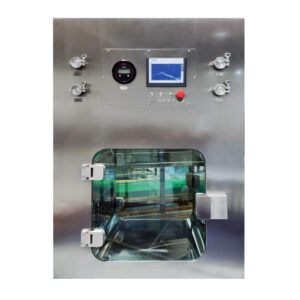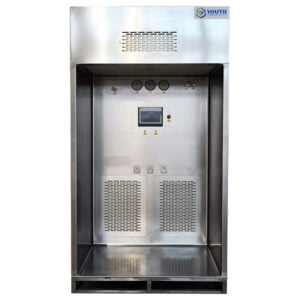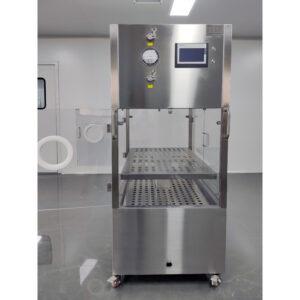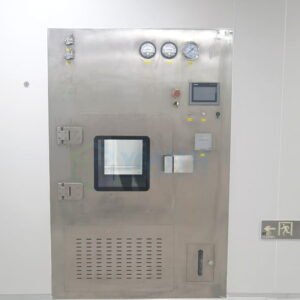
Pharmaceutical and biosafety facility managers face a critical operational paradox: filter replacement procedures designed to protect clean environments can become the most dangerous contamination events if improperly executed. A single breach during filter changeout in BSL-4 laboratories or cytotoxic compounding facilities can expose personnel to carcinogens, biohazards, or radioactive particulates. Standard housing systems require extensive PPE protocols and environmental lockdowns, yet still present unacceptable exposure risk. The consequences extend beyond personnel safety to regulatory compliance failures, facility shutdowns, and liability exposure.
BIBO filter housing systems eliminate this exposure risk through contained changeout procedures, but selecting and operating these systems requires precise understanding of technical specifications, regulatory requirements, and integration parameters. Facilities handling hazardous drugs under USP 800 protocols, biological agents in ABSL-3 environments, or nuclear materials face distinct containment requirements that dictate housing design, filtration configurations, and validation procedures. This guide provides the technical framework for specifying, implementing, and maintaining BIBO systems that meet 2025 regulatory standards while optimizing operational efficiency.
Fundamentals of BIBO Filter Housing Design and Regulatory Compliance
Core Containment Architecture and Access Configuration
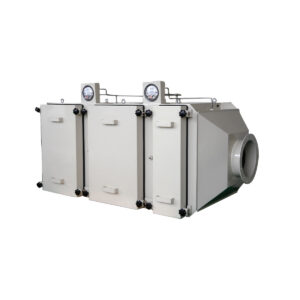
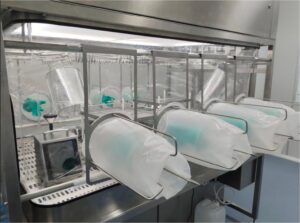
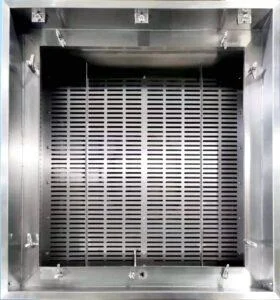
BIBO systems achieve zero-exposure filter replacement through specialized housing geometry and sealing mechanisms. Side-mounted access doors integrate with bagging collars that remain permanently attached to the housing perimeter. The collar accepts heavy-duty disposal bags that create a sealed envelope around the contaminated filter during removal. This configuration prevents interior housing surfaces and spent filters from contacting ambient air or personnel. Gasket and fluid seal systems with mechanical locking mechanisms maintain airtight separation between filter media and housing interface points. The dual-seal approach—combining elastomeric gaskets with liquid gel seals—accommodates thermal expansion and vibration while sustaining pressure differentials up to 5000 Pa.
Housing construction materials directly impact decontamination efficacy and service longevity. Stainless steel with full-penetration TIG welds provides superior corrosion resistance in facilities using vaporized hydrogen peroxide or chlorine dioxide for terminal disinfection. Aluminized steel with decontaminable powder coating offers cost advantages for applications with less aggressive cleaning protocols. I’ve observed facilities that selected inadequate coatings face premature housing failure when acidic decontamination agents penetrated surface treatments and initiated corrosion at weld seams.
BIBO Housing Core Technical Specifications
| Component | Material/Configuration | Operating Parameters |
|---|---|---|
| Housing Construction | Stainless steel with airtight welds or steel with powder coating | Temperature to 150°F (66°C) continuous |
| Pre-filter Sections | 2″, 4″, or 6″ sections available | MERV 8, UL Class 2 rated |
| Sealing System | Gasket and fluid seals with locking mechanism | Leakage control to 1µg/m³ rate |
| Access Configuration | Side-mounted doors with bagging collar | Heavy-duty disposal bag attachment |
Note: Design meets ABSL-3 and BSL-4 cleanliness benchmarks with OEB standard leakage limits.
Source: USP General Chapter 797, ISO 9001:2015
Regulatory Frameworks and Occupational Exposure Band Requirements
BIBO housing specifications must align with the specific contaminants and exposure limits your facility handles. Systems designed for BSL-4 biological agents require fundamentally different validation than those protecting against OEB 5 pharmaceutical compounds. The international OEB standard establishes exposure thresholds from OEB 1 (>1000 µg/m³) to OEB 5 (<0.1 µg/m³), with BIBO systems typically specified for OEB 3-5 applications. Housing designs reference the 1 µg/m³ leakage rate as the baseline containment target, achieved through precision-machined sealing surfaces and continuous pressure monitoring.
Pharmaceutical facilities compounding hazardous drugs must meet USP 800 containment requirements. These standards mandate negative pressure rooms with minimum 12 air changes per hour and external exhaust through HEPA filtration. BIBO housings serve as the critical terminal filtration point where contaminated exhaust air passes before environmental discharge. NIOSH criteria define hazardous drugs to include any agent exhibiting carcinogenicity, teratogenicity, reproductive toxicity, or genotoxicity at low doses—a classification encompassing over 200 commonly handled pharmaceutical compounds.
Pre-Filter Integration and Pressure Management
Pre-filter sections installed upstream of primary HEPA/ULPA filters extend service intervals and reduce operational costs. Available in 2-inch, 4-inch, or 6-inch depths, these sections capture larger particulates and aerosol droplets before they reach expensive final filters. MERV 8 rated cotton-synthetic blend media provides adequate removal efficiency for particles above 3 µm while maintaining acceptable pressure drop. Facilities processing materials that generate substantial particulate loading—such as powder handling in pharmaceutical manufacturing—benefit from 6-inch pre-filter sections that triple media surface area compared to 2-inch configurations.
Differential pressure monitoring across pre-filter sections provides early warning of filter loading and required changeout intervals. When pressure differential exceeds manufacturer specifications—typically 1.0 to 1.5 inches water column—airflow reduction compromises ventilation rates and containment effectiveness. Pre-filter replacement using BIBO procedures prevents exposure to accumulated hazardous particulates while restoring system performance.
Selecting the Optimal BIBO Housing for Your Facility’s Risk Assessment
Filtration Stage Configuration and Contaminant-Specific Media Selection
Optimal BIBO housing specification begins with contaminant characterization and exposure risk assessment. Particulate-only applications require HEPA or ULPA filtration, while processes generating gaseous contaminants demand HEGA media or multistage configurations combining particulate and gas-phase filtration. HEPA filters rated at 99.97% efficiency for 0.3 µm particles provide adequate protection for most pharmaceutical and biological applications. ULPA filters achieving 99.999% efficiency serve facilities handling radioisotopes or highly potent cytotoxic compounds where even minimal particulate release presents unacceptable risk.
HEGA (High Efficiency Gas Adsorption) filters incorporate activated carbon or chemically treated media to capture volatile organic compounds, acid gases, and radioactive iodine isotopes. Nuclear facilities and radiopharmaceutical compounding operations typically specify multistage configurations with HEGA filters upstream of HEPA filters to address both gaseous and particulate radioactive emissions. The staged approach prevents gaseous contaminants from passing through particulate filters while protecting carbon media from premature loading by large particles.
Filtration Efficiency and System Capacity Matrix
| Filter Type | Efficiency Rating | Pressure/Airflow Capacity |
|---|---|---|
| HEPA | 99.97% @ 0.3µm | Up to -5000Pa sustained pressure |
| ULPA | 99.999% @ 0.3µm | 50-300 m³/h airflow range |
| HEGA (Gaseous) | 98% minimum | Compatible with multistage configurations |
| Multistage Combination | 98-99.999% @ 0.3µm | Customizable based on risk assessment |
Source: USP 800, NSF/ANSI 49-2009
Application-Specific Housing Selection Criteria
Non-BIBO systems offer no containment during filter replacement. Personnel must don full PPE including powered air-purifying respirators, yet still face direct exposure to filter surfaces laden with hazardous materials. This approach introduces human factors risk where improper donning, doffing, or PPE failures result in contamination incidents. Facilities handling radiological materials, select carcinogens, or BSL-3/4 biological agents cannot accept this exposure probability regardless of PPE protocols.
BIBO systems eliminate personnel exposure through complete physical isolation of contaminated filters within sealed disposal bags. Maintenance staff work outside the containment envelope throughout the entire replacement procedure. This engineering control supersedes administrative controls and PPE, providing reliable protection independent of human performance variables. When safety represents the primary design criterion—as in radioactive waste processing, biological research facilities, and hazardous drug compounding—BIBO systems constitute the only acceptable approach.
Airflow and Pressure Differential Requirements
Housing selection must accommodate facility-specific airflow requirements and pressure capabilities. Systems range from 50 m³/h for small laboratory applications to 300 m³/h or higher for process exhaust applications. Undersized housings create excessive pressure drop that reduces ventilation rates below required air change frequencies. Oversized housings increase capital costs and filter replacement expenses without performance benefits.
Pressure capability determines the system’s ability to maintain specified airflow against downstream duct resistance and atmospheric discharge conditions. BIBO housings designed for pharmaceutical isolators and biological safety cabinets must sustain negative pressures to 5000 Pa while maintaining rated airflow. I’ve encountered facilities where inadequate pressure ratings caused system failure when seasonal wind conditions increased exhaust back-pressure and collapsed ventilation rates below minimums.
A Step-by-Step Guide to Safe and Compliant Bag In Bag Out Procedures
Pre-Replacement Preparation and System Decontamination
Successful BIBO filter replacement begins with thorough system decontamination before initiating bag attachment. Facilities handling biological agents typically perform gaseous decontamination using vaporized hydrogen peroxide or formaldehyde to kill viable organisms on filter media and interior housing surfaces. Pharmaceutical applications may use in-situ decontamination with sporicidal agents appropriate for the handled compounds. This critical step reduces bioburden and chemical contamination to levels that prevent exposure even in the unlikely event of bag breach.
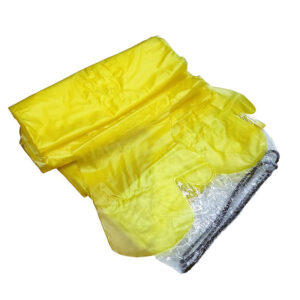
Verify adequate replacement bags, tools, and secondary containment materials before shutting down ventilation. Bags must meet specifications for the housed filter dimensions and operating temperatures. Standard BIBO bags feature 8-mil thick polyvinyl chloride construction with yellow translucent finish for visibility and three integrated glove ports for manipulation. The ¼-inch diameter elastic shock cord hemmed into the bag opening creates secure attachment around the housing’s bagging flange.
Sequential Filter Removal Through Double-Bag Technique
The BIBO procedure maintains continuous containment through overlapping bag layers that never expose contaminated surfaces. Begin by securing the first disposal bag to the housing collar using the elastic shock cord attachment. The bag creates a sealed chamber extending from the housing face. Open the access door from outside the bag, allowing the door to fall into the bag interior. Don gloves through the bag’s glove ports to manipulate the contaminated filter without direct contact.
BIBO Filter Replacement Process Sequence
| Step | Action | Containment Method |
|---|---|---|
| 1 | Seal 8-mil PVC bag to housing collar via ¼” elastic shock cord | Bag remains sealed during entire process |
| 2 | Remove contaminated filter into sealed bag through glove ports | Filter pulled directly into disposal bag |
| 3 | Twist, seal, and cut bag in half | Half-bag remains on collar |
| 4 | Install new bag over existing half-bag on collar | Double-bag containment maintained |
| 5 | Insert new filter and repeat for remaining units | Zero environmental exposure |
Note: Bag contains 3 glove ports for handling; yellow translucent finish for visibility.
Source: USP 800
Critical Sealing and Clean Filter Installation Steps
Once the contaminated filter resides fully inside the bag, twist the bag multiple times to create a sealed section containing the filter. Apply a cable tie or heat seal across the twisted section, then cut the bag between the seal and the housing collar. This leaves half the bag material still attached to the collar, maintaining the sealed barrier. Immediately install a fresh bag over the existing half-bag stub, creating overlapping containment layers.
Insert the new filter through the bag using the glove ports to guide it into proper position within the housing. Verify gasket alignment and seating before closing and securing the access door. Remove the outer bag only after confirming door closure and seal integrity. The inner half-bag remains in place for the next filter replacement cycle, providing continuous containment between service intervals.
Multi-Filter Housing Procedures and Validation
Housings containing multiple filters require sequential removal following the same bag-within-bag technique for each unit. Never remove more than one filter simultaneously, as this increases manipulation complexity and breach risk. I’ve found that methodical single-filter processing reduces procedure time compared to attempting parallel operations.
After completing all filter replacements, perform leak testing before returning the system to service. NSF/ANSI 49-2008 standards require challenge testing of installed filters to verify 99.97% minimum efficiency and absence of bypass leakage. DOP or PAO aerosol challenge with downstream photometric scanning confirms filter integrity and proper gasket sealing.
Integrating BIBO Systems with HVAC and Facility Containment Strategies
Ductwork Configuration and Pressure Cascade Design
BIBO housing integration requires careful attention to ductwork routing and pressure relationships. All ductwork upstream of BIBO filters must operate under negative pressure to prevent contaminated air leakage through duct seams or penetrations. The BIBO filter housing system serves as the final containment barrier where negative pressure zones terminate and filtered air discharges to atmosphere or returns to supply systems.
Exhaust discharge points must locate away from building air intakes, personnel areas, and sensitive environmental receptors. Minimum separation distances depend on building codes and facility-specific risk assessments, but typically range from 25 to 50 feet horizontal distance or discharge above roof level with vertical separation. Prevailing wind patterns and building aerodynamics influence discharge plume behavior and required separation distances.
Room Pressure Relationships and ISO Classification Requirements
Hazardous material handling areas must maintain negative pressure relative to adjacent spaces to ensure directional airflow from clean to progressively more contaminated zones. Pharmaceutical compounding rooms handling hazardous drugs require minimum -0.01 inches water column negative pressure relative to adjacent ISO Class 7 ante-areas. This pressure differential drives continuous airflow from the ante-area into the compounding room, preventing contaminated air from migrating to cleaner spaces.
HVAC Integration Requirements and System Performance
| Parameter | Specification | Monitoring/Control |
|---|---|---|
| Blower Performance | 1720 CFM @ 1″ / 1015 CFM @ 9″ static pressure | Magnehelic gauges on each section |
| Room Pressure | Minimum -0.01″ water column negative | ISO Class 7 area requirement |
| Air Changes | Minimum 12 ACH | Continuous operation to maintain gradient |
| Electrical | 230/460V, 12/6A, 3-phase, 60Hz | Standard power configuration |
| Ductwork | All ducting under negative pressure | External exhaust away from air intakes |
Note: Typical unit: 93″L × 32″W × 45″H, 680 lbs.
Source: USP General Chapter 797, ISO 9001:2015
Blower Selection and Static Pressure Considerations
BIBO systems incorporate high-pressure blowers capable of overcoming substantial static pressure from filter resistance, ductwork friction, and discharge conditions. Typical systems develop over 9 inches water column static pressure, with performance curves showing 1720 CFM at 1 inch static pressure declining to 1015 CFM at 9 inches static pressure. Select blower capacity to deliver required airflow at the maximum anticipated system static pressure, including safety factors for filter loading at end of service life.
Electrical requirements typically specify 230/460V three-phase power at 12/6A respectively. Confirm electrical service compatibility during specification to avoid field modifications. Direct-drive motor configurations eliminate belt maintenance and improve reliability, with bearing service lives exceeding 100,000 hours L10 rating.
Continuous Operation and Pressure Gradient Maintenance
Primary engineering controls including biological safety cabinets, pharmaceutical isolators, and BIBO exhaust systems must operate continuously to maintain required pressure gradients and directional airflow. Shutting down exhaust systems causes pressure equalization that eliminates protective air barriers and allows contamination migration. Facilities should provide backup power for critical containment systems to maintain protection during utility interruptions.
Magnehelic gauges installed across each filter section provide real-time pressure differential monitoring. Rising pressure indicates filter loading and approaching end of service life. Facilities should establish action levels that trigger filter replacement before excessive pressure drop reduces airflow below minimum requirements. I’ve implemented monitoring protocols where pressure readings at 80% of maximum rated differential initiate replacement planning to prevent emergency shutdowns.
Advanced Materials and HEPA/ULPA Filtration for Critical Environments
Filter Media Construction and Efficiency Validation
HEPA filter media consists of submicron glass fibers arranged in random orientation to create a dense filtration matrix. Fiber diameter, packing density, and media depth determine collection efficiency and pressure drop characteristics. Filters rated at 99.97% efficiency for 0.3 µm particles achieve this performance through combined mechanisms including inertial impaction, interception, and diffusion. The 0.3 µm particle size represents the most penetrating particle size (MPPS) where collection mechanisms operate least efficiently—particles both larger and smaller exhibit higher collection efficiency.
Aerosol testing validates installed filter performance at both 100% and 20% of rated airflow. This dual-condition testing ensures filters meet efficiency specifications across the full operational range, detecting manufacturing defects or installation errors that might not appear at a single test condition. Metal-framed filters with single gasket design simplify installation and gasket sealing compared to dual-gasket configurations. Wire face guards protect fragile media during handling and installation.
HEPA/ULPA Filter Technical Specifications Comparison
| Filter Component | Standard Size | Efficiency/Rating | Testing Protocol |
|---|---|---|---|
| HEPA Filter | 24″ × 24″ × 11.5″ | 99.97% @ 0.3µm | Aerosol tested @ 100% and 20% rated flow |
| Prefilter | 24″ × 24″ × 2″ | MERV 8, UL Class 2 | Cotton-synthetic blend |
| Rated Airflow | 1080 CFM @ 1.0″ wg | — | Metal frame, single gasket, wire guards |
| Housing Design | Circular casing preferred | ISO 14644-1 Class 5 | Enhanced leak tightness for bag attachment |
Source: ISO 9001:2015, NSF/ANSI 49-2009
Housing Geometry and Seal Integrity Optimization
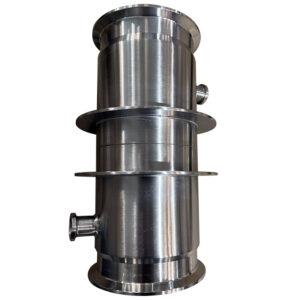
Circular BIBO filter casings provide superior leak tightness compared to rectangular designs. The continuous radius eliminates corner stress concentrations where gasket sealing often fails in rectangular housings. Circular geometry also facilitates uniform bag attachment around the perimeter, reducing the likelihood of loose sections that could compromise containment during filter removal. I’ve specified circular housings for high-consequence applications where even minor seal deficiencies present unacceptable risk.
Single gasket filter designs with knife-edge sealing surfaces create reliable compression seals when properly installed. The filter frame contacts the housing’s machined sealing surface with a thin elastomeric gasket compressed between. Proper compression—typically 25-30% of gasket thickness—achieves leak rates below 0.01% of airflow. Insufficient compression allows bypass leakage, while excessive compression damages gaskets and may distort filter frames.
Material Compatibility with Decontamination Protocols
Housing and filter materials must withstand repeated exposure to facility-specific decontamination agents without degradation. Vaporized hydrogen peroxide (VHP) decontamination at concentrations to 1000 ppm causes minimal material effects on stainless steel housings and sealed HEPA filters. Formaldehyde decontamination requires consideration of polymerization effects on certain gasket materials. Chlorine dioxide presents greater material compatibility challenges, potentially attacking elastomeric seals and certain metal alloys.
GFRP (glass fiber reinforced plastic) cleanroom panel systems integrate with BIBO housings in pharmaceutical manufacturing environments requiring frequent cleaning with aggressive chemicals. These composite panels resist degradation from alcohols, quaternary ammonium compounds, and oxidizing agents that gradually attack painted steel surfaces. The crack-bridging properties of GFRP construction maintain space integrity despite minor substrate movement or material aging.
Temperature Limitations and High-Temperature Applications
Standard BIBO containment bags tolerate continuous operating temperatures to 150°F (66°C). Applications exceeding this threshold require high-temperature bag materials such as silicone-coated fabrics rated to 400°F or specialty films for moderate temperature increases. Housing selection must also consider thermal expansion effects on sealing systems, with differential expansion between dissimilar materials potentially compromising gasket seals at temperature extremes.
Predictive Maintenance and Performance Validation for BIBO Housings
Differential Pressure Monitoring and Filter Service Life Prediction
Continuous pressure differential monitoring across filter sections provides the primary indicator of filter loading and remaining service life. Install magnehelic gauges with appropriate pressure ranges for each filter stage—typically 0-2 inches water column for pre-filters and 0-4 inches water column for HEPA/ULPA filters. Digital pressure transducers with data logging enable trend analysis to predict end-of-life timing and optimize replacement scheduling.
New HEPA filters exhibit initial pressure drop of 0.8 to 1.2 inches water column at rated airflow. Pressure increases gradually as particulate accumulates on media surfaces, with manufacturers typically specifying maximum operating pressures of 2.0 to 2.5 inches water column. Facilities should establish action levels at 80% of maximum rated pressure to initiate replacement planning before performance degradation affects room pressurization or air change rates.
Maintenance Monitoring and Validation Parameters
| Component | Monitoring Method | Performance Requirement |
|---|---|---|
| Differential Pressure | Magnehelic gauges with test ports | Screen and output port for leakage testing |
| Motor Bearings | Direct-drive configuration | L10 minimum 100,000 hours lifetime |
| Primary Controls | Continuous operation | Maintains pressure gradient integrity |
| Field Certification | NSF/ANSI 49-2008 compliance | Regular certification and performance validation |
| Filter Service Life | Prefilter monitoring | Extends HEPA life, reduces operational costs |
Note: Static pressure taps and test ports available as custom options.
Source: NSF/ANSI 49-2009, ISO 9001:2015
Leak Testing Protocols and Scan Test Procedures
In-place leak testing validates filter installation integrity and detects manufacturing defects or shipping damage. The procedure challenges the filter with a polydisperse aerosol—typically dioctyl phthalate (DOP), polyalphaolefin (PAO), or emery oil—while scanning downstream surfaces with a photometric probe. Any localized concentration exceeding 0.01% of upstream challenge concentration indicates a leak requiring correction.
Test ports located downstream of filters provide access for probe insertion and systematic scanning. Scan the entire filter face using overlapping passes at probe traverse rates not exceeding 2 inches per second. Pay particular attention to filter perimeter areas where gasket sealing failures most commonly occur. I’ve detected leaks that resulted from minor gasket displacement during installation that would have gone unnoticed without proper scan testing.
Predictive Bearing Maintenance and Motor Reliability
Direct-drive blower motors with permanently lubricated bearings eliminate the maintenance requirements of belt-driven systems. Quality motors specify bearing life using L10 ratings—the operating hours at which 10% of bearings will have failed. Modern direct-drive motors achieve L10 ratings exceeding 100,000 hours (11.4 years continuous operation), far surpassing typical facility equipment lifecycles.
Vibration monitoring detects bearing degradation before catastrophic failure. Establish baseline vibration signatures during commissioning, then perform quarterly or semi-annual measurements to identify developing problems. Increasing vibration amplitude or changing frequency spectra indicate bearing wear, misalignment, or imbalance requiring investigation. Infrared thermography provides complementary assessment by detecting abnormal bearing temperature rises from increased friction.
Documentation Requirements and Regulatory Compliance
Maintain comprehensive documentation of all maintenance activities, leak test results, and performance validations. Regulatory agencies expect records demonstrating that containment systems maintain specified performance throughout their service life. Documentation should include filter installation dates, leak test reports with remediation actions, pressure differential trends, and calibration records for monitoring instruments.
Quality management systems aligned with ISO 9001 principles establish formal procedures for preventive maintenance scheduling, corrective action documentation, and change control for system modifications. These structured approaches ensure consistent practices across maintenance staff and provide audit trails demonstrating regulatory compliance. Facilities pursuing certification from third-party agencies should implement these quality systems early to establish the documented history required for certification assessments.
Successful BIBO system implementation requires three critical decisions: filter configuration matching your specific contaminants, integration design maintaining required pressure cascades, and maintenance protocols sustaining validated performance. Specify housings based on exposure risk assessment rather than cost optimization—inadequate containment during a single filter replacement can negate years of operational savings. Establish pressure monitoring protocols with defined action levels that trigger proactive filter replacement before performance degradation compromises facility containment.
Need professional guidance selecting BIBO filtration solutions for your specific containment requirements? YOUTH provides engineering support for pharmaceutical, biosafety, and nuclear applications with validated housing designs meeting international regulatory standards. Our technical team assists with risk assessment, specification development, and commissioning validation to ensure your containment systems deliver reliable protection throughout their operational lifecycle.
For detailed consultations on custom BIBO configurations or facility-specific integration challenges, reach out directly at [email protected].
Frequently Asked Questions
Q: How do we determine if a BIBO housing is required for our pharmaceutical compounding facility?
A: A BIBO system is mandated when handling hazardous drugs as defined by USP <800>, which includes chemotherapies and other agents with carcinogenic or reproductive toxicity risks. The requirement is driven by the need for maximum containment integrity during filter replacement to protect personnel from exposure. Facilities operating under USP <797> for sterile compounding must conduct a risk assessment, but BIBO is generally the safest method for any hazardous application.
Q: What are the critical pressure specifications to verify when integrating a BIBO housing with existing HVAC ductwork?
A: The BIBO housing and connected ductwork must maintain a negative pressure to adjacent spaces, typically a minimum of 0.01 inches of water column. The housing itself must be capable of sustaining system pressure, with filtering units rated to -5000Pa. Ensure your blower performance is compatible, as systems can develop over 9″ of static pressure, and all ducting must be under negative pressure and exhausted externally from the building.
Q: What is the recommended procedure for in-situ disinfection and leak testing of a BIBO system?
A: The BIBO housing should be equipped with differential pressure gauges with an output port specifically for in-situ leak testing. The procedure involves aerosol testing the HEPA filter at 100% and 20% of its rated flow to verify the 99.97% efficiency for 0.3-micron particles. All primary engineering controls must run continuously to maintain pressure gradients, and field certification should follow NSF/ANSI 49 standards for biosafety cabinetry.
Q: Why are circular BIBO filter casings sometimes recommended over rectangular designs?
A: Circular BIBO filter casings are recommended for improved leak tightness and a more secure bag attachment during the filter exchange process. The design minimizes potential leak paths that can occur at the corners of rectangular housings, which is critical for maintaining the stringent leakage control required by international standards, such as the 1ug/m³ dust leakage rate for high-containment facilities.
Q: How does the multi-bag BIBO change-out procedure ensure personnel safety during filter replacement?
A: The procedure ensures safety by performing the entire filter replacement within a series of sealed bags, preventing the contaminated filter from ever contacting the external environment. The process involves twisting, sealing, and cutting the bag, leaving half sealed to the housing collar while the contaminated filter is isolated in the other half. This closed-system technique is essential for preventing the spread of harmful aerosols, as required for handling highly toxic or active materials.
Q: What maintenance schedule and documentation are required for BIBO systems in a GMP environment?
A: BIBO systems require regular certification and field testing to maintain performance, with differential pressure across pre-filters and HEPAs continuously monitored via Magnehelic gauges. Documentation and quality control must adhere to ISO 9001 requirements, ensuring all maintenance, filter changes, and pressure readings are meticulously recorded. While pre-filters extend HEPA life, the system’s direct-drive motor bearings typically have a minimum L10 lifetime of 100,000 hours.
Related Contents:
- Bag-In/Bag-Out (BIBO) Systems: Operation and Maintenance Guide
- HEPA Housing Boxes in Pharmaceutical Manufacturing: Uses
- What is the Efficiency Rating of HEPA Housing Boxes?
- Understanding BIBO | Hazardous Material Containment
- Bag In Bag Out Systems | Safety Fundamentals Explained
- BIBO Filter Housing | Design Principles & Components
- BIBO System Basics | Bag In Bag Out Filter Principles
- How BIBO Works | Containment Filter Technology Guide
- Emerging Trends in HEPA Housing Box Technology for 2025