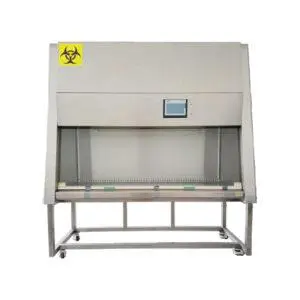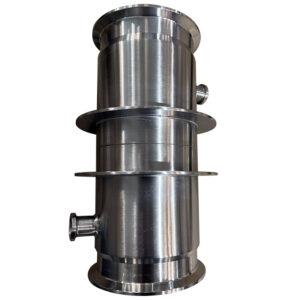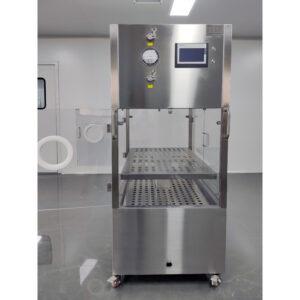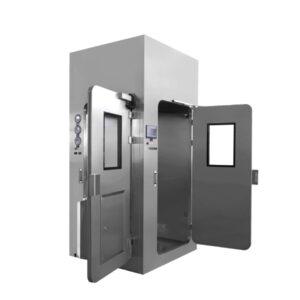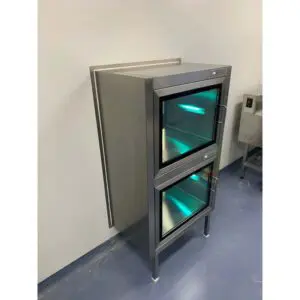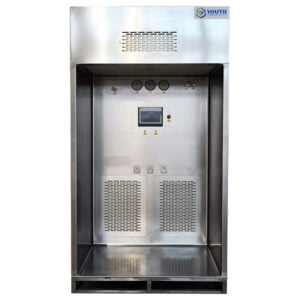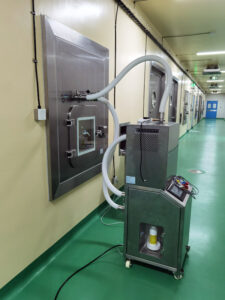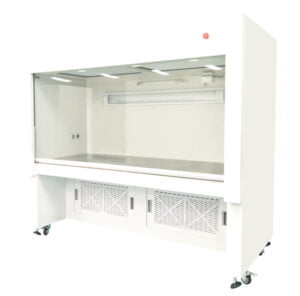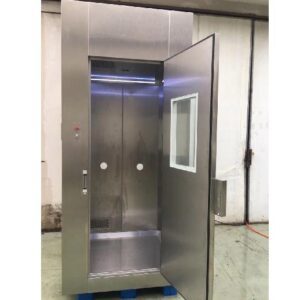
Pharmaceutical manufacturers face a critical decision point when selecting weighing booth systems. The wrong choice creates cascading failures: regulatory non-compliance, operator exposure to hazardous APIs, compromised batch integrity, and costly retrofits. Most selection processes focus narrowly on equipment specifications while overlooking integration requirements, operational workflows, and total lifecycle costs. This gap between technical capability and operational reality drives project delays and performance shortfalls.
The stakes increased substantially in 2024-2025. Regulatory scrutiny intensified around data integrity and electronic record systems. Supply chain disruptions forced manufacturers to handle a broader range of APIs with varying potency profiles. Energy costs pushed facilities to prioritize efficiency without compromising containment performance. These converging pressures demand a systematic approach to weighing booth selection that balances immediate compliance needs with long-term operational flexibility.
Understanding Your Weighing Requirements: Accuracy, Materials, and Throughput
Defining Containment Levels for Your API Portfolio
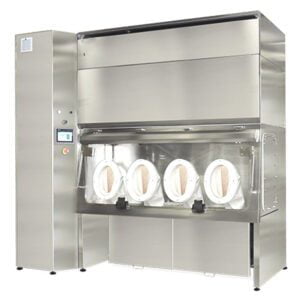
Containment requirements drive every other specification decision. Materials with occupational exposure limits (OELs) below 10 μg/m³ demand engineered controls beyond basic booth designs. Weighing booths achieve containment levels from 10-100 μg/m³ through HEPA-filtered downflow that captures particulates at the point of generation. Your material safety data sheets establish baseline requirements, but actual containment performance depends on operator technique, booth configuration, and airflow patterns around the work zone.
Manufacturers handling multiple API categories need flexible containment strategies. A booth configured for nuisance-level excipients performs inadequately when production schedules shift to highly potent compounds. I’ve observed facilities underestimate containment needs during initial scoping, then face expensive modifications when product portfolios expand. Safe Change filter systems address this by enabling filter replacement without exposure, supporting both internal and external change procedures depending on material potency.
Critical Performance Specifications for Weighing Booth Selection
| Parameter | Specification | Application Impact |
|---|---|---|
| Air Flow Velocity | 0.3-0.5 m/s | Maintains ISO Class 5; prevents turbulence |
| Containment Level | 10-100 μg/m³ | Operator protection for hazardous APIs |
| Average Illuminance | 500 LUX | Ensures accurate visual inspection |
| Noise Level | ≤75 dBa | Sustained operator comfort during shifts |
| Air Quality at Rest | ISO Class 5 | Meets GMP Class A requirements |
Source: ISO 14644-1:2015
Matching Booth Capacity to Throughput Demands
Production throughput determines booth sizing and configuration. Small-batch operations handling 5-20 weighing events per shift function efficiently in compact 1.6-2.4 meter widths. High-volume facilities processing continuous dispensing operations require 3.0-5.0 meter configurations that accommodate multiple operators or automated material handling systems. Internal depth options from 0.8-2.8 meters affect operator reach zones and equipment placement for balances, printers, and material staging.
Throughput analysis reveals patterns most engineers overlook. Peak demand periods create queuing delays when booth capacity matches average rather than maximum requirements. Multi-station booths distribute workflow but require careful consideration of cross-contamination risks and independent environmental control. Standard equipment offers over 420 dimensional models, yet I recommend custom analysis before defaulting to modular options.
Navigating Regulatory Compliance: cGMP, 21 CFR Part 11, and Data Integrity
Regulatory Framework Compliance Requirements Matrix
| Regulation | Primary Application | Key Technical Requirement |
|---|---|---|
| cGMP | Manufacturing process control | Documented process validation and change control |
| 21 CFR Part 11 | Electronic records/signatures | Audit trails, data integrity, user authentication |
| ISO 14644-1 | Cleanroom classification | Particle count verification at ISO Class 5 |
| GAMP 5 | Computerized system validation | Risk-based validation approach for control systems |
Source: FDA cGMP Guidance, 21 CFR Part 11
Establishing cGMP Compliance from Design Through Operation
Current Good Manufacturing Practice requirements shape weighing booth design, qualification, and operational controls. Equipment must demonstrate that design specifications prevent contamination and enable consistent performance verification. This starts with material selection—SUS304 or SUS316 stainless steel construction provides chemical resistance and cleanability required for pharmaceutical applications. Antimicrobial powder coating on booth panels adds additional protection in powder handling environments.
Design features directly support cGMP compliance requirements. Minimized joints and seams reduce contamination harboring points. Integrated filter challenge ports enable compliant filter integrity testing without improvised access points. Flush-mounted LED fixtures eliminate horizontal surfaces where materials accumulate. These design elements simplify both routine cleaning and qualification activities.
Implementing 21 CFR Part 11 Compliant Data Systems
Electronic record systems introduce both capability and compliance obligations. 21 CFR Part 11 establishes requirements for electronic signatures, audit trails, system validation, and data integrity controls. Weighing booth control systems that generate electronic batch records must authenticate users, create tamper-evident audit trails, and enforce operational sequencing that prevents unauthorized changes.
Software systems integrated with MES and ERP platforms streamline operations while creating compliance complexity. Barcode scanning for material identification prevents transcription errors and creates electronic linkages from incoming goods through production. Step-by-step operator instructions with embedded safety warnings improve consistency. The control system must timestamp all actions, link them to authenticated user accounts, and prevent deletion or alteration of completed records. Pre-programmed control systems supporting multiple configuration options enable compliance adaptation without custom software development.
Addressing Data Integrity Throughout the Weighing Process
Data integrity represents the convergence of system design, procedural controls, and quality culture. ALCOA+ principles—attributable, legible, contemporaneous, original, accurate, complete, consistent, enduring, and available—apply to every data point generated during weighing operations. Balance interfaces, environmental monitors, and batch record systems must capture data automatically at the point of generation, preventing manual transcription that introduces errors and manipulation opportunities.
Closed-loop control systems provide superior data integrity compared to open-loop monitoring. Real-time feedback from pressure differential transducers, airflow sensors, and balance readings creates contemporaneous records tied to specific operational events. Web services APIs enable integration with plantwide information management systems, making data retrieval straightforward while maintaining audit trail integrity across multiple platforms.
Core Components and Technology: From Balance Selection to Environmental Control
Engineering Three-Stage Filtration for Contamination Control
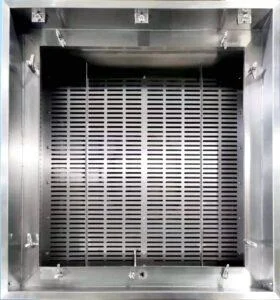
Filtration architecture determines both product protection and operator safety. Three-stage filtration cascades air treatment from initial particle capture through final HEPA filtration. G4 pre-filters remove larger particulates that would rapidly load downstream filters. F8 secondary filters capture mid-range particles, extending HEPA filter service life. H14 HEPA filters deliver 99.995% efficiency at 0.3 μm, achieving ISO Class 5 air quality at rest conditions required for GMP Class A environments.
Filtration System Components and Performance Standards
| Component | Specification | Efficiency/Function |
|---|---|---|
| Pre-filter (Stage 1) | G4 grade | Initial particle capture |
| Secondary Filter (Stage 2) | F8 grade | Mid-range particle filtration |
| HEPA Filter (Stage 3) | H14 liquid tank | 99.995% at 0.3 μm |
| Construction Material | SUS304/SUS316 stainless steel | Chemical resistance, cGMP compliance |
| Blower System | Closed loop ECM fans | Auto-adjust to filter loading; energy efficient |
Note: Filter replacement intervals: G4/F8 quarterly; H14 every 1-3 years or at 500Pa ΔP.
Source: ISO 14644-1:2015
Filter replacement strategy impacts both compliance and operational costs. Knife-edge gel-sealed filters enable rapid tool-less replacement, minimizing booth downtime. Quarterly replacement of pre-filters prevents premature HEPA loading. HEPA filters typically require replacement every 1-3 years, though aggressive chemical environments or high particulate loads accelerate this timeline. Differential pressure monitoring provides objective replacement criteria—mandatory replacement occurs when pressure drop exceeds 500Pa regardless of elapsed time.
Selecting Blower Technology for Energy Efficiency and Control
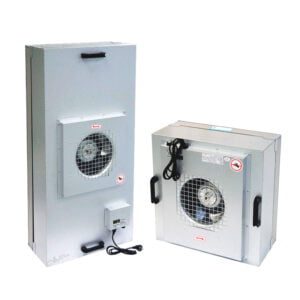
Blower selection affects energy consumption, noise levels, and control system capability. Closed-loop ECM (electronically commutated motor) fans automatically adjust speed in response to filter loading, maintaining consistent airflow velocity as filters accumulate particulates. This contrasts with fixed-speed systems that either over-ventilate when filters are clean or under-ventilate as filters load.
Energy-efficient blowers reduce operational costs without compromising performance. A 2KW total power requirement supports stand-alone operation without external HVAC connections. Automatic speed control via pressure probe enables the system to compensate for filter clogging, maintaining 0.3-0.5 m/s airflow velocity throughout the filter service life. Noise levels at or below 75 dBa support sustained operator comfort during extended shifts.
Optimizing Environmental Controls for Operator Comfort and Product Integrity
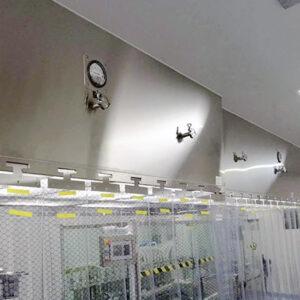
Environmental conditions inside the booth affect both operator performance and material handling. Standard LED lighting at 500 LUX provides sufficient illumination for visual inspection without glare. Operators working extended shifts in enclosed booths benefit from optional cooling coil systems that offset heat generated by lighting, equipment, and personnel. PVC strip curtains support environmental separation when booth openings face variable ambient conditions.
Material compatibility drives construction material selection. Stainless steel work surfaces and antimicrobial powder-coated panels withstand aggressive cleaning agents and resist chemical degradation. Flush-mounted fixtures eliminate horizontal surfaces where powder accumulates. Modular panel design with minimized seams simplifies cleaning validation and enables future modifications without complete booth replacement. I’ve found that facilities underestimate the long-term value of modular construction until production requirements change.
Integration Strategies: Connecting Weighing Booths with Your MES and ERP
Control System Integration Options and Capabilities
| Control Configuration | Interface Protocol | Primary Use Case |
|---|---|---|
| PLC/PB’s/PDI/PDT | Ethernet, RS-232 | Basic open loop monitoring |
| PLC/HMI/PDT | Ethernet, RS-232 | Real-time visualization with closed loop control |
| Sentinel Gold/PDI/PDT | Web services API | Full MES/ERP integration with 21 CFR Part 11 compliance |
Note: All systems support electronic batch record modules and barcode material tracking.
Source: 21 CFR Part 11 Guidance
Architecting System Integration from Balance to Enterprise
Integration architecture determines operational efficiency and data integrity. Basic configurations provide standalone operation with manual data transfer. Mid-tier systems incorporate HMI (human-machine interface) panels for real-time visualization and local control. Advanced configurations leverage web services APIs that enable bidirectional communication with MES, ERP, and quality management systems.
Balance integration represents the critical data capture point. Ethernet and RS-232 pass-through connections enable direct communication between analytical balances and control systems. This eliminates manual transcription while creating timestamped records linked to specific batch operations. Electronic batch record modules replace paper-based protocols, reducing transcription errors and enabling real-time batch record review. Pre-programmed control systems supporting multiple configuration options adapt to changing requirements without custom software development.
Building Closed-Loop Control for Real-Time Performance Verification
Closed-loop control systems continuously monitor environmental conditions and adjust equipment operation to maintain specifications. Pressure differential transducers track filter loading. Airflow sensors verify velocity at the work zone. Temperature and humidity monitors ensure environmental conditions remain within validated ranges. When parameters drift toward specification limits, the control system generates alerts before conditions exceed acceptable ranges.
True closed-loop control distinguishes sophisticated systems from basic monitoring. Automatic fan speed adjustment compensates for filter loading without operator intervention. The system maintains 0.3-0.5 m/s airflow velocity throughout filter service life by modulating blower speed based on differential pressure readings. This contrasts with open-loop systems that require manual adjustment as filters load. Control system data becomes part of the electronic batch record, documenting environmental conditions during each weighing operation.
Implementing Barcode Material Tracking for Chain of Custody
Barcode integration creates material traceability from receiving through production. Material identification at goods receipt generates unique tracking codes. Barcode scanning at each process step—storage, retrieval, weighing, dispensing—creates an unbroken chain of custody. The system verifies that materials scanned match batch production requirements before enabling weighing operations. This prevents wrong-material errors while automatically populating batch records with material lot numbers and quantities.
Comprehensive tracking systems provide step-by-step operator instructions customized for each material. Health and safety warnings display automatically when handling hazardous materials. The system enforces operational sequences, preventing steps from occurring out of order. All actions generate timestamped audit trail entries linked to authenticated user accounts. Integration with dispensing booth and sampling booth operations creates unified material handling workflows that eliminate data silos between operations.
Site Planning and Installation: A Practical Guide to Utility and Space Requirements
Standard Dimensional Configurations and Utility Requirements
| Dimension Parameter | Available Options | Configuration Notes |
|---|---|---|
| Internal Height | 2.1 m, 2.5 m | Standard operator clearance |
| External Width | 1.6-5.0 m (0.2 m increments) | 17 standard width options |
| Internal Depth | 0.8-2.8 m (0.4 m increments) | 6 standard depth options |
| Total Power | 2 KW | Stand-alone operation; no external HVAC |
| Voltage Options | 120-480V; 1Ph/3Ph; 50/60Hz | Global compliance configurations |
Note: Over 420 dimensional models with ~3.5 million possible system configurations available.
Source: ISO 14644-1:2015
Calculating Space Requirements Beyond Equipment Footprint
Facility layout extends beyond booth dimensions. External width and depth define the booth footprint, but operational requirements add clearance zones. Front access requires minimum 1.5 meters for operator movement and material handling equipment. Maintenance access at rear and sides demands additional 0.8-1.0 meters for filter replacement and service activities. Ceiling height must accommodate booth height plus 0.5 meters for utility connections and structural clearance.
Modular design provides installation flexibility that fixed construction cannot match. Standard configurations adapt to existing facility constraints through dimensional adjustments. Width options from 1.6-5.0 meters in 0.2 meter increments enable precise fitting within available floor space. Depth options from 0.8-2.8 meters balance work zone requirements against room dimensions. Internal heights of 2.1 or 2.5 meters accommodate different operator anthropometrics and overhead utility requirements.
Utility Planning for Stand-Alone Operation
Stand-alone operation simplifies installation and reduces facility modifications. The booth requires only electrical power—no external HVAC connections, no exhaust ductwork, no makeup air systems. A 2KW power requirement accommodates blowers, lighting, controls, and optional accessories. Voltage options spanning 120-480V with single-phase or three-phase configurations support global installation requirements and regional electrical standards.
Recirculating airflow eliminates the energy penalty and complexity of exhausting conditioned air. Air enters the work zone through overhead HEPA filters, creating laminar downflow that sweeps particulates away from the operator breathing zone. Base filtration captures particulates before air returns to the blower. This closed-loop approach maintains environmental control without consuming facility HVAC capacity. I’ve calculated that eliminating exhaust requirements reduces installation costs by 30-40% compared to ducted systems.
Addressing Hazardous Area Classifications and ATEX Requirements
Facilities handling flammable solvents or explosive dust atmospheres require ATEX-rated equipment configurations. NEC 505 and NEC 500 classifications define hazardous area requirements in North America. Explosion-proof electrical components, bonding and grounding systems, and spark-resistant materials prevent ignition sources. These configurations add cost and complexity but enable compliant operation in areas where standard equipment would create unacceptable risks.
Equipment documentation requirements expand substantially for hazardous area installations. Complete electrical schematics, component certifications, and installation specifications support facility classification reviews and inspection authority approvals. Custom documentation including IO/OQ/GMP protocols accelerates validation activities. These documents arrive with equipment shipment, preventing project delays while engineers develop validation protocols.
Operational Excellence: SOPs, Calibration, and Preventative Maintenance
Preventative Maintenance Schedule and Critical Tasks
| Maintenance Task | Frequency | Acceptance Criteria |
|---|---|---|
| Pressure differential inspection | Monthly | Stable ΔP; <500Pa threshold |
| Pre-filter replacement (G4/F8) | Quarterly | Visual inspection; airflow verification |
| HEPA filter integrity testing | Annually or per validation protocol | 99.995% efficiency at 0.3 μm maintained |
| HEPA filter replacement | Every 1-3 years or ΔP >500Pa | Airflow velocity returns to 0.3-0.5 m/s |
| IQ/OQ/PQ requalification | Per change control or annually | Full documentation per GAMP standards |
Source: FDA cGMP Guidance
Developing Risk-Based Maintenance Strategies
Preventative maintenance schedules balance equipment reliability against operational disruption. Critical tasks require monthly or quarterly execution regardless of condition indicators. Pressure differential inspection occurs monthly to detect filter loading trends before airflow degrades. Quarterly pre-filter replacement prevents premature HEPA loading and extends final filter service life. Annual HEPA filter integrity testing verifies continued performance between replacements.
Maintenance intervals adapt to actual operating conditions rather than arbitrary time periods. Facilities processing high particulate loads or operating multi-shift schedules may require accelerated pre-filter replacement. Conversely, low-volume operations with minimal particulate generation can sometimes extend replacement intervals. Differential pressure monitoring provides objective criteria—replacement occurs when ΔP approaches 500Pa regardless of calendar schedule. This risk-based approach optimizes maintenance costs while ensuring continuous compliance.
Implementing Calibration Programs for Connected Balance Systems
Balance calibration drives weighing accuracy and data integrity. Calibration frequency depends on balance specifications, material characteristics, and risk assessment. High-precision operations weighing potent APIs in milligram quantities require monthly or even weekly calibration. Less critical operations tolerate quarterly calibration intervals. Calibration protocols must address balance, weights, and environmental conditions during calibration activities.
Electronic integration between balances and booth control systems simplifies calibration documentation. Calibration due dates populate automatically from equipment databases. The system generates alerts when balances approach calibration expiration. Some configurations prevent operation with expired calibration, enforcing compliance through operational controls rather than procedural discipline. Calibration results transmit electronically to quality management systems, creating centralized records without manual data transfer.
Establishing SOPs that Support Both Compliance and Efficiency
Standard operating procedures translate equipment capability into consistent operational performance. Effective SOPs address startup procedures, operational checks, material handling techniques, cleaning requirements, and shutdown protocols. Procedures must specify acceptance criteria for each step—defining what operators verify and how they document compliance.
SOP development benefits from operator input and iterative refinement. Initial procedures based solely on equipment specifications often miss practical operational considerations. Operators identify workflow bottlenecks, ergonomic issues, and procedural ambiguities that engineers overlook. I recommend validation batches that test SOPs under production conditions before finalizing procedures. This reveals gaps between documented procedures and operational reality, enabling corrections before regulatory inspections identify deficiencies.
Managing Change Control for Equipment Modifications and Upgrades
Change control processes govern equipment modifications, software updates, and procedural changes. Proposals require technical justification, risk assessment, and validation impact analysis. Changes affecting validated systems trigger requalification activities proportionate to modification scope. Control system software updates may require revalidation. Physical modifications like adding cooling systems or increasing booth size necessitate environmental performance reverification.
Pre-programmed control systems supporting multiple configuration options reduce change control complexity. Enabling previously disabled features occurs through software configuration rather than custom programming. This maintains validation status while adapting equipment to changing operational requirements. Documentation supporting multiple configurations arrives with initial equipment delivery, accelerating change implementation when operational needs evolve.
Selecting and implementing weighing booth systems demands attention to specifications, integration architecture, and operational workflows. Success requires matching containment performance to your API portfolio, implementing control systems that support both compliance and efficiency, and establishing maintenance programs that sustain validated performance. Facilities that treat selection as purely technical specification miss integration complexities that create project delays and operational shortfalls.
Ready to specify a weighing booth system that balances regulatory compliance with operational efficiency? YOUTH engineers modular containment solutions designed for pharmaceutical manufacturing environments. Our technical team provides application analysis, system configuration, and validation support throughout implementation.
Questions about specific material handling requirements, integration capabilities, or site planning constraints? Contact us for detailed technical consultation and configuration recommendations tailored to your facility requirements.
Frequently Asked Questions
Q: What containment level should a weighing booth provide for handling potent compounds like APIs?
A: Modern weighing booths achieve containment levels of 10-100μg/m³, protecting operators from inhaling harmful dust and preventing cross-contamination. This performance is maintained by HEPA-filtered unidirectional laminar downflow, which ensures an ISO Class 5 environment at rest. For highly potent products, specify a Safe Change filter configuration to allow safe replacement without exposure.
Q: How do weighing booth control systems ensure compliance with 21 CFR Part 11 for electronic records?
A: Control systems are pre-programmed to support 21 CFR Part 11 requirements for electronic records and signatures, often integrating with electronic batch record modules to replace paper protocols. These systems create a single, secure electronic record of all weighing actions, from material identification via barcode to step-by-step operator instructions. Validation according to GAMP standards is critical for demonstrating compliance during audits.
Q: What are the key factors in selecting a balance and integrating it with the booth’s control system?
A: Balance selection must align with your required weighing accuracy and the booth’s integration capabilities. For full traceability, choose a balance with RS-232 or Ethernet connectivity that can interface with the booth’s PLC or Sentinel Gold control system. This integration feeds weight data directly into the electronic batch record, supporting 21 CFR Part 11 compliance and eliminating manual transcription errors.
Q: What is the recommended maintenance schedule for HEPA and pre-filters to maintain ISO Class 5 conditions?
A: HEPA filters typically require replacement every 1-3 years, or when the pressure drop exceeds 500Pa, while pre-filters (G4/F8 grade) need quarterly replacement. Perform monthly inspections of pressure differential stability to proactively detect filter clogging. Integrated filter challenge ports support regular integrity testing to verify continued compliance with ISO 14644-1 classification.
Q: How flexible are standard weighing booth designs for fitting into existing facility layouts?
A: Standard modular designs offer exceptional flexibility, with over 420 possible dimensional models and approximately 3.5 million configurations. External widths range from 1.6 to 5.0 meters, and internal depths from 0.8 to 2.8 meters, allowing for precise fitting in warehouses or production areas. This modularity also permits future on-site size adjustments without a full equipment replacement, supporting evolving cGMP facility requirements.
Related Contents:
- Precision Weighing Booths for Pharmaceutical Industry
- Weighing Booth vs Scale Room: Which is Right for You?
- What is a Weighing Booth? Essential Facts Explained
- Boost Productivity with Automated Weighing Booths
- Emerging Trends: The Future of Weighing Booth Technology
- The Ultimate Guide to Weighing Booths [2025 Edition]
- Weighing Booth ROI: Maximizing Your Investment
- 7 Steps to Perfectly Calibrate Your Weighing Booth
- 5 Critical Safety Features in Modern Weighing Booths