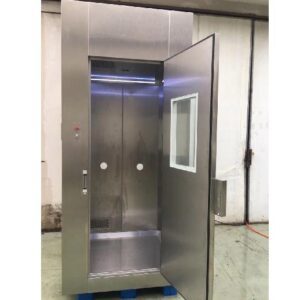
In controlled environments, UV sterilization cycles for pass boxes are often treated as a set-and-forget timer function. This approach ignores the fundamental science of microbial inactivation and creates significant compliance and contamination risks. The core challenge is moving from a time-based assumption to a validated, dose-based protocol that guarantees efficacy.
As regulatory scrutiny intensifies and processes like advanced therapy manufacturing demand higher sterility assurance, a data-driven approach is no longer optional. Optimizing UV cycles is a critical operational qualification step that directly impacts product safety, regulatory standing, and throughput efficiency.
How to Validate UV Dose for Pass Box Sterilization
Defining the Validation Mandate
Validation transforms UV sterilization from an assumed activity into a measurable control. The definitive parameter is UV dose, expressed in mJ/cm², calculated as irradiance (µW/cm²) multiplied by exposure time (seconds). The goal is to prove the minimum required dose for your target microbial reduction is consistently delivered to the least exposed surface of a typical load. This process is not a one-time event but a lifecycle commitment. UV sterilization efficacy is a dynamic, not static, property. Lamp intensity decays predictably over time, creating a critical dependency on periodic re-validation to prevent sterilization failure.
The Validation Lifecycle Framework
A complete validation strategy integrates Installation Qualification (IQ), Operational Qualification (OQ), and Performance Qualification (PQ). IQ verifies correct installation per specifications. OQ tests functional performance—interlocks, timers, alarms. PQ is the critical phase, demonstrating the cycle delivers the target sterilizing dose under simulated load conditions. This framework provides a defensible baseline. Any subsequent change to cycle time, lamp type, or load configuration necessitates a formal change control review and likely re-validation.
From Qualification to Routine Monitoring
Post-validation, the focus shifts to routine monitoring and change control. The maintenance schedule, informed by initial radiometric mapping and biological indicator (BI) testing, becomes the operational blueprint. This disciplined approach treats UV intensity as a key performance indicator. In our audits, we frequently find that the absence of this monitoring schedule is the primary gap in an otherwise compliant facility.
Key Factors: UV Intensity, Duration, and Dose
The Interdependent Parameters
UV dose is the product of irradiance and time. Irradiance is not uniform within a chamber; it varies with distance from the lamp and is susceptible to shadowing. The worst-case, lowest intensity point dictates the entire cycle design. Exposure duration is the programmed active time. Optimization seeks the minimum effective time that delivers the required dose at that worst-case location, directly impacting throughput. This relationship means a timer setting alone is meaningless without knowing the delivered intensity at the load’s surface.
The Risk-Throughput Trade-Off
Achieving a higher, more reliable dose lowers contamination risk but typically requires longer cycle times, reducing throughput. This is a fundamental operational balance to manage. The target UV dose itself is microorganism-specific. Bacterial spores like Geobacillus stearothermophilus may require 50-100 mJ/cm² for a 3-log reduction, whereas common vegetative bacteria need significantly less. Defining this requirement upfront is essential.
Quantifying the Relationship
The following table outlines the core parameters and their operational impact, providing a reference for initial cycle design.
| Parameter | Key Metric / Range | Impact / Consideration |
|---|---|---|
| UV Irradiance | µW/cm² (measured) | Dictates worst-case design point |
| Exposure Duration | Seconds (programmed) | Balances throughput vs. risk |
| Target UV Dose | 50-100 mJ/cm² (spores) | Microorganism-specific requirement |
| Common Bacteria Dose | <50 mJ/cm² | Lower dose requirement |
| Log Reduction | 3-log, 6-log | Defines target efficacy level |
Source: Technical documentation and industry specifications.
Selecting the Right UV-C Lamps and Configuration
The Contamination Control Hierarchy
UV-C is a tertiary decontamination step, secondary to physical separation (interlocked doors) and HEPA filtration. Capital allocation should prioritize these primary engineering controls first. When specifying UV, the choice extends beyond component selection to holistic system design. The configuration must embody this hierarchy, ensuring UV supplements, rather than substitutes for, fundamental contamination control.
Lamp and Chamber Design Specifications
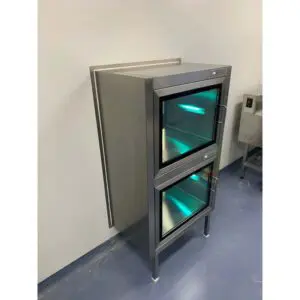
Low-pressure mercury vapor lamps emitting at 253.7 nm remain the standard for germicidal efficacy. Lamp placement must minimize shadows, and chamber surfaces should be stainless steel or other materials with high UV reflectivity to improve irradiance distribution. The configuration must also account for operational safety as a non-negotiable constraint, mandating features like door-interlocked activation to prevent personnel exposure.
Key Configuration Considerations
Selecting components with the right specifications is critical for both performance and safety, as outlined below.
| Component / Feature | Specification / Type | Primary Consideration |
|---|---|---|
| Lamp Type | Low-pressure mercury | Standard 253.7 nm emission |
| Chamber Surfaces | Stainless steel | High UV reflectivity |
| Activation Control | Door-interlocked | Mandatory safety constraint |
| Contamination Control | Tertiary step | Secondary to HEPA/separation |
| Lamp Placement | Minimizes shadows | Ensures uniform irradiance |
Source: ISO 14644-7: Cleanrooms and associated controlled environments — Part 7: Separative devices. This standard provides design and performance criteria for separative devices like pass boxes, emphasizing the integration of safety features and hierarchical contamination control, which directly informs UV system configuration.
Implementing a Reliable Efficacy Testing Protocol
Physical Proof: Radiometric Mapping
The first pillar of testing is radiometric measurement using a calibrated UV-C light meter. This process maps irradiance at multiple points inside the empty chamber to identify the minimum intensity (I_min). This data is used to calculate the minimum dose delivered by the set cycle time. This mapping should be performed during initial validation and repeated at scheduled intervals to track lamp decay. The principles for this quantitative assessment are supported by standardized methodologies like those found in ISO 15714:2019.
Biological Proof: Indicator Testing
The second, definitive pillar is microbiological inoculation testing with biological indicators (BIs). BIs inoculated with a known population of resistant spores (e.g., Geobacillus stearothermophilus) are placed at the worst-case locations. After the UV cycle, the BIs are cultured; no growth confirms the target log reduction. This provides direct evidence of microbial kill, not just physical energy delivery.
Structuring the Testing Regimen
A reliable protocol combines both methods at defined frequencies, as shown in the framework below.
| Test Method | Tool / Material | Purpose / Frequency |
|---|---|---|
| Radiometric Measurement | Calibrated UV-C meter | Maps chamber irradiance |
| Biological Validation | G. stearothermophilus BIs | Direct kill proof |
| BI Placement | Worst-case locations | Confirms minimum dose |
| Testing Interval | Quarterly / Semi-annual | Tracks lamp decay |
| Validation Baseline | IQ/OQ/PQ protocols | Formal performance qualification |
Source: ISO 15714:2019: Method of evaluating the UV dose to airborne microorganisms. This standard establishes a framework for quantifying UV microbial inactivation dose, providing a relevant methodological foundation for the radiometric and biological testing protocols used in pass box validation.
Safety and Material Compatibility Considerations
Engineered Safety Controls
UV-C radiation poses documented hazards to skin and eyes. Safety is not an add-on but a core design constraint. Engineered controls are mandatory and include door interlocks that prevent activation when open, fail-safe timers, and prominent warning labels. Some lamps generate ozone as a byproduct; specifying ozone-free types eliminates this secondary hazard. Facility EHS must be a stakeholder in pass box selection and SOP development.
Assessing Material Degradation
Concurrently, material compatibility must be assessed. UV-C is a high-energy wavelength that degrades many plastics and polymers, causing embrittlement and discoloration. Items routinely transferred via the pass box should be UV-resistant. This evaluation prevents the decontamination process from damaging valuable tools, components, or packaging.
Integrating Safeguards
This dual focus ensures the optimized UV cycle does not inadvertently create occupational hazards or operational downtime. It aligns hardware safeguards with procedural controls, requiring training for all users on the risks and proper operation of the interlocked system.
Creating a UV Cycle Maintenance and Calibration Schedule
Proactive vs. Reactive Maintenance
A proactive schedule based on radiometric data counteracts the predictable decay of UV efficacy. This schedule should be triggered by performance metrics, not just elapsed time. The routine involves periodic irradiance measurements to track decay, with lamp replacement triggered when intensity falls below a predetermined threshold that jeopardizes the minimum target dose. Waiting for complete lamp failure is a compliance risk.
Core Maintenance Activities
The schedule must encompass more than lamp replacement. It includes calibration of the measurement equipment itself, functional checks of safety interlocks, and periodic biological verification. This treats the entire system as critical process equipment.
A Standardized Maintenance Framework
Implementing a disciplined schedule requires clear triggers and frequencies, as detailed in the following table.
| Activity | Recommended Frequency | Trigger / Threshold |
|---|---|---|
| Irradiance Measurement | Quarterly / Semi-annual | Track intensity decay |
| Lamp Replacement | When intensity < threshold | Maintains target dose |
| Biological Indicator Test | Annually (minimum) | Quality system requirement |
| Safety Interlock Check | With every maintenance | Ensures personnel protection |
| Calibration (Meter) | Per manufacturer schedule | Ensures measurement accuracy |
Source: Technical documentation and industry specifications.
Step-by-Step Guide to Optimizing Your UV Cycle
The Calculation Phase
The optimization process is methodical. First, define the requirement: determine the necessary log reduction and target UV dose (e.g., 40 mJ/cm² for a 3-log spore reduction). Second, map irradiance using a calibrated meter to identify the minimum intensity (Imin) in the chamber. Third, calculate the minimum exposure time: Time (s) = Target Dose (mJ/cm²) / Imin (µW/cm²). Remember to convert units (1 mJ/cm² = 1000 µW•s/cm²).
The Validation and Implementation Phase
Fourth, set the cycle timer to a value exceeding the calculated minimum, adding a safety margin (e.g., +20%). Fifth, perform biological validation by placing BIs at the low-irradiance locations and running the cycle; confirm no growth. Sixth, document all parameters and test results, and establish SOPs for operation and loading to prevent shadowing. This process highlights how customization drives a pass box from a commodity to a strategic asset.
A Repeatable Optimization Procedure
Following a clear, stepwise procedure ensures consistency and traceability in cycle development.
| Step | Key Action | Example / Calculation |
|---|---|---|
| 1. Define Requirement | Set target log reduction | e.g., 3-log spore kill |
| 2. Map Irradiance | Identify minimum intensity (I_min) | Use calibrated meter |
| 3. Calculate Minimum Time | Time (s) = Dose / I_min | 40,000 µW·s/cm² / I_min |
| 4. Set Cycle Time | Add safety margin | e.g., Minimum time + 20% |
| 5. Biological Validation | Place BIs at low points | Confirm no growth |
| 6. Document & Implement | Establish SOPs | Prevent load shadowing |
Source: Technical documentation and industry specifications.
Final Validation and Operational Qualification Steps
Formalizing Performance Qualification (PQ)
Final validation integrates all previous steps into a formal PQ protocol. This demonstrates the optimized cycle consistently delivers the sterilizing dose under actual or simulated load conditions. The PQ report should include the irradiance map, BI test results, and a clear statement of the validated cycle parameters (dose, time, log reduction). This document is the definitive baseline for routine operation and regulatory inspection.
Managing Change Control
Any future modification—a new lamp model, a different typical load, or a change in cycle time—triggers a formal change control process. This review determines the extent of re-validation required, from a partial check to a full PQ repeat. Treating the pass box as validated equipment enforces this discipline.
Evaluating Advanced Alternatives
For the highest-risk applications, this level of scrutiny may justify evaluating disruptive technologies. Electron beam (E-beam) systems, for example, offer faster, more definitive surface sterilization (capable of achieving a Sterility Assurance Level of 10⁻⁶) with less dependence on line-of-sight. This represents a strategic choice in the market segmentation into value-tier and performance-tier decontamination solutions, potentially simplifying long-term validation for advanced therapies.
The core decision points are defining your required log reduction, committing to a dose-based validation protocol, and establishing a lifecycle maintenance schedule. Without this data-driven framework, UV cycle settings are merely an assumption, not a control. This approach transforms the pass box from a simple transfer point into a qualified and monitored critical process node.
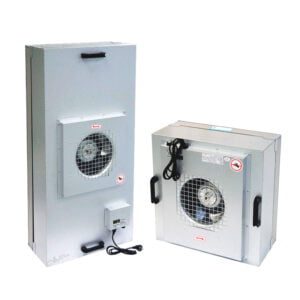
Need professional guidance on implementing a validated UV decontamination strategy for your cleanroom? The technical team at YOUTH specializes in integrating measurable contamination control solutions, including optimized fan filter units for controlled environments, to support your quality objectives. For specific project inquiries, you can also Contact Us.
Frequently Asked Questions
Q: How do you calculate the minimum UV cycle time to ensure effective pass box decontamination?
A: Determine the minimum time by dividing your target UV dose (e.g., 40 mJ/cm²) by the lowest measured irradiance (in µW/cm²) at the worst-case location in the chamber, applying unit conversion (1000 µW•s = 1 mJ). Always program the timer to exceed this calculated minimum, adding a safety margin. This means facilities must first perform a detailed irradiance map of the empty chamber to establish a scientifically valid baseline, as a generic timer setting provides no efficacy guarantee.
Q: What is the proper method for validating the microbial kill rate of a UV pass box?
A: Validation requires a dual approach combining physical radiometric measurement and biological testing. Use a calibrated UV-C meter to map irradiance and calculate delivered dose, then confirm microbial reduction by placing biological indicators (BIs) with resistant spores at the lowest-intensity points and checking for no growth post-cycle. This protocol, aligning with principles in ISO 15714:2019, means you must treat validation as an ongoing lifecycle activity, not a one-time event, to counteract lamp decay and maintain compliance.
Q: Where should UV-C lamps be placed inside a pass box, and what design factors affect efficacy?
A: Lamp placement must minimize shadows and create the most uniform irradiance field possible, considering chamber geometry and typical load configurations. The design should also account for surface reflectivity and integrate safety features like door interlocks. As pass boxes are separative devices, their fundamental design must first meet the requirements of standards like ISO 14644-7 for contamination control. This means system selection is a holistic exercise where UV efficacy is secondary to primary engineering controls like physical separation and HEPA filtration.
Q: How often should UV lamp intensity be tested and maintained?
A: Establish a proactive schedule based on radiometric testing, typically quarterly or semi-annually, to track intensity decay. Replace lamps when irradiance falls below a predetermined threshold that jeopardizes delivering the minimum target dose. This means you should budget for and schedule regular metrology-grade measurements, as relying solely on elapsed time or lamp hours introduces significant risk of undetected sterilization failure.
Q: What are the critical safety and material risks when implementing a UV pass box cycle?
A: UV-C radiation poses direct hazards to skin and eyes, mandating engineered safety controls like door interlocks and warning labels. Concurrently, UV degrades many plastics and polymers, requiring an assessment of material compatibility for items being transferred. This means your facility’s EHS and process engineering teams must be core stakeholders in selection and SOP development to prevent occupational hazards and avoid damaging valuable materials.
Q: What steps are involved in the final operational qualification (OQ/PQ) for a UV pass box?
A: Final OQ verifies all mechanical and safety functions (interlocks, timers, alarms) operate correctly. PQ then demonstrates the optimized cycle consistently delivers the target sterilizing dose under simulated load conditions, using both radiometric and biological indicator testing. This formal closure creates a defensible validation baseline, meaning any future change to cycle time, lamp type, or load configuration triggers a mandatory change control review and likely re-validation.
Related Contents:
- Pass Box Working Principles Explained: Interlock Mechanisms, Airflow Dynamics, and UV Sterilization Cycle Design for Cleanroom Applications
- VHP Pass Box 6-Log Reduction: Validation Methods & Data
- VHP Pass Box Validation: IQ/OQ/PQ Compliance Checklist
- VHP Pass Box Market Forecast: 2025-2030 Growth Analysis
- VHP vs Traditional Pass Boxes: Key Differences Compared
- VHP Pass Box Cycle Times: Complete 2025 Efficiency Data
- VHP Pass Box Safety: OSHA Compliance & Best Practices
- VHP Pass Box Aeration Systems: Complete Technology Guide
- VHP Pass Box Size Chart: Capacity Options for Cleanrooms