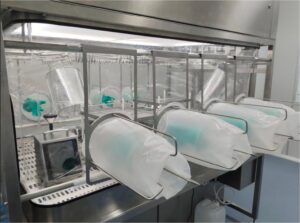
In pharmaceutical and fine chemical manufacturing, the weighing of potent powders presents a persistent cross-contamination risk. A negative pressure weighing booth is the engineered solution, but its effectiveness hinges on a precise, calibrated balance of technical parameters. Misunderstanding this balance leads to common configuration errors that compromise containment, operator safety, and regulatory compliance. This guide moves beyond basic specifications to detail the interdependent requirements for a reliably safe and compliant operation.
The regulatory focus has shifted from merely having containment equipment to proving its continuous, validated performance. With standards like ISO 14644-7 demanding documented verification, selecting and operating a weighing booth is now a critical capital decision with long-term operational implications. Getting it right protects your product, your personnel, and your regulatory standing.
What Is a Negative Pressure Weighing Booth?
Core Function and Operating Principle
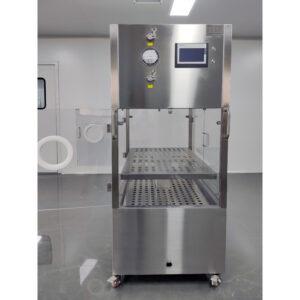
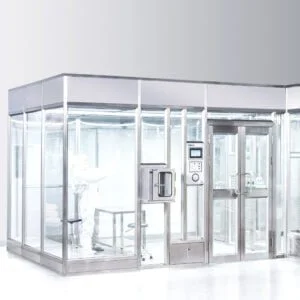
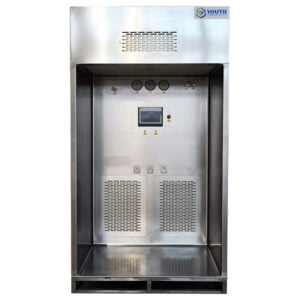
A negative pressure weighing booth is a primary engineering control designed for handling hazardous fine particulates like active pharmaceutical ingredients (APIs) and potent compounds. Its fundamental purpose is operator and environmental protection, achieved by maintaining the internal air pressure at a level lower than the surrounding room. This engineered pressure differential, typically between -5 Pa to -15 Pa, ensures a consistent inward airflow through any opening, preventing the escape of airborne contaminants. This principle is the inverse of a positive pressure clean bench, which protects the product from the environment.
Distinguishing Containment from Cleanliness
It is critical to distinguish this application from general cleanroom operations. While both may use HEPA-filtered air, the objective differs. Cleanrooms maintain a positive pressure cascade to keep contaminants out. A negative pressure booth is a containment device within a potentially clean environment, acting as a sink to trap hazardous material at its source. This distinction dictates all design and validation priorities, focusing on containment integrity over particulate classification alone.
Application Spectrum and Risk Alignment
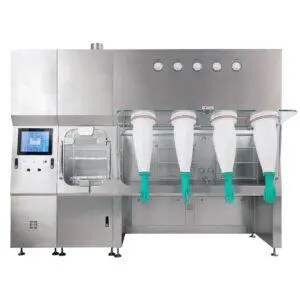
The use of negative pressure booths spans high-risk pharmaceutical weighing, dispensing of cytotoxic compounds, and handling of fine hazardous powders in electronics or specialty chemicals. The specific configuration—open-front, closed with glove ports, or full isolator—must align with a formal risk assessment of the material’s Occupational Exposure Band (OEB) or Occupational Exposure Limit (OEL). Selecting the wrong containment level is a frequent and serious error.
Key Technical Requirements for Negative Pressure
The Triad of Containment Parameters
Reliable containment is not governed by a single specification but by three interdependent parameters working in concert. First, a stable negative pressure differential is the non-negotiable foundation. Second, a vertical unidirectional (laminar) airflow, typically targeted at 0.45 m/s (±20%), captures and directs generated dust away from the operator’s breathing zone. Third, an engineered air handling imbalance, where the exhaust system permanently removes more air than the supply delivers, sustains the negative pressure. Disrupting the balance between these three cripples performance.
The Airflow Velocity Bottleneck
A particularly non-intuitive insight is that higher airflow velocity does not automatically mean better containment. Exceeding the optimal range can create turbulence, disrupting the laminar flow curtain and potentially ejecting material from the work surface. This creates a performance bottleneck where “more” becomes “less.” Precise control and continuous monitoring of this velocity are therefore essential, not optional. In our analysis of operational failures, overspecifying exhaust fan power to chase a higher pressure differential often directly causes this turbulent disruption.
Quantifying the System Balance
The technical requirements must be quantified and monitored. The following table outlines the core parameters that establish and maintain the critical containment environment.
| Parameter | Target Value / Range | Critical Function |
|---|---|---|
| Pressure Differential | -5 Pa to -15 Pa | Ensures inward airflow |
| Airflow Velocity | 0.45 m/s (±20%) | Captures dust downward |
| Air Handling Imbalance | ~10% permanent exhaust | Creates negative pressure |
| HEPA Filter Pressure Drop Limit | e.g., 500 Pa | Triggers filter replacement |
Source: ANSI/ASSP Z9.5: Laboratory Ventilation. This standard establishes critical performance requirements for ventilation and containment devices, including the necessary pressure differentials and airflow patterns to ensure operator safety when handling hazardous materials.
Design Features for Enhanced Safety and Compliance
Materials and Construction for Cleanability
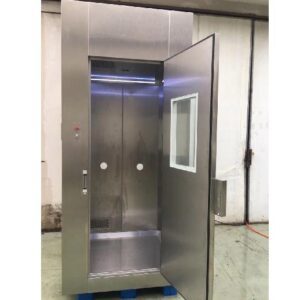
Long-term compliance requires design that prevents contamination accumulation. Construction using SUS304 or SUS316 stainless steel with fully welded, radiused corners is standard for a reason: it provides a non-shedding, cleanable surface with no crevices for powder trapping. The choice of grade (304 vs. 316) often depends on the chemical resistance required for cleaning agents and the materials being handled.
The Open-Front vs. Isolated Trade-Off
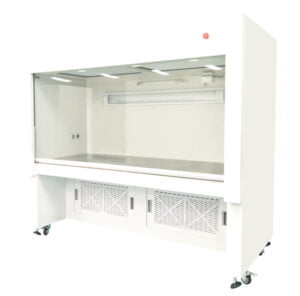
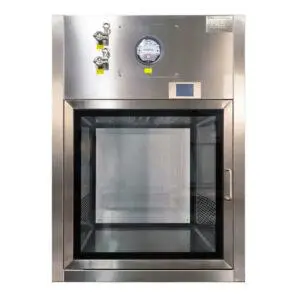
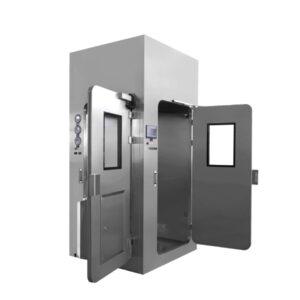
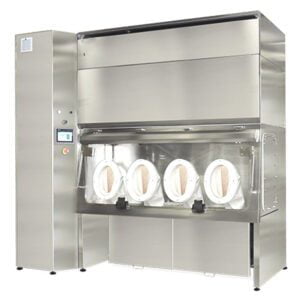
The design represents a strategic trade-off between ergonomics and containment level. An open-front booth relies entirely on the integrity of the laminar airflow curtain for operator access and is suitable for lower-risk materials. For higher OEB compounds, physical isolation via glove ports or a transfer isolator plate becomes mandatory. This decision cannot be based on convenience alone; it must be driven by the formal risk assessment.
Integrated Intelligence and Control
Modern booths are evolving into data-integrated process nodes. Intelligent control systems with real-time monitoring, alarms for parameter breaches, and data-logging capabilities support advanced validation and Industry 4.0 initiatives. Features like automatic pressure and velocity logging, along with secondary containment such as integrated spill trays, transform the booth from a passive cabinet into an active, documented control point. This design evolution is critical for meeting the growing demand for data-backed proof of performance.
Operational and Maintenance Best Practices
Establishing Pre-Operational Discipline
Sustained performance begins with operator discipline. A strict procedure must mandate verification of the negative pressure gauge and system alarms before each use. This simple, pre-use check is the first line of defense against operating a compromised system. Cleaning procedures must be equally rigorous, using approved non-corrosive agents applied in a manner that protects filter integrity and sealants.
The Filter Maintenance Hierarchy
Filter maintenance is a systematic, scheduled cost of operation. Pre-filters act as sacrificial components, protecting the capital-intensive HEPA filters from larger particulates. Their regular inspection and replacement are economically essential. HEPA filter replacement is triggered either by a scheduled interval (e.g., 1-2 years) or when the pressure drop across the filter exceeds the manufacturer’s specified limit, such as 500 Pa. Neglecting this hierarchy leads to premature HEPA failure and unpredictable containment breaches.
Scheduled Calibration and Verification
Operational confidence requires periodic verification. Airflow velocity and pressure differential sensors must be calibrated at defined intervals to ensure readings are accurate. This scheduled maintenance, often overlooked in operational budgets, is non-negotiable for maintaining a state of control. The following schedule provides a framework for a robust maintenance program.
| Component | Maintenance Action | Typical Frequency |
|---|---|---|
| Pre-filters | Inspection & Replacement | Quarterly |
| HEPA Filters | Replacement | Every 1-2 years |
| Airflow Velocity | Calibration | Periodic |
| Pressure Gauge | Pre-use Verification | Before each operation |
Source: Technical documentation and industry specifications.
Validating and Certifying Your Weighing Booth
Moving Beyond Installation to Performance Proof
Validation provides the documented evidence that the booth performs as intended under actual operating conditions. This is a regulatory expectation, as outlined in standards like ISO 14644-7. The process goes far beyond a simple installation check, involving a series of performance qualification (PQ) tests that simulate operational stress.
Critical Tests for Containment Integrity
Key validation tests each serve a specific purpose. HEPA filter integrity testing, using a challenge aerosol like Dioctyl Phthalate (DOP) or equivalent, verifies there are no leaks in the filter media or its seal. Airflow velocity uniformity mapping across the entire work surface confirms the laminar flow profile. Smoke pattern tests visually demonstrate the inward airflow at the opening, providing tangible proof of containment. Finally, pressure decay or hold tests check the integrity of the enclosure’s seals when closed.
Documentation and the Shift to Continuous Assurance
The output of validation is not just a passing certificate but a comprehensive documentation package. This forms the baseline for ongoing performance. The industry shift is toward continuous assurance, where periodic re-validation is supplemented by real-time data monitoring from the booth’s control system. This data-driven approach is becoming the standard for demonstrating control.
| Validation Test | Method / Challenge | Purpose |
|---|---|---|
| HEPA Filter Integrity | Dioctyl Phthalate (DOP) aerosol | Verifies filter leakage |
| Airflow Velocity | Uniformity mapping | Confirms laminar flow |
| Containment Visualization | Smoke pattern test | Demonstrates inward airflow |
| Pressure Integrity | Pressure decay/hold test | Checks enclosure seals |
Source: ISO 14644-7: Cleanrooms and associated controlled environments — Part 7: Separative devices. This standard provides the foundational testing methods and performance criteria for verifying the containment integrity of separative devices like isolators and clean air hoods, which operate under negative pressure.
Common Configuration Mistakes and How to Avoid Them
Mistake 1: The “More Power” Fallacy
A prevalent error is overspecifying the exhaust fan capacity in a misguided attempt to achieve “stronger” containment. This disrupts the delicate balance between supply and exhaust airflow, often creating excessive turbulence that breaks down the critical laminar flow. The result can be material ejection and worse containment than a properly balanced system. The solution is to specify components based on the calculated air volume needed to achieve the target parameters, not on maximum available power.
Mistake 2: Neglecting the Facility Interface
The booth does not operate in a vacuum. Failing to consider its integration with the room’s HVAC system is a common oversight. The surrounding room must be able to supply sufficient makeup air to the booth without compromising its own pressure cascades. Additionally, planning for maintenance access—clear space for filter removal, service panels, and calibration—is frequently an afterthought, leading to costly downtime and compliance gaps during servicing.
Mistake 3: Selection Based on Form Over Function
Choosing an open-front design for highly potent materials because it is more ergonomic or less expensive upfront is a critical risk-based error. This mistake stems from selecting equipment based on convenience or capital cost alone, without a formal assessment of the material hazard. The avoidance strategy is rigid: let the OEB/OEL risk assessment dictate the containment level (open front, glovebox, isolator), then select a compliant design.
Selecting the Right Booth for Your Application
Starting with a Formal Risk Assessment
Selection is a risk-based decision, not a catalog exercise. The process must begin with a formal assessment of the material’s hazard (OEB/OEL), the powder characteristics (dustiness, electrostatic properties), and the process duration and frequency. This assessment outputs a required containment performance level, which becomes the primary specification for the equipment.
Evaluating Technical Specifications and Customization
With the performance level defined, evaluate technical specs against it. Scrutinize the guaranteed pressure differential and airflow uniformity data. Assess the construction quality, weld finish, and material grade. Look for modular and customizable options that can adapt to your specific facility layout and future process changes. The ability to integrate specific monitoring devices or data outputs should be a key differentiator.
Navigating the Supplier Landscape
The global supplier market is fragmented, ranging from generic cabinet manufacturers to specialized containment engineering firms. This presents a consolidation opportunity. Partnering with a provider that offers the full ecosystem—engineered booth, validated installation, filter supply, and ongoing service—simplifies accountability. For operations requiring assured performance, exploring a custom-configured negative pressure containment booth from a single-source provider mitigates integration risk and ensures technical support aligns with the original design intent.
Creating a Comprehensive Risk Management Plan
Integrating the Booth into a Holistic Control Strategy
The weighing booth is a vital engineering control, but it is not a standalone solution. A comprehensive risk management plan integrates it within a hierarchy of controls. This plan starts with the risk assessment, defines the booth’s specifications as a control measure, and layers on administrative controls (SOPs, training) and personal protective equipment (PPE).
Documenting Procedures and Response Protocols
The plan must be fully documented. This includes detailed standard operating procedures for booth operation, cleaning, and maintenance. It must outline clear response protocols for alarm conditions, spills, and filter failures. Training records for all personnel interacting with the booth or the area are a core component, demonstrating competency as a control.
Leveraging Data for Continuous Improvement
A modern plan leverages the booth’s data-generation capabilities. Trend analysis of pressure differentials and airflow velocities can provide early warning of filter loading or system drift. This shift from periodic validation to continuous performance monitoring is the hallmark of an advanced quality system. Furthermore, recognizing cross-industry applications—from pharmaceutical APIs to nano-materials in electronics—can provide innovative models for risk mitigation and technological adaptation.
Effective containment requires viewing the negative pressure weighing booth as a calibrated system, not just purchased equipment. Prioritize the stability of the pressure-velocity balance over maximum power specs. Base your selection strictly on a formal risk assessment, not convenience. Finally, budget for and execute rigorous validation and scheduled maintenance—these are the non-negotiable costs of assured compliance.
Need professional guidance to specify, validate, and maintain a containment solution tailored to your potent compound handling? The engineering team at YOUTH provides integrated support from risk assessment through to ongoing performance certification. Contact us to discuss your application’s specific containment challenges.
Frequently Asked Questions
Q: What are the critical technical parameters for ensuring containment in a negative pressure weighing booth?
A: Reliable containment depends on three calibrated parameters working together. You must maintain a stable negative pressure differential, typically between -5 Pa to -15 Pa relative to the room, as the primary containment force. This is supported by a vertical unidirectional airflow, often targeted at 0.45 m/s (±20%), to capture dust, and an engineered air handling imbalance where exhaust permanently exceeds supply. This means your validation protocol must verify all three parameters in unison, not just pressure, to prove the system functions as an integrated safety control.
Q: How do you validate that a weighing booth provides adequate containment for regulatory compliance?
A: Validation requires documented proof of performance under actual operating conditions, not just installation. Key tests include HEPA filter integrity checks using an aerosol challenge, airflow velocity uniformity mapping across the work surface, and smoke pattern tests to visually confirm inward airflow and containment. The standard ISO 14644-7 provides the framework for testing separative devices like these. This shift means your capital investment must include budget for robust, ongoing validation protocols and personnel training on performance monitoring to meet modern regulatory expectations.
Q: When should you choose an open-front booth versus a closed glovebox configuration?
A: The choice is a strategic risk-based decision driven by your material’s hazard level. An open-front design, which relies on the integrity of the laminar airflow curtain, may suffice for lower-risk materials where operator ergonomics is a priority. For handling potent compounds with higher Occupational Exposure Bands (OEBs), a closed system with glove ports or an isolation plate is mandatory to provide physical containment. This means your facility’s initial risk assessment for the materials and processes is the essential first step before any booth specification or purchase.
Q: What is a common but critical mistake when configuring the exhaust system for a weighing booth?
A: A frequent and serious error is overspecifying the exhaust fan power in an attempt to achieve “stronger” containment. Excessive exhaust can create turbulent airflow that disrupts the critical laminar flow, potentially ejecting material from the work area instead of containing it. This mistake stems from misunderstanding the delicate balance between supply and exhaust needed to achieve a stable -5 to -15 Pa range. For projects where fine, potent powders are handled, you should plan for a system with integrated monitoring and controls to maintain this precise balance, not just maximum airflow.
Q: What maintenance schedule is required to sustain a weighing booth’s performance and compliance?
A: Sustained performance demands a strict, scheduled maintenance regimen as a non-negotiable operational cost. Pre-filters need regular inspection and typically quarterly replacement to protect the capital-intensive HEPA filters. The HEPA filters themselves require replacement when their pressure drop exceeds the manufacturer’s limit (e.g., 500 Pa) or on a defined schedule, often every 1-2 years. Airflow velocity and pressure differentials also need periodic calibration. This means if your operation requires continuous GMP compliance, you must plan for both the recurring parts costs and the associated operational downtime for these maintenance activities.
Q: How do standards like USP <797> influence the design and use of weighing booths?
A: Standards such as USP <797> mandate stringent engineering controls for sterile compounding, which directly applies to booths used for weighing active pharmaceutical ingredients. It requires the use of appropriate primary engineering controls, which for hazardous operations typically means containment isolators operating under negative pressure. This standard shifts the focus from simply having equipment to proving it provides adequate protection. Facilities engaged in sterile compounding must therefore select booths designed for validation and integrate them into a comprehensive quality system with documented procedures and monitoring.
Related Contents:
- Precision Weighing Booths for Pharmaceutical Industry
- Weighing Booth vs Scale Room: Which is Right for You?
- What is a Weighing Booth? Essential Facts Explained
- Boost Productivity with Automated Weighing Booths
- Emerging Trends: The Future of Weighing Booth Technology
- The Ultimate Guide to Weighing Booths [2025 Edition]
- Weighing Booth ROI: Maximizing Your Investment
- 7 Steps to Perfectly Calibrate Your Weighing Booth
- 5 Critical Safety Features in Modern Weighing Booths