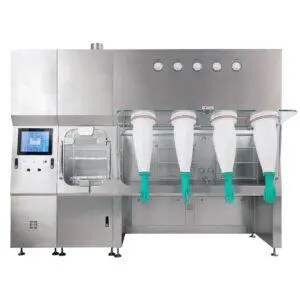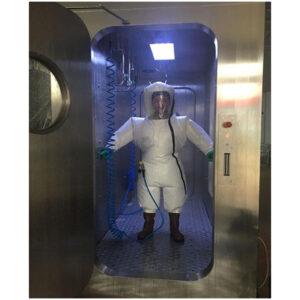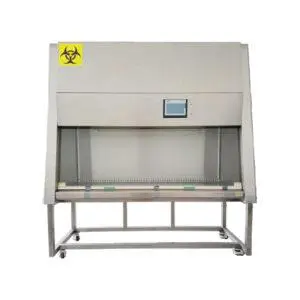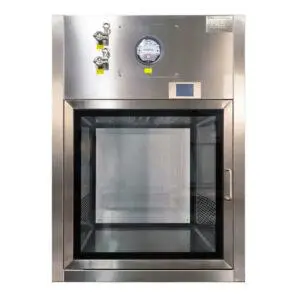
Achieving uniform vapor distribution is the central engineering challenge in VHP bio-decontamination. A single injection point, a common design in simpler systems, is fundamentally inadequate for creating the homogenous, lethal environment required for validated sterilization. This limitation leads directly to vapor dead zones and inconsistent microbial kill, posing significant compliance and safety risks. Understanding this flaw is the first step toward specifying a reliable system.
The shift toward multiple injection points represents a critical evolution in VHP technology, moving from passive dispersion to active vapor management. For facility managers and validation engineers, this is not merely an equipment upgrade but a fundamental change in decontamination philosophy. Specifying and validating such a system requires a detailed grasp of fluid dynamics, HVAC integration, and spatial mapping to ensure repeatable success and regulatory compliance.
The Core Challenge: Why Single-Point VHP Injection Fails
The Physics of Vapor Distribution
Vaporized Hydrogen Peroxide is not a true gas but a heavy vapor with a strong tendency to stratify and settle. Introducing this vapor from a single location creates a dominant, predictable flow path dictated by room geometry and HVAC currents. Vapor follows the path of least resistance, leaving peripheral areas, shielded corners, and spaces behind complex equipment critically under-dosed. These dead zones are not theoretical; they are physical realities where microbial survival is virtually guaranteed, leading directly to failed biological indicators and non-compliant cycles.
Consequences for Decontamination Efficacy
The outcome of this physical limitation is inconsistent and unrepeatable decontamination. A cycle may pass validation in one run yet fail in the next due to minor changes in ambient conditions or equipment positioning. This unreliability makes single-point systems unsuitable for applications demanding guaranteed sterility assurance, such as pharmaceutical filling suites or high-containment laboratories. The core problem is that a single source cannot overcome the natural behavior of the vapor to achieve the spatial uniformity mandated by standards like ISO 13408-6:2021.
How Multiple Injection Points Create Uniform Vapor Distribution
Engineering Overlapping Zones of Influence
Multiple injection points transform the decontamination volume from a single, problematic zone into a network of smaller, managed areas. By strategically placing vapor inlets, the system drastically reduces the travel distance for vapor to reach all surfaces. This minimizes the risk of condensation within distribution ducting and ensures a rapid, simultaneous rise in concentration across the space. The interaction of vapor streams from different points enhances turbulent mixing, actively disrupting stratification and promoting a homogenous mixture.
Targeting Shielded and Critical Areas
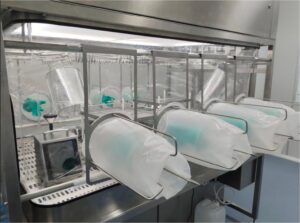
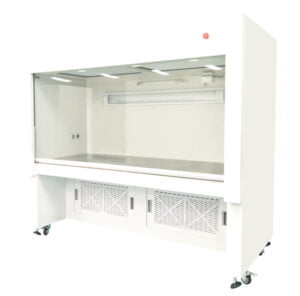
A key advantage of a multi-point design is the ability to place injection nozzles directly into challenging environments. For instance, placing a nozzle inside a biological safety cabinet or behind large equipment ensures direct vapor contact with interior surfaces that laminar airflow would otherwise protect. This targeted approach is essential for comprehensive decontamination. In my experience commissioning these systems, the difference in vapor penetration and CI color change in these shielded zones between single-point and multi-point designs is immediately visible and decisive.
Key Design Elements: Nozzles, Placement, and HVAC Integration
The Distribution Network Components
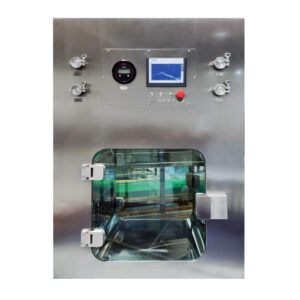
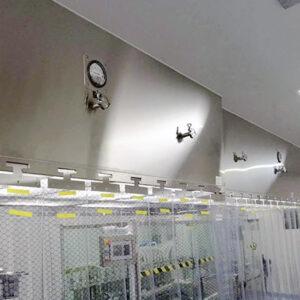
A multi-point injection system is an integrated assembly comprising a central generator, a dehumidifier, and a network of distribution piping feeding adjustable injection nozzles. These nozzles are not simple openings; they are engineered with features like directional louvers and adjustable orifice plates. During commissioning, these orifices are balanced to ensure equal vapor flow to each point, a critical step for achieving the designed distribution pattern. Their final placement is never purely theoretical; it is determined empirically based on room CFD models or, more commonly, physical tracer studies and validation mapping.
The Critical Role of HVAC Interoperability
The most significant force multiplier for uniformity is the facility’s HVAC system. Placing the HVAC into a dedicated closed-loop “fumigation mode” uses existing fans to actively recirculate and mix the VHP-laden air. This integration can reduce cycle time and improve concentration homogeneity by an order of magnitude. However, this creates a critical dependency: the HVAC system’s reliability and its control interface with the VHP generator become a single point of failure for the entire decontamination process. The system design must account for this interoperability from the outset.
Validating Uniformity with Chemical and Biological Indicators
Mapping the Space for Proof of Efficacy
Performance is proven not by design intent but by empirical spatial validation. This involves creating a detailed “map” of the space by placing chemical indicators (CIs) and biological indicators (BIs) at numerous predefined challenging locations: under tables, inside drawers, at return air grilles, and in corners. Uniform CI color change across all locations provides the first visual confirmation of vapor contact. The true measure of success, however, is the consistent achievement of a 6-log reduction of spore populations on biological indicators.
Selecting the Right Biological Indicators
The standard BI organism, Geobacillus stearothermophilus, provides a validated baseline for sterilization processes. However, a risk-based validation strategy may demand more. For facilities targeting specific, more resistant pathogens—such as catalase-producing bacteria like MRSA—reliance solely on Geobacillus may provide an insufficient safety margin.
| Indicator Type | Primary Function | Key Performance Metric |
|---|---|---|
| Chemical Indicators (CIs) | Confirm vapor contact | Uniform color change |
| Biological Indicators (BIs) | Demonstrate lethal efficacy | 6-log reduction |
| Standard BI Organism | Baseline validation | Geobacillus stearothermophilus |
| Supplemental BIs | Risk-based targeting | Specific resistant pathogens (e.g., MRSA) |
Source: ISO 13408-6:2021 Aseptic processing of health care products — Part 6: Isolator systems. This standard provides guidance on the qualification and validation of bio-decontamination processes, including the use of biological and chemical indicators to prove the uniform, lethal efficacy of the VHP process across the entire treated space.
Critical Operational Parameters for Multi-Point System Success
Controlling the Foundation: Environment and Chemistry
A perfect distribution network fails if operational parameters are unstable. Initial room conditions are paramount; temperature and relative humidity must be within a specific, narrow range. The control of absolute humidity is non-negotiable. A stable, low absolute humidity, achieved through a dedicated dehumidification phase, maximizes the air’s capacity to hold VHP vapor in the gaseous phase, preventing condensation that would reduce efficacy and damage materials. Furthermore, the concentration of the hydrogen peroxide solution (e.g., 59% vs. 35%) is a primary lever for lethality, directly determining the maximum achievable vapor concentration.
Accounting for Facility and Material Variables
Two often-overlooked variables are room leakage rate and material composition. Leakage impacts the ability to maintain target concentration and prolongs the aeration phase. Perhaps more critically, porous materials like cardboard, certain plastics, and exposed concrete act as sinks, adsorbing and then slowly releasing H2O2. This not only reduces available vapor during the sterilization phase but significantly extends aeration time, the longest phase of the cycle, directly impacting operational downtime.
| Parameter Category | Key Variable | Typical Requirement/Impact |
|---|---|---|
| Environmental Control | Temperature & RH range | Specific, stable range required |
| Humidity Control | Absolute humidity | Low, stable level (non-negotiable) |
| Chemical Input | H2O2 solution concentration | Primary lethality lever (e.g., 59% vs. 12%) |
| Facility Factors | Room leakage rate | Impacts cycle time, concentration |
| Material Factors | Porous material composition | Prolongs aeration, increases downtime |
Source: GB/T 32309-2015 Vaporized hydrogen peroxide sterilizer. This standard specifies technical requirements and test methods for VHP sterilizers, directly governing the critical operational parameters such as hydrogen peroxide concentration, environmental controls, and performance validation that ensure system success.
Comparing Multi-Point vs. Single-Point System Performance
A Stark Performance Differential
The performance gap between the two approaches is not incremental; it is fundamental. A single-point system, limited by physics, inherently produces significant concentration gradients. This often manifests as failed BIs in predictable dead zones and cycles that cannot be reliably repeated. In contrast, a validated multi-point system delivers a homogenous environment proven to achieve a 6-log reduction across the entire volume. This engineering control transforms decontamination from a hopeful procedure into a predictable, repeatable, and compliant process.
Implications for Facility Design and Retrofit
This understanding also redefines facility requirements. While effective distribution is engineered, recognizing VHP as a vapor—not a perfect gas like ethylene oxide—lowers adoption barriers. Multi-point systems do not demand the extreme airtightness required for traditional gaseous fumigants. This enables the practical retrofit of effective VHP bio-decontamination into older facilities or those not originally designed for such processes, a significant advantage for upgrading existing operations.
| Performance Aspect | Single-Point Injection | Multi-Point Injection |
|---|---|---|
| Vapor Distribution | Significant concentration gradients | Homogenous environment |
| Validation Outcome | Failed BIs in dead zones | Proven 6-log reduction everywhere |
| Cycle Result | Unrepeatable cycles | Guaranteed repeatability |
| Facility Airtightness | Often demands extreme sealing | Enables retrofit into older facilities |
| Compliance Basis | Inherently limited by physics | Validated with spatial mapping |
Source: Technical documentation and industry specifications.
Designing a System: Key Considerations for Your Facility
Aligning Technology with Operational Philosophy
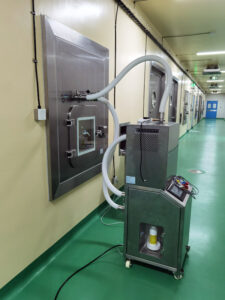
The market offers two primary pathways, each suiting a different operational model. For large, permanent installations requiring high-throughput, validated decontamination—such as a suite of production isolators—a complex integrated “skid” system with built-in HVAC control offers maximum automation and central management. For smaller, flexible, or variable needs—like decontaminating a single lab post-maintenance—a simpler mobile fogging unit with multiple hoses provides lower upfront cost and adaptability. The choice between a permanent portable VHP generator with multi-point distribution and a built-in system dictates the entire project scope.
Scoping the Non-Trivial Phases
Choosing an integrated system initiates a holistic engineering project. The design of piping networks, nozzle placement, and room-specific tuning become as critical as selecting the generator itself. Budgets and timelines must accurately account for the empirical cycle development phase. This phase, where injection parameters are tuned and validated against BI placement, is not a quick checkout; it is a meticulous, iterative process that determines the final system settings and proves efficacy for the unique room geometry.
Ensuring Compliance and Repeatable Decontamination Cycles
The Foundation of Demonstrable Compliance
Regulatory compliance hinges on demonstrable, repeatable uniformity validated with biological indicators. A multi-point injection system is the foundational engineering control that makes this evidence possible. Maintaining this repeatability requires strict adherence to the validated parameters documented in the system’s qualification protocols: environmental preconditioning, solution concentration, and consistent room preparation. Standard Operating Procedures must explicitly control the types and quantities of porous materials present during fumigation, as these variables directly impact the longest and most schedule-sensitive phase: aeration.
The Evolving Role of VHP Technology
VHP’s proven, broad-spectrum efficacy is expanding its role beyond traditional isolator sterilization. Its validated action against resilient pathogens, including viruses like SARS-CoV-2 even within organic matrices, positions it as a critical crisis response technology for public health and research labs. This drives demand for systems that are not only robust and compliant but also user-friendly and reliable across diverse, high-stakes applications. The engineering focus shifts toward designs that guarantee performance under variable conditions, ensuring trust in the technology’s output.
The decision to implement a multi-point VHP system centers on three priorities: validating spatial uniformity with a comprehensive BI study, ensuring strict control over operational parameters like absolute humidity, and designing for seamless HVAC integration. The choice between a mobile or fixed system must align with your facility’s throughput needs and operational flexibility.
Need professional guidance on designing a validated VHP decontamination strategy for your facility? The engineers at YOUTH specialize in tailoring multi-point distribution systems to meet specific compliance and operational challenges. Contact Us to discuss your application requirements and validation goals.
Frequently Asked Questions
Q: How do multiple injection points in a VHP system solve the problem of vapor dead zones?
A: Multiple, strategically placed injection nozzles create overlapping flow paths that actively manage vapor dispersion. This engineered network reduces travel distance to all surfaces and enhances turbulent mixing, which disrupts the stratification and settling inherent to heavy VHP vapor. For facilities with complex equipment layouts or shielded spaces like biosafety cabinets, this design is essential to achieve the homogenous concentration required for reliable decontamination.
Q: What is the critical role of HVAC integration in a multi-point VHP decontamination system?
A: HVAC integration is a key design element where the building’s air handling system is placed into a closed-loop fumigation mode. This uses existing fans to actively recirculate and mix the VHP-laden air, significantly enhancing distribution uniformity. However, this creates a system dependency; the HVAC’s robust operation and interoperability become critical, as its failure is a single point of failure for the entire cycle.
Q: Beyond standard biological indicators, how should we validate a VHP system for specific pathogen threats?
A: Validation should employ a risk-based strategy that may require supplemental biological indicators. While a consistent 6-log reduction of Geobacillus stearothermophilus spores proves baseline lethality, facilities targeting more resistant pathogens (e.g., catalase-producing bacteria) should consider indicators representing those actual microbial threats. This ensures an appropriate safety margin is validated for your specific operational risks.
Q: What are the most critical environmental parameters to control for repeatable multi-point VHP cycles?
A: You must strictly control absolute humidity and temperature. A stable, low absolute humidity—achieved via a dedicated dehumidification phase—maximizes the air’s capacity to hold VHP without condensation. Uncontrolled temperature fluctuations can drastically extend this phase and disrupt schedules. This means facilities with variable environmental conditions must invest in robust room conditioning to ensure cycle reliability and compliance.
Q: How does the choice between an integrated skid system and a mobile fogger impact project scope?
A: An integrated system with built-in HVAC control demands a holistic engineering approach, where piping networks and empirical room tuning are as critical as the generator itself. A simpler mobile unit offers lower upfront cost and flexibility. For projects requiring high-throughput, validated decontamination in a permanent facility, you should plan for the non-trivial cycle development phase and associated engineering costs of an integrated design.
Q: Which standards govern the design and qualification of VHP systems used in aseptic processing?
A: The design and qualification of VHP systems, particularly for isolators in aseptic processing, are governed by ISO 13408-6:2021. For the sterilizer equipment itself, standards like GB/T 32309-2015 provide technical requirements and test methods. This means regulated facilities must ensure their system design and validation protocols align with these relevant international and national standards.
Q: Why is material composition a key consideration when designing a VHP decontamination cycle?
A: Porous materials within the space adsorb hydrogen peroxide and then slowly release it during the aeration phase. This adsorption-desorption dynamic directly prolongs aeration time, which is often the longest phase of the cycle and impacts operational downtime. If your facility has rooms containing porous items like cardboard or certain fabrics, you must account for extended aeration in your scheduling and SOPs.
Related Contents:
- Optimal VHP Concentrations: Sterilization Efficiency Guide
- VHP Passbox Validation: Ensuring Sterilization Efficacy
- VHP Pass Box 6-Log Reduction: Validation Methods & Data
- Optimizing VHP Cycles for Cleanroom Decontamination
- Optimizing Cycles: Portable VHP Generator Efficiency
- VHP Generator Cycle Time Optimization: Reducing Sterilization Duration by 30-50% Through Parameter Adjustment
- VHP Chamber Size Optimization: 8 Pro Tips
- Validating Portable VHP Generator Performance
- VHP Chamber Cycle Development: 7 Key Steps