For facility managers and engineers in pharmaceutical and biotech, specifying a Bag In Bag Out system is a critical containment decision. The choice between pre-filter and post-filter configurations, however, is often oversimplified to a sequence on a diagram. This misses the strategic operational and safety implications embedded in each design. The wrong choice doesn’t just affect filter life—it impacts containment integrity, maintenance risk, and total cost of ownership.
Understanding these configurations is essential for compliance and operational efficiency. With tightening regulations on occupational exposure bands (OEB) and potent compound handling, the airflow path and filter placement within a BIBO housing define your facility’s fundamental safety protocol. This isn’t about component selection; it’s about engineering a reliable containment barrier.
Pre-Filter vs. Post-Filter: Defining the Core Difference
The Fundamental Distinction in Position and Purpose
The core difference is defined by position relative to the primary HEPA filter and each component’s engineered role. A pre-filter is an upstream sentinel. Its purpose is sacrificial protection, capturing larger particulate matter to prevent premature loading of the critical final filter. Conversely, the post-filter, or final HEPA filter, is the downstream ultimate barrier. It provides high-efficiency capture of hazardous fine particulates, ensuring exhaust air meets safety standards. This layered defense is a deliberate safety strategy.
The BIBO Housing as the Enabling Safety Platform
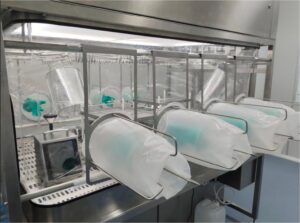
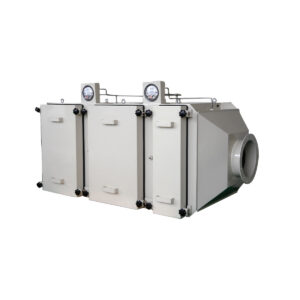
Both filters operate within the sealed environment of a BIBO housing. This housing is not a simple cabinet; it is the engineered platform that enables the safe replacement protocol. It incorporates features like sealed bag ports and filter locking arms specifically to allow for the removal of contaminated filters—especially the hazardous final HEPA—without breaching containment. The housing integrates both filter types into a single safety system.
| Component | Position | Primary Function |
|---|---|---|
| Pre-Filter | Upstream | Protects final HEPA filter |
| Post-Filter (Final HEPA) | Downstream | Ultimate containment barrier |
| BIBO Housing | Encloses both | Enables safe filter replacement |
Source: Technical documentation and industry specifications.
This table clarifies the distinct roles within the system. In our validation of containment systems, we consistently find that confusion between these roles leads to underspecified pre-filters or misplaced reliance on a single filtration stage.
Core Technical Principle: Airflow Path and Containment
The Sealed Pressure Regime
The operational principle hinges on a maintained, negative pressure airflow path. Contaminated air enters the housing under negative pressure, passes sequentially through the pre-filter and then the HEPA filter, before being exhausted. This negative pressure relative to the surrounding room is non-negotiable; it ensures any potential leakage is inward, protecting personnel. The integrity of this sealed path is the foundation, relying on advanced sealing technologies like gel gaskets to prevent bypass.
Containment as the Driving Objective
The pressure regime defines the application’s scope. A negative pressure system is designed for containment—to keep hazardous material inside. This is fundamental for exhaust applications in pharmaceutical or biohazard settings. The principle underscores that the filter media is only one part of the solution; the housing’s ability to maintain seal integrity under operational stress is the critical engineering control. A leak at a seal negates the efficiency of even the best HEPA filter.
Key Benefits and Applications of Pre-Filter Configurations
Extending System Life and Managing Cost
The primary benefit of a pre-filter is economic and operational. By capturing bulk particulate, it significantly extends the service life of the far more expensive final HEPA filter. In a BIBO housing, the pre-filter chamber is often separately accessible, and the filter itself may be replaced using a BIBO procedure if contaminated. This shifts the maintenance burden from frequent, high-risk HEPA changes to more manageable pre-filter interventions, reducing the total cost of safe ownership.
Ideal Use Cases and Strategic Implementation
This configuration is a direct response to challenging particulate loads. Industry experts recommend its use in active pharmaceutical ingredient (API) manufacturing or powder processing, where coarse dust is prevalent. The pre-filter, often an F9-rated MEPA filter, acts as a workhorse. Its implementation is a strategic decision based on the insight that protecting the primary containment barrier is more efficient than replacing it constantly.
| Benefit | Key Metric/Descriptor | Primary Application |
|---|---|---|
| Extends HEPA life | Prevents premature clogging | High-dust-load processes |
| Reduces total cost | Manages expensive HEPA changes | API manufacturing |
| Pre-filter efficiency | Often F9 (MEPA) rated | Powder processing |
| Maintenance focus | Shifts to pre-filter changes | Operational efficiency |
Source: Technical documentation and industry specifications.
The Critical Role of Post-Filter (Final HEPA) Configurations
The Non-Negotiable Containment Barrier
The post-filter is the core of the safety strategy. As the final stage, typically a HEPA (H14) filter, it ensures exhaust air complies with rigorous standards for occupational and environmental safety, such as OEB 5 containment levels. Its performance is validated against standards like EN 1822-5: High efficiency air filters (EPA, HEPA and ULPA) — Part 5: Determining the efficiency of filter elements, which establishes the test methods for filter element efficiency. This filter is the definitive line between hazard and safety.
Engineered for Safe Handling
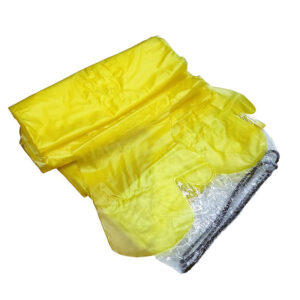
The BIBO procedure is primarily designed for this component. Features like a sealed bag port and internal locking arms are safety-engineered protocols to allow removal of the contaminated primary barrier without exposure. This design directly addresses the highest-risk maintenance activity. Its critical role makes the final HEPA BIBO filter a mandatory infrastructure investment for regulatory compliance when handling hazardous substances.
| Parameter | Specification/Requirement | Purpose |
|---|---|---|
| Filter Type | HEPA (H14) or ULPA | High-efficiency fine particulate capture |
| Containment Level | OEB 5 compliance | Occupational & environmental safety |
| BIBO Procedure | Sealed bag port, locking arm | Safe contaminated filter removal |
| System Purpose | Exhaust application priority | Operator safety & containment |
Source: EN 1822-5: High efficiency air filters (EPA, HEPA and ULPA) — Part 5: Determining the efficiency of filter elements. This standard establishes the foundational performance testing criteria for HEPA filter elements, which are the core component of the final containment barrier in a BIBO system.
Integrated System Designs: Multi-Stage BIBO Housings
The Evolution to Complete Containment Solutions
For high-risk applications, multi-stage BIBO housings represent the integrated solution. A common design for potent compounds might include a first-stage pulse-jet cartridge filter, a second-stage MEPA safety filter, and a third-stage final HEPA filter—all replaceable via BIBO. Constructed from materials like stainless steel, these housings are engineered to withstand significant negative pressure and prevent leakage at every joint. This approach bundles specialized hardware with validated change protocols.
The Procurement and Flexibility Advantage
This evolution means procurement must evaluate the total cost of safe ownership, not just component prices. Furthermore, the trend toward factory-configurable, modular units enables flexible facility design. Spaces can be repurposed for different containment needs efficiently, as the filtration system can be adapted without full redesign.
| Stage | Typical Filter Type | BIBO Replacement |
|---|---|---|
| First Stage | Pulse-jet cartridge filter | Yes, safe procedure |
| Second Stage | MEPA safety filter | Yes, safe procedure |
| Third Stage | Final HEPA filter | Yes, safe procedure |
| Housing Material | Stainless steel | Withstands negative pressure |
Source: Technical documentation and industry specifications.
Application-Specific Considerations for Pharma and Labs
Defining the Control Objective
The configuration is dictated by the specific contamination control objective. Is it product protection, operator safety, or preventing environmental release? This is the essential first step. In pharmaceutical hazardous drug (HD) compounding, for instance, total exhaust (single-pass) airflow is mandatory. Here, the final HEPA BIBO filter is critical for protection, with pre-filters acting as safeguards. The trade-off is clear: total exhaust eliminates recirculation risk but increases energy costs—a necessary sacrifice for volatile hazards.
Tailoring to the Hazard
In laboratory biocontainment, final HEPA filtration for biological safety is paramount, often requiring side-access BIBO housings for servicing while maintaining room integrity. For high-toxicity dust in API manufacturing, multi-stage BIBO housings are essential to achieve ultra-low leakage rates. Each application demands a tailored approach based on the particulate hazard and regulatory framework.
| Application | Airflow Scheme | Critical Filter & Trade-off |
|---|---|---|
| Pharma HD Compounding | Total exhaust (single-pass) | Final HEPA BIBO; Higher energy cost |
| Lab Biocontainment | Varies | Final HEPA; Side-access housing |
| API Manufacturing | Varies | Multi-stage BIBO; <1 µg/m³ leakage |
| Objective Definition | First specification step | Product, operator, or environmental safety |
Source: Technical documentation and industry specifications.
Operational and Maintenance Implications for Each Setup
Balancing Risk and Frequency
The configuration dictates long-term operational protocols. A robust pre-filter stage reduces the frequency of high-risk final HEPA change-outs but introduces an additional maintenance point. Each filter type may have its own BIBO procedure, requiring specific PPE and waste handling protocols. The integrity of the entire system, especially seals, requires regular validation through in-situ integrity testing, a procedure outlined in IEST-RP-CC034.3: HEPA and ULPA Filter Leak Tests.
The Critical Role of In-Situ Testing
Innovations in in-situ PAO challenge testing tools are a strategic efficiency play. They allow for integrity verification without filter removal, minimizing downtime and reducing the frequency of high-risk BIBO procedures. This operational reality reinforces that sealing technology, not just filter media, is the foundation of ongoing containment performance.
| Aspect | Pre-Filter System Implication | Post-Filter System Implication |
|---|---|---|
| HEPA Change Frequency | Reduced | Primary risk activity |
| Maintenance Points | Additional pre-filter stage | Focus on final filter seals |
| Integrity Validation | Regular in-situ PAO testing | Regular in-situ PAO testing |
| Procedure Complexity | Dual BIBO procedures | High-risk BIBO procedure |
Source: IEST-RP-CC034.3: HEPA and ULPA Filter Leak Tests. This recommended practice outlines the critical in-situ leak testing procedures (e.g., PAO challenge) required to validate the ongoing integrity of the filter media and seals in both pre and post-filter configurations.
Selecting the Right Configuration: A Decision Framework
A Structured Four-Step Process
Selecting the optimal configuration requires a structured framework. First, define the contamination control objective and required containment level (e.g., OEB). This determines the necessary pressure regime and whether total exhaust is required. Second, analyze the particulate characteristics—size, load, and hazard—to specify pre-filter efficiency and the need for multi-stage protection. This analysis often references broader standards like ANSI/ASHRAE 52.2 for understanding particle-size removal efficiency of pre-filtration stages.
Integrating Operational and Strategic Factors
Third, evaluate operational factors: desired maintenance intervals, facility space, and compatibility with in-situ testing. Finally, consider strategic factors like modularity for future flexibility and the vendor’s ability to provide a validated, integrated containment ecosystem. This framework ensures the technical specification aligns with both safety imperatives and long-term operational strategy.
| Decision Step | Key Considerations | Example Criteria |
|---|---|---|
| 1. Define Objective | Containment level, pressure regime | OEB level, negative pressure |
| 2. Analyze Particulates | Size, load, hazard | Pre-filter efficiency (e.g., F9) |
| 3. Evaluate Operations | Maintenance interval, facility space | Compatibility with in-situ testing |
| 4. Strategic Factors | Modularity, vendor ecosystem | Total cost of safe ownership |
Source: Technical documentation and industry specifications.
The decision between pre-filter and post-filter configurations is not arbitrary. It directly influences containment reliability, maintenance safety, and lifecycle costs. Prioritize defining your specific hazard and operational objective first—this dictates the necessary pressure regime and filter efficiency. Then, select a system design that manages maintenance risk through strategic pre-filtration and enables safe validation via in-situ testing.
Need professional guidance to specify or validate your BIBO containment strategy? The engineers at YOUTH specialize in configuring systems like multi-stage BIBO housings for pharmaceutical and lab applications, ensuring your setup meets both safety and operational efficiency goals. For a direct technical consultation, you can also Contact Us.
Frequently Asked Questions
Q: How does the position of a pre-filter versus a post-filter define their purpose in a BIBO system?
A: The pre-filter serves as an upstream protective stage, capturing larger particulates to prevent premature clogging of the critical final HEPA filter, thereby extending its service life and reducing operational costs. The post-filter, positioned downstream, is the ultimate containment barrier, ensuring exhaust air meets stringent safety standards for hazardous fine particulates. This means facilities handling high-dust-load materials like API powders should prioritize a robust pre-filter stage to minimize the frequency of high-risk final filter changes.
Q: What is the fundamental engineering principle that ensures containment in a BIBO housing?
A: Containment relies on maintaining a defined, sealed airflow path under negative pressure relative to the surrounding environment, which prevents hazardous material leakage. The integrity of this system depends on advanced sealing technologies like gel gaskets and knife-edge fluid seals within the housing, not just the filter media itself. For projects requiring high-level containment like OEB 5, you must specify housings with these engineered controls and plan for regular integrity validation through in-situ leak testing per standards like IEST-RP-CC034.3.
Q: When is a multi-stage BIBO housing necessary, and what does it typically include?
A: A multi-stage housing is essential for high-risk applications like potent compound handling, where it integrates several filtration layers into one unit. A common design features a pulse-jet cartridge filter, a MEPA safety filter, and a final HEPA filter, all replaceable via safe BIBO procedures. If your operation targets ultra-low leakage rates (<1 µg/m³) for high-toxicity dust, expect to invest in this integrated safety solution and evaluate vendors on their ability to provide a fully validated containment ecosystem.
Q: How do application-specific objectives in pharma dictate the choice between total exhaust and recirculation?
A: In pharmaceutical hazardous drug compounding, a total exhaust (single-pass) airflow scheme is mandatory to eliminate any risk of recirculating contaminated air back into the workspace. This setup makes the final HEPA BIBO filter the critical protective element, with pre-filters acting in a safeguarding role. This presents a direct trade-off: if your operation handles volatile hazards, you must plan for the increased energy costs of total exhaust as a necessary sacrifice for absolute safety.
Q: What operational factor most significantly reduces the frequency of high-risk final HEPA filter changes?
A: Implementing a robust pre-filter stage is the primary strategy for reducing how often you must perform the high-risk BIBO procedure on the final HEPA filter. By capturing the bulk of particulate matter upstream, the pre-filter protects the HEPA from excessive loading. This means facilities with high-dust-load processes should specify a high-efficiency pre-filter (e.g., F9/MEPA) to shift maintenance focus to a more manageable and less hazardous task.
Q: Which standards are critical for verifying the performance of the filter elements used in BIBO systems?
A: The performance of HEPA and ULPA filter elements is verified against core standards like ISO 29463-5 and EN 1822-5, which specify test methods for determining filtration efficiency. For broader air-cleaning devices like pre-filters, ANSI/ASHRAE 52.2 provides a standardized removal efficiency metric (MERV). When selecting components, you must ensure vendor-supplied filter elements are tested and certified to these relevant standards to meet your specified containment level.
Q: What is the first step in a decision framework for selecting a BIBO configuration?
A: The essential first step is to definitively establish your contamination control objective—whether it is operator safety, environmental release prevention, or product protection. This objective directly determines the required containment level (e.g., OEB rating) and dictates the necessary pressure regime, such as maintaining negative pressure for hazard containment. If your primary goal is protecting personnel from potent compounds, your specification must start with a total exhaust scheme and a final HEPA BIBO as the non-negotiable core.
Related Contents:
- HEPA Housing Boxes in Pharmaceutical Manufacturing: Uses
- BIBO HEPA Housing Box Installation for Hazardous Environments
- What is the Efficiency Rating of HEPA Housing Boxes?
- BIBO vs. Traditional Containment: Which is Better?
- Hospital HVAC Systems: HEPA Housing Box Implementation Guide
- Safe Chemical Handling with BIBO Systems
- The Complete Bag In Bag Out (BIBO) Filter Housing Guide for Pharmaceutical and Biosafety Facilities: 2025 Technical Edition
- Emerging Trends in HEPA Housing Box Technology for 2025
- Top 5 BIBO Containment Solutions for 2025