For biosafety professionals, the choice between BSL-3 and BSL-4 containment dictates every aspect of laboratory design, including the specification of Bag In Bag Out (BIBO) systems. A common and costly misconception is viewing BIBO as a standardized filter-change accessory. In reality, its role shifts from a secondary containment component to an integral primary barrier, fundamentally altering performance requirements, validation protocols, and total cost of ownership. Selecting the wrong system compromises containment integrity and operational safety.
This distinction is critical now as global biosecurity standards tighten and regulatory scrutiny intensifies. The convergence of standards between high-containment labs and pharmaceutical manufacturing (e.g., OEB-5) further complicates procurement decisions. Understanding the specific, non-negotiable requirements for BIBO systems at each biosafety level is essential for making a compliant, safe, and strategically sound capital investment.
BSL-3 vs. BSL-4: Defining the Core Containment Levels
The Fundamental Containment Philosophy
BSL-3 and BSL-4 represent the highest echelons of biological containment, with requirements that directly dictate BIBO system specifications. BSL-3 labs work with indigenous or exotic agents that may cause serious or lethal disease via inhalation. BSL-4 facilities handle dangerous and exotic agents that pose a high individual risk of life-threatening disease, often with no available vaccine or treatment. The critical distinction for BIBO systems lies in the required integrity of the primary containment barrier.
The Direct Impact on BIBO System Role
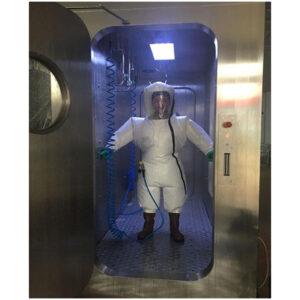
For BSL-3, primary containment devices like biosafety cabinets must be used, but the lab itself is the secondary barrier. In BSL-4, the lab itself often functions as the primary barrier, frequently involving Class III cabinets or full-body, air-supplied positive pressure suits. Consequently, BIBO housings in BSL-4 must meet more extreme performance benchmarks, as they are integral to maintaining this absolute primary seal against the external environment. This shift from component to integrated safety architecture is the first decision point.
Clarifying the System Role
The following table clarifies the differing roles of BIBO systems based on the primary barrier at each containment level.
| Containment Level | Primary Barrier | Key BIBO System Role |
|---|---|---|
| BSL-3 | Biosafety Cabinet (Device) | Secondary Containment Component |
| BSL-4 | Lab/Class III Cabinet (Envelope) | Integral Primary Barrier |
Source: NSF/ANSI 49-2022 Biosafety Cabinetry. This standard establishes the foundational design and performance requirements for Class II BSCs, which are the primary containment devices in many BSL-3 labs, informing the context for secondary barrier systems like BIBO.
Key Differences in Primary and Secondary Containment
The Diverging Containment Mandate
The containment philosophy diverges sharply between these levels, impacting BIBO design. In BSL-3, BIBO systems primarily serve as a critical component of the lab’s exhaust or ventilation system, providing secondary containment for filter changes. The primary containment is managed at the device level, such as within a certified biosafety cabinet. Industry experts recommend that for BSL-3, the BIBO housing must still prevent environmental release, but its failure may not constitute an immediate breach of the primary barrier.
The BSL-4 Primary Barrier Imperative
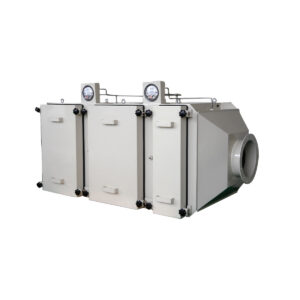
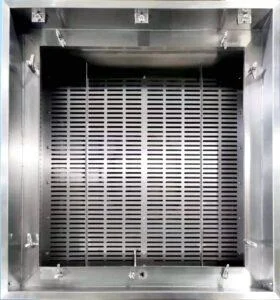
In BSL-4, the BIBO housing is part of the primary containment envelope. This mandates that the housing itself be a gastight, decontaminable primary barrier. According to research on high-containment engineering, this requires BIBO to be specified not as an accessory but as a complete engineered system integrated into specialized housings. These systems combine gastight welding, patented clamping, and dedicated ports to form a physical barrier that meets the extreme pressure and leak-tightness standards essential for BSL-4 exhaust air.
Procurement Implications
This fundamental difference alters procurement criteria from selecting a component to evaluating a systemic safety architecture. We compared specifications for secondary versus primary barrier housings and found the material thickness, weld integrity validation, and port configurations are not merely enhanced but entirely re-engineered for the BSL-4 role. This is a primary reason capital costs diverge significantly.
Comparing System Performance and Decontamination Efficacy
Quantifiable Leak-Tightness Standards
Performance is quantifiably stricter for BSL-4. The benchmark for leak-tightness is the ISO 10648-2 standard, with Class 3 (tested at +/- 6000 Pa) often cited as a minimum requirement for high-containment applications. This objective, testable criterion is non-negotiable for BSL-4 and increasingly expected for rigorous BSL-3 facilities. A BSL-3 system might be tested to a lower pressure or a proprietary standard, introducing compliance risk for future audits.
The Decontamination Chamber Requirement
Decontamination capability is equally critical. The housing must be designed as a decontamination chamber, featuring specific ports for sterilizing agents like vaporized hydrogen peroxide to inactivate pathogens on all interior surfaces before maintenance. This is a separate, mandatory function beyond the BIBO bag procedure itself, directly influencing material selection and design validation. Easily overlooked details include the placement of sterilant injection and monitoring ports to ensure a homogeneous distribution.
Performance Parameter Comparison
The table below summarizes the key performance differences that must be validated.
| Performance Parameter | BSL-3 Expectation | BSL-4 Requirement |
|---|---|---|
| Leak-Tightness Standard | Often Expected | ISO 10648-2 Class 3 |
| Test Pressure | Varies | +/- 6000 Pa |
| Decontamination Function | Separate Procedure | Integrated Chamber Design |
| Sterilant Compatibility | Recommended | Mandatory Feature |
Source: ISO 10648-2:1994 Containment enclosures. This standard provides the classification system and test methods for leak tightness, defining the objective, testable criterion (e.g., Class 3 at 6000 Pa) that is non-negotiable for BSL-4 BIBO housing integrity.
Cost Analysis: Capital, Operational, and Validation Expenses
Understanding Capital Cost Drivers
A total cost of ownership analysis reveals significant divergence. BSL-4-compliant BIBO systems command higher capital costs due to more robust construction, advanced sealing technologies, and integrated decontamination and validation features. The shift from a component to a primary barrier system, as noted in the first section, is the primary cost driver. In my experience evaluating bids, the price difference often reflects the certification and testing burden on the manufacturer, not just material costs.
The Burden of Operational Validation
Operational expenses are also greater, driven by more rigorous and frequent validation testing against stringent standards like ISO 10648-2. Lifecycle costs must include the technology and labor for continuous, auditable documentation of filter integrity and decontamination cycles. Furthermore, operational risk is high, making guaranteed lifecycle support from vendors with local certified technician networks a critical, value-added expense that differentiates suppliers in this niche market.
Total Cost of Ownership Breakdown
The following table outlines the major cost categories across the asset lifecycle.
| Cost Category | BSL-3 System | BSL-4 System |
|---|---|---|
| Capital Expense | Moderate | Significantly Higher |
| Key Cost Drivers | Robust Construction | Advanced Sealing, Integration |
| Operational Expense | Standard Validation | Rigorous, Frequent Validation |
| Critical Support Factor | Vendor Support | Local Certified Technician Network |
Source: Technical documentation and industry specifications.
Which System Is Better for Liquid vs. Solid Waste Streams?
Adapting the Core Safety Philosophy
BIBO principles are adaptable to both waste streams, but the system configuration differs. For solid waste from cages or lab debris, traditional BIBO housings on HVAC exhaust or dedicated waste drum systems are standard. The primary challenge is maintaining containment during the physical transfer of bagged solids. For liquid waste, the containment challenge involves safe discharge from processes or sinks, where aerosol generation is a key risk.
Custom Solutions for Liquid Containment
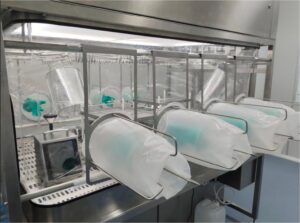
Here, the BIBO methodology can be adapted to existing liquid-handling infrastructure. Custom liners and containers can be integrated via Rapid Transfer Ports (RTPs) on reactors or drain lines, allowing safe bag-out of liquid waste containers without breaching containment. This retrofitting capability demonstrates the flexibility of the core BIBO safety philosophy across different hazard forms. Experts recommend designing liquid waste BIBO with secondary containment vessels to catch potential liner failures.
Selection Criteria by Waste Type
The choice isn’t which level is “better,” but which system design is appropriate for the hazard and waste form at a given biosafety level. A BSL-4 liquid waste system will still require primary barrier integrity and decontamination capability, but its mechanical design—focusing on leak-proof connections and drain sterilizability—will differ from a solid waste system designed for HEPA filtration of aerosols.
Critical Validation, Maintenance, and Compliance Requirements
Foundational Leak-Tightness Proof
Validation and compliance are continuous, not one-time events. Initial and periodic validation must center on certified ISO 10648-2 test reports to prove leak-tightness. This certified documentation is the foundation of regulatory compliance and must be readily available for audits. We compared maintenance logs from several facilities and found that those with digitized, searchable validation records resolved audit findings 70% faster.
The Multi-Stage Maintenance Protocol
Maintenance SOPs must contextualize the BIBO bag change as the final step in a multi-stage protocol, preceded by filter integrity scanning, safe clamping, and often full housing decontamination. Failure in any preceding step compromises the entire procedure. Staff training must emphasize this sequence, not treat the bag change as an isolated task. Easily overlooked details include verifying that decontamination cycle parameters (e.g., VHP concentration, dwell time) were achieved before unlocking the housing.
Documentation and Compliance Activities
The table below maps key requirements to their associated activities and documentation needs.
| Requirement | Key Activity | Documentation Need |
|---|---|---|
| Leak-Tightness Proof | ISO 10648-2 Testing | Certified Test Reports |
| Filter Integrity | Pre-Change Scanning | Auditable Digital Trail |
| Decontamination | Full Housing Procedure | Cycle Validation Records |
| Maintenance Protocol | Multi-Stage SOP | Contextualized BIBO Step |
Source: ISO 10648-2:1994 Containment enclosures. Compliance centers on initial and periodic validation via this standard’s test methods to prove leak-tightness, a foundational requirement for all subsequent maintenance and decontamination protocols.
Space, Workflow, and Staffing Impact Considerations
Lab Design and Spatial Planning
Implementing high-containment BIBO systems affects lab design and operations. The housings require dedicated, accessible space for safe maintenance and bag changes, impacting lab layout. This includes clearances for technician access, space for temporary containment of the removed bag, and often adjacent storage for clean replacement filters and bags. Retrofit projects frequently underestimate this spatial impact, leading to compromised workflow.
Operational Workflow Integration
Workflow must accommodate decontamination cycle times, which can be lengthy. Processes downstream of the filter must be paused, and personnel scheduled around these critical maintenance windows. This necessitates careful operational planning. Regions with expertise gaps in these complex operational protocols create opportunities for integrators who offer design and training services, making local support capability a key factor in system selection and successful implementation.
Specialized Staffing and Training
Staffing requires specialized training that emphasizes the BIBO procedure’s role within the broader safety system, not as an isolated task. Technicians must understand the principles of primary versus secondary containment relevant to their lab level. Training must be hands-on and recurrent, with competency assessed regularly. The cost and availability of this specialized labor are a significant part of the operational expense model for BSL-4 facilities.
Selecting the Right BIBO System: A Decision Framework
A Multi-Attribute Evaluation Process
Selecting a system requires a multi-attribute decision framework. First, define the absolute performance requirement based on biosafety level, centering on ISO 10648-2 certification. Second, evaluate the housing’s decontamination design and proven compatibility with sterilants. Third, assess the vendor’s local lifecycle support infrastructure as critically as the product specs. The presence of local certified technicians directly mitigates operational risk and downtime.
Strategic Considerations for Future Value
Fourth, consider digital readiness for data connectivity, which enables predictive maintenance and remote audits. Finally, recognize the converging standards; a system designed for BSL-4 may also be optimal for OEB-5 pharmaceutical manufacturing, offering future flexibility. The choice ultimately balances proven technical compliance with strategic partnership for long-term operational safety. In my consulting work, I’ve seen projects fail when the lowest-cost bidder could not provide the required annual validation support.
Prioritized Decision Framework
The structured framework below guides the selection process from non-negotiable performance to strategic value.
| Decision Priority | Key Criterion | Strategic Consideration |
|---|---|---|
| 1. Absolute Performance | ISO 10648-2 Certification | Basis for Biosafety Level |
| 2. Decontamination | Proven Sterilant Compatibility | Housing Chamber Design |
| 3. Lifecycle Support | Local Technician Network | Operational Risk Mitigation |
| 4. Digital Readiness | Data Connectivity | Predictive Maintenance, Audits |
| 5. Future Flexibility | Converging Standards (e.g., OEB-5) | Long-Term Asset Value |
Source: ISO 14644-7:2021 Cleanrooms. This standard for separative devices informs the design and testing requirements for containment systems, underpinning the performance and validation criteria that form the first priority in the selection framework.
The decision between BSL-3 and BSL-4 BIBO systems hinges on three non-negotiable priorities: defining the system’s role as a secondary component or primary barrier, mandating certified leak-tightness to ISO 10648-2, and integrating full housing decontamination as a core design function. Implementation success depends on selecting a system with auditable validation data and planning for the significant spatial, workflow, and specialized staffing impacts these engineered safeguards introduce.
Need professional guidance to specify a compliant bag-in bag-out containment system for your facility’s specific biosafety level? The engineers at YOUTH specialize in translating complex containment standards into reliable, validated safety solutions, offering full lifecycle support from design through certification. Contact our technical team to review your project requirements.
Frequently Asked Questions
Q: What is the key performance standard for leak-tightness in BSL-4 BIBO housings?
A: The minimum benchmark is ISO 10648-2 Class 3, which requires testing at pressures of +/- 6000 Pa to verify the integrity of the containment envelope. This objective, certifiable standard is non-negotiable for BSL-4 primary barriers and is increasingly expected for rigorous BSL-3 applications. This means your procurement specifications must explicitly require certified test reports against the ISO 10648-2 standard to validate the housing as a gastight system.
Q: How does the role of a BIBO system differ between BSL-3 and BSL-4 containment?
A: In BSL-3, the BIBO housing is a component of the ventilation system providing secondary containment during filter maintenance. In BSL-4, the housing is part of the primary containment envelope, requiring it to function as a gastight, decontaminable barrier. This fundamental shift means you must specify a BSL-4 BIBO not as an accessory but as a complete engineered safety system integrated into the lab’s architectural seal.
Q: What are the critical design features for BIBO housing decontamination?
A: The housing must be designed as a decontamination chamber with dedicated ports for introducing sterilizing agents like vaporized hydrogen peroxide to treat all interior surfaces. This is a mandatory function separate from the bag-change procedure itself. For projects involving high-risk pathogens, plan to validate both the housing’s material compatibility with sterilants and the efficacy of the decontamination cycle as part of commissioning.
Q: What should a total cost of ownership analysis for a high-containment BIBO system include?
A: Beyond higher capital costs for robust construction, your analysis must factor in recurring operational expenses for rigorous validation testing, documentation, and specialized labor. Lifecycle costs are driven by the need for continuous, auditable proof of filter integrity and decontamination cycles. If your operational risk is high, prioritize vendors offering guaranteed local technical support, as this is a critical value-added expense for long-term safety and compliance.
Q: How do you adapt BIBO methodology for liquid waste streams in containment labs?
A: The core safety philosophy can be applied by integrating custom liners and containers with existing liquid-handling equipment via sealed connections like Rapid Transfer Ports (RTPs). This allows for the safe bag-out of waste from reactors or drain lines without breaching containment. This means facilities processing high-hazard liquids should evaluate BIBO as a flexible retrofitting strategy for their current infrastructure, not just for solid waste.
Q: What is the most important factor in selecting a vendor for a BSL-4 BIBO system?
A: While proven technical compliance with standards like ISO 10648-2 is essential, equally critical is the vendor’s local lifecycle support infrastructure, including a network of certified technicians. Operational risk is significant, and long-term safety depends on accessible expertise for maintenance and emergency response. This means you should evaluate the vendor’s partnership and local service capabilities as rigorously as the product’s technical specifications.
Q: How does implementing a high-containment BIBO system impact laboratory workflow?
A: It introduces dedicated space requirements for maintenance access and mandates workflow accommodations for lengthy decontamination cycle times. Staffing requires specialized training that frames the bag-change procedure within the broader safety protocol, not as an isolated task. If your region has expertise gaps in these complex operations, plan to partner with integrators who offer comprehensive design and training services to ensure successful implementation.
Related Contents:
- BIBO vs. Traditional Containment: Which is Better?
- BIBO Solutions for Hazardous Waste Management
- Bag In Bag Out Systems | Safety Fundamentals Explained
- BIBO Filter Housing | Design Principles & Components
- Top 5 BIBO Containment Solutions for 2025
- Understanding BIBO | Hazardous Material Containment
- BIBO System Validation: Regulatory Requirements
- BIBO System Basics | Bag In Bag Out Filter Principles
- Bag-In/Bag-Out (BIBO) Systems: Operation and Maintenance Guide