For pharmaceutical engineers and EHS professionals managing OEB5 compounds, specifying the correct bag-in/bag-out (BIBO) filter bag is a critical containment decision. The wrong choice risks catastrophic exposure during the highest-risk operation: filter change-out. A common misconception is that regulatory bodies dictate a precise mil thickness, leading to a false sense of security from simply meeting a checklist. The reality is more complex. The bag is a dependent component within a validated system, and its specification must be driven by a rigorous, risk-based assessment of your specific process and equipment.
Attention to this specification is non-negotiable now. The evolution of potent compound manufacturing and heightened regulatory scrutiny demand evidence-based qualification over prescriptive compliance. Selecting a BIBO bag involves balancing material science, mechanical integrity, and system integration to ensure it functions as a reliable temporary primary containment vessel. This decision directly impacts operator safety, product integrity, and regulatory standing.
Key Specifications for OEB5 BIBO Bag Thickness
Defining the Baseline Requirement
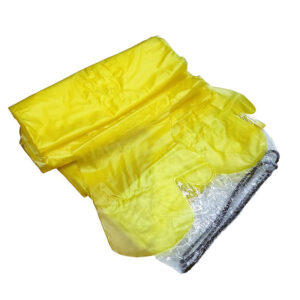
For OEB5 applications, the established industry consensus mandates a minimum thickness of 6 mils (0.006 inches or ~150 microns). This is not an arbitrary figure but a performance-based specification derived from decades of operational experience. The primary function is puncture resistance against sharp filter housing edges and robust containment of heavy, contaminated HEPA filters during handling. A 6-mil film provides the necessary structural integrity for heat-sealed seams and a reliable barrier against fine, potent powders, offering a critical margin of safety against pinhole defects.
The Rationale Behind the Minimum
The 6-mil standard addresses three core failure modes: mechanical stress during bagging, pressure from the filter weight, and permeation risk. It is crucial to understand this specification as a secondary safety component. The primary assurance is the engineered enclosure itself; the bag is a critical but dependent element. Organizations cannot rely on bag specs alone as a compliance shortcut. This baseline must be the starting point for all OEB5 risk assessments, forming the foundation upon which further specifications are built.
Interpreting the Specifications
The following table outlines the key parameters that define this baseline specification for OEB5 containment.
| Parameter | Minimum Specification | Key Rationale |
|---|---|---|
| Bag Thickness | 6 mils (150 microns) | Baseline for OEB5 |
| Equivalent Measurement | 0.006 inches | Industry consensus standard |
| Primary Function | Puncture resistance | Against sharp housings |
| Critical Feature | Robust heat-sealed seams | For heavy filter containment |
Source: Technical documentation and industry specifications.
The Role of BIBO Bags in High-Containment Systems
A Layered Defense Strategy
BIBO bags are not standalone products but integral components of a high-containment system’s layered defense. Their sole purpose is to maintain integrity during filter change-out, the process’s most vulnerable phase. The protocol involves double-bagging the contaminated filter while it remains sealed within its housing, creating a temporary primary containment vessel. This function is part of a broader strategy where engineering controls are redundant. For OEB5, a double HEPA filtration system is standard, where a secondary filter maintains containment if the primary is compromised during BIBO operations.
Mitigating Catastrophic Risk
This design philosophy directly mitigates catastrophic risk, justifying significant capital investment. The BIBO bag acts as one fortified link in a safety chain that includes the isolator, HEPA filters, and validated SOPs. Its failure would place immense strain on other controls. In my experience overseeing containment validations, the bag’s performance is only proven when tested as part of the complete system under simulated failure conditions, not in isolation.
Technical Standards and Industry Consensus for Thickness
The Performance-Based Framework
Technical standards like ISO 14644-7 provide the design and testing principles for separative devices but do not prescribe exact mil thicknesses. This performance-based approach is intentional, shifting focus from checklist compliance to proven system efficacy. The 6-mil minimum emerges from a collective understanding of material science and operational risk, validated through rigorous factory acceptance testing. Regulatory scrutiny now prioritizes evidence-based qualification, meaning your thickness specification must be justifiable through risk assessment and supported by test data.
From Consensus to Validation
The consensus on thickness is validated by its role in supporting system performance during challenges like PAO leak tests. Thicker films (e.g., 8 mils) are specified for heightened-risk scenarios based on site-specific assessment, not standard mandate. This reflects the industry’s mature, risk-managed approach to containment.
| Standard/Guideline | Relevance to Thickness | Prescriptive Level |
|---|---|---|
| ISO 14644 Series | Design principles for separative devices | Performance-based, not prescriptive |
| Industry Consensus | Derives 6-mil minimum | Risk & material science based |
| Thicker Film Use (e.g., 8 mil) | Abrasive powders, complex handling | Site-specific risk assessment |
| Validation Method | Factory tests (PAO leak) | Evidence-based qualification |
Source: ISO 14644-7: Cleanrooms and associated controlled environments — Part 7: Separative devices. This standard provides the foundational performance requirements for containment devices like isolators, informing the risk-based approach used to establish bag thickness specifications for integrated BIBO systems.
When to Consider Thicker Bags (8 Mil vs. 6 Mil)
Triggering a Risk Assessment
The decision to upgrade from a 6-mil to an 8-mil bag is a direct application of formal risk management. It is warranted by specific, documented hazards. The most common triggers include handling exceptionally abrasive or high-density powders that can stress the bag material during handling, or a filter cassette design with pronounced sharp edges that increase puncture potential. This decision cannot be arbitrary; it must follow a documented assessment that evaluates filter weight, powder characteristics, and procedural complexity.
Making the Justified Decision
This granular specification underscores how OEB5 requirements drive cross-functional collaboration. EHS, engineering, and process development teams must converge to evaluate trade-offs between safety and operational practicality. The choice is not simply “thicker is better,” but rather selecting the appropriate specification that mitigates identified risks without introducing new handling difficulties.
| Decision Factor | Favors 6 Mil | Favors 8 Mil (or thicker) |
|---|---|---|
| Powder Characteristics | Standard potency, fine | Abrasive, high-density |
| Handling Hazard | Routine procedure | Heightened puncture risk |
| Filter Cassette Design | Standard housing | Sharp or complex design |
| Documentation Basis | Baseline OEB5 protocol | Formal risk assessment required |
Source: Technical documentation and industry specifications.
Material Compatibility and Chemical Resistance Factors
Beyond Thickness: Material Science
Specifying thickness without material compatibility is a critical error. The polymer must offer chemical resistance to the potent compounds handled. Many OEB5 powders require low-static or anti-static materials to prevent adhesion and dangerous discharge. This material science principle extends to the entire enclosure. Features like antimicrobial coatings on permanent surfaces target secondary contamination risks, ensuring the equipment itself does not become a reservoir for cross-contamination.
A Holistic View of Containment
This holistic view is essential for supporting overall facility hygiene mandates. The bag material must not degrade, leach, or react when exposed to process compounds, as this could compromise both containment and product quality. Compatibility testing should be part of the supplier qualification process.
Integrating Bag Specs with BIBO Housing and SOPs
The System Integration Imperative
A specified bag is ineffective without seamless integration with the BIBO housing and validated procedures. The housing must have compatible ports and sealing mechanisms—such as specific clamp rings—designed to accommodate the bag’s thickness without creating a leak path. The “BIBO bag” is a system component, not a generic commodity. Sourcing generic bags risks invalidating the entire containment system’s validation status, as the OEM’s certification covers the integrated assembly.
Closed-Loop Workflow Design
Integration extends to workflow. A well-designed system features closed-loop disposal ports with O-ring seals, allowing for safe waste removal without breaking containment. This seals the hazardous material’s lifecycle within the validated system. For professionals sourcing components, this underscores the necessity of selecting OEM-validated BIBO containment bags that are guaranteed to interface correctly with your specific housing model.
Validating Containment: Testing and Quality Assurance
Evidence-Based Qualification
System validation, including the bag’s role, is proven through performance-based testing. Factory acceptance tests (FAT) like PAO leak challenges, airflow visualization, and velocity checks simulate operational stresses to prove containment efficacy. These are not simple quality checks but foundational evidence required for qualifying equipment for OEB5 use. Procurement must mandate and review these test certificates; they are the objective proof of performance.
The Testing Protocol
Protocols such as IEST-RP-CC034.2 detail the methods for HEPA filter leak testing, a core part of system validation. This evidence-based approach provides confidence that the integrated system, with its specified bags, will perform under real-world conditions and potential failure modes.
| Test Type | Simulated Challenge | Evidence Purpose |
|---|---|---|
| PAO Leak Test | System integrity under challenge | Prove containment efficacy |
| Airflow Visualization | Operational air patterns | Validate unidirectional flow |
| Velocity Checks | Containment barrier strength | Foundational qualification evidence |
| Factory Acceptance | Real-world failure modes | Mandatory for OEB5 procurement |
Source: IEST-RP-CC034.2: HEPA and ULPA Filter Leak Tests. This recommended practice details procedures for leak-testing HEPA/ULPA filters, which is a critical component of validating the overall integrity of a BIBO containment system during factory acceptance testing.
Selecting the Right BIBO Bag: A Decision Framework
A Stepwise Selection Process
Selecting the correct bag requires a structured, multi-factor decision framework. Start with the 6-mil baseline for OEB5. Escalate to 8 mils only upon a formal risk assessment citing material abrasiveness or handling hazards. The third step is non-negotiable: verify material compatibility (chemical and static properties) with your process compounds. Fourth, confirm the bag is an OEM-validated component for your specific housing to maintain system certification.
Future-Proofing the Investment
Finally, consider adaptability. Modular enclosure designs allow for post-procurement modifications, and the intersection of powder and vapor containment is growing. Your selection framework should favor systems that can adapt to evolving compounds and tighter standards.
| Selection Step | Key Action | Critical Checkpoint |
|---|---|---|
| 1. Baseline | Start with 6-mil thickness | OEB5 minimum specification |
| 2. Risk Escalation | Assess material abrasiveness | Documented risk assessment |
| 3. Material Compatibility | Verify chemical/static resistance | Process compound compatibility |
| 4. System Integration | Confirm OEM-validated component | Maintains system certification |
| 5. Future-Proofing | Evaluate modular design | Adapts to evolving standards |
Source: Technical documentation and industry specifications.
Prioritize the 6-mil baseline as your default, but empower your team to escalate specifications through a formal, documented risk assessment process. Ensure every selection is justified by material compatibility and system integration requirements, not just a thickness number. The final decision must be locked into validated SOPs and supported by unassailable factory test evidence.
Need professional guidance to specify and validate a BIBO system for your OEB5 application? The engineers at YOUTH specialize in integrating containment components into performance-guaranteed solutions. Review your project specifications with our technical team to ensure your safety margins are scientifically defined and empirically validated.
Frequently Asked Questions
Q: What is the minimum thickness for BIBO filter bags in OEB5 applications, and is it a regulatory requirement?
A: The established industry baseline for OEB5 is a 6-mil (0.006 inch) bag thickness. This is a risk-based best practice for puncture resistance and seam integrity, not a direct regulatory mandate. Standards like ISO 14644-7 provide design principles but do not specify exact mils. This means your facility must justify the 6-mil specification through your own risk assessment, as regulators increasingly demand evidence-based qualification over simple checklist compliance.
Q: When should we consider using an 8-mil bag instead of the standard 6-mil thickness?
A: Upgrade to an 8-mil or thicker bag when your risk assessment identifies heightened hazards like exceptionally abrasive powders, high-density materials, or complex filter cassette designs that increase puncture potential. This decision requires documented evaluation of powder characteristics and handling procedures. For projects where you handle coarse or heavy potent compounds, plan to specify thicker films and validate their performance within your specific BIBO housing system.
Q: How does bag material compatibility impact selection beyond just thickness?
A: Material science is as critical as thickness. The polymer must resist chemical interaction with your specific potent compounds and often requires low-static properties to prevent powder adhesion and ensure complete discharge. This holistic view extends to all containment surfaces. If your operation involves reactive or sticky APIs, you must verify both chemical resistance and anti-static performance in the bag material to prevent product loss or cross-contamination risks.
Q: Why is it critical to source BIBO bags from the original equipment manufacturer (OEM)?
A: The bag is a validated system component, not a generic commodity. OEM bags are designed to integrate precisely with the housing’s specific ports, clamp rings, and sealing mechanisms. Using a generic bag risks improper sealing and can invalidate the entire containment system’s certification. This means your procurement must mandate OEM-specified bags to maintain the integrity of factory acceptance tests like those outlined in IEST-RP-CC034.2.
Q: What role does validation testing play in qualifying a BIBO system for OEB5 use?
A: Validation through tests like PAO leak challenges and airflow visualization provides the foundational evidence that the integrated system, including the bag, maintains containment under simulated failure modes. These are not simple quality checks but required performance proofs. For your project, you must review and mandate these test certificates from the vendor, as they are essential for qualifying the equipment for handling the highest potency materials under EU GMP Annex 1 principles.
Q: How should we approach the decision framework for selecting the right BIBO bag?
A: Start with the 6-mil baseline for OEB5, then escalate thickness based on a formal risk assessment of material abrasiveness and handling hazards. Concurrently, verify chemical compatibility and confirm the bag is part of the OEM’s validated system. This framework must also consider future needs. If your product pipeline includes evolving compound forms, prioritize systems with modular design that allow for post-procurement adaptation to future containment requirements.
Related Contents:
- Bag In Bag Out Systems | Safety Fundamentals Explained
- Understanding BIBO | Hazardous Material Containment
- Bag-In/Bag-Out (BIBO) Systems: Operation and Maintenance Guide
- BIBO System Basics | Bag In Bag Out Filter Principles
- Top 5 BIBO Containment Solutions for 2025
- Safe Chemical Handling with BIBO Systems
- BIBO vs. Traditional Containment: Which is Better?
- How BIBO Works | Containment Filter Technology Guide
- The Complete Bag In Bag Out (BIBO) Filter Housing Guide for Pharmaceutical and Biosafety Facilities: 2025 Technical Edition