In pharmaceutical and advanced manufacturing, the weighing of active ingredients presents a dual mandate: protect the product from contamination and shield the operator from potent compounds. The choice of containment technology directly dictates which risk is prioritized. Many facilities default to familiar open-front laminar flow booths without fully assessing whether their primary hazard is product integrity or personnel safety, leading to either over-engineering or dangerous under-protection.
This decision is critical now due to tightening global regulations like the revised EU GMP Annex 1 and the increasing potency of modern drug compounds. Selecting the wrong airflow architecture or containment class doesn’t just create compliance risk; it fundamentally compromises product quality or operator health. Understanding the engineering behind vertical laminar airflow is the first step in making an informed, risk-based investment.
How Vertical Laminar Airflow Works in Weighing Booths
The Engineered Air Stream
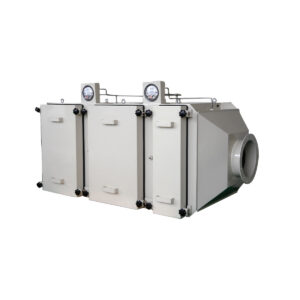
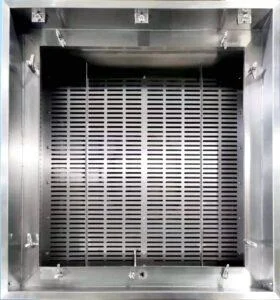
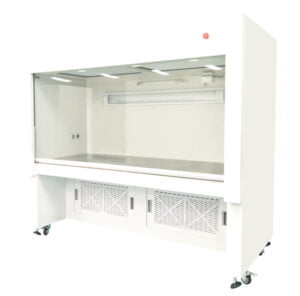
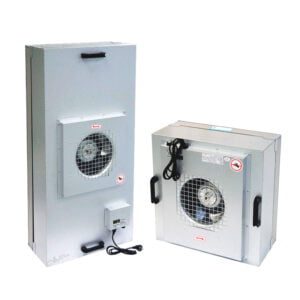
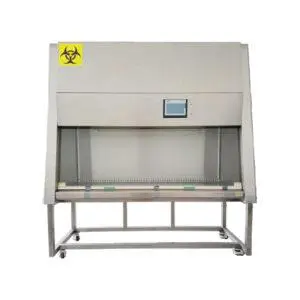
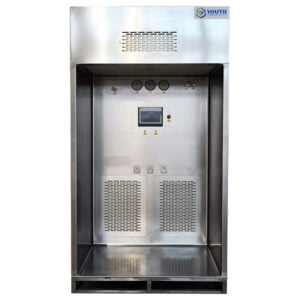
Vertical laminar airflow is a controlled, unidirectional stream of clean air moving from the top of an enclosure directly downward to the work surface. This environment is engineered by drawing ambient air through a pre-filter to capture larger particles, then forcing it through a final HEPA filter—typically H14 grade. The resulting ISO Class 5 air is directed downward in a laminar, non-turbulent sheet at a precise face velocity. This flow acts as a critical barrier, sweeping generated particulates away from the operator’s breathing zone.
Critical Components and Their Function
The system’s efficacy hinges on specific components working in concert. The HEPA filter is the cornerstone, but its performance depends on effective pre-filtration to extend its life. The fan and plenum design must deliver consistent velocity without creating disruptive eddies. The physical enclosure, often with coved stainless-steel interiors, is designed for cleanability and to support the aerodynamic profile. In my experience, the most common point of failure isn’t the HEPA filter itself, but an imbalance between the booth’s airflow and the room’s HVAC system, which disrupts the critical pressure differential.
Performance Parameters in Practice
Key measurable parameters define and validate the system’s operation. Face velocity must be stable; too low and containment fails, too high and it creates turbulence that can compromise weighing accuracy or even scatter powder. The pressure differential is the silent guardian, ensuring any leakage flows inward. Industry experts recommend continuous monitoring of these parameters, as a single shift can indicate filter loading or a facility HVAC fault. The table below outlines the core specifications that create the functional environment.
The following table details the fundamental specifications that define a vertical laminar airflow system’s operation.
| Component/Parameter | Specification/Range | Key Function |
|---|---|---|
| Airflow Direction | Top to bottom | Unidirectional particle sweep |
| Final Filter Grade | H14 (99.995% @ 0.3µm) | Ultra-clean air supply |
| Air Classification | ISO Class 5 | Product protection standard |
| Face Velocity | 0.3 – 0.5 m/s | Stable, non-turbulent flow |
| Containment Pressure | -10 to -30 Pa | Inward leakage guarantee |
Source: ISO 14644-1. This standard defines the particle concentration limits for ISO Class 5 air, which is the target classification for the clean air supplied by the HEPA filter in a weighing booth. It provides the foundational criteria for the air cleanliness required to protect the product.
Core Benefits: Product Protection vs. Operator Safety
The Dual Mandate
The vertical laminar airflow pattern is engineered to serve two primary objectives. For product protection, the continuous shower of ultra-clean air prevents ambient contaminants from settling on the weighing pan, safeguarding sensitive APIs. The stable flow also minimizes air turbulence that can cause inaccuracies in high-precision scales. For operator safety, the downward airflow captures hazardous particles generated during dispensing, preventing them from rising into the operator’s breathing zone. This is the principle of Insight 1: Airflow Pattern Dictates Primary Containment Objective.
Prioritizing the Dominant Hazard
The core benefit is not universal; it is a calibrated balance. The design choice between a product-protective laminar flow and a safety-focused turbulent flow in closed systems directly determines which risk is prioritized. If the dominant hazard is potent compound exposure (OEB 4-5), the system must prioritize absolute operator containment, often requiring a different airflow strategy. If the threat is microbial contamination of a sterile product, maintaining an ISO 5 laminar flow over the material is paramount. The selection process must begin with this definitive risk assessment.
The Ergonomics-Containment Trade-off
Achieving one benefit often involves a trade-off with the other. A design optimized for operator safety with full enclosure and glove ports reduces ergonomic efficiency. A design optimized for product protection and operator access with an open front increases dependency on procedural controls. According to research from containment studies, common mistakes include selecting an open booth for potent compounds based on ergonomic preference, thereby placing operators at risk. The balance must be engineered, not assumed.
Key Design Types: Open-Front Booths vs. Closed Isolators
Philosophy of Open-Front Booths
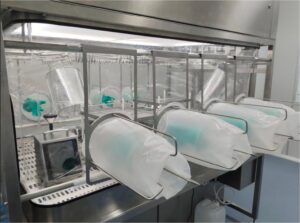
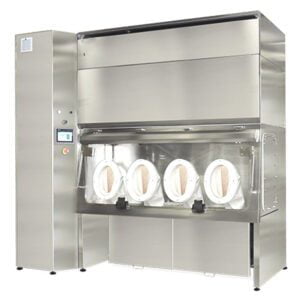
Open-front weighing booths prioritize operator ergonomics and flexibility, featuring a gloveless access area. They rely on the aerodynamic barrier of inward room air and downward laminar flow for containment, making them suitable for lower-potency materials. This design introduces Insight 2: Open-Front Design Introduces an Ergonomics-Containment Trade-off, where procedural controls and rigorous training must compensate for the reduced physical barrier. Their performance is intrinsically linked to stable room conditions.
Absolute Containment with Closed Isolators
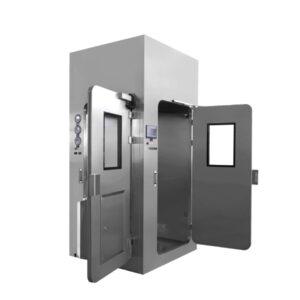
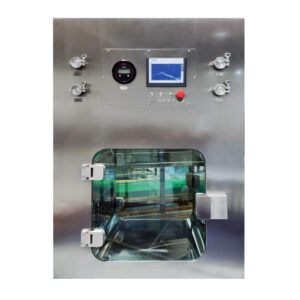
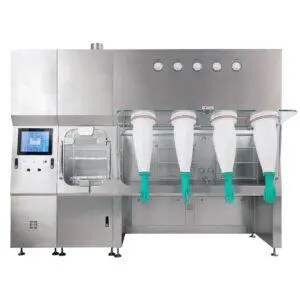
Closed-front containment isolators are fully enclosed with glove ports and maintain higher negative pressure. They often use vertical turbulent airflow for effective mixing and dilution of contaminants before exhaust, providing engineered containment for OEB 4-5 potent compounds. This design represents a shift from an aerodynamic barrier to a physical one, significantly reducing dependency on operator technique for primary containment. They are appliances designed for a specific high-risk task.
Market Segmentation and Selection
This bifurcation reflects Insight 8: The Market is Segmenting into Flexible Platforms vs. High-Potency Appliances. Open booths serve as flexible platforms for a range of non-potent or sterile weighing applications. Closed isolators are specialized appliances for high-potency handling. Companies handling diverse material classes often need both types. The decision matrix below clarifies the primary application scope for each design.
Selecting between an open booth and a closed isolator depends on a clear assessment of the primary hazard and operational needs.
| Selection Criteria | Open-Front Booth | Closed Isolator |
|---|---|---|
| Primary Hazard Addressed | Product contamination | Operator exposure (OEB 4-5) |
| Containment Principle | Aerodynamic air barrier | Physical enclosure, glove ports |
| Airflow Pattern | Laminar (vertical) | Often turbulent for mixing |
| Operator Ergonomics | High, gloveless access | Restricted, glove ports |
| Procedural Dependency | High (SOPs, training) | Lower (engineered control) |
Source: ISO 10648-2. This standard for classifying containment enclosure leak tightness provides the framework for evaluating the performance of closed isolators designed for high-potency compounds, informing the selection based on required containment class.
Critical Performance Parameters and Validation
Monitored vs. Controlled Parameters
Performance hinges on key parameters, but not all are equal. Air velocity and pressure differential are typically controlled and continuously monitored. Air Changes Per Hour (ACH) is a derived parameter critical for contaminant removal rate but is often only verified during qualification. HEPA filter integrity is a verified parameter, tested periodically. The stability of these parameters, especially pressure, is more telling than their nominal values. Insight 4: Negative Pressure Stability is the Single Point of Failure for Open Systems underscores that a fluctuation here immediately compromises containment.
The Validation Lifecycle
The physical booth gains regulatory legitimacy only through generated evidence. The cycle from Design Qualification (DQ) through Performance Qualification (PQ) transforms the equipment. This includes Installation Qualification (IQ) verifying correct setup and Operational Qualification (OQ) proving it operates within specified parameters under challenge. PQ demonstrates it functions consistently in its actual operating environment with standard procedures. This process, as highlighted in Insight 6: Validation Documentation Transforms Equipment into a Regulated Asset, creates an ongoing administrative burden integral to the asset’s lifecycle.
Documentation of Performance
Validation is not an event but a documented state of control. The table below summarizes the targets and focus of this critical activity. Smoke studies visualize airflow, and particle challenges quantify containment. The resulting reports are auditable assets that demonstrate due diligence and control to regulators. We compared systems with and without integrated data logging and found the former significantly reduces the labor and risk associated with manual performance logging.
Qualification and ongoing monitoring focus on a set of key parameters that prove the system’s performance and control.
| Parameter | Target Range | Validation Focus |
|---|---|---|
| Air Velocity | 0.3 – 0.5 m/s | Consistency, uniformity |
| Pressure Differential | -10 to -30 Pa | Stability, continuous monitoring |
| Air Changes Per Hour (ACH) | Application-specific | Contaminant removal rate |
| HEPA Filter Integrity | 99.995% efficiency | Leak testing, certification |
| System Qualification | DQ, IQ, OQ, PQ | Regulatory evidence generation |
Source: EU GMP Annex 1. The guideline mandates the qualification and monitoring of unidirectional airflow systems, including air velocity and pressure differentials, to ensure they provide the necessary protection for exposed product and containers, directly informing the validation requirements.
Maintenance Requirements and Total Cost of Ownership
The Recurring Cost of Filters
Rigorous maintenance is non-negotiable, and its largest cost driver is filter replacement. Insight 3: HEPA Filter Lifecycle is a Critical Operational Cost Driver is paramount. Mandatory replacement cycles, typically every two years or when pressure drop exceeds a threshold, represent a predictable, recurring capital expense. The use of pre-filters is a direct cost-optimization strategy to extend the life of these high-value H14 filters. Easily overlooked details include the cost and lead time for filter integrity testing after each change.
Labor and Operational Expenses
True Total Cost of Ownership (TCO) extends far beyond the purchase order. It must factor in the labor for scheduled interior cleaning, pre-filter changes, and the significant administrative labor for requalification activities. Energy consumption from the fan motor is a continuous operational cost. Systems with smart controls and EC fans can reduce this expense. The validation lifecycle itself is a recurring labor cost, often requiring external specialists for integrity testing.
Building a Comprehensive TCO Model
A procurement evaluation must shift from capital expense to a comprehensive operational budget analysis. This model should project costs over a 5-10 year period, including all consumables, energy, validation, and potential downtime. The table below breaks down the primary cost categories. In my experience, facilities that neglect this analysis are often surprised by the second and third-year costs, which can rival a significant portion of the initial equipment investment.
A complete financial assessment requires evaluating all recurring operational costs, not just the initial purchase price.
| Cost Category | Key Driver | Typical Frequency/Impact |
|---|---|---|
| HEPA Filter Replacement | Major capital expense | ~2 years or pressure drop |
| Pre-filter Replacement | Extends HEPA life | Regular, frequent intervals |
| Validation Labor | DQ/IQ/OQ/PQ cycles | Recurring administrative burden |
| Energy Consumption | Fan operation | Continuous operational cost |
| Interior Cleaning | Stainless steel surfaces | Scheduled preventive maintenance |
Note: True TCO shifts evaluation from CapEx to comprehensive OpEx analysis.
Source: Technical documentation and industry specifications.
Integration with Cleanroom Design and Space Planning
Co-Dependency with Facility HVAC
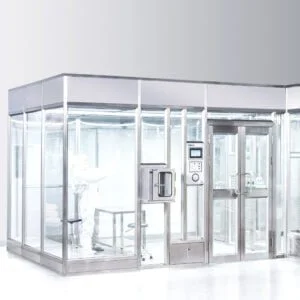
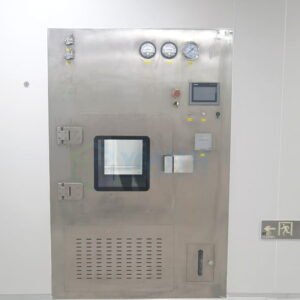
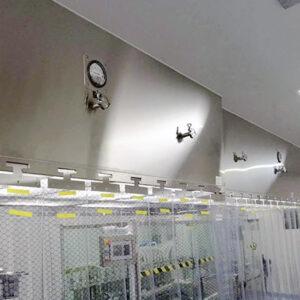
A weighing booth is not an island. Its performance, particularly the maintenance of critical negative pressure, requires a stable and balanced room HVAC system. This interdependency means the facility and equipment must undergo joint validation. A failure in room pressurization can instantly nullify the containment of an open-front booth. Strategic placement considers proximity to supply and return vents to avoid disrupting the laminar flow profile.
Planning for Material and Process Flow
Insight 5: Material Compatibility Defines Application Scope directly impacts integration. The prevalent stainless-steel construction targets dry powders, excluding many solvent-based processes. This may mandate separate dedicated stations or influence the selection of booth lining materials. Space planning must also account for material flow—positioning the booth near dispensing and staging areas to minimize transfer distances and contamination risk within the cleanroom.
Enabling Future Automation
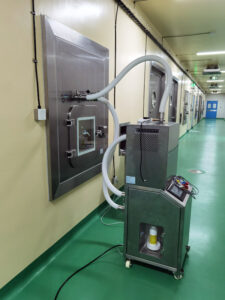
Strategic design should position the booth as an integratable node. As Insight 9: Advanced Industries Will Drive Convergence of Weighing and Process Automation suggests, features like Rapid Transfer Port (RTP) compatibility, provisions for CCTV, and PLC controls allow the station to connect seamlessly to downstream isolators or filling lines. This enables closed process trains for advanced therapies like ATMPs. Planning should include conduit runs and network connections for future smart sensor integration, even if not implemented immediately.
Selecting the Right System for Your Application
Starting with a Definitive Risk Assessment
Selection is not a technical comparison; it begins with a hazard analysis. Define the Occupational Exposure Band (OEB) or potency category of the materials. Determine the primary hazard: is it product contamination or operator exposure? This answer directly points to the architectural choice between an open-front laminar flow booth and a closed isolator. For potent compounds (OEB 4-5), a closed isolator is non-negotiable. For aseptic processing of non-potent materials, an open booth with ISO 5 air is appropriate.
Evaluating Total Cost of Ownership
With a shortlist of technically suitable options, apply the TCO model. Compare not only purchase prices but projected costs for filters, energy, and validation over five years. Assess the operational impact of maintenance requirements. Will filter changes cause significant downtime? Does the supplier offer local service and hold filter stock? This financial analysis often reveals that a slightly higher initial investment in a more efficient or durable system yields a lower long-term cost.
Ensuring Compatibility and Future-Proofing
Verify material compatibility with your processes. For powder handling, stainless steel is standard. For solvents, confirm chemical resistance. Consider Insight 7: Smart Sensor Integration; opting for systems with real-time monitoring and data export capabilities is a strategic investment in predictive maintenance and future regulatory readiness. Finally, ensure the physical dimensions and utility requirements (power, data) align with your cleanroom layout and infrastructure. A detailed sampling booth specification should address all these factors to ensure a fit-for-purpose installation.
Future Trends in Containment and Weighing Technology
The Shift to Predictive Control
Insight 7: Smart Sensor Integration is Shifting Containment from Passive to Predictive is materializing. Real-time particle counters, continuous pressure monitors, and differential pressure sensors are becoming standard. These feed data into building management or standalone systems, enabling condition-based maintenance and immediate breach detection. This transforms risk management from a periodic verification activity to a state of continuous, data-driven assurance.
Convergence with Digitalized Processes
The trend toward automation, as inferred in Insight 9, will accelerate. Weighing stations will evolve into automated nodes within digitalized process trains. Integrated load cells, automated material handling via RTPs, and robotic dispensing will be crucial for advanced therapies (ATMPs, ADCs) where human intervention is a contamination risk. The weighing booth will become less of a standalone workstation and more of a connected process module, with data directly populating electronic batch records.
Sustainability as a Design Driver
Insight 10: Sustainability Pressures Will Target Energy and Waste in Containment Systems will drive innovation. Energy-efficient EC fans and variable airflow controls that reduce speed during idle periods are already available. Future developments will focus on reducing the carbon footprint of high-flow containment, perhaps through advanced air recirculation modes that maintain safety while minimizing HVAC load. The industry will also seek solutions for recycling HEPA filter materials to reduce hazardous waste volumes.
The decision for a vertical laminar airflow weighing system hinges on a clear hierarchy of risks: operator safety versus product integrity. This dictates the fundamental choice between an open booth and a closed isolator. Following this, a rigorous Total Cost of Ownership analysis, inclusive of validation and filter lifecycle costs, must inform the financial evaluation. Finally, the system must be planned as an integratable node within the cleanroom, with provisions for the inevitable shift toward smart monitoring and process automation.
Need professional guidance to specify a weighing booth that balances containment, compliance, and cost? The engineers at YOUTH can help you navigate these complex decisions based on your specific materials and processes. Contact us to discuss your application requirements and facility constraints.
Frequently Asked Questions
Q: How do you validate the performance of a vertical laminar airflow weighing booth?
A: Validation requires a formal lifecycle approach from Design Qualification (DQ) through Performance Qualification (PQ). This process involves testing critical parameters like consistent face velocity (0.3-0.5 m/s), stable negative pressure (-10 to -30 Pa), and HEPA filter integrity using smoke and particle challenge tests. The generated evidence, as required by standards like EU GMP Annex 1, formally establishes the system as a regulated asset. This means you must budget for recurring validation labor and documentation as a core part of the system’s total cost of ownership.
Q: What is the main operational cost driver for a laminar airflow weighing system?
A: The recurring replacement of HEPA filters represents the most significant operational expense. These H14-grade filters, which achieve ISO Class 5 air, have a finite lifecycle and typically require replacement every two years or when pressure drop exceeds a set limit. Using pre-filters is a standard tactic to extend this expensive consumable’s service life. For projects where budget forecasting is critical, you should model filter costs, validation, and energy use into a comprehensive TCO analysis, not just the initial purchase price.
Q: When should we choose an open-front booth over a closed isolator for weighing?
A: The choice is dictated by your primary risk: product protection or operator safety. Open-front booths with vertical laminar flow are suitable for protecting non-potent, sterile materials from contamination, as defined by ISO 14644-1 air cleanliness classes. They prioritize operator ergonomics but rely on procedural controls to maintain their aerodynamic barrier. If your operation handles potent compounds (OEB 4-5), a closed isolator with glove ports and higher containment is non-negotiable for personnel safety.
Q: Why is negative pressure stability so critical for open weighing booths?
A: For open-front systems, maintaining a stable negative pressure differential of -10 to -30 Pa is the single point of failure for containment. This inward airflow is the primary physical barrier preventing hazardous aerosols from escaping into the operator’s breathing zone. Its stability is entirely dependent on a well-balanced and reliable facility HVAC system. This means your booth’s performance is co-dependent on room infrastructure, requiring joint validation and continuous monitoring to mitigate containment risk.
Q: How does vertical laminar airflow design balance product protection and operator safety?
A: The downward, unidirectional airflow pattern is engineered to serve both objectives simultaneously. It showers the weighing pan with ultra-clean air to prevent product contamination while sweeping generated particulates away from the operator’s face and toward exhaust. The architecture inherently creates a trade-off; prioritizing a perfectly laminar flow favors product protection, while designs that introduce more turbulence can enhance contaminant mixing for operator safety. Your system selection should calibrate this balance based on the dominant material hazard in your process.
Q: What future trends will impact the design and operation of weighing containment?
A: Integration of smart sensors for real-time particle and pressure monitoring is shifting maintenance from scheduled to predictive, enabling immediate breach detection. Furthermore, systems are evolving to integrate with automated process trains via features like Rapid Transfer Ports (RTPs), driven by advanced therapy manufacturing. Sustainability pressures will also target energy use and filter waste, favoring efficient EC fans and recyclable filter materials. If you are specifying equipment today, plan for connectivity and efficiency features to ensure long-term viability and regulatory readiness.
Q: How do material compatibility concerns affect weighing station application scope?
A: The prevalent stainless-steel construction in weighing booths is optimized for dry powder handling but presents limitations for solvent-based processes. This material definition directly confines the system’s approved use cases. It means you must establish clear standard operating procedures that restrict the station to compatible materials or budget for separate, dedicated stations if your operations involve diverse chemical properties. This decision must be made during risk assessment and facility planning stages.
Related Contents:
- Precision Weighing Booths for Pharmaceutical Industry
- Weighing Booth vs Scale Room: Which is Right for You?
- What is a Weighing Booth? Essential Facts Explained
- Boost Productivity with Automated Weighing Booths
- Emerging Trends: The Future of Weighing Booth Technology
- The Ultimate Guide to Weighing Booths [2025 Edition]
- Weighing Booth ROI: Maximizing Your Investment
- 7 Steps to Perfectly Calibrate Your Weighing Booth
- 5 Critical Safety Features in Modern Weighing Booths