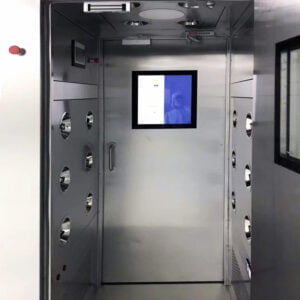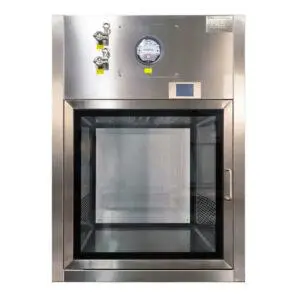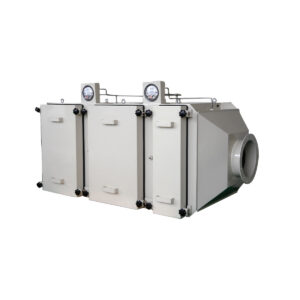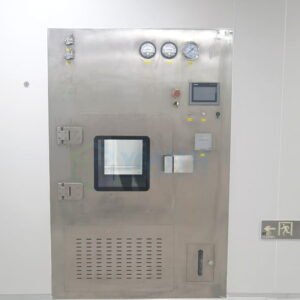
Procurement teams that finalize equipment lists before locking airflow concept and transfer strategy routinely discover the problem at the worst possible moment—during qualification, when room boundaries are fixed, devices are installed, and rework means delay measured in months rather than days. The specific failure is not choosing the wrong product; it is issuing an RFQ before each room’s use state, classification, operating mode, and acceptance evidence requirement are defined, so supplier scope gets negotiated against an incomplete brief. The decision that prevents this is upstream: treat cleanroom design inputs as procurement prerequisites, not as details to resolve during commissioning. What follows gives buyers the thresholds, configuration consequences, and supplier boundary questions needed to judge whether a project is ready to go to market.
The Cleanroom Decision Starts With Use State and Risk
The first decision is not which equipment to buy. It is whether the cleanroom’s purpose requires particle control alone, or whether microbial control must be engineered into every downstream choice.
A non-aseptic controlled environment—used in semiconductor manufacturing, certain electronics assembly, or solid-dose pharmaceutical production—needs a design that keeps particle counts within class limits. The contamination strategy centers on dilution efficiency, airflow pattern, and personnel discipline. A sterile or aseptic environment adds a second control layer: microbial contamination from personnel, surfaces, and operations must not reach the product or product-contact zone. That addition is not a minor adjustment. It changes how transfer devices are specified, what level of pressure cascade is required, how gowning areas are sequenced, and which acceptance tests must be run before release.
The practical consequence of skipping this distinction at the planning stage is that buyers end up specifying equipment against the wrong risk model. Aseptic manufacturing in a room designed only for particle control will fail regulatory review regardless of whether the particle counts pass, because airflow visualization, microbial monitoring, and personnel flow segregation were not designed in from the start. Treating the non-aseptic/aseptic question as a design-shaping risk decision—not a checkbox on a compliance form—sets the correct scope for every equipment group that follows.
Standards That Change Equipment Scope
ISO 14644-1:2015 defines the classification framework that directly links cleanroom class to the airflow pattern and filtration equipment a room must support. Crossing the boundary between ISO 6 and ISO 5 is not a marginal upgrade—it is a structural shift in what the room must physically be.
Below ISO 6, mixed-flow air supply is the highest performance achievable without unidirectional flow. ISO 6 represents the ceiling for non-unidirectional systems; achieving ISO 5 or cleaner requires a unidirectional flow design, typically a full-ceiling HEPA array with floor or low-wall return. That shift changes ceiling structure, filter coverage area, and the complexity of sealing and validating every filter element in the array. For buyers working with legacy Federal Standard 209E specifications—still common in older facility documents and some customer contracts—ISO 5 corresponds to Class 100 and ISO 7 corresponds to Class 10,000.
| Cleanroom Class (ISO) | Legacy Fed Std 209E | Required Airflow Pattern | Typical Equipment Implication |
|---|---|---|---|
| ISO 5 and below | Class 100 | Unidirectional flow | Full-ceiling HEPA array; floor or low-wall return common |
| ISO 6 | Class 1,000 | Mixed-flow achievable (highest class for non-unidirectional) | Ceiling HEPA with or without diffuser; returns positioned bottom |
| ISO 7 and above | Class 10,000 | Mixed-flow | Ceiling HEPA with diffuser; buyer-specified supply mode |
The classification boundary does more than define particle limits. It determines whether a buyer can use a simpler ceiling configuration or must commit to the complexity and commissioning demands of a full unidirectional system. Misreading the target class by one ISO level in the wrong direction is one of the more expensive planning errors, because the structural and filtration differences between ISO 6 and ISO 5 cannot be corrected with a drop-in product change after the ceiling is built.
Equipment Groups Buyers Should Define Before RFQ
Three configuration parameters are most commonly treated as late-stage layout choices when they should be treated as RFQ inputs. Each one affects whether the installed room can meet its target class in operational state, and leaving any of them undefined transfers resolution cost from the design phase to the qualification phase.
Air supply type determines how effectively contamination is diluted and removed. Ceiling HEPA supply with a nonuniformly perforated diffusion plate consistently outperforms a bare HEPA outlet at the same face velocity: the plate distributes airflow more evenly across the working area, and research data suggests this can reduce average particle concentration in the working area by approximately 20% compared to a HEPA outlet without a diffusion plate. That figure is a planning indicator, not a certified benchmark, but it is sufficient justification for specifying the plate before RFQ rather than leaving it as a vendor option.
Return air grille placement carries disproportionate consequences for room recovery. Placing return grilles with their upper edge no more than 0.7 m from the floor, in an upper-supply/bottom-return configuration, is the preferred arrangement for mixed-flow rooms. Specifying upper-return instead—which is frequently the path of least architectural resistance—roughly doubles self-purification time and makes consistent removal of 5 µm particles difficult to achieve in operational state. This is a design-consequence relationship, not a code requirement, but it sets a hard ceiling on what acceptance tests the room can realistically pass. Treating return grille placement as an interior finish detail rather than a contamination control input is one of the more common sources of commissioning disputes.
| Equipment/Design Parameter | Key Configuration Options | Why It Matters Before RFQ |
|---|---|---|
| Air supply type | Ceiling HEPA (with/without diffuser), streamlined diffuser, local perforated plate, sidewall supply | Determines dilution effectiveness and contaminant removal speed |
| Return air grille placement | Upper side (≤0.7 m from floor) bottom return; upper return | Self-purification time twice as long with upper return; 5 µm particle removal difficult |
| Diffusion plate on HEPA outlet | With vs. without nonuniformly perforated plate | Particle concentration in working area ~20% lower with plate vs. without |
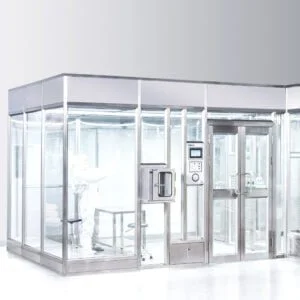
Buyers who reach RFQ without these three parameters defined will find that different vendors make different default assumptions—and that the performance gaps those assumptions create only surface during acceptance testing. For projects where modular cleanroom construction is being evaluated, the airflow configuration decisions above apply equally and must be resolved before modular layout is finalized.
Supplier Boundaries That Affect Commissioning
For ISO 5 and cleaner rooms, full-ceiling HEPA arrays with floor return are the standard approach to achieving unidirectional flow. The performance ceiling is the highest available, but the installation is demanding: ceiling structures must carry the load and seal of a continuous HEPA array, and preventing filter leakage across a full ceiling coverage area is technically difficult. If any element of that ceiling array leaks, the room’s classification is compromised at the point of leakage, and the defect may not be obvious until filter integrity testing is performed during commissioning—at which point remediation requires access to ceiling infrastructure that is already fully installed.
For smaller cleanrooms or less stringent classes, side-installed HEPA filters with a leakage-preventing distribution layer and grille represent a legitimate alternative that reduces ceiling complexity and shifts the supplier boundary. The commissioning obligation does not disappear; airflow distribution from a side installation must still be validated to confirm the room reaches its target class. But the structural demands on the ceiling are lower, and the scope of ceiling-level work that must be allocated between buyer and supplier in contract documentation is narrower.
| Configuration | Cleanliness Potential | Cost & Complexity | Commissioning Risk / Leakage Concern |
|---|---|---|---|
| Full-ceiling HEPA array with floor return (unidirectional) | Highest (suitable for ISO 5 and below) | High; complex ceiling structures | HEPA filter leakage difficult to prevent; commissioning risk high |
| Side-installed HEPA with leakage-preventing layer and grille (small cleanrooms) | Adequate for less stringent classes | Lower ceiling complexity; shifts supplier scope | Leakage risk reduced; airflow distribution must be validated |
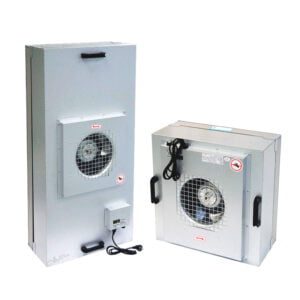
The practical problem is not that one configuration is universally better. It is that the choice between them must be made—and scope responsibility explicitly assigned—before suppliers are asked to quote. When room classification, terminal filtration, transfer devices, and supplier drawings are owned by different teams with no single party responsible for contamination control logic, the seams between those scopes become the primary source of commissioning delay. A full cleanroom package from a single supplier reduces interface exposure but requires that supplier to hold validated responsibility for the complete system. Split procurement reduces that risk only when the buyer directly owns HVAC design and validation responsibility; without that ownership, scope ambiguity between suppliers accumulates and resolves expensively during qualification rather than cheaply during design. Fan filter units, for example, must be specified with confirmed static pressure compatibility against the room’s ceiling plenum design—a dependency that frequently crosses supplier boundaries.
Acceptance Evidence Needed Before Release
Defining acceptance evidence before commissioning begins is not a documentation formality. It is the mechanism by which design decisions made upstream are confirmed to have worked as intended—and the point at which gaps in those upstream decisions become formally visible and expensive.
Three categories of evidence are most directly tied to the design inputs covered in this article. Self-purification capability—the room’s ability to recover from a contamination event to within class limits—is directly affected by return grille placement. A room configured with upper-return will take approximately twice as long to recover as one with bottom-return. If that design choice was treated as a layout detail rather than a performance input, the buyer will discover at commissioning that the room’s operational recovery time cannot meet the expected acceptance criterion without redesigning the return path. The doubling factor is a planning benchmark drawn from airflow research, not a value traceable to a named standard, but it is concrete enough to serve as a commissioning review check that should appear in qualification documentation.
Air distribution effectiveness—specifically the ratio of average particle concentration in the working area to concentration at the return grille—is a measurable indicator of how well the supply configuration dilutes contamination. Rooms built with a nonuniformly perforated diffusion plate show approximately a 20% lower ratio than rooms without one, meaning the diffusion plate measurably reduces the particle load in the working zone relative to what the return grille is seeing. This metric gives buyers a quantifiable basis for comparing as-built performance against design intent and for supporting the configuration decision in audit documentation.
| Acceptance Criterion | Key Metric / Evidence | Why It Matters |
|---|---|---|
| Self‑purification capability | Time to reduce particle load; compare upper‑supply/upper‑return vs bottom‑return modes (bottom return preferred) | Upper‑return mode doubles purification time; directly impacts operational recovery |
| Air distribution effectiveness | Average particle concentration in working area vs return grille; ratio with/without diffusion plate | 20% lower ratio with diffusion plate indicates better dilution and product protection |
| Contamination risk to product (WHO GMP 17.25) | Airflow visualization or particle dispersion test showing no particle migration from sources into critical zones | Regulatory requirement; airflow must protect product from operators, operations and machines |
WHO GMP item 17.25 establishes a specific regulatory criterion: airflow in the cleanroom must be demonstrated not to present a contamination risk, meaning particles from occupants, operations, and machines must not disperse into high-risk zones near the product. Meeting this requirement demands airflow visualization or particle dispersion testing that traces actual contamination transport paths, not just static particle counts. This is a criterion that must be planned into the validation protocol before commissioning begins—not added after a regulatory inspection identifies a gap. Missing any one of the three acceptance criteria above does not simply slow release; it creates an unresolved contamination risk that may be invisible until a regulatory review surfaces it.
The line between a cleanroom project that qualifies on schedule and one that does not is often a set of decisions that should have been fixed before equipment was specified. Confirming the use state, target classification, operating mode, airflow configuration, and acceptance evidence for each room before issuing an RFQ compresses the qualification timeline by preventing disputes that otherwise accumulate between suppliers, between design teams, and between commissioning evidence and regulatory expectations.
Before moving to RFQ, the practical check is simple: can each room in the project be described by its required cleanliness class in operating state, its air supply and return configuration, its transfer and personnel flow logic, and the specific evidence that will confirm it is ready for release? If any of those inputs is still open, the procurement process will close them expensively.
Frequently Asked Questions
Q: We are renovating an existing facility with legacy 209E specifications in the contract documents — do we need to reclass everything to ISO before going to RFQ?
A: No reclassification of the physical room is needed, but you must map each legacy class to its ISO equivalent before writing supplier scope. Federal Standard 209E was withdrawn in 2001, and suppliers working to current standards quote against ISO 14644-1 classifications. A Class 100 specification in a legacy document is ISO 5; Class 10,000 is ISO 7. Confirm those equivalencies in your RFQ brief so that both sides are evaluating the same cleanliness target and the same equipment consequences — particularly the ISO 5/6 boundary where unidirectional flow becomes mandatory.
Q: If the airflow concept and return grille placement are still being finalized by the HVAC engineer, is there any part of cleanroom procurement that can safely proceed in parallel?
A: Very little can proceed without design lock on airflow configuration. The air supply type, return grille position, and ceiling plenum arrangement directly determine which terminal filtration products are compatible, what static pressure fan filter units must be specified against, and whether a full-ceiling HEPA array or a side-installation approach is feasible. Procuring terminal filtration or transfer devices before those inputs are frozen is the specific failure mode that produces layout rework and delayed commissioning. The only procurement activity that can safely run in parallel is shortlisting suppliers and preparing the acceptance evidence framework — neither commits to hardware dimensions or interface specifications.
Q: At what point does splitting procurement across multiple suppliers become riskier than a single integrated package?
A: Split procurement becomes high-risk the moment the buyer cannot directly own HVAC design and validation responsibility. When room classification, terminal filtration, transfer devices, and supplier drawings are held by different teams with no single party accountable for the contamination control logic, scope gaps accumulate at the interfaces — and those gaps resolve during qualification rather than during design. A single integrated supplier reduces interface exposure but requires that supplier to hold validated responsibility for the complete system. If the buyer’s team has the engineering capacity to own HVAC design and validation directly, split procurement can be the safer commercial choice; without that internal ownership, the savings from split procurement are typically offset by commissioning delay costs.
Q: Does the WHO GMP 17.25 airflow visualization requirement apply to non-sterile pharmaceutical cleanrooms, or only to aseptic manufacturing?
A: WHO GMP 17.25 is explicitly tied to sterile product manufacturing contexts, so its direct regulatory force applies to aseptic environments. However, the underlying principle — that airflow must be demonstrated not to transport contamination from occupants or equipment into high-risk product zones — is increasingly expected by regulators across EU GMP Annex 1 and related frameworks whenever a contamination risk to the product exists. For non-sterile cleanrooms, the visualization requirement may not appear in the same regulatory language, but if your validation protocol cannot show that airflow patterns are protective, an inspection can still raise it as a contamination control gap. The safest approach is to plan airflow visualization into the qualification protocol regardless of sterility classification, then scope it proportionally to process risk.
Q: How should a buyer decide whether a modular cleanroom is a viable option, or whether a site-built room is the more appropriate choice for their project?
A: The decision turns on how stable the room’s classification, footprint, and use state are likely to be over the facility’s operating horizon. Modular construction offers faster commissioning timelines and reconfigurability, which has real value when production requirements or regulatory classifications may shift. Site-built construction is generally more appropriate when the cleanroom must integrate tightly with existing building infrastructure, when the target class demands ceiling structural loads that modular systems cannot support, or when long-term permanence outweighs flexibility. The airflow configuration decisions covered in this article — supply type, return placement, diffusion plate specification — apply equally to modular builds and must be resolved before modular layout is finalized, so modularity does not remove the upstream design obligation; it changes the physical assembly method, not the contamination control logic.