Facility managers face a critical decision point: selecting HEPA filtration systems that balance regulatory compliance, operational efficiency, and long-term cost management. The stakes are high. A poorly specified filter compromises product quality, employee safety, and regulatory standing. Yet most procurement teams lack a structured framework for evaluating filtration requirements against the 2025 regulatory landscape. Common mistakes include selecting filters based solely on initial cost, ignoring pressure drop implications, or mismatching filter grades to actual cleanliness requirements.
The urgency has escalated. New Cal/OSHA lead exposure limits took effect January 1, 2025, reducing permissible exposure from 50 to 10 micrograms per cubic meter. ISO 29463 has replaced legacy testing protocols with MPPS-based efficiency standards. These changes demand immediate reassessment of existing filtration infrastructure. Facilities operating under outdated specifications now face compliance gaps that expose them to regulatory penalties and operational disruptions. This guide provides the technical framework and decision criteria required to specify, install, and maintain HEPA systems that meet 2025 standards while optimizing total cost of ownership.
Understanding the 2025 HEPA Filter Standards and MERV Rating System
Defining HEPA Performance: Efficiency Metrics and Particle Size Targets
HEPA filters operate on a specific performance threshold: removal of 99.97% of particles at 0.3 microns under North American standards. This definition has served as the baseline for decades. However, contemporary standards have shifted focus to the Most Penetrating Particle Size, typically 0.1-0.2 microns where filtration efficiency reaches its lowest point. ISO 29463 establishes this MPPS-based classification method, requiring 99.95% minimum efficiency at this critical size range. The distinction matters. A filter that meets the 0.3-micron standard may underperform at MPPS, creating a vulnerability window for the particles most likely to penetrate the media.
The relationship between filtration efficiency and airflow resistance creates an unavoidable trade-off. Higher efficiency demands denser media, which increases pressure drop and energy consumption. Initial pressure drop ranges from 0.5 to 1.5 inches of water gauge for new filters. As particulate loading accumulates, pressure drop climbs to 2.0-3.0 inches before replacement becomes necessary. I’ve seen facilities underestimate this operational cost component, focusing exclusively on filter purchase price while ignoring the fan energy required to maintain airflow through increasingly restricted media.
Regional Classification Systems and Compliance Framework
Three primary standards govern HEPA classification globally. IEST-RP-CC001 establishes eleven filtration efficiency levels in North America. EN1822 classifies filters from H10 through U17 based on MPPS efficiency. ISO 29463 harmonizes international testing methodologies. These frameworks are not interchangeable without careful translation.
HEPA Filter Classification Standards by Region
| Standard | Efficiency Requirement | Particle Size Target |
|---|---|---|
| IEST-RP-CC001 (North America) | 99.97% minimum | 0.3 microns |
| ISO 29463 | 99.95% minimum | MPPS (0.1-0.2 microns) |
| EN1822 H13 | 99.95% minimum | MPPS (0.1-0.2 microns) |
| EN1822 H14 | 99.995% minimum | MPPS (0.1-0.2 microns) |
Note: MPPS represents the Most Penetrating Particle Size where filtration efficiency is lowest.
Source: IEST-RP-CC001.6, ISO 14644-3:2019
Healthcare facilities must comply with ASHRAE Standard 170-2021 for ventilation design. Pharmaceutical manufacturing falls under FDA guidelines with specific validation requirements. ISO 14644-3 defines testing methodologies for cleanroom environments, including HEPA filter validation protocols. Each regulatory framework imposes distinct documentation, testing frequency, and performance verification requirements that cannot be overlooked during specification.
HEPA Operational Parameters and Pressure Drop Thresholds
| Parameter | Specification | Application Impact |
|---|---|---|
| Initial pressure drop | 0.5-1.5 in. W.G. | Baseline fan energy consumption |
| Final pressure drop | 2.0-3.0 in. W.G. | Replacement trigger threshold |
| Temperature range | Up to 160°F (70°C) | Standard filter operational limit |
| Humidity tolerance | Up to 95% RH | Standard filter operational limit |
| Cleanroom classification | ISO Class 1-9 | Determines required efficiency grade |
Source: IEST-RP-CC001.6, ISO 14644-3:2019
Conducting a Facility-Site Assessment for Optimal HEPA Placement and Airflow
Evaluating Environmental Conditions and System Integration Points
Temperature and humidity parameters determine filter material selection. Standard HEPA filters tolerate temperatures up to 160°F and humidity up to 95% RH. Applications exceeding these thresholds require specialized high-temperature resistant media with steel frames instead of aluminum or engineered plastics. Corrosive environments demand material compatibility assessment to prevent premature filter degradation.
Bypass leakage represents the most common installation failure mode. Even minor gaps between the filter frame and housing compromise overall system efficiency. A 1% bypass negates the benefit of 99.97% filter efficiency, reducing actual system performance to 99% or lower. This vulnerability explains why proper sealing systems are non-negotiable in critical applications. Applications requiring HEPA filtration typically mandate specific testing and validation protocols to verify continued performance, with pharmaceutical manufacturing and healthcare requiring more frequent validation than general industrial environments.
Determining Terminal vs. AHU-Integrated Filtration Architecture
Two primary installation strategies exist: terminal HEPA filters installed at room-level supply points, or AHU-integrated filtration providing centralized protection. Terminal placement eliminates contamination from ductwork, ensuring that supply air remains pristine from filter to point of use. This configuration suits hospital operating rooms, bio-containment zones, and pharmaceutical sterile processing areas where contamination risk must be eliminated.
AHU-integrated systems centralize filtration at the air handling unit. This approach works when duct hygiene can be assured and room-level filtration is unnecessary. I’ve found this configuration more cost-effective for general manufacturing environments with moderate cleanliness requirements. The trade-off involves duct contamination risk versus filter quantity and maintenance accessibility.
Mapping Cleanroom Classifications to Required Filter Grades
ISO cleanroom classifications range from Class 1 (strictest) to Class 9 (least restrictive). Each classification imposes maximum allowable particle concentrations at specified sizes. Class 5 environments, common in pharmaceutical manufacturing, permit 3,520 particles of 0.5 microns per cubic meter. Meeting this threshold requires H13 or H14 filters depending on air change rates and room loading.
Airborne isolation areas present unique requirements. HEPA filters on exhaust ducts prevent contaminated air from recirculating into occupied spaces. This application prioritizes containment over supply air quality, yet demands the same rigorous installation and testing protocols. Pressure cascade design ensures directional airflow from clean to contaminated zones, with HEPA filtration serving as the final containment barrier.
Selecting the Right HEPA Filter: Media, Housing, and Configuration for Your Application
Understanding Media Construction and Fiber Technology
HEPA filter media consists of randomly arranged glass microfibers creating a tortuous path for particle capture. Three mechanisms enable filtration: interception, impaction, and diffusion. Larger particles impact directly onto fibers. Mid-range particles follow airstream trajectories that bring them within one radius of fiber surfaces. Submicron particles exhibit Brownian motion, diffusing randomly until fiber contact occurs.
Modern manufacturing techniques optimize fiber distribution and density gradients throughout media depth. This engineering creates higher surface loading capacity before pressure drop becomes excessive. The fiber arrangement determines both initial efficiency and service life—two parameters that directly impact total cost of ownership. Filters with poorly engineered media may meet initial efficiency specifications but load prematurely, requiring frequent replacement.
Matching Filter Grade to Application Cleanliness Requirements
Five primary filter grades serve industrial applications. H11 filters provide 95% efficiency on MPPS, suitable for general industrial environments with minimal cleanliness requirements. H12 filters reach 99.5% efficiency, serving light manufacturing and food processing applications. H13 filters achieve 99.95% efficiency, meeting pharmaceutical sterile zone and hospital isolation requirements. H14 filters deliver 99.995% efficiency for semiconductor fabrication and critical sterile processing. ULPA filters exceed 99.9995% efficiency for advanced semiconductor and nano-manufacturing applications.
HEPA Filter Media Grades and Application Matching
| Filter Grade | Efficiency | Typical Applications |
|---|---|---|
| H11 | ≥95% on MPPS | General industrial environments |
| H12 | ≥99.5% on MPPS | Light manufacturing, food processing |
| H13 | ≥99.95% on MPPS | Pharmaceutical sterile zones, hospital isolation |
| H14 | ≥99.995% on MPPS | Semiconductor fabrication, critical sterile processing |
| ULPA | ≥99.9995% on MPPS | Advanced semiconductor, nano-manufacturing |
Source: EN1822 Standard, ISO 29463
Over-specification carries cost penalties. Specifying H14 filters for applications that require only H13 performance increases both initial cost and operational energy consumption without delivering measurable benefit. The specification decision should align precisely with documented cleanliness requirements, not arbitrary safety factors.
Evaluating Frame Materials and Sealing System Options
Frame materials must withstand operational pressures while maintaining dimensional stability. Aluminum frames offer lightweight construction suitable for standard applications. Steel frames provide high-temperature resistance required for metalworking or 3D printing processes. Engineered plastic frames resist corrosive environments while minimizing weight for ceiling-mounted installations.
Filter Frame Materials and Performance Characteristics
| Frame Material | Temperature Resistance | Application Suitability |
|---|---|---|
| Aluminum | Standard to high | General purpose, lightweight requirements |
| Steel | High | High-temperature processes, metalworking, 3D printing |
| Engineered plastics | Standard | Corrosive environments, weight-sensitive installations |
Note: All materials must meet UL 900 flame-retardant rating for safety compliance.
Source: IEST-RP-CC001.6, ISO 29463
Sealing systems fall into two categories. Gasket seals use compressible materials that create a barrier when the filter is clamped into the housing. This design suits standard applications where minimal leakage is acceptable. Gel seals employ viscous compounds that flow into gaps, creating enhanced leak-tight performance required for critical applications. The high-efficiency air filters you specify should match sealing requirements to your application’s leak tolerance threshold.
Ensuring Compliance: Regulatory Requirements and Documentation for Industrial Facilities
Navigating the 2025 Cal/OSHA Lead Exposure Standards
New Cal/OSHA regulations effective January 1, 2025, impose dramatically reduced lead exposure limits. The Action Level dropped from 30 to 2 micrograms per cubic meter of air measured as an 8-hour time-weighted average. The Permissible Exposure Limit decreased from 50 to 10 micrograms per cubic meter. Abrasive blasting operations face a PEL of 25 micrograms per cubic meter until 2030. These thresholds are not aspirational targets—they are enforceable limits with citation and penalty consequences for non-compliance.
2025 Lead Exposure Limits for Industrial Facilities
| Regulation | Previous Limit | 2025 Limit | Effective Date |
|---|---|---|---|
| Cal/OSHA Action Level | 30 µg/m³ (8-hr TWA) | 2 µg/m³ (8-hr TWA) | January 1, 2025 |
| Cal/OSHA PEL (General) | 50 µg/m³ (8-hr TWA) | 10 µg/m³ (8-hr TWA) | January 1, 2025 |
| Cal/OSHA PEL (Abrasive Blasting) | 50 µg/m³ (8-hr TWA) | 25 µg/m³ (until 2030) | January 1, 2025 |
Note: Facilities must implement full unit HEPA-certified vacuums per EPA RRP regulations.
Source: Cal/OSHA General Industry Standard 5198, Cal/OSHA Construction Standard 1532.1
Facilities must implement engineering controls to reduce exposure to the lowest feasible level. HEPA filtration serves as a primary control for dust-generating operations involving lead-containing materials. EPA RRP regulations require full unit HEPA certification for vacuums—testing the entire vacuum assembly, not just the filter component. This distinction eliminates the compliance gap created by vacuums with HEPA filters that allow leakage around seals or through the exhaust system.
Establishing Documentation Protocols for Regulatory Verification
Compliance documentation creates an auditable record of system performance. Required records include filter installation dates, pressure drop monitoring data, integrity test results, and replacement documentation. Medical device manufacturers and pharmaceutical facilities face additional FDA requirements specifying retention periods and data format standards.
Monitoring protocols must track pressure drop trends and schedule replacements before performance degradation affects critical processes. I’ve implemented automated monitoring systems that trigger alerts when pressure drop approaches replacement thresholds, preventing unexpected system failures. Organizations must maintain detailed records of exposure monitoring, engineering controls, and employee training to demonstrate compliance during Cal/OSHA inspections.
Calculating Total Cost of Ownership for Investment Justification
Facilities implementing HEPA filtration must evaluate costs against the value of improved air quality, regulatory compliance, and risk mitigation. Initial costs include filter hardware, housing modifications, installation labor, and commissioning testing. Operational costs encompass energy consumption, filter replacements, and periodic integrity testing. Energy costs typically represent the largest component due to fan energy required to overcome filter pressure drop.
The compliance value proposition extends beyond avoiding citations. Improved air quality reduces employee health claims and absenteeism. Product quality improvements decrease rework and scrap rates. Medical device manufacturers face challenges in updating legacy cleanroom systems to meet stricter documentation standards, but the alternative—regulatory warning letters or product recalls—carries far greater financial consequences.
Installation and Sealing Protocols for Maximum Filtration Efficiency and System Integrity
Implementing Leak-Free Installation Procedures
Proper installation protocols eliminate bypass leakage and ensure optimal airflow distribution. Installation requirements include precise fit verification, leak testing, and airflow uniformity assessment. Professional installation and commissioning procedures are essential for applications where HEPA performance is critical to product quality or worker safety.
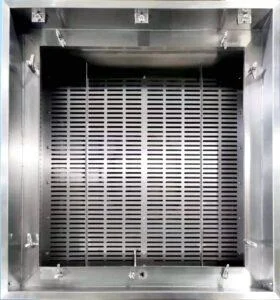
Filter housings must provide uniform clamping pressure around the entire filter perimeter. Uneven pressure creates gaps that allow bypass flow. Housing design should incorporate inspection ports for integrity testing without system disassembly. Access panels must seal completely when closed to prevent infiltration. These design features separate professional-grade installations from expedient solutions that appear adequate during initial inspection but fail during validation testing.
Selecting and Validating Sealing System Performance
Gasket seals serve standard applications where small amounts of bypass leakage remain acceptable. The gasket compresses when the filter clamps into the housing, creating a mechanical barrier. This design suits general manufacturing environments with moderate cleanliness requirements. Gel seal systems provide enhanced leak-tight performance required for critical applications. The gel compound flows into microscopic gaps, creating a fluid seal that accommodates slight dimensional variations between filter and housing.
HEPA Installation Seal Types and Testing Protocols
| Seal Type | Application | Testing Method | Testing Frequency |
|---|---|---|---|
| Gasket seal | Standard applications | DOP testing, photometer scanning | Annually |
| Gel seal | Critical leak-tight applications | Particle counting, photometer scanning | Annually |
Source: ISO 14644-3:2019, IEST-RP-CC001.6
Applications requiring enhanced leak-tight performance should specify gel seal systems regardless of incremental cost. The performance difference becomes critical in pharmaceutical sterile zones, semiconductor fabrication, and bio-containment applications where contamination events carry severe consequences.
Conducting Integrity Testing and Performance Validation
Three testing methods verify filter installation integrity. DOP testing introduces a challenge aerosol upstream of the filter and scans the downstream face with a photometer. Leak rates exceeding 0.01% indicate seal failures or media defects. Particle counting measures actual particle concentrations upstream and downstream, calculating system efficiency under operational conditions. Photometer scanning identifies leak locations by detecting elevated particle concentrations at specific points on the filter face.
Independent laboratory certification is required for full unit HEPA compliance under EPA RRP regulations. This testing verifies that the entire vacuum assembly—not just the filter—prevents particle escape. Filter integrity testing typically occurs annually in healthcare and pharmaceutical applications. General industrial facilities may extend intervals based on risk assessment and operational stability. I’ve found that annual testing provides the minimum verification frequency to maintain compliance confidence.
Proper system design and filter selection minimize energy consumption while maintaining required performance levels. Oversized filters reduce face velocity and pressure drop. Multiple smaller filters in parallel configuration may deliver lower total pressure drop than a single large filter. These design optimizations reduce fan energy consumption, lowering operational costs throughout filter service life.
Developing a Proactive Maintenance, Monitoring, and Replacement Strategy
Implementing Continuous Pressure Drop Monitoring
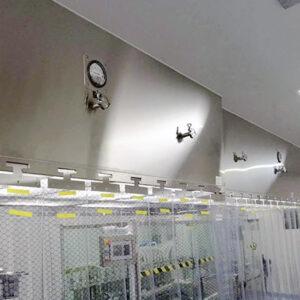
HEPA filter maintenance focuses primarily on monitoring pressure drop and scheduling timely replacement. Differential pressure gauges measure resistance across the filter, indicating particulate loading. Continuous monitoring enables trend analysis that predicts replacement timing before performance degradation occurs. Automated systems integrate with building management platforms, generating alerts when pressure drop approaches replacement thresholds.
Initial pressure drop establishes the baseline for new filters. As particulate accumulates in the media, airflow resistance increases. Replacement becomes necessary when pressure drop reaches 2.0 to 3.0 inches of water gauge—the point where energy consumption and airflow reduction outweigh the cost of new filters. Waiting beyond this threshold reduces system airflow, compromising room air change rates and potentially violating cleanroom classification requirements.
Establishing Replacement Timing and Procurement Protocols
HEPA filters cannot be cleaned and reused. Attempts to vacuum or wash the media damage fiber structure, creating leakage paths that eliminate filtration efficiency. Dirty filters require complete replacement—a reality that demands proactive procurement planning to prevent emergency purchases at premium prices.
HEPA Filter Maintenance and Replacement Schedule
| Monitoring Parameter | Inspection Frequency | Replacement Trigger | Industry Variance |
|---|---|---|---|
| Differential pressure | Continuous/Weekly | 2.0-3.0 in. W.G. final pressure | Application-dependent |
| Visual inspection | Quarterly | Physical damage, seal degradation | Risk-based |
| Filter integrity testing | Annually | Failed DOP test, efficiency drop | More frequent for pharma/healthcare |
| Standard replacement interval | 6-12 months | Time-based or condition-based | Particle loading dependent |
Note: HEPA filters cannot be cleaned; replacement is mandatory when performance thresholds are breached.
Source: ISO 14644-3:2019, FDA Guidelines
Replacement scheduling varies depending on application and particle loading rates. Facilities with high dust generation may require replacement every six months. Clean manufacturing environments may extend service life to twelve months or longer. Healthcare applications typically require more frequent validation than general industrial applications, driven by patient safety considerations and regulatory oversight intensity.
Integrating Predictive Maintenance and Performance Analytics
Integration of monitoring technologies enables real-time performance tracking and predictive maintenance scheduling. Historical pressure drop data reveals patterns that indicate abnormal loading rates—potential evidence of upstream filtration failure or process changes increasing dust generation. Sudden pressure drop increases suggest media damage or seal failure requiring immediate investigation.
Scheduled filter inspections occur quarterly or as needed based on operational conditions. Visual inspection identifies physical damage, seal degradation, or housing corrosion that could compromise performance. These inspections supplement pressure drop monitoring, catching issues that do not immediately affect airflow resistance. I’ve prevented system failures by identifying small seal gaps during quarterly inspections, addressing problems before they escalated to validation test failures.
Facilities must establish monitoring protocols that track pressure drop trends and schedule replacements before performance degradation affects critical processes. Energy costs typically represent the largest component of HEPA filter total cost of ownership due to increased fan energy required to overcome filter pressure drop. This reality emphasizes the importance of optimized replacement timing—not too early when filters remain effective, but before energy waste and performance compromise create greater costs than new filters.
The 2025 regulatory landscape demands immediate action. Facilities operating under legacy specifications now face compliance gaps that expose them to citations, operational disruptions, and quality failures. Your implementation priorities should focus on three areas: validating that current filter specifications meet 2025 standards, establishing documented monitoring protocols that demonstrate ongoing compliance, and developing procurement relationships that ensure filter availability without emergency premium pricing.
Need professional assistance specifying, installing, or validating HEPA filtration systems that meet 2025 compliance requirements? YOUTH delivers engineered filtration solutions with complete documentation, testing, and technical support for industrial facilities.
Contact our filtration engineering team at [email protected] to schedule a facility assessment and receive specification recommendations aligned with your cleanliness requirements and regulatory obligations.
Frequently Asked Questions
Q: What is the practical difference between the 99.97% efficiency at 0.3 microns and the Most Penetrating Particle Size (MPPS) metrics for HEPA filters?
A: The 99.97% at 0.3 microns is a traditional benchmark, but the MPPS (typically 0.1-0.2 microns) represents the particle size most likely to penetrate the filter and is therefore a more rigorous efficiency measure. Modern international standards like ISO 29463 classify HEPA filters based on their efficiency at the MPPS, providing a more accurate performance assessment for critical applications where even minimal penetration is unacceptable.
Q: How do I decide between an AHU-integrated HEPA filter and a terminal HEPA filter at the room supply?
A: The choice depends on ductwork integrity and application criticality. Terminal HEPA filters installed at the room level eliminate the risk of contamination from downstream ductwork, which is essential for hospital operating rooms and bio-containment zones. Conversely, AHU-integrated filtration is suitable for centralized systems where duct hygiene is assured and validated, as outlined in cleanroom testing methodologies per ISO 14644-3.
Q: What are the key implications of the updated 2025 Cal/OSHA lead standards for HEPA system selection and documentation?
A: The updated standards drastically reduce the Permissible Exposure Limit (PEL) to 10 micrograms per cubic meter, mandating more robust engineering controls. This requires facilities to select HEPA systems with higher efficiency ratings and maintain meticulous documentation of exposure monitoring, filter maintenance, and employee training to demonstrate compliance with Cal/OSHA General Industry Standard (5198 Lead).
Q: When should a facility specify gel seals over standard gasket seals for HEPA filter installation?
A: Gel seals are necessary for critical applications where enhanced leak-tight performance is non-negotiable, such as in pharmaceutical sterile zones or semiconductor fabrication. While gasket seals suffice for standard industrial applications, gel seals provide a superior seal that minimizes bypass leakage, a requirement validated by stringent integrity testing methods defined in ISO 14644-3.
Q: What is the most effective strategy for scheduling HEPA filter replacements to balance cost and performance?
A: The most effective strategy is proactive monitoring of pressure drop rather than relying on a fixed time schedule. Filters should be replaced when the pressure drop approaches the final specified limit of 2.0 to 3.0 inches of water gauge, as operating beyond this point significantly increases energy consumption and risks performance degradation. This approach is supported by the framework for ongoing monitoring in ISO 14644-3.
Q: How does the H13 to H14 filter grade selection impact operational costs and compliance in a pharmaceutical sterile zone?
A: Selecting an H14 filter (≥99.995% efficiency) over an H13 (≥99.95%) provides a higher assurance of cleanliness but results in a greater initial pressure drop and higher ongoing energy costs. The decision must be based on the required ISO cleanroom classification for the specific process, as defined by standards like EN1822, to ensure compliance without incurring unnecessary operational expenses.
Related Contents:
- HEPA Filter Testing: Ensuring Optimal Performance
- HEPA Filter Systems | Air Handling Equipment Specifications
- GMP Compliant Air Filters | FDA Requirements Cleanroom Validation
- HEPA Filters in Biosafety Cabinets: A Deep Dive
- Cleanroom Air Filter Performance Metrics | Technical Specifications
- HEPA vs ULPA Filters: Choosing the Right Option
- HEPA Filter Efficiency: Maximizing Air Purification
- The Complete Fan Filter Unit Guide for Cleanroom Managers: Technical Selection, Installation, and Performance Optimization 2025 Edition
- HEPA Filter Efficiency Testing | Performance Metrics Guide