For professionals in medical device manufacturing, pharmaceutical production, and sterile services, selecting a low-temperature sterilization method involves a critical technical balancing act. The operational temperature range is not just a specification; it defines material compatibility, process efficacy, and facility feasibility. A common misconception is that a lower temperature universally guarantees safety for all sensitive materials, overlooking the complex interplay between heat, chemical kinetics, and load characteristics that ultimately determines success or failure.
Understanding this balance is paramount now. The proliferation of complex, miniaturized, and heat-sensitive medical devices—from polymer-based implants to integrated electronics—demands sterilization that doesn’t compromise design integrity. Simultaneously, regulatory scrutiny on validation requires a multivariate approach, where temperature is one of several interlinked critical process parameters that must be precisely controlled and documented to ensure both sterility assurance and product safety.
The Core VHP Sterilization Temperature Range Explained
Defining the Operational Envelope
Vaporized Hydrogen Peroxide sterilization is fundamentally characterized by its low-temperature operational band, typically 28°C to 40°C (82°F to 104°F) under deep vacuum conditions. This range is the technical cornerstone that enables the processing of materials incompatible with steam sterilization. The core biocidal exposure consistently occurs within this window, establishing VHP’s primary market niche for heat-sensitive devices. Transient peaks may occur during phases like aeration, but these do not represent the sterilizing phase.
Implications for Facility and Energy Design
This “room temperature” operation provides significant strategic advantages beyond the chamber. It drastically reduces energy consumption compared to high-heat methods, as there is no need for large steam boilers or high-power heating elements. This Evidence-Based Insight on Facility Integration Flexibility means VHP systems can be deployed in spaces not originally designed for sterilization equipment, lowering infrastructure barriers and enabling more flexible facility planning. In my experience, this flexibility often becomes the deciding factor for retrofits or multi-purpose cleanrooms.
Standardized Parameters for Consistent Results
The defined temperature range is not arbitrary but is rooted in the physical properties of hydrogen peroxide vapor and its interaction with microorganisms. Adherence to this range, as outlined in standards like ISO 22441:2022, ensures process repeatability and safety. It standardizes the core advantage of VHP: effective microbial lethality without thermal degradation of sensitive components.
| Operational Phase | Typical Temperature Range | Key Implication |
|---|---|---|
| Core Biocidal Exposure | 28°C to 40°C (82°F to 104°F) | Heat-sensitive material compatibility |
| Transient Peak (e.g., Aeration) | Up to 50-55°C | Not the primary sterilizing phase |
| Facility Integration | “Room temperature” operation | Lower energy consumption |
Source: ISO 22441:2022 Sterilization of health care products — Low temperature vaporized hydrogen peroxide. This standard specifically defines requirements for low-temperature VHP processes, establishing the foundational temperature parameters for safe and effective sterilization, which inherently includes the operational range.
How Temperature Directly Impacts Microbial Kill Kinetics
The Reaction Rate Accelerator
Within the validated VHP range, temperature acts as a powerful accelerator of microbial inactivation kinetics. Increased thermal energy enhances the reaction rate between hydrogen peroxide radicals and critical cellular components like proteins, lipids, and DNA. This relationship can allow for shorter exposure times to achieve the required Sterility Assurance Level (SAL), such as SAL 10⁻⁶. However, this is not a simple linear relationship and must be empirically validated for each specific process.
The Multivariate Efficacy Equation
A critical, often overlooked detail is that efficacy is a multivariate equation, not just temperature. Temperature is one of five interlinked critical process variables: exposure time, VHP concentration, humidity, and vacuum level are equally decisive. Optimizing a cycle requires a holistic validation approach. Adjusting one parameter, like raising temperature to accelerate kinetics, may necessitate compensatory changes in others, such as reducing exposure time or modulating concentration to prevent material stress or uneven distribution.
Balancing for Optimal Cycle Development
The goal is to find the most efficient balance within the validated envelope. A higher temperature may shorten cycle time, boosting throughput, but it pushes against the upper compatibility limits of some polymers. The development process involves mapping this relationship to identify the optimal set point that delivers the target SAL in the shortest time without compromising load integrity. Industry experts recommend a risk-based approach that prioritizes material safety when in doubt, as a failed biocompatibility test is costlier than a slightly longer cycle.
| Process Variable | Impact on Sterilization | Typical Optimization Goal |
|---|---|---|
| Increased Temperature | Accelerates microbial inactivation kinetics | Shorter exposure time for SAL 10⁻⁶ |
| Exposure Time | Directly contributes to lethality | Balanced against temperature |
| VHP Concentration | Critical for radical availability | Managed with temperature & humidity |
| Humidity (RH) | Affects condensation behavior | Optimized for micro-condensation |
Source: ISO 14937:2009 Sterilization of health care products — General requirements. This standard establishes the framework for characterizing sterilizing agents and validating processes, emphasizing that efficacy (e.g., achieving a target SAL) is a multivariate function of interlinked parameters like temperature, time, and concentration.
Vapor Generation, Stability, and Optimal Temperature Control
Precision at the Flash Point
The sterilization process begins with precise temperature management at the vapor generation stage. The generator must flash-evaporate liquid hydrogen peroxide into a true, “dry” vapor. The temperature at this flash point is a critical control parameter distinct from chamber temperature. If too low, vaporization is incomplete, leading to liquid carryover and inefficient sterilization. If too high, it risks premature decomposition of H₂O₂ into water and oxygen before it contacts surfaces, drastically reducing biocidal availability.
Governing Vapor Concentration and Distribution
Temperature directly governs the saturation vapor pressure of hydrogen peroxide, which influences the maximum achievable VHP concentration in the chamber. Advanced systems precisely control this to ensure stable vapor quality. Furthermore, temperature gradients within the chamber affect vapor distribution and condensation behavior. Uniform temperature is essential to prevent local “cold spots” where excessive condensation can dilute sterilant or “hot spots” that may stress materials.
Ensuring Process Consistency
Consistent vapor generation and chamber conditions are non-negotiable for repeatable results. We compared systems with basic versus advanced thermal control loops and found the latter provided significantly more consistent biological indicator kill rates across multiple cycles, directly impacting validation confidence and routine control. This control ensures effective distribution, which is paramount for sterilizing complex loads with lumens or shielded areas.
| Control Point | Temperature Function | Consequence of Deviation |
|---|---|---|
| Flash Evaporation | Creates “dry” VHP vapor | Low temp: Inefficient vaporization |
| H₂O₂ Stability | Prevents premature decomposition | High temp: Reduced biocidal availability |
| Saturation Pressure | Governs max VHP concentration | Impacts sterilant distribution uniformity |
| Chamber Distribution | Ensures uniform micro-condensation | Critical for complex load efficacy |
Source: Technical documentation and industry specifications.
Material Compatibility vs. Efficacy: The Temperature Balance
The Primary Constraint of Compatibility
The low-temperature range is fundamentally chosen to ensure broad material compatibility, protecting polymers, electronics, and complex assemblies. However, this presents a critical constraint. Pushing temperature to its upper limit to enhance kill kinetics must be carefully validated against potential stress on plastics, adhesives, or elastomers. This balance is a core activity in cycle development, where the goal is to maximize efficacy without inducing cracking, clouding, or altered mechanical properties.
Incompatible Materials Regardless of Temperature
It is crucial to understand that temperature is just one aspect of compatibility. Cellulose-based materials (e.g., paper, cardboard, certain fabrics) and highly absorbent materials are incompatible with VHP at any temperature due to their tendency to absorb and decompose hydrogen peroxide, creating a residual and efficacy challenge. This Material Compatibility Present a Critical Constraint must be addressed at the product design and packaging stage, not during sterilization validation.
The Need for Early-Stage Integration
The most common mistake is treating sterilization as a final step rather than an integrated design requirement. Early-stage R&D must include sterilization compatibility testing. Selecting materials that can withstand the entire VHP parameter range—temperature, chemical exposure, and vacuum—ensures a viable pathway to market and avoids costly redesigns later. Adherence to guidelines like ANSI/AAMI ST58:2013 provides a framework for this testing.
| Material Category | VHP Temperature Suitability | Primary Constraint |
|---|---|---|
| Polymers & Electronics | Compatible (28-40°C range) | Upper limit stress potential |
| Cellulose-based Materials | Incompatible (any temperature) | High absorbency |
| Adhesives & Assemblies | Requires validation | Thermal & chemical stress |
| Load Conditioning | Manages item start temperature | Prevents excessive condensation |
Source: ANSI/AAMI ST58:2013 Chemical sterilization and high-level disinfection in health care facilities. This guideline covers the safe use of chemical sterilants like VHP, which includes critical considerations for material compatibility to prevent device damage during processing.
The Role of Load Characteristics and Temperature Uniformity
The Load as an Active Thermal Mass
The load itself is not passive; it is an active thermal mass that significantly influences process dynamics. Dense, metallic, or high-mass items act as heat sinks, cooling their local microenvironment. This can alter local condensation behavior. If items are too cold relative to the incoming vapor, excessive “wet” condensation occurs, diluting the sterilant and potentially causing damage. If items are too warm, the necessary micro-condensation may be insufficient for effective microbial kill.
Optimizing Through Conditioning
The cycle’s conditioning phase—managing load temperature and humidity prior to injection—is critical for optimizing this interaction. The goal is to bring the entire load to a uniform, optimal starting temperature that promotes consistent micro-condensation of VHP across all surfaces, including within lumens and under shielding. This phase is often where cycles fail validation for complex or densely packed loads.
Validating for Complex Geometries
Ensuring temperature uniformity is especially challenging for loads containing long, narrow lumens or densely packaged kits. These scenarios require application-specific validation using strategically placed chemical and biological indicators. The validation must prove that the coldest, most challenging point within the load still receives the minimum required sterilant exposure. This often means that the cycle parameters developed for a simple load are insufficient for a complex one, necessitating re-validation.
Validating and Optimizing Your VHP Cycle Parameters
Defining the Multivariate Lethality Model
Validation is the process of defining and proving a set of parameters that deliver a safe, effective, and repeatable cycle for a specific load. It moves beyond single-factor adjustments to establish a multivariate lethality model. Temperature, exposure time, concentration, humidity, and vacuum are not independent knobs to turn; they are interlinked variables in an equation where the output is the achieved SAL.
The Cycle Development Balancing Act
Cycle development involves systematically balancing these parameters. For instance, lowering the temperature to protect an ultra-sensitive material may require compensating with a longer exposure time or a slightly higher VHP concentration to achieve the same lethality. The optimization goal is to find the most efficient combination—often the shortest cycle time—that still meets all safety and efficacy criteria for the product’s worst-case load.
A Rigorous, Holistic Approach
This rigorous approach is non-negotiable for regulatory compliance and patient safety. It requires a formal, documented process following standards like ISO 14937:2009, which provides the framework for characterization and validation. The output is a master process specification that defines the operating windows for each parameter, providing the basis for routine monitoring and control to ensure every cycle released is effective.
Key Technical Considerations Beyond Basic Temperature Ranges
Deployment and Economic Models
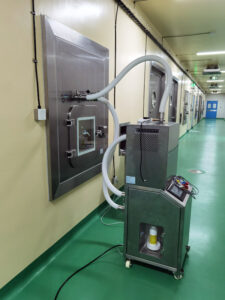
The technical evaluation extends beyond chamber specs. The “Generator” Model Shifts CapEx to OpEx and Enables Scalability. A centralized, modular VHP generator can service multiple chambers or be used for room decontamination, offering operational flexibility and different economic models compared to dedicated, single-chamber units. This impacts facility design and long-term cost of ownership.
Safety and Operational Features
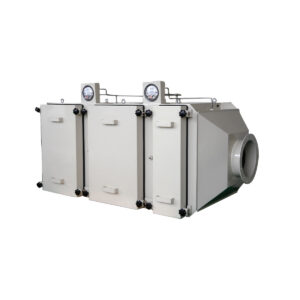
Integrated Residual Management is a Built-In Process Phase. Advanced systems use catalytic converters or cold plasma technology to break down residual H₂O₂ into water and oxygen at the end of the cycle, simplifying aeration, enhancing operator safety, and easing environmental reporting. Furthermore, the Equipment Spectrum Reveals Application Segmentation. Choosing between a benchtop sterilizer for a clinic and a large generator for manufacturing terminal sterilization depends on throughput, load size, and facility integration needs.
Data Integrity and Traceability
Modern regulatory expectations make Data Logging and Connectivity Become Key Differentiators. Features like RFID load tracking, parametric release capabilities, and seamless data export to Quality Management Systems (QMS) are critical for audit trails and demonstrating process control. These features transform the sterilizer from a utility into a data-generating node in a quality system. For operations requiring precise environmental control, selecting a portable VHP generator with advanced parameter control is often essential for validation success.
| Consideration | Technical/Operational Impact | Business Implication |
|---|---|---|
| Generator Model (Modular) | Services multiple chambers/spaces | Shifts CapEx to OpEx; enables scalability |
| Residual Management | Catalytic breakdown to H₂O & O₂ | Built-in safety & simpler reporting |
| Equipment Spectrum | Benchtop to room decontamination | Reveals application segmentation |
| Data Logging & RFID | Audit trails & parameter tracking | Key for QMS integration & compliance |
Source: Technical documentation and industry specifications.
Implementing an Effective Low-Temperature Sterilization Process
Aligning with Market Drivers
Successful implementation starts with a strategic view. VHP’s growth is fueled by the Market Growth Fueled by Miniaturization and Complexity of Medical Devices. Implants, drug-device combinations, and sensitive optics demand low-temperature solutions that traditional methods cannot provide. This trend makes VHP a future-proof investment for companies developing next-generation devices.
Navigating Converging Standards
Implementers must also navigate the Convergence of Pharma and Medical Device Manufacturing Standards. VHP is used both for terminal sterilization of devices and for decontaminating pharmaceutical isolators and filling lines. This means equipment and validation approaches may need to satisfy both GMP (Good Manufacturing Practice) and medical device QMS requirements, influencing selection criteria and documentation practices.
Building a Lifecycle Strategy
The final implementation step is building a lifecycle strategy. This includes selecting a technology partner that supports not just initial validation but also ongoing service, requalification, and potential process changes. It means training personnel on the multivariate nature of the process, so they understand that a deviation in one parameter (like an unusual load temperature) can impact the entire cycle’s efficacy. The process must be designed for the entire product portfolio lifecycle, from R&D to commercial production.
The operational temperature range of 28-40°C defines VHP’s core advantage but is merely the starting point for validation. The critical decision is to treat sterilization as a multivariate system where temperature, time, concentration, humidity, and vacuum are interlocked. Prioritize early-stage material compatibility testing to avoid downstream constraints, and select equipment based not only on chamber specs but on scalability, residual management, and data integrity features that support quality system integration.
Need professional guidance on implementing a validated low-temperature sterilization process? The technical team at YOUTH can provide application-specific insights to help you balance efficacy with material compatibility. For a detailed discussion on your specific requirements, you can also Contact Us.
Frequently Asked Questions
Q: What is the standard operational temperature range for VHP sterilization, and why is it so narrow?
A: VHP systems operate within a narrow range of 28°C to 40°C (82°F to 104°F) under vacuum. This low-temperature band is the defining technical feature that enables the sterilization of heat-sensitive materials like plastics and electronics without damage. The range balances effective vapor generation with broad material compatibility. This means facilities processing sensitive medical devices should prioritize this parameter to ensure both efficacy and product integrity, as detailed in the process requirements of ISO 22441:2022.
Q: How does chamber temperature affect the microbial kill rate in a VHP cycle?
A: Higher temperatures within the validated range accelerate microbial inactivation kinetics, potentially allowing for shorter exposure times to achieve a Sterility Assurance Level (SAL) of 10⁻⁶. Temperature increases the reaction rate between hydrogen peroxide radicals and cellular components. However, if you raise the temperature to shorten cycle time, you must validate this change holistically, as it may require compensatory adjustments to other parameters like concentration or humidity to maintain efficacy and material safety.
Q: Why is precise temperature control critical during the VHP vapor generation phase?
A: The generator must flash-evaporate liquid H₂O₂ into a true “dry” vapor, and temperature is the key control parameter. If temperature is too low, vaporization is incomplete; if too high, it risks premature decomposition of the sterilant into water and oxygen before it reaches the load. This precise control ensures stable vapor quality and effective distribution. For reliable process performance, you should verify your generator’s flash-point temperature control specs during vendor evaluation.
Q: When developing a VHP cycle, how do you balance sterilization efficacy with material compatibility?
A: Cycle development requires balancing the desire to use higher temperatures for faster microbial kill against the risk of stressing sensitive device components like polymers or adhesives. This balance is a fundamental, multivariate optimization problem governed by standards like ISO 14937:2009. For projects involving novel or complex devices, plan for early-stage R&D integration to test compatibility across the full parameter space, not just temperature, to avoid costly redesigns later.
Q: How do load characteristics influence temperature uniformity and process efficacy?
A: Dense, high-mass items act as heat sinks, cooling local environments and affecting how vapor condenses on surfaces. This can lead to uneven sterilization or excessive wet condensation. The cycle’s conditioning phase manages load temperature and humidity to optimize this “micro-condensation.” If your loads are consistently varied or contain dense packaging and lumens, you must conduct application-specific validation to ensure temperature uniformity and consistent microbial kill throughout the chamber.
Q: What are the key technical factors beyond chamber temperature to consider when selecting a VHP system?
A: Look beyond basic specs to factors like modular generator design for operational scalability, integrated catalytic converters for residual management, and robust data logging for audit trails. The equipment spectrum ranges from benchtop units to room decontamination systems, so technical specs must match the specific use case. If your operation requires audit readiness and integration with a Quality Management System, prioritize systems with advanced data logging and connectivity features as a key differentiator.
Q: How should we approach the validation of VHP cycle parameters for a new medical device load?
A: Validation defines the proven set of parameters—temperature, exposure time, concentration, humidity, and vacuum—that deliver a safe and repeatable cycle for a specific load. It is a holistic exercise; adjusting one parameter, like lowering temperature for material safety, necessitates compensating changes in others. This rigorous approach is non-negotiable for compliance. For any new device introduction, budget for comprehensive validation testing to establish this multivariate parameter set, following guidelines in ANSI/AAMI ST58:2013.
Related Contents:
- Optimal VHP Concentrations: Sterilization Efficiency Guide
- VHP Chamber Sterilization: 2025 Ultimate Guide
- VHP Pass Box 6-Log Reduction: Validation Methods & Data
- VHP Chamber Cycle Development: 7 Key Steps
- VHP Passbox Validation: Ensuring Sterilization Efficacy
- Medical Device VHP Sterilization: Packaging Compatibility
- VHP Chamber Temperature Control: Top 5 Methods
- VHP-Compatible Materials: Comprehensive 2025 List
- VHP Chamber Material Compatibility: 2025 Guide