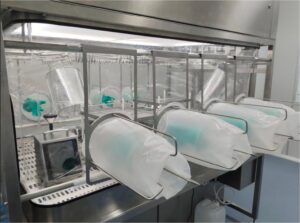
What Is a Cleanroom Chemical Shower?
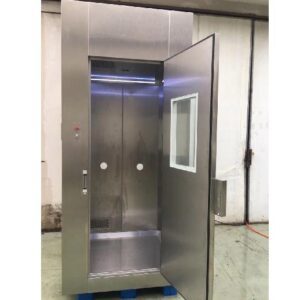
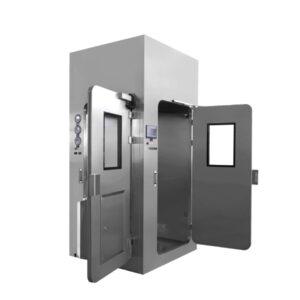
Cleanroom chemical showers are controlled decontamination chambers designed for facilities where personnel may carry hazardous residues, biological contamination, chemical aerosols, or process contaminants between cleanroom zones. Unlike a standard emergency shower, a cleanroom chemical shower must support both personnel safety and contamination control: it helps remove hazardous substances from protective clothing or positive-pressure suits while also protecting adjacent clean areas from uncontrolled spread.
The core purpose is straightforward: when personnel may be exposed to hazardous or corrosive materials, the facility needs a fast, reliable way to rinse, dilute, or remove contamination before it spreads further. In cleanroom and biosafety projects, however, the design question goes beyond emergency access alone. The shower room must be matched to the facility’s hazard profile, containment level, gowning process, chemical compatibility, wastewater route, and validation expectations.
More Than a Standard Emergency Shower
A well-designed chemical shower room should be evaluated as an engineered system, not just a plumbing fixture. Important design points include chamber size, two-person use requirements, positive-pressure suit compatibility, chemical dosing or rinse sequence, hands-free activation, emergency stop access, door interlocking, anti-slip flooring, corrosion-resistant materials, lighting, alarms, ventilation, and drainage segregation.
For facilities handling hazardous chemicals or biological agents, decontamination planning should also consider how personnel enter, shower, dry, and exit without transferring contamination into adjacent spaces. This is especially important in pharmaceutical manufacturing, biotechnology laboratories, animal facilities, high-containment laboratories, chemical processing areas, and cleanroom suites where contamination control and personnel protection must work together.
Chemical Shower Room Inspection Checklist
| Inspection Item | Recommended Check |
|---|---|
| Nozzles | Confirm they are not blocked, damaged, misaligned, or producing uneven spray |
| Drainage | Check for standing water, slow drainage, odor, residue, or blocked floor drains |
| Doors and Interlocks | Confirm doors close fully and interlocks follow the intended cycle logic |
| Emergency Controls | Test emergency stop, manual release, alarms, and external override functions |
| Lighting and Signage | Confirm instructions, warning labels, and visibility are clear for suited users |
| Floor Surface | Check for slip risk, cracks, chemical damage, or areas that are difficult to clean |
| Seals and Gaskets | Inspect for swelling, corrosion, cracking, or chemical degradation |
| Ventilation | Confirm airflow, exhaust, and pressure relationships match the facility procedure |
| Records | Review maintenance logs, user training records, inspection forms, and corrective actions |
How Does a Cleanroom Chemical Shower Work?
A cleanroom chemical shower works by creating a controlled decontamination step between a contaminated or potentially contaminated area and a cleaner or safer zone. Personnel enter the chamber, the doors are controlled by the system logic, and a programmed spray or rinse sequence is activated. Depending on the facility requirements, the shower may use water, chemical disinfectant, neutralizing agent, rinse water, air drying, or a combination of these steps.
The process should be defined before equipment selection. A shower designed for routine suit decontamination may use a repeatable cycle with fixed spray times and controlled drainage. A shower designed for emergency chemical exposure may need immediate hands-free activation, high water flow, simple operation, and unobstructed access. A shower used in a containment facility may need interlocked doors, pressure control, wastewater collection, and documented cycle records.
Typical Personnel Decontamination Sequence
A common personnel decontamination sequence includes entry, door lock confirmation, shower activation, chemical or water spray, dwell or contact time, rinse, optional air purge or drying, and controlled exit. The exact sequence depends on the risk profile of the facility.
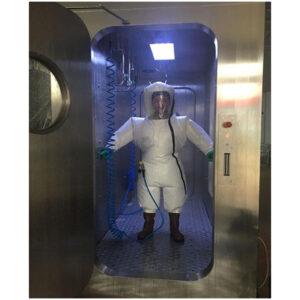
For positive-pressure protective suits, the spray pattern must reach critical areas such as the front torso, arms, gloves, legs, boots, back surfaces, and connection points. If two operators may use the chamber at the same time, the chamber size, nozzle arrangement, drainage capacity, and emergency access must all support two-person operation without reducing decontamination coverage.
Box or Chamber Disinfection Mode
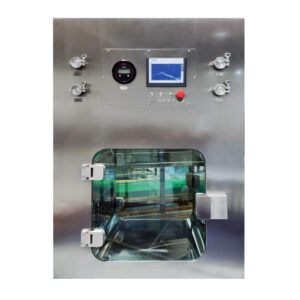
Some facilities also require a separate chamber or box disinfection process. In this mode, personnel may enter the chemical shower system in batches, while the chamber itself is disinfected at intervals. This helps reduce residue accumulation, supports repeatable use, and prevents the decontamination room from becoming a secondary contamination source.
A good design should make this process easy to operate and document. The system should support defined cycle parameters, clear operator prompts, simple cleaning access, and maintenance procedures that do not require unnecessary exposure to contaminated surfaces.
Key Design Requirements for Chemical Shower Rooms
Chemical shower room design should start with the risk assessment. The room must be matched to the chemicals, biological agents, process residues, PPE type, user behavior, emergency scenarios, and cleanroom classification strategy. A generic shower layout is rarely enough for a high-risk cleanroom or biosafety project.
The most important design question is not only “Can the shower spray water?” but “Can the system reliably remove or reduce the expected contamination without creating new hazards?” This includes chemical compatibility, drainage route, ventilation, operator safety, and the ability to clean and inspect the system over time.
Chamber Size and Personnel Capacity
The chamber must provide enough space for personnel to stand, turn, and expose all relevant suit surfaces to the spray pattern. If the facility uses bulky positive-pressure protective suits, the chamber should be sized around real suit dimensions rather than standard body dimensions.
For facilities that require two-person simultaneous use, the layout must allow two suited operators to enter, complete the cycle, and exit without blocking spray coverage or emergency controls. This affects door width, chamber depth, nozzle placement, floor slope, lighting, and communication features.
Spray Coverage and Nozzle Arrangement
Nozzle placement determines whether the shower actually reaches the surfaces that matter. Poorly placed nozzles can leave shadow zones behind arms, under folds, around boots, or near suit connectors. A high-quality chemical shower design should consider full-body coverage, overlapping spray zones, and the ability to reach both front and back surfaces.
Spray pressure should be strong enough to remove contamination but not so aggressive that it damages suits, forces liquid into connections, or creates excessive aerosol. The goal is controlled decontamination, not uncontrolled splashing.
Materials and Chemical Compatibility
Chemical shower rooms should be built from materials that resist corrosion, cleaning agents, disinfectants, and repeated wet operation. Stainless steel, chemical-resistant panels, sealed joints, anti-slip flooring, and corrosion-resistant hardware are commonly considered.
Material selection should match the decontamination chemistry. Some disinfectants, neutralizers, or cleaning agents may affect plastics, gaskets, coatings, sensors, drains, or door seals. Before final specification, the facility should review the chemicals used in both normal operation and emergency scenarios.
Drainage and Wastewater Management
Drainage is one of the most important and often underestimated parts of chemical shower design. Wastewater from the shower may contain hazardous chemical residues, biological contamination, disinfectant, neutralizer, or process materials. It should not be routed casually into a general drain without confirming local regulations and facility procedures.
Depending on the hazard, the system may require segregated drainage, collection tanks, neutralization, effluent treatment, sampling points, or controlled discharge. The floor should slope properly, avoid standing water, and support easy cleaning after each cycle.
Safety Features That Matter
A chemical shower room must be safe to use under stress. Operators may enter during an emergency, while wearing PPE, with limited visibility, reduced mobility, or urgent exposure concerns. Controls must be easy to understand, easy to reach, and reliable.
Safety features should be simple, visible, and fail-safe. A complicated interface may be acceptable for routine operation, but emergency functions must remain obvious and accessible.
Hands-Free Activation and Emergency Controls
Hands-free activation is important when the user’s hands are contaminated, gloved, or occupied. Emergency stop buttons, alarms, and manual override functions should be positioned where users and supervisors can access them quickly.
The system should also account for the possibility of a user becoming disoriented or unable to complete a normal cycle. Observation windows, communication systems, emergency release functions, and external override controls may be needed depending on the facility risk level.
Door Interlocking and Access Control
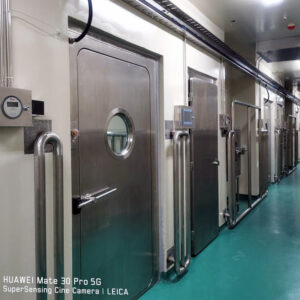
Door interlocking helps prevent both doors from opening at the same time and spreading contamination between zones. This is especially important when the chemical shower connects a higher-risk area to a cleaner corridor or gowning zone.
The interlock logic should match the decontamination cycle. In some cases, the exit door should remain locked until the cycle is complete. In other cases, emergency egress must override the normal sequence. The design should balance containment, personnel safety, and emergency escape.
Lighting, Signage, and Visibility
Lighting should be bright enough for safe movement, inspection, and emergency response. Signage should clearly identify the shower room, operating instructions, emergency controls, PPE requirements, and any restrictions.
Visibility matters because chemical shower rooms are often used by personnel wearing visors, respirators, or positive-pressure suits. Instructions should be simple, durable, and positioned at the point of use.
Chemical Shower Room Applications
Chemical shower rooms are used wherever personnel may need controlled decontamination before leaving a hazardous or controlled area. The exact application depends on the facility type, contamination source, and process risk.
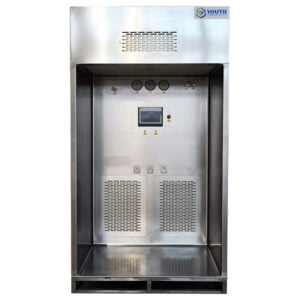
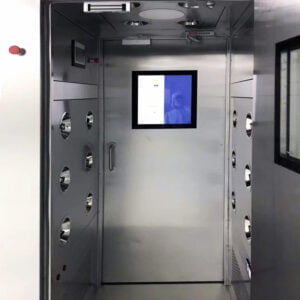
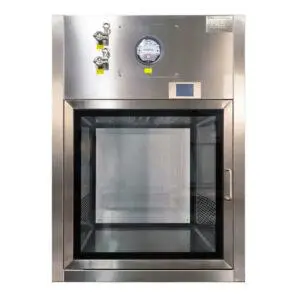
In cleanroom projects, chemical showers are usually part of a broader contamination control strategy. They may work alongside air showers, mist showers, pass boxes, dunk tanks, biosafety airtight doors, VHP systems, and controlled gowning rooms.
Pharmaceutical and Biotech Facilities
In pharmaceutical and biotech environments, chemical shower rooms may be used to support personnel decontamination, containment exit, and controlled transfer from higher-risk areas. They are especially relevant where operators handle potent compounds, biological materials, or processes requiring strict contamination control.
The design should consider GMP documentation, cleaning procedures, user training, and maintenance records. If the chemical shower is part of a validated process, the cycle parameters, inspection points, and operator procedures should be clearly defined.
High-Containment Laboratories
High-containment laboratories may require chemical shower rooms for personnel leaving areas where hazardous biological or chemical materials are handled. In these environments, the shower is not just a convenience feature. It may be a critical part of containment.
Important factors include pressure cascade, door interlocks, suit compatibility, wastewater treatment, emergency communication, and decontamination effectiveness. The system should support safe exit without compromising containment boundaries.
Chemical Processing and Industrial Safety Areas
Chemical processing facilities may use chemical shower rooms for emergency exposure response or routine decontamination after work in hazardous areas. The design must consider the specific chemicals handled, possible splash exposure, corrosive materials, and wastewater controls.
For these facilities, quick access, simple activation, durable materials, and clear emergency procedures are especially important. The room must remain functional even when used under urgent conditions.
Chemical Shower vs Air Shower vs Mist Shower
| System Type | Main Purpose | Best Used For | Key Limitation |
|---|---|---|---|
| Chemical Shower | Wet decontamination using water, chemical agents, rinse steps, or a defined decontamination cycle | Hazardous chemical residues, biological contamination, positive-pressure suits, high-containment exit procedures | Requires drainage, wastewater planning, chemical compatibility review, and more maintenance |
| Air Shower | Particle removal using high-velocity filtered air | Removing loose particles from cleanroom garments before entry | Does not neutralize or rinse chemical or biological contamination |
| Mist Shower | Controlled wet mist or fog-based personnel decontamination | Personnel decontamination where particle capture or controlled wetting is required | May not provide the same rinsing strength as a full chemical shower |
| Emergency Safety Shower | Rapid drenching for accidental chemical exposure | Immediate response to chemical splash or corrosive exposure | Usually not designed as a cleanroom containment or validated decontamination chamber |
Key Design Requirements for Chemical Shower Rooms
| Design Area | What to Check | Why It Matters |
|---|---|---|
| Chamber Size | Space for one or two users, positive-pressure suits, safe turning, and emergency access | Prevents blocked spray coverage and supports safe movement |
| Spray Coverage | Nozzle position, spray angle, pressure, shadow zones, and full-body coverage | Determines whether contaminants are actually removed from suit surfaces |
| Materials | Stainless steel, chemical-resistant panels, sealed joints, resistant gaskets, anti-slip flooring | Reduces corrosion, leakage, and long-term maintenance problems |
| Drainage | Floor slope, segregated drainage, wastewater route, treatment or collection requirements | Prevents standing water and uncontrolled discharge of contaminated liquid |
| Controls | Hands-free activation, emergency stop, cycle timer, interlocks, alarms, manual override | Supports safe use during both routine and emergency conditions |
| Ventilation | Exhaust strategy, pressure control, odor control, and aerosol management | Reduces exposure risk and protects adjacent cleanroom zones |
| Documentation | SOPs, inspection records, training logs, maintenance history, cycle records | Supports compliance, repeatability, and long-term operational control |
Chemical showers, air showers, and mist showers are often discussed together, but they serve different purposes. Choosing the wrong type can create a safety gap or an unnecessary project cost.
An air shower mainly removes loose particles from garments by using high-velocity filtered air. It is useful for particle control but does not provide wet chemical decontamination. A mist shower can support particle capture or controlled wetting in some personnel decontamination processes. A chemical shower is selected when the facility needs liquid-based decontamination, chemical neutralization, or more intensive removal of hazardous residues.
When to Choose a Chemical Shower
Choose a chemical shower when the contamination risk cannot be controlled by air removal alone. This may include hazardous chemical residues, biological contamination on protective suits, process materials that require rinsing, or containment exit procedures that require a wet decontamination step.
The decision should be based on hazard type, required decontamination method, containment level, personnel PPE, drainage handling, and regulatory expectations. A chemical shower is usually more complex than an air shower, but it may be necessary when personnel safety and contamination control demand a liquid decontamination process.
When Another Decontamination System May Be Better
A chemical shower is not always the right answer. For low-risk particle control, an air shower may be sufficient. For material transfer, a pass box, VHP chamber, or dunk tank may be more appropriate. For routine gowning control, a well-designed changing room and airlock may solve the problem without adding chemical wastewater management.
The best cleanroom design uses the right decontamination method at the right point in the workflow.
How to Choose the Right Chemical Shower Room
Selecting the right chemical shower room requires a structured review of the facility, not only a comparison of chamber dimensions or price. The best system is the one that fits the actual contamination risk, user workflow, and maintenance capability.
A strong specification should define who will use the shower, what they will wear, what contamination is expected, what chemicals may be used, where wastewater will go, how the cycle will be controlled, and how the system will be inspected.
Define the Hazard Profile
Start by identifying the materials and contaminants involved. Are the risks chemical, biological, particulate, or mixed? Are the materials corrosive, toxic, infectious, sticky, volatile, or difficult to rinse? Are users wearing standard cleanroom garments or positive-pressure protective suits?
The answers determine the shower cycle, spray method, material compatibility, wastewater requirements, and emergency procedures.
Confirm the Facility Workflow
The chemical shower should fit naturally into the cleanroom or containment workflow. Personnel should not need to cross clean zones while still contaminated, and the shower should not create traffic bottlenecks during routine operation.
Review entry and exit routes, gowning rooms, waste routes, emergency exits, and maintenance access. If the chamber will be used by two suited operators at once, confirm that the space and cycle logic support that use case.
Review Compliance and Documentation Needs
Chemical shower requirements may involve occupational safety rules, facility standards, cleanroom procedures, biosafety protocols, environmental discharge rules, and internal quality systems. The exact requirements depend on the country, industry, and application.
For regulated facilities, documentation is as important as hardware. The system should support written procedures, inspection checklists, maintenance logs, training records, and change control.
Maintenance and Routine Inspection
A chemical shower room must remain ready for use. If the system is only checked after an incident, the risk is already too high. Routine inspection should confirm that the chamber, controls, valves, nozzles, drains, alarms, lighting, and interlocks are functioning as intended.
Maintenance should also include cleaning, corrosion checks, gasket inspection, drain inspection, sensor testing, and verification of emergency functions. Any chemical dosing or neutralization system should be checked according to the facility’s procedure and manufacturer recommendations.
Common Maintenance Points
Common inspection points include nozzle blockage, uneven spray coverage, standing water, drain restriction, door seal wear, corrosion, damaged floor surfaces, malfunctioning alarms, unclear signage, weak lighting, and control panel errors.
Facilities should also review whether the actual user behavior matches the written procedure. If operators bypass steps, rush the cycle, or misuse the chamber, the problem may be training or workflow design rather than equipment alone.
Training for Chemical Shower Use
Training should cover normal operation, emergency use, PPE requirements, entry and exit behavior, cycle completion, alarm response, and reporting. Personnel should understand when to use the chemical shower, how to activate it, what to do if the system fails, and how to avoid transferring contamination after the shower.
For high-risk facilities, periodic drills or supervised practice may be necessary. Training should be documented and updated when the process, chemical risk, or equipment changes.
Why Work With YOUTH for Cleanroom Chemical Showers?
YOUTH’s cleanroom chemical shower rooms are designed for facilities that require controlled decontamination, cleanroom compatibility, and practical integration with biosafety or contamination control workflows. Instead of treating the shower as an isolated fixture, the system can be considered as part of a complete cleanroom or biosafety equipment strategy.
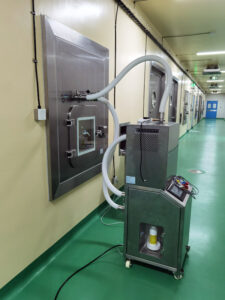
YOUTH’s chemical shower solutions can support personnel disinfection, positive-pressure protective suit use, controlled chamber operation, and integration with related cleanroom systems. For projects that require a broader contamination control layout, chemical showers may be coordinated with biosafety airtight doors, pass boxes, VHP equipment, dunk tanks, air showers, mist showers, and other cleanroom equipment.
Practical Project Support
A successful chemical shower project depends on more than equipment delivery. It requires understanding the facility’s process, contamination risk, user flow, and maintenance requirements. YOUTH can support project discussions around chamber configuration, material selection, decontamination workflow, and integration with cleanroom layouts.
This is especially useful for pharmaceutical, biotech, laboratory, and high-containment projects where personnel safety, contamination control, and operational reliability must be considered together.
Built for Safety and Contamination Control
The value of a cleanroom chemical shower room is measured by how reliably it supports safe decontamination in real operation. A good system should be easy to use, easy to inspect, resistant to the expected chemicals, and compatible with the facility’s containment strategy.
When specified correctly, a chemical shower room helps protect personnel, reduce contamination transfer, support compliance, and strengthen the overall cleanroom safety program.
Key Standards and Guidance Related to Chemical Shower Rooms
Chemical shower rooms are not governed by one single universal standard. In most projects, the correct specification comes from combining workplace safety rules, emergency shower standards, cleanroom design standards, biosafety guidance, and industry-specific GMP or contamination control requirements. The following sources are commonly relevant when evaluating chemical shower room design, installation, operation, and documentation.
OSHA 29 CFR 1910.151(c)
OSHA 29 CFR 1910.151(c) is one of the most important references for facilities where personnel may be exposed to injurious corrosive materials. It requires suitable facilities for quick drenching or flushing of the eyes and body within the work area for immediate emergency use. For chemical shower room planning, this source supports the need for accessible emergency response capability where chemical exposure risk exists.
ANSI/ISEA Z358.1
ANSI/ISEA Z358.1 is the main American standard for emergency eyewash and shower equipment. It covers minimum performance and use requirements for emergency showers, eyewashes, eye/face washes, combination units, personal wash units, and drench hoses. While a cleanroom chemical shower may include additional containment and decontamination functions, ANSI/ISEA Z358.1 is still a key reference when emergency shower performance, activation, flushing capability, and user safety are part of the design basis.
EN 15154 Emergency Safety Showers
EN 15154 is an important European standard series for emergency safety showers. It is especially relevant for projects in Europe or facilities that want to align emergency shower design with European expectations. Depending on the project, different parts of EN 15154 may apply to plumbed-in body showers, non-plumbed body showers, laboratory safety showers, or multiple-nozzle body showers.
WHO Laboratory Biosafety Manual
The WHO Laboratory Biosafety Manual is a high-authority biosafety reference for laboratories and biomedical facilities. It emphasizes risk assessment, safe handling of biological agents, decontamination, waste management, laboratory design, PPE, and biosafety program management. For chemical shower rooms used in high-containment or biological-risk areas, this manual supports a risk-based approach rather than a one-size-fits-all shower design.
CDC/NIH Biosafety in Microbiological and Biomedical Laboratories
The CDC/NIH BMBL is a major biosafety reference for microbiological and biomedical laboratories. It is useful when chemical showers are part of a containment strategy, personnel exit process, or decontamination workflow. The BMBL perspective is especially relevant for facilities that handle infectious materials, biological agents, contaminated PPE, or controlled laboratory waste streams.
EU GMP Annex 1
EU GMP Annex 1 is highly relevant for sterile pharmaceutical manufacturing and other facilities where contamination control is critical. It emphasizes quality risk management, contamination control strategy, facility design, personnel practices, cleaning, disinfection, monitoring, maintenance, and documentation. A chemical shower room used in a pharmaceutical or biotech cleanroom should be considered within this broader contamination control strategy, not treated as a standalone fixture.
Frequently Asked Questions
What is the difference between a chemical shower and an emergency safety shower?
A chemical shower room is usually a controlled decontamination chamber designed for cleanroom, biosafety, or containment workflows. It may include door interlocks, programmed cycles, drainage control, chemical compatibility, and documentation requirements. An emergency safety shower is mainly intended for immediate drenching after accidental chemical exposure.
Does every cleanroom need a chemical shower?
No. Many cleanrooms only need gowning rooms, air showers, pass boxes, or other contamination control systems. A chemical shower is usually required when personnel may carry hazardous chemical residues, biological contamination, or process materials that require wet decontamination before exit.
Can a chemical shower replace an air shower?
Not usually. They solve different problems. An air shower removes loose particles from garments, while a chemical shower provides wet decontamination. In some facilities, both may be used at different points in the personnel flow.
What materials are best for chemical shower rooms?
The best materials depend on the chemicals used in the facility. Common choices include stainless steel, chemical-resistant wall panels, sealed joints, corrosion-resistant hardware, resistant gaskets, and anti-slip flooring. Material compatibility should always be checked against both routine cleaning agents and emergency exposure chemicals.
How should wastewater from a chemical shower be handled?
Wastewater should be reviewed based on the expected contamination. It may contain hazardous chemicals, biological residues, disinfectants, neutralizers, or process materials. Some facilities may require segregated drainage, collection tanks, neutralization, treatment, sampling, or controlled discharge.
How often should a chemical shower room be inspected?
Inspection frequency should match the facility risk level and internal safety procedures. High-risk or regulated facilities may require routine functional checks, documented inspections, preventive maintenance, and periodic review of user training records.
What should be included in chemical shower training?
Training should cover normal use, emergency use, PPE requirements, activation steps, cycle completion, alarms, exit behavior, reporting, and what to do if the system fails. For high-containment or high-risk facilities, supervised practice or periodic drills may be appropriate.
Can chemical showers be used with positive-pressure protective suits?
Yes, but the chamber must be designed for it. The layout should support suit size, movement, spray coverage, connection points, drainage, communication, and emergency access. If two suited users may enter at the same time, this must be considered during design.