Specifying the wrong upstream filtration for a HEPA system is one of the more reliably expensive mistakes in cleanroom HVAC design — not because the error is obscure, but because the cost lands in a different budget line than the decision. A G4 panel pre-filter costs almost nothing at the point of procurement; the bill arrives later, in accelerated HEPA replacement cycles, unplanned maintenance shutdowns, and, in worst cases, an airflow shortfall that turns a deferred filter change into an ISO class compliance event. The judgment that prevents this is not about filter efficiency ratings in isolation — it is about matching upstream filter grade to contamination profile, housing geometry, and the total operating cost picture across a five-year horizon. By the end of this article, you will have the information needed to evaluate whether your current pre-filtration specification is actually protecting your HEPA investment, or merely appearing to.
Pre-Filtration Purpose: Extending HEPA Service Life and Managing Coarse Particulate Load
HEPA filters are sized, purchased, and validated for a purpose: removing particles ≥0.3 µm with ≥99.97% efficiency. They are not designed to manage coarse dust loads, and when they are forced to do so — because upstream filtration is absent or inadequate — their service life contracts in proportion to the contamination burden they absorb.
The mechanism is straightforward. Coarse and medium-sized particles that could have been captured by a lower-grade upstream filter instead accumulate in the HEPA media, increasing resistance progressively from the initial 250 Pa baseline toward the 500 Pa threshold at which replacement becomes economically justified. The rate at which that resistance builds depends almost entirely on what the upstream stages removed. An ePM1 ≥50% intermediate filter upstream of HEPA — roughly equivalent to MERV 13–14 — can extend HEPA service life by 2–4× compared to a G4 pre-filter alone in urban environments. That range translates directly into replacement frequency: HEPA filters in well-protected systems commonly achieve 4–6 years of service life, while under-protected systems may require replacement in under two years.
Pre-filter replacement frequency in cleanroom applications generally falls between 2 and 6 months, depending on site contamination profile and monitored pressure drop — not a fixed schedule. That range is a planning baseline, not a manufacturer guarantee or a regulatory interval. In high-traffic urban facilities with elevated PM10 and PM2.5 exposure, replacement may occur at the short end of that range or shorter. In lower-contamination environments, intervals may extend. The only reliable way to calibrate replacement frequency for a specific site is through pressure differential monitoring tracked against a documented baseline.
Framing pre-filtration as a HEPA lifecycle investment rather than a commodity item changes the specification conversation. The upstream filter grade is a controlled variable; the HEPA replacement schedule is the downstream consequence. Systems designed with that relationship in mind consistently outperform those where filter stages are selected in isolation on initial cost.
Panel vs. Bag vs. V-Bank Pre-Filter Configurations: Pressure Drop and Dust-Holding Comparison
The three dominant pre-filter configurations used in cleanroom HVAC — panel, bag, and V-bank — differ not just in efficiency but in the physical constraints they impose on housing selection, which is where specification decisions tend to collide with site reality.
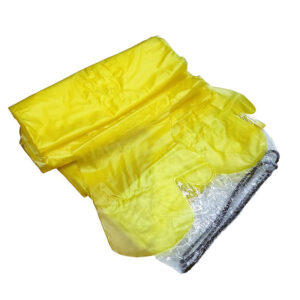
Panel pre-filters, typically constructed from Dacron or synthetic media, carry a 60% capture efficiency for particles ≥5 µm as a performance benchmark for that product type. This makes them appropriate as a first-stage coarse particulate barrier, but their dust-holding capacity is comparatively limited. In urban or high-particulate environments, that capacity ceiling means short replacement cycles and, critically, rapid HEPA loading in single-stage configurations. Their main practical advantage is dimensional: panel filters are available in standard frame depths of 21 mm, 25 mm, and 46 mm, which accommodates retrofit into most existing AHU housings without structural modification.
Bag and V-bank configurations deliver substantially higher efficiency — ePM1 50% and above — and significantly greater dust-holding capacity, extending both their own service intervals and HEPA service life downstream. The consequence of that performance is physical: bag filters require deeper housing to accommodate the pocket geometry, and V-bank configurations require greater face area to deliver their full surface advantage. Neither of these constraints is prohibitive in a purpose-designed AHU, but both create friction when retrofit into a system originally specified for a single-stage panel filter.
| Configuration | Typical Particle Capture Efficiency (≥5µm) | Key Advantage | Key Consideration for Planning |
|---|---|---|---|
| Panel (Dacron) | 60% | Lower initial cost, simple installation | Lower dust-holding capacity, shorter service life between changes |
| Bag Filter | Higher than Panel (ePM1 50%+) | High dust-holding capacity, extends HEPA life | Requires deeper housing, higher initial pressure drop |
| V-Bank | Higher than Panel (ePM1 50%+) | High surface area, low initial pressure drop | Larger footprint, higher initial hardware cost |
The table captures the efficiency and planning trade-offs across configurations; the consequential variable it cannot fully represent is the housing depth that a retrofit requires. If an existing AHU was designed around a 25 mm panel filter stage, installing a bag filter typically requires custom casing fabrication and may add 6–12 weeks to project schedule and 20–40% to total modification cost. That constraint makes AHU selection and filter bank depth allowance decisions at the design stage more consequential than they are usually treated.
For new installations, the selection question between bag and V-bank typically resolves around available face area versus available depth. Where AHU footprint is constrained but depth is available, bag filters are often the more practical choice. Where depth is limited but face area can be maximized, a V-bank medium-efficiency air filter provides high media surface area within a shallower envelope, keeping initial pressure drop low and extending the time before the stage reaches its replacement threshold.
MERV and ISO 16890 Classification: Matching Pre-Filter Efficiency to Facility Contamination Profile
ISO 16890-1:2016 provides the testing framework for classifying medium-efficiency filters according to their efficiency against ambient aerosol fractions — ePM1, ePM2.5, and ePM10 — measured against a defined particle size distribution. This classification replaced EN 779:2012 for new filter testing, but EN 779 design figures remain in circulation as planning references for system engineers, particularly the maximum final pressure drop limits that define operational boundaries for each filter class.
| Filter Class (EN 779:2012) | Category | Maximum Final Pressure Drop | Why It Matters |
|---|---|---|---|
| G1 – G4 | Coarse Filters | 250 Pa | Defines the replacement trigger to prevent excessive system resistance from coarse particulate loading. |
| M5 – F9 | Fine / Medium-Efficiency Filters | 450 Pa | Sets a higher operational limit, crucial for sizing fan capacity to handle the resistance of finer filtration stages. |
These pressure drop limits — 250 Pa for coarse filters (G1–G4) and 450 Pa for fine and medium-efficiency filters (M5–F9) — function as design figures for fan sizing and replacement trigger calibration, not as active regulatory mandates under ISO 16890, which uses a different classification framework. The practical implication of mismatching filter class to contamination profile appears before either of those limits is reached: a G4 filter specified in a high-PM environment will reach 80% of its dust-loading capacity within 4–8 weeks, well before a pressure differential instrument triggers an alert, because the loading rate outpaces most monitoring intervals set for lightly contaminated sites.
For pharmaceutical HVAC upstream of HEPA, the specification floor for intermediate filtration is generally treated as ePM1 ≥50% (approximately MERV 13–14). This is not an arbitrary efficiency preference — it reflects the particle size range that contributes most to HEPA loading in typical urban environments. Filters classified below this threshold leave a meaningful share of sub-micron and fine particles to migrate downstream, where they reach the HEPA media and begin shortening its service life.
The contamination profile question is site-specific. Facilities in dense urban or industrial environments, those with high internal occupancy, or those with frequent material transfers operate under substantially higher particulate burdens than rural or low-activity sites. Specifying a minimum ePM1 50% pre-filter grade without reference to the actual contamination load can still result in undersized protection if the AHU serves a zone with unusually high coarse particulate generation — and it can mean over-specification in a low-burden environment where a cost-effective intermediate grade would have sufficed. For a more detailed review of how filter selection maps to cleanroom requirements across different ISO classes, this overview of air filtration requirements in cleanrooms provides useful context for matching specification to classification.
Sizing Methodology: Face Velocity Limits, Filter Bank Capacity, and Replacement Frequency Modeling
Sizing a pre-filtration bank is not a pass/fail exercise against a nameplate rating. The variables that determine whether a filter bank performs as designed — face velocity, total filter area, dust-holding capacity against site contamination rates, and the resulting replacement frequency — interact in ways that matter for lifecycle cost modeling.
Face velocity across the filter bank is the starting control variable. Most panel and bag pre-filters are rated at nominal face velocities in the range of 1.5–2.5 m/s; operating above the upper limit increases initial pressure drop and accelerates media loading. Operating significantly below the lower limit can affect particle deposition patterns and reduce measured capture efficiency relative to the rated value. For a given AHU airflow volume, the filter bank area needs to be sized to keep face velocity within the operating band for the selected filter type — a step that is sometimes bypassed when filters are specified by frame size to match an existing housing rather than by required filtration area.
Dust-holding capacity — the mass of particulate a filter can accumulate before reaching its final pressure drop — translates directly into replacement frequency when combined with the site’s mass concentration and airflow rate. A simplified model for a given pre-filter stage looks like this: divide the rated dust-holding capacity by the product of airflow volume, contaminant concentration, and fractional capture efficiency of upstream stages. The result is an estimated service life in operating hours, which converts to calendar time based on HVAC run schedule. This calculation is a planning estimate, not a precision tool, but it forces the engineer to put a number on how quickly the stage will load — a discipline that frequently changes the filter grade or stage configuration decision.
For pharmaceutical cleanroom applications, the downstream HEPA service life target of 4–6 years provides a useful back-calculation anchor. If the pre-filtration specification produces a HEPA loading rate that implies replacement at year two, the pre-filtration stage is underspecified for that environment, regardless of whether it meets the minimum efficiency classification. The 2–4× HEPA service life extension attributable to an ePM1 ≥50% intermediate stage versus a G4 alone should be a design input for lifecycle cost modeling, not a post-selection observation. ISO 14644-2:2015, as a monitoring and evidence-of-performance standard, supports the systematic pressure differential tracking that makes this modeling verifiable over time — but it does not prescribe filter sizing rules or replacement frequency mandates.
The two-stage approach — G4 panel as a primary coarse arrestance stage followed by an F7/ePM1 bag filter as an intermediate stage — carries a hardware cost premium of approximately 30–50% over a single G4 stage. Across a five-year period in polluted-air environments, that investment typically reduces total filtration operating cost by 40–60% through reduced HEPA replacement frequency, with a return-on-investment breakeven around 12–18 months. That calculation rarely happens at the specification stage because capital cost and operating cost sit in different budget lines — and it is precisely the calculation that most changes the outcome. A bag pocket pre-air filter positioned as the second stage in this configuration carries the dust-holding capacity necessary to make the math work over multi-year operating cycles.
System Integration: Filter Housing Selection and Pre-Filter/Final-Filter Pressure Drop Monitoring
Pressure differential monitoring is not a reporting function — it is the control mechanism that prevents deferred filter changes from cascading into ISO class failures. The relationship between filter loading, system resistance, and cleanroom airflow delivery is direct: as combined pre-filter and medium-efficiency stage resistance climbs toward and beyond 250 Pa, AHU fan capacity begins to be consumed maintaining static pressure across the increasingly loaded filter bank, at the cost of delivered airflow to cleanroom zones.
A 250 Pa combined resistance across the pre-filter and intermediate stage is the replacement trigger calibrated to protect total system static pressure within typical AHU fan capacity limits. This is not a standard-specified mandatory threshold; it is a design figure derived from the relationship between fan curve, system resistance, and minimum air change requirements for ISO class maintenance. Systems that operate beyond this point do not fail immediately — they begin to deliver less than the minimum airflow to cleanroom zones, degrading particle control before any visible alarm trips. The failure mode is gradual and easily misattributed to other variables until a trend review makes the pressure data visible.
For HEPA monitoring, the equivalent planning figures are an initial clean-filter pressure drop of approximately 250 Pa and a replacement trigger around 500 Pa — the latter representing the point at which continued operation becomes economically unfavorable relative to replacement cost based on energy consumption. These are planning thresholds and energy-cost trade-off figures; the actual economical trigger for a specific facility depends on local energy pricing and filter replacement cost.
| Filter / Stage | Key Pressure Drop Value | Significance |
|---|---|---|
| HEPA (Initial, Clean) | 250 Pa | Establishes the baseline system resistance for a new filter. |
| HEPA (Replacement Trigger) | 500 Pa | Often considered the economical point for replacement based on energy cost trade-offs. |
| Combined Pre-Filter & Medium-Efficiency Stage | 250 Pa (Final) | Calibrated replacement trigger to maintain total system static pressure within AHU fan limits. |
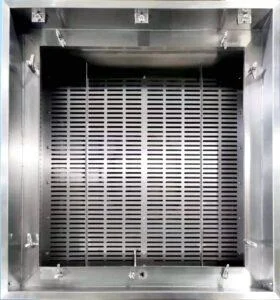
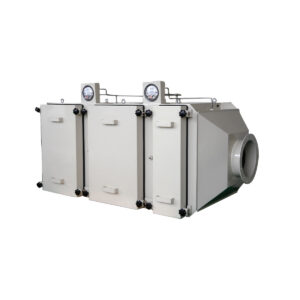
Housing selection for pre-filtration introduces a physical constraint that affects which filter configurations are actually feasible. Standard pre-filter frame depths are available at 21 mm, 25 mm, and 46 mm; these dimensions determine whether a given AHU housing can accept the filter type required by the efficiency specification.
| Consideration | Conventional Frame Thickness | What to Clarify During Planning |
|—|—|—|—|
| Standard Pre-Filter Frame Depths | 21 mm, 25 mm, 46 mm | Verify that the existing or planned AHU housing depth can accommodate the required filter type. |
| Retrofit Risk if Depth is Inadequate | N/A | Determine if structural modification or custom housing fabrication is required, which impacts project schedule and cost. |
The retrofit risk is significant when an existing AHU was designed around a 21 mm or 25 mm panel filter slot. Adding a bag filter stage requires housing depth that a single-stage panel installation typically does not provide, and accommodating it often means custom filter housing fabrication and structural modification to the AHU casing — a scope addition that neither the filtration engineer nor the project manager anticipates until the physical survey happens. At that stage, the 6–12 week schedule impact and 20–40% cost premium are non-negotiable. Identifying housing depth as a design constraint at the AHU selection phase, rather than during commissioning, is the intervention that prevents it.
The monitoring architecture should be specified with filter stage independence in mind. A single differential pressure transmitter reading across the full AHU from inlet to final filter is insufficient to distinguish between HEPA loading and pre-filter loading; they look identical in the aggregate signal. Dedicated sensors across each filter stage — pre-filter bank and HEPA bank separately — provide the data needed to identify which stage is approaching its threshold, enabling targeted maintenance rather than exploratory investigation during a scheduled shutdown.
Matching pre-filter and medium-efficiency filter grade to a specific cleanroom HVAC system is a lifecycle cost decision as much as a technical specification. The filters that protect HEPA longest are not necessarily the most efficient on paper — they are the ones sized correctly for the contamination load, installed in housing that accommodates their geometry without modification, and monitored at the stage level so that replacement decisions are driven by measured performance rather than fixed-interval schedules.
Before finalizing a pre-filtration specification, confirm three things: whether the contamination profile at your site supports an ePM1 ≥50% intermediate stage ahead of HEPA; whether the existing or planned AHU housing depth can physically accommodate the filter configuration the efficiency requirement demands; and whether the fan capacity in the system has been sized against the combined final pressure drop of all filter stages, not just the HEPA terminal filter. Those three checks resolve the majority of specification errors that surface later as HEPA overconsumption, retrofit cost surprises, or ISO class maintenance events.
Frequently Asked Questions
Q: Does the 12–18 month ROI breakeven for a two-stage pre-filtration system still hold in a low-contamination or rural facility?
A: No — the breakeven period extends significantly in low-particulate environments. The 12–18 month figure is calculated for polluted-air environments with elevated PM2.5 and PM10 loading. Where coarse particulate concentrations are low, a G4 single-stage pre-filter loads slowly enough that HEPA replacement frequency does not increase at the same rate, narrowing the operating cost gap that makes the two-stage hardware premium worthwhile. Before committing to a two-stage configuration on cost grounds, model the dust-holding capacity of each stage against your site’s actual mass concentration and airflow rate — the calculation may show that the single-stage approach is defensible at your contamination level, even if it would be underspecified in a denser urban or industrial setting.
Q: If the AHU housing can only accommodate a 46 mm panel filter, what options exist for reaching ePM1 ≥50% efficiency without a full casing modification?
A: A V-bank medium-efficiency filter is often the most practical alternative in depth-constrained housings. V-bank configurations achieve ePM1-class efficiency within a shallower envelope than bag filters by folding the media into a pleated V geometry, which maximizes surface area without requiring the housing depth that bag pocket designs demand. Whether a 46 mm slot can accept a specific V-bank frame depends on the manufacturer’s dimensional specification, so a physical housing survey against filter datasheet geometry should be completed before specifying — but this configuration is typically the retrofit path that avoids custom casing fabrication and the associated 6–12 week schedule impact.
Q: At what point does operating a cleanroom HVAC system beyond the 250 Pa combined pre-filter replacement trigger create an actual ISO class compliance risk, rather than just an energy cost issue?
A: The compliance risk begins before any pressure alarm trips, and the failure mode is airflow deficit rather than filtration bypass. Once combined pre-filter and intermediate stage resistance exceeds 250 Pa, the AHU fan begins consuming static pressure capacity to push air through the loaded filter bank, reducing delivered airflow to cleanroom zones below the minimum air change rate required for ISO class maintenance. Because the drop is gradual and the total system pressure reading does not distinguish between filter loading and airflow delivery, the degradation can persist undetected through multiple monitoring cycles. Facilities operating under ISO 14644-2:2015 monitoring protocols with stage-level differential pressure sensors will catch the trend earlier; those relying on a single aggregate pressure transmitter across the full AHU are exposed to a longer window between threshold breach and corrective action.
Q: How should replacement frequency modeling change if the cleanroom serves both a pharmaceutical manufacturing zone and a lower-classification support area on the same AHU?
A: The highest-contamination zone served by that AHU should anchor the pre-filter replacement schedule, not an average across zones. If a shared AHU draws return air from a high-occupancy support area with elevated coarse particulate generation alongside a controlled manufacturing zone, the pre-filter bank sees the combined contamination load of both. Sizing dust-holding capacity and replacement frequency against the manufacturing zone’s cleaner air profile while the support zone is driving actual loading will result in the G4 stage reaching capacity faster than modeled — and the HEPA protection shortfall the article describes follows from that. Where contamination profiles across served zones differ substantially, separate AHU systems or dedicated pre-filter banks per zone remove this misalignment at the design stage.
Q: Is there a meaningful performance difference between monitoring pre-filter loading by pressure drop versus monitoring on a fixed time interval for facilities that cannot install dedicated stage-level sensors?
A: Yes — fixed-interval replacement consistently results in either premature changes that increase operating cost or overdue changes that allow HEPA loading to accelerate, depending on whether the interval was set conservatively or optimistically against actual site conditions. Pressure differential monitoring, even with a single sensor across the pre-filter bank rather than a stage-isolated transmitter, responds to actual dust accumulation rather than elapsed time, and adjusts implicitly to seasonal variation in ambient particulate concentration. The 2–6 month replacement range cited as a planning baseline exists precisely because site-specific loading rates vary enough that a fixed schedule cannot be accurate for all conditions. If dedicated sensors are not feasible, a portable manometer used at documented inspection intervals is a workable intermediate — it removes the fixed-schedule error without requiring permanent instrumentation on each stage.
Related Contents:
- V-Bank vs Mini-Pleat HEPA Filter – How to Choose the Right Configuration for Your Cleanroom Class and Airflow Demand
- What is the Efficiency Rating of HEPA Housing Boxes?
- HEPA Housing Boxes in Pharmaceutical Manufacturing: Uses
- Emerging Trends in HEPA Housing Box Technology for 2025
- Hospital HVAC Systems: HEPA Housing Box Implementation Guide
- Boosting Productivity with Advanced HEPA Housing Systems
- Aerospace HEPA Housing Box Requirements & NASA Standards
- HEPA Housing Boxes for Food Processing Air Quality Compliance
- HEPA vs ULPA Housing Boxes: Choosing the Right Filtration